Retail shelving manufacturing is the sheet metal discipline behind the gondolas, racks, and display fixtures that organize products in stores across North America and Europe. Shelving components must carry weight, assemble quickly on site, resist years of retail traffic, and match the store’s visual standard, which makes them a precision volume product rather than simple steel furniture. Standards from MHI, the material handling industry association, and safety practice from OSHA shape how load ratings and construction are communicated.
This guide follows the full journey of a custom shelving and display program in seven steps: the product and its fixture families, the applications each serves, material selection, production difficulty, lead times, past case studies with realistic purchasing data, and a practical summary. Whether you are a retailer standardizing store fixtures, a display OEM serving brands, or a distributor sourcing shelving for warehouses, the information here will help you brief a fabricator, plan realistic timelines, and avoid the fit and finish problems that show up at store opening.
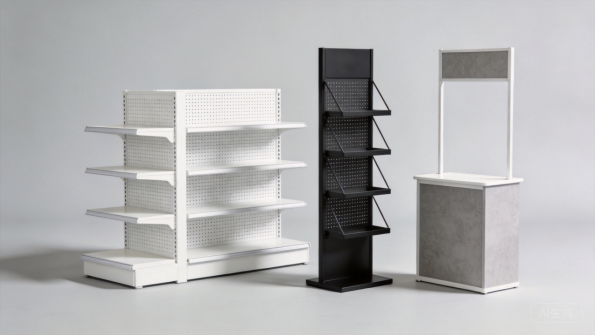
Figure 1: Retail shelving and display fixtures in powder-coated commercial finishes.
The Product: What Are Retail Shelving and Display Fixtures
Fixture Families and Configurations
Retail shelving components come in three main families: gondola shelving, freestanding display racks, and custom promotional fixtures. Gondola shelving is the back-to-back upright system used in supermarket aisles, with perforated uprights, shelf brackets, and shelving panels; display racks carry products on walls, floors, and end caps; and promotional fixtures are project-specific displays for launches and seasonal programs.
Within each family, components vary by duty and finish. Light commercial shelving uses thinner coated steel for general merchandise, while heavy-duty racks use thicker or galvanized sections for warehouses and back-of-store. Retail shelving manufacturing spans all of these, and a fabricator that handles roll forming, punching, and powder coating can supply the full component range to retailers and display OEMs.
Core Components and Their Roles
The core components are uprights, shelf brackets, shelf panels, bases, back panels, and hardware. Uprights carry the vertical load and provide the punched slot pattern that brackets lock into, shelf brackets transfer the load from the panel to the upright, and shelf panels provide the merchandise surface. Bases and kick plates finish the unit at floor level, and back panels close the gondola and define the aisle.
Hardware completes the system: leveling feet, connectors between units, end caps, and sign holders are fitted during installation. Every component is a fit point, and the slot pattern and bracket geometry must hold tolerances so shelves level without shimming and units join without gaps. The design must also support flat-pack shipping, which shapes how panels and uprights are made.
Slot spacing is standardized across the range so shelves and accessories can be repositioned in seconds during store resets.
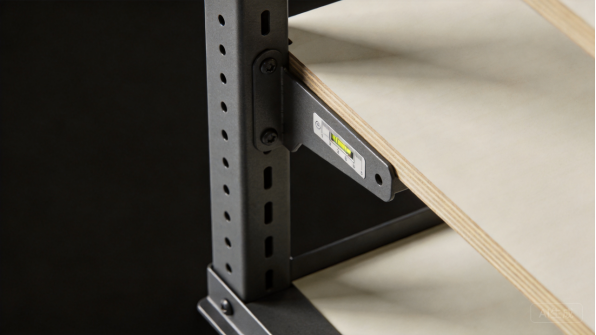
Figure 2: Uprights, brackets, panels, and hardware define the shelving system.
Design Drivers: Load, Modularity, and Finish
Retail shelving design is driven by load rating, modularity, and finish durability. Each shelf is rated for a load, from light merchandise to heavy bulk, and the upright, bracket, and panel are engineered together so the rating holds across the unit. The slot pattern is standardized so shelves and accessories reposition without tools, which lets stores reset aisles quickly.
Finish durability matters because fixtures face years of restocking, cleaning, and product contact. Powder-coated finishes resist scratches and are easy to match across batches, and edge treatment prevents the sharp corners that damage merchandise and staff. ANSI and industry practice guide load communication, and these drivers are settled at quotation so the fixture works in the store, not just in the catalog.
Leveling feet and anchoring provisions are part of the design, because a fixture that rocks on an uneven floor looks unfinished and can tip.
Customization in Retail Shelving Manufacturing
Custom retail shelving manufacturing exists because every retailer has its own store standard. Buyers customize aisle lengths, shelf widths, finishes, end cap designs, sign systems, and product-specific accessories, and they expect the components to assemble with their existing fixtures. Custom fabrication also supports standard ranges: one upright system can serve many shelf sizes and accessory options.
Customization includes compliance and safety details such as load labels, anchoring provisions, and documentation for the store standard. OSHA workplace guidance covers rack safety where staff work among fixtures, and buyers increasingly ask for documented materials and test evidence. A fabricator that can provide material certifications and consistent batch quality gives retailers and OEMs the file they need for store standards.
Use Cases and Applications
Grocery and Mass Retail
Grocery and mass retail is the largest market for gondola shelving. Supermarkets, discount stores, and general merchandise chains build entire aisles from upright runs, and the fixture program must match the store layout and the merchandise mix. Standard components dominate, and the slot pattern and shelf sizes follow the retailer’s specification.
For grocery programs, consistency is everything: shelves must level, units must join, and finishes must match across thousands of components. Retail shelving manufacturing serves this volume with repeatable punching, forming, and coating, and retailers value fabricators that deliver complete, documented programs on the store opening schedule.
Aisle heights and shelf widths follow the merchandise planogram, which the retailer shares with the fabricator for exact sizing, and retailers also standardize aisle hardware and sign strips across stores to keep the fixture program consistent nationwide.
Specialty and Apparel Stores
Specialty and apparel stores use wall systems, freestanding racks, and display tables that carry the brand’s visual identity. These fixtures use cleaner finishes, tighter tolerances, and more design content than bulk gondola systems, and they are produced in shorter runs with more variety. The finish and edge quality are part of the brand experience.
For specialty programs, fixture design and finish consistency decide the store’s look. Display OEMs and retailers order components against store openings and refreshes, and delivery is scheduled around installation. For fabricators, specialty work adds design content and margin, and it builds relationships with display brands that reorder by season.
Wall systems and display tables also need to match the store’s lighting and merchandising plan, so the fixture finish and proportions are specified with the visual standard, and seasonal refreshes drive steady reorders that smooth the fixture factory’s schedule.

Figure 3: Gondola shelving organizes product aisles in the retail environment.
Warehouses and Back-of-Store
Warehouses and back-of-store areas use heavier shelving for bulk product, pallet flow, and reserve stock. These racks carry high loads and are built from thicker or galvanized steel, with construction that follows rack engineering practice. MHI rack standards and the Rack Manufacturers Institute guidance underpin load ratings and installation requirements.
Warehouse programs are specification-driven: the rack layout is engineered for the loads and aisle plan, and components are documented for the safety file. For manufacturers, heavy-duty shelving adds volume and demonstrates the punching, forming, and coating capability that retail programs also need.
Back-of-store shelving also serves click-and-collect and fulfillment staging, where pickers need clear, load-rated storage near the sales floor.
Promotional and Seasonal Displays
Promotional and seasonal displays are project fixtures built for product launches, holidays, and marketing campaigns. These displays are often shipped flat and assembled in store, with graphics, special structures, and short production windows. The components must assemble quickly, carry the product, and look right for the campaign duration.
Promotional programs reward fast lead times and design support, because the campaign date sets the deadline. Display OEMs and brands order against the launch, and the fixture is produced, packed, and shipped on a compressed schedule. For fabricators, promotional work is high-volume project business that exercises the full range of fabrication and finishing.
Displays are often recycled or repurposed after the campaign, so the fixture design considers component recovery and packaging disposal.
Material Selection
Cold-Rolled Steel with Powder Coating
In retail shelving manufacturing, cold-rolled steel is the standard material for uprights, brackets, and panels, protected by powder coating. It forms cleanly, punches precisely, and carries the load ratings that retail programs require, and its mechanical properties are documented in references such as MatWeb’s materials database for comparison. Typical thicknesses range from 0.8 mm for light shelves to 2.0 mm for heavy-duty uprights.
The finish does the retail work. Powder coating, applied electrostatically and cured, forms a tough film that resists scratching and cleaning chemicals, and the Powder Coating Institute publishes coating guidance with performance verified under ASTM International standards including salt spray and adhesion tests. White, black, and grey dominate retail programs, and textured finishes hide handling marks.
For retail programs, coating color tolerance is verified across batches, because a store opening with mismatched fixtures is a visible failure, and the coating system is also checked for edge coverage since cut edges are the first place retail fixtures show wear.
Galvanized Steel
Galvanized steel serves warehouse, back-of-store, and outdoor display applications where corrosion resistance and lower finishing cost matter. The zinc coating protects cut edges sacrificially, and the American Galvanizers Association documents the protective life of zinc coatings. Galvanized uprights and racks are standard in heavy-duty storage.
Galvanized steel cuts, forms, and punches predictably, and its mill finish is accepted in back-of-store applications without painting. For retail-facing fixtures, galvanized is less common because the finish does not match store color standards, so the choice follows the application: galvanized for storage, coated steel for the sales floor.
Galvanized components can also be powder coated for outdoor or wet-area displays, combining zinc protection with color.
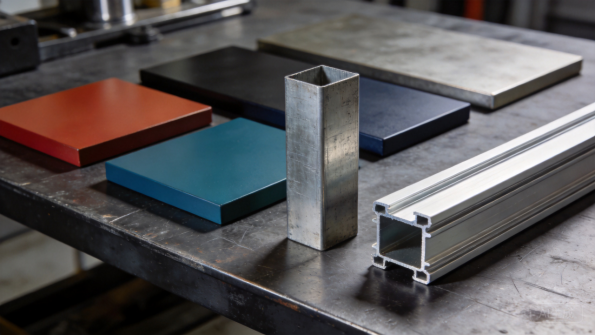
Figure 4: Coated steel, galvanized sections, and aluminum profiles cover the shelving range.
Aluminum and Stainless Steel
Aluminum appears in display fixtures where weight and appearance matter: slatwall systems, sign frames, and modern shelving profiles, and its properties are cataloged by references such as AZoMaterials. Stainless steel serves food and pharmacy display fixtures where hygiene and cleanability are required, with SSINA guiding grade selection.
Aluminum extrusions carry design-led displays, while stainless shelves and end panels serve refrigerated and food areas. Aluminum extrusion also allows complex accessory channels that are difficult to form in steel, and both materials cost more than coated steel, so they are specified where the application demands them. For fabricators, aluminum and stainless capability broadens the fixture portfolio beyond standard coated-steel shelving.
Anodized aluminum and brushed stainless give specialty fixtures a premium surface that coated steel cannot match.
Finishes, Edge Treatment, and Hardware
Finish and edge treatment define the retail experience. Powder coating carries the store color standard, and edge treatment, including rolled edges and protective end caps, prevents damage to merchandise and staff. Shelf panels often combine a steel structure with a melamine or laminate surface for product presentation.
Hardware completes the system: shelf clips, leveling feet, connectors, and anchoring kits are matched to the fixture design, and their finish must not corrode or mar the merchandise. Agreeing the finish, edge, and hardware specification at quotation prevents the most common store complaints: color mismatch, sharp edges, and wobbly shelves.
Shelf clips and connectors are often nylon-coated or plated to avoid scratching merchandise and to slide smoothly in slots.
Production Difficulty
Roll Forming, Punching, and Hole Patterns
Retail shelving manufacturing relies on roll forming for uprights and roll-formed sections, and on CNC punching for the slot and hole patterns that make the system adjustable. Roll forming produces long, consistent profiles at high speed, and punching creates the slot pattern that brackets lock into, with the pattern geometry defined by the system design. At XHX Metal, laser cutting and precision fabrication support the component set.
Slot pattern accuracy is the heart of a shelving system: brackets must engage positively and level across the shelf, and mispunched slots cause wobbly fixtures on the sales floor. Punching dies and programs are verified on first articles, and the pattern is sampled through production. The forming and punching stage decides whether the system assembles and levels in the store.
Roll-formed profiles also carry merchandising accessories such as sign strips and hooks, so the profile geometry includes their mounting features.
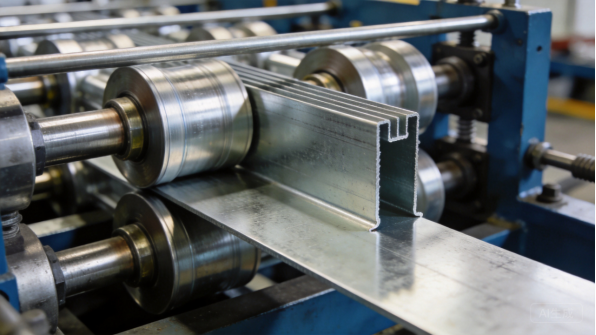
Figure 5: Roll forming produces upright sections with consistent profiles and slots.
CNC Bending and Forming
Bending and forming convert blanks into brackets, bases, and end panels, and springback compensation is tuned for each material. Engineers Edge publishes bend allowance and deduction references used to lay out blanks and predict finished dimensions, and modern CNC press brakes with programmable back gauges hold bend positions and angles consistently across runs.
For shelving components, the critical checks are bracket engagement geometry, base squareness, and panel flatness, because shelves must sit level and units must join without gaps. First articles are verified against the drawing, and the forming process is sampled through production. This discipline is what lets a store reset an aisle without fighting its own fixtures.
For end panels and bases, the bend geometry also defines how units connect at aisle ends.
Welding, Fastening, and Assembly
Welding joins bases, reinforcing brackets, and structural end assemblies, while lighter components use riveting, clinching, and mechanical fastening to protect thin coatings. TWI Global provides technical guidance on joining thin metals, and fixtures hold parts to geometry during assembly. Weld locations are planned so the finish remains clean on visible surfaces.
Assembly and fitting validate the system: a sample unit is built from production components, shelves are leveled, and connectors are checked before shipment. For retailers and OEMs that install in house, the fabricator ships components with assembly instructions and hardware kits. Fixture-based assembly and sample builds keep quality consistent across large programs.
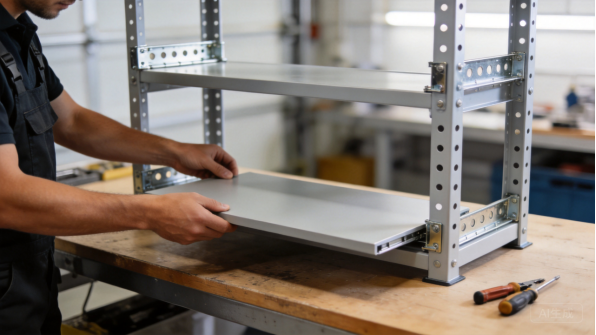
Figure 6: Assembly validates bracket engagement and shelf leveling.
Quality Control and Load Testing
Shelving quality control combines dimensional inspection with load verification. First articles are inspected against the drawing, verifying slot patterns, bracket geometry, and finish, and production batches follow a control plan with sampling. Coating thickness, edge quality, and hardware fit are checked at defined points, and a sample unit is assembled to confirm leveling and alignment.
Load testing is the shelving-specific step: representative shelves and uprights are loaded to their rated capacity, and deflection is measured against the specification. MHI and rack industry practice guide load documentation, and buyers need the evidence for their store and warehouse standards. A fabricator that coordinates load testing gives retailers the data they need for fixture approval.
Load test reports are issued per shelf configuration, so retailers can qualify each size once.
Production Lead Times
RFQ, Engineering Review, and Prototypes
A retail shelving manufacturing program starts with an RFQ: drawings or store specification, material, finish, quantities, and target timing. The fabricator’s engineering team reviews the design for manufacturability, checking slot patterns, bend geometry, coating, and assembly, and returns a quotation with comments within one to three business days. Prototypes are typically delivered in seven to fifteen business days for a component set.
The prototype is where the system gets validated: a sample unit is assembled, shelves are leveled, and the finish is checked against the store standard. Prototype feedback should include fit notes and suggested drawing changes. For retail programs, a fully assembled sample unit, not just loose components, is worth the cost because it proves the system works before production.
Tooling and Process Setup
Roll-formed uprights and punched slot patterns use dedicated tooling: roll-form dies and punch tooling add tooling lead time and investment, but they pay back through volume and consistency. Tooling development typically takes three to six weeks for a new upright profile, while bending and panel programs need less setup. The economics are reviewed at quotation so buyers see the volume threshold.
Beyond the profile tooling, process setup includes bending programs, assembly fixtures, and inspection gauges for slot patterns and brackets. For retailers with approved drawings, repeat orders reuse the tooling and shorten lead time. Buyers should expect a clear cost comparison between custom tooling and available standard profiles.
Standard upright profiles from existing tooling can start production immediately, which shortens lead time for retailers adopting a proven system.
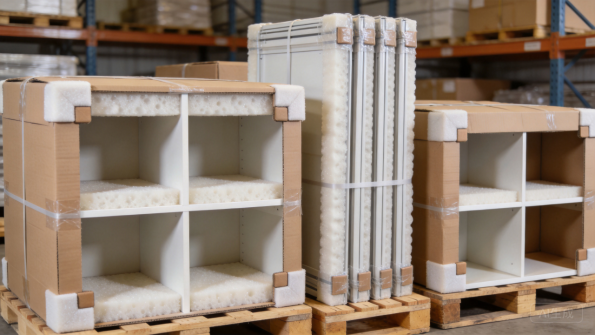
Figure 7: Flat-packed components ship with protective packaging for store installation.
Production Batches and Volume Planning
In retail shelving manufacturing, production runs are volume-driven: light component families such as shelf panels and brackets ship in monthly volumes of 1,000 to 3,000 pieces, while heavier uprights and end assemblies run in the hundreds. Typical lead times are 20 to 35 business days for a store program, with roll forming, coating, and packing consuming the largest share.
Forecast sharing keeps batch lead times stable. When retailers and OEMs share rolling forecasts, the factory reserves material and coating capacity and orders long-lead items such as custom powder colors in advance. Coated steel coils are usually on hand, while custom colors and thicker gauges may add one to two weeks. A clear schedule with milestone dates makes the bottleneck visible before it becomes an opening delay.
Retailers also use stage-and-hold agreements so components arrive as store construction reaches each phase.
Packaging, Logistics, and Documentation
Shelving components ship flat-packed: coated panels protected by film and foam, upright bundles banded, and hardware kits packed per unit. Export shipments use rust-preventive paper or VCI film against container condensation, and the fabricator should provide carton and bundle dimensions, gross weight, and loading photos for freight planning.
Documentation accompanies every shipment: packing lists, material certificates, coating records, and load test reports where agreed. Retailers and OEMs need records for their store standards, and buyers should confirm the documentation set during quotation. Communication follows clear milestones, with photos at each stage, so store programs can track progress without site visits.
For store programs, carton marking includes unit and aisle identifiers, which speeds installation on site.
Past Case Studies
Grocery Retailer: Standard Shelving Program
A grocery retailer needed a standard gondola shelving program for its store standard, covering uprights, shelf brackets, and panels in a textured white finish. The program runs at 1,200 to 1,800 shelf panels and brackets per month with a minimum order of 300 pieces, priced from $8 to $45 FOB depending on component, for an annual value of roughly $400,000.
XHX Metal delivered the first article sample unit in 14 business days, and the first production batch of 800 panels shipped in 26 business days. Monthly releases now follow the retailer’s store opening plan, and coating and slot pattern checks are verified on a sampling basis. The program supplies 20 store openings a year, and a black end-cap variant was added in the second year. The program shows how retail shelving manufacturing scales across store openings.
The program also includes end caps and sign strips, which the retailer orders with each store opening package.
Display OEM: Custom Gondola End Caps
A display OEM needed custom gondola end cap fixtures for brand programs, with printed graphics panels, product-specific shelves, and a matte black finish. The program runs at 200 to 400 end cap assemblies per month with a minimum order of 100 units, priced from $60 to $180 FOB depending on configuration, for an annual value of roughly $250,000.
First articles were assembled with the brand’s graphic panels and checked for fit, and the first batch of 200 end caps shipped in 22 business days. The program now delivers against campaign schedules, with graphics-ready panels and hardware kits per unit. The OEM uses the same fixture platform across three brand programs, and a backlit variant was added for premium launches.
The display units pass the brand’s drop and assembly tests before each campaign release.
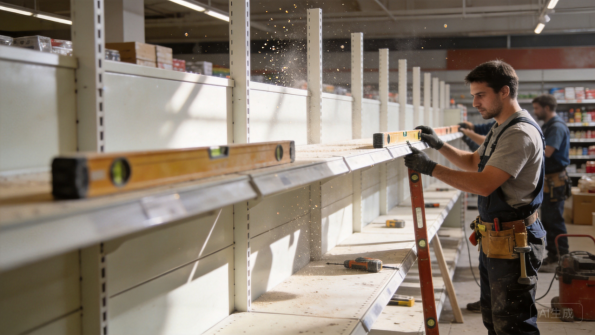
Figure 8: Store fitters install gondola runs during a retail renovation.
Warehouse Distributor: Heavy-Duty Racking
A warehouse equipment distributor needed heavy-duty shelving for back-of-store and reserve stock, with galvanized uprights, beams, and panels rated for pallet and bulk loads. The program runs at 800 to 1,200 beam and panel pieces per month with a minimum order of 200 pieces, priced from $25 to $95 FOB depending on section, for an annual value of roughly $300,000.
First articles were load tested to the rated capacity, and the first batch of 600 pieces shipped in 28 business days with load test reports and material certificates. The distributor stocks the range for warehouse projects, and a seismic-rated upright option was added in the second year. The program demonstrates how retail shelving manufacturing extends into storage duty.
Brand Program: Seasonal Promotional Display
A brand launched a seasonal promotional display that shipped flat and assembled in store, with product shelves, a header, and graphic panels in a campaign finish. The project covered 2,000 displays with a minimum order of 500 units, priced from $35 to $70 FOB depending on configuration, for a total value of roughly $110,000.
The tooling and prototype were approved in 18 business days, and production shipped in three batches of 700 units in 24 to 30 business days to hit the campaign launch. Each carton contained the flat-packed display, graphic kit, and assembly instructions, and the brand completed store roll-out on schedule. The program showed how compressed project schedules reward prepared fabricators.
Summary and Next Steps
Key Takeaways
Retail shelving manufacturing is a load, modularity, and finish-sensitive discipline that demands more than sheet metal work. The material decision drives cost and performance, from coated steel for the sales floor to galvanized sections for storage, and finishes, edge treatment, and hardware must be specified for the retail environment. Production difficulty concentrates in slot patterns, forming accuracy, and load verification, which are exactly where experienced fabricators differentiate themselves.
Lead times follow a predictable path: engineering review in days, prototypes in one to two weeks, profile tooling in three to six weeks, and production in three to five weeks per batch. Forecast sharing and staged delivery planning keep store programs on schedule. Buyers who settle materials, finish standards, and documentation requirements before quoting will have smoother programs than those who discover requirements at store opening.
Why XHX Metal
XHX Metal is a privately owned sheet metal manufacturer in Dongguan, China, with a 2,000 square meter factory, about 30 employees, and an annual capacity exceeding 500,000 pieces. The factory operates under an ISO 9001:2015 quality management system with CE and SGS certifications, and it produces custom shelving, fixtures, enclosures, and fabricated parts for export customers with packaging designed for ocean freight. Two 6kW fiber laser cutting machines, roll forming, CNC press brakes, and TIG and MIG welding cover the fabrication side of shelving work.
The company supports buyers from design review through production, provides first-article inspection reports and material certificates, and coordinates load testing, coating, and dimensional verification when required. For retail shelving manufacturing programs, buyers can review related sheet metal fabrication services and product pages, and the team will structure quotations, quality documentation, and delivery schedules to match the program’s needs.