Project Background
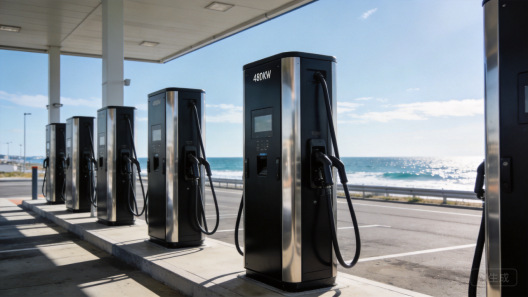
Against the global push for green mobility and sustainable development, the new energy vehicle (NEV) sector has boomed—driving surging demand for supporting charging infrastructure. In 2024, a leading East China EV charging operator launched a coastal highway high-speed charging network project: deploying 500 units of 480kW ultra-high voltage (UHV) charging piles across salt-spray-prone coastal service areas. These piles required salt-spray corrosion resistance, UHV-grade precision, lightweight portability for field installation, and seamless integration with high-power components.
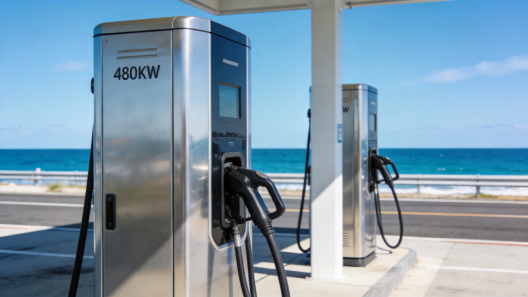
After evaluating suppliers, the operator selected XHX Metal (Guangdong Xinghaoxin Technology Co., Ltd.) for the project. Founded in 2014 and headquartered in Dongguan, XHX Metal is an ISO 9001:2015 certified sheet metal fabrication specialist with over a decade of industry experience. With a 2,000 m² facility housing 28 advanced machines (including 6kW fiber laser cutters, multi-axis CNC press brakes, and robotic welding stations), XHX Metal’s proven track record in UHV charger enclosures, thermal management solutions, and precision custom sheet metal was instrumental in securing the partnership.
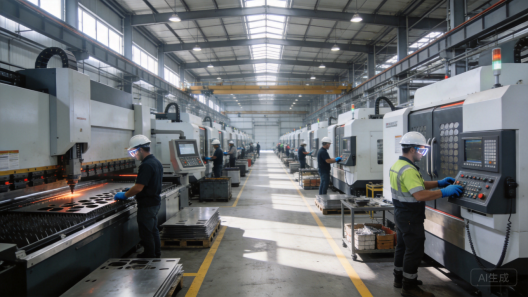
Manufacturing Process of Core Sheet Metal Components
XHX Metal tailored production to the 480kW UHV pile’s needs, focusing on three core components: outer cabinet, internal structural brackets, and air-spring maintenance door—integrating precision craftsmanship and material science aligned with charging pile sheet metal standards.
1. Material Selection: Scenario-Driven Performance
Guided by coastal environmental demands and UHV operation, XHX Metal chose materials to balance durability and functionality:
- Outer Cabinet: 1.5mm 316 stainless steel (JIS G 4305). Unlike standard 304 stainless steel, 316’s molybdenum content boosts salt-spray corrosion resistance by 50%—critical for coastal deployment.
- Internal Brackets: 1.2mm 6061-T6 aluminum alloy. 30% lighter than carbon steel while maintaining 276 MPa tensile strength, optimizing heat dissipation for UHV components (480kW charging generates extreme heat).
- Air-Spring Door: 1.0mm 304 stainless steel (durability) + EPDM rubber gaskets (sealing), meeting IP54 protection standards.
2. Core Craftsmanship: Precision at Every Stage
(1) Laser Cutting: Functional Hole Accuracy
For cabinet heat-dissipation holes and bracket component slots, XHX Metal used a 6000W fiber laser cutter (±0.01mm tolerance):
- 8mm-diameter heat-dissipation holes (15mm spacing) in cabinet panels to optimize UHV module airflow.
- 25mm×30mm rectangular slots in aluminum brackets for 480kW power connectors—eliminating assembly misalignment.
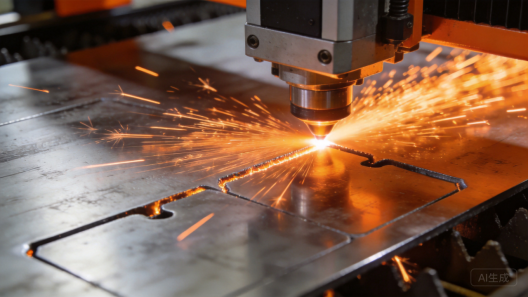
Laser-cut edges (Ra ≤0.8μm) were burr-free, skipping secondary grinding to cut assembly time.
(2) CNC Bending: Uniform Shape Formation
Using a multi-axis CNC press brake (±0.1° bend tolerance), XHX Metal formed curved cabinet corners and multi-fold brackets:
- Cabinet top/bottom edges bent to R10mm rounded shapes (user safety + structural stability).
- Aluminum brackets underwent 3-step bending (90°→135°→90°) to add U-shaped ribs, boosting load capacity by 40%.
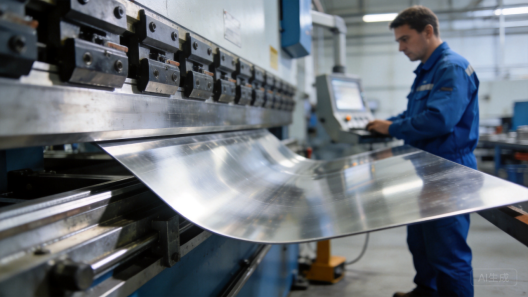
A custom 3D-printed bend die minimized springback, ensuring dimension consistency across 500 units.
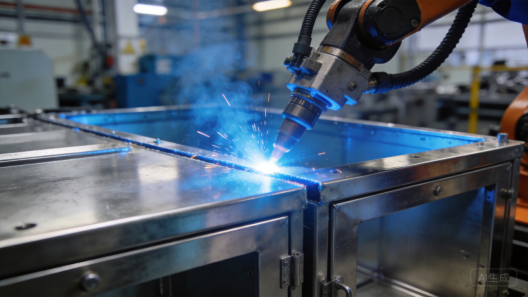
(3) Welding: Secure, Seamless Connections
Targeted welding techniques addressed structural needs:
- Cabinet: Gas Metal Arc Welding (GMAW) for seams (3mm-wide, porosity-free). Post-weld grinding ensured IP54 sealing.
- Aluminum Brackets: 1500W fiber laser welding (≤1mm narrow seams) to reduce thermal deformation, keeping bracket flatness ≤0.08mm.
(4) Surface Treatment: Dual Protection
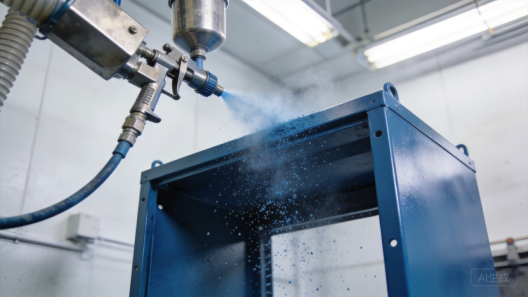
Two-stage treatment enhanced durability and aesthetics:
- 316 Cabinet: Nitric acid passivation (5μm oxide film) + 60μm matte black electrostatic coating (UV-resistant, fingerprint-proof).
- Aluminum Brackets: 20μm anodization (ISO 10079) to improve heat dissipation and corrosion resistance.
3. Quality Control: Rigorous Validation
XHX Metal implemented 3-stage inspections to meet client standards:
- Dimensional Check: CMM verified 100% of units (e.g., cabinet flatness, bracket hole position) with ≤0.1mm tolerance required.
- Corrosion Test: 5 random samples passed 1500-hour salt-spray testing (JIS Z 2371) with no rust/peeling.
- Functional Test: Air-spring doors completed 1,000 open/close cycles with ≤0.3mm gap (IP54 compliance).
Project Challenges & XHX Metal’s Professional Solutions
The project faced 5 critical hurdles—resolved by XHX Metal’s technical expertise:
1. Challenge: Extreme Coastal Salt-Spray Corrosion
Coastal service areas (50mg/m³ chloride ion concentration) risked rapid corrosion of standard sheet metal, threatening 12-month pile longevity.
XHX Metal’s Solution:
- Upgraded from 304 to 316 stainless steel for the outer cabinet; added post-weld passivation to densify the oxide film.
- Exceeded client requirements with 1500-hour salt-spray testing (vs. 1000-hour request) and applied a UV-resistant topcoat. Field data: 12 months of operation with 0 visible corrosion.
2. Challenge: UHV-Level Flatness for Component Alignment
480kW power modules required sheet metal flatness ≤0.1mm—misalignment would cause overheating and component failure.
XHX Metal’s Solution:
- Pre-treated raw materials with a ±0.02mm/m precision leveler to eliminate rolling-induced stress deformation.
- Post-bending/welding, CMM-inspected each cabinet; unqualified units (flatness >0.1mm) received localized pressure correction, cutting defect rates from 8% to 0.5%.
3. Challenge: Lightweight vs. Structural Wind Resistance
The client required ≤35kg sheet metal weight (easy field installation) while withstanding 500N lateral wind loads (outdoor stability).
XHX Metal’s Solution:
- Optimized bracket design: 6061 aluminum + 1mm-thick laser-welded ribs (15% weight reduction, from 41kg to 35kg).
- Conducted finite element analysis (FEA) to validate 1.5mm 316 cabinet resistance to 500N loads—no deformation under simulated wind conditions.
4. Challenge: Air-Spring Door Gap Uniformity
The lock-free air-spring door needed ≤0.3mm uniform gaps (IP54 compliance) but often jammed if gaps were too tight, or leaked dust if too wide.
XHX Metal’s Solution:
- Laser-cut the door panel to ±0.03mm tolerance; CNC-machined a 0.2mm frame recess for the EPDM gasket.
- Used 0.05mm-step adjustable hinges + feeler gauges to calibrate gaps—achieving 0.25mm average gap across all units, with 0 jamming reports.
5. Challenge: Mass Production Consistency
Producing 500 units with identical precision (e.g., arc shape, hole position) was critical to avoiding on-site assembly delays.
XHX Metal’s Solution:
- Deployed robotic loading/unloading for press brakes and laser cutters to eliminate human error.
- Implemented a “batch sampling” system: 10% of each production batch underwent full CMM inspection, ensuring dimensional consistency across all 500 units.
Project Outcomes
- Delivery: Completed 500 units in 60 days (meeting the 65-day deadline) with 100% pre-delivery inspection pass rate.
- Field Performance (12 months):
- 0 visible corrosion/coating peeling (salt-spray resistance validated).
- Cabinet flatness maintained ≤0.08mm; no UHV component misalignment or overheating.
- Air-spring doors operated smoothly with ≤0.3mm gaps (IP54 intact).
- Client Collaboration: The operator renewed the contract for 800 additional units in 2025, citing XHX Metal’s “precision craftsmanship” and “scalable customization” as key differentiators.
This case highlights XHX Metal’s expertise in NEV charging pile sheet metal customization—from material selection and precision manufacturing to solving scenario-specific challenges. By combining advanced equipment, rigorous quality control, and client-centric solutions, XHX Metal continues to support global NEV charging infrastructure development.