Custom CNC punching parts are produced on CNC turret punch presses that cut holes, slots, notches, louvers, embosses and formed features directly into flat sheet metal. Because the tool magazine changes punches automatically, one panel can combine many hole sizes and forms without dedicated stamping dies, which makes the process efficient for brackets, panels, chassis, enclosure parts and mid-volume production.
XHX Metal is a custom sheet metal manufacturer in Dongguan, China, with about 30 employees in a 2,000-square-meter factory and annual capacity above 500,000 pieces. This page covers what we punch, suitable materials, typical applications, finishing support and the drawing information needed for a quotation.
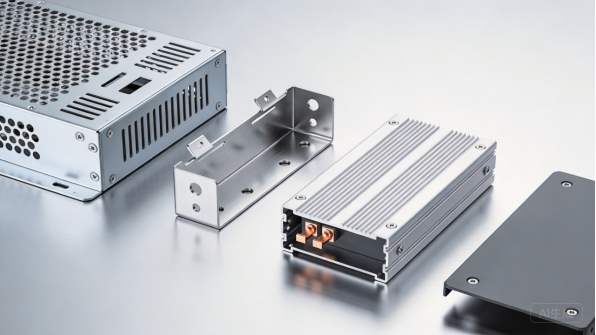
Figure 1: Punched steel, stainless and aluminum parts ready for review.
What CNC Punching Produces
CNC punching suits parts that are mostly flat with repeated features. Typical custom CNC punching parts include mounting brackets and plates, chassis and frame panels, electrical and control enclosure parts, covers, vent grilles, EMI shields, shelf supports and formed hardware.
Standard features cover round and shaped holes, slots and notches, countersinks, louver vents for airflow, embosses for stiffness, extruded holes, forms and simple bends. Punching is combined with laser cutting in one program when a panel needs very large cutouts or a complex profile, and dedicated stamping dies are reviewed when annual volume rises enough to justify the tooling. The Precision Metalforming Association maintains useful process references for punch press work.
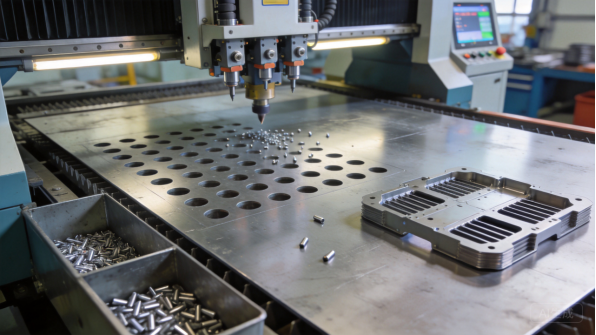
Figure 2: A CNC turret punch press programs holes and forms across a steel sheet.
Materials for Custom CNC Punching Parts
Cold-rolled steel is the default for painted and powder-coated parts. Electro-galvanized steel adds corrosion resistance without extra finishing, stainless grades 304 and 430 serve food, marine and outdoor applications, and aluminum such as 5052 reduces weight with good formability. Copper and brass suit conductive parts and terminals, with property and composition data available from MatWeb and AZoM. SSINA offers practical guidance on stainless selection and care.
Minimum hole sizes, edge distances and tool wear depend on material type, thickness and temper. XHX Metal confirms grade, thickness, finish and hole-to-edge spacing during drawing review so the punching program matches the material.
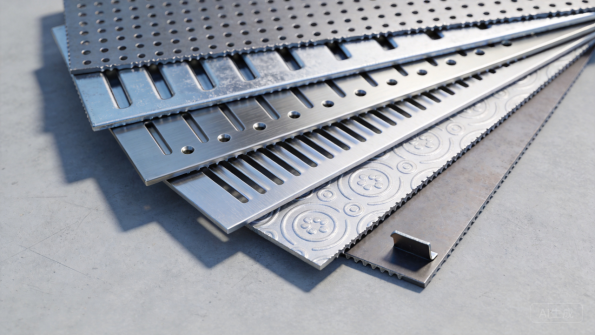
Figure 3: Punched steel, galvanized, stainless and aluminum material samples.
Where Punched Parts Are Used
Custom CNC punching parts appear in electrical enclosures and control panels, telecom and server racks, machinery guards and doors, new-energy equipment, appliances, lighting, automotive-related brackets and outdoor products. Punched ventilation patterns keep enclosures cool while protecting internal components, and the NEMA enclosure standards help buyers specify the environment a panel must survive.
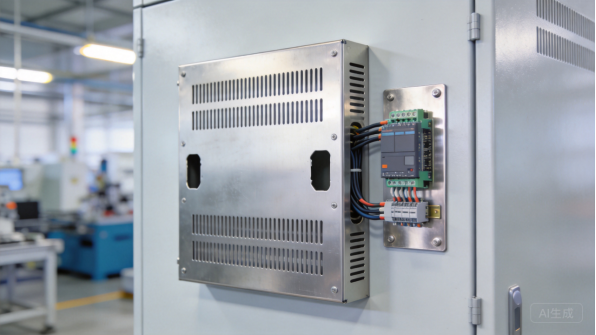
Figure 4: A punched enclosure panel installed in an industrial control cabinet.
CNC punching holds feature positions consistently across a run. Typical flat pattern tolerances are around plus or minus 0.1 mm depending on material thickness and tooling, and the first article is measured against the drawing before production.
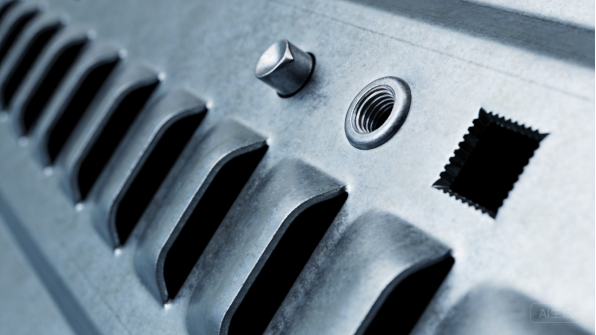
Figure 5: Louvers, countersinks, extruded holes and notches punched in one panel.
Finishing, Assembly and Engineering Support
Punched parts can ship bare or finished. Common options include powder coating, whose film thickness and cure guidance is published by the Powder Coating Institute, zinc or nickel plating, anodizing for aluminum, and passivation or electropolishing for stainless. Hardware such as PEM studs, captive nuts, hinges and cable clips can be installed before delivery.
Engineering review happens before quoting. XHX Metal checks hole-to-edge spacing, louver direction, form height, deburring needs and assembly access, then confirms the flat pattern with the customer. Send a STEP or STP model with a 2D drawing, material, finish, quantity and target timing, and the team replies with a review, price and lead time.
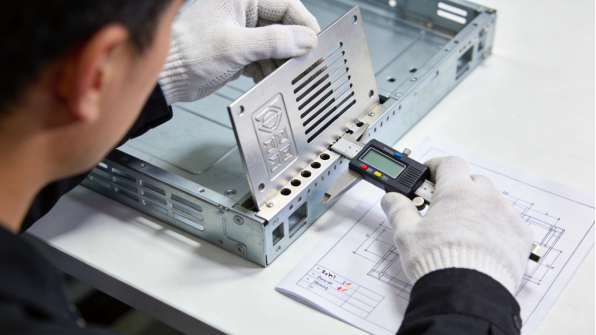
Figure 6: A prototype punched panel is fitted and measured before production.
Custom CNC Punching Parts FAQ
What are custom CNC punching parts?
Custom CNC punching parts are sheet metal components whose holes, slots, notches, louvers, embosses and forms are produced on a CNC turret punch press without dedicated stamping dies.
How is CNC punching different from die stamping?
CNC punching changes programs and tools automatically, so it suits prototypes and mid-volume runs with low tooling cost. Die stamping lowers unit cost at very high volumes once the tooling investment is justified.
Which materials can be CNC punched?
Cold-rolled and galvanized steel, stainless grades 304 and 430, aluminum, copper and brass are reviewed against thickness, temper and feature requirements before production.
What quantities and lead times are typical?
Prototypes usually ship within about seven working days after drawing approval, and production runs of 100 to 300 pieces per month typically take 15 to 25 business days, with an MOQ near 50 pieces.
Can punched parts be bent, welded or finished together?
Yes. XHX Metal coordinates CNC punching with laser cutting, bending, welding, deburring, hardware installation and finishing so related operations stay on one schedule.
Related Products and Next Steps
Custom CNC punching parts are supported by the same engineering and quality practices used across the factory’s sheet metal fabrication services and OEM sheet metal parts. Browse the product pages, contact the engineering team, or send your drawing through the online quoting form.
Last updated: September 2026 | Author: XHX Metal Engineering Team