Last updated: October 16, 2026 | By XHX Metal Engineering Team
An electronic metal housing is the sheet metal structure that carries and protects electronics: the chassis, case or cabinet that holds a board stack, a power supply, connectors and cooling, and that has to line up with every other part of the product. At XHX Metal, electronic metal housing fabrication runs on two 6 kW fiber lasers, CNC punching and CNC bending inside a 2,000 sqm factory in Dongguan, China.
This article is written for buyers, hardware engineers and procurement teams sourcing electronic metal housing and device enclosures from a contract manufacturer: what a housing includes, who orders it, which materials and finishes suit electronics, what makes an enclosure hard to build well, what documentation a supplier owes you, and three order examples with volumes and price bands.
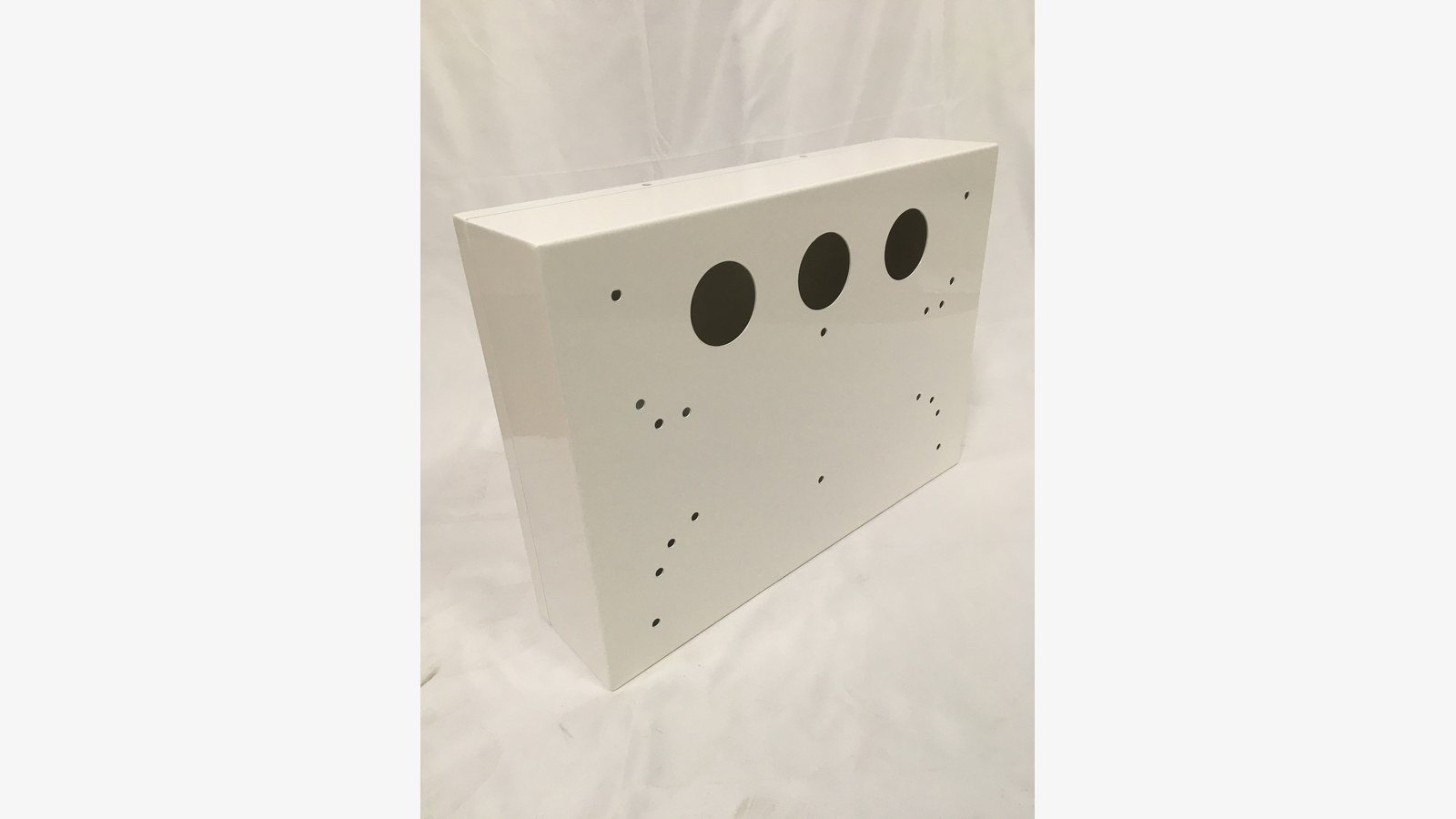
Figure 1: A powder coated electronic metal housing with cable-entry holes and fixing holes punched to drawing.
Electronic Metal Housing Fabrication for OEM Buyers
What an Electronic Metal Housing Includes
What does an electronic metal housing actually consist of? It consists of a base or chassis, one or more covers, a front and rear panel, internal mounting features such as standoffs and DIN rail, and the openings that let connectors, displays and cables through. Those parts are punched, formed, welded and finished as one kit.
Buyers order electronic metal housing as a complete enclosure kit, or as individual parts they assemble themselves. Enquiries arrive as a STEP assembly with a dimensioned 2D drawing, or as a DXF when only flat panels are needed. Quotations come back from four answers: material, finish, quantity per batch and the assembly scope.
The parts ordered most often are front and rear panels with connector cut-outs, base plates and mounting trays, card guides and board supports, EMI shielding partitions, cover plates and louvre vent panels. One enclosure typically carries six to twenty sheet metal parts, and running them as one kit keeps hole positions and finish consistent across the build.
Sheet Metal Manufacturing for Device Housings
Sheet metal manufacturing for device housings differs from general fabrication in one respect: the housing is a mechanical interface. Its hole pattern has to match a board, a connector or a rack rail made somewhere else, so the critical dimensions are the ones that bolt to a purchased part, not the outline.
That changes how the job is planned. The mating features are identified first and inspected at first article, tolerances are quoted per feature rather than as one blanket figure, and a revision-controlled drawing becomes the specification the batch runs against.
Custom Electronics Enclosure Manufacturing Scope
Custom electronics enclosure manufacturing at XHX covers the full chain rather than cutting alone: laser cutting, CNC punching, bending, TIG and MIG welding, hardware insertion, surface finishing, assembly and packing. A housing that needs a pressed-in standoff, a welded corner, a powder coated finish and a fitted gasket leaves as one finished unit.
Because those operations sit in one factory, a revision that moves a connector 2 mm does not restart the supply chain. That single point of contact is the practical difference between a fabricator and a parts vendor when a product is still being iterated.
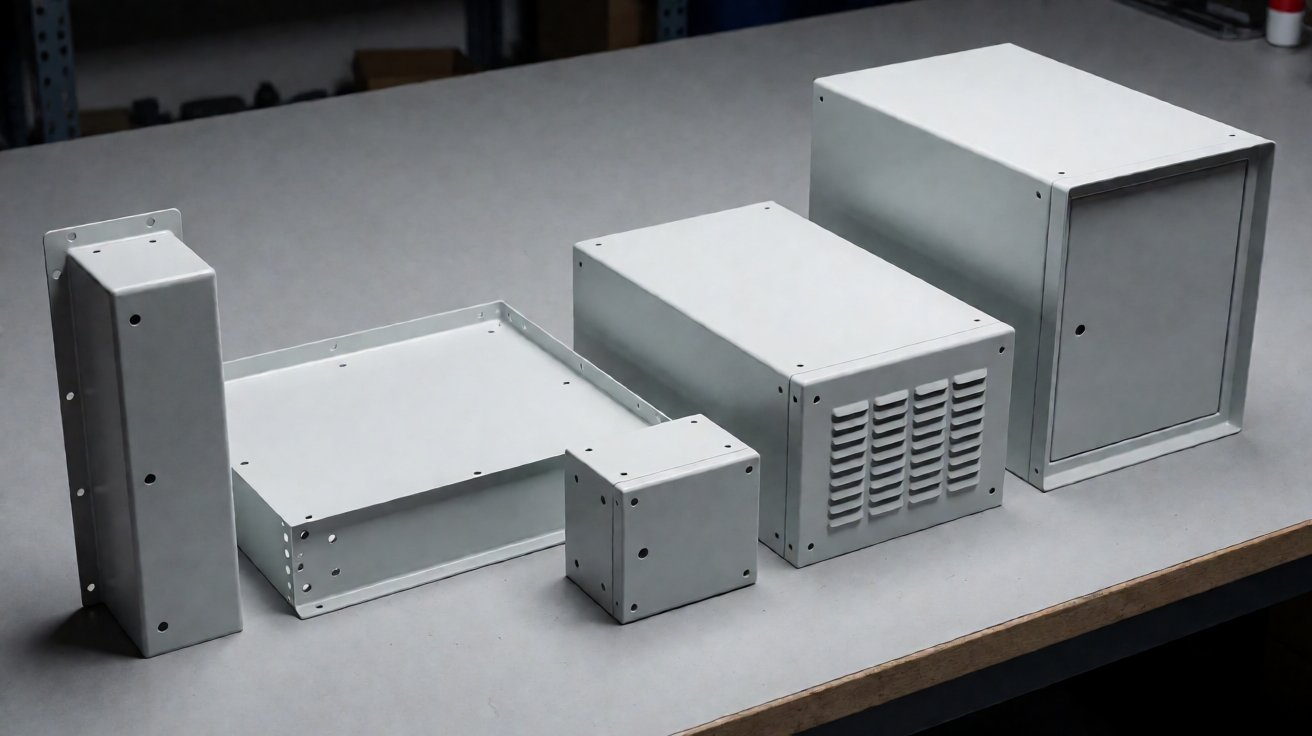
Figure 2: A family of custom electronic metal housings from a small sealed case to a deep cabinet housing.
Where Electronic Metal Housings Are Used
Instrumentation and Control Electronics
Instrumentation is the largest share: bench instruments, controllers, measurement modules and test fixtures that need a rigid case, a clean front panel and reliable grounding. These housings are judged on panel flatness and hole position, because a connector that sits 0.3 mm off centre is visible to the end user.
Control electronics adds sealing and shielding to the same requirement. A controller mounted on a machine needs a housing that keeps dust out, keeps interference in, and still opens for service without disturbing the wiring.
Power Supplies, Inverters and Charging Electronics
Power electronics housings carry the heaviest thermal duty. A power supply, inverter or charging module generates heat that has to leave the enclosure, so the housing becomes part of the thermal design: louvre banks, perforated fields, and a mounting surface flat enough to sit against a heatsink or a cold plate. Thermal management practice for this class of equipment is described by IEEE.
Safety also shapes these parts. Earth continuity has to run through the assembly, which means bonded joints, masked coating at earth points, and hardware that survives being tightened repeatedly. We mask earth contact areas before coating rather than scraping paint off afterwards. Where a housing has to meet a defined ingress or corrosion rating, the enclosure type definitions are published by the National Electrical Manufacturers Association.
Rack, Network and Data Equipment
Rack equipment is the third group: 1U to 4U chassis, shelf units, blanking panels, rack trays and subracks. These are built to standard widths and mounting pitches, so the sheet metal has to match published rack dimensions rather than only the customer’s own drawing.
Where a housing slides into a rack, straightness and squareness matter as much as hole position, because a chassis that twists will not enter the rails. Frames are checked for square before panels are fitted. Related assemblies are listed on the products page.
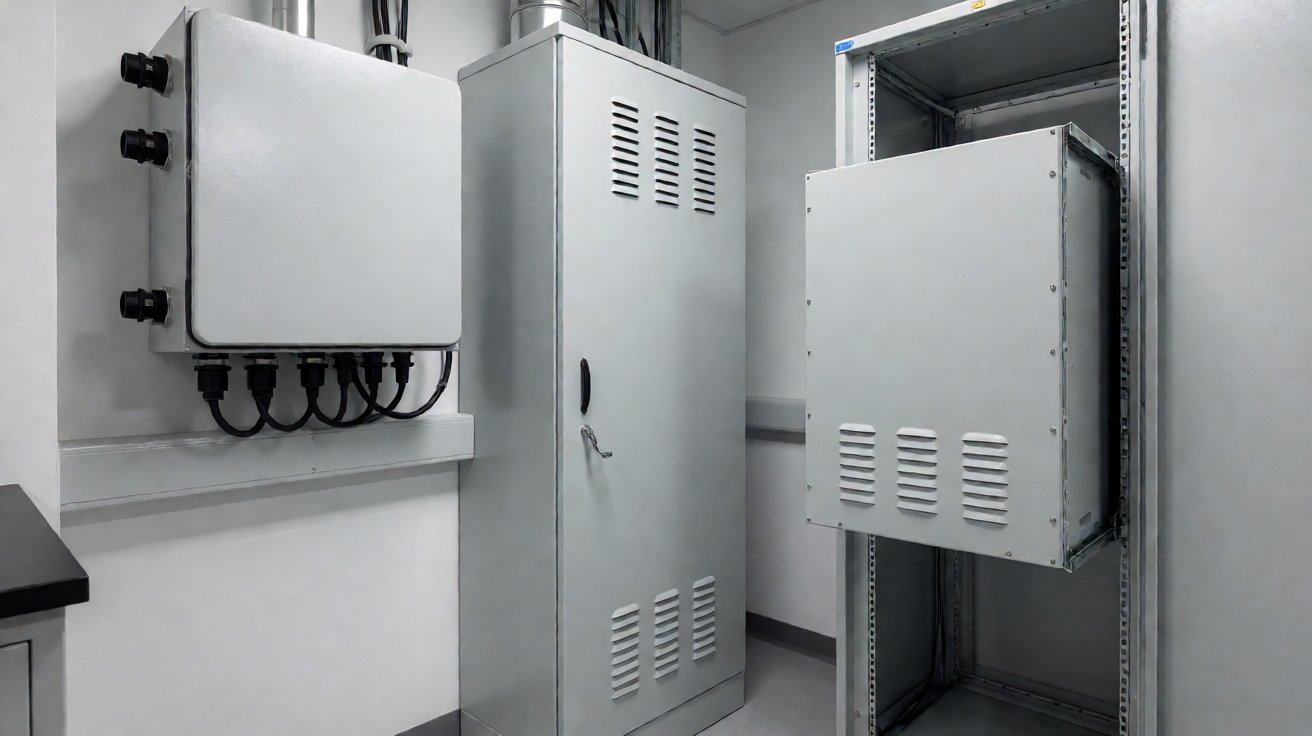
Figure 3: Installed electronic metal housings: wall-mounted instrument case, floor cabinet and rack chassis.
Materials and Finishes for Electronic Housings
Choosing the Sheet Metal
Four materials cover most electronic metal housing work. Cold rolled steel is the default for painted housings and gives the best stiffness per cost. Electro-galvanised steel is chosen where a conductive, corrosion-resistant surface is needed without painting. Stainless steel 304 suits cleanrooms, food and medical environments. Aluminium is used where weight matters, and for extruded or machined front panels.
The choice is usually made by the finish and the environment rather than by strength. Material practice for these grades is documented by SSINA, the American Iron and Steel Institute and the Aluminum Association. Where aluminium is used for a machined or extruded front panel, the alloy and temper designations follow the Aluminium Association designation system.
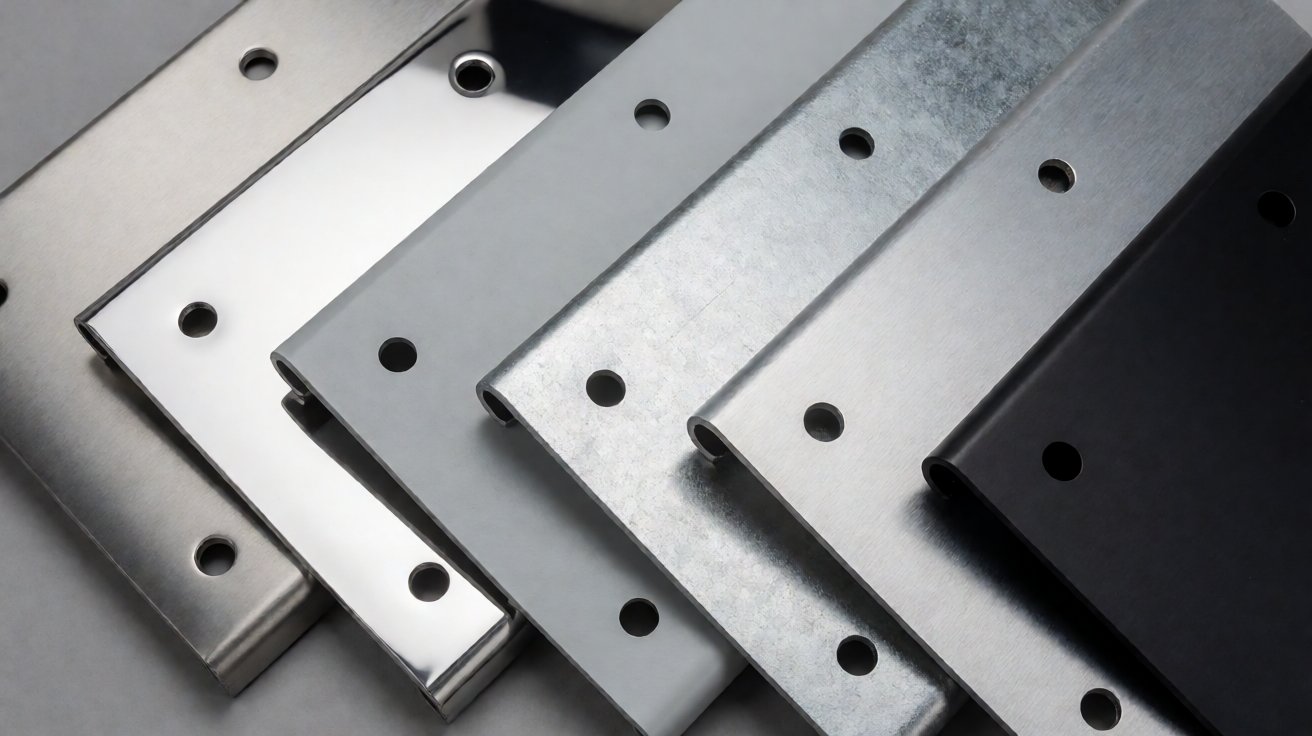
Figure 4: Sheet metal samples for electronic metal housing: stainless, powder coated steel, galvanised and aluminium.
Powder Coating, Plating and Masking
Most housings are powder coated, in a textured or smooth finish, at a film thickness that hides the substrate without filling small holes. Plated finishes are used where conductivity is required. The specification that matters is not the colour but the coating build and which surfaces are masked. Coating performance categories are described by the American Society for Testing and Materials.
Masking is where electronic enclosures differ from general fabrication. Earth studs, shielding lands, connector apertures and mating faces are masked so the coating does not insulate a joint that has to conduct. Those areas are agreed on the drawing before the batch is coated.
EMI Shielding and Ventilation
Electromagnetic shielding is a design requirement as much as a finish. Shielding depends on continuous metal-to-metal contact, so a coated housing needs masked contact lands, gasket strips, finger stock or a conductive gasket at every seam and opening.
Ventilation fights shielding: every hole that lets air through also lets interference through. Perforated fields, honeycomb vents and louvre banks balance the two, and the pattern is fixed at design stage because changing it later changes both airflow and attenuation.
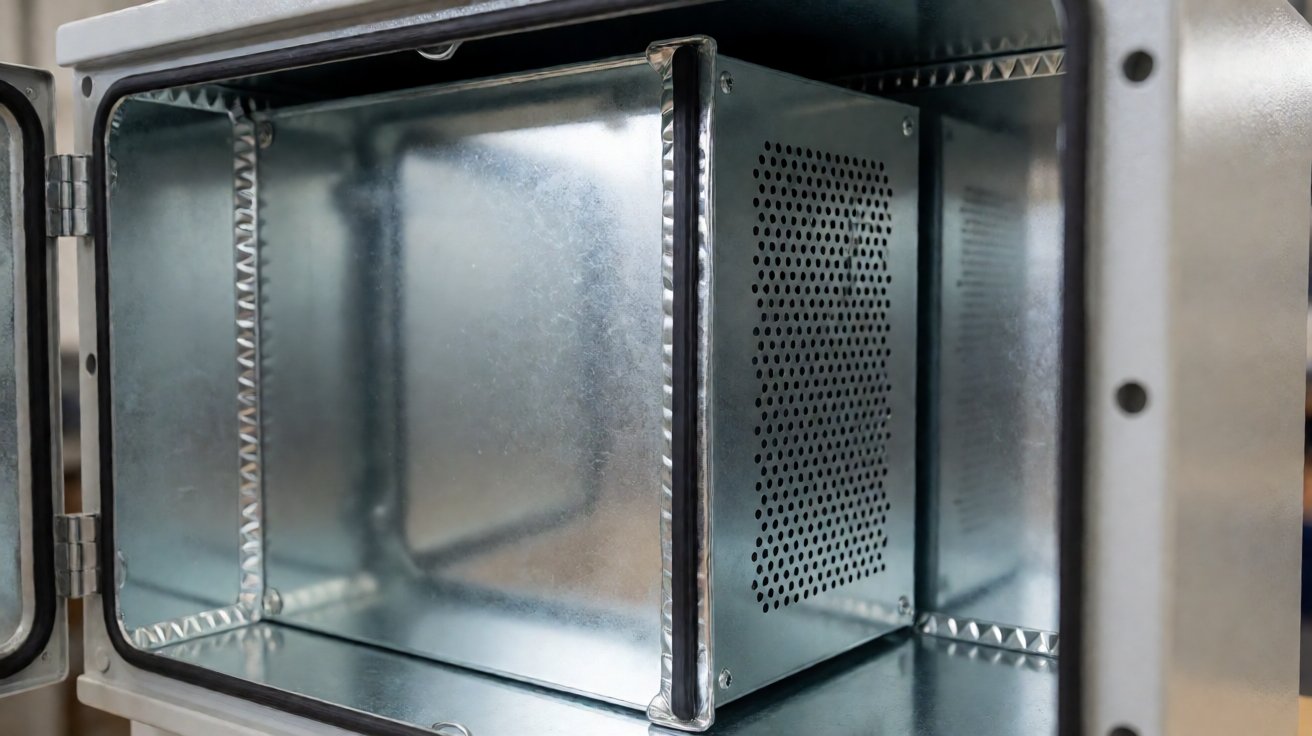
Figure 5: EMI shielding inside an electronic metal housing: folded shield partition and finger-stock gasket.
What Makes Electronic Metal Housing Hard to Build
Tolerance Stack-Up and Hole Position
What quality risks should a buyer watch for in electronic metal housing? The first is tolerance stack-up. Each part of a housing is accurate on its own, but the housing is an assembly: base, panels, board and connector all contribute, and the errors add up at the point where a connector meets its mating half.
Our countermeasure is to identify the mating dimensions before quoting and inspect them at first article, rather than checking the outline and hoping the interfaces follow. Where a stack-up is tight, we ask which feature is adjustable instead of tightening every tolerance on the drawing.
Distortion, Flatness and Panel Bow
The second risk is distortion. Thin panels bow during welding, powder coating bakes at a temperature that can move a light gauge part, and a large perforated field releases stress as material is removed. A front panel that bows by a millimetre will not sit flush against a bezel.
Countermeasures are a welding sequence that balances heat across the part rather than running one long seam, fixtures that hold panels flat through coating, and flatness checks on any panel that carries a display, a gasket or a visible seam.
Sealing, Gaskets and Surface Damage
The third risk group is sealing and appearance. An IP-rated housing depends on a continuous gasket channel with no weld spatter or coating build in the groove, and on a lid that pulls down evenly rather than at one corner. A gasket that is pinched in one place leaks at that place.
Appearance is the last risk. Coated and brushed surfaces mark during handling, so parts are separated between operations, handled with gloves once finished, and packed with interleaving. Scratches on a visible front panel cannot be repaired after coating.
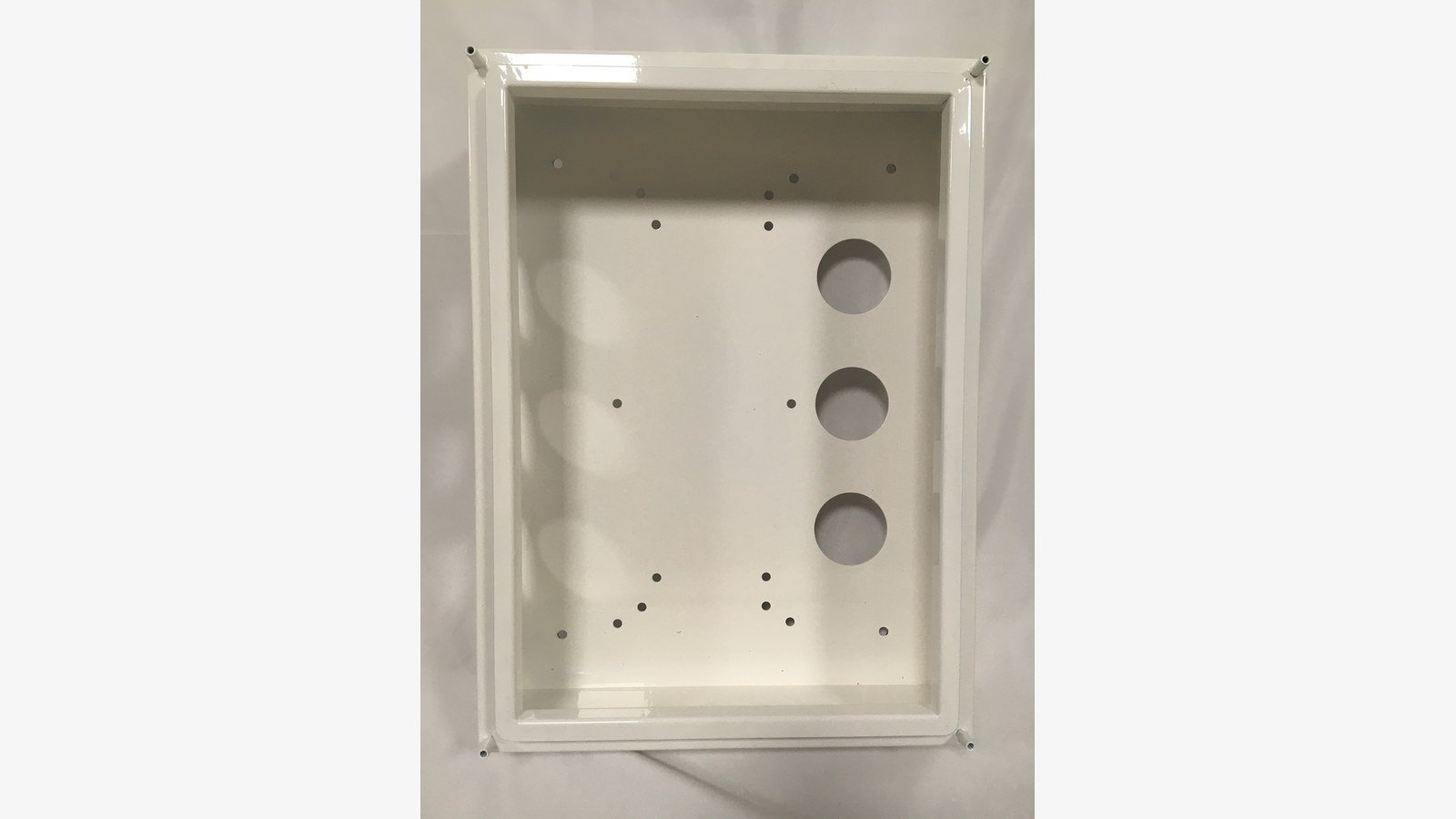
Figure 6: Interior of an electronic housing showing the gasket channel and internal mounting points.
Electronic Metal Housing Lead Times and Documents
What to Send for a Quotation
What does a supplier need to quote an electronic metal housing? Send a STEP assembly with a dimensioned 2D drawing of each part, or a DXF when only flat panels are required. Add the material and thickness, the finish and masking requirements, the quantity per batch, and the assembly scope.
Two details save a quotation round: which dimensions are critical because they mate with a purchased part, and which surfaces are visible in the finished product. Both change the process plan, and neither is recoverable from geometry alone.
Files are controlled by revision so a batch cannot be built from a superseded drawing, and the drawing approved at sample stage becomes the specification for production.
Lead Times
Samples follow in 5-10 working days after drawing approval, and the first production batch ships 15-30 days later depending on material, finishing and quantity. Cut and formed parts with no coating are the shortest route through the factory.
Two things move the date: a material that is not in stock in the right grade and thickness, and a finishing or masking specification that arrives after forming. Both are cheaper to settle before the batch runs, which is why the sample is treated as the specification.
Inspection, Certificates and Packing
Documents ship with the parts: material certificates, a first article inspection report with the mating dimensions measured, and batch traceability back to the sheet. The factory holds ISO 9001:2015 and CE, and third-party inspection can be arranged through SGS or by a customer visit.
For export orders, US buyers calculate landed cost with the Harmonized Tariff Schedule, and CE marking obligations for electrical products are set out by the European Commission. Packing is specified with the part: interleaving between coated panels, individual protection for visible faces, and export crates banded for sea freight.
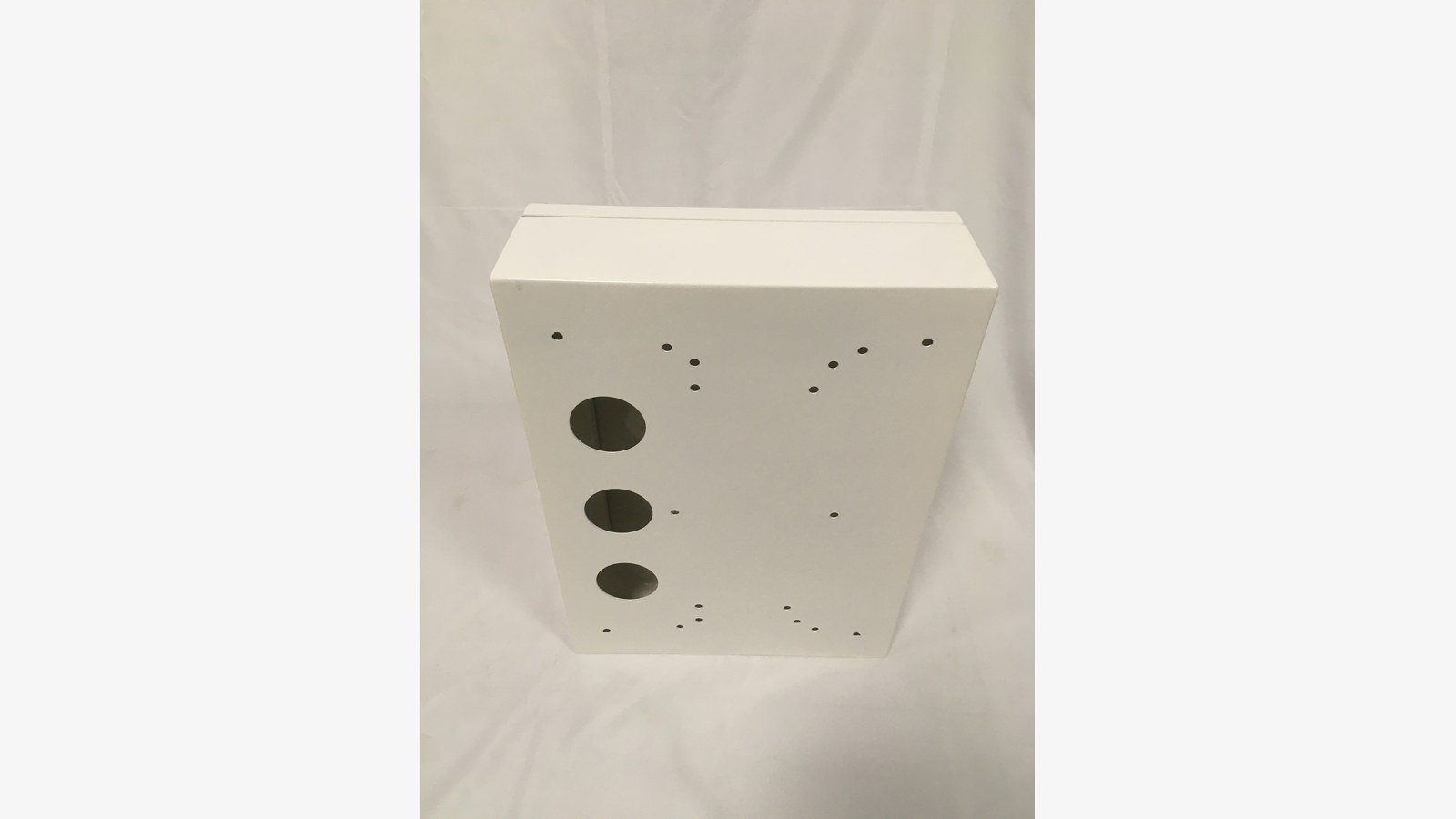
Figure 7: Front panel of a custom electronic housing with gland openings and fixing holes before assembly.
Electronic Metal Housing Programmes We Have Delivered
Case 1: Instrument Builder – Bench Case and Front Panels
An instrument builder ordered bench cases with punched front panels and internal board supports in 1.5 mm cold rolled steel, powder coated: batches of 200-800 pieces, four to eight batches a year, a minimum of 100 pieces and FOB prices from $2 to $15 each depending on size and coating.
The programme was won on front panel flatness and hole position rather than on price. Panels are inspected against the drawing before coating, the batch is nested so panels stay flat through the oven, and annual spend stayed in the $15k-40k band.
Case 2: Power Electronics OEM – Inverter and Charging Housings
A power electronics OEM ordered inverter and charging module housings in 2 mm galvanised steel with louvre banks and masked earth points: batches of 50-300 pieces, three to six times a year, a minimum of 20-50 pieces and FOB prices in the $15-80 range per piece.
The work depended on thermal features and earth continuity: louvre depth held across the batch, earth lands masked before coating, and every unit checked for continuity before packing. The first batch shipped 15-30 days after approval and annual spend sat in the $30k-60k band.
Case 3: Rack and Network Equipment Supplier – 1U to 4U Chassis
A rack equipment supplier ordered 1U to 4U chassis, shelf units and blanking panels in 1.2 mm cold rolled steel with a textured black powder coat: batches of 200-800 pieces, four to eight batches a year, a minimum of 100 pieces and FOB prices from $2 to $15 each.
This programme lived on squareness and repeatability. Frames are checked for square before panels are fitted, the mounting pitch is inspected at first article, and a 4-6% step-down was agreed on the repeated parts in the second year. Annual spend stayed in the $15k-40k band.
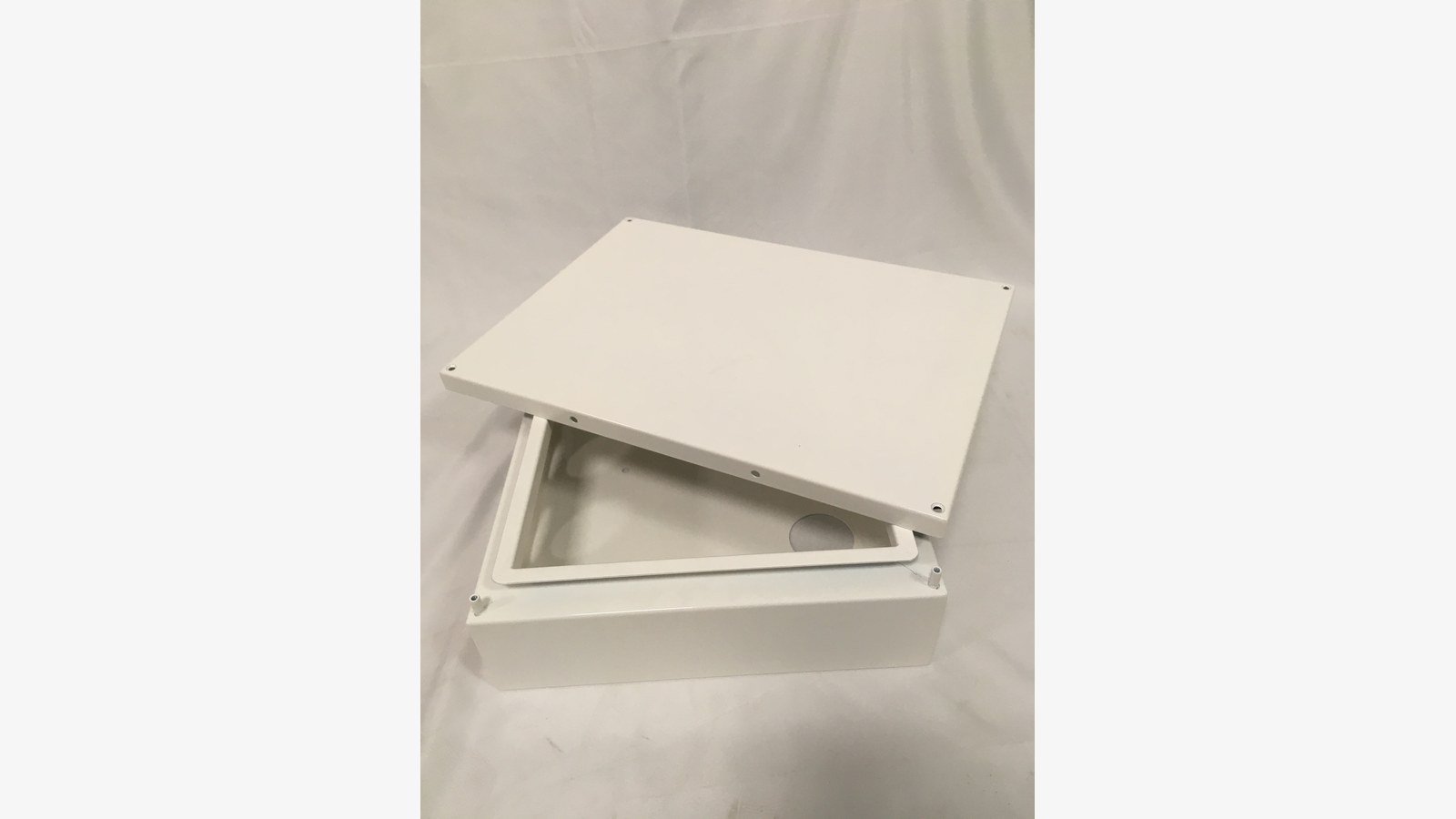
Figure 8: Enclosure lid open on its hinges showing the sealing gasket that keeps the electronic housing sealed.
Summary and Next Steps
How to Specify an Electronic Metal Housing
Specify electronic metal housing from the interfaces backwards. List every dimension that mates with a purchased part, fix the material and finish, state which surfaces are masked and which are visible, and give the annual quantity. Tooling, nest and price follow from those four answers.
Then ask two questions: how the mating dimensions are inspected, and how flatness and coating build are controlled before packing. Those answers decide whether the tenth batch behaves like the first.
Why XHX Metal
XHX Metal keeps laser cutting, CNC punching, forming, welding, hardware insertion, finishing and assembly in one 2,000 sqm factory in Dongguan: two 6 kW fiber laser cutting machines at +-0.01 mm positioning accuracy, CNC turret punching, CNC bending, TIG and MIG welding and coating partners, at about 500,000 parts a year.
The factory holds ISO 9001:2015 and CE, works with SGS on inspection, and has supplied OEM and brand customers in North America and Europe for over a decade.
How to Start Your Programme
Send a STEP or DXF file with material, finish, masking and quantity for a quotation with the lead time. Enclosure capability is set out on the sheet metal capabilities page, electronics work sits under the electrical and electronics industry page, electrical enclosures are on the custom electrical enclosures page, and projects start from the contact page; enquiries also reach the engineering team at sales01@xinghaoxin.com.
FAQ: Electronic Metal Housing
What is the minimum order? Around 100 pieces for small panels and housings and 20-50 pieces for larger cabinets; prototypes and one-off units are quoted too.
Can you supply the housing assembled? Yes. Hardware insertion, board supports, gaskets, DIN rail and final assembly are part of the scope, so a housing can arrive ready to receive electronics.
How do you handle EMI shielding requirements? Shielding needs continuous metal-to-metal contact, so contact lands are masked before coating and gasket or finger-stock features are formed into the parts rather than added later.
Do you work from a 3D model only? Yes, a STEP model is enough to quote, but a dimensioned 2D drawing is required for inspection so the critical dimensions can be measured against a controlled document.
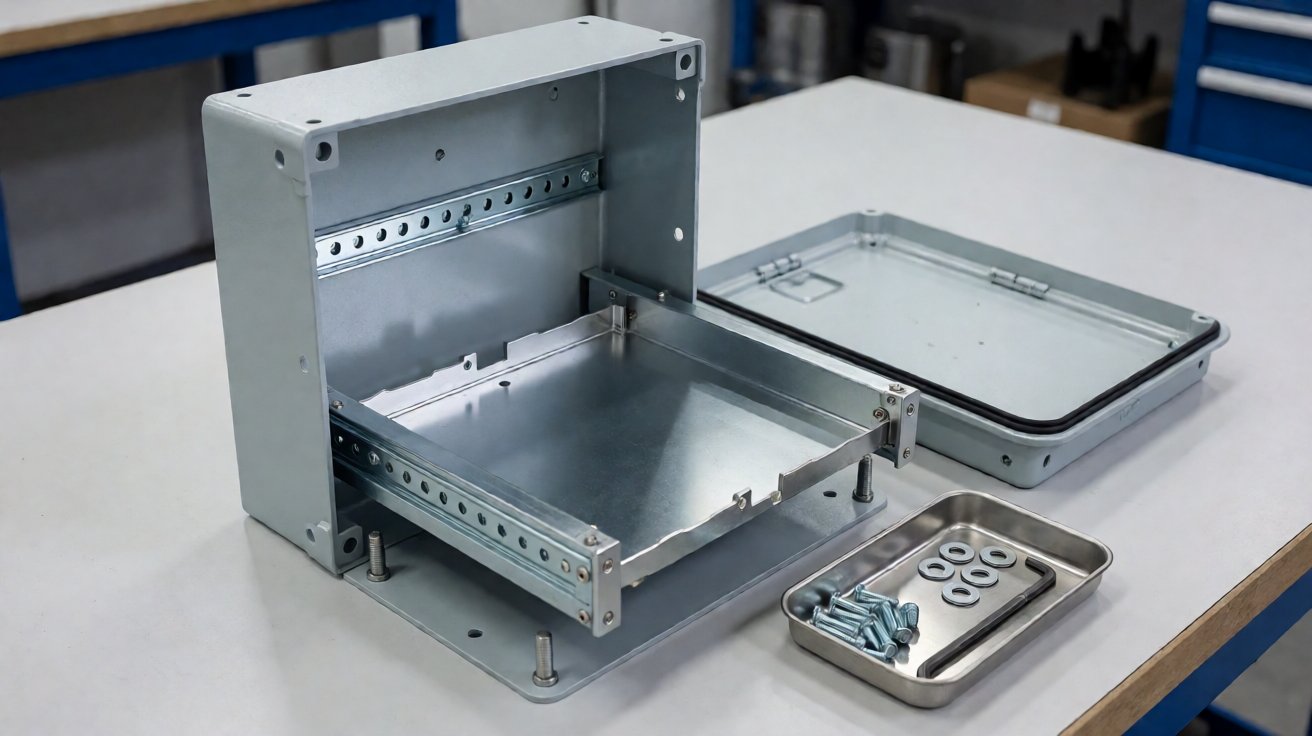
Figure 9: Electronic metal housing during assembly with DIN rail, board tray, standoffs and hinged lid.