Last updated: September 18, 2026 | By XHX Metal Engineering Team
Metal signs identify a building, a room, a business, or a property, and they are one of the few products a customer keeps on the wall for a decade without replacing. For brands and suppliers in North America and Europe, buying metal signs is a design exercise as much as a purchasing one: the outline, the lettering, the colour, the mounting, and the packing all have to be specified before anything is cut.
This guide explains how metal signs are made in small and medium batches, what can be customised, the materials and finishes that suit different locations, the production risks that decide whether a sign still reads correctly after two winters outdoors, and how a programme runs from artwork to delivery.
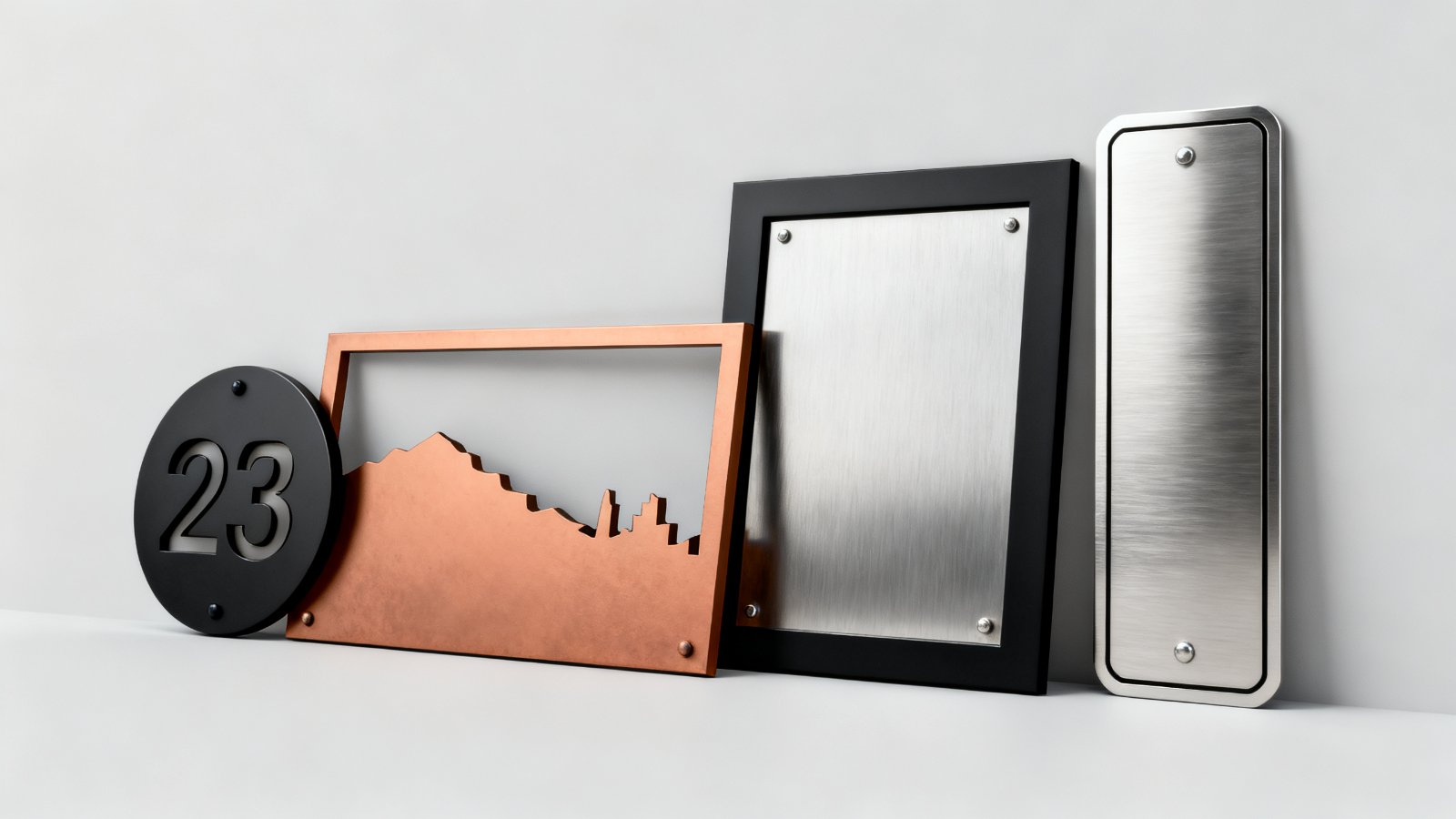
Figure 1: Custom metal signs produced in one process across different shapes, sizes and finishes.
The Product: What Metal Signs Are
What Metal Sign Manufacturing Covers
Metal signs are the flat or cut-out metal panels that identify a building, a room, a business, or a property. Manufacturing them covers the whole item: the panel or cut silhouette, the lettering or artwork, the sheet material, the finish, the mounting system, and the packing that gets it to site without a scratch.
That is different from a printed sign. A printed sign carries an image on a substrate, and the graphic is applied after the panel is made. With metal signs the artwork is cut into the material itself, so the letters and shapes are physical openings or solid forms in the sheet. The edge of every letter becomes part of the design, and the sign reads through shadow and cut-out rather than through ink. The engineering discipline this relies on is described by SME.
XHX Metal produces metal signs from drawing to delivered parts inside one factory: two 6kW fiber laser cutting machines, CNC punching and bending, TIG and MIG welding, deburring, and coating partners for powder coating, galvanising, and plating. The wider scope is on the sheet metal fabrication services page.
Sign Types: Flat Panels, Cut-Out Silhouettes, and Layered Signs
Three families cover most orders. A flat panel is a solid plate with cut lettering or cut shapes in it. A cut-out silhouette is the shape itself, with no surrounding plate, so the outline of a tree, an animal, or a house becomes the sign. A layered sign stacks two or more panels with spacers between them, so the front layer casts a shadow on the one behind.
The family decides how the sign reads from a distance. Flat panels with cut lettering are the standard choice for wayfinding and room signs, where legibility matters more than decoration. Cut-out silhouettes suit entrance signs, farm and estate signs, and decorative pieces, where the outline is the message. Layered signs trade cost and weight for depth and photograph well.
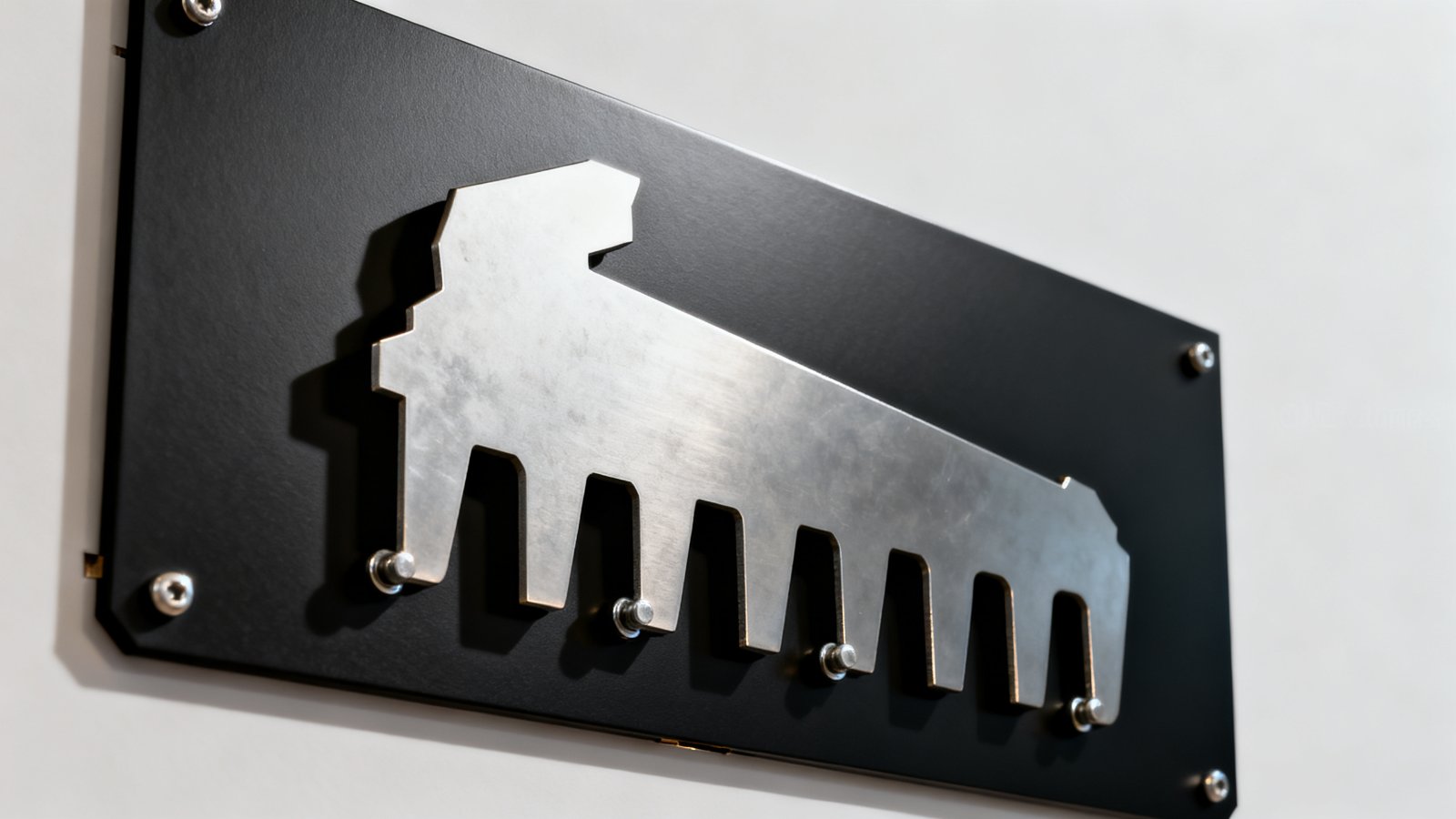
Figure 2: A layered sign: a bare steel cut layer on spacers in front of a powder coated backing panel.
Which Parts Buyers Order Most
The parts on nearly every order are the panel or cut silhouette, the cut lettering or shapes, the finish, the mounting hardware, and the packing. Buyers add concealed fixings, a backing plate, a post bracket, or a spacer kit depending on how the sign will be installed.
Repeat buyers add items once the range is established: a mounting template, a spare fixing pack, a branded insert card, and a flat carton sized to the largest sign in the family. Those additions cost little per unit and remove most of the installation complaints that follow a first delivery. The wider scope is listed on the product range page.
Use Cases: Who Orders Metal Signs
Home Decor, Address, and DTC Brands
Home decor and direct-to-consumer brands order metal signs as part of a designed collection, where colour, outline, and pack presentation carry the sale. They launch two or three finishes, test them, and reorder the winners in batches of a few hundred. Weight and hanging safety matter in this channel, because the buyer’s customer installs the sign on a domestic wall without help; safety expectations for wall-hung goods are set out by the US Consumer Product Safety Commission.
Address signs and house numbers are the most functional metal signs in this group. They have to stay legible from the street after years of weather, which puts the emphasis on contrast, letter size, and a finish that does not chalk or fade. A house number that becomes unreadable is not a cosmetic problem, it is a delivery problem for the owner.
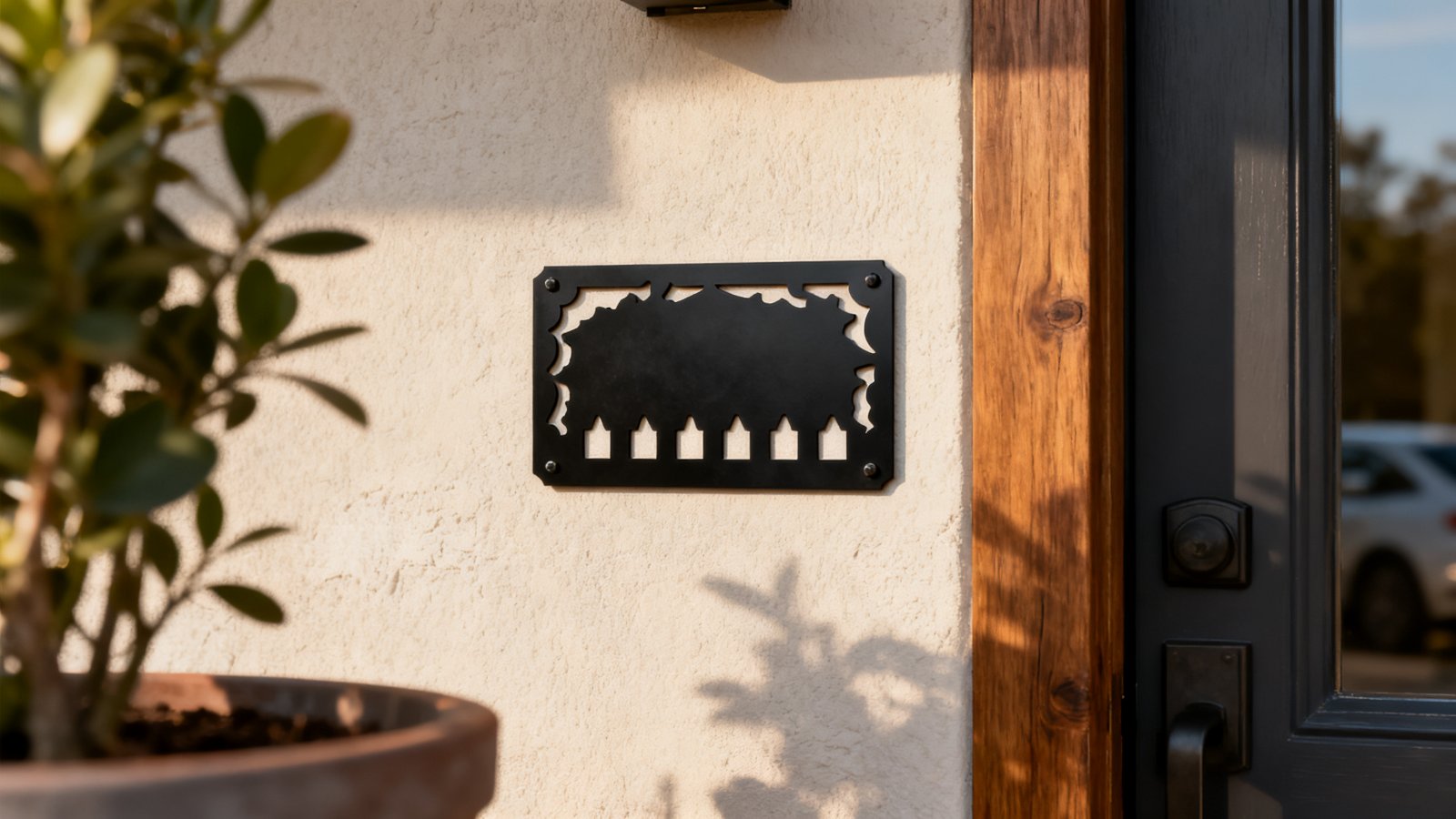
Figure 3: A concealed-mount cut metal address sign beside a front door.
Hospitality, Retail, and Commercial Signage
Hotels, restaurants, and retail chains order metal signs for room numbers, wayfinding, entrance signage, and interior brand features. These programmes are driven by schedule and consistency: every room sign in a hotel has to match the others, and a replacement fitted two years later has to match them too.
Legibility requirements are stricter in this channel. Where signs carry directions or identify rooms in a public building, size, contrast, and mounting height are set by accessibility rules rather than by taste, and the baseline for those requirements in the United States is published by the US Access Board. Metal signs meet the durability part of that requirement well, because a cut and coated metal plate does not delaminate or fade the way a printed label can.
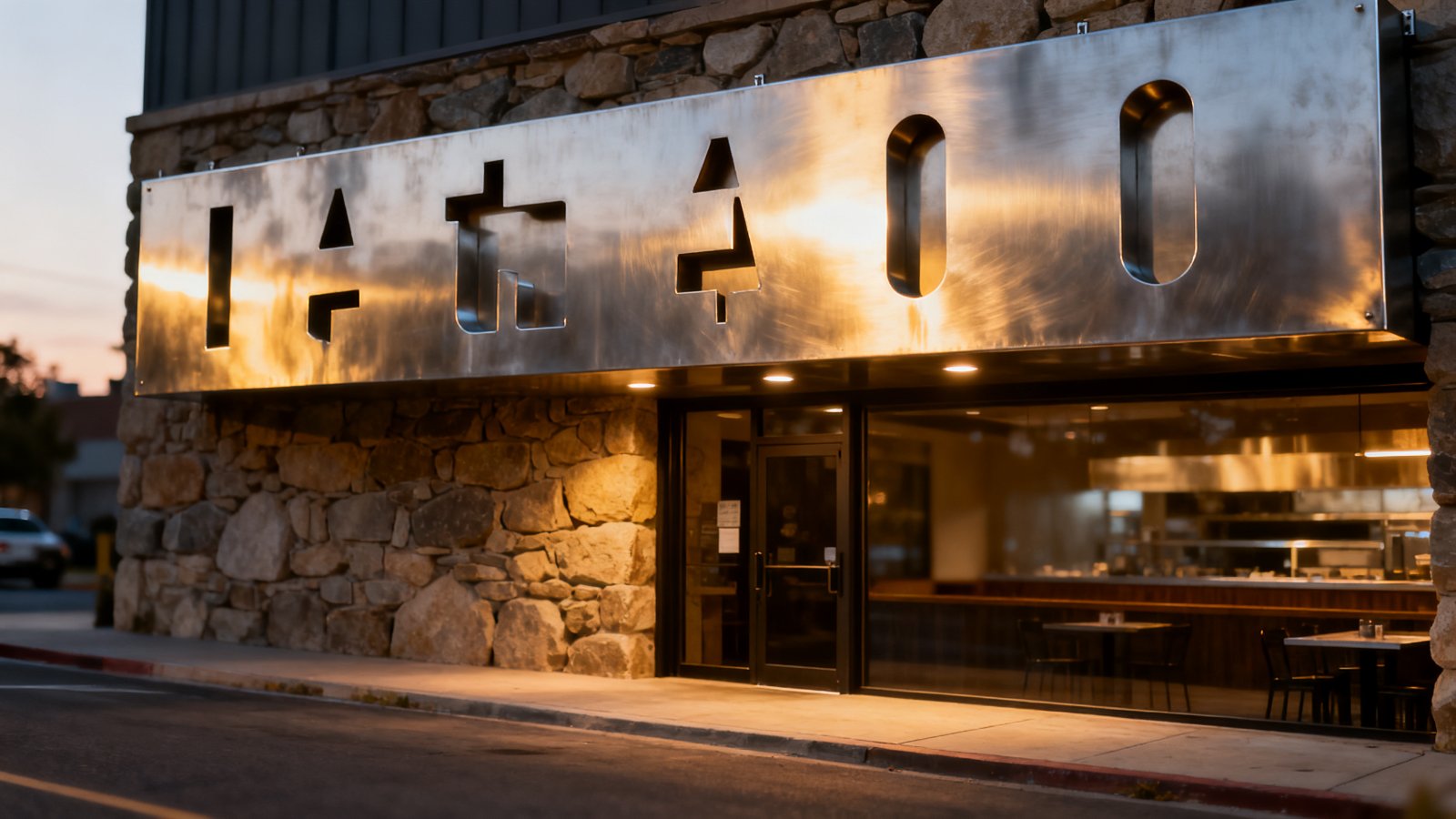
Figure 4: A brushed stainless steel facade sign with warm uplighting at dusk.
Farm, Estate, and Industrial Signage
Farms, estates, and industrial sites order larger metal signs that have to survive unsupervised outdoor conditions: entrance signs, property name signs, and site identification signs mounted on posts or gate structures. The specification is heavier than for interior work, with thicker sheet, galvanised or stainless material, and fixings that can be tightened without crushing the panel.
These buyers also order the mounting structure with the sign. A post, a base plate, and a bracket that were designed together install in an afternoon; the same sign supplied without them usually arrives on site to find that nobody owns the interface between the panel and the gate post.
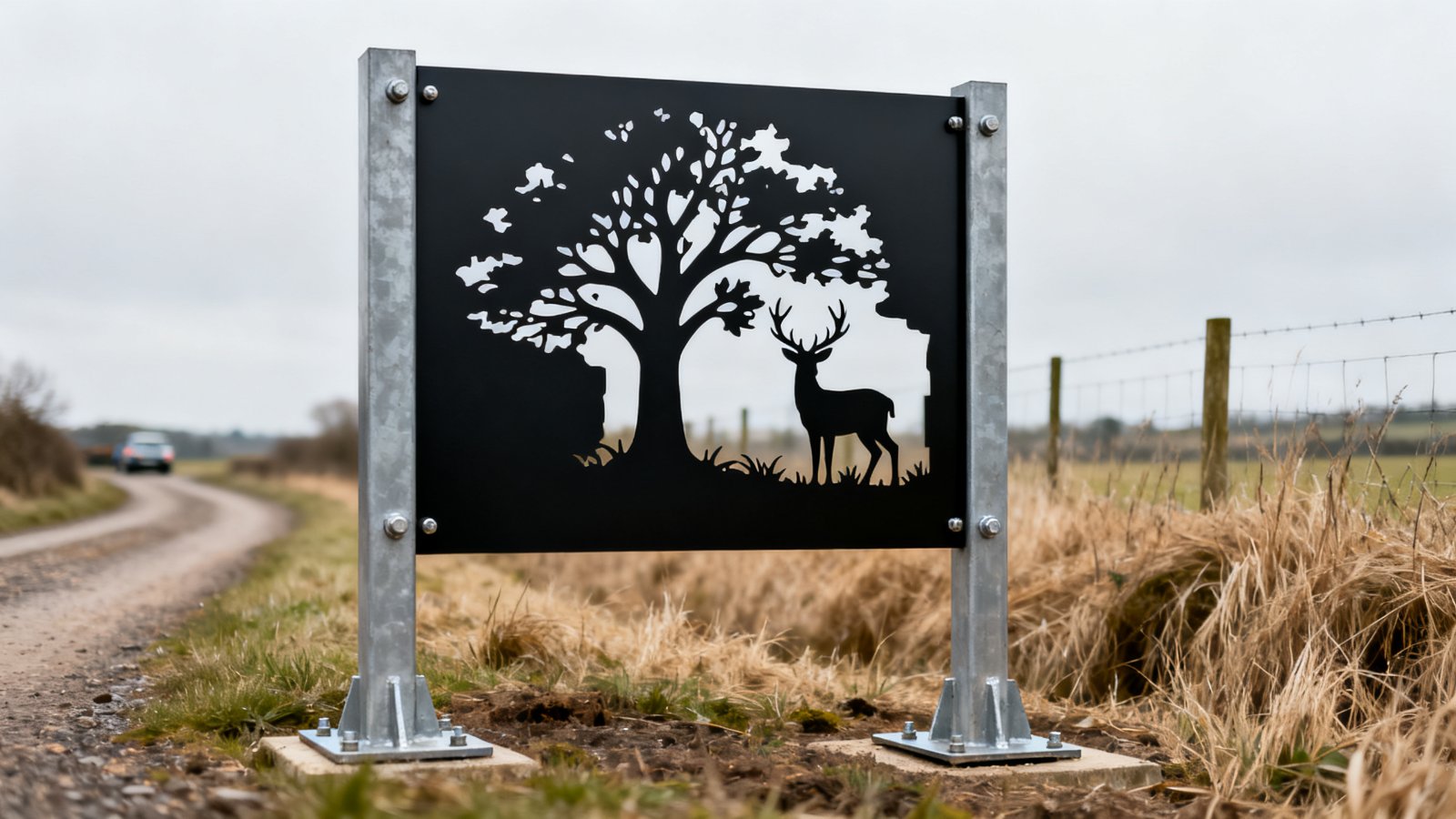
Figure 5: A post-mounted silhouette sign on galvanised steel posts with a bolted base plate.
Materials, Finishes, and Mounting Options
Steel, Stainless Steel, and Aluminium
Mild steel is the default for painted metal signs, stainless steel is chosen for outdoor and coastal use, and aluminium is chosen where weight matters. All three cut cleanly; the choice follows the location and the finish rather than the drawing.
Mild steel is the most economical substrate and takes powder coating well, but it has to be coated or galvanised because bare steel rusts outdoors. Stainless steel, usually grade 304 and grade 316 in coastal air, can be left bare or brushed and needs no coating; guidance is published by SSINA. Aluminium weighs about a third of steel at the same thickness and is the usual choice for large panels and for signs that ship by parcel, with alloy guidance from the Aluminum Association and European Aluminium. Thickness usually runs from 1.5 mm for small interior signs to 3.0 mm for large exterior panels.
Powder Coating, Colours, and Two-Tone Signs
Powder coating is the standard finish for metal signs: any RAL colour, in matte, satin, gloss, or textured form, cured to a controlled film thickness over a pre-treated surface. A colour change costs nothing beyond the powder lot, which is why a sign range can be offered in six colours without tooling.
Two-tone metal signs use a mask to protect one area while a second colour is applied, so a sign can carry a black border with a bare steel centre or a white backing with a coloured silhouette. Masking adds handling and reject risk and is quoted as its own operation. On steel, a galvanised substrate under the coating protects cut edges as well as faces, which is what makes a coated sign survive a coastal winter; see the American Galvanizers Association. Coating practice is described by the Powder Coating Institute.
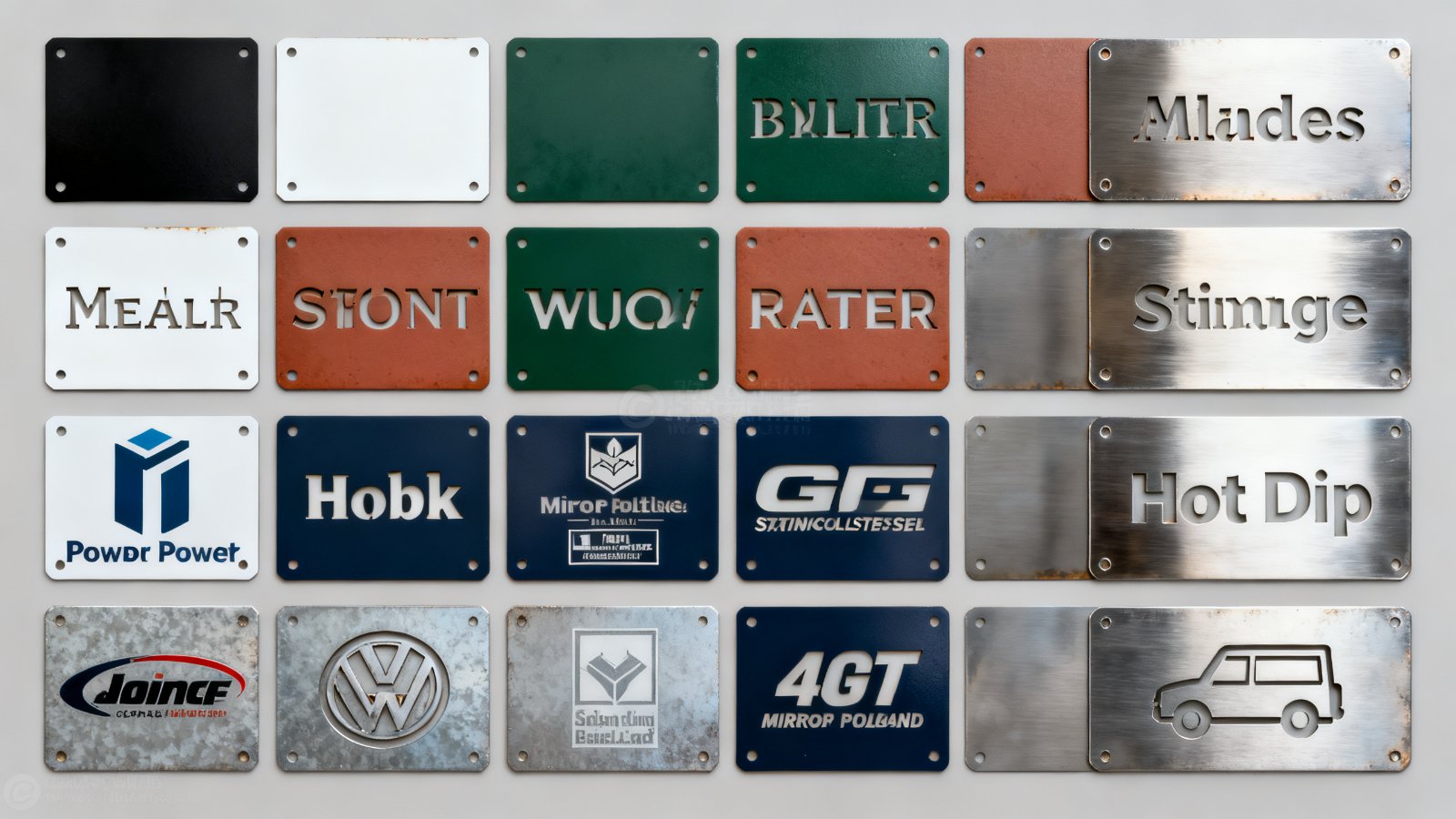
Figure 6: Powder coated, brushed, polished and galvanised samples cut to the same sign outline.
Mounting Systems: Wall, Post, and Freestanding
Backing and mounting decide whether metal signs are installed in twenty minutes or returned to the factory. A wall-mounted sign can use keyhole slots, concealed studs, or standoff pins; a post-mounted sign needs a flange and a bracket; a freestanding sign needs a base plate and an anchor pattern.
The design rule is to keep fixings hidden unless they are part of the look, and to standardise them across a range so one template and one instruction sheet serve every size. Hardware and thread standards are published by ANSI. For metal signs, the mounting system should be designed with the panel rather than added afterwards, because a bracket designed after the fact usually forces a change to the panel, and by then the artwork is approved.
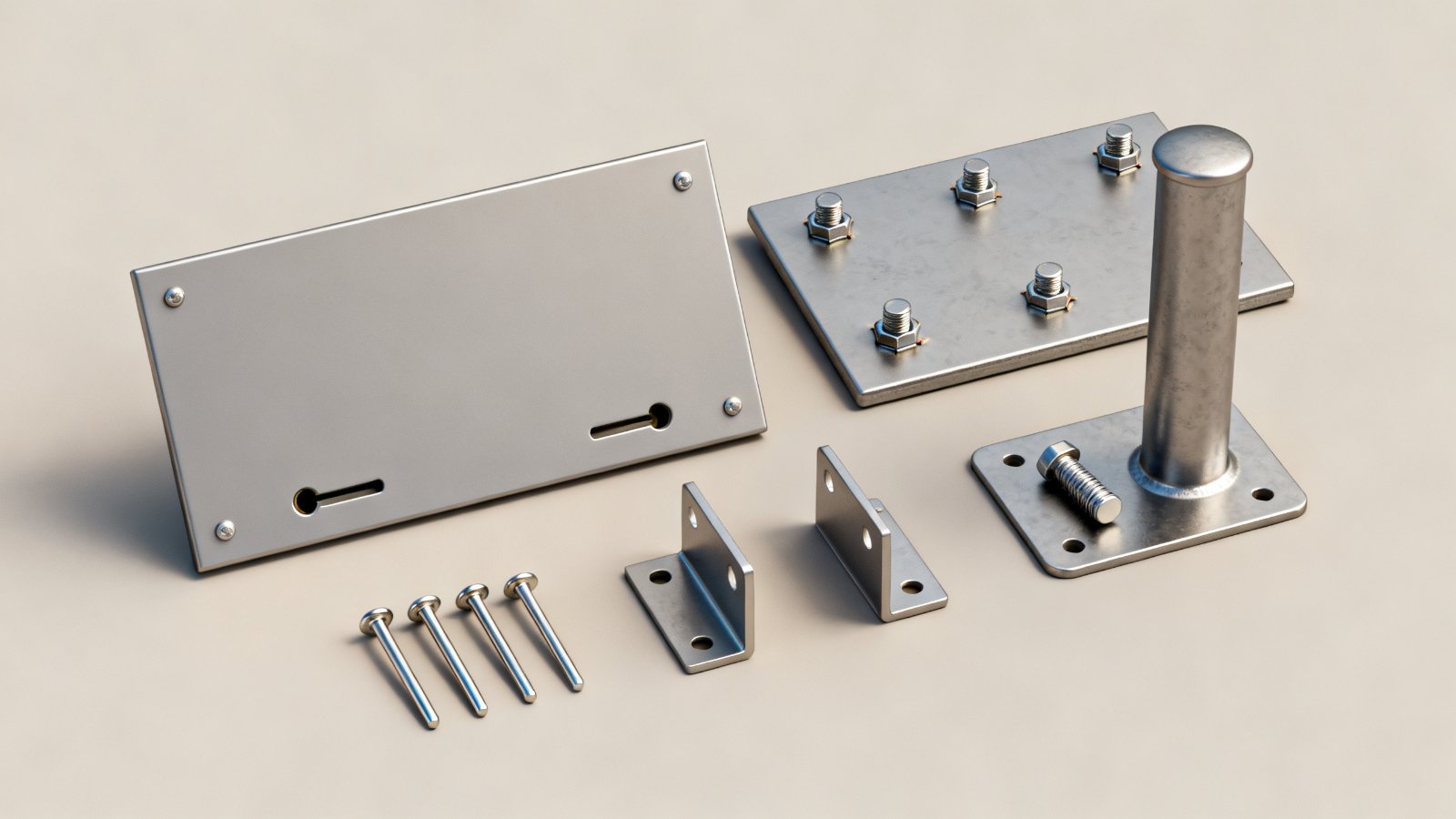
Figure 7: Mounting options: concealed keyhole slots, welded studs, standoff pins, brackets and a post flange.
Production Difficulty and Quality Risks
From Artwork or Logo to a Cut File
The first risk appears before any metal is cut. A logo, a photograph, or a hand sketch has to become a vector file whose paths the laser can follow, and that file is what the buyer approves. The general capabilities of the process are described by the Laser Institute of America.
Lettering is the part that most often needs correction. A thin script face that looks elegant on a screen can lose its connecting strokes once it is cut from 2 mm sheet, and a logo with hairline details has to be thickened or simplified. On metal signs, the drawing stage is where legibility is decided: stroke width, spacing, and the relationship between the letters and the border all change the result more than the material does.
Letter Legibility, Minimum Stroke Width, and Bridges
On metal signs, any part of a letter that is not connected to the rest of the panel will fall out. The letter O, the centre of an A, and the inside of a B all need bridges, which are short lengths of uncut material that hold the piece together. These bridges are visible, so their position is a design decision rather than a technical detail.
As a working rule, a stroke or bridge should be at least as wide as the sheet is thick at its narrowest point, and about 1.5 times the thickness for signs that will be handled or shipped individually. Very small text is the other limit: below roughly 10 mm of letter height in 2 mm sheet, counters close up and the sign stops reading correctly from any distance. Reviewing the artwork at final size, rather than on a screen, catches both problems before cutting.
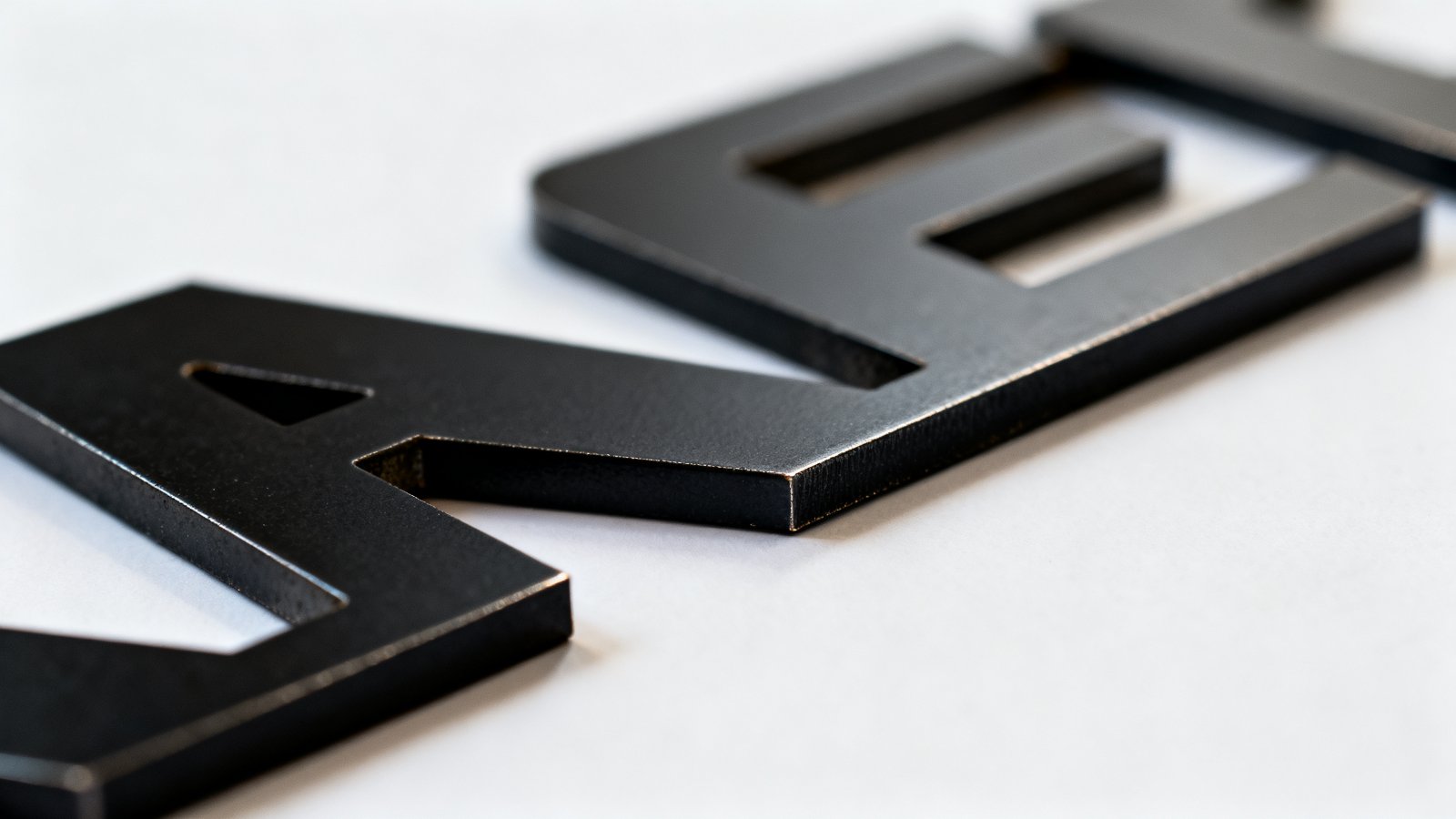
Figure 8: A cut letter edge in 3 mm powder coated steel: square cut, visible sheet thickness and even coating.
Distortion, Edge Quality, and Colour Consistency
Laser cutting puts heat into a thin sheet, so long narrow signs can bow or twist, and the cut edge carries a small burr. Both are controlled by nesting, cut parameters, and a deburring step, and flatness is checked against a straight edge using the measurement practice published by NIST. A sign that will not sit flat against a wall is not a dimensional failure, it is a visible one.
Colour is the second recurring risk on metal signs. Two batches coated weeks apart will not match by accident, so a factory should use one powder lot per order, record the cure parameters, and keep a retained sample for reorders. Buyers comparing quotations should ask for the film thickness range and the pre-treatment method in writing, because those two numbers decide how the finish behaves after a season outdoors.
Lead Times, Files, and Order Flow
What You Send Us
Every enquiry starts from a small set of inputs: the artwork or the idea, the finished size, the material and finish if they are already decided, the mounting method, the quantity and release pattern, and the packing standard. If the design is still a concept, a reference photograph and a target size are enough to begin.
A vector file is ideal, with a DXF or STEP for the outline and a dimensioned drawing for anything that has to fit something else, such as a fixing pattern or a post bracket. Where no vector exists, send the highest-resolution image available; a phone photograph of a hand sketch is workable, while a screenshot usually is not, because compression removes exactly the edge detail the tracing step depends on. For metal signs with small lettering, state the minimum text height the design has to hold.
Batch Volumes, MOQ, and Realistic Pricing
Metal signs are a small-item product. Realistic volumes run from 200 to 800 pieces per batch over four to eight releases a year for interior and decorative signs, with a minimum order around 100 pieces and FOB prices typically between $2 and $15 depending on size, material, and finish.
Larger outdoor and post-mounted metal signs sit in a different band, running at 50 to 300 pieces per batch with an MOQ of 20 to 50 and FOB prices from about $15 to $80. First batches usually ship 15 to 25 days after drawing and sample approval, and repeat orders move faster because the cut file, the fixture, and the colour record already exist. The saving from a shared nest and one coating programme rather than several small orders is larger than most buyers expect.
Assembly, Post-Processing, and Documents
XHX Metal cuts, deburrs, forms, welds, and finishes the metal part, fits standoffs or studs, prepares the mounting hardware, and packs the finished item. Coating is carried out by audited partners for powder coating, galvanising, anodising, and plating, with inspection recorded against the batch.
An order is supported by the approved drawing with its revision number, the vector proof, material certificates, a first article inspection report, batch records, and a packing list. Buyers who need third-party verification of the kind offered by UL should agree the scope at quotation. For metal signs, keeping those records matters more than usual, because a replacement sign ordered a year later has to match the units already on the wall.
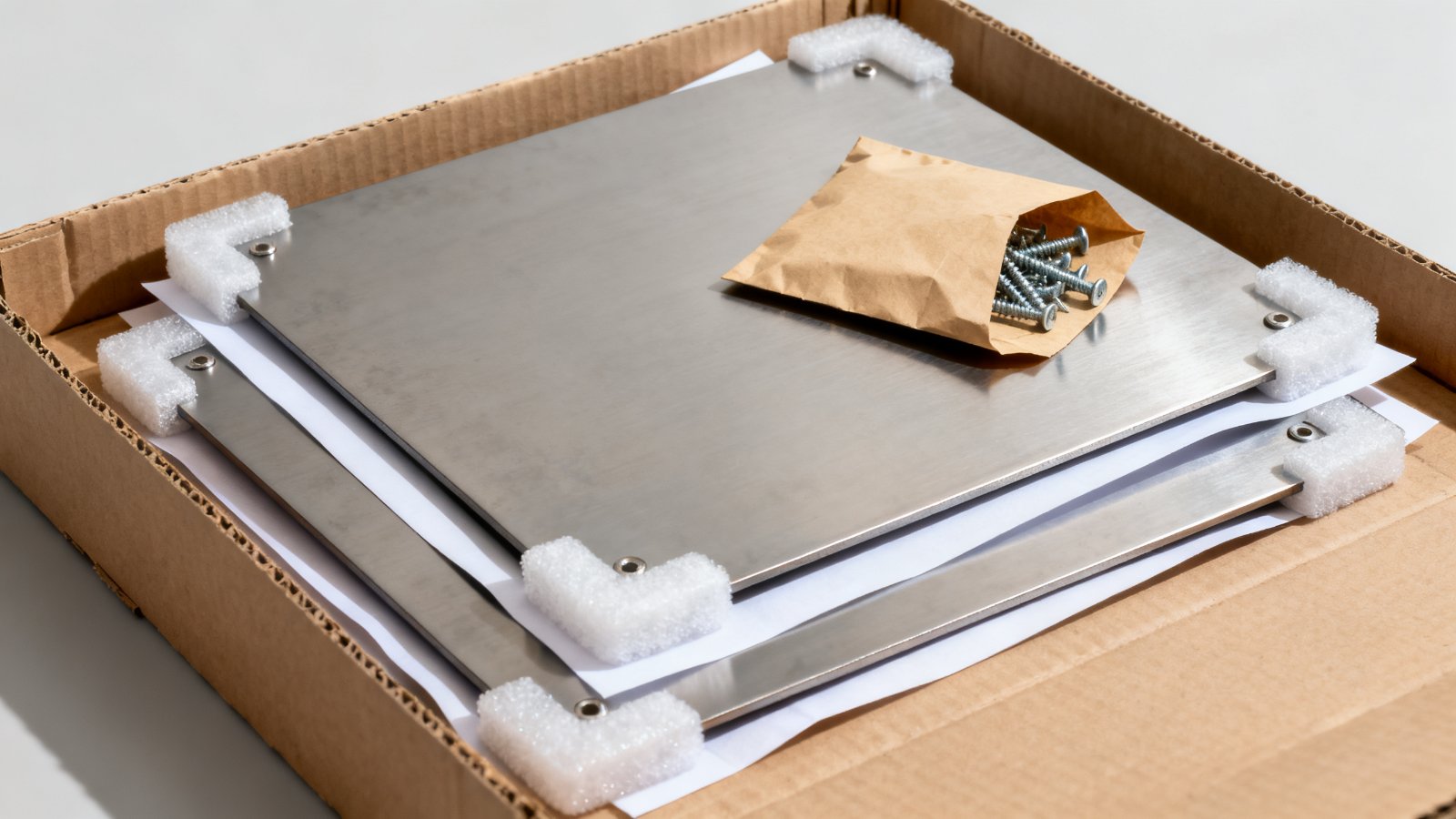
Figure 9: Flat packing for metal signs: corner protectors, paper interleaves between panels and a sealed hardware envelope.
Case Studies: Metal Sign Programmes in Production
Case 1: US Home Decor Brand — Layered Sign Range
A US home decor brand wanted a range of layered metal signs for its own store, in two sizes and three colourways, with the front layer standing off the backing panel so the sign casts a shadow. The range had to ship flat and assemble on the customer’s wall without tools beyond a screwdriver.
We produced the front layer in 1.5 mm steel with a matte powder coat and the backing panel in 1.5 mm steel with a contrasting finish, joined by stainless spacer pins, with a printed template in each box. Production ran at 400 pieces per batch, four batches a year, with an MOQ of 100 and FOB prices from $6.50 to $13.00. First batch shipped 18 days after approval, and annual value was approximately $31,000.
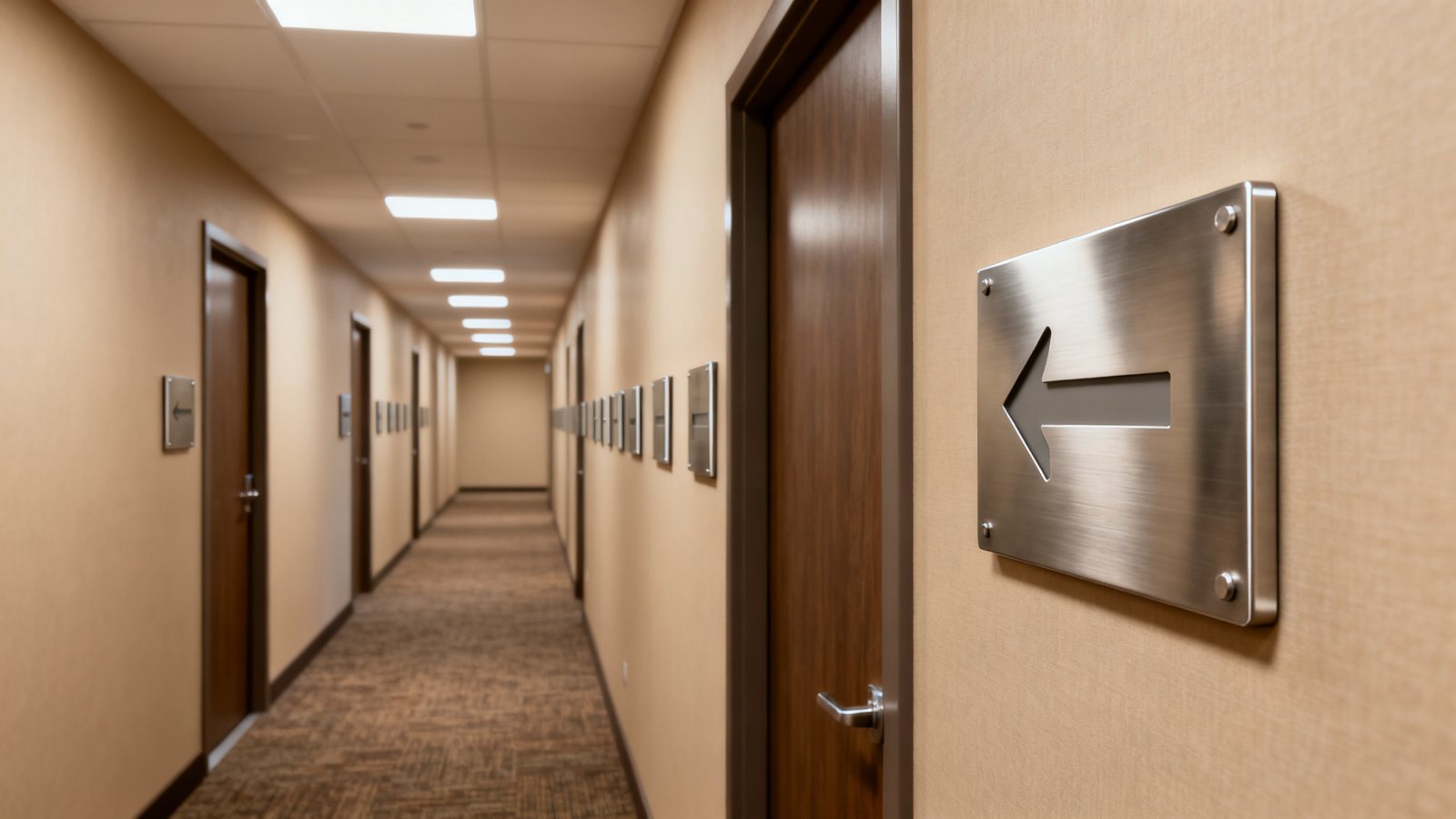
Figure 10: Interior wayfinding and room signs in brushed stainless, delivered by floor for staged installation.
Case 2: European Hospitality Group — Room and Wayfinding Signs
A European hotel group needed room number plaques and interior wayfinding signs for a refurbishment, in a brushed stainless finish that had to match the joinery throughout the building. Deliveries were staged floor by floor so the contractor could fit as each level was completed.
The plaques were cut in 2.0 mm grade 304 stainless with a brushed finish and concealed stud mounting, and each shipment was packed by floor and marked for its zone. Production ran at 120 pieces per batch, three batches a year, with an MOQ of 50 and FOB prices from $18 to $42. First batch lead time was 24 days, and annual value was approximately $36,000.
Case 3: Farm and Estate Signage — Post-Mounted Silhouette Signs
A rural estate needed entrance and boundary signs mounted on existing gate posts, with a design based on the estate’s tree line. The signs had to survive coastal wind and salt air, and the mounting had to work with posts that were already in the ground.
The metal signs were cut as 3.0 mm steel silhouettes with a galvanised substrate and a matte black powder coat, and supplied with galvanised flange brackets sized to the surveyed post dimensions. Volumes ran at 80 pieces per batch, four batches a year, with an MOQ of 25 and FOB prices from $26 to $58. First batch shipped 21 days after approval, and annual value was approximately $41,000.
Summary and Next Steps
How to Choose a Metal Sign Manufacturer
The supplier that fits this product can trace artwork, cut and finish the metal, prepare the mounting, and pack a sign that arrives flat and unmarked. Ask to see a vector proof, a finished sample, and a flatness check on a large panel, and ask who performs the tracing.
Check that the quotation states the sheet thickness, the material grade, the finish and its film thickness, the mounting hardware, and the packing grade. Match the supplier to the batch size as well: metal signs are bought in small and medium batches, and a factory built for container volumes treats a 120-piece order as a nuisance.
Why XHX Metal
XHX Metal provides metal signs from drawing to delivered parts: artwork tracing, cutting on two 6kW fiber laser cutting machines to plus or minus 0.01 mm, CNC bending, TIG and MIG welding, deburring, powder coating through audited partners, hardware assembly, and export packing.
The company has produced decorative metal pieces and sheet metal products for export customers from Dongguan, Guangdong since 2014, and holds ISO 9001:2015 certification with CE documentation and SGS records. Samples in 5 to 10 working days and first batches in 15 to 25 days are normal work.
How to Start Your Sign Programme
Send the artwork, the finished size, the material and finish if known, the mounting method, quantity, and packing you need. We reply with a manufacturability review and a quotation, and a sample follows in 5 to 10 working days after proof approval.
Programmes are handled directly through the contact page.
FAQ: Metal Signs
Can you make metal signs from a logo or a hand sketch? Yes. Send the highest-resolution file you have and we trace it into a vector outline that you approve before anything is cut.
What is the smallest lettering you can cut? As a guide, text should be at least 10 mm high in 2 mm sheet, and stroke widths need to be at least as wide as the sheet is thick.
What is the minimum order? MOQ is typically 100 pieces for interior and decorative metal signs, and 20 to 50 pieces for larger outdoor and post-mounted signs.
Do you supply the posts and mounting hardware? Yes. Brackets, flange plates, standoff pins, and concealed fixings can be supplied with the sign so the mounting matches the panel.
Which material suits an outdoor metal sign? Stainless steel in grade 304, or grade 316 in coastal air. Mild steel is a lower-cost option when it is galvanised under the coating.
How long does a sample take? The sample follows in 5 to 10 working days after proof approval, and the first batch ships 15 to 25 days after sample approval.