OEM parcel box manufacturing turns a brand’s own concept for a parcel delivery box into a production-ready metal product: the panel geometry, the door and lock, the finish, the mounting, and the retail packaging are engineered, tooled, sampled, and then rebuilt in repeat batches under the buyer’s brand. Brands in North America and Europe order this way when they want a parcel box that only they can sell, not a generic import shared with every other seller on the same marketplace.
This guide explains how an OEM parcel box programme actually runs, written for buyers who place the order: appliance and smart home brands, home and garden ranges, retail chains, and property programmes. It covers the formats and options that exist, the materials and finishes that decide cost and service life, the quality risks that reach the customer when they are ignored, the lead times and files needed to start, the assembly and packing scope a factory should carry, and three production cases with real purchasing data behind them.
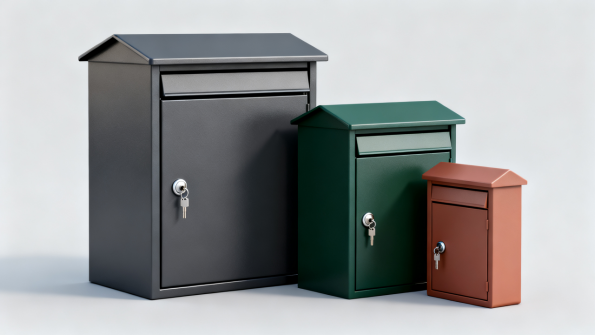
Figure 1: A powder-coated metal parcel box family built as one OEM range in three sizes and finishes.
The Product: What OEM Parcel Box Manufacturing Covers
How an OEM Parcel Box Programme Works
An OEM parcel box programme converts a buyer’s design intent into a repeatable metal product. The buyer supplies a concept sketch, a CAD model, a competitor sample, or a full drawing set; the factory reviews it for manufacturability and builds an approved sample before any batch is released, following established engineering practice described by SME.
That review covers sheet thickness, bend radii, corner joints, the lock cut-out, and the mounting method. Its purpose is to find the features that would be expensive to produce, or that would fail in service, while they are still lines on a drawing.
The commercial difference from buying a stock box is ownership of the design. A generic parcel box bought from a trading company is shared with every other seller offering the same item; an OEM programme produces geometry, colour, lock, mounting pattern, and packaging that belong to one buyer. That exclusivity, not the unit price, is what most brands are paying for when they ask for OEM parcel box manufacturing instead of an off-the-shelf import.
XHX Metal runs these programmes as a single route from drawing to delivered parts. Laser cutting, bending, welding, finishing, hardware assembly, and export packing sit inside one 2,000 sqm factory in Dongguan, Guangdong, with two 6kW fiber laser cutting machines, CNC punching, CNC bending, and TIG and MIG welding. Buyers who want to see the wider scope can review the sheet metal fabrication services before the first enquiry.
The Parcel Box Product Family: Formats and Options
Most OEM ranges are built from four formats. Wall-mounted boxes suit townhouses and apartment corridors, post or pillar-mounted boxes suit detached houses with a garden boundary, floor-standing boxes take larger parcels and commercial entrances, and recessed through-wall boxes keep the facade flush by passing the compartment through the wall.
Within a format, buyers choose the deposit method and the lock. A top-drop chute with an internal retention flap keeps parcels out of reach of anyone at street level. A full front door with a cam lock gives access to the whole compartment and is easier to load. Keypad and app-controlled locks add electronics, a battery compartment, and a cable route that has to be designed into the sheet metal rather than added after coating.
The practical advice for a first range is to fix one core body and derive two or three sizes from it. Sharing the door geometry, hinge position, lock, and sloped lid keeps fixtures, jigs, and packaging common across the family. That lowers tooling cost and shortens the launch of the second and third SKU, which is usually where an OEM programme either becomes profitable or stalls.
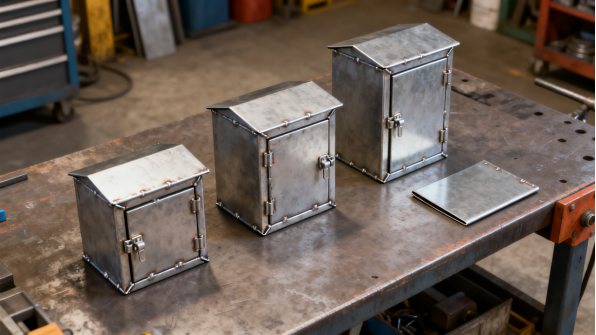
Figure 2: A SKU family shares door geometry, hinge position, and lid profile across three sizes.
What Brand Buyers Order Most
The parts that appear on almost every OEM parcel box purchase order are the outer box shell, the front door assembly with its hinge, the sloped rain hood, the internal parcel retention flap, the lock assembly, the gasket, the wall or ground anchor bracket, and the hardware bag that carries the fasteners the end customer needs.
Behind those core parts sit the items buyers add once the product sells: a laser-cut brand plate, a coating colour matched to the brand palette, an instruction leaflet, a foam or corrugated insert, and a retail carton printed for the brand. Buyers selling through their own store normally order the box ready to hang or bolt down, so the consumer does not have to source anchors. Buyers running a wider home product range usually order the same box in finishes that already exist in the catalogue, so the range stays visually consistent. The full manufacturing scope is listed on the product range page.
A clean purchase order for this product therefore lists the box, the finish, the lock type, the mounting hardware, and the packing as separate lines. Separating them makes quotations comparable between suppliers, because two factories quoting the same head-line price may be including very different hardware and packaging content.
Anatomy of a Parcel Box: Body, Door, Lock, and Mounting
The body is a folded and welded shell, usually 1.0 mm to 2.0 mm steel or aluminium, with a base that includes a drainage path so water cannot stand inside. Corners are welded and dressed, and the door opening is checked against a fixture so the gap stays even around the perimeter.
Blanks are cut on our two 6kW fiber laser cutting machines to +-0.01 mm positioning accuracy, which is what allows a lock cut-out to stay concentric with the door edge on every unit. The general principles of the process are set out by the Laser Institute of America.
The door carries the hinge, the lock, and the seal. A piano hinge spreads load along the full door height and keeps alignment stable; a cam lock remains the volume default, while keypad locks need a mounting boss, a protected cable route, and space for the battery holder. The gasket should sit in a formed channel rather than on a flat face, because a compressed gasket in a channel survives years of openings without creeping out of position.
The rain hood, the door overlap, and the drain hole work as one system. A hood alone does not keep water out if the door lip is flat, so the design needs a drip edge that throws water clear of the opening, an overlap that sheds wind-driven rain, and a drain large enough to stay clear of leaves and grit through a full winter.
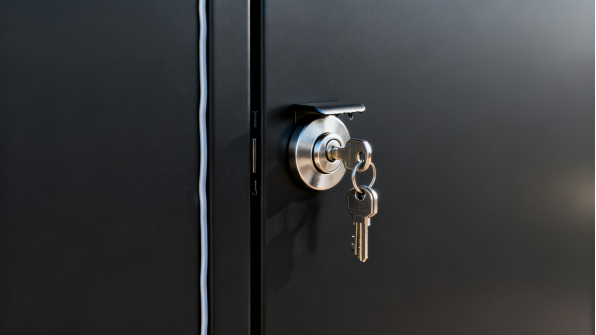
Figure 3: Door gap, cam lock, rain lip, and channel gasket on a powder-coated parcel box.
Use Cases: Who Orders OEM Parcel Box Programmes
Smart Doorbell and Smart Lock Brands
Smart home brands order parcel boxes as a companion product to a doorbell, a smart lock, or a camera, so the box has to share the design language of the range and work alongside an app. Parcel theft is why the category exists, and the US Postal Inspection Service continues to warn consumers about package theft.
That concern gives these brands a product story customers already understand. These programmes add electrical content to a sheet metal part: the lock module, keypad, battery holder, and antenna all need space, a cable route, and a service access that does not break the weather seal. The sheet metal design decides whether the box is quick to assemble on the line and straightforward for the end customer to install. A wiring channel formed during bending costs a fraction of a hand-cut route added after coating.
Buyers in this segment typically ask for a functional prototype with the electronics fitted, a firmware test pass, and a water resistance report before the first production batch. We build the enclosure, install the customer’s module, and run the agreed routine before the units are packed, so the sample arriving in the buyer’s office is the same build as the batch.
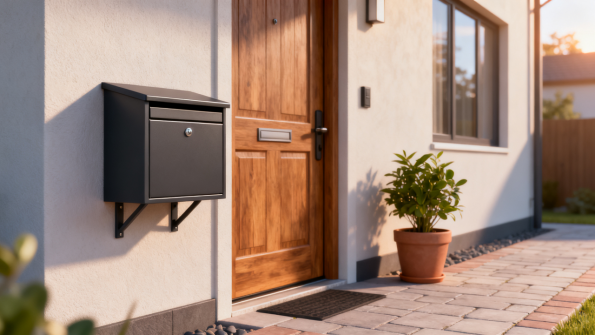
Figure 4: A wall-mounted parcel box installed at a townhouse entrance with concealed bracket mounting.
Home, Garden, and Lifestyle Brands
Home and lifestyle brands buy parcel boxes as a designed object rather than an appliance. Colour, proportion, and surface finish carry the sale, and the range usually launches in two or three colours with packaging that matches the rest of the catalogue.
Planning in this channel follows seasons and campaigns, so batches repeat three to six times a year and each order has to match the colour of the previous one. Brands commonly start with a test batch of 50 to 150 units, measure which colour sells, and scale the winner. Because the cut files and the coating programme were approved at the start, a repeat order does not need another sample round unless the colour, the lock, or a dimension changes.
These buyers also care about how the product photographs. A wall-mounted box with a sloped hood and a hidden hinge reads better in a lifestyle image than a square utility box, and that decision is made at the drawing stage, before any tooling exists.
Retail, E-Commerce, and Subscription Brands
Retail and e-commerce brands order parcel boxes for storefronts, click-and-collect counters, and staffed delivery points. These buyers care about durability and price per unit more than styling, and they place the largest batches in the category, with parcel volumes reported by USPS continuing to drive demand for secure delivery points.
A typical retail order is one colour, one size, and a repeating schedule tied to a store rollout or a distribution plan. Because the design is stable, the second and third batches usually ship faster than the first, and the unit price improves once fixtures and the coating programme are amortised across repeat orders rather than a single run.
Some of these buyers also need a padlock loop, an anti-tamper shield over the lock, or a bolted floor plate for public areas. Those details are inexpensive to add while the drawing is still open and costly to retrofit, which is why they belong in the first technical review rather than in a change order after production begins.
Property and Multi-Unit Programmes
Developers and property managers order larger boxes, and sometimes banks of boxes, for apartment buildings and shared entrances. Order volumes are lower than retail, but the specification is heavier: thicker material, welded anchor plates, and a finish that survives unsupervised daily use.
These programmes often include a numbering or naming plate and a requirement that units stay interchangeable, so a replacement door or lock can be fitted without matching a specific serial number. Designing to that requirement means holding tolerances across the whole run and keeping a record of the fixture and settings used for each batch.
Because the units are installed by a contractor rather than by the end user, the mounting pattern, the anchor type, and the installation drawing matter as much as the box itself. Supplying a setting-out template with the first delivery removes a common source of site delay.
Choosing Materials and Finishes for an OEM Parcel Box Range
Mild Steel with Powder Coating: The Volume Default
Cold-rolled mild steel between 1.0 mm and 2.0 mm with a polyester powder coating is the default in OEM parcel box manufacturing, because it cuts and bends cleanly, holds detail, takes a smooth finish, and costs less than stainless steel at the same thickness.
Where the box stays outdoors, the substrate should be zinc-coated before coating. Hot-dip galvanized or zinc-iron alloy sheet adds sacrificial protection at cut edges and around drain holes, and the behaviour of those coatings is documented by the American Galvanizers Association. Powder application, film thickness, curing, and adhesion testing follow the practice published by the Powder Coating Institute. A common production specification is 60 to 80 microns of polyester powder over a zinc-coated substrate, matched to a retained colour sample rather than to a screen or a printed swatch.
Thickness follows span and load. A wall-mounted box up to roughly 400 mm wide usually works well at 1.2 mm. A floor-standing box with a wide door is safer at 1.5 mm to 2.0 mm, because the door has to stay flat, the hinge has to carry its weight, and the sides have to resist a person leaning on them.
Aluminium for Lightweight Outdoor Ranges
Aluminium is chosen when weight matters, when the wall cannot carry much load, or for a bright anodised finish. Grade 5052 is the usual default for formed outdoor enclosures because of its corrosion resistance, while 6061 is used where a stiffer bracket or a machined component is needed. Selection guidance is published by the Aluminum Association and European Aluminium.
Aluminium brings two practical constraints into the workshop. It needs a larger spring-back allowance in bending, so tooling, bend deductions, and flat patterns differ from the steel version of the same box. It also has to be isolated from stainless or galvanized fasteners to avoid galvanic corrosion, which we handle with nylon washers, isolating gaskets, aluminium fasteners, or a deliberate coating break. The fastener material is stated on the drawing so it cannot be substituted later without review.
For an outdoor range, aluminium pairs well with a textured powder coat, which hides handling marks and small scratches that a smooth gloss finish would show within weeks of installation.
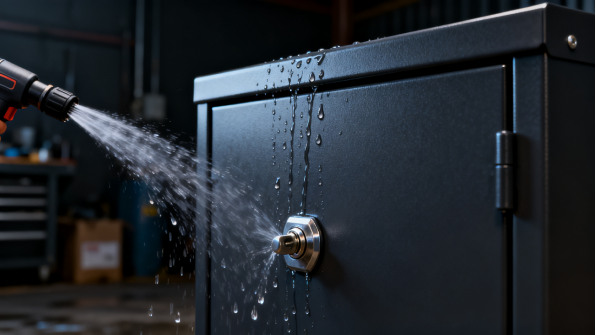
Figure 5: Water spray testing a sealed door and lock area on a powder-coated outdoor parcel box.
Stainless Steel for Premium and Coastal Markets
Stainless steel is specified for coastal installations, premium product lines, and buyers who want a visible brushed or satin surface instead of paint. Grade 304 covers most urban outdoor use, and 316 is the safer choice within a few kilometres of salt water. Surface and welding guidance for these grades follows SSINA.
Cost in a stainless parcel box is dominated by material rather than labour, so the design should avoid unnecessary thickness and heavy weld dressing. A brushed finish also shows scratches, which means visible faces need protective film or foam in packing, and the assembly area has to stay free of carbon steel dust that would later bloom as rust spots on the surface.
For buyers who want a stainless appearance at a lower cost, a zinc-coated steel body with a stainless door and a bright powder coat is a workable compromise. The two finishes then have to be tested together for colour match under daylight and for galvanic behaviour at the hinge and lock joints.
Colour Consistency Across a SKU Family
Colour is where OEM parcel box manufacturing fails most quietly. Two sizes produced months apart can arrive with a visible difference if the powder lot, the film thickness, or the curing profile changes, and the buyer only discovers it when the units stand side by side in a showroom or on a pallet.
We control it by coating a family in the same rack cycle where the schedule allows, by keeping a retained colour sample from the approved first article, and by recording the powder lot and curing parameters for every batch. Buyers who want a measurable limit can specify a colour difference tolerance measured against the retained sample, so acceptance is a number rather than an opinion.
For a first order, the safe approach is to produce all sizes of a new range in one batch if the volume allows. Splitting a launch across two batches doubles the opportunities for a colour step between sizes, and correcting it later means recoating or scrapping finished units.
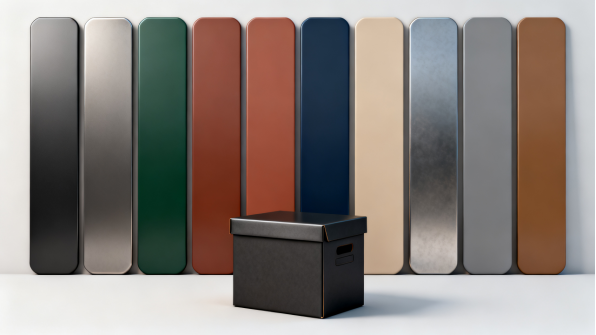
Figure 6: Coating colour swatches and a finished box used to hold a range to one approved colour standard.
Production Difficulty and Quality Risks
Cosmetic Quality: Welds, Grinding, and Door Gaps
The most common complaint about an OEM parcel box is cosmetic: weld marks visible through a light colour, grinding burn on thin panels, an uneven gap around the door, or a twist that appears only after coating. All four come from heat and from inconsistent setup rather than from the material.
We control them by welding in fixtures that hold the shell square, keeping weld length and sequence fixed, dressing joints in a set order rather than working until the surface looks right, and checking the door gap with a gauge instead of by eye. Where a joint does not need to carry load, spot or short TIG stitches replace a continuous weld, which reduces distortion and cuts dressing time.
The first article is photographed and measured before the batch starts, and those photographs become the visual standard for the run. Light colours such as white and sand are held to a stricter weld-dressing standard than charcoal or dark green, because powder coating hides less on a light face. Final judgement always happens before coating, since a defect found afterwards cannot be repaired without stripping the finish.
Dimensional Consistency and Lock Alignment
A parcel box that will not lock or unlock smoothly, or whose door needs lifting to close, is a dimensional failure rather than a component failure. The typical causes are a lock cut-out that is off centre, a hinge position that drifts between units, or a shell that is square on the bench but twisted on the pallet.
Fixing this starts with a single fixture used for every unit in the batch, laser-cut blanks from the same nesting pattern, and a lock cut-out held concentric to the door edge. We measure the first article, the mid-batch piece, and the last piece against the drawing and record the values. Measurement practice and tolerancing conventions for this kind of work follow the standards published by ANSI and the measurement guidance of NIST.
Where a customer’s lock is supplied by a third party, we request a drawing with the mounting hole pattern and a sample lock for the first build. Lock suppliers revise tooling without notice more often than buyers expect, and a 0.3 mm shift in a hole pattern is enough to stall a production line or force rework on a finished batch.
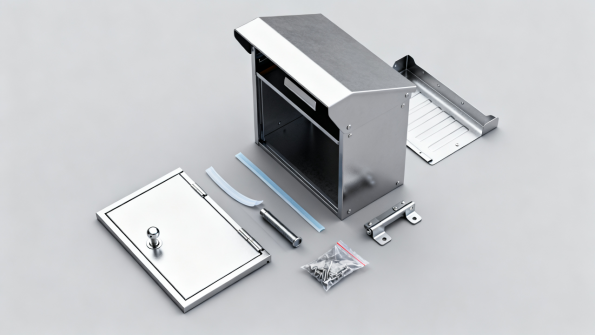
Figure 7: Exploded view of an OEM parcel box showing shell, door, hood, retention flap, gasket, lock, and bracket.
Weather Resistance: Gaskets, Drainage, and Hardware
In OEM parcel box manufacturing, weather resistance is a system property, and it fails first at the details: a gasket that creeps out of its groove, a lock that seizes after a freeze, a drain hole that blocks with leaves, or rust blooming from a cut edge that was never protected.
We design the seal as a formed channel with a compressed silicone or EPDM gasket, add a drip edge above the door opening, and place the drain at the lowest point of the base with enough clearance to stay clear. Hardware is stainless or zinc plated, and the lock boss is sealed on the inside face so water cannot track along the barrel into the compartment. Where a customer needs a defined enclosure rating, the test method and the applicable marking are agreed with reference to the enclosure standards published by UL Solutions, and the first article is water-sprayed before the batch is released.
In coastal markets we also test the coating system separately. A 500-hour salt spray result on a zinc-coated substrate with 70 microns of powder is achievable, but only when the powder is correctly cured and the edges are covered properly, so we treat the edge coverage check as part of in-process inspection rather than a final audit.
Batch-to-Batch Colour and Appearance Consistency
Appearance consistency is the risk that buyers underrate until a reorder arrives. Colour drift of a few units in a lab measurement becomes obvious in a retail display, and a change from smooth to slightly textured coating is visible even to an untrained eye.
We hold a retained sample from the approved first article, specify the powder by supplier code rather than by name, and record the lot number and curing profile for each batch. Film thickness is checked on the parts rather than on a test panel, because the inside of a deep box coats differently from a flat sheet.
Where a buyer runs a permanent range, the simplest control is to place a single annual order split into scheduled releases instead of several independent orders. The coating line then runs one programme, colour and texture stay constant, and the buyer keeps the benefit of staged delivery and staged payment.
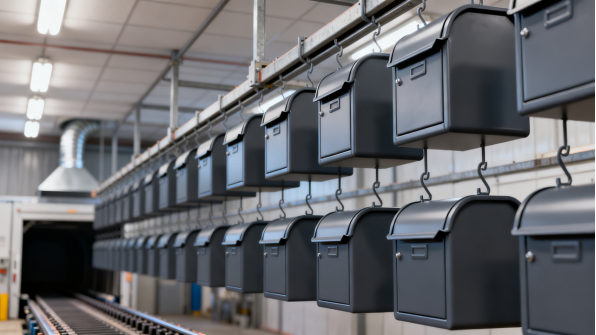
Figure 8: Matched batch coating on a rack line, the control that keeps a range colour-consistent.
Packaging and Transit Damage
A parcel box often survives manufacturing and fails in transit. The exposed risks are a dented door, a scratched visible face, a bent mounting bracket, and a missing hardware bag, and they all appear as quality complaints on a product that left the factory in perfect condition.
We pack each unit in its own carton with corrugated corner protectors and foam pads on the visible faces, tape the hardware bag and the instruction leaflet to the inside of the door so small parts cannot migrate, and load cartons so that no unit rests on a door face. Carton strength and compression resistance are specified for the shipping method rather than assumed.
For buyers who sell direct to consumers, we also supply a drop-test pass on the packed unit before the first shipment. It is a short test that prevents the most expensive kind of complaint, because replacing a dented box under consumer returns costs far more than the packing material that would have prevented it.
Lead Times, Files, and Production Planning
Files Needed to Quote and Produce
To quote an OEM parcel box manufacturing programme accurately, we need the 3D model in STEP or IGES format, a dimensioned 2D drawing, the material and thickness, the finish and the colour reference, the lock type, and the packaging requirement. A STEP file alone tells us the shape; the 2D drawing tells us which dimensions and features are critical.
Alongside the geometry, four commercial inputs decide the price: the annual volume, the batch size per release, the target market, and the delivery method. Volume determines nesting efficiency and the amortisation of fixtures. Target market decides whether certification evidence, a specific coating standard, or a language-specific instruction leaflet is required. Delivery method decides carton grade and pallet pattern.
What we return is equally specific: a design-for-manufacturing review with proposed changes, a quotation broken into box, finish, lock, hardware, and packing, a production drawing with tolerances, a material certificate, a first article inspection report, and a batch record. Buyers who need to qualify a supplier for an audit can request the ISO 9001:2015 certificate, CE documentation, and SGS inspection records with the quotation rather than after the order.
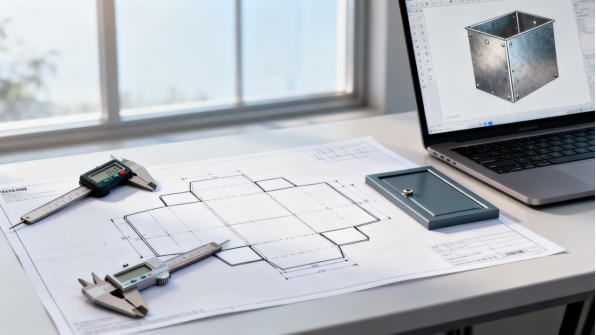
Figure 9: Drawing, 3D model, and door sample reviewed together before a parcel box batch is released.
Sampling in 5-10 Working Days
After the drawing is confirmed, a sample parcel box is normally built in 5 to 10 working days. That window covers laser cutting, bending, welding, dressing, coating, and hardware fitting, and it assumes the lock and any customer-supplied components are already in our hands.
The sample is the point where the buyer validates the things a drawing cannot show: how the door feels when it closes, whether the lock lines up with a gloved hand, how the colour reads in daylight, and whether the mounting bracket suits the wall it will be fixed to. We photograph the sample from fixed angles and record the measured dimensions so the approved piece becomes a reference for the batch.
Sample cost is quoted separately and credited against the first production order in most programmes. Changes requested at sample stage are inexpensive; changes requested after tooling and coating approval usually mean a second sample round and a new approval, which is why we ask buyers to route every stakeholder comment through one review instead of sending them one at a time.
First Batch in 15-30 Days and Reorder Planning
The first production batch ships 15 to 30 days after drawing and sample approval for most parcel box sizes, extending to 35 days for large floor-standing units. Within that window, material, laser cutting, forming, welding, coating, and assembly are scheduled as one flow rather than handed between suppliers.
Three items outside the factory can move the date: a special powder colour, a customer-supplied lock, and printed packaging. A non-standard colour can add a week if the powder has to be ordered, and a lock that arrives late stops assembly even when every metal part is finished. Buyers preparing a retail launch should confirm those three items before the drawing is released rather than after.
Reorder lead time is shorter, typically 12 to 20 days, because the drawings, fixtures, and coating programme already exist. For a repeating range, the most efficient arrangement is a blanket order with scheduled releases: the buyer secures the price and the colour standard for the year, and the factory plans material and coating capacity around release dates instead of rebuilding the programme each time.
Assembly, Finishing, and Packing Scope
A single supplier should carry the whole build. Our scope for a parcel box programme runs from laser cutting and CNC punching through CNC bending, TIG and MIG welding, deburring, and dressing, then powder coating or galvanizing through qualified partner lines, and finally silkscreen or laser marking, riveting, and hardware assembly.
Assembly includes fitting hinges, locks, gaskets, retention flaps, mounting brackets, and the hardware bag, and installing any customer-supplied electronics module such as a keypad or a lock controller. We also handle kitting, so a distributor can receive a box, an anchor set, and an instruction leaflet as one pack rather than three deliveries.
Packing is treated as part of the product rather than an afterthought: individual cartons with corner protection, retail cartons with printed branding, and pallet or container loading plans for export. Buyers who want to review the whole capability set before sending drawings can start from the sheet metal fabrication services page, which lists the equipment actually installed in the factory.
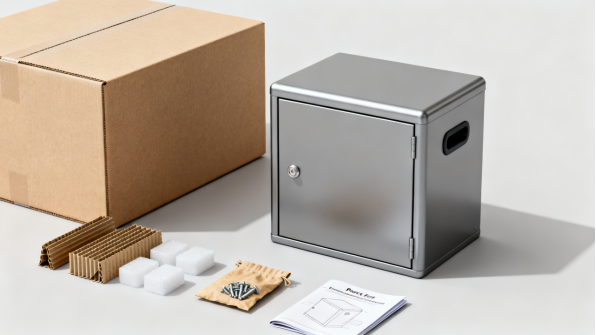
Figure 10: Retail packing for an OEM parcel box with corner protection, hardware bag, and instruction leaflet.
Case Studies: OEM Parcel Box Programmes in Production
Case 1: Wall-Mounted SKU Family for a Smart Home Brand
A German smart home brand needed a wall-mounted parcel box to sell alongside its video doorbell. The buyer supplied a concept sketch and a competitor sample, and asked for three sizes sharing one design language so the range could be listed without confusing customers.
We proposed a 1.5 mm zinc-coated steel body with a textured charcoal powder coat, a piano hinge, a cam lock with a stainless barrel, a channel gasket, and a folded anchor plate. The family shared one door geometry, one hinge position, and one hood profile, so only the shell height and the flat pattern changed between SKUs.
The programme started with an MOQ of 50 pieces per size and a first order of 260 units across the three sizes. FOB price was $48 to $62 per unit depending on size, well inside the mid-size band for this type of enclosure. The first batch shipped 26 days after approval, with SGS pre-shipment inspection at the buyer’s request. Annual volume settled at 700 to 900 units, a customer value of roughly $34,000 to $46,000, and a nesting revision and a shared carton size reduced the unit price by about 5 percent in the second year.
Case 2: Aluminium Post-Mounted Range for a Lifestyle Brand
A Dutch direct-to-consumer lifestyle brand wanted a lighter parcel box for post mounting at garden boundaries, and specified aluminium so the product could be lifted and installed by one person. The brand also wanted a warm sand finish to match an existing outdoor furniture range.
The final design used 2.0 mm grade 5052 aluminium with a textured powder coat, isolated stainless fasteners, an aluminium post bracket, and a top-drop chute with an internal retention flap so a parcel could not be reached from the street. The aluminium flat pattern needed different bend deductions from the steel version, and the first article check focused on the post bracket fit and the door alignment after coating.
Production ran at 120 units per batch, three releases a year, with an FOB price of $68 per unit. First batch lead time was 28 days, including the sand powder order. Annual customer value was approximately $49,000, near the top of the mid-size band, and the repeat orders required no further sampling because the colour sample and the fixture records were already held in the factory.
Case 3: Single-Colour Parcel Box for a Retail Rollout
A North American appliance brand ordered parcel boxes for a store rollout programme, in one size and one colour, with a bolted floor plate and an anti-tamper shield over the lock. The requirement was consistency and schedule discipline rather than styling, and the buyer needed units delivered in step with store openings.
The box was built from 1.2 mm cold-rolled steel with a smooth charcoal powder coat, a welded anchor plate, and a stainless padlock loop. Because the design was stable and the colour standard, we produced the whole programme on one coating schedule and released the units in three shipments so the stores could be fitted as they opened.
Volumes ran at 300 units per release with an MOQ of 100, at an FOB price of $29 per unit. The first batch shipped 21 days after approval, and repeat releases shipped in 14 days. Annual customer value was about $35,000, and the buyer reported no transit damage across the first two releases because each unit was packed in its own carton with corner protectors and a taped hardware bag.
What the Case Numbers Show
Across these three programmes the pattern is consistent. A mid-size parcel box carries an FOB price between roughly $29 and $68 depending on material, hardware, and lock content, batches run from 50 to 300 units, and one customer programme is worth between $30,000 and $50,000 a year.
That is the scale a 30-person factory with a 500,000-piece annual capacity handles comfortably and repeats reliably.
The cost drivers are also consistent. Material and coating set the floor, but the lock, the mounting hardware, and the packaging decide where a unit lands inside its band. The largest savings rarely come from negotiating the unit price; they come from nesting changes, shared carton sizes, a common door across a SKU family, and one annual coating programme instead of several small orders.
For buyers comparing quotations, those are the numbers to compare line by line. A quotation that is 15 percent lower almost always differs in substrate, coating thickness, lock grade, hardware material, or packing grade, and those differences surface as complaints rather than as savings.
Summary and Next Steps
What to Look For in an OEM Parcel Box Manufacturing Partner
The partner that fits this product is one that builds the whole unit, not just the sheet metal. Cutting, forming, welding, coating, hardware assembly, and export packing should sit under one quality system, because a parcel box that is ordered from four suppliers ends up with four sets of tolerances and one set of complaints.
Look for a factory that reviews the drawing before quoting, states the substrate and coating thickness on the quotation, holds a colour sample for reorders, and can show material certificates, a first article inspection report, and batch records. ISO 9001:2015 certification, CE documentation, and SGS or customer factory audits are reasonable evidence to request, and a supplier that treats those requests as routine is usually the one that also answers engineering questions quickly.
Finally, check the size of the programme the supplier normally runs. A factory built around very large container-volume orders will treat a 120-unit parcel box launch as a nuisance, while a factory set up for small and medium batches will plan it properly. XHX Metal operates at 2,000 sqm with about 30 staff and a 500,000-piece annual capacity, which suits exactly this kind of mid-size OEM programme.
How to Start: Send Drawings and Target Volumes
Send the STEP or IGES model, the 2D drawing if one exists, the material and finish you have in mind, the lock type, and your annual volume and batch size. If the product is still a concept, send a sketch, a reference photo, and the parcel sizes the box has to accept, and we will propose the geometry.
We reply with a manufacturability review and a quotation, and if the programme proceeds we build a sample in 5 to 10 working days for approval. The first production batch follows in 15 to 30 days, with the agreed inspection and packing standard applied before shipment. Programmes are handled directly through the contact page, and buyers visiting Guangdong are welcome to audit the factory and see a sample built on the line.
It helps to send the annual volume and the batch size together, because the two drive different costs. A brand planning 900 units a year in three releases of 300 is quoting a very different programme from one planning the same total in nine releases of 100, and the second pattern carries more setup, more colour changes, and more inspection hours per unit. Stating the intended release pattern in the first enquiry lets the quotation reflect the way the product will actually be ordered.
Approved samples, cut files, nesting layouts, and coating colour records stay with the programme. If a buyer later moves the work to another supplier, the drawings and the approved colour standard travel with the buyer, and the fixture and inspection records held here are what make a repeat order reproducible without another sample round. That continuity is the part of an OEM relationship that unit price alone does not measure.
FAQ: OEM Parcel Box Manufacturing Questions
Do you produce parcel boxes under our own brand? Yes. Tools, cut files, coating colour, brand plate, and packaging are dedicated to the buyer, and the product is not sold to other customers in the same market under the same design.
What is the minimum order? MOQ is typically 100 pieces for small wall-mounted boxes and 20 to 50 pieces for larger formats or a new colour, and it can be spread across sizes inside one SKU family.
Can you design the box if we only have a photo of a similar product? Yes. Send the photo, the parcel sizes the box must accept, and the mounting method, and we will produce a proposal drawing and a sample for approval.
Which files do you need to quote? A STEP or IGES model with a dimensioned 2D drawing is ideal. Where no drawing exists, a concept sketch plus target dimensions is enough to start, and we will return a drawing for confirmation.
Do you handle the electronics in a smart parcel box? Yes. We build the enclosure, install the customer’s lock module, keypad, or controller, route and protect the wiring, and run the agreed functional and water tests before packing.