Online shopping has turned the front porch into a delivery point that is used several times a week. Parcel volumes keep climbing, and with them the risk of missed deliveries, damaged packages, and porch theft. That is why the parcel box has become one of the most practical sheet metal products in everyday life: a lockable, weatherproof enclosure that receives packages when no one is home and keeps them secure until the owner returns. Grand View Research tracks the parcel locker market as one of the fastest-growing segments in secure delivery infrastructure, driven by e-commerce expansion and rising demand for unattended pickup.
This guide walks through the full journey of a custom sheet metal parcel box project in seven steps: the product itself, the use cases it serves, material selection, production difficulty, lead times, past case studies, and a practical summary. Whether you are a hardware brand launching a parcel box product line, a property developer specifying community lockers, or an OEM sourcing secure delivery boxes, the information here will help you brief a fabricator, set realistic expectations, and avoid the mistakes that cause delays in production.
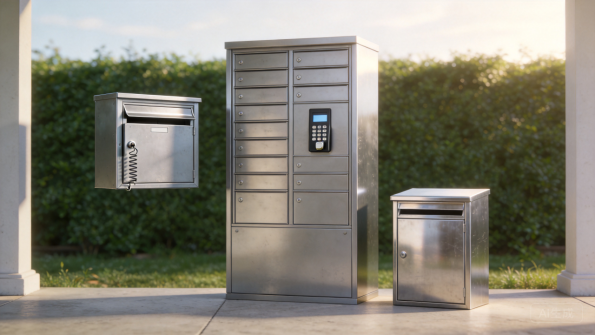
Figure 1: Finished custom sheet metal parcel boxes with powder-coated finishes and secure locking systems.
The Product: What Makes a Sheet Metal Parcel Box
Core Structure and Standard Configurations
A sheet metal parcel box is a lockable metal enclosure that receives packages when no one is home and stores them securely until the recipient retrieves them. Unlike a standard mailbox, a parcel box is sized for shipping cartons rather than envelopes, which means its structure must be stiff, its door must be large enough for typical e-commerce packages, and its locking system must resist both casual tampering and determined theft. The three most common configurations are wall-mounted units, freestanding post-mounted boxes, and modular locker banks used in multi-family buildings, workplaces, and retail pickup points.
The structural core is simple: a five-sided body, a retrieval door with a lock, a one-way deposit door, and an internal baffle. Most residential models use 1.2 mm to 2.0 mm steel, roughly 18 to 14 gauge, with internal dimensions of about 400 mm wide, 300 mm deep, and 500 mm high, which accommodates a large share of typical e-commerce parcels. The United States Postal Service publishes packaging guidance and dimensional expectations for parcel handling, and designers should review them before finalizing internal volume, door openings, and carrier access (USPS packaging guidance).
Modular locker banks follow the same principles at a larger scale: individual compartments are built from formed sheet metal panels and joined into a frame, with each compartment rated for a specific parcel size class. Whether the product is a single wall box or a 20-compartment locker, the manufacturing fundamentals are identical, which is why brands often start with one standard design and extend the family later as volumes grow.
Locking and Access Control
The locking system determines how carriers deliver packages and how owners retrieve them. The most common residential approach is a spring-loaded deposit door that opens inward only, combined with a keyed retrieval door. Because the deposit door accepts packages but cannot be pulled open from the outside, it removes the simplest porch-piracy attack, reaching through the opening. An internal baffle plate adds a second barrier, so a thief must either unlock the retrieval door or deform the box itself.
Cam locks and five-pin cylinder locks are standard on residential boxes, while deadbolt-style slam latches engage automatically when the door closes, eliminating the risk that a carrier leaves the box unlocked. Electronic options, including keypads, Bluetooth, and connected smart locks, add one-time codes for delivery drivers and audit trails for property managers. The lock area itself needs reinforcement: a 3 mm to 5 mm backing plate welded behind the lock keeps the mechanism from becoming the weakest point in the structure.
Weatherproofing and Sealing
An outdoor parcel box must protect its contents from rain, snow, condensation, and ultraviolet exposure. Good designs achieve IP54 or better by combining overlapping door edges, drip channels, continuous EPDM or silicone gaskets, and a sloped roof that sheds water. The deposit door deserves special attention, because it opens to the outside every time a carrier drops off a package and is the most likely path for wind-driven rain.
Sealing quality depends on fabrication as much as design. Door openings must be cut and bent within tight tolerances so gaskets compress evenly around the full perimeter, and weld seams must be continuous at the corners where water is most likely to enter. A box that looks weatherproof on paper but leaks around the door seal fails its core purpose, which is why established manufacturers verify sealing with water tests during production.
Customization Options
Custom sheet metal fabrication gives brands flexibility that off-the-shelf products cannot match. Compartment size and layout, door type, lock integration, mounting hardware, brand colors, logo placement, and interior dividers can all be engineered into the design. Powder coating supports RAL and Pantone matching, so a parcel box line can carry the same finish language as the rest of a brand’s outdoor products.
Customization also extends to secondary features that matter in production and daily use: anti-theft fasteners, concealed hinges, padlock hasps, label holders, drainage holes in the interior floor, and removable shelves for different package sizes. Because every feature is formed from the same sheet metal design, brands can differentiate their products while keeping the manufacturing process efficient and repeatable.
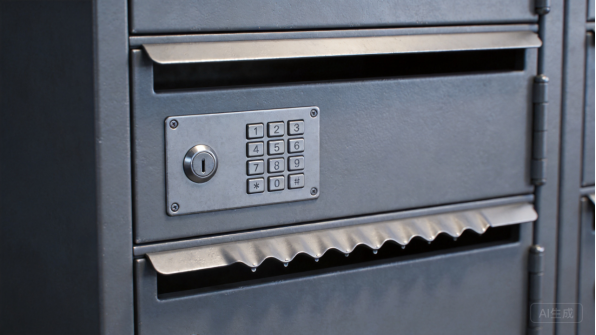
Figure 2: Precision-engineered door details: electronic lock plate, spring-loaded deposit door, and concealed hinges.
Use Cases and Applications
Residential Front Porch and Driveway
The largest market for parcel boxes is the single-family home, where packages are routinely left at the door while owners are at work. Statista reports that e-commerce continues to account for a growing share of total retail sales worldwide, and Pitney Bowes’ Parcel Shipping Index tracks parcel volumes that now exceed 100 billion units a year globally. A growing share of those parcels arrives at a private address, which makes the wall-mounted parcel box beside the front door a natural product for hardware brands and home-improvement channels.
Residential boxes are designed for one simple job: let the carrier drop a package through the deposit door, then let the owner retrieve it with a key or code. The box must mount securely to the wall or post, survive decades of weather, and match the architectural style of the house. For manufacturers, the residential segment is attractive because volumes are high, designs are standardized, and the same box can be sold through multiple retail and online channels.
Multi-Family and Community Lockers
Apartment buildings and condominiums face a different problem: dozens of packages arriving every day for residents who are not always home. Community locker banks solve this by providing a row of compartments managed by a central system. Property managers receive deliveries from carriers, place each package in an assigned compartment, and send the resident a one-time code. Some systems even give carriers direct access, so packages are sorted and secured without staff involvement.
Locker banks are typically built from the same galvanized or powder-coated steel used for residential boxes, but with standardized compartment sizes, electronic locks, and heavier-duty hinges because they open and close hundreds of times per week. Community associations and property developers specify these systems to reduce lost-package complaints and keep lobbies organized, which makes multi-family projects a steady source of repeat orders for sheet metal fabricators.
Commercial Offices and Gated Communities
Office buildings, medical facilities, universities, and gated communities all need a controlled place for deliveries when staff or residents are away from the front desk. A compact locker bank in a reception area or mailroom handles documents, small equipment, and catering orders while keeping them out of sight. These installations often require custom sizing to fit existing walls, branded finishes to match the interior, and electronic locks that integrate with access-control systems.
From a fabrication perspective, commercial projects add requirements that residential boxes do not: fire-rated materials in some jurisdictions, cable management for powered locks, tamper-resistant mounting, and finishes that hold up to indoor traffic and cleaning chemicals. Because every installation is slightly different, commercial buyers benefit most from working with a fabricator that can engineer and produce one-off configurations without long tooling lead times.
Retail Pickup and Last-Mile Logistics
Retailers and logistics operators are using parcel lockers to close the last-mile gap. A locker at a convenience store, supermarket, or transit station gives shoppers a secure pickup point that is open longer than a staffed counter, and it gives carriers a single drop location that serves many customers at once. The same modular compartments used in apartment lobbies appear in retail settings, often with brand graphics, weatherproof outdoor construction, and software that issues pickup codes by SMS or email.
Last-mile lockers are the most demanding application because they run unattended in public spaces. Enclosures need robust locking mechanisms, reinforced doors, weather sealing if installed outdoors, and enough strength to resist vandalism. The volume of compartments and the frequency of use also make serviceability important: individual doors, locks, and electronic modules should be replaceable so the operator can maintain the locker without replacing the whole bank.
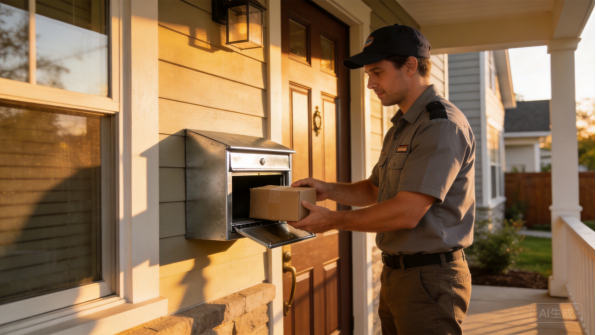
Figure 3: A wall-mounted parcel box in a residential setting receives packages when no one is home.
Material Selection
Galvanized Steel: The Default Standard
Galvanized steel is the workhorse of the parcel box industry. A zinc coating applied through hot-dip galvanizing provides sacrificial protection: if the surface is scratched, the surrounding zinc corrodes in place of the steel beneath it. The American Galvanizers Association documents that hot-dip galvanized coatings can protect steel for decades in rural environments and for 20 years or more in urban and suburban settings, which is why most residential parcel boxes are built from galvanized steel in 1.5 mm to 2.0 mm thicknesses.
Galvanized steel also offers the best balance of security and cost for mass production. It cuts cleanly on fiber lasers, forms consistently on CNC press brakes, and welds well when the coating is prepared correctly. Mechanical property data for common steel grades and coatings is available through MatWeb’s materials database, allowing engineers to verify yield strength, hardness, and formability before committing to a design.
Stainless Steel: Premium and Coastal Applications
For premium boxes, coastal properties, and installations where coating damage is unacceptable, stainless steel, primarily grades 304 and 316, delivers corrosion resistance without relying on a paint film. SSINA provides detailed guidance on stainless steel grade selection for outdoor architectural applications: grade 304 suits most residential environments, while grade 316 adds molybdenum for superior resistance to salt spray and chlorides, making it the standard choice within a few kilometers of the ocean.
Stainless steel costs roughly two to three times more than galvanized steel on a material basis, and it demands cleaner handling to prevent carbon steel contamination and weld discoloration. In return, the box never needs recoating, ages gracefully, and carries a premium look that many homeowners and architects are willing to pay for. Stainless is also the material of choice for smart lockers in exposed public locations where painted surfaces would be quickly vandalized.
Aluminum: Lightweight and Corrosion-Resistant
Aluminum parcel boxes, typically fabricated from 5052 or 6061 alloy, are naturally corrosion-resistant and roughly one-third the weight of an equivalent steel box. That makes them easier to mount on walls, cheaper to ship, and popular for modern architectural designs. Aluminum also accepts powder coating and anodizing well, giving brands a wide palette of finishes.
The trade-off is strength. Aluminum’s lower hardness and yield strength mean thicker panels are needed to reach the same resistance to forced entry, which partially cancels the weight advantage. Aluminum is also more sensitive to weld heat, so corner joints require controlled welding parameters to avoid distortion and reduced strength. For residential boxes where weight matters more than brute-force security, aluminum is a strong choice; for anti-theft lockers in public spaces, steel remains the safer default.
Coatings and Corrosion Protection
Whatever the base metal, the finish determines how long the box looks good and resists corrosion. Powder coating is the dominant technology: electrostatically charged powder is sprayed onto the part and cured in an oven, forming a tough 60 to 80 micron film. The Powder Coating Institute publishes technical resources on coating selection, application, and testing for outdoor products, including UV-stable polyester formulations that hold their color for a decade or more of direct sun.
A proper finish is built on preparation. Multi-stage pre-treatment, including degreasing, rinsing, and phosphate conversion coating, is what gives powder coating its adhesion, and skipping it is the most common cause of premature peeling at edges. For industrial-grade outdoor protection, buyers can specify coating systems that meet the corrosion categories of ISO 12944, the international standard for protective paint systems on steel structures, to match expected service life with environmental exposure.
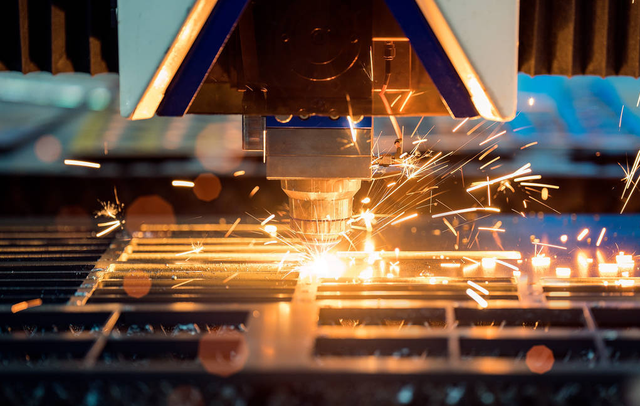
Figure 4: Fiber laser cutting produces accurate blanks for parcel box bodies, doors, and baffles.
Production Difficulty
Laser Cutting and Nesting
Every parcel box starts as flat steel, and the quality of the finished box is decided at the cutting stage. Fiber laser cutting produces the body panels, doors, baffles, and mounting plates with clean edges and tight tolerances, typically within plus or minus 0.1 mm. At XHX Metal, two 6kW fiber laser cutting machines deliver plus or minus 0.01 mm positioning accuracy, which is the foundation for panels that align correctly during welding and for doors that close evenly against their seals.
Nesting software arranges the flat blanks on each sheet to minimize scrap, and the nesting strategy affects cost directly: a well-nested sheet of parcel box parts uses 20 percent to 30 percent more of the material than a careless layout. Cutting order, lead-in points, and micro-joints also matter, because they control edge quality and keep small parts from tipping during cutting. These details are invisible in the finished product but determine whether a production run is profitable.
CNC Bending and Dimensional Control
Bending converts flat blanks into the three-dimensional box geometry: the body, the door frame, the deposit chute, and the internal baffle all depend on accurate bends. Each bend must compensate for springback, material thickness, and bend radius, and the sequence matters because the first bend changes the reference surfaces for every bend after it. Engineers Edge publishes bend allowance and bend deduction references that engineers use to lay out blanks so that finished dimensions land on target.
Modern CNC press brakes with programmable back gauges and angle measurement hold bend angles consistently across thousands of parts. The operator verifies the first formed part against the drawing, then monitors the run with periodic checks. For parcel boxes, the critical dimensions are the door opening width and height, the flange positions where gaskets sit, and the flatness of the mounting face, because errors in any of these produce gaps, rattles, or leaks after assembly.
Welding, Sealing, and Assembly
Welding joins the box body and attaches brackets, hinge mounts, and lock plates, and it is the step where poor process control shows up most quickly. Heat from welding can distort thin panels, so parts are clamped in fixtures that hold the correct geometry while the weld cools. TWI Global provides technical guidance on welding processes for thin-gauge sheet metal, including joint design, heat input control, and distortion management, which are directly applicable to parcel box production.
For outdoor boxes, exterior seams should be continuous welds rather than spot welds, because every gap is a potential water entry point. TIG welding produces clean, narrow beads suited to visible surfaces, while MIG welding deposits material faster on internal joints. After welding, seams are ground smooth before finishing, and water-tightness is verified on representative units. Fixtures, weld parameters, and inspection points should be documented so quality does not drift between batches.
Quality Control and Testing
Quality control for parcel boxes combines dimensional checks with functional testing. Coordinate measuring machines verify critical dimensions on first articles, coating thickness gauges confirm the powder coat meets specification, and water tests or leak checks validate sealing on outdoor models. Accelerated corrosion testing, such as salt spray exposure conducted to the relevant ASTM International standards, gives buyers confidence that the finish will survive years of outdoor use.
The testing program should be agreed before production starts, because it drives both cost and lead time. A residential box with a visual check and a water test is a different product than a public locker with documented salt spray, torque, and cycle testing on every batch. The right level of verification depends on the application, and a fabricator’s willingness to document tests is one of the clearest signals of its manufacturing discipline.
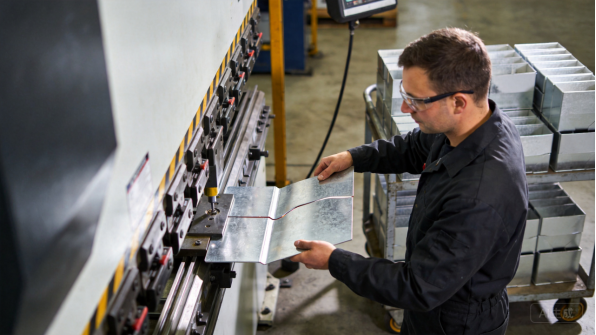
Figure 5: CNC press brake forming shapes parcel box panels to consistent bend angles.
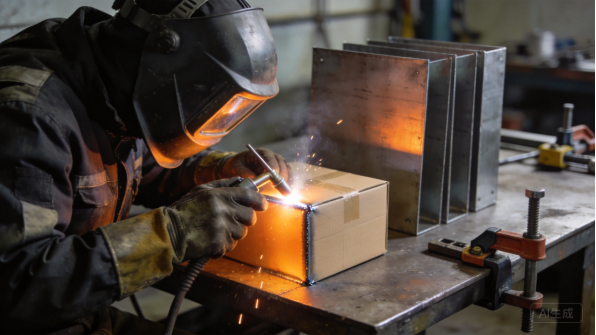
Figure 6: Controlled welding and fixturing keep parcel box seams strong and watertight.
Production Lead Times
Prototype Lead Times
For a new parcel box design, the first milestone is a prototype that proves the geometry, the door fit, and the finish. Simple single-compartment boxes are typically delivered in 5 to 12 business days after engineering review, which includes cutting, forming, welding, and finishing one or two samples. Prototypes are worth the wait: they reveal fit issues in the door seal, problems with gasket compression, and mounting difficulties that are nearly impossible to catch from a 3D model.
The engineering review itself, usually one to two business days, is where the fabricator checks the design for manufacturability: bend radii, flange lengths, material thickness, and tolerance stacks. Catching a problem at this stage costs nothing; catching it after tooling or welding starts can add weeks. Buyers should expect the fabricator to return a short list of design comments with the prototype quotation, not just a price.
Tooling and Process Setup
Most parcel boxes can be produced without dedicated stamping dies, using laser cutting and CNC bending, which keeps tooling costs low and makes design changes inexpensive. The setup that matters is process tooling: welding fixtures that hold panel geometry, bending programs with verified parameters, and inspection gauges that operators use on the line. Building and validating this setup typically takes one to two weeks for a new product family.
For very high volumes, a manufacturer may add dedicated tooling such as a progressive die for small components or a stamping line for body panels, reducing per-part cost at the price of longer tooling lead times, often four to eight weeks, and higher upfront investment. The right decision depends on annual volume: under roughly 20,000 units, laser cutting and bending is almost always the lower-cost path; above that, the economics should be modeled both ways.
Production Batches and Volume Planning
Once the prototype and process setup are approved, production lead time depends on batch size, finishing capacity, and testing requirements. Typical production runs of 100 to 5,000 units are quoted at 15 to 30 business days, with most of that time consumed by surface preparation, powder coating, and curing, which are batch processes with fixed cycle times. Locker banks and multi-compartment systems take longer because they are assemblies of many parts that must be built, finished, and fitted together.
Forecast sharing is the most effective way to keep lead times short. When a buyer shares rolling monthly forecasts, the factory can reserve material and finishing capacity in advance, order galvanized or stainless coil ahead of the purchase order, and schedule production to smooth out peaks. Material availability matters more than machine time: standard galvanized steel is usually on hand, while specific stainless grades, custom powder colors, and electronic lock components can add one to two weeks.
Packaging, Logistics, and Communication
Finished parcel boxes are large and easily scratched, so packaging is a real cost and schedule item. Individual boxes are wrapped in protective film, packed in export cartons with foam corner pads, and palletized with stretch wrap, which keeps them clean through ocean freight and local delivery. The fabricator should provide carton dimensions, gross weight, and loading photos so the buyer can plan freight and customs clearance.
Corrosion protection during transit is worth specifying: condensation inside a container can attack even coated steel, so rust-preventive paper or VCI film is standard for long sea voyages. Finally, communication should follow clear milestones: design review, material confirmation, first-article inspection, and shipment. A weekly update with photos of parts at each stage gives buyers confidence without requiring site visits, and it keeps small issues from becoming shipping delays.
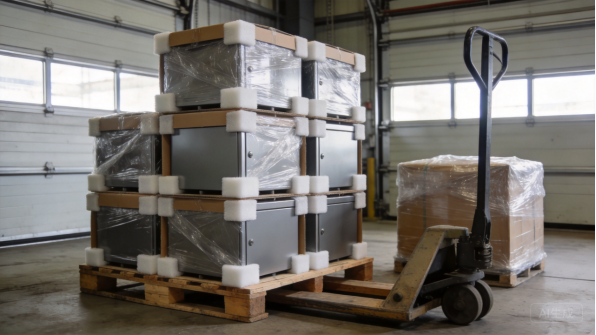
Figure 7: Protective packaging keeps finished parcel boxes safe from factory to destination.
Past Case Studies
Residential Hardware Brand: A Wall-Mounted Parcel Box Line
A hardware brand approached XHX Metal with a sketch and a target retail price for a wall-mounted residential parcel box. The product needed to fit common US porch dimensions, survive rain and direct sun, and sell at a price point that required efficient manufacturing. The engineering team converted the sketch into a producible design: a five-panel body with a one-piece U-bend, a spring-loaded deposit door, a keyed retrieval door, and an anti-fish baffle, all in 1.5 mm galvanized steel with a textured powder coat.
The prototype revealed a door seal issue that the 3D model did not show, so the door frame flange was adjusted and the gasket profile changed before production started. Once approved, the line produced 500 units per month with water tests on a sample from every batch. The brand scaled the same construction into a larger freestanding model, and the tooling knowledge from the first design carried directly into the second.
Property Developer: A Community Locker Bank
A property developer needed a 16-compartment locker bank for the entrance of a new apartment building, with three compartment sizes, electronic keypad locks, and a powder coat color matched to the lobby. The project required custom internal dimensions to fit an existing wall alcove and cable routing for the powered locks, which meant the bank had to be engineered as a single assembly rather than assembled from catalog parts.
The fabrication team built the compartments from 1.5 mm galvanized steel, welded the frame in a fixture to keep all 16 compartments aligned, and installed individual lock plates that could be replaced in the field. The complete bank was test-fitted in the factory before delivery, and the developer installed it in one day. The same design was later reproduced for a second building with different compartment proportions, demonstrating that a well-built modular system can be adapted without redesigning the whole product.
Logistics Operator: Modular Smart Lockers
A logistics operator needed a weatherproof modular locker for unattended pickup points at retail locations. The requirements were demanding: outdoor-rated construction, electronic locks with one-time codes, doors that would survive thousands of open-close cycles, and vandal-resistant panels in a public setting. Stainless steel was selected for the exterior panels, with galvanized internal frames and powder-coated steel doors.
The production program used laser cutting and CNC bending for the panels, fixture welding for the frames, and a documented testing protocol that included cycle testing on the doors and salt spray testing on representative finished units. The first order of 40 banks was delivered in stages so the operator could pilot two locations before full rollout. Feedback from the pilot changed the door handle design, and the modification was implemented on the remaining production without disrupting the schedule.
Security Products OEM: Heavy-Gauge Secure Drop Boxes
A security products company required a heavy-gauge steel drop box for commercial sites where valuable documents and small items are collected. The specification called for 2.0 mm steel, a reinforced lock pocket with a backing plate, concealed hinges, and a deposit slot designed so contents cannot be fished out. Because the boxes carried a strict security claim, the OEM needed documented welds, a tested locking system, and finish durability.
XHX Metal produced first articles within ten business days, then delivered production in batches with inspection records for weld continuity, lock installation, and coating thickness. The OEM incorporated the boxes into its catalog and reordered on a monthly schedule. The program also generated a design improvement: a drainage detail in the deposit area that kept rainwater from pooling, which was incorporated into every subsequent order at no additional cost.
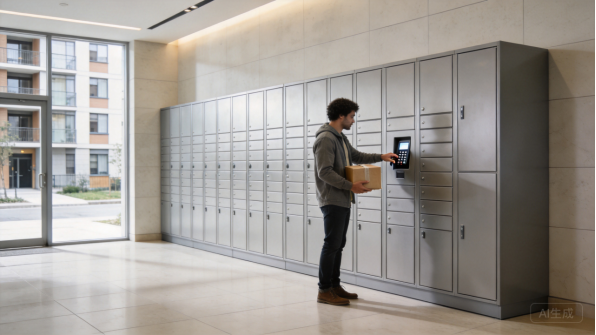
Figure 8: Modular sheet metal parcel lockers serve multi-family buildings and community pickup points.
Summary and Next Steps
Key Takeaways
A custom sheet metal parcel box is a deceptively simple product with demanding requirements. The design must balance package capacity, locking security, weather sealing, and installation practicality; the material must match the environment, from suburban galvanized steel to coastal stainless; and the manufacturing process must hold tolerances that keep doors, gaskets, and locks working for years. Each of these decisions flows into cost and lead time, so the earlier they are settled, the smoother the project runs.
For buyers, the practical takeaways are: specify the parcel sizes and security level before asking for a quote, choose the material for the real climate rather than the lowest first cost, and require documented quality checks on prototypes and production samples. A fabricator that can cut, bend, weld, finish, and test under one roof will always give shorter lead times and simpler accountability than one that subcontracts each step.
The parcel box category sits at the intersection of e-commerce growth and home security, and demand is not limited to one climate or market. Buyers who approach the product with clear parcel-size data, realistic security targets, and a fabricator that documents its process will bring a better product to market faster than teams that treat the parcel box as a simple metal box.
Why XHX Metal
XHX Metal is a privately owned sheet metal manufacturer in Dongguan, China, operating a 2,000 square meter factory with about 30 employees and an annual capacity exceeding 500,000 pieces. The factory runs under an ISO 9001:2015 quality management system and holds CE and SGS certifications, and it serves both domestic and export customers with packaging designed for ocean freight. Two 6kW fiber laser cutting machines, CNC press brakes, TIG and MIG welding, and a multi-stage finishing line cover the complete parcel box manufacturing process in-house.
The company has produced custom enclosures for residential mailboxes, secure delivery boxes, community lockers, and industrial products, and it supports customers from design review through production delivery. Engineers provide manufacturing feedback during quotation, prototypes are built before mass production, and inspection records accompany each batch. Corrosion and coating performance is validated with reference to standards such as AMPP guidance for protective coatings, so buyers can specify outdoor durability with confidence. For parcel box programs, buyers can also review related sheet metal fabrication services and product pages to see the range of enclosures the factory produces.
How to Start Your Project
The fastest way to start a parcel box project is to send a STEP or STP file together with a drawing that states material, thickness, finish, and quantity. If the design is not finalized, send photos or sketches of the product you have in mind, the parcel sizes it must hold, and the target price, and the engineering team will help turn the concept into a manufacturable design. The typical path is: engineering review, quotation, sample approval, production, and shipment, with clear communication at every milestone.
Quotations should state material, finish, packaging, and testing assumptions so that prices can be compared fairly, and the quotation process usually takes one to three business days after the file review. To discuss a parcel box program, contact Barry at +86 13244963694 or sales01@xinghaoxin.com, or send your design through the XHX Metal website. With the right design and the right partner, a custom parcel box program moves from concept to production in weeks, not months.