BBQ grill sheet metal parts manufacturing is the discipline behind every grill that survives years of backyard use: bodies, lids, drip trays, burner shields, and side tables that must resist heat, moisture, and food contact while fitting together cleanly on an assembly line. The outdoor cooking industry is large and growing, and HPBA, the Hearth, Patio & Barbecue Association, tracks steady consumer demand for grills across North America and beyond, which creates real volume for sheet metal fabricators that serve grill brands and their suppliers.
This guide follows the full journey of a BBQ grill component program in seven steps: the product and its part families, the applications each serves, material selection, production difficulty, lead times, past case studies, and a practical summary. Whether you are a grill brand launching a new model, an outdoor kitchen OEM sourcing stainless components, or an e-commerce company developing a compact grill, the information here will help you brief a fabricator, plan realistic timelines, and avoid the heat and corrosion problems that appear after the first season.
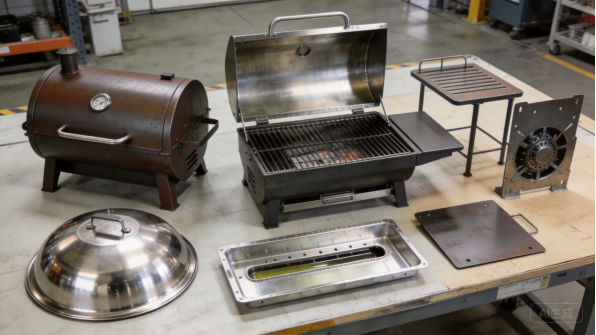
Figure 1: Finished BBQ grill sheet metal parts with powder-coated and stainless construction.
The Product: What Are BBQ Grill Sheet Metal Parts
Grill Types and Part Families
Grills come in three main types: gas, charcoal, and pellet. Gas grills use burners under a cooking grate, charcoal grills burn fuel directly beneath the food, and pellet grills feed wood pellets through an auger for smoke flavor and temperature control. Each type uses different sheet metal parts, but they share a common structure: a body or firebox, a lid, a cooking grate, a grease management system, and the panels and brackets that hold it all together.
Within a grill, the part families are distinct. Body and lid panels are the largest formed parts, drip trays and grease channels manage runoff, burner shields protect the burners from drips, side tables and shelves add workspace, and control panels carry the knobs and ignition. BBQ grill sheet metal parts manufacturing spans all of these, and a fabricator that handles the full range can supply a complete component set to one brand.
Core Components and Their Roles
The firebox body is the structural core: it contains the heat source, supports the cooking grate, and connects to the lid, legs, and side tables. The lid is a formed shell that traps heat and smoke, often double-walled for insulation, and its hinge points must align so it opens and closes smoothly for years. The drip tray and grease channel route drips away from the heat source to prevent flare-ups, and their slope and edge geometry are design details that decide whether grease pools or drains.
Burner shields, heat tents, and flavorizer bars protect burners and distribute heat across the cooking surface, and the cooking grate itself is usually cast iron or stainless, sourced separately from the sheet metal body. Control panels, valve mounts, and ignition brackets complete the assembly. Every component is a fit point, and the sheet metal design must hold tolerances so the grill assembles without shims or rework.
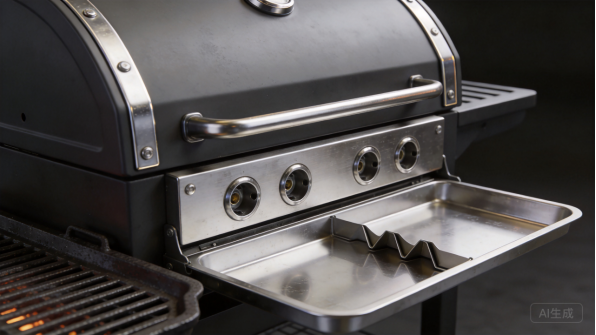
Figure 2: Grill components include burner shields, lids, grates, and grease trays.
Design Drivers: Heat, Food Safety, and Corrosion
Grill parts face three design drivers that ordinary sheet metal products do not: heat, food safety, and outdoor corrosion. Components near the fire must resist high temperature without warping or degrading, which drives material choice and vent design. Food contact surfaces must meet food safety expectations, and NSF International standards and similar requirements influence material and coating decisions for cooking zones.
Outdoor corrosion is the failure mode buyers see first: rust on the body, peeling powder coat, and seized fasteners. The design responds with coated steel for the outer shell, stainless for heat and corrosion-critical parts, and drainage details that stop water pooling. Understanding these drivers before quoting is what separates grill manufacturing from general sheet metal work, because the same bracket that works in a machine fails on a grill.
Customization in BBQ Grill Sheet Metal Parts Manufacturing
Custom BBQ grill sheet metal parts manufacturing exists because every brand needs its own look and fit. Buyers customize body dimensions, lid profiles, panel hole patterns, color-matched powder coating, and hardware kits, and they expect the parts to assemble into a grill that matches the marketing render. Custom fabrication also supports product families: one body platform can carry several burner configurations and side table options.
Compliance is part of customization. Gas grills sold in North America typically need UL or CSA certification evidence, and brands need documented materials and test records for their certification files. A fabricator that can provide material certifications, coating evidence, and consistent batch quality gives grill brands the file they need to launch products in regulated markets.
Use Cases and Applications
Residential Gas Grills
Residential gas grills are the volume engine of the industry. Brands sell hundreds of thousands of units a year through retail and e-commerce, and each unit needs a full set of sheet metal parts: body, lid, side tables, drip tray, and brackets. For these programs, manufacturing cost matters, so designers use coated steel for the shell and reserve stainless for heat-critical components.
Residential programs reward consistency and packaging. Retailers and online buyers reject grills with scratches, dents, or mismatched panels, so parts must be protected through transit and assemble without forcing. For fabricators, the residential market offers steady volumes and repeat designs, and brands reorder against retail forecasts. The HPBA industry data shows gas grills remain the dominant backyard product, which keeps this volume stable year after year, and this volume supports predictable production planning in BBQ grill sheet metal parts manufacturing.
Charcoal and Kamado Grills
Charcoal grills use a simpler construction: a bowl or firebox, a lid, a grate, and air vents. Traditional kettle grills are spun or formed steel with porcelain or powder-coated finishes, while kamado grills use ceramic bodies with steel bands and hardware. For sheet metal fabricators, the steel parts of charcoal grills are straightforward but volume-heavy, and vent, hinge, and handle brackets need precision to operate smoothly.
Charcoal programs often appeal to value and performance brands. A compact charcoal grill can ship in flat-pack form with a small parts kit, and the manufacturing focus is cost and fit. Air vent geometry affects how the user controls temperature, so the stamped vent plates and their rotation stops are functional parts, not just trim. For fabricators, charcoal grills add variety to a gas-dominated portfolio.
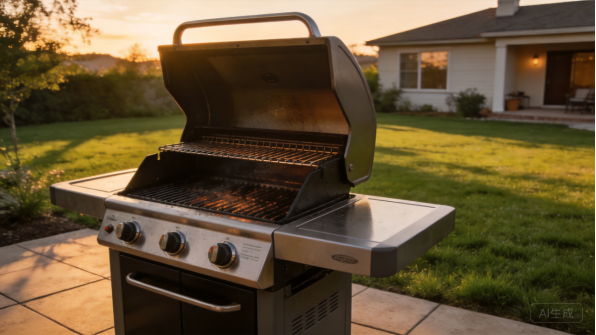
Figure 3: A backyard gas grill brings the manufactured components together in daily use.
Commercial and Outdoor Kitchen Grills
Commercial and outdoor kitchen grills are built for daily use in restaurants, hotels, and high-end homes. These products use heavier stainless steel construction, larger cooking surfaces, and more complex assemblies, and they are judged on durability, heat performance, and cleanability. Stainless bodies and components resist corrosion and wipe down easily, which is why commercial grills are almost entirely stainless.
Outdoor kitchen programs are often project-based: fabricators build components for built-in grill units, side burners, and storage modules that match a kitchen layout. SSINA provides guidance on stainless grades for outdoor food equipment, and buyers specify grade 304 or 316 depending on the environment. These programs reward fabricators with stainless experience and the documentation discipline that commercial buyers expect.
For fabricators, commercial programs build long-term relationships because replacements and expansions follow the initial order.
Portable and Specialty Grills
Portable and specialty grills serve tailgating, camping, apartment balconies, and niche cooking styles. These compact products need lightweight construction, folding or detachable features, and finishes that survive transport, and they often use aluminum and stainless to keep weight down. Tabletop gas grills, portable charcoal grills, and compact pellet grills each bring a different sheet metal challenge.
Portable programs emphasize design cleverness: a lid that doubles as a wind guard, a drip tray that snaps in without tools, legs that fold into the body. For fabricators, these products are smaller and lighter than residential grills but require tighter tolerances because every feature has to work by hand. Specialty grills also let brands differentiate, which makes them a useful program for fabricators building long-term relationships.
Material Selection
Cold-Rolled Steel with Powder Coating
Cold-rolled steel is the default material for grill bodies, lids, and side tables, protected by a powder coating that provides color and corrosion resistance. The steel forms cleanly and welds predictably, and its mechanical properties are documented in references such as MatWeb’s materials database for direct comparison. Typical thicknesses range from 0.8 mm for covers to 1.5 mm for fireboxes that carry heat and weight.
The coating does the outdoor work. Powder coating, applied electrostatically and cured in an oven, forms a tough 60 to 80 micron film, and the Powder Coating Institute publishes technical resources on coating selection and testing for outdoor products. For grill shells, textured and super-durable polyester powders resist UV and hide handling marks, and coating performance is verified with standards published by ASTM International, including salt spray and adhesion tests.
Stainless Steel
In BBQ grill sheet metal parts manufacturing, stainless steel, primarily grades 304 and 430, is used where heat, corrosion, or appearance matters: burner shields, heat tents, drip trays, and the outer shells of commercial and premium grills. Grade 430 is a cost-effective ferritic stainless common in grill bodies, while grade 304 offers better corrosion resistance for outdoor kitchen and coastal installations. SSINA provides grade selection guidance for outdoor food equipment.
Stainless costs more and demands careful handling, but it never needs recoating and tolerates heat better than coated carbon steel. For heat zones, stainless is the standard because painted surfaces degrade under high temperature. Buyers should match the grade to the component’s job: a burner shield can use 430, while a coastal built-in grill should use 304 or 316. The fabricator’s stainless experience shows in weld quality and surface finish.

Figure 4: Cold-rolled steel, stainless, and aluminum cover the grill material range.
Cast Iron and Aluminum
Cast iron is the classic cooking grate material: it holds heat, sears well, and lasts for decades when seasoned, though it is heavy and rusts if neglected. Porcelain-coated cast iron grates combine heat performance with easier cleaning. Aluminum appears in portable grills, side tables, and structural brackets where weight matters, and it is about one-third the weight of steel with natural corrosion resistance.
These materials are usually sourced as finished components rather than fabricated in-house: grates are cast by specialist foundries, and aluminum parts may be extruded or cast before machining. The fabricator’s role is to integrate them: brackets that locate the grate, frames that hold the aluminum table, and hardware that joins dissimilar materials without galvanic corrosion. Material compatibility at these joints is a design responsibility.
Heat-Resistant Finishes and Food-Safe Coatings
Finishes are specified by zone. Outer shells use decorative outdoor powder coatings, while components near the fire use heat-resistant coatings or bare stainless, because standard powder coating degrades above roughly 200 degrees Celsius. High-temperature silicone paints and ceramic coatings serve heat shields and fireboxes, and their performance is chosen to match the component’s exposure.
Food contact adds another layer of specification. Cooking grates and surfaces that touch food must meet food-safe material expectations, and NSF and related standards guide those choices. Fasteners and hardware should also resist corrosion without coating failures, which is why stainless hardware is standard on grills. Agreeing the finish and food-contact specification at quotation prevents the most common grill warranty claims: rust, peeling, and heat damage.
Production Difficulty
Laser Cutting and Hole Patterns
BBQ grill sheet metal parts manufacturing begins with laser cutting, which produces body panels, lids, brackets, and the vent, handle, and mounting holes that make the grill work. Fiber laser systems hold tolerances around plus or minus 0.1 mm, and at XHX Metal two 6kW fiber laser cutting machines deliver plus or minus 0.01 mm positioning accuracy, which matters when body and lid holes must line up across the whole assembly.
Cutting quality is visible on a grill. Burrs around vent holes catch fingers and look unfinished, edge roughness around mounting holes damages powder coat during assembly, and pierce points must sit in hidden areas. Nesting software arranges parts to minimize scrap across the component set, and cutting parameters are tuned per material and thickness. The cutting stage decides whether a grill assembles cleanly and looks good on the showroom floor.
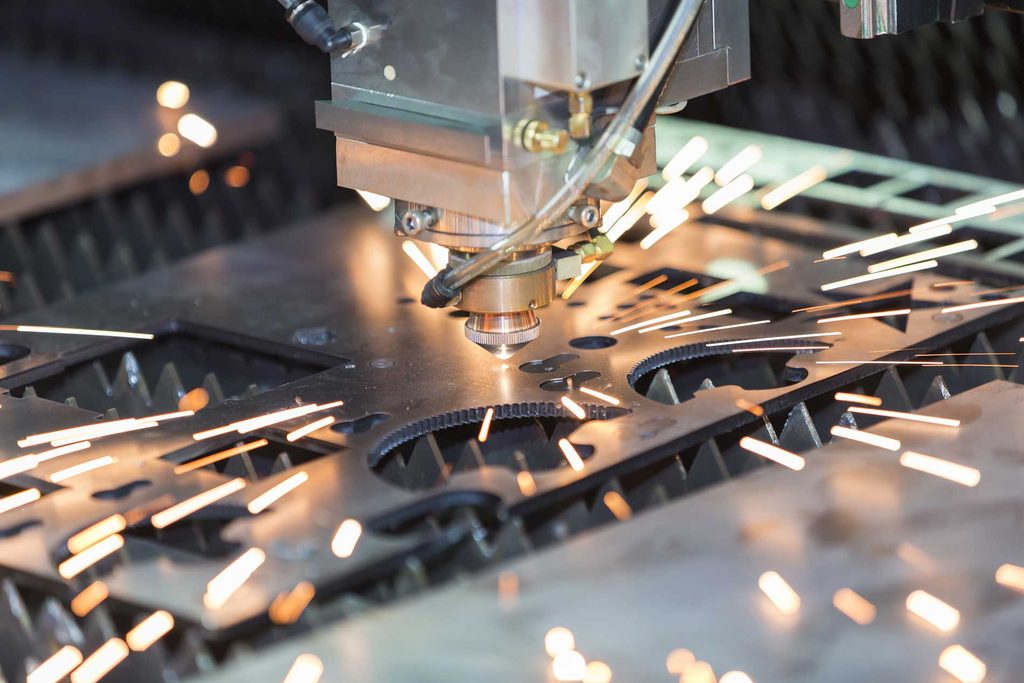
Figure 5: Fiber laser cutting produces accurate grill panels and vent patterns.
CNC Bending and Forming
Bending converts flat blanks into lids, bodies, grease trays, and brackets, and springback compensation is essential for the thicker and stainless materials grills use. Engineers Edge publishes bend allowance and deduction references used to lay out blanks and predict finished dimensions, and modern CNC press brakes with programmable back gauges hold bend positions and angles consistently across production runs.
For grill parts, the critical checks are lid and body flange alignment, grease channel slope, and the flatness of panel edges that join adjacent parts. A lid that is 2 mm out of shape will not close evenly, and a grease tray with the wrong angle leaves pools of fat. First-article verification and in-process sampling keep the forming process under control, and this discipline is what lets brands assemble grills without shims.
Welding, Fastening, and Assembly
In BBQ grill sheet metal parts manufacturing, welding joins structural grill components: firebox brackets, lid hinge mounts, and support frames, and heat from welding can distort thin panels, so parts are clamped in fixtures that hold geometry while the weld cools. TWI Global provides technical guidance on welding thin steel and controlling distortion, and stainless components need controlled heat input to preserve corrosion resistance.
Assembly adds the hardware that makes the grill function: hinges, handles, knobs, ignition brackets, and vent mechanisms are fitted with torque specifications and alignment checks. For brands that assemble at their own plant, the fabricator ships parts ready to assemble; for complete programs, the fabricator can build and test subassemblies. Fixture-based assembly with documented checks keeps quality consistent across thousands of units.
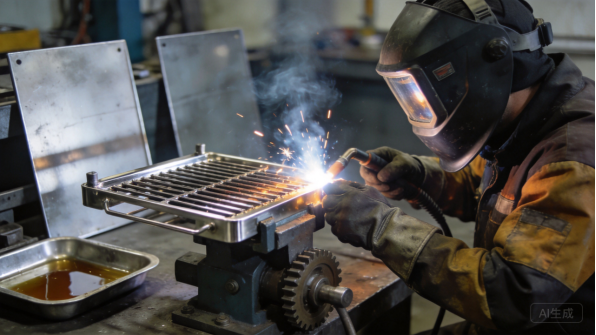
Figure 6: Controlled welding and fixturing build grill components without distortion.
Quality Control and Testing
Grill quality control combines dimensional inspection with functional and coating checks. First articles are inspected against the drawing, verifying hole patterns, flange angles, and panel fit, and production batches follow a control plan with sampling. Coating thickness, edge quality, hinge alignment, and vent operation are checked at defined points, and representative parts are salt spray tested to confirm outdoor durability.
The testing program should be agreed before production because it affects cost and lead time. A budget charcoal grill may need only dimensional and visual checks, while a premium gas grill requires salt spray evidence, coating verification, and documented materials for certification. A fabricator that documents tests with photos and reports gives brands evidence they can use in their UL or CSA files and in marketing, which is a real advantage for grill products.
Production Lead Times
RFQ, Engineering Review, and Prototypes
A BBQ grill sheet metal parts manufacturing program starts with an RFQ: drawings or product specification, material, finish, quantities, and target timing. The fabricator’s engineering team reviews the design for manufacturability, checking bend radii, panel fit, coating requirements, and assembly sequence, and returns a quotation with comments within one to three business days. Prototypes are typically delivered in seven to fifteen business days for a component family.
The prototype is where grill fit gets validated: lids are fitted to bodies, hinge points are checked, and panels are test-assembled with the hardware. Prototype feedback should include fit notes and suggested drawing changes. For grill programs, a full assembly sample with hardware, not just individual parts, is worth the cost because it proves the product assembles and closes correctly before production tooling is committed.
Tooling and Process Setup
Most grill parts are produced with laser cutting and CNC bending, which keeps tooling costs low and design changes inexpensive. The setup that matters is process tooling: bending programs with verified parameters, welding fixtures for lids and brackets, and inspection gauges for panel fit and hinge alignment. Building this setup typically takes one to two weeks for a new model.
For very high volumes, dedicated tooling such as roll-forming lines for long panels or stamping dies for brackets can reduce unit cost, but die development adds four to eight weeks and a tooling investment that pays back through volume. The right decision depends on annual volume and model mix, and buyers should expect a cost comparison before committing to dedicated tooling.
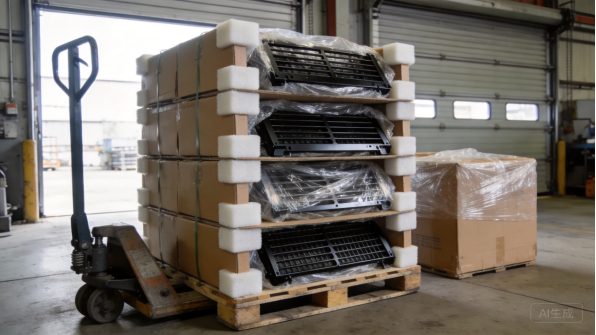
Figure 7: Protective packaging keeps finished grill parts safe from factory to destination.
Production Batches and Volume Planning
In BBQ grill sheet metal parts manufacturing, typical production lead times are 15 to 30 business days for batches from a few hundred to tens of thousands of components, with coating and packaging consuming a large share of that time. Retail launches are seasonal, so brands plan production against spring and summer demand, and the factory schedule must align with the launch date.
Forecast sharing keeps lead times stable. When brands share rolling forecasts, the factory reserves material and coating capacity and orders long-lead items such as specific stainless grades or custom powder colors in advance. Cold-rolled steel coils are usually on hand, while stainless sheets and custom colors may add one to two weeks. A clear schedule with milestone dates makes the bottleneck visible before it becomes a missed launch.
Retail launch planning also benefits from agreed stock levels, so the brand can support promotions without tying up warehouse space.
Packaging, Logistics, and Documentation
Grill parts ship in packaging matched to the product: panels wrapped in protective film, coated parts separated by foam, and hardware packed in labeled kits. Export shipments use rust-preventive paper or VCI film against container condensation, and the fabricator should provide carton dimensions, gross weight, and loading photos for freight planning. Retail programs may require retail-ready packaging, which adds lead time and cost.
Documentation accompanies every shipment: packing lists, material certificates, coating certificates, and test reports where agreed. Buyers should confirm the documentation set during quotation, because certification files and customs clearance depend on it. Communication follows clear milestones, with photos at each stage, so brands can track progress without site visits.
Past Case Studies
Grill Brand: Residential Gas Grill Family
A grill brand needed a full sheet metal component set for a new residential gas grill line: body, lid, side tables, drip tray, and brackets, with a textured powder coat in the brand’s signature color. The engineering team designed one body platform with two burner configurations, sharing panels and hardware across the line to control cost.
Prototypes were fully assembled to validate lid fit and hinge alignment, and production batches of 3,000 units per month shipped with kit contents verified on every carton. The brand launched on time for the spring season and standardized the platform on its second model. The program showed how shared platforms reduce cost and lead time across a product family.
The brand now orders the family twice a year with quarterly releases, which keeps factory capacity aligned with retail demand.
Outdoor Kitchen OEM: Stainless Components
An outdoor kitchen OEM needed stainless steel components for built-in grill units and side burners: bodies, control panels, drip trays, and hinge assemblies in grade 304, with a brushed finish and documentation for commercial projects. The specification required controlled weld heat input and surface finishing that matched the kitchen line.
First articles were inspected for weld quality and surface finish, and production batches delivered with material certificates and finish verification. The OEM used the components across multiple kitchen configurations, and the program expanded with a grade 316 variant for coastal installations. For the OEM, BBQ grill sheet metal parts manufacturing became a single-source capability for its stainless line.
A spare parts program followed the initial order, with replacement panels and hardware stocked for service.
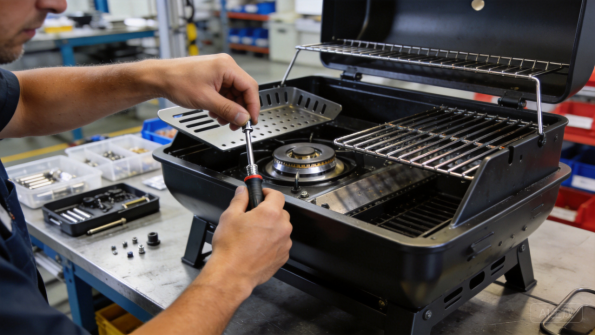
Figure 8: Assembly fits burner shields, grates, and hardware into the grill body.
E-commerce Brand: Compact Portable Grill
An e-commerce brand needed a compact portable gas grill with a folding design: body, lid, folding legs, drip tray, and a detachable table, packed flat for shipping. The design challenge was weight and tolerance: the parts had to assemble by hand without tools and survive courier handling.
The prototype was assembled and tested by the brand’s product team, and the fold geometry was refined before production. First orders of 2,000 units shipped in flat-pack cartons with an illustrated assembly guide, and the product grew to monthly reorders as reviews improved. The program showed how design for assembly and packaging differentiates portable grills.
The flat-pack design also reduced shipping volume, which lowered freight cost per unit for the e-commerce channel.
Retail Program: Charcoal Grill Parts
A retail distributor needed a volume program of charcoal grill parts: bowls, lids, grates, vent plates, and hardware for a private-label kettle grill sold through home improvement stores. The parts were designed for efficient nesting and coating, with a porcelain-style black finish on the body and lid.
Production ran in seasonal batches of 10,000 units with coating thickness and salt spray verification, and the parts shipped as component kits to the distributor’s assembly partner. The program has continued for three seasons with consistent quality, and the distributor added a second grill size using the same hardware. The program demonstrated how volume manufacturing and coating consistency win retail private label work.
Coating and salt spray records accompany each seasonal batch, which the distributor keeps in its product compliance file.
Summary and Next Steps
Key Takeaways
BBQ grill sheet metal parts manufacturing is a heat, food-safety, and corrosion-sensitive discipline that demands more than basic sheet metal work. The material decision drives cost and performance, from coated steel for bodies to stainless for heat zones and coastal outdoor kitchens, and finishes must be specified for the component’s zone rather than assumed. Production difficulty concentrates in panel fit, lid alignment, and coating durability, which are exactly where experienced fabricators differentiate themselves.
Lead times follow a predictable path: engineering review in days, prototypes in one to three weeks, process tooling in one to two weeks, and production in three to four weeks per batch, with seasonal planning against the retail launch date. Forecast sharing and clear documentation keep that path stable. Buyers who settle materials, finishes, and certification requirements before quoting will have smoother programs than those who discover requirements at the first assembly.
Why XHX Metal
XHX Metal is a privately owned sheet metal manufacturer in Dongguan, China, with a 2,000 square meter factory, about 30 employees, and an annual capacity exceeding 500,000 pieces. The factory operates under an ISO 9001:2015 quality management system with CE and SGS certifications, and it produces custom parts, panels, enclosures, and assemblies for export customers with packaging designed for ocean freight. Two 6kW fiber laser cutting machines, CNC press brakes, TIG and MIG welding, and finishing partners cover the complete process.
The company supports buyers from design review through production, provides first-article inspection reports and material certificates, and coordinates salt spray, coating, and dimensional verification when required. For BBQ grill sheet metal parts manufacturing programs, buyers can review related sheet metal fabrication services and product pages, and the team will structure quotations, quality documentation, and delivery schedules to match the program’s needs.
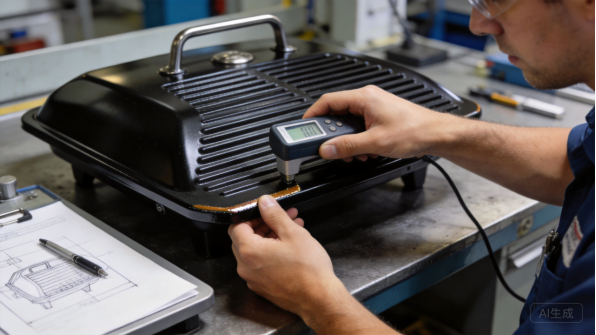
Figure 9: Coating and edge inspection verify grill parts before shipment.
How to Start Your Project
Start with a STEP or STP file and a drawing that states material, finish, quantities, and certification requirements. If the design is not finalized, send photos or sketches of the grill, the cooking type and size, the target retail price, and the annual volume, and the engineering team will recommend a manufacturable, certification-ready design. The typical path is: engineering review, quotation, prototype, first-article inspection, production, and shipment, with clear communication at each milestone.
To discuss a grill component program, contact Barry at +86 13244963694 or sales01@xinghaoxin.com, or send your design through the XHX Metal website. With clear requirements and the right partner, a BBQ grill part family moves from drawing to production in weeks, with fit and finishes that hold up for seasons of backyard use.
What to Ask a Fabricator
Before placing an order, ask the fabricator three questions: which grill materials and coatings it runs regularly, how it verifies panel fit and lid alignment on first articles, and what salt spray, coating, and certification documentation it can provide. The answers reveal whether the shop treats grill parts as outdoor products or as simple cut-and-bend pieces.
Also confirm experience with stainless heat zones, hardware kits, and export packaging, because those details decide whether a grill survives shipping and its first season. A fabricator that lists test methods and acceptance criteria in the quotation is treating quality as part of the product, and that is the partner worth building a grill line with.