Solar PV mounting bracket manufacturing is one of the fastest-growing and most specification-driven disciplines in metal fabrication. Every solar installation, from a residential rooftop to a utility-scale ground-mount plant, is held together by mounting structures: rails, posts, clamps, feet, and connectors that carry the panels through wind, snow, and decades of weather. Grand View Research tracks strong growth in the solar mounting systems market as renewable capacity expands worldwide, and the components behind that growth demand precise forming, certified materials, and corrosion protection that off-the-shelf hardware cannot provide.
This guide follows the full journey of a solar mounting component program in seven steps: the product and its system types, the applications each serves, material selection, production difficulty, lead times, past case studies, and a practical summary. Whether you are a solar distributor building a mounting product line, a renewable energy OEM sourcing components, or an EPC contractor specifying structures, the information here will help you brief a fabricator, plan realistic timelines, and avoid the corrosion and fit problems that show up on site years later.
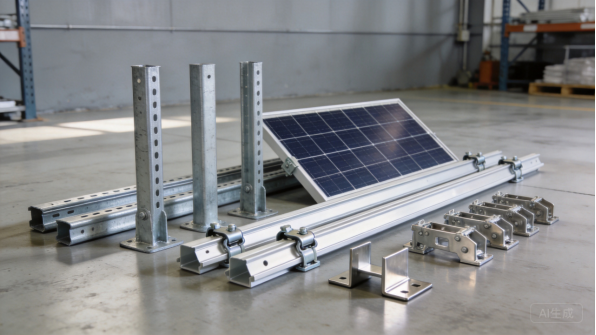
Figure 1: Finished solar PV mounting components with galvanized, aluminum, and stainless construction.
The Product: What Are Solar PV Mounting Brackets
Solar Mounting System Types
Solar mounting systems fall into three broad families: rooftop, ground-mount, and tracking. Rooftop systems use rails, feet, and clamps to attach panels to pitched or flat roofs, ground-mount systems use posts, rails, and ballast frames to hold panels on open land, and tracking systems use rotating structures that follow the sun to increase energy yield. Each family has its own components, loads, and manufacturing logic, and most fabricators specialize in one or two.
Within each family, the mounting structure is an engineered system, not a collection of parts. Panel dimensions, row spacing, wind exposure, and foundation type all affect the bracket design, and the components must work together as a load path from the module to the ground. That is why solar mounting programs reward manufacturers that understand structural requirements, not just sheet metal forming.
Key Components of a Mounting System
The key components are rails, feet, clamps, posts, and connectors. Rails are long profiles that carry the module row, typically extruded aluminum or roll-formed steel, with slots that accept clamps and fasteners. Feet, such as L-feet and standoffs, connect the rails to the roof structure, and clamps, including mid-clamps and end-clamps, hold the panels onto the rails. Ground-mount systems add support posts, cross beams, and brace plates that transfer load to driven piles or concrete foundations.
Connectors and fasteners complete the system: splice plates join rail sections, grounding lugs bond the modules, and stainless steel bolts and washers resist corrosion at every joint. Each component is a fit point in a long load path, so tolerances that look small on a drawing become alignment problems across a row of panels. A fabricator that holds these tolerances consistently is what keeps installation crews on schedule.
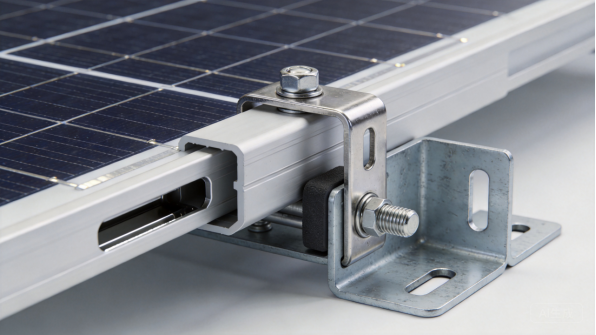
Figure 2: Solar mounting components include rails, clamps, feet, and connectors with precision fits.
Design Drivers: Loads, Angles, and Corrosion
Three design drivers dominate solar mounting engineering: wind load, snow and dead load, and corrosion exposure. Wind is usually the governing load because a tilted panel acts like a sail, and uplift forces on the edges can exceed the panel weight. Snow load adds vertical weight in colder markets, and dead load from the panels themselves sets the minimum structural requirement. Designers model these loads against the site location and module layout, then specify component strength and spacing.
Tilt angle and orientation determine energy yield, and they also affect the mounting structure’s geometry and wind behavior. Corrosion exposure depends on the site: coastal installations face salt, agricultural sites face chemical drift, and northern markets face road salts and ice. NREL publishes extensive research on photovoltaic system design and reliability that engineers use when specifying mounting structures, and the corrosion decision is a material and coating decision that starts at quotation.
Customization in Solar PV Mounting Bracket Manufacturing
Custom solar PV mounting bracket manufacturing exists because no two projects are identical. Buyers customize rail lengths, bracket hole patterns, clamp sizes for different panel frames, color-matched finishes, and hardware kits, and they expect the components to arrive ready to install. Custom fabrication also supports product families: a distributor can offer one rail profile with several clamp options, covering many panel widths from one manufacturing platform.
Compliance is part of customization. Structural certifications such as UL 2703 for racking and mounting systems in North America require documented material and testing evidence, and buyers increasingly ask for load-test reports and material certifications with each shipment. A fabricator that can provide engineering documentation and test evidence gives distributors and EPC contractors the file they need for project approvals.
Use Cases and Applications
Residential Rooftop Solar
Residential rooftop systems are the highest-volume consumer of mounting components. Installers fit rails and clamps to pitched and flat roofs, and they value components that are easy to handle, quick to install, and clearly labeled, because labor time drives system cost. Aluminum rails and stainless fasteners are standard, with roof-specific feet that attach to rafters, tiles, or standing seams.
Residential programs reward standardization and packaging. Distributors stock component kits that cover common roof types and panel sizes, and they reorder against installation demand. For manufacturers, the residential market offers steady volumes and repeat designs, but the components must arrive corrosion-free and match the kit contents exactly, because an installer on a roof cannot wait for a missing clamp.
Commercial and Industrial Rooftop
Commercial and industrial rooftops carry larger arrays with bigger loads and more complex layouts. Flat-roof systems use ballasted or penetrated mounting frames that hold panels at optimized tilts, and the structures must spread load across the roof membrane without damaging it. Roof layout, obstacles, and wind zones all affect the bracket plan, so commercial projects often use project-specific engineering.
For commercial programs, structural calculations and installation drawings are part of the product. The ANSI and local building codes define the wind and snow requirements that the mounting design must meet, and EPC contractors need documentation for permitting. A manufacturer that provides engineering support and clear assembly documentation is a stronger partner than one that only ships parts.
For commercial systems, the mounting layout is often optimized by engineering software that balances cost against wind performance, and manufacturers that support that analysis with accurate component data help contractors bid projects faster.
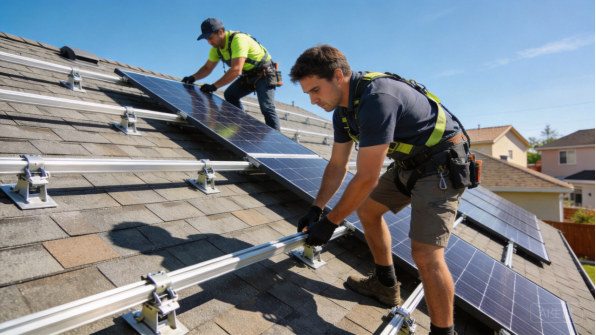
Figure 3: Installers mount aluminum rails and clamps during residential rooftop solar installation.
Ground-Mount and Utility-Scale Solar
Ground-mount and utility-scale plants use the heaviest mounting structures: driven piles or concrete foundations, steel support posts, cross beams, and rail systems that carry hundreds of modules per row. These structures are built for decades of outdoor service, and the components are typically hot-dip galvanized steel sized for the largest wind and snow events at the site.
Utility-scale programs are won on price, certification, and delivery discipline. A 50 MW plant can require thousands of tons of steel structures, delivered in staged shipments that match the construction schedule, so the manufacturer’s capacity and logistics matter as much as the bracket design. Load test reports, galvanizing certificates, and traceable batches are standard requirements, and ASTM International standards underpin the material and coating verification.
Solar Tracking Systems
Solar tracking systems add moving structures that rotate panels to follow the sun. Trackers use torque tubes, bearings, and drive assemblies, with mounting brackets that connect modules to the rotating frame while handling dynamic loads from wind and motion. The components must hold alignment through thousands of rotation cycles and survive years of outdoor exposure.
Tracker programs demand precision because moving parts amplify small errors: a bracket that is 1 mm off can bind the row or misalign the drive. Manufacturers serving trackers need tight forming tolerances, documented quality, and experience with the higher-strength materials that keep moving structures light. It is a demanding niche, but it rewards fabricators with process discipline.
Material Selection
Hot-Dip Galvanized Steel
Hot-dip galvanized steel is the workhorse of ground-mount and commercial solar structures. The zinc coating protects steel through sacrificial action, and the American Galvanizers Association documents decades of service life for galvanized coatings in atmospheric exposure, making it the standard for outdoor structural components. Galvanized steel posts, rails, and brackets carry the heavy loads of utility-scale systems at a competitive cost.
Galvanized steel also fits the manufacturing process: it cuts, bends, and welds well when handled correctly, and cut edges are protected by the surrounding zinc. Thickness is chosen for the structural load, and coating weight is specified to match the site’s corrosion environment. For most ground-mount and commercial rooftop projects, galvanized steel is the cost-effective default, with stainless reserved for the most corrosive sites.
Aluminum Rails and Extrusions
Aluminum, typically 6005 or 6061 alloy, is the standard for residential and commercial rooftop rails because it is light, corrosion-resistant, and easy to cut on site. Aluminum rails are usually extruded profiles with slots that accept clamps and fasteners, and their properties and alloy selection guidance are cataloged by references such as AZoMaterials. The material’s natural oxide film protects it in most environments without coating.
Aluminum’s trade-offs are strength and cost: it is more expensive per kilogram than steel and needs thicker sections to carry the same load, but its weight advantage reduces shipping cost and roof handling time. Aluminum must be isolated from galvanized steel at contact points to prevent galvanic corrosion, which is why stainless fasteners and isolation washers are specified at mixed-material joints.
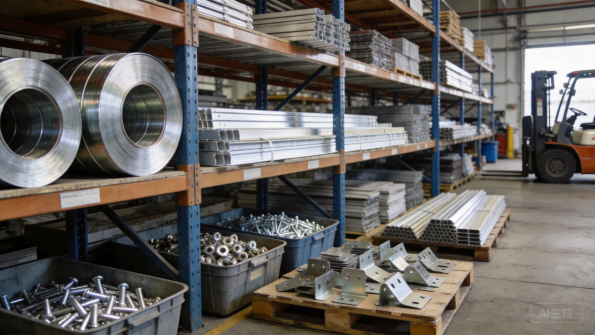
Figure 4: Galvanized steel, aluminum profiles, and stainless fasteners cover the solar material range.
Stainless Steel Fasteners and Components
Stainless steel, primarily grades 304 and 316, is used for the fasteners and clamps that hold every solar system together. Bolts, washers, clamps, and grounding lugs must resist corrosion at the joint, where galvanized coatings are most likely to be damaged, and SSINA provides grade selection guidance for outdoor and coastal environments. Grade 316 is specified for coastal and agricultural sites where chlorides are present.
The fastener decision is a reliability decision: a corroded bolt on a rooftop is expensive to replace, and a failed clamp can release a panel in wind. Stainless hardware costs more than plated steel but pays for itself in system life, which is why professional solar specifications require stainless at exposed joints. For manufacturers, sourcing certified stainless fasteners and matching them to the bracket design is part of delivering a complete system.
Corrosion Protection and Finishes
Corrosion protection is specified for the site, not the catalog. Hot-dip galvanizing serves most outdoor steel, powder coating adds color and durability for visible residential components, and anodizing protects aluminum while allowing color options. The Powder Coating Institute publishes technical resources on coating selection and testing, and coating performance is verified with standards published by ASTM International, including salt spray and adhesion tests.
Finishes also affect installation: a scratch on a coated rail during installation is a future rust site unless the coating system includes touch-up provisions, and fastener coatings must survive torque without flaking. Buyers should specify the corrosion environment, expected service life, and inspection requirements at quotation, because the coating decision is one of the largest drivers of both cost and warranty risk in solar mounting products.
Production Difficulty
Laser Cutting, Punching, and Slot Precision
Solar PV mounting bracket manufacturing begins with cutting and punching the blanks and profiles that carry the system. Fiber laser cutting produces rails, feet, and plates with holes and slots that must align with module frames and roof attachments, and at XHX Metal two 6kW fiber laser cutting machines deliver plus or minus 0.01 mm positioning accuracy. Slot positions and hole patterns are the fit points that decide whether an installer’s bolts line up on site.
Cutting quality matters at the edges: burrs on slots damage fasteners and installer gloves, and edge roughness around load-bearing holes can initiate cracks in high-strength material. For long rails and posts, nesting software arranges parts to minimize scrap, and cutting order and parameters are tuned per material and thickness. The cutting stage decides whether a 200-panel row assembles cleanly or fights the crew for a day.
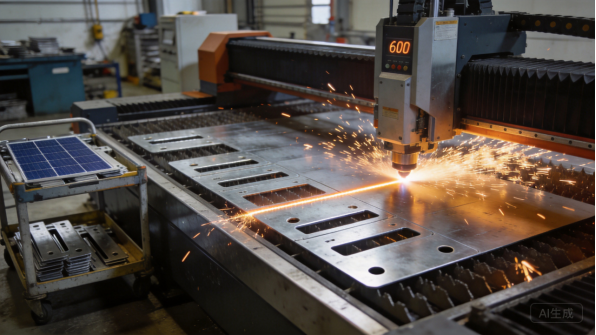
Figure 5: Fiber laser cutting produces accurate solar mounting blanks and slot patterns.
CNC Bending and Forming
Bending converts blanks into L-feet, brackets, channels, and structural sections, and springback compensation is essential for the higher-strength steels used in solar structures. Engineers Edge publishes bend allowance and deduction references used to lay out blanks and predict finished dimensions, and modern CNC press brakes with programmable back gauges hold bend positions and angles consistently across production runs.
For solar components, the critical checks are flange angles, hole-to-bend distances, and the squareness of support posts and bracket planes. A bracket that is out of angle by one degree shifts the panel row by millimeters across its length, which compounds over multiple components. First-article verification and in-process sampling keep the forming process under control, and this discipline is what separates professional mounting hardware from field-modified parts.
Solar PV Mounting Bracket Manufacturing: Welding and Assembly
Welding joins structural assemblies: support post frames, brace plates, and bracket reinforcements that carry the heaviest loads. Heat from welding can distort long sections, so parts are clamped in fixtures that hold geometry while the weld cools, and TWI Global provides technical guidance on welding steel and controlling distortion. For galvanized components, weld preparation and coating repair are managed so the joint keeps its corrosion protection.
Assembly adds the hardware that makes the system work: splice plates, clamps, fasteners, and grounding components are packed as complete kits with torque specifications and installation documents. For distributed solar programs, kit accuracy is as important as component quality, because a missing part stops an installation crew. A fabricator that checks kit contents and documents batch traceability gives distributors confidence in every order.
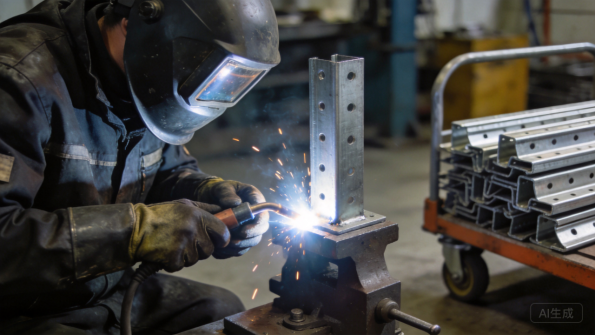
Figure 6: Controlled welding and fixturing build structural solar support assemblies.
Quality Control and Load Verification
Solar mounting quality control combines dimensional inspection with structural verification. First articles are inspected against the drawing, verifying hole positions, angles, and coating, and production batches follow a control plan with sampling. Material certifications trace steel and aluminum to specific lots, and galvanizing certificates document coating weight and adhesion.
Structural verification is where solar differs from general fabrication: representative components are load tested to confirm they carry the rated wind and snow loads, and test reports are part of the certification file. Coating checks, including salt spray where required, confirm corrosion performance. A fabricator that treats load and coating verification as part of the product gives distributors and EPC contractors the evidence they need for project approval and insurance.
Production Lead Times
RFQ, Engineering Review, and Prototypes
A solar mounting program starts with an RFQ: drawings or system specification, material, finish, quantities, and target timing. The fabricator’s engineering team reviews the design for manufacturability, checking hole patterns, bend geometry, coating requirements, and kit packaging, and returns a quotation with comments within one to three business days. Prototypes are typically delivered in seven to fifteen business days for a component family.
The prototype is where fit gets validated: rails are test-assembled with clamps and panels, brackets are fitted to roof feet or support posts, and installation documents are checked against the actual parts. Prototype feedback should include fit notes and suggested drawing changes. For solar programs, a full assembly sample with hardware, not just individual parts, is worth the cost because it proves the kit works before production.
Early design input from the fabricator also reduces iterations, because forming and coating constraints are resolved before the drawing is finalized.
Tooling and Process Setup
Most solar mounting components are produced with laser cutting, CNC bending, and standard roll-forming or extrusion sourcing, which keeps tooling costs low and design changes inexpensive. The setup that matters is process tooling: bending programs with verified parameters, welding fixtures for structural assemblies, and inspection gauges for hole patterns and angles. Building this setup typically takes one to two weeks.
For very high volumes, dedicated tooling such as progressive dies for clamp bodies or roll-forming lines for long rails can reduce unit cost, but die development adds four to eight weeks and a tooling investment that pays back through volume. The right decision depends on annual volume and product mix, and buyers should expect a cost comparison before committing to dedicated tooling.
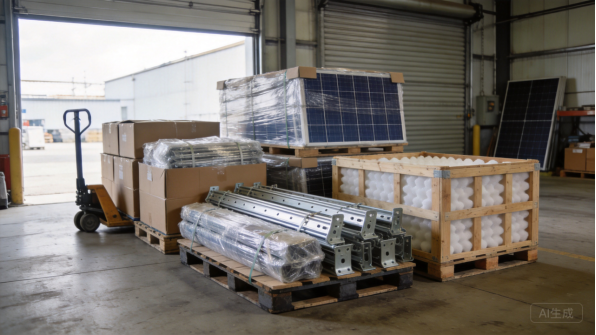
Figure 7: Bundled rails and bracketed kits ship in protective packaging for site-ready delivery.
Production Batches and Volume Planning
Typical production lead times are 15 to 30 business days for batches from a few hundred to tens of thousands of components, with coating, galvanizing, and packaging consuming a large share of that time. Utility-scale programs are scheduled in staged shipments that match the construction plan, so the manufacturer’s capacity planning and logistics are part of the delivery promise.
Forecast sharing keeps lead times stable. When buyers share rolling forecasts, the factory reserves material and coating capacity and orders long-lead items such as specific aluminum profiles or stainless fasteners in advance. Galvanized steel coils are usually on hand, while custom profiles and colors may add one to two weeks. A clear schedule with milestone dates makes the bottleneck visible before it becomes a construction delay.
Packaging, Logistics, and Documentation
Solar mounting components ship in packaging matched to the job: rails bundled and banded, brackets boxed with fasteners in labeled kits, and heavy posts crated for container loading. Protective film and foam separators protect coated surfaces, and export shipments use rust-preventive paper or VCI film against container condensation. The fabricator should provide carton and crate dimensions, gross weight, and loading photos for freight planning.
Documentation accompanies every shipment: packing lists, material certificates, galvanizing certificates, and load or coating test reports where agreed. Buyers should confirm the documentation set during quotation, because project approvals and customs clearance depend on it. Communication follows clear milestones, with photos at each stage, so distributors and EPC contractors can track progress without site visits.
Past Case Studies
Solar Distributor: Residential Roof Mount Family
A solar distributor needed a residential roof mount family: aluminum rails in three lengths, L-feet and standoffs for common roof types, and mid and end clamps for standard panel frames, packaged as install-ready kits. The engineering team designed one rail profile with a shared slot system, so the same clamps worked across all rail lengths and panel widths.
Prototypes were test-assembled with sample panels to validate the clamps, and production batches of 5,000 kits per month shipped with kit contents verified on every carton. The distributor reduced installation time and customer complaints by standardizing one mounting platform. The program later added a ballasted flat-roof variant using the same clamp hardware.
The kits include a torque chart and install checklist, which the distributor found reduced callbacks from installers, and it now stocks the family in two regional warehouses with monthly reorders against install demand.
The distributor now ships the family to three markets and tracks kit-level quality feedback monthly, which feeds small design refinements into the next production run.
EPC Contractor: Commercial Ground Mount
An EPC contractor building a 10 MW ground-mount plant needed galvanized steel support posts, rails, and brace plates sized for the site’s wind zone, with staged deliveries matching the construction schedule. The engineering team reviewed the structural drawings and adjusted hole patterns for the contractor’s pile installation tolerance.
First articles were load tested and coating verified, and production shipped in three stages with galvanizing certificates and batch traceability. The plant was completed on schedule, and the contractor standardized the same structure family on a second project. The program showed how structural documentation and staged logistics win utility-scale work.
Staged deliveries were matched to the pile-driving schedule so crews never waited for structure, and documented load test reports were submitted with each shipment for the contractor’s engineering review.
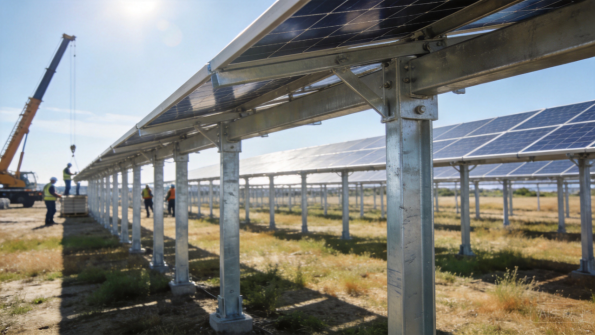
Figure 8: Utility-scale ground-mount structures carry solar panels across open fields.
Tracker OEM: Precision Components
A solar tracker OEM needed precision mounting brackets that connected modules to the rotating torque tube, with tight hole positions and alignment tolerances for dynamic operation. The components were formed from higher-strength steel to keep the moving structure light, and every batch required documented dimensional verification.
First articles were inspected on a coordinate measuring machine, and production followed a control plan with gauge checks on critical hole patterns. The tracker passed its endurance testing, and the OEM placed repeat orders as new projects launched. The program demonstrated how process discipline wins precision-driven tracker work.
The OEM also requested batch-level coating verification, which the factory included in its standard inspection routine.
Export Distributor: Coastal Hardware Kits
An export distributor serving Caribbean and Southeast Asian markets needed complete mounting hardware kits for residential systems, with stainless fasteners and corrosion resistance specified for salt air. The kits combined aluminum rails, stainless clamps and bolts, and installation documents in a single carton.
The first articles included salt spray verification of the fastener and clamp finishes, and production batches shipped with material certificates and kit packing lists. Distributors in coastal markets approved the kits for their projects, and the program grew to quarterly reorders. The program showed how corrosion specification and kit completeness create value in export solar markets.
The program later added a roof-mount variant for island markets, produced on the same forming lines with stainless hardware.
Summary and Next Steps
Key Takeaways
Solar PV mounting bracket manufacturing is a load-carrying, corrosion-sensitive discipline that demands more than basic sheet metal work. The material decision drives cost and performance, from galvanized steel for utility structures to aluminum and stainless for rooftop systems, and coatings and fasteners must be specified for the real site environment. Production difficulty concentrates in slot precision, forming accuracy, and structural verification, which are exactly where experienced fabricators differentiate themselves.
Lead times follow a predictable path: engineering review in days, prototypes in one to three weeks, process tooling in one to two weeks, and production in three to four weeks per batch. Forecast sharing and staged delivery planning keep utility programs on schedule. Buyers who settle loads, materials, and certification requirements before quoting will have smoother programs than those who discover requirements at the construction site.
Why XHX Metal
XHX Metal is a privately owned sheet metal manufacturer in Dongguan, China, with a 2,000 square meter factory, about 30 employees, and an annual capacity exceeding 500,000 pieces. The factory operates under an ISO 9001:2015 quality management system with CE and SGS certifications, and it produces custom brackets, structures, enclosures, and fabricated parts for export customers with packaging designed for ocean freight. Two 6kW fiber laser cutting machines, CNC press brakes, TIG and MIG welding, and finishing and galvanizing partners cover the complete process.
The company supports buyers from design review through production, provides first-article inspection reports and material certificates, and coordinates load testing, salt spray, and galvanizing verification when required. For solar PV mounting bracket manufacturing programs, buyers can review related sheet metal fabrication services and product pages, and the team will structure quotations, quality documentation, and delivery schedules to match the program’s needs.
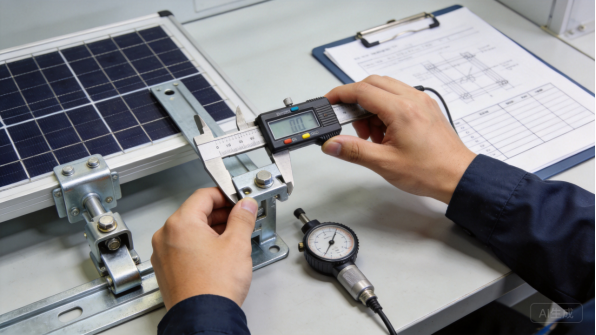
Figure 9: Dimensional and torque verification confirms solar mounting components meet specification.
How to Start Your Project
Start with a STEP or STP file and a drawing that states material, finish, load requirements, and quantity. If the design is not finalized, send photos or sketches of the mounting system, the panel sizes and tilt angle, the site environment, and the annual volume, and the engineering team will recommend a manufacturable, certification-ready design. The typical path is: engineering review, quotation, prototype, first-article inspection, production, and shipment, with clear communication at each milestone.
To discuss a solar mounting program, contact Barry at +86 13244963694 or sales01@xinghaoxin.com, or send your design through the XHX Metal website. With clear requirements and the right partner, a solar PV mounting bracket family moves from drawing to production in weeks, with fit and corrosion performance that hold up for decades in the field.
What to Ask a Fabricator
Before placing an order, ask the fabricator three questions: which solar materials and coating processes it runs regularly, how it verifies slot and hole precision on first articles, and what load, salt spray, and galvanizing documentation it can provide. The answers reveal whether the shop treats mounting hardware as structural product or as simple cut-and-bend parts.
Also confirm kit packaging and batch traceability, because installers and project approvals depend on complete, documented shipments. A fabricator that lists test methods and acceptance criteria in the quotation is treating quality as part of the product, and that is the partner worth building a solar product line with.