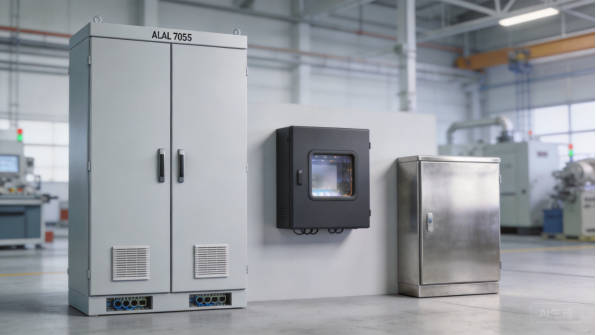
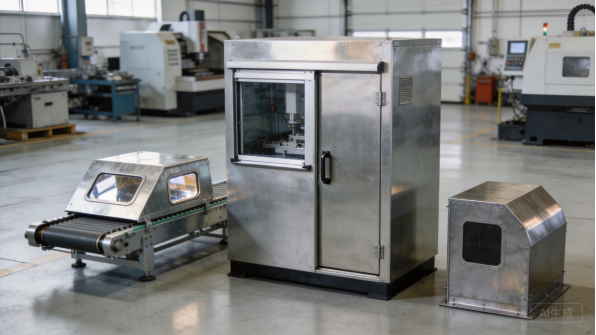
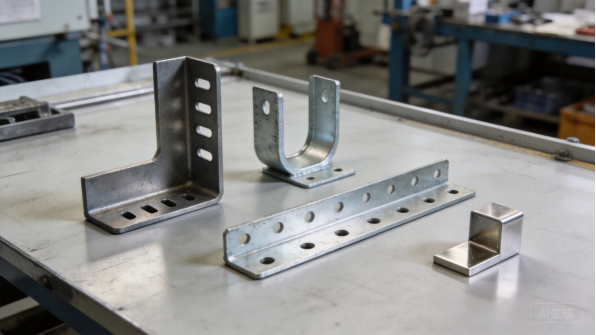
Automotive engineering relies on thousands of formed metal parts that most drivers never see: brackets that hold components to the chassis, reinforcements that stiffen body panels, trays that carry batteries, and heat shields that protect wiring from exhaust heat. These automotive sheet metal parts are produced in enormous volumes, yet every one of them starts as a flat sheet of steel or aluminum that must be cut, formed, welded, and finished to tight tolerances. Grand View Research tracks the automotive stamping market as a multi-billion-dollar segment that continues to grow with vehicle electrification and the shift to lightweight body structures.
This guide follows the full journey of a custom automotive sheet metal part in seven steps: the product itself, the applications that use it, material selection, production difficulty, lead times, past case studies, and a practical summary. Whether you are a Tier 1 supplier sourcing brackets, a vehicle manufacturer prototyping a battery tray, or an aftermarket brand launching a mounting kit, the information here will help you brief a fabricator, plan realistic timelines, and avoid the pitfalls that cause automotive programs to slip.
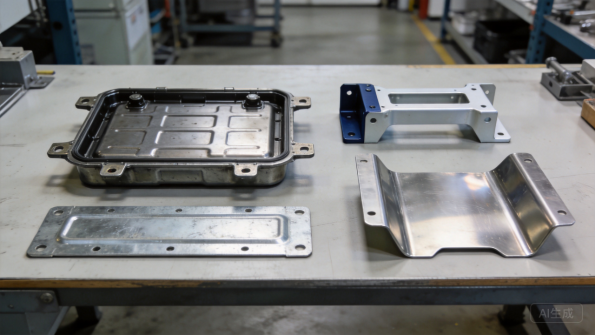
Figure 1: Finished custom automotive sheet metal parts with structural and protective finishes.
The Product: What Are Automotive Sheet Metal Parts
Definition and Typical Components
Automotive sheet metal parts are formed components manufactured from flat metal sheet and used in vehicles for structure, mounting, protection, or heat management. The category is broad: chassis brackets and cross-members, door and hood reinforcements, seat tracks, battery trays, heat shields, fuel tank shields, suspension components, and the many small plates and covers inside the engine bay. What unites them is the manufacturing route: flat metal is cut to shape, bent or stamped into a three-dimensional form, joined where necessary, and finished against corrosion.
Parts differ widely in complexity. A simple bracket may be a single laser-cut blank with two bends and four mounting holes, while a battery tray can require a dozen panels, welded inserts, sealing flanges, and a powder-coated or e-coated finish. The common thread is that every part must fit precisely within a vehicle assembly where adjacent components are already located by design, which is why dimensional accuracy is the first requirement in every automotive quotation.
Structural vs. Cosmetic Parts
Automotive sheet metal parts fall into two broad groups. Structural parts carry load: mounting brackets, reinforcements, cross-members, and trays must hold components in place under vibration, crash loads, and thermal cycling. Their design is governed by strength and fatigue requirements, and their manufacturing is judged on dimensional accuracy, weld integrity, and material properties.
Cosmetic and protective parts are the second group: covers, shields, liners, and trims that are visible in the vehicle or protect wiring and occupants. These parts are judged on surface quality, edge finish, and appearance after coating, and they often demand tighter attention to burrs, scratches, and paint-friendly design. Understanding which category a part belongs to determines tolerances, material, and inspection requirements from the first quotation, so buyers should always state the part’s function and visibility when requesting a quote.
Common Configurations and Tolerances
The dimensional tolerances for automotive sheet metal parts are tighter than for most industrial products. Hole positions are commonly held to plus or minus 0.1 mm, flange angles to a fraction of a degree, and flatness to specific limits depending on part size. These numbers are achievable with modern laser cutting and CNC bending, but they require controlled processes and inspection rather than operator judgment.
For automotive programs, tolerances are usually defined in a GD&T drawing that follows standards such as those published by SAE International and the American National Standards Institute, including datum references that tell the fabricator how the part will be located in the vehicle. A fabricator that reads GD&T correctly and verifies parts against datums will deliver parts that assemble the first time, while one that treats tolerances loosely will generate rework and line stoppages.
Prototyping and Custom Parts
Not every automotive part is a mass-production stamping. Vehicle programs at every level need prototypes: pre-production samples for fit testing, small batches for durability trials, and custom brackets for special vehicles, motorsport, and restoration projects. Laser cutting and CNC bending make these parts economical in quantities from one to several thousand, which is why fabrication shops work alongside stamping plants in the automotive supply chain.
A good prototype program validates more than geometry. It confirms that the part can be formed without cracking, that weld joints are accessible, that coating will adhere at edges, and that the assembly sequence works on the vehicle. Catching these issues on samples costs days; catching them after production tooling is committed costs weeks and tooling modifications.
Use Cases and Applications
OEM Production Programs
Original equipment manufacturers run the largest volume programs for sheet metal parts, from body structure components to under-hood brackets. OEM programs are characterized by annual volumes in the tens of thousands to millions, strict documentation requirements, and delivery schedules tied to vehicle production. Most OEM parts are stamped in dedicated dies, but fabrication shops supply prototype parts, low-volume variants, and overflow quantities during ramp-up.
For a fabricator, OEM work means documentation as much as machining: material certifications, dimensional reports, process control plans, and traceability back to coil or sheet lots. OEM buyers typically require a quality system aligned with IATF 16949, the international automotive quality management standard, and they audit suppliers before production begins, so the fabricator’s paperwork must be as reliable as its machines.
These programs also create opportunities for fabricators during pre-production: building prototypes for testing, supplying service parts for early vehicles, and covering temporary capacity gaps while dies are transferred between plants. A fabricator that performs well in those roles is often invited to bid on the production program itself.
Tier 1 and Tier 2 Supplier Components
The supply chain below the OEM is where custom fabrication is most active. Tier 1 suppliers integrate systems such as seats, cooling modules, and battery packs, and they source hundreds of individual brackets, trays, covers, and shields from Tier 2 fabricators. These parts are usually defined by the Tier 1 supplier’s drawings, and quantities range from pilot lots of a few hundred to annual volumes of 50,000 to 500,000 units.
Tier 2 fabricators compete on precision, lead time, and flexibility. Because Tier 1 suppliers manage many programs, they value a fabricator that can quote from a drawing in days, deliver samples in weeks, and ramp production without changing tolerances. The relationship is typically documented with a quality agreement, a control plan, and regular first-article inspections that keep both sides aligned as volumes change.
Aftermarket and Replacement Parts
Aftermarket programs serve repair and replacement demand: collision repair panels, replacement brackets, trailer hitch parts, and accessory mounting kits sold through parts distributors and e-commerce channels. Volumes are lower and more erratic than OEM production, and time to market is critical because aftermarket products are often launched alongside a new vehicle model to capture early demand.
Aftermarket parts also face unique quality demands. A replacement bracket must bolt directly onto the vehicle without modification, which requires accurate hole positions and flange geometry measured from the original part. Fit and finish matter commercially, because consumers compare aftermarket parts to OEM quality, and coating durability affects warranty claims in salt-belt regions, so material and finishing choices carry direct business consequences.
Electric Vehicles and New Energy Programs
Electrification has created entirely new sheet metal part families. Battery trays and enclosures protect cells and thermal management hardware, motor mounts carry powertrain weight, and covers shield high-voltage cabling. NHTSA and global regulators subject these components to crash, vibration, and thermal requirements, which push material selection toward high-strength steel and aluminum with controlled welding.
EV programs also change production economics. Battery tray volumes are large but designs change quickly, so fabricators that combine low-volume flexibility with scalable processes are in high demand. Thermal management, sealing, and corrosion protection are critical, and parts often require leak testing, salt spray testing, and strict dimensional verification, which makes the fabrication partner’s testing capability as important as its machines.
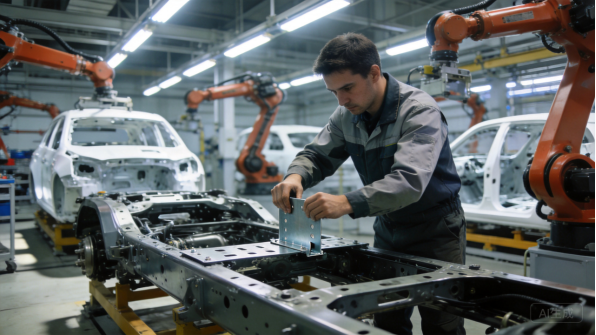
Figure 2: Sheet metal brackets and reinforcements integrate into vehicle assembly lines.
Material Selection
Cold-Rolled and Galvanized Steel
Cold-rolled steel is the default material for automotive brackets, reinforcements, and covers where strength is adequate and cost matters. Grades such as DC01 and DC04 form and weld predictably, and their mechanical properties are documented in MatWeb’s materials database for direct comparison across suppliers. Cold-rolled parts must be protected against corrosion, usually with electroplating, powder coating, or e-coat.
Galvanized steel adds a zinc coating that protects cut edges through sacrificial action, and the American Galvanizers Association documents the long service life of zinc coatings in atmospheric exposure. For under-vehicle parts exposed to road salt and water, galvanized or zinc-coated steel is often the most cost-effective choice, though welding requires preparation to avoid porosity and zinc fumes.
High-Strength and Advanced High-Strength Steel
Vehicle lightweighting has pushed high-strength steel (HSS) and advanced high-strength steel (AHSS) into brackets, reinforcements, and structural panels. Grades such as DP600 and DP780 offer yield strengths two to three times that of mild steel, allowing thinner sections that save weight without sacrificing crash performance. The trade-off is formability: these grades spring back more, crack at tighter radii, and demand more press force or careful CNC bending parameters.
Fabricators handling AHSS need experience with springback compensation, edge quality, and weld schedules designed for high-strength chemistries. Hole punching and laser cutting must avoid micro-cracks at edges that can initiate fatigue failures. Buyers should confirm that the fabricator has processed the specified grade before, because the behavior differences between mild steel and AHSS are significant in production.
Stainless Steel
Stainless steel, primarily grades 304 and 316, appears in automotive parts where corrosion, heat, or appearance matters: exhaust shields, heat shields, marine vehicle components, and trim. SSINA provides grade selection guidance for outdoor and corrosive environments, and grade 316 adds molybdenum for resistance to chlorides in coastal and salt-road conditions.
Stainless is more expensive and harder to form than carbon steel, and it requires dedicated handling to prevent contamination from carbon steel tooling, which can cause surface rust. For heat shields, stainless is valuable because it retains strength at high temperature where coated carbon steel would degrade. Buyers should weigh the material premium against service life and the consequences of failure in the specific application.
Aluminum Alloys
Aluminum, particularly 5052 and 6061, is used for brackets, battery trays, and lightweight structures. It is about one-third the weight of steel, conducts heat well, and resists corrosion naturally, which makes it attractive for EV battery enclosures and components where weight is critical. Aluminum’s mechanical properties are well cataloged in engineering references such as AZoMaterials, which publishes alloy selection and property guides.
Aluminum demands different processing: welding requires controlled heat input to avoid distortion and strength loss, forming requires larger bend radii, and galvanic corrosion must be managed at joints with steel fasteners. Anodizing or conversion coating protects surfaces, and powder coating provides color and durability. Aluminum parts are more expensive per kilogram than steel but can be competitive per part when weight targets are mandatory.
Coatings and Corrosion Protection
Corrosion protection is a specification, not a default. Options include electro-galvanizing and hot-dip galvanizing for steel, e-coat for uniform coverage inside cavities, powder coating for durable exterior finishes, and anodizing for aluminum. Testing standards such as salt spray exposure, published by ASTM International, let buyers verify that a coating system meets the target for the vehicle’s expected service environment.
The coating choice affects the design itself: thread forms, weld locations, and assembly surfaces must accommodate the coating thickness, and masking may be required where electrical grounding or press-fit features need bare metal. A fabricator that applies coating in-house or with a tightly managed partner can control the sequence, while one that outsources finishing loses schedule control. For automotive work, documenting coating thickness and adhesion per batch is expected, not optional.
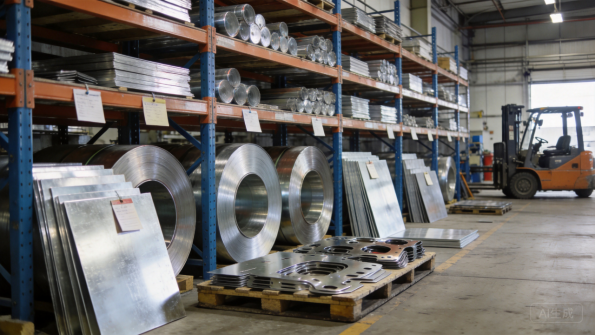
Figure 3: Raw material coils and cut blanks for automotive sheet metal production.
Production Difficulty
Laser Cutting and Blanking
Most automotive sheet metal parts begin as flat blanks, and laser cutting is the most flexible way to produce them in low and medium volumes. Fiber laser systems cut carbon steel, stainless, and aluminum with clean edges and tolerances around plus or minus 0.1 mm. At XHX Metal, two 6kW fiber laser cutting machines deliver plus or minus 0.01 mm positioning accuracy, which matters for hole patterns that must align with vehicle mounting points.
Cutting quality directly affects downstream steps. Edge burrs can damage seals or injure assemblers, micro-cracks from thermal cutting can weaken high-strength steels, and pierce points must be located in non-critical areas. Nesting software minimizes scrap across mixed part families, and cutting parameters are tuned per material and thickness, so a fabricator’s cutting experience is visible in part cost and quality.
CNC Bending and Springback
Bending converts flat blanks into brackets, channels, and trays, and it is where geometry errors appear. Every bend compresses the inner surface and stretches the outer surface, and the material springs back elastically when the punch releases. Springback is larger for high-strength steel and aluminum, so bend programs must compensate or the flange angle will be wrong by several degrees. Engineers Edge publishes bend allowance and bend deduction references used to lay out blanks and predict finished dimensions.
Modern CNC press brakes with programmable back gauges and angle sensors hold consistent results across runs, and operators verify first articles against the drawing before production. For automotive parts, the critical checks are flange height, hole-to-bend distances, and the position of holes relative to bent surfaces, because assembly depends on all of them. Process capability, not just the capability of a single sample, is what automotive buyers audit.
Stamping, Welding, and Assembly
For volumes above roughly 20,000 parts per year, stamping dies produce brackets and panels faster and at lower unit cost than laser cutting and bending. Die development adds four to eight weeks of lead time and a significant tooling investment, but it pays back through cycle times of seconds per part. Many fabricators offer both routes, prototyping on lasers and bending, then moving to dies once volumes justify them.
Welding joins brackets to panels, attaches inserts, and closes trays. TWI Global provides technical guidance on automotive welding processes, including MIG and resistance spot welding, heat input control, and distortion management. Fixtures hold parts to correct geometry during welding, and weld quality is verified by visual inspection, sectioning, or non-destructive testing depending on the part’s safety role. For battery trays and sealed enclosures, leak testing follows welding.
Quality Control and Testing
Automotive quality control starts with the first article: a full dimensional inspection of the initial sample against the drawing, often on a coordinate measuring machine, with a report submitted to the buyer. Production batches then follow a control plan with sampling, in-process checks, and record keeping. Material certifications must accompany each batch, tracing parts to specific coil or sheet lots.
Testing depends on the part’s role. Structural parts may require hardness or tensile verification, sealed enclosures require leak testing, and outdoor components require salt spray and coating thickness checks. Documentation standards follow automotive practice, including PPAP-style submissions where the buyer requests them. A fabricator that treats documentation as part of the product, not paperwork, is the one that will pass an automotive audit.
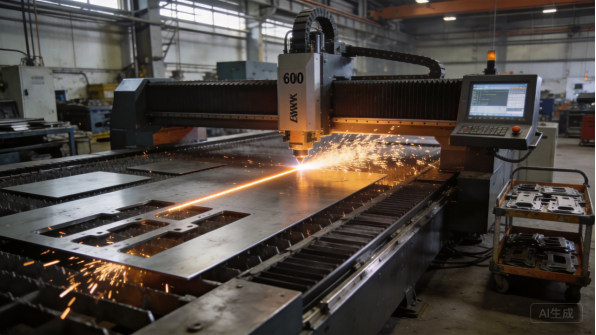
Figure 4: Fiber laser cutting produces accurate blanks for brackets, trays, and reinforcements.
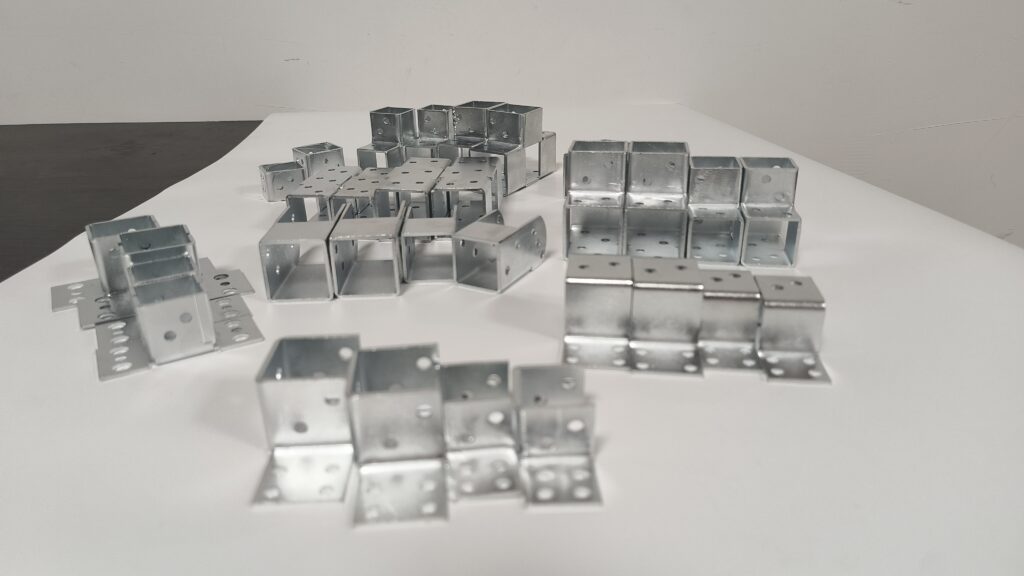
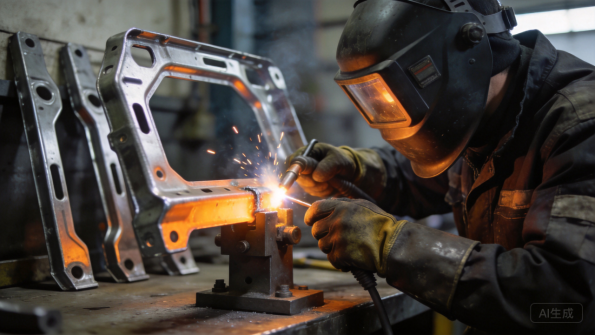
Figure 6: Controlled welding and fixturing keep automotive parts strong and dimensionally stable.
Production Lead Times
RFQ, Engineering Review, and Prototypes
An automotive sheet metal program starts with an RFQ: 3D model, drawing, material specification, quantity, and target timing. The fabricator’s engineering team reviews the design for manufacturability, checking bend radii, flange lengths, hole distances, and tolerance stacks, and returns a quotation with comments within one to three business days. Prototypes are then delivered in five to twelve business days for typical brackets and covers, and slightly longer for multi-part assemblies.
The engineering review is where automotive buyers get the most value. A fabricator that flags an unformable radius or an unrealistic flatness callout before tooling exists prevents weeks of delay later. Prototype feedback should include fit notes, suggested drawing changes, and any material substitutions, so the buyer can approve the final configuration with full information.
Tooling and Process Setup
If volumes justify stamping or dedicated fixtures, tooling development follows prototype approval. Stamping dies typically take four to eight weeks with tryout and sample approval, while welding fixtures and inspection gauges can be built in one to two weeks. The fabricator should provide a tooling timeline with milestones, so the buyer can plan the production start date accurately.
Process setup includes bending programs, weld schedules, and inspection routines, all documented in the control plan. First articles from the production process, not from the prototype tooling, are inspected against the drawing, and any discrepancy is resolved before the batch runs. Buyers should expect photographic and dimensional evidence at this stage, and the fabricator should be willing to adjust until the part meets specification.
Production Batches and Volume Planning
Typical production lead times are 15 to 30 business days for batches from a few hundred to several thousand parts, with finishing, coating, and testing consuming the largest share of that time. Larger annual volumes are scheduled in monthly or quarterly batches so the buyer receives parts in line with assembly needs without tying up capital in inventory.
Forecast sharing is the most effective tool for keeping automotive lead times stable. When buyers share rolling forecasts, the factory reserves material, schedules finishing capacity, and orders long-lead items such as special steel grades or custom powder colors in advance. Material availability is usually the gating factor: standard cold-rolled and galvanized steel is on hand, while AHSS grades, aluminum tempers, and stainless coils may require one to two weeks of lead time.
A clear production schedule with agreed milestone dates also lets both sides manage the finishing bottleneck, since powder coating and e-coat lines run in fixed batch cycles that cannot be compressed without risking quality. Buyers should agree on milestone dates, not just a final delivery date, so that coating, testing, and packaging delays are visible early enough to correct.
Packaging, Logistics, and Documentation
Automotive parts are shipped in protective packaging matched to the part: individual wrapping, foam separators, and dunnage that prevents surface damage in transit. For parts that will be coated after arrival, edge protection is critical, and for overseas shipments, rust-preventive paper or VCI film protects against container condensation. The fabricator should provide carton dimensions, gross weight, and loading photos for freight planning.
Documentation accompanies every shipment: packing lists, material certificates, inspection reports, and any requested quality documentation such as PPAP or IMDS declarations for automotive materials. Buyers should confirm the documentation set during quotation, because missing certificates at customs or at the plant gate can stop a shipment even when the parts are perfect.
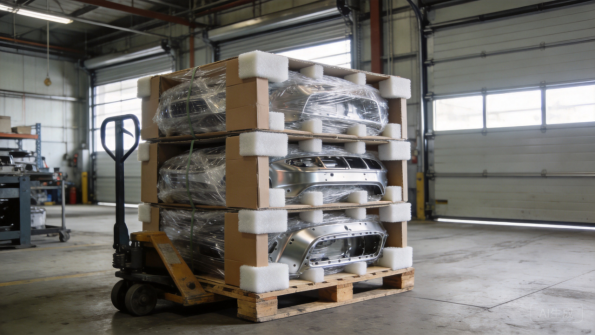
Figure 7: Protective packaging keeps finished automotive parts safe from factory to destination.
Past Case Studies
EV Battery Tray Program
An electric vehicle program needed a lightweight aluminum battery tray with a sealed perimeter flange, mounting brackets, and threaded inserts, delivered as a complete assembly. The customer supplied a STEP file and a target weight, and the engineering team redesigned the panel layout for laser cutting and CNC bending while preserving the sealing flange geometry. Welding was performed in a fixture with controlled heat input to keep the tray flat within specification.
The program delivered prototypes in two weeks, followed by production batches with leak testing and dimensional reports on every batch. The tray was later adapted for a second vehicle variant by changing the bracket positions, demonstrating how a modular design reduces the cost of model variations. The customer now schedules monthly releases against a rolling forecast.
Tier 1 Supplier: Structural Brackets
A Tier 1 supplier producing seat and cooling modules needed a family of galvanized steel brackets with hole positions held to plus or minus 0.1 mm, delivered in monthly volumes of about 8,000 units. The parts were prototyped on laser cutting and CNC bending, and first articles were inspected on a coordinate measuring machine against the supplier’s GD&T drawing.
The production process used dedicated bending programs and inspection fixtures, with material certificates traced to each coil. Because the supplier’s assembly lines run on schedule, on-time delivery and consistent quality were the evaluation criteria, and the program has continued for three years with a defect rate below the agreed target. The relationship expanded to include a second bracket family under the same quality system.
Commercial Vehicle Reinforcement Parts
A commercial vehicle manufacturer needed heavy-gauge reinforcement plates and cross-members for truck chassis, fabricated from 4 mm to 6 mm steel. The challenge was size and weight: large plates are difficult to handle, cut, and form consistently, and the parts carry structural loads that require documented weld quality and material certification.
XHX Metal produced the parts in dedicated fixtures with a handling plan for large blanks, and each batch included dimensional reports and weld documentation. The manufacturer now orders the reinforcement family twice a year in container quantities, and the packaging plan protects the heavy parts during ocean freight. The program shows how fabrication shops support commercial vehicles where volumes are moderate but quality demands are high.
Aftermarket Brand: Custom Mounting Kits
An aftermarket brand needed a mounting kit for a popular SUV model: four brackets, a heat shield, and hardware, sold through e-commerce with a target retail price. The kits had to fit the vehicle without modification, which required accurate reverse-engineered geometry and hole positions measured from an original vehicle.
The prototype was fitted to the customer’s test vehicle before production, confirming the mounting points and clearance, and the finished parts used powder coating matched to the brand’s color. The kit launched with a first order of 500 units and grew to monthly reorders as the product was listed on additional channels. For the buyer, the entire development cycle from drawing to launch took under six weeks.
The kit program also highlighted the value of reverse-engineering discipline: every hole position was measured from a production vehicle, and the prototype was fitted twice before tooling approval. That attention to detail prevented fit complaints at retail and kept early customer reviews positive, which is exactly what a brand needs when launching an accessory product.
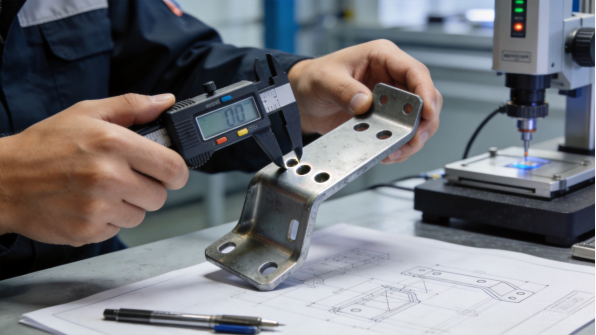
Figure 8: Dimensional inspection verifies automotive parts before shipment.
Summary and Next Steps
Key Takeaways
Automotive sheet metal parts look simple but carry demanding requirements: tight tolerances, material traceability, controlled welding, and documented quality. The material decision drives both performance and cost, from mild steel for brackets to AHSS and aluminum for lightweight structures, and coatings must be specified for the real service environment rather than assumed. Production difficulty concentrates in springback control, welding distortion, and first-article verification, which are exactly where experienced fabricators differentiate themselves.
Lead times follow a predictable path: engineering review in days, prototypes in one to two weeks, tooling in four to eight weeks when needed, and production in three to four weeks per batch. Forecast sharing and clear documentation keep that path stable. Buyers who settle material, tolerances, and documentation before quoting will always have smoother programs than those who discover requirements after production starts.
Why XHX Metal
XHX Metal is a privately owned sheet metal manufacturer in Dongguan, China, with a 2,000 square meter factory, about 30 employees, and an annual capacity exceeding 500,000 pieces. The factory operates under an ISO 9001:2015 quality management system with CE and SGS certifications, and it produces automotive-related enclosures, brackets, trays, and covers for export customers with packaging designed for ocean freight. Two 6kW fiber laser cutting machines, CNC press brakes, TIG and MIG welding, and a finishing line cover the complete process under one roof.
The company supports buyers from design review through production, provides first-article inspection reports and material certificates, and coordinates third-party testing such as salt spray and dimensional verification when required. For automotive programs, buyers can review related sheet metal fabrication services and product pages, and the team will structure quotations, quality documentation, and delivery schedules to match the program’s needs.
How to Start Your Project
Start with a STEP or STP file and a drawing that states material, thickness, finish, tolerance, and quantity. If the design is not finalized, send photos or sketches, the target weight and environment, and the annual volume, and the engineering team will recommend a manufacturable design. The typical path is: engineering review, quotation, prototype, first-article inspection, production, and shipment, with clear communication at each milestone.
To discuss an automotive sheet metal program, contact Barry at +86 13244963694 or sales01@xinghaoxin.com, or send your design through the XHX Metal website. With clear requirements and the right partner, a custom automotive sheet metal part moves from drawing to production in weeks, with documentation that passes the most demanding buyer audits.
What to Ask a Fabricator
Before placing an order, ask the fabricator three questions: which materials and thicknesses it runs regularly, how it verifies first articles and production samples, and what documentation it provides with each shipment. The answers reveal whether the shop has the process discipline that automotive programs require or whether it will learn quality management on your project.
Also confirm testing capabilities, whether in-house or through a named partner, because salt spray, leak testing, and dimensional reports are only useful when the buyer knows exactly what was tested and how. A fabricator that quotes testing vaguely will usually deliver vague evidence, while one that lists test methods and acceptance criteria in the quotation is treating quality as part of the product.