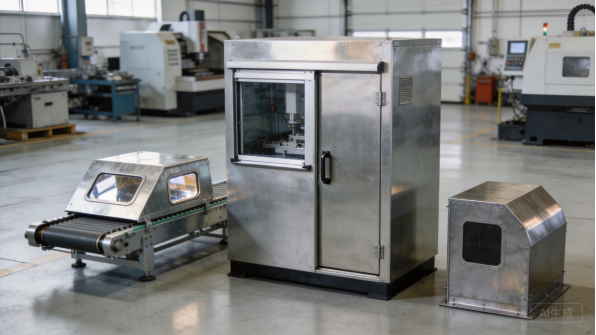
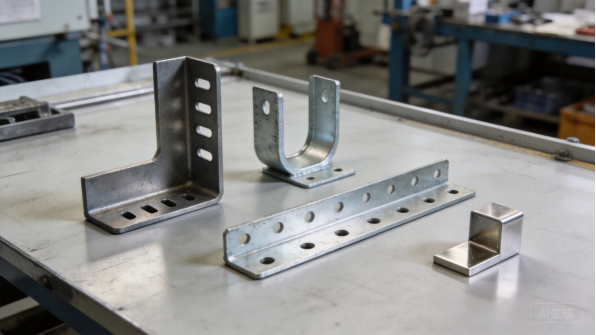
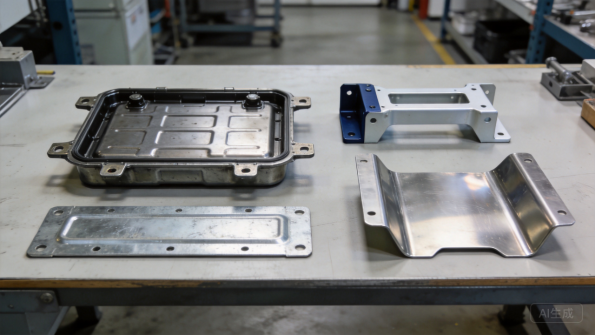
Automation control cabinet manufacturing is the sheet metal engineering behind the enclosures that house PLCs, servo drives, robot controllers, and machine power systems on modern production lines. These cabinets protect sensitive electronics from dust, oil, heat, and electromagnetic interference, and they give maintenance teams clean access to the controls that run the line. NFPA 79, UL 508A, and related industrial standards shape how OEMs and fabricators build and document this equipment.
This guide follows an automation control cabinet program in seven steps: the product and its families, the applications each configuration serves, material selection, production difficulty, lead times, real case studies with purchasing data, and a practical summary. Whether you are a machine builder launching a new control platform, an automation integrator sourcing enclosures for a robot cell, or an OEM replacing a low-cost supplier, this guide will help you brief a fabricator, plan realistic timelines, and avoid the fit, sealing, and documentation problems that appear in the field.
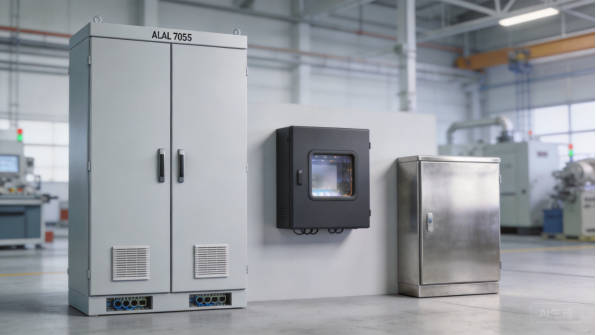
Figure 1: Automation control cabinets in floor-standing, wall-mount, and stainless configurations.
The Product: What Is an Automation Control Cabinet
Cabinet Families and Configurations
An automation control cabinet is a fabricated sheet metal enclosure engineered to hold industrial controls: PLCs, drives, contactors, terminals, and the wiring that connects them to a machine or production cell. It is not a generic electrical box; its size, cooling, door access, cutouts, and earthing are planned around a specific control system and its operating environment.
The main families are floor-standing cabinets, wall-mount enclosures, and compact machine-mounted boxes. Floor-standing cabinets, typically 1.4 to 2.0 meters tall, carry complete machine controls, servo drive groups, and transformer or power sections. Wall-mount enclosures hold smaller PLC and I-O groups near the machine, and compact boxes protect sensors, local buttons, and communications devices close to the point of use.
Within each family, builders customize width, depth, door style, gland plates, viewing windows, and paint color so the enclosure matches the OEM product line and the panel layout inside. Automation control cabinet manufacturing therefore starts with an envelope decision, and every later choice, from material to door hardware, follows from it.
Core Components and Their Roles
The core components of an automation control cabinet are the body, door or doors, mounting plates, gland plates, and the busbar and earthing system. The body defines the enclosure rating and carries the loads, the door provides service access, and the mounting plate carries the DIN rails, devices, and cable ducts that the panel builder installs.
Gland plates route power and signal cables through the cabinet floor or roof with strain relief and sealing, and earth studs bond the door, body, and mounting plate to the machine earth. Viewing windows, door interlocks, lifting eyes, and hinge options are added per the control system and site. Every opening is a fit point, and the cabinet must hold tolerances so doors close square, panels align, and the panel builder can install devices without forcing.
The same component set is reused across machine models, which is why OEMs standardize a few cabinet sizes and treat the enclosure as a platform rather than a one-off.
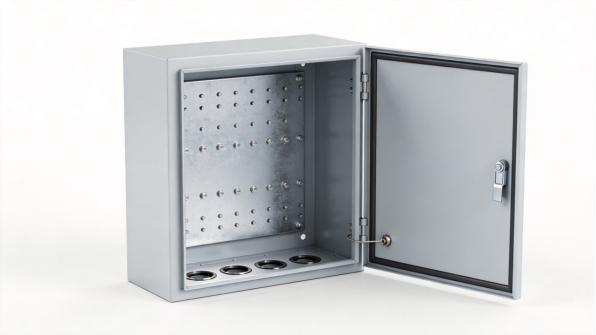
Figure 2: The mounting plate, gland entries, and door hardware define the cabinet interior.
Design Drivers: Cooling, EMC, and Service Access
Three design drivers dominate automation control cabinet design: thermal management, electromagnetic compatibility, and service access. Drives and controllers reject heat into the cabinet, fast-switching power electronics create interference that must be contained, and maintenance teams need to reach terminals and devices quickly when a line stops.
Cooling is solved with vented enclosures, filtered fan units, or sealed cabinets with heat exchangers and air conditioners for hot or dusty sites. EMC is solved with continuous earthing, bonded doors, gland plates that limit cable openings, and separation of power and signal wiring inside. Service access is solved with full-height doors, removable gland plates, and layouts that keep terminals reachable. NEMA enclosure type guidance and IEC standards for low-voltage switchgear and controlgear assemblies give the design framework that OEMs and fabricators use at quotation.
These drivers must be settled before the cabinet is quoted, because they decide material thickness, door construction, gasket class, and whether the cabinet needs extra cooling hardware. National standards bodies such as ANSI coordinate the same safety and construction framework for industrial control equipment.
Customization in Automation Control Cabinet Manufacturing
Custom automation control cabinet manufacturing exists because every machine builder has its own controller brand, layout, and service philosophy. Buyers customize cabinet dimensions, door and window configurations, gland plate patterns, color, lifting and mounting hardware, and documentation, and they expect the cabinet to accept their exact panel layout without field modification.
Customization also covers certification and site requirements: UL 508A panel construction practices, NFPA 79 wiring and guarding rules, NEMA or IP ratings for the environment, and export documentation for the destination market. A fabricator that holds dimensional control and can provide material certificates, first-article reports, and batch records gives the OEM a cabinet that is ready for its own panel shop and for customer audits.
Use Cases and Applications
Machine Tools and CNC Equipment
Machine tools and CNC equipment use automation control cabinets to house axis drives, spindle controllers, and the PLC that coordinates machining cycles. These cabinets sit beside or on the machine, exposed to cutting fluid mist, swarf, and vibration, so the enclosure must protect electronics while allowing routine service.
Typical programs run as floor-standing cabinets beside the machine or as machine-integrated enclosures with doors that match the machine base. Cutouts are planned for the machine interface, cable entries are positioned for the machine harness, and the cabinet is painted to the builder’s color standard. For CNC builders, cabinet geometry and door fit directly affect assembly time, because a cabinet that arrives out of square slows the whole machine build. Cabinet platforms also carry options such as vibration-isolated mounting and sealed doors where coolant mist is heavy, and the same enclosure family often covers several machine sizes.
Robotic Cells and Automation Stations
Robotic cells and automation stations concentrate controls in one lockable enclosure: the robot controller, safety relays, and the station PLC are grouped where technicians can service them. Standardized cabinets with clear terminal access are reused across many station layouts, and industry research put the global industrial automation market near USD 190 billion in 2021 Grand View Research (2023).
Robot and cell integrators typically order wall-mount or compact floor cabinets with gland plates pre-arranged for their cable routes. Doors need viewing windows where operators monitor cell status, and the cabinet must accept safety-rated wiring practices called out by the cell specification. Integrators benefit from a fabricator that can ship identical enclosures across a multi-station project, and repeatability is the central value of automation control cabinet manufacturing for cell builders.
Packaging and Material Handling Lines
Packaging and material handling lines run around the clock, and their control cabinets are installed along the line where operators and technicians work around them. Enclosures protect PLCs and drives from dust, film residue, and washdown, and they need doors that stay sealed after years of use on a vibrating line.
Line builders order cabinets in project quantities, with spares ordered at the same time to keep service parts identical. The gland plates are laid out for the line’s cable trays, and lifting eyes and base channels are added for installation on raised platforms. Delivery is scheduled to the line build, so the fabricator’s batch lead time and documentation matter as much as the cabinet price. Power and data entries are grouped on one gland plate so the line’s cable trays land cleanly, and doors open toward the service aisle on every station.
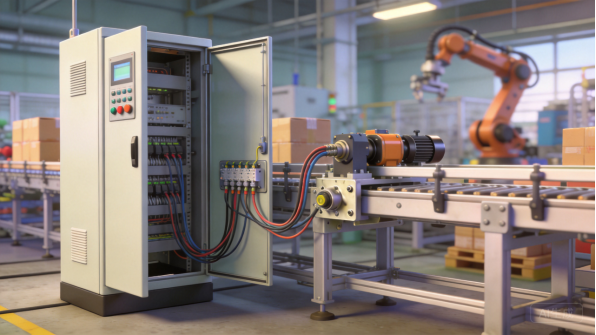
Figure 3: A floor-standing control cabinet feeds an automated packaging line.
Food, Beverage, and Pharmaceutical Environments
Food, beverage, and pharmaceutical plants specify washdown-rated cabinets in stainless steel, with sloped tops, sealed doors, and hardware that survives chemical cleaning. These enclosures protect controls in environments where a coated carbon steel cabinet would corrode or trap product residue. Sloped tops shed rinse water, and door hinges are specified for thousands of cleaning cycles rather than occasional use.
Washdown programs demand brushed stainless construction, continuous gaskets, and documented material for the plant’s hygiene and audit file. Because stainless fabrication requires dedicated handling to prevent contamination, OEMs choose fabricators with real stainless process control rather than shops that treat it as an occasional material. These programs show that automation control cabinet manufacturing must extend from dry machine halls into hygienic production environments.
Material Selection for Automation Control Cabinets
Powder-Coated Cold-Rolled Steel
Powder-coated cold-rolled steel is the standard material in automation control cabinet manufacturing, balancing strength, formability, and cost for machine builders, with property data for common grades available in MatWeb. Typical sheet thicknesses range from 1.2 mm for wall-mount cabinets to 1.5 or 2.0 mm for tall floor cabinets that carry doors, gland plates, and internal hardware.
Electrostatic powder coating, cured to a textured industrial finish, gives the cabinet a durable film that resists oil, dust, and handling damage. RAL 7035 light grey and RAL 7022 or 7016 dark greys dominate automation equipment, and textured finishes hide workshop marks. Before coating, panels are degreased, rinsed, and pretreated so the powder film has a stable surface to bond to, and batch-to-batch color is matched under controlled curing. Coating thickness and edge coverage are verified because cut edges and fastener areas see the most moisture, and the Powder Coating Institute publishes guidance on specifying and testing industrial powder finishes.
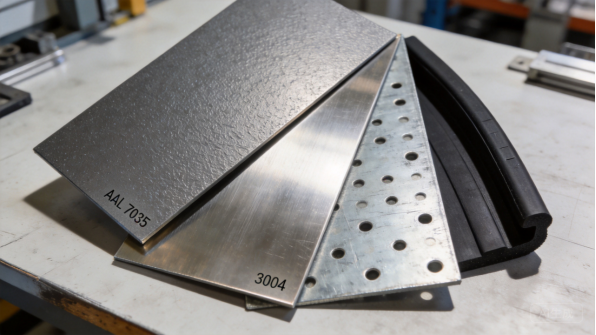
Figure 4: Powder-coated steel, stainless, galvanized steel, and gasket profiles cover the material range.
Stainless Steel for Washdown and Corrosive Sites
Stainless steel, primarily grade 304 and grade 316, is specified where washdown chemicals, salt air, or clean-room rules make coated carbon steel the wrong choice. SSINA publishes grade selection guidance for corrosive service, with grade 316 adding molybdenum for chloride resistance in coastal and chemical environments.
Stainless cabinets cost more to fabricate because the material is harder to form and demands dedicated tooling and handling to prevent iron contamination. For food, beverage, pharmaceutical, and coastal automation sites, the premium is justified by service life and audit requirements. Stainless hardware, hinge pins, and fasteners are specified with the panels, because carbon fasteners rust first and stain the cabinet face. Brushed finishes must run consistently across visible panels so the cabinet looks uniform on the machine.
Galvanized and Zinc-Coated Construction
Galvanized and electro-galvanized steel is used for mounting plates, gland plates, and internal structure where corrosion resistance is needed without painting. The American Galvanizers Association provides guidance on zinc coating selection and service life for industrial environments, and hot-dip galvanized frames are common in outdoor and high-humidity cabinet bases.
Internal galvanized components protect the panel interior from condensation, while painted carbon steel gives the visible enclosure its industrial finish. Zinc-coated returns and flanges also stop edge corrosion where paint film is thin, which extends door and hinge life in humid plants. The material mix is a cost decision: galvanized internals add small cost and large reliability value, and OEMs standardize the combination across a product family so quotations are repeatable.
Seals, Ventilation, and Hardware
Sealing and ventilation are engineered with the material decision because they decide whether the cabinet keeps its rating in service. Continuous EPDM gaskets close doors and gland plates, vent grilles and filter fans manage airflow, and rain hoods protect outdoor or washdown cabinets from water entry.
Hardware completes the enclosure: hinges, multi-point latches, viewing windows, earth studs, lifting eyes, and leveling feet are selected for industrial duty and long cycle life. Vent grilles are sized with the drive heat load, and filter classes are chosen to keep dust out of the panel without restricting airflow. Agreeing seals, vents, and hardware at quotation prevents the most common field complaints: doors that leak, hinges that sag, and fastener corrosion that turns a maintenance job into a rework job.
Production Difficulty and Tolerance Control
Cutout Precision and Door Fit
Cutout precision is the first quality gate in automation control cabinet manufacturing. Laser cutting produces door openings, window apertures, gland plate holes, and mounting patterns, and these openings must match the panel layout and hardware within tight limits or the whole cabinet fails at assembly.
At XHX Metal, two 6kW fiber laser cutting machines hold plus or minus 0.01 mm positioning accuracy, which matters when a viewing window frame, door lock, or gland plate must line up across a tall cabinet. Cut quality is equally important: burrs around gland holes damage cable jackets, rough window edges catch gaskets, and pierce points must sit where they are not visible. Cut edges around openings are deburred so panel installers and technicians do not cut gloves and cables during wiring. Nesting software arranges the cabinet set to control scrap, and cutting parameters are tuned per material and thickness.
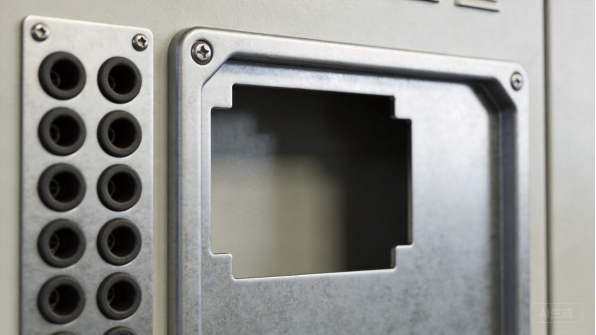
Figure 5: Laser-cut openings and gland entries hold the precision that panel builders need.
Bending and Cabinet Geometry
Bending converts flat blanks into the cabinet body, doors, and mounting flanges, and springback compensation is tuned for each material grade. Engineers Edge publishes bend allowance and deduction references used to lay out blanks and predict finished dimensions, and CNC press brakes with programmable back gauges hold bend positions and angles consistently across a batch.
In automation control cabinet manufacturing, the critical checks are door opening geometry, flange squareness, and base flatness, because a cabinet must stand level, doors must close with even gaps, and gland plates must sit flush. First articles are measured against the drawing, and forming is sampled through production. This discipline is what lets a floor-standing cabinet accept a full panel layout without shimming and misalignment at the panel shop.
Welding, Assembly, and Sealing
Welding joins base frames, door stays, hinge brackets, and structural sections, while lighter enclosures use fastening and clinching to protect coatings. TWI Global provides technical guidance on joining thin sheet steel, and fixtures hold parts to geometry while welds are made so the cabinet does not distort.
Assembly fits the door, gaskets, viewing window, latches, and earth system, and the finished cabinet is checked for door operation and seal fit. Door stays hold heavy doors open during service, and captive fasteners prevent hardware from falling into energized panels. For OEMs that build panels in house, the fabricator ships enclosures ready for their mounting plates and DIN rails. Fixture-based assembly and sample builds keep quality consistent, and the process repeats identically across product generations.
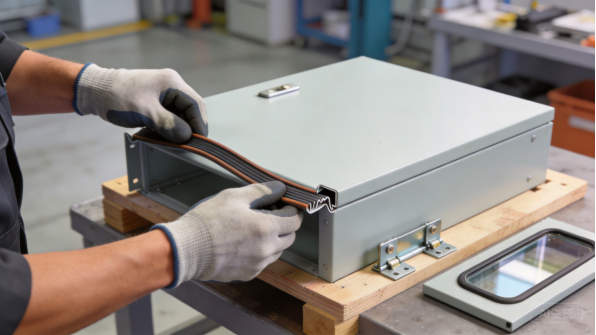
Figure 6: Gasket and hinge assembly gives the cabinet its door seal and service life.
First-Article Verification in Automation Control Cabinet Manufacturing
First-article verification in automation control cabinet manufacturing is a formal check of a representative cabinet against the drawing before production is released. The door is fitted and operated, gland plates are trial-mounted, the earth path is checked, and dimensions are recorded on a first-article report the OEM keeps for its own quality file.
Batch control follows the same discipline at a lighter level: door gap, coating, and hardware fit are sampled against the agreed control plan, and material certificates are collected per batch. Buyers increasingly ask for the reports as evidence before payment and shipment, and a fabricator that provides them treats quality as part of the product rather than an inspection afterthought.
Production Lead Times and Volume Planning
RFQ, Engineering Review, and Prototypes
An automation control cabinet program starts with an RFQ: drawings or a panel layout, material, finish, quantities, and target timing. Engineering reviews manufacturability, checking cabinet size, door geometry, gland plates, and hardware, then quotes within one to three business days. Prototypes arrive in five to ten working days, and trial-fitted gland plate samples prove the interfaces before production.
The prototype is where the enclosure is validated: the door is operated, gland plates are trial-mounted, hardware is fitted, and the cabinet is checked against the panel layout the buyer will install. Prototype feedback should include fit notes and suggested drawing changes. Material, finish, and documentation choices are settled here, before batch tooling begins. For OEMs with approved drawings, the first batch can follow the prototype immediately, and the typical drawing-to-first-batch lead time at XHX Metal is 15 to 30 days depending on size and finish.
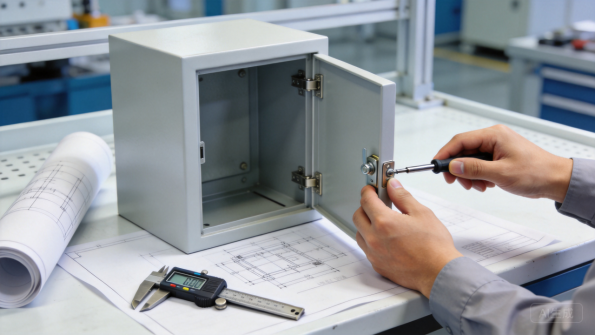
Figure 7: A prototype cabinet is fitted and checked before batch release.
Process Setup and Tooling
Most automation control cabinets are produced with laser cutting, CNC bending, and light welding, which keeps tooling costs low and design changes inexpensive. The setup that matters is process tooling: bending programs with verified parameters, assembly fixtures for door and gland fit, and inspection gauges for critical openings.
Building this setup typically takes one to two weeks for a new cabinet size. Because batch volumes in automation control cabinet manufacturing are moderate, dedicated stamping dies are rarely justified; flexible fabrication is usually the right route, and the economics are reviewed at quotation. Buyers should expect the fabricator to confirm the flexible route rather than assume expensive tooling is required.
Batch Planning and Realistic Volumes
In automation control cabinet manufacturing, production runs are deliberately small to match OEM releases. Floor-standing cabinets typically ship in batches of 10 to 40 units with two to four releases per year; wall-mount enclosures run in batches of 50 to 300. Minimum orders of 5 to 20 units keep panel shops stocked without tying cash in inventory.
Forecast sharing keeps batch lead times stable. When OEMs share rolling forecasts, the factory reserves material and coating capacity and orders long-lead items such as custom colors or stainless grades in advance. Steel coils are usually on hand, while stainless sheets and custom finishes may add one to two weeks. Batch sizes are kept small enough that a design change can be introduced without scrapping a warehouse of painted shells, which is why OEMs release cabinets quarterly. A clear schedule with milestone dates makes the bottleneck visible before it becomes a machine launch delay.
Documentation, Packaging, and Shipment
Automation control cabinets ship in packaging matched to the product: coated panels protected by film, doors and gland plates separated or fitted with protective pads, and units packed for export with blocking inside the carton or crate. Export shipments use rust-preventive paper or VCI film against container condensation.
Documentation accompanies every shipment: packing lists, material certificates, first-article and batch reports where agreed, and dimensional records for the panel shop. Buyers should confirm the documentation set during quotation because their machine certification file depends on it. Communication follows clear milestones with photos at each stage, so OEMs can track progress without site visits.
Past Case Studies
Packaging Machinery OEM: Floor-Standing Cabinet Program
A European packaging machinery OEM needed a floor-standing automation control cabinet platform for its wrap-around case packer line, with double doors, cable-tray-matched gland plates, and a textured RAL 7035 finish. The program runs at 20 to 30 cabinets per quarterly release with a 10-unit minimum, priced from $210 to $340 FOB, for an annual value of roughly $28,000 to $45,000.
XHX Metal delivered the prototype in 8 working days, and the first batch of 24 cabinets shipped in 28 days after drawing approval. The OEM released four batches in the first year, with doors and gland plates verified on a first-article report and coating thickness checked on a sampling basis. A design review cut material cost by about 5 percent by consolidating three cabinet widths into two formed body sizes, and spares are now ordered from the same production runs. The OEM’s panel shop now receives cabinets that drop onto its build line without rework, and door and gland fit are consistent from batch to batch.
The program shows how automation control cabinet manufacturing scales across machine generations when the enclosure platform is kept stable.
Robot Cell Integrator: Wall-Mount Controller Enclosures
A robotics integrator needed wall-mount controller enclosures for its standard station design, grouping the PLC, safety relays, and communications in one compact cabinet. The program runs at 80 to 150 enclosures per release with a minimum order of 20 units, priced from $32 to $72 FOB depending on options, for an annual value of roughly $30,000 to $50,000.
The integrator standardized one enclosure size with three gland plate variants, and XHX Metal shipped the first batch of 90 units in 18 days. Each batch is inspected by the integrator’s quality engineer during a customer audit, and third-party SGS inspection is available on request for project deliveries. Door sealing and hinge life were validated on the prototype, and the same enclosure now serves the integrator’s multi-station projects without re-qualification. Gland plate variants are stocked as options, so the integrator configures each station without qualifying a new cabinet.
Standardized wall-mount enclosures keep the integrator’s panel build repeatable, and the case data shows the volume range a small automation shop expects from its cabinet supplier.
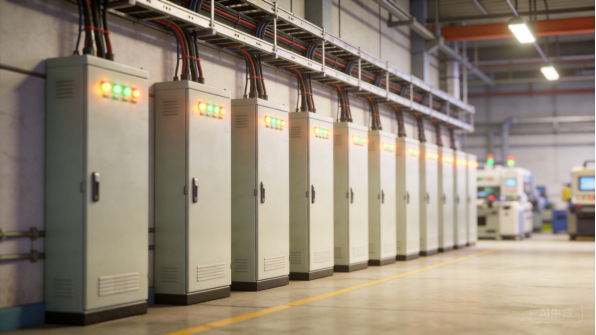
Figure 8: Installed cabinet rows keep machine controls accessible along the production hall.
What the Case Data Shows
Both programs follow the same pattern: small to medium batches, minimum orders of 10 to 20 units, FOB pricing by cabinet size and options, and annual values below $80,000. Floor-standing cabinets release two to four times per year and wall-mount enclosures more often; prototypes arrive in one to two weeks and first batches follow in three to four weeks.
Delivery is staged against each OEM’s build calendar, and inspection is scheduled before shipment so findings are corrected on the bench rather than in the field.
The purchasing data reflects a 30-person factory with total annual capacity of roughly 500,000 pieces across all product lines, and orders at this scale receive dedicated engineering attention rather than being lost in a high-volume production line. Buyers can compare these figures with their own forecasts, and the values are representative of automation control cabinet manufacturing for North American and European OEM programs.
Summary and Next Steps
Key Takeaways
Automation control cabinet manufacturing is a fit, sealing, and documentation discipline that demands more than sheet metal work. Material choice drives cost and performance, from powder-coated steel for machine halls to stainless for washdown and coastal sites, while seals, ventilation, and hardware must match the control system and environment. Production difficulty concentrates in cutout precision, door geometry, and first-article verification.
Lead times follow a predictable path: engineering review in days, prototypes in five to ten working days, process setup in one to two weeks, and production batches in three to four weeks for floor cabinets and two to three weeks for wall-mount enclosures. Forecast sharing and staged delivery planning keep OEM programs on schedule, and buyers who settle materials, finish standards, and documentation before quoting will have smoother programs than those who discover requirements at certification.
Why XHX Metal
XHX Metal is a privately owned sheet metal manufacturer in Dongguan, China, with a 2,000-square-meter factory, about 30 employees, and annual capacity of about 500,000 pieces. ISO 9001:2015, CE, and SGS certification cover the quality system, and two 6kW fiber laser cutting machines, CNC press brakes, and TIG and MIG welding handle the fabrication side of automation cabinet work.
The factory produces custom enclosures, cabinets, panels, and welded assemblies for export customers, with packaging designed for ocean freight.
The company supports buyers from design review through production, provides first-article inspection reports and material certificates, and coordinates third-party inspection when required. For automation control cabinet manufacturing programs, buyers can review related sheet metal fabrication services and product pages, and the team will structure quotations, quality documentation, and delivery schedules to match the program’s volume.
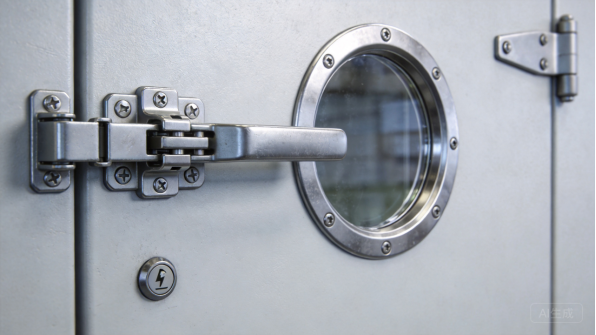
Figure 9: Door hardware and viewing windows are specified for years of industrial service.
How to Start Your Project
Start with a STEP or STP file and a drawing that states material, finish, cabinet dimensions, door configuration, gland plate layout, quantities, and documentation needs. If the design is not finalized, send photos or sketches of the control system, the machine environment, the service access needs, and the annual volume, and the engineering team will recommend a manufacturable cabinet design.
The typical path is: engineering review, quotation, prototype, first-article inspection, production, and shipment, with clear communication at each milestone. Quotes include the documentation set and delivery milestones, so the buyer and fabricator start from the same scope. To discuss an automation control cabinet program, contact Barry at +86 13244963694 or sales01@xinghaoxin.com, or send your design through the XHX Metal website.
What to Ask a Fabricator
Before placing an order, ask a fabricator three questions: which cabinet sizes and finish colors it produces regularly, how it verifies door fit and gland plate accuracy on first articles, and what material certificates, dimensional reports, and batch records it can provide. The answers reveal whether the shop treats automation cabinets as engineered enclosures or as simple metal boxes.
Also confirm experience with export packaging, custom colors, and stainless work, because those details decide whether a cabinet arrives clean and certifies for the destination market. A fabricator that lists tolerance targets and inspection points in the quotation is treating quality as part of the product, and that is the partner worth building a machine line with.