Metal brackets are the quiet workhorses of manufactured products. They hold motors in place, mount equipment to walls, reinforce frames, and connect components that were never designed to touch each other. Though a bracket is often the smallest part in an assembly, it carries load, controls alignment, and must fit its neighbors within fractions of a millimeter, which makes custom metal bracket manufacturing a precise and surprisingly demanding discipline. Grand View Research tracks steady growth across the industrial fasteners and components segment that brackets belong to, driven by machinery, construction, automotive, and electronics demand.
This guide follows the full journey of a custom metal bracket project in seven steps: the product itself, the applications it serves, material selection, production difficulty, lead times, past case studies, and a practical summary. Whether you are a machinery OEM sourcing mounting brackets, an automotive tier supplier planning reinforcement parts, or an electronics brand developing a chassis bracket family, the information here will help you brief a fabricator, plan realistic timelines, and avoid the pitfalls that turn a small part into a costly program.
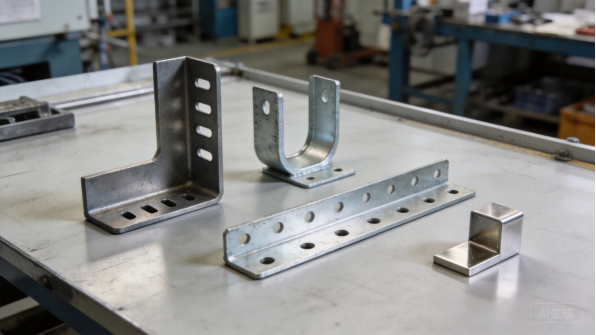
Figure 1: Finished custom metal brackets with precision holes, bends, and protective finishes.
The Product: What Are Custom Metal Brackets
Definition and Common Bracket Types
A metal bracket is a rigid component, usually formed from sheet metal, that mounts, supports, or connects other parts. The most common types are L-brackets, which join two perpendicular surfaces; U-brackets and channels, which cradle or clamp components; Z-brackets, which offset mounting planes; flat plates with holes, used for bolted connections; and multi-bend brackets that follow complex equipment geometry. Brackets can also be stamped, machined, or welded assemblies when load and geometry demand it.
What distinguishes a good bracket from a bad one is not shape but discipline: hole positions that match the mating parts, bend angles that hold the mounting planes parallel, and edges and corners that meet safety and appearance requirements. Even a simple L-bracket fails if the holes are 0.2 mm off, because it will not align with the components it connects. That is why custom fabrication exists, and why the manufacturing process behind brackets deserves the same attention as the parts they hold.
Core Structure and Design Elements
The core design elements of a bracket are the mounting holes, the bends, and the features that add stiffness. Hole patterns define how the bracket bolts to its mating parts, and hole type matters: plain holes for bolts, slotted holes for adjustability, countersunk holes for flush fasteners, and threaded or tapped holes for direct mounting. Bend geometry defines the bracket’s shape and strength, with flanges and return bends adding stiffness that lets a thinner material carry the same load as a thicker flat plate.
Additional features are added during design: reinforcing ribs pressed into large flat areas, lightening holes that reduce weight without losing strength, edge reliefs at bends to prevent tearing, and weld bosses or studs where the bracket joins other components. Every feature adds manufacturing steps, so a good design review balances function against cost. A fabricator that flags unnecessary features during quotation helps the buyer avoid paying for strength the product does not need.
Tolerances and Fit
Bracket tolerances are defined by what the bracket connects. For structural mounting in machinery and vehicles, hole positions are commonly held to plus or minus 0.1 mm, bend angles to a fraction of a degree, and flatness to specified limits, with the requirements captured in GD&T drawings that follow standards such as those published by ASME and the general tolerance frames of ISO 2768.
Tolerance is a cost driver, not just a drawing note. A 0.1 mm hole position is routine for laser cutting, while a 0.05 mm position may require inspection on every part and slower processes. Buyers should specify the tolerance that the application needs and challenge anything tighter, because each tightening multiplies inspection time and rejects. The right conversation with a fabricator is about what the bracket must do, not about copying tolerances from another drawing.
Customization and Volume Flexibility
Custom metal brackets are produced in volumes from a single prototype to hundreds of thousands of pieces, and the manufacturing route changes with volume. Small and medium quantities use laser cutting and CNC bending, which need no dedicated tooling and allow design changes at no cost. Higher volumes move to stamping dies that reduce unit cost but add tooling investment and lead time, and some programs use both: laser-formed prototypes, then stamping for production.
Customization also covers material, finish, and marking. Brackets can be produced in steel, stainless, aluminum, and brass, finished by zinc plating, powder coating, anodizing, or left raw with oil, and marked with part numbers, logos, or assembly identifiers. A fabricator that can manage mixed volumes and finishes gives buyers a single source from prototype to production, which simplifies sourcing and protects the design intent.
Use Cases and Applications
Industrial Machinery and Equipment
Industrial machinery is the largest consumer of custom brackets. Motors, pumps, gearboxes, sensors, guards, and cable trays all need mounting brackets that hold them in position under vibration, heat, and load. A motor bracket, for example, must maintain shaft alignment within tight limits or the coupling wears and the machine fails early, which makes bracket precision a reliability issue, not just a fit issue.
Machinery brackets also face maintenance realities: they must allow access to fasteners, survive repeated assembly and disassembly, and tolerate oils and cleaning chemicals. OEMs often standardize brackets across a machine family to reduce inventory, and they value fabricators that can deliver accurate parts in batches aligned with their production schedule.
Beyond mounting, brackets often serve as the attachment point for guards, nameplates, cable management, and sensors, which adds hole patterns and features that must stay consistent across the machine family. A fabricator that holds those patterns through design changes protects the OEM from rework on the assembly line.
Automotive and Transportation
Vehicles use hundreds of brackets: mounts for engines and transmissions, brackets for lights, sensors, battery trays, seat components, and body reinforcements. These parts must survive vibration, temperature cycling, and crash loads, and they are produced under strict quality documentation requirements. AWS and other standards bodies provide weld specifications and quality guidance that apply to welded bracket assemblies in transportation applications.
For automotive and commercial vehicle programs, bracket reliability is safety-critical, so material certification, dimensional reports, and traceability are expected with every batch. Volumes range from prototype lots for new models to millions of pieces for high-production vehicles, and suppliers are often selected for process discipline as much as price. A fabricator with automotive-quality documentation experience fits naturally into this supply chain.
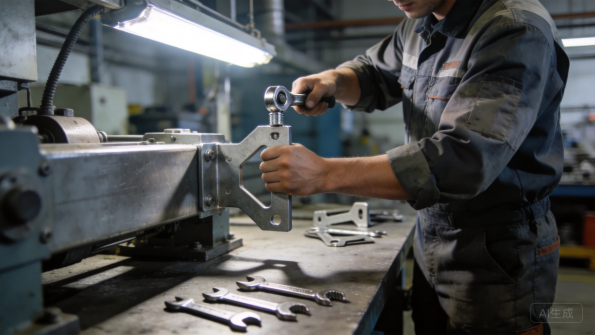
Figure 2: Custom metal brackets mount and support components in industrial assemblies.
Construction and Infrastructure
Construction and infrastructure use brackets to mount equipment to structures: wall brackets for cable trays and ducts, support brackets for piping, solar panel mounting brackets, and brackets for signs and lighting. These parts are often galvanized or heavily coated because they live outdoors and must survive decades of exposure, and they are designed to meet structural loads defined by the application.
Construction brackets are frequently standardized across projects, which rewards efficient production of repeat designs. The American Galvanizers Association documents the long service life of galvanized coatings in atmospheric exposure, making hot-dip galvanizing the standard finish for exterior steel brackets. For OEMs in construction, reliable supply of coated brackets is as important as the parts themselves, because site schedules depend on deliveries.
Electronics, Furniture, and Consumer Products
Electronics and consumer products use brackets at a smaller scale: chassis brackets that hold PCBs, mounting plates for connectors, TV and monitor wall brackets, and furniture brackets that join panels or support shelves. These parts are visible or user-facing, so edge quality, finish, and consistency matter commercially, and the Powder Coating Institute provides resources on the finishes that make consumer metal parts look and last better.
Consumer brackets face different forces than industrial ones: static load, occasional impact, and the expectations of users who notice rust, sharp edges, or crooked assembly. They are also produced in large volumes at retail price points, which rewards designs that stamp and assemble efficiently. For brands, the bracket is a quality signal, and a fabricator that controls edges, finish, and dimensional consistency protects the brand at low cost.
Material Selection
Cold-Rolled and Galvanized Steel
Cold-rolled steel is the default material for brackets where strength and cost matter. Grades with good formability and weldability produce clean bends and precise holes, and their mechanical properties are documented in references such as MatWeb’s materials database for direct comparison. Typical thicknesses range from 1.0 mm for light brackets to 6.0 mm for structural supports, with thickness driving both strength and the force required to form it.
Galvanized steel adds a zinc coating for corrosion resistance and is common for brackets that ship bare or live in humid environments. The zinc protects cut edges sacrificially, which matters because a bracket’s holes and bends are exactly where coatings get damaged. Galvanized steel costs slightly more and needs preparation before welding, but for outdoor and washdown applications it is often the most cost-effective choice.
Thickness choice also interacts with bending: thicker material requires larger bend radii and more press force, so the design should be reviewed for formability before the material is locked into the drawing.
Stainless Steel
Stainless steel, primarily grades 304 and 316, is specified for brackets in marine, food, medical, chemical, and coastal environments where corrosion resistance cannot rely on a coating. SSINA provides grade selection guidance for corrosive environments, and grade 316 adds molybdenum for chloride resistance. Stainless brackets never need recoating and tolerate aggressive cleaning and exposure.
Stainless costs more and is harder to form, with more springback and a need for dedicated handling to prevent carbon steel contamination. For welded stainless brackets, heat input must be controlled to preserve corrosion resistance at the weld. Buyers should choose stainless where the environment demands it, and work with a fabricator that has real stainless experience, because the material does not forgive shortcuts.
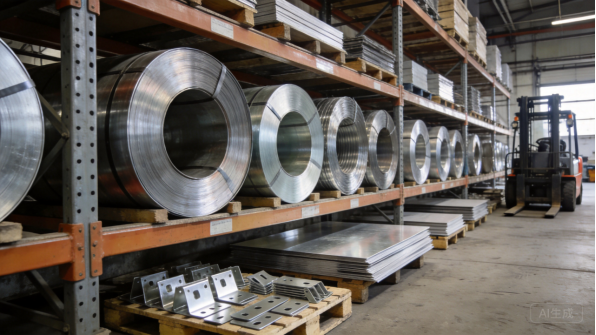
Figure 3: Raw material coils and cut blanks for metal bracket production.
Aluminum
Aluminum brackets, typically 5052 or 6061 alloy, are used where weight matters: aerospace and marine mounting, portable equipment, and electronics chassis. Aluminum is about one-third the weight of steel, resists corrosion naturally, and conducts heat well. Its properties and alloy selection guidance are cataloged by references such as AZoMaterials, which publishes practical alloy comparisons for structural parts.
The trade-offs are strength, cost, and processing. Aluminum brackets must be thicker than steel to reach the same stiffness, the material costs more per kilogram, and forming requires larger bend radii and careful springback control. Aluminum also needs galvanic isolation at joints with steel fasteners and protection through anodizing or powder coating where appearance matters.
Finishes and Corrosion Protection
The finish protects the bracket and defines how it looks. Zinc plating is the most common finish for steel brackets: it is inexpensive, provides good corrosion resistance indoors, and is specified by coating thickness and salt spray performance. Powder coating adds color and durability for visible parts, and hot-dip galvanizing provides the thickest protection for outdoor structural brackets. Anodizing protects aluminum while adding color.
Finish performance is verified with standards published by ASTM International, including salt spray, adhesion, and coating thickness tests, and buyers should specify the expected performance for the environment. Plating and coating also affect fit: thread forms, hole diameters, and press-fit features must accommodate the finish thickness, and masking may be required where conductive contact is needed. Agreeing the finish at quotation prevents fit surprises and warranty claims later.
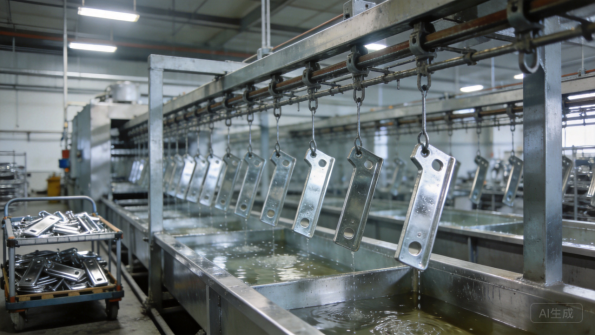
Figure 4: Plating and finishing protect metal brackets from corrosion.
Production Difficulty
Laser Cutting and Hole Precision
Most brackets start as flat blanks, and laser cutting produces the outline and the holes that make the bracket functional. Fiber laser systems hold tolerances around plus or minus 0.1 mm, and at XHX Metal two 6kW fiber laser cutting machines deliver plus or minus 0.01 mm positioning accuracy, which matters when hole patterns must align with mating parts across the whole assembly.
Cutting quality affects everything downstream. Burrs on holes must be removed or they damage fasteners and assemblers’ hands, edge roughness around slots can weaken high-strength materials, and pierce points must be placed where they will not show or crack. Nesting software arranges parts to minimize scrap, which is significant for small brackets that can pack many per sheet, and cutting parameters are tuned per material and thickness.
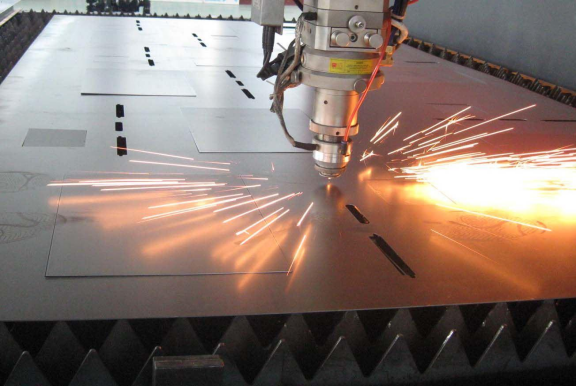
Figure 5: Fiber laser cutting produces accurate bracket blanks and hole patterns.
CNC Bending and Springback
Bending converts flat blanks into L, U, Z, and multi-bend geometries, and it is where bracket accuracy is won or lost. Every bend compresses the inner surface and stretches the outer surface, and the material springs back elastically when the punch releases. Springback is larger for stainless and aluminum, so bend programs must compensate or the angle will be wrong. Engineers Edge publishes bend allowance and deduction references used to lay out blanks and predict finished dimensions.
Modern CNC press brakes with programmable back gauges hold bend positions and angles consistently across runs, and operators verify first articles against the drawing before production. For brackets, the critical checks are flange height, the position of holes relative to bent surfaces, and the angle between mounting planes. If the holes are in the right place on the flat blank but the bend drifts, the bracket still fails to fit, which is why bend verification matters as much as cutting precision.
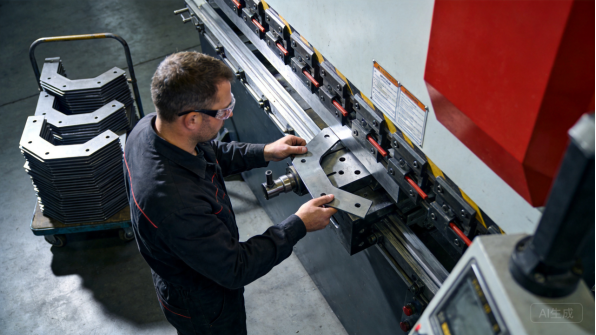
Figure 6: CNC press brake forming shapes brackets to consistent bend angles.
Stamping, Welding, and Secondary Operations
For volumes above roughly 20,000 pieces per year, stamping dies produce brackets faster and at lower unit cost than laser cutting and bending, with die development adding four to eight weeks of lead time. Many fabricators offer both routes: prototyping on lasers and brakes, then moving to dies when volumes justify them. Some brackets are welded assemblies, joining a plate to a channel or adding a welded nut, and TWI Global provides technical guidance on welding thin steel and controlling distortion.
Secondary operations complete many bracket designs: countersinking, tapping, clinch nuts and studs, pressing, deburring, and marking. Each operation adds a process step and an inspection point, so the design should use them deliberately. A clinch nut, for example, costs more than a plain hole but saves the buyer an assembly step, and the trade-off belongs in the quotation conversation, not discovered later.
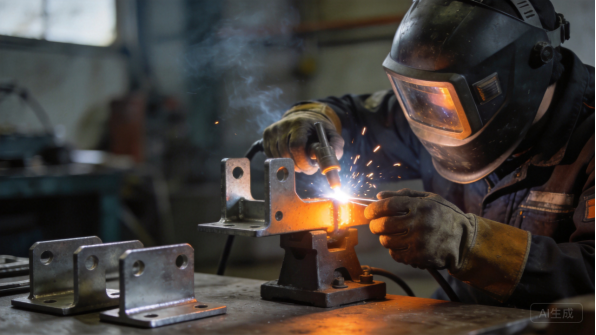
Figure 7: Controlled welding joins bracket assemblies without distortion.
Quality Control
Bracket quality control starts with the first article: a full dimensional inspection of the initial sample against the drawing, often on a coordinate measuring machine, with a report submitted to the buyer. Production batches follow a control plan with sampling, and critical dimensions such as hole positions and bend angles are checked with gauges that operators use on the line. Material certifications accompany each batch, tracing parts to specific sheet or coil lots.
Testing depends on the application. Structural brackets may require hardness or load verification, coated brackets require coating thickness and salt spray checks, and welded assemblies require weld inspection. For high-volume parts, process capability studies show whether the process stays within tolerance across the run. A fabricator that treats documentation as part of the product, not paperwork, is the one that will pass an automotive or machinery audit.
Production Lead Times
RFQ, Engineering Review, and Prototypes
A bracket program starts with an RFQ: 3D model, drawing, material, finish, quantity, and target timing. The fabricator’s engineering team reviews the design for manufacturability, checking bend radii, hole-to-bend distances, tolerances, and secondary operations, and returns a quotation with comments within one to three business days. Prototypes are typically delivered in five to ten business days for standard brackets.
The prototype validates fit before production: hole alignment with mating parts, bend geometry, and finish appearance are all confirmed on the physical sample. Prototype feedback should include fit notes and suggested drawing changes, so the buyer can approve the final configuration with full information. For brackets that mate with other components, buyers should test-fit the prototype early, because a 0.2 mm error found at prototype costs days, while the same error found in production costs weeks.
Tooling and Process Setup
Most brackets are produced with laser cutting and CNC bending, which keeps tooling costs low and design changes inexpensive. The setup that matters is process tooling: bending programs with verified parameters, inspection gauges for hole patterns and bend angles, and fixtures for welded assemblies. Building this setup typically takes a few days to two weeks for a new part.
For high volumes, stamping dies add four to eight weeks and a tooling investment that pays back through faster cycle times and lower unit cost. The right decision depends on annual volume: under roughly 20,000 pieces per year, laser cutting and bending is usually the lower-cost route, while above that the economics should be modeled both ways. Buyers should ask for a cost comparison before committing to tooling.
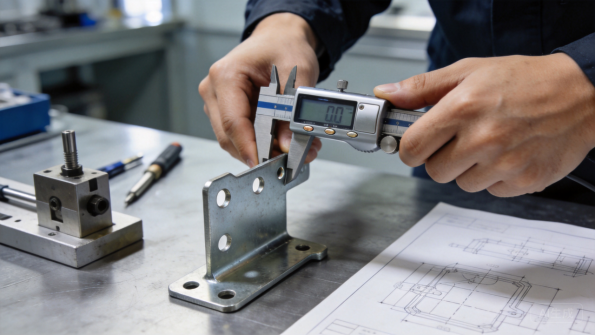
Figure 8: Dimensional inspection verifies bracket hole positions and bend angles.
Production Batches and Volume Planning
Typical production lead times are 10 to 25 business days for batches from a few hundred to tens of thousands of pieces, with finishing and coating consuming a large share of that time because plating and powder coating lines run in fixed batch cycles. High-volume stamping programs are scheduled in monthly or quarterly batches aligned with the buyer’s assembly needs.
Forecast sharing keeps lead times stable. When buyers share rolling forecasts, the factory reserves material and finishing capacity and orders long-lead items such as specific steel grades or custom colors in advance. Standard cold-rolled and galvanized steel is usually on hand, while stainless coils, aluminum tempers, and custom finishes may add one to two weeks. A clear schedule with milestone dates makes the bottleneck visible before it becomes a delay.
Packaging, Logistics, and Communication
Brackets are shipped in packaging matched to the part: individual wrapping for plated or coated surfaces, foam separators for stacked parts, and cartons sized to the order. For plated brackets, the packaging must protect the finish during transit, and overseas shipments use rust-preventive paper or VCI film against container condensation. The fabricator should provide carton dimensions, gross weight, and loading photos for freight planning.
Documentation accompanies every shipment: packing lists, material certificates, inspection reports, and coating certificates where required. Buyers should confirm the documentation set during quotation, because missing certificates at customs or at the plant gate can stop a shipment even when the parts are perfect. Communication follows clear milestones, with photos at each stage so buyers can track progress without site visits.
Past Case Studies
Machinery OEM: Motor Mounting Brackets
A machinery OEM needed a family of motor mounting brackets that held shaft alignment within tight limits while allowing belt tension adjustment. The design used slotted mounting holes and a reinforced bend geometry that kept the motor plane rigid, and the engineering team adjusted the slot orientation and rib placement during prototype review.
First articles were inspected on a coordinate measuring machine, and production batches of 1,500 pieces followed a control plan with gauge checks on hole positions and bend angles. The OEM standardized the bracket family across three machine models, reducing inventory and simplifying service. The program showed how a small part, engineered carefully, improves the reliability of the whole machine.
The customer later moved its highest-volume bracket to a stamping die, reducing unit cost while keeping the same inspection plan, which demonstrated how volumes can grow within the same design.
Automotive Tier Supplier: Reinforcement Brackets
A tier supplier producing vehicle body components needed galvanized reinforcement brackets with hole positions held to plus or minus 0.1 mm, delivered in monthly volumes of about 12,000 units. The parts were prototyped on laser cutting and CNC bending, and first articles were inspected against the customer’s GD&T drawing before production approval.
The production process used dedicated bending programs and inspection fixtures, with material certificates traced to each coil. Because the supplier’s assembly lines run on schedule, on-time delivery and consistent quality were the evaluation criteria, and the program has continued for two years with a defect rate below the agreed target. The relationship later expanded to include a welded bracket assembly under the same quality system.
The welded assembly added a clinch nut and a weld boss, both validated on the first article and documented in the control plan, so the supplier could assemble the part without additional operations.
Construction Products: Galvanized Support Brackets
A construction products distributor needed hot-dip galvanized support brackets for cable tray installations, with standard hole patterns that matched industry tray systems and a coating specification for outdoor exposure. The parts were cut and formed from 3.0 mm steel, then galvanized at a qualified partner with coating thickness verification.
The first articles were coating tested and dimensionally inspected, and production batches shipped in palletized cartons with coating certificates for the distributor’s project documentation. The program grew to quarterly reorders as the distributor expanded its territory, and the standardized design kept unit costs low. For the distributor, the coating certificate became a sales tool that differentiated the product on infrastructure projects.
The distributor later added a lighter aluminum variant for indoor installations, produced on the same cutting and bending lines with an anodized finish.
Electronics Brand: Chassis Brackets
An electronics brand needed a family of chassis brackets that mounted PCBs and connectors inside a new instrument line, with countersunk holes, clinch nuts, and a black powder-coated finish. The brackets were visible when the instrument was opened, so edge quality and finish consistency were part of the specification.
The prototype review refined the countersink depth and clinch nut positions, and production ramped to 3,000 units per month across three bracket part numbers. The brand used the same construction platform for a second instrument, adding two new brackets without requalifying the whole design. The program showed how fabrication discipline on small parts supports fast product launches.
Summary and Next Steps
Key Takeaways
Custom metal brackets are small parts with demanding requirements: hole precision, bend accuracy, and finish consistency all depend on controlled manufacturing. The material decision drives cost and performance, from cold-rolled steel for volume brackets to stainless for corrosive environments, and finishes must be specified for the real environment rather than assumed. Production difficulty concentrates in hole-to-bend relationships, springback control, and quality documentation, which are exactly where experienced fabricators differentiate themselves.
Lead times follow a predictable path: engineering review in days, prototypes in one to two weeks, process tooling in days to weeks, and production in two to four weeks per batch, with stamping dies adding four to eight weeks when volumes justify them. Forecast sharing and clear documentation keep that path stable. Buyers who settle material, tolerances, and finishing before quoting will have smoother programs than those who discover requirements after production starts.
Why XHX Metal
XHX Metal is a privately owned sheet metal manufacturer in Dongguan, China, with a 2,000 square meter factory, about 30 employees, and an annual capacity exceeding 500,000 pieces. The factory operates under an ISO 9001:2015 quality management system with CE and SGS certifications, and it produces custom brackets, enclosures, and fabricated parts for export customers with packaging designed for ocean freight. Two 6kW fiber laser cutting machines, CNC press brakes, TIG and MIG welding, and finishing partners cover the complete process.
The company supports buyers from design review through production, provides first-article inspection reports and material certificates, and coordinates third-party testing such as salt spray, load, and dimensional verification when required. For bracket programs, buyers can review related sheet metal fabrication services and product pages, and the team will structure quotations, quality documentation, and delivery schedules to match the program’s needs.
How to Start Your Project
Start with a STEP or STP file and a drawing that states material, thickness, finish, tolerances, and quantity. If the design is not finalized, send photos or sketches of the bracket and the parts it must connect, the load it carries, and the annual volume, and the engineering team will recommend a manufacturable design. The typical path is: engineering review, quotation, prototype, first-article inspection, production, and shipment, with clear communication at each milestone.
To discuss a bracket program, contact Barry at +86 13244963694 or sales01@xinghaoxin.com, or send your design through the XHX Metal website. With clear requirements and the right partner, a custom metal bracket moves from drawing to production in weeks, with fit and finish that keep assemblies together for years.
What to Ask a Fabricator
Before placing an order, ask the fabricator three questions: which materials and thicknesses it runs regularly, how it verifies hole-to-bend relationships and bend angles on first articles, and what finishing and testing it can document. The answers reveal whether the shop treats brackets as precision parts or as simple cut-and-bend pieces.
Also confirm secondary operations such as clinch nuts, tapping, countersinking, and marking, and how they are quality controlled, because these steps often decide whether a bracket works in assembly. A fabricator that lists processes and acceptance criteria in the quotation is treating quality as part of the product, and that is the partner worth building a supply relationship with.