Last updated: October 28, 2026 | By XHX Metal Engineering Team
Bathroom hardware is the family of stainless steel bathroom fittings that hold towels, toilet paper, robes and toiletries in a bathroom: towel bars, towel rings, paper holders, shelves, hooks and robe hooks. At XHX Metal, bathroom hardware manufacturing covers tube bending, TIG welding, grinding and polishing, brushing, passivation and powder coating in a 2,000 sqm factory in Dongguan, China.
This article is written for the buyers and specifiers who order that range: what bathroom hardware is made of, where it is used, how grade and wall thickness are chosen, what actually goes wrong on a welded fitting, how long a programme takes, what documents arrive with it, and three order examples with volumes and price bands.
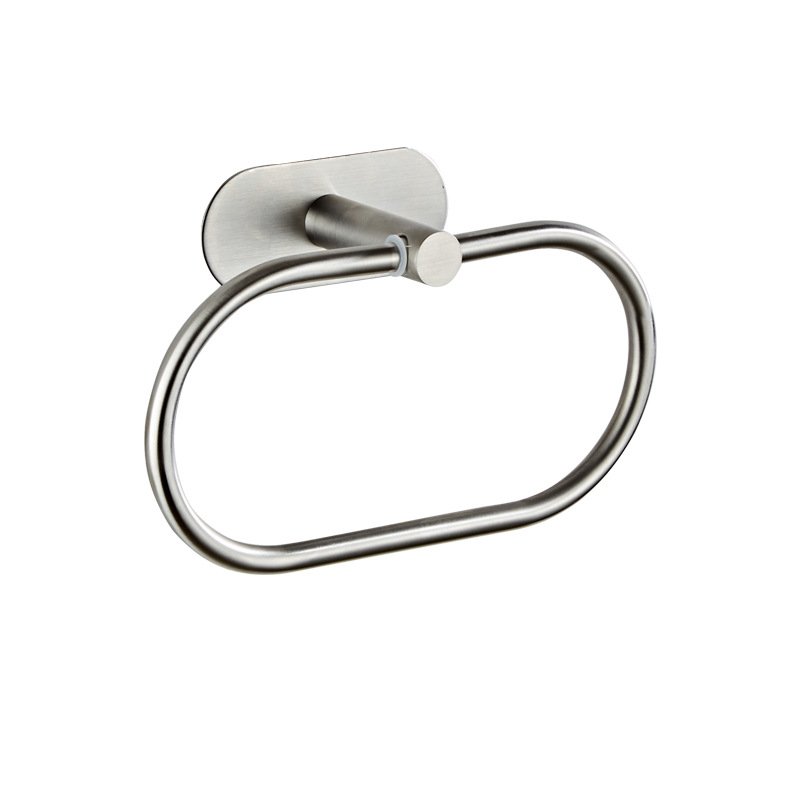
Figure 1: A brushed stainless towel ring: tube bent into a ring, welded to a mounting plate.
Bathroom Hardware Manufacturing: What We Build
The Parts in a Range
A typical range contains a towel bar in two or three lengths, a towel ring, a paper holder, a glass shelf or a metal shelf, robe hooks, and the wall plates or concealed fixings that hold them. Most of the range shares one tube diameter and one finish, because the pieces are bought as a set and a set with two slightly different brushed tones reads as a mistake.
Each piece of bathroom hardware is a small welded assembly: a bent tube welded to a plate or a folded bracket, then dressed and finished. The plate is not a detail, it is the part that transfers load into the wall, so its thickness and its weld are chosen together with the tube rather than after it. The tube is thin, usually 0.6 mm to 1.0 mm wall, and the plate is 2 mm to 3 mm, which makes the joint the hardest part of the whole product.
Two Problems, Not One
Bathroom hardware looks simple and is judged on two things a photograph cannot show. The first is the weld joint: thin tube welded to a heavier plate, dressed until the seam disappears, on a part that will be looked at from 300 mm in a mirror-finish or brushed surface. Any undercut, pinhole or polishing hollow shows immediately.
The second is corrosion. A bathroom is a warm, humid, chloride-bearing environment, and it is cleaned with chloride-bearing products. A fitting that passes a visual inspection can still show rust spots along a weld within a year, and the cause is almost always the weld zone rather than the base material.
Where Our Scope Ends
The wall fixings are usually bought in. Screws, wall anchors, concealed mounting plates and adhesive systems are purchased components, and we machine or fold the interface that receives them. Where a range uses an adhesive fixing rather than screws, the mating face has to be flat and clean because an adhesive joint fails on a crowned or polished surface. What we own is the tube geometry, the weld, the dressing, the finish and the passivation of the part itself.
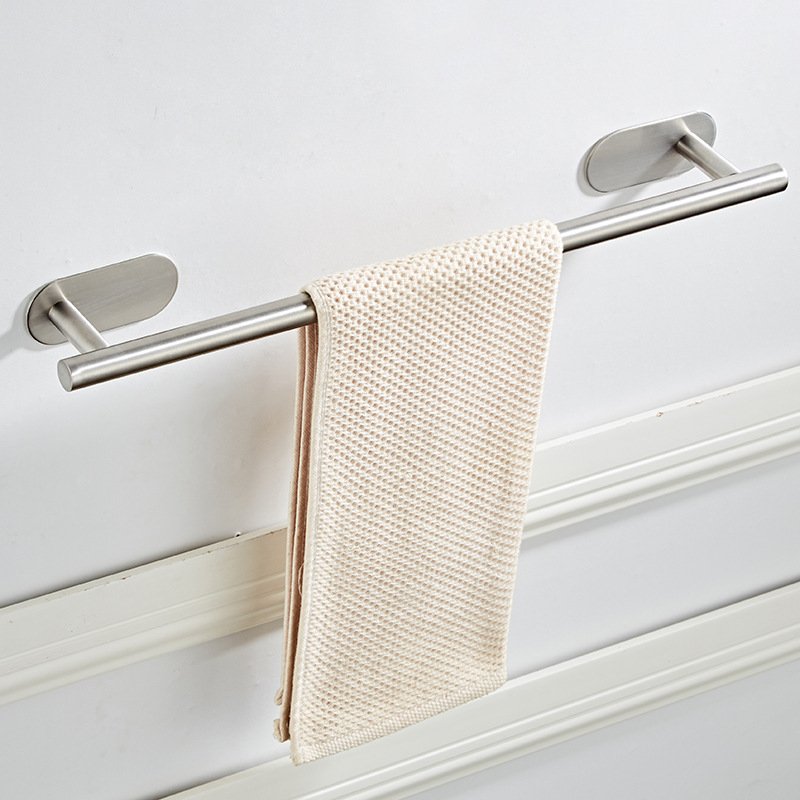
Figure 2: A straight towel bar with two wall plates, the tube ends welded and dressed flush.
Where Bathroom Hardware Is Used
Hotels, Serviced Apartments and Hospitality
The largest group is hospitality: hotel bathrooms, serviced apartments, resorts and student accommodation. These buy by the hundred as a matched range, and the specification is driven by two things a facilities manager cares about: whether the finish still looks right after three years of guest use and chloride cleaning, and whether the fixing survives a guest pulling on a towel bar. Both questions come back to the same two manufacturing decisions, so a range that is specified once tends to be repeated.
Hospitality buyers also care about range consistency across a refurbishment programme, because bathrooms get replaced in phases and the second phase has to match the first. That pushes the specification towards a fixed brush tone and a fixed tube diameter held across several years of supply.
Residential and Retail
The second group of bathroom hardware buyers is residential and retail: DIY chains, bathroom showrooms, housebuilders and online brands. These are price-sensitive and appearance-led, with matte black and brushed nickel selling alongside brushed stainless, and the range is often sold as a matched set in a printed carton. Packaging is part of the product here: a printed carton with a fixing kit and an instruction sheet is what the buyer shelves, and a scratched item costs more in returns than the finish saved at quotation.
Commercial, Healthcare and Accessible Bathrooms
The third group of bathroom hardware projects works harder: care homes, hospitals, schools and accessible bathrooms. These add grab rails and load-bearing fittings, specify a defined pull-out strength, and often require the fitting to be cleanable and to survive stronger disinfectants. The consequence is a heavier wall, a full-penetration weld at the end plate, and a corrosion specification written against the cleaning chemical rather than against a general salt spray figure. A stainless grab rail is the same manufacturing problem as a towel bar with a much higher consequence if the weld fails.
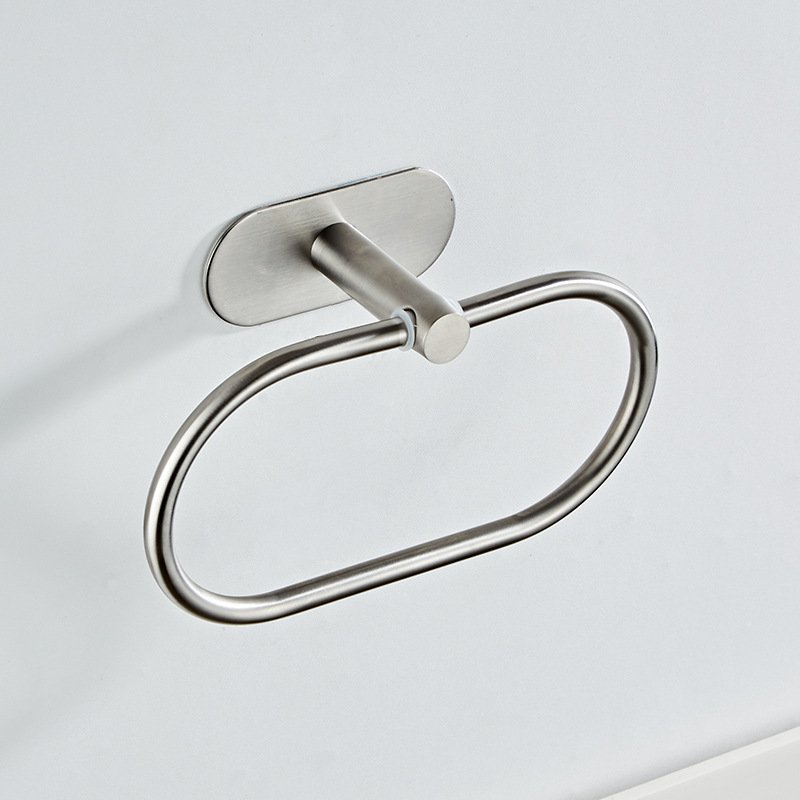
Figure 3: A paper holder in brushed stainless, showing the folded arm and the mounting flange.
Choosing Grade, Wall and Finish
304 or 316
What are the main quality risks in bathroom hardware manufacturing? The first is grade choice against the cleaning regime. Grade 304 covers a domestic or hotel bathroom with normal cleaning, and its composition is standardised in EN 10088-2, but test data from fittings in chloride-bearing service shows 304 starting to corrode somewhere between 168 and 240 hours of neutral salt spray when it is repeatedly exposed to chloride cleaners, while 316L with proper passivation was still clean at 720 hours under the same regime.
That is not an argument for specifying 316 on every bathroom hardware range, because 316 costs more and most bathrooms do not need it. It is an argument for matching the grade to the cleaning product and the environment: coastal sites, harsh disinfectants and marine air justify 316L, and an ordinary domestic bathroom does not.
Wall Thickness on a Small Part
Wall thickness matters more than it looks on a bathroom hardware fitting. The tube is thin, the welded joint concentrates stress, and the fixing pulls on the plate rather than on the tube axis. Published tube standards allow a wall tolerance that is a large fraction of the wall itself on thin sections, and the practical consequence is that a fitting made from the low side of the tolerance deforms at the joint before a nominal one does.
We buy tube to a tightened wall tolerance and check it on receipt against EN 10305-1, because the difference cannot be seen in a finished polished part. A wall measured at the shank of the joint tells the truth; measuring the polished surface does not.
Finish and Its Direction
Finish on bathroom hardware is brushed, polished mirror, or powder coated in matte black or another colour, and the anodic and electroplated options follow ISO 1456 for decorative chromium. Brushed is the most forgiving and the most common for hospitality; mirror shows every handling mark and every polishing error. On a brushed part the grain has to run along the tube and follow the bend, because grain that runs across a curve reads as a scratch.
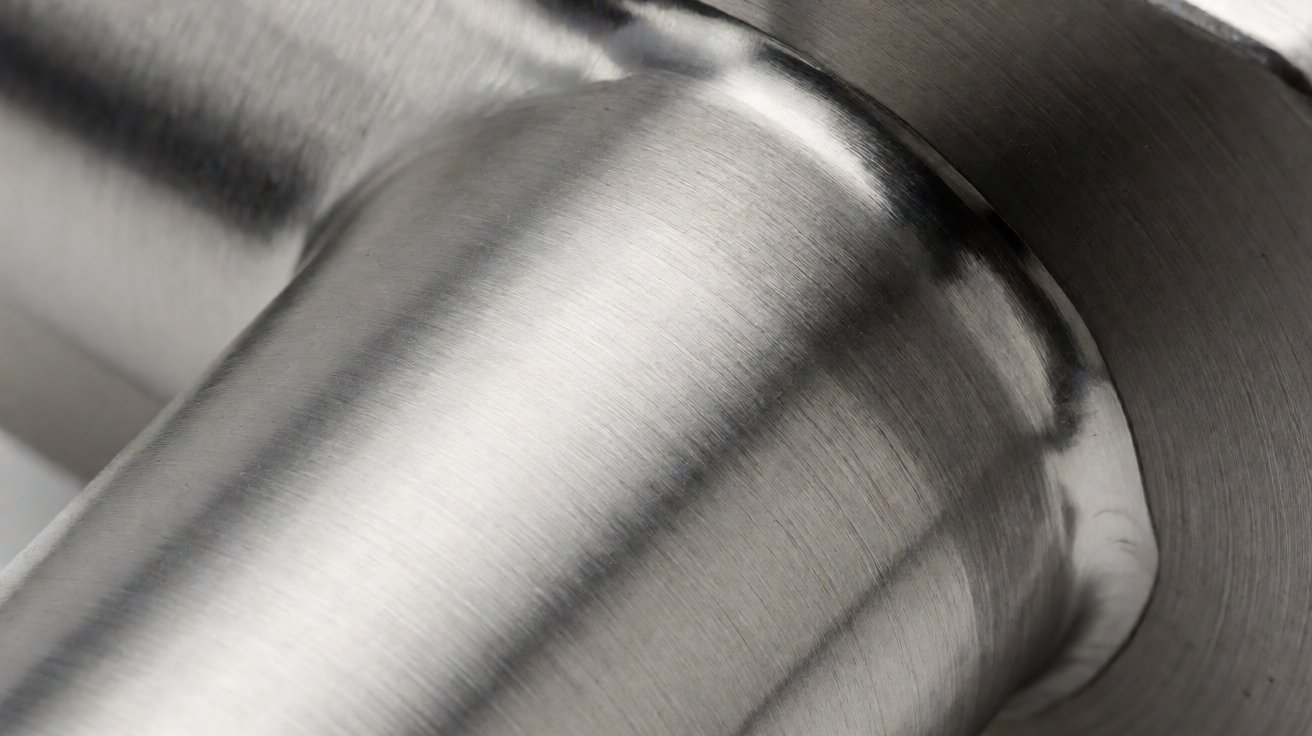
Figure 4: A tube-to-plate weld on a bathroom fitting, ground and polished flush before brushing.
Welding, Dressing and Passivation
Why the Joint Is Hard
A bathroom hardware fitting welds a 0.8 mm tube to a 2.5 mm plate, and the weld quality levels that apply are described in ISO 5817. The two parts have very different thermal mass, so the tube reaches melting point while the plate is still cold, and the result is a weld that either undercuts the tube or leaves a lump on the plate. Both are then hidden under polishing, which is where the real failure starts.
The countermeasures on bathroom hardware are TIG with a fine arc, low heat input, a fixture that holds the tube square to the plate, and a welder who works the arc onto the heavier part. Purging the back is not usually possible on a solid plate joint, so the root is protected by fit quality and by not over-penetrating.
Dressing Without Thinning the Wall
Grinding a weld on a thin tube removes wall. A joint needing a deep grind has already lost section, and a polishing hollow that reads as a soft spot is often a thin spot in the metal. The discipline on bathroom hardware is to fit the parts so the weld is small, then dress with a light pass rather than grinding to hide a bad fit.
Abrasive contamination is the other trap, and it is covered in the guidance published by the British Stainless Steel Association. A disc that has touched carbon steel will embed iron in stainless, and that iron becomes a rust spot within weeks in a bathroom.
Passivation and How It Is Checked
Passivation removes free iron and rebuilds the chromium oxide layer after welding and polishing, and its requirement is defined in ASTM A967. On a bathroom hardware fitting the treated zones are the welds and the ground areas, and the check is a water break test or a copper sulphate test rather than a visual look, with the test methods for confirming it in ASTM A380.
Passivation is the bathroom hardware step most often skipped by suppliers who polish well but do not passivate, and it is why a fitting can look perfect and still spot-rust along the seam.
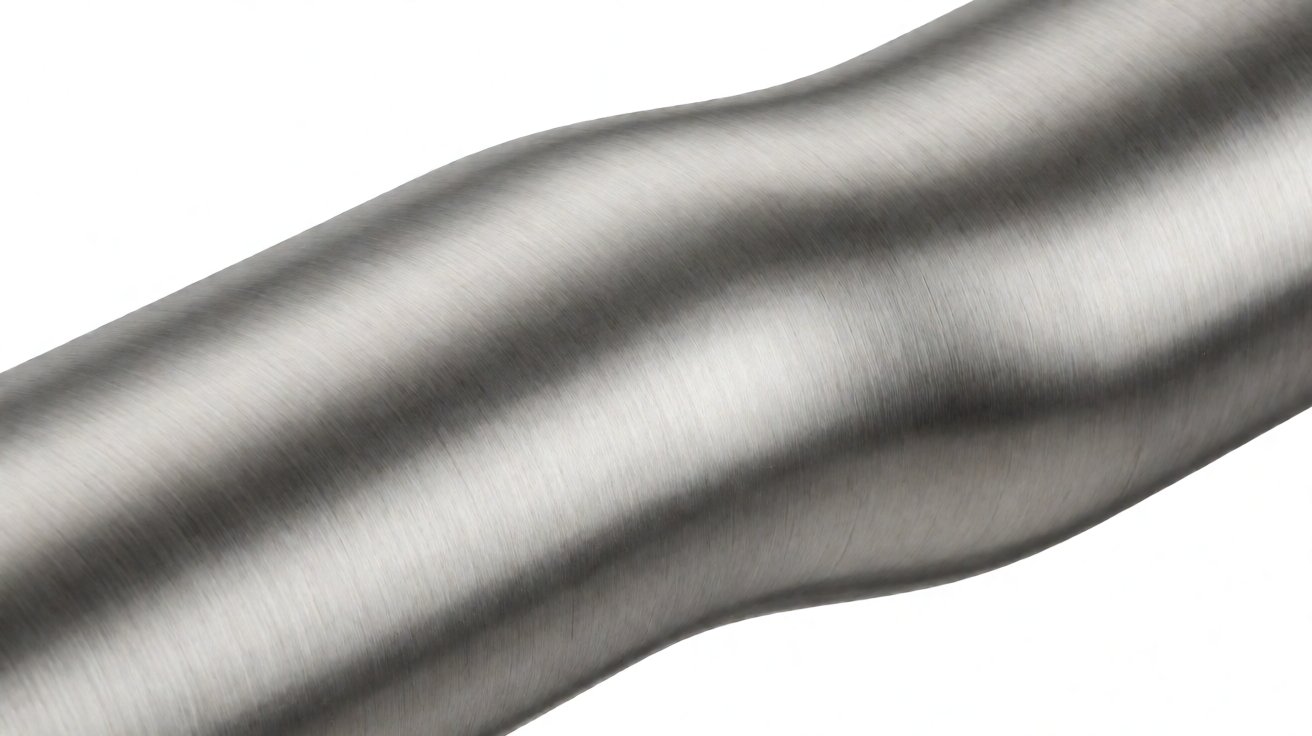
Figure 5: Brushed finish on a curved tube, the grain running along the part rather than across it.
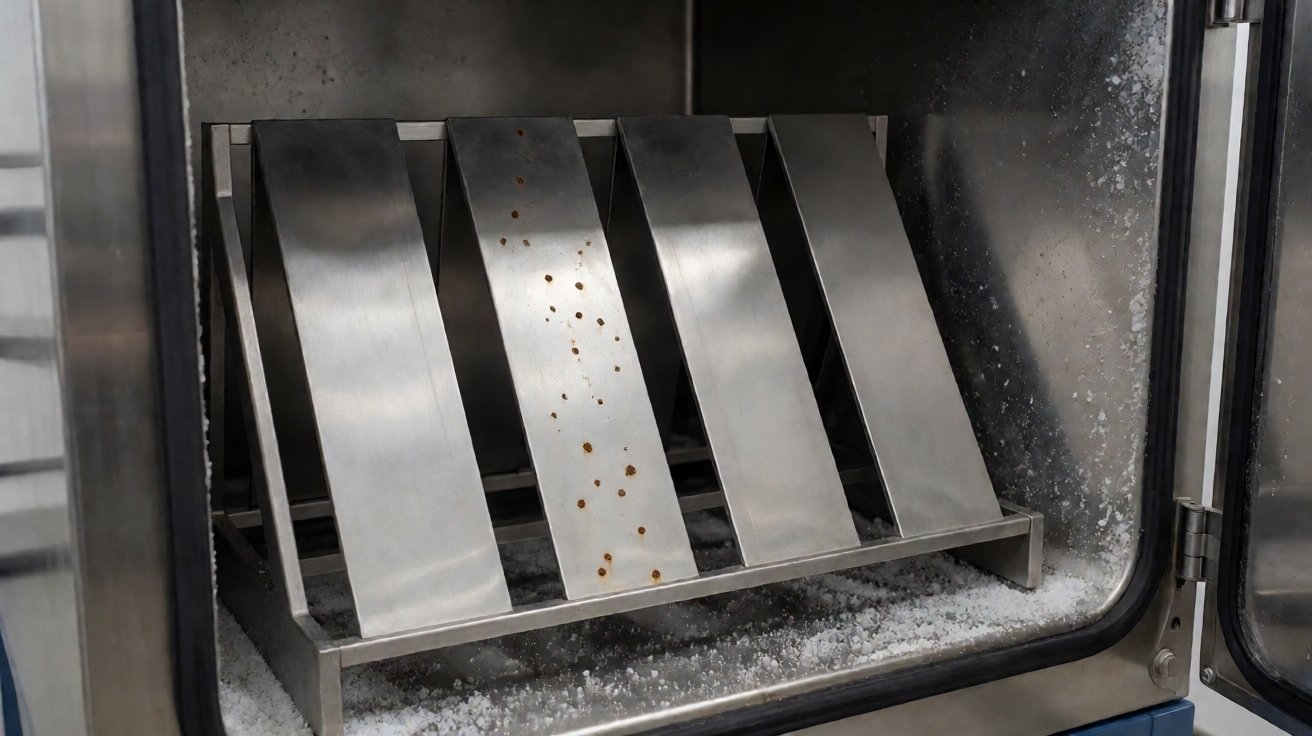
Figure 6: Salt spray test coupons with scribed lines, showing corrosion starting at the scribe.
Load, Corrosion Testing and Lead Time
Load and Pull-Out
A towel bar is loaded in the middle and pulled at the ends; a grab rail is loaded with body weight and must not move. The test that matters on bathroom hardware is a static load held for a period at the worst point, checking that the tube does not take a permanent set and that the joint does not crack. A permanent set of a few millimetres makes a range look tired even if nothing has broken. For accessible fittings the pull-out requirement is specified by the standard the project is built to, and the weld and the plate thickness are what deliver it. Grab rail loading and fixing design is covered by EN 12182.
Salt Spray and What the Number Means
Salt spray hours for bathroom hardware are quoted constantly and mean little without the test conditions. Neutral salt spray per ISO 9227 at 5 percent NaCl and 35 C is the usual reference, with the corrosion category for the intended environment set out in ISO 12944, and the number that matters is the time to first corrosion at the scribe or the weld, not the time to a general bloom.
A sensible specification states the grade, the passivation, the test method and the acceptance criterion together, and states where the coupons are scribed, because corrosion almost always starts at a scribe or a weld rather than in the middle of a polished field. Quoting 480 hours without saying whether the coupons were scribed, passivated or polished invites two suppliers to quote the same number for very different products.
Batch Sizes and Price Bands
Bathroom hardware of this kind is a high-volume, low-unit-value product, and the range is usually bought as a set rather than as single items. A hotel bathroom hardware range runs 500 to 5,000 pieces per release, a retail range 1,000 to 10,000, and the minimum order is usually 300 to 500 pieces per item once the tooling and the finish are fixed. FOB prices for a brushed 304 towel bar of 600 mm typically fall between USD 3.50 and USD 9 depending on wall, grade, dressing and packing, with the fixing set and the printed carton priced separately.
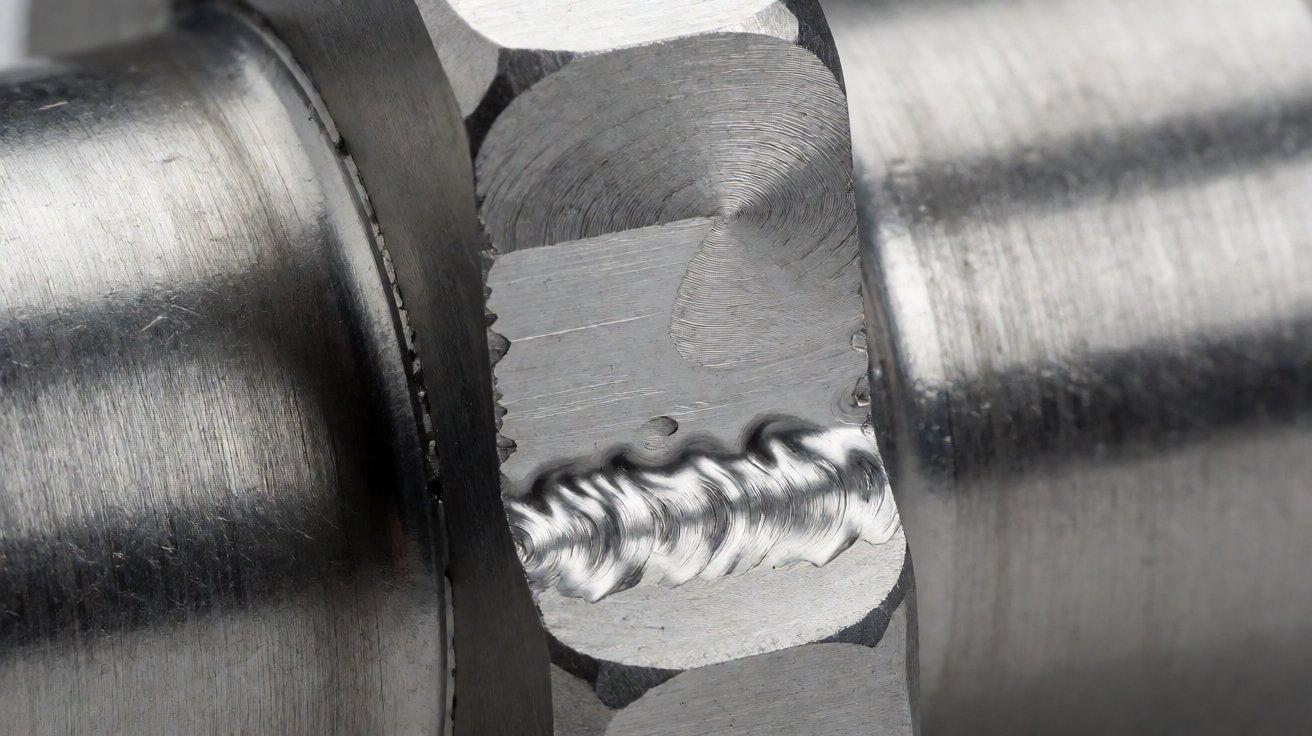
Figure 7: Finished bathroom hardware packed with protective sleeves for export.
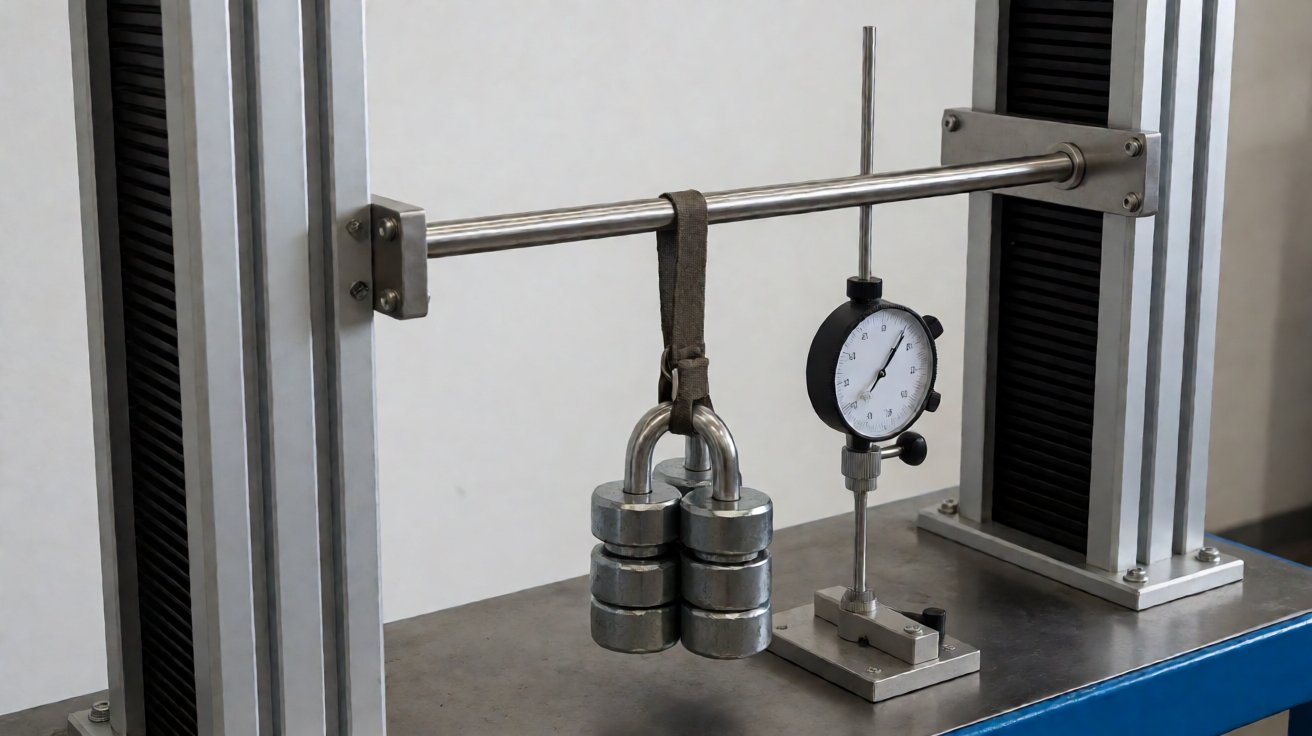
Figure 8: A thin-wall tube welded to a plate, with the wall thickness visible at the joint.
Three Bathroom Hardware Programmes
A Hotel Range for a Middle East Operator
A hotel operator furnishing 400 bathrooms needed a matched range in brushed 304: a 600 mm towel bar, a towel ring, a paper holder and two robe hooks, all in the same brush tone, with concealed fixings and a salt spray requirement written against the weld zone.
We produced the bathroom hardware as a single range sharing one tube diameter and one brushing direction, TIG welded on fixtures, dressed and passivated, with each item salt-spray tested per batch. Releases ran at 2,000 pieces, twice a year, with an MOQ of 500 and FOB prices from USD 4.20 to USD 7.80. The first batch shipped 25 days after approval and annual value was approximately USD 24,000.
A Retail Range for a European DIY Chain
A DIY chain needed four items in matte black powder coat and brushed stainless for its own-brand range, packed in printed cartons with the fixing kit included, and priced to hit a shelf price point.
The bathroom hardware was built on a 0.7 mm tube to hit the price band, with the powder coated items masked at the fixing interface and the brushed items passivated. Releases ran at 6,000 pieces, once or twice a year, with an MOQ of 1,000 and FOB prices from USD 2.40 to USD 5.10. First batch lead time was 22 days and annual value was approximately USD 19,000.
Accessible Bathroom Fittings for a UK Care Operator
A care operator needed grab rails and a load-bearing towel bar to a specified pull-out strength, in 316L with a brushed finish, for bathrooms cleaned with chlorine-based disinfectant several times a day.
We produced the bathroom hardware in 316L with a heavier wall on the grab rails, full-penetration welds at the end plates, dressing and passivation on every unit, and a static load test on a sample per batch. Releases ran at 800 pieces, twice a year, with an MOQ of 300 and FOB prices from USD 8.50 to USD 16. First batch shipped 28 days after approval and annual value was approximately USD 11,000.
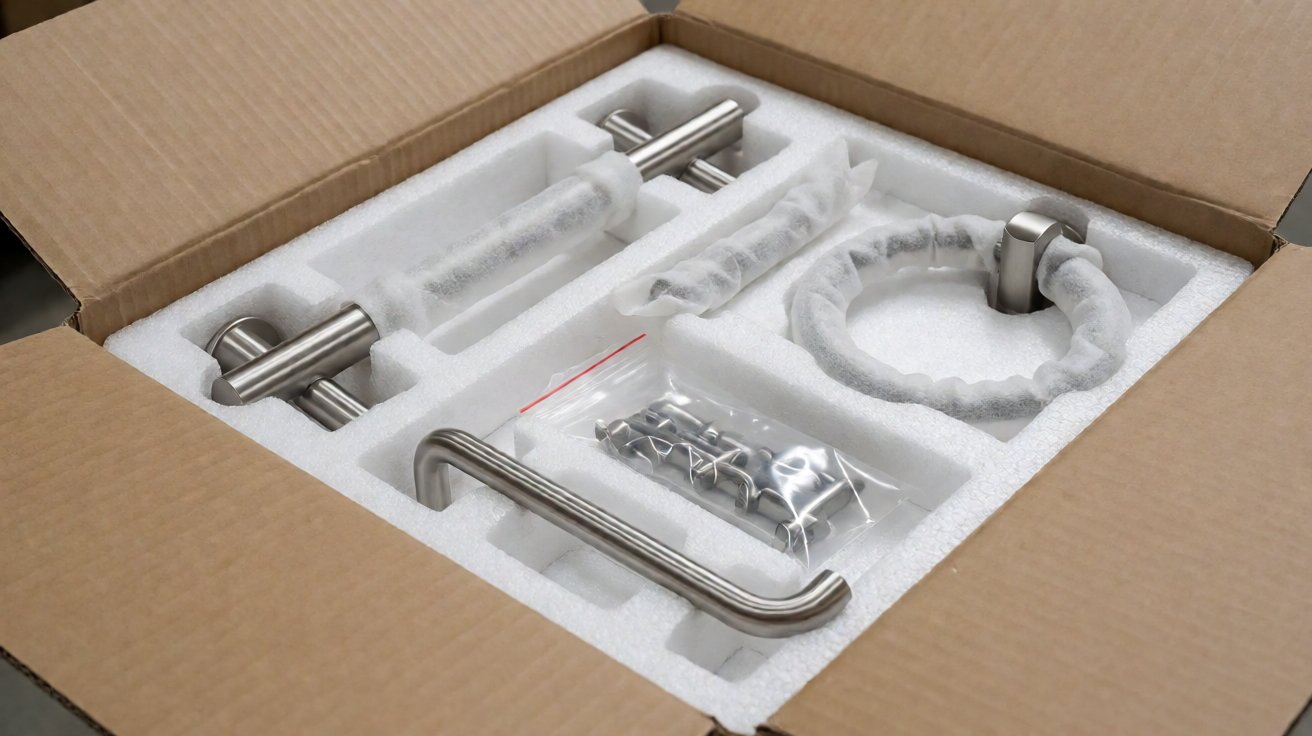
Figure 9: A loaded towel bar under test, checking deflection at mid span.
Choosing a Bathroom Hardware Supplier
What to Ask at Quotation
Ask five things before comparing prices for bathroom hardware. Which grade is quoted, 304 or 316L, and does it match the cleaning product the bathroom will see? What is the measured wall thickness of the tube? Is the joint TIG welded on a fixture, and is the dressing a light pass or a deep grind? Is the part passivated after polishing, and is there a test record? And what salt spray method and acceptance criterion are being quoted against?
The answers separate suppliers quickly. A quote that names the grade, the wall, the passivation and the test method is comparable; a quote that lists a length and a price is not, because the same towel bar can be built to survive three years in a hotel or three months in a coastal bathroom.
Where Suppliers Fail
Failures in bathroom hardware supply cluster in four places. Rust spots appear along a weld within a year because the part was polished but never passivated. A towel bar dents at the joint because the tube wall was on the low side of tolerance and the weld was ground too deep. A range does not match because the brushing direction was set per part rather than per range. And a fitting arrives scratched because each piece was packed loose in a carton rather than sleeved.
None of these are exotic. They are the result of buying a small shiny object on a photo and a price, and they are avoided by specifying the grade, the passivation and the test.
How XHX Metal Works
XHX Metal has manufactured metal products for export customers from Dongguan since 2014, in a 2,000 sqm factory with about 30 staff. The capability list covers tube bending, TIG welding, grinding and polishing, brushing, passivation and powder coating, all under ISO 9001:2015 with CE documentation and SGS records.
For a bathroom hardware programme, samples follow in 5 to 10 working days and first batches in 20 to 30 days. Send a drawing or a sample with the grade, the cleaning regime, the finish and the fixing requirement through the contact page; related work is described on the stainless steel work table page and the sheet metal capabilities page, and enquiries also reach sales01@xinghaoxin.com.
Frequently Asked Questions
What is bathroom hardware?
It is the family of stainless steel fittings that hold towels, paper and toiletries in a bathroom: towel bars, towel rings, paper holders, shelves and hooks, usually supplied as a matched range with a common tube diameter and finish.
Should bathroom hardware be 304 or 316?
304 covers a normal domestic or hotel bathroom. Choose 316L where the fitting sees chloride cleaners daily, coastal air or harsh disinfectants: test data shows 304 starting to corrode at 168 to 240 hours of neutral salt spray under repeated chloride exposure, while passivated 316L was still clean at 720 hours.
Why does stainless bathroom hardware rust?
Almost always at a weld or a polished area that was never passivated, or because the part was contaminated by carbon steel abrasives during dressing. The base material is rarely the cause; the fabrication process is.
What wall thickness should a towel bar tube have?
0.6 mm to 1.0 mm is normal, with the heavier end used where the fitting takes load or is ground heavily at the joint. The wall has to be specified and measured, because a tube on the low side of the standard tolerance deforms at the weld before a nominal one does.
What salt spray duration should I specify?
State the grade, the passivation, the test method (neutral salt spray per ISO 9227) and the acceptance criterion together, including whether the coupons are scribed. A bare number without those conditions is not a specification.
How long does bathroom hardware manufacturing take?
Samples follow in 5 to 10 working days after drawing approval. First production batches ship in 20 to 30 days depending on the polishing, passivation and packing content.