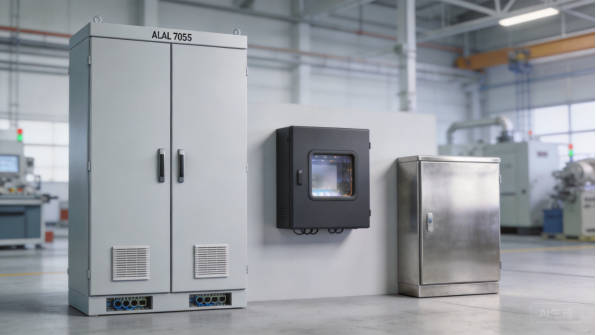
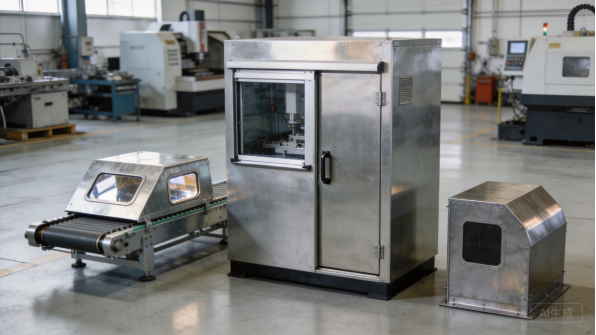
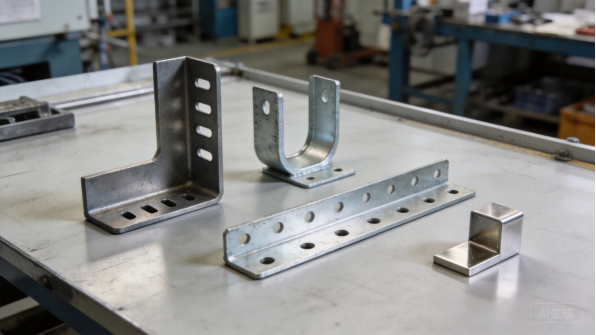
An industrial distribution cabinet is an enclosed metal housing that receives electrical power from a source, distributes it through breakers, busbars, and terminal blocks, and protects the installation from dust, moisture, mechanical impact, and accidental contact. It is the physical backbone of a power system in a factory, data center, charging station, or commercial building. The cabinet is usually built from formed sheet metal panels, welded or bolted into a rigid frame, with a front door, cable entries, ventilation, and mounting plates for electrical equipment.
For a privately owned sheet metal manufacturer such as Guangdong Xinghaoxin Technology Co., Ltd. (XHX Metal), building distribution cabinet enclosures means more than cutting and bending steel. It means reviewing the customer’s electrical layout, improving manufacturability, controlling every process step, and delivering cabinets that electricians can assemble quickly and safely. This guide explains what industrial distribution cabinets include, where they are used, how to select materials, what makes them difficult to produce, how lead times work, and what realistic projects look like from quotation to delivery.
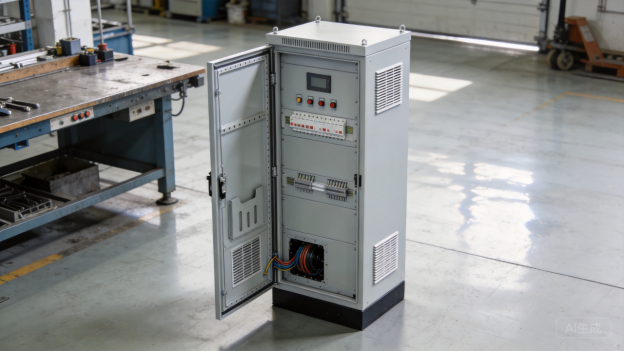
Figure 1: Finished industrial distribution cabinet ready for installation.
What Is an Industrial Distribution Cabinet?
Definition and Core Function
An industrial distribution cabinet is a custom metal enclosure that routes electrical power from a source to multiple loads while providing protection and control. It typically contains an incoming supply point, protective devices, busbars, outgoing feeders, and space for metering or monitoring equipment. The enclosure must keep electrical components physically safe, reduce the risk of contact with live parts, and maintain a clear path for cable routing and maintenance.
The cabinet itself is only one part of the system, but its design determines how easily electricians can install breakers, route cables, and perform maintenance. Wall thickness, bend accuracy, door flatness, sealing, and coating quality all influence whether the final assembly meets safety and performance expectations. This is why more OEM buyers choose a sheet metal fabricator that understands the enclosure rather than buying generic boxes.
The enclosure must also provide adequate rigidity so doors, hinges, and mounting plates remain aligned over years of service. Vibration from nearby machinery, frequent door operation, and temperature changes can all cause a poorly built cabinet to loosen or deform. A robust frame, folded edges, and proper fasteners keep the assembly stable for the equipment inside.
Main Structural Components
A distribution cabinet enclosure is more than a painted box. Its main components include:
- Frame and panels: base frame, side panels, rear panel, roof, and door leaves.
- Mounting hardware: mounting plates, DIN rails, busbar supports, cable ducts, and terminal blocks.
- Access and sealing: hinges, locks, handles, gaskets, cable glands, and IP-rated sealing points.
- Ventilation and cooling: louvers, filter fans, and mounting points for cooling equipment.
- Protection features: grounding studs, busbar covers, arc shields, and anti-tamper hardware.
Each component must fit together consistently over many production batches. A small variation in door height or hinge position can make installation difficult and reduce the perceived quality of the final electrical product.
Standardized hardware and fasteners also reduce assembly time and make maintenance easier for the end user. Reusing the same hinge, lock, and gland specifications across a product family gives the buyer a simpler spare parts list.
Cabinet Types and Enclosure Ratings
Distribution cabinets range from small wall-mount boxes for branch circuits to tall floor-standing switchboards for main incoming power. Modular enclosures allow a control section, metering section, and outgoing feeder section to be combined in one lineup. Enclosure ratings define the level of protection: IP codes cover ingress protection, while NEMA types describe indoor, outdoor, and hazardous-duty applications used by many industrial buyers.
The rating should be chosen for the real installation environment, not just the label. A cabinet installed in a dusty production hall needs a different sealing strategy than one installed in a climate-controlled electrical room. The enclosure design, gaskets, and hardware must all support the target rating.
XHX Metal’s Capability Snapshot
XHX Metal builds custom distribution cabinet enclosures in a 2,000 sqm Dongguan factory with about 30 employees and roughly 500,000 parts of annual capacity. The production line includes two 6kW fiber laser cutting machines with +/-0.01mm positioning, CNC press brakes, TIG/MIG/laser welding, automatic deburring, and CNC machining centers, so panels, frames, mounting plates, and hardware can be produced under one roof.
The factory operates under an ISO 9001:2015 quality management system, and every enclosure program includes first-article inspection, coating verification, and batch traceability. As a privately owned company, XHX Metal can adjust schedules and engineering priorities faster than many larger suppliers.
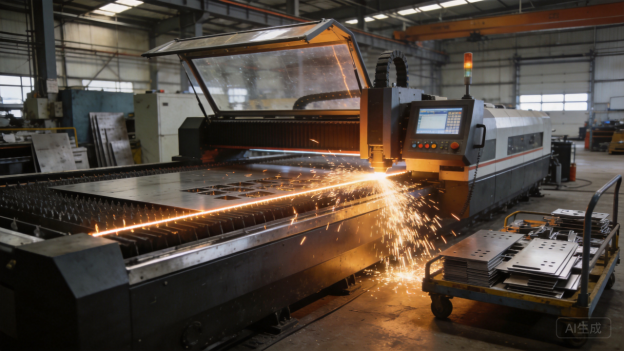
Figure 2: Fiber laser cutting produces accurate panels for distribution cabinet enclosures.
Where Industrial Distribution Cabinets Are Used
Factories and Automation Lines
Factories use distribution cabinets for main incoming power, motor control, lighting, and machine feeders. The enclosures are often installed in rows along production lines, so consistent dimensions, clear cable entry, and durable doors are critical. Cabinet panels may be machined for push buttons, pilot lights, and local disconnect switches; the fabricator must keep hole positions accurate so panel builders do not need to rework them on site.
Automation adds another layer: control cabinets with PLCs, drives, and relays need more mounting space, cable ducts, and cooling openings. A well-designed steel cabinet protects electronics from heat and vibration while still allowing access for commissioning and maintenance.
The cabinet also has to work with the factory’s cable management system. Top entry, bottom entry, or rear entry changes the gland plate and frame design, so the fabricator should confirm the routing direction before production. A standardized gland plate makes future modifications easier.
Commercial Buildings and Infrastructure
Commercial buildings use distribution cabinets for metering, lighting panels, and tenant sub-distribution. Architects and contractors usually prefer clean, low-maintenance enclosures that fit standard service rooms and can be painted to match the building. Galvanized or cold-rolled steel with a high-quality powder coat is common because it resists fingerprints and minor impact.
Building projects also require coordination between the enclosure supplier and the electrical contractor. Hole layouts, gland plates, and labeling areas must match the final cable schedule, which is why early engineering review reduces installation delays.
Fire safety and accessibility also influence cabinet design in buildings. Doors must open fully, labels must be readable, and ventilation must not be blocked by surrounding equipment. These practical details are often decided during the enclosure review.
Renewable Energy and EV Charging
Solar plants, wind farms, battery storage, and EV charging stations place cabinets outdoors or inside containerized power rooms. These installations demand corrosion-resistant materials, sealed cable entries, and controlled ventilation. Aluminum reduces weight for wall-mounted charging cabinets, while stainless steel or galvanized steel is preferred where salt, humidity, or chemical exposure is likely.
Energy projects also need clear documentation of material grade, coating thickness, and grounding continuity. The enclosure becomes part of the system’s safety file, so the supplier must keep records stable across revisions.
Charging cabinets are also touched by operators daily, so handles, locks, and hinges need to survive repeated use. Stainless hardware or protected steel reduces the chance of corrosion at access points.
Telecom, Data Centers, and Communications
Telecom and data centers use similar enclosures for AC/DC power distribution, rectifiers, and battery backup. The equipment is dense and heat-sensitive, so cabinets often include larger vent openings, filter fan mounting, and reinforced doors. Grounding and cable management details are more important here than in general industrial use because signal quality and uptime depend on stable installation.
Outdoor and Harsh Environments
Outdoor cabinets face rain, dust, UV, and temperature swings. Sealed gaskets, drainage details, and corrosion-resistant finishes prevent premature failure. Buyers usually specify salt-spray or humidity testing, coating thickness, and hardware corrosion resistance before approving production. A small sealing detail can determine whether a cabinet lasts two years or twenty.
The supplier should also provide guidance on drainage slopes, weep holes, and gasket compression so water cannot collect inside. These details are inexpensive at the design stage but very expensive to correct after installation.
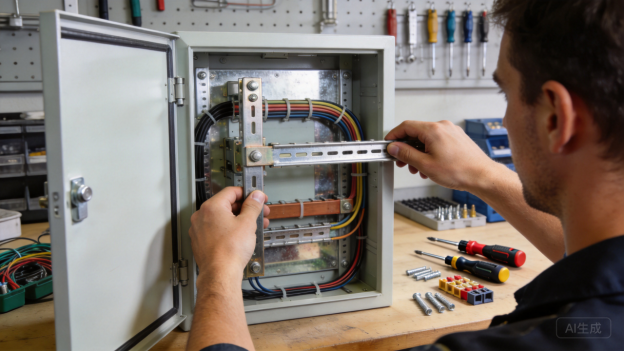
Figure 3: Internal panel assembly with busbars, ducts, and mounting rails.
Choosing the Right Material
Cold-Rolled Steel
Cold-rolled steel is the default for most indoor distribution cabinets. It provides high stiffness, good formability, a smooth surface for powder coating, and predictable cost. Typical thicknesses range from 1.0 mm to 2.5 mm depending on cabinet size and load. The main limitation is corrosion, so cold-rolled steel parts must always be coated before installation.
For large floor-standing cabinets, steel also provides the mechanical strength needed to carry breakers, busbars, and doors without deflection. Stiffeners and folded edges add rigidity without increasing sheet thickness, and MatWeb offers property data useful when comparing grades and thicknesses.
The thickness choice should also consider the weight of installed equipment. A heavy busbar system or large breakers can pull a thin mounting plate out of shape, so reinforcing plates or thicker material may be needed at load points.
Stainless Steel
Stainless steel is selected for marine, food, chemical, and high-humidity environments where rust would be unacceptable. Grade 304 handles most indoor and light outdoor use; 316 adds molybdenum for salt exposure. Stainless costs more and is harder to form, so it is usually applied selectively rather than across the entire cabinet. SSINA provides guidance on selecting and finishing stainless enclosures.
Stainless also needs protection from carbon steel contamination during handling. Tools and brushes that have touched ordinary steel can embed particles and create rust spots, so dedicated tooling and clean work areas are recommended.
Aluminum Alloys
Aluminum alloys such as 5052 and 6061 are used when weight matters, such as wall-mount charging cabinets, portable power units, and telecom enclosures. Aluminum is corrosion-resistant and conducts heat well, but it is softer than steel and can dent more easily. The oxide layer can also affect grounding contacts, so conductive surface treatment may be needed at connection points. AZoMaterials explains typical alloy properties.
Thermal expansion should also be considered when aluminum is combined with steel in one assembly. Fasteners and joints need enough clearance to allow for movement without loosening over time.
Galvanized and Pre-Painted Steel
Galvanized steel is a cost-effective option for outdoor frames, back plates, and parts that will be hidden inside the enclosure. The zinc coating protects the steel even where the paint is scratched. Pre-painted steel reduces finishing time for simple parts, while hot-dip galvanizing is reserved for heavy structural frames. The American Galvanizers Association publishes practical guidance on coating behavior and edge treatment.
Zinc-coated steel also affects welding and finishing. The zinc layer must be removed or adjusted at weld joints to avoid fumes and porosity, and coating adhesion should be verified before the cabinet is shipped.
Finishing, Sealing, and Hardware Selection
The finish protects the cabinet and defines its appearance. Powder coating provides a thick, uniform film that resists impact and chemicals; the Powder Coating Institute explains film requirements and curing. Gaskets, cable glands, hinges, and locks must also match the protection level: a good enclosure can fail early if hardware corrodes or seals degrade. Material and finish should be decided together during engineering review.
Coating thickness and color consistency are verified with film gauges and color standards before release. Masking protects threaded holes and contact surfaces, and edge coverage is checked because sharp corners often receive less coating.
Fasteners should be selected for the environment as well: stainless or zinc-plated screws, captive hardware, and corrosion-resistant hinges extend cabinet life and simplify maintenance.
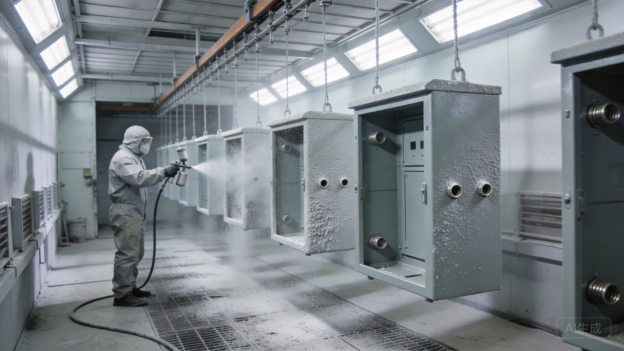
Figure 4: Powder coating provides a durable finish for cabinet enclosures.
Production Difficulty and Process Control
Design for Manufacturability
Distribution cabinets are large sheet metal assemblies, so manufacturing difficulty starts in design. Hole-to-edge distances, minimum flange heights, and bend radius must match the material thickness and available tooling. Engineers Edge provides practical references for bend allowance and formed feature limits. The DFM review should also check door opening clearance, hinge positions, and whether panels can be nested efficiently.
A cabinet that is difficult to manufacture does not always need a complex redesign. Small changes, such as adding a stiffener or moving a vent, can reduce welding time and improve flatness without changing function.
Laser Cutting and Nesting
Laser cutting produces the flat panels that become cabinet sides, doors, roofs, and mounting plates. XHX Metal’s two 6kW fiber laser cutting machines hold positioning to +/-0.01mm and handle steel, stainless, and aluminum up to the thicknesses used in distribution cabinets. Cut quality is checked for dross, edge roughness, and hole roundness before panels move to bending.
Nesting software combines multiple cabinet parts on the same sheet, which improves material utilization and reduces waste. Larger panels may need micro-joints and tab placement to prevent movement during cutting.
For tall cabinet panels, the laser program must also control part lifting and vibration. Keeping the sheet flat during cutting protects hole roundness and edge quality, especially when several doors are nested in one sheet.
Bending and Dimensional Accuracy
Bending converts flat panels into three-dimensional enclosures, and it is where most dimensional problems appear. Springback varies with material grade and thickness, and large panels can twist if the bend sequence is wrong. CNC press brakes with calibrated tooling and experienced operators keep angles consistent. Door and frame parallelism must be checked because a small angular error multiplies across a tall enclosure.
Operators verify the first formed part against the drawing, then monitor bend angles during the run. Setup records are kept for repeat orders so that production can be reproduced without trial and error.
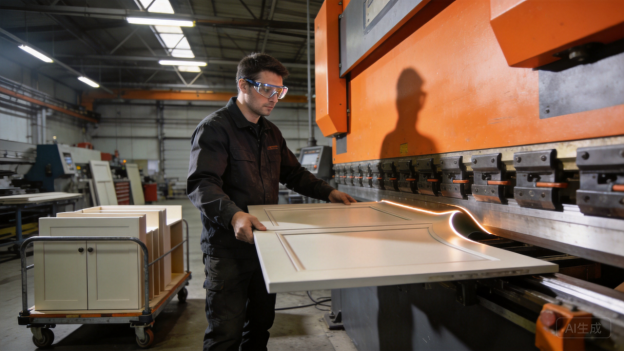
Figure 5: CNC press brake bending forms cabinet panels to tight dimensions.
Welding, Assembly, and Sealing
Welding joins frames, mounting rails, and reinforcements, but heat can distort panels and leave discoloration. TIG is preferred for clean stainless and aluminum seams, while MIG is efficient for steel frames; laser welding can reduce distortion on precision joints. Fixtures hold part position during welding, and grinding restores the surface before coating. Automatic deburring removes sharp edges from cutouts and sheet edges. TWI Global offers practical weld quality guidance.
Sealing details deserve the same attention as structural joints. Gasket channels must be formed consistently, gland plates must fit the cable entry pattern, and door seals should be tested in the prototype stage.
Weld quality should be inspected on the first article and sampled during production. Porosity, undercut, and inconsistent weld size are easier to prevent with fixtures and controlled parameters than to repair after coating.
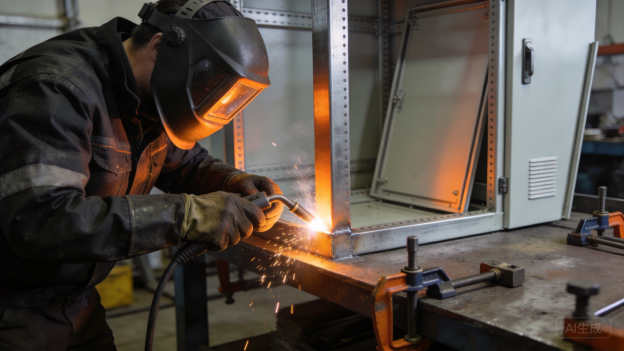
Figure 6: Controlled welding and fixturing keep cabinet frames rigid.
Quality Control and Testing
Quality control for a cabinet includes dimensional checks, door alignment, gasket fit, coating thickness, and electrical safety features such as grounding continuity. First-article inspection verifies critical dimensions from the drawing; in-process checks catch drift before a batch is finished. Under ISO 9001:2015, records should be traceable to material certificates and production settings.
Inspection frequency should be based on risk: critical dimensions are checked on every part or at short intervals, while cosmetic features are sampled. When a problem is found, the corrective action is recorded so the same defect does not repeat in the next lot.
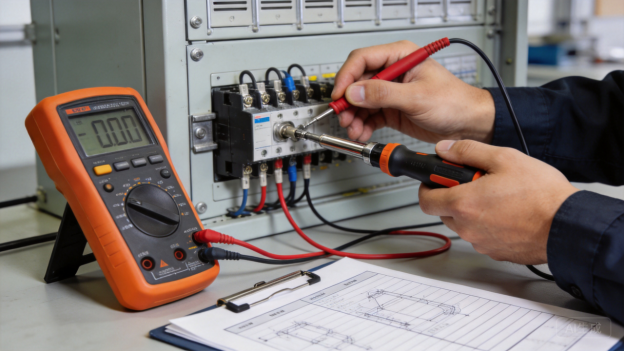
Figure 7: Electrical and dimensional checks verify cabinet quality before release.
Lead Time, Quoting, and Production Planning
What a Complete RFQ Includes
A complete RFQ includes 3D CAD, a drawing with dimensions and tolerances, material grade and thickness, finish, enclosure rating, quantity, and special requirements such as certificates or export packing. XHX Metal reviews the package, returns DFM feedback, and issues a quotation with clear assumptions. If the buyer has only a sketch, the engineering team can still estimate feasibility, but the final quote depends on confirmed details.
Quotes should state material, finish, tolerance assumptions, packaging, and payment terms clearly. Ambiguous quotes usually lead to change orders later, so the supplier documents what is included and what would be quoted separately.
Prototype Lead Time
Simple cabinet prototypes are usually delivered within 5 to 10 business days after design review and material confirmation. Laser-cut panels and folded enclosures are faster than fully welded, coated, and assembled cabinets. A prototype with powder coating and hardware adds time for curing and assembly. Prototypes are made with production-equivalent processes so the sample reflects the final part.
Prototype feedback is valuable even before parts exist. The supplier should confirm that the proposed bend radius, hole size, gasket channel, and hardware are producible, and should flag anything that would be cheaper or more reliable in production.
The prototype stage is also the right time to validate door sealing, gasket compression, and gland plate fit. Changing a channel depth or gasket profile is simple on a sample and disruptive once production tooling is set.
Production Lead Time and Batch Planning
Production lead time depends on size, quantity, finishing, and accessories. A typical batch of custom distribution cabinets can be completed within 2 to 4 weeks after sample approval, and repeat orders are usually faster because tooling and programs already exist. Large programs are split into scheduled batches so buyers receive parts as needed without excess inventory.
Batch planning also considers finishing capacity and inspection time. A large order may be split by process stage so that coating and QC do not create a bottleneck; customers receive a rolling delivery plan instead of one large uncertain shipment.
Forecast sharing helps the factory reserve material and finishing capacity. Buyers who update their forecast quarterly give the supplier time to order steel, schedule coating, and avoid last-minute expedite fees.
Packaging and Logistics
Cabinets are large and easily scratched, so packaging needs corner protectors, foam, and robust cartons or crates. Each shipment includes packing lists and lot numbers for traceability. Export orders are usually quoted FOB or EXW from southern China ports, with air freight for urgent samples and sea freight for production quantities.
The factory should provide carton dimensions, gross weight, and photos before shipment so the buyer can plan customs clearance and warehouse space. Early discussion of destination and handling helps the factory choose the right packaging grade.
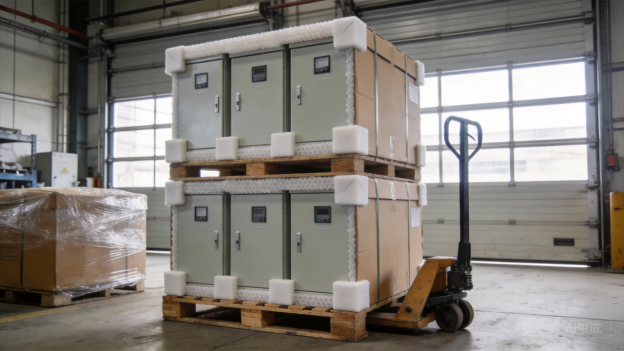
Figure 8: Protective packaging keeps cabinets traceable from factory to site.
Project Communication
Every program follows clear milestones: design review, material confirmation, cutting, forming, welding, finishing, inspection, and shipment. The project team reports progress at each stage and flags risks early. This visibility lets buyers align their own installation schedule with the actual delivery date.
A weekly summary with photos of the parts at each stage gives buyers confidence without requiring visits. When a delay is unavoidable, the supplier communicates the new date and the reason as early as possible.
Past Case Studies
Factory Main Distribution Enclosure
An automation customer needed a floor-standing main distribution enclosure with a reinforced door, busbar supports, and a rear cable compartment. XHX Metal reviewed the drawing, adjusted the door stiffener layout for better flatness, and produced first articles within one week. The enclosure passed dimensional and coating checks and entered repeat production without rework.
The customer supplied only a STEP file and a target price, so the engineering team proposed the material thickness, bend allowance, and mounting rail positions. This early DFM input reduced the number of prototypes and allowed the enclosure to move directly to pilot production.
Repeat batches were scheduled every month so the customer’s production line always had replacement enclosures available. The design was later used for a smaller variant with the same door hardware and finish.
EV Charging Station Cabinet
For an EV charging station program, the customer required a wall-mount aluminum cabinet with a sealed cable entry, ventilation louvers, and powder-coated finish. The team selected 5052 aluminum, controlled bend accuracy to keep the door sealing surface flat, and coordinated gasket installation. The first article passed IP-fit checks, and the program moved into scheduled batches.
The program also included a second variant with different mounting points. By reusing the same bending programs and coating color, the factory delivered both variants in one production window, which reduced the customer’s total cost and warehouse stock.
The charging cabinet program also required packaging that protected the sealed door during transit. Foam corner protectors and a dedicated carton prevented impact damage and reduced field complaints.
Outdoor Telecom Power Cabinet
A telecom customer needed an outdoor power cabinet that could handle high ambient temperatures and frequent door access. XHX Metal used galvanized steel for the frame, cold-rolled steel for painted panels, and added filter fan mounting points. Salt-spray and coating thickness requirements were documented, and the cabinets were shipped with protective packaging to avoid transit damage.
Repeat batches were scheduled every eight weeks so the customer’s installation crews always had stock on hand. The enclosure was later adapted for two additional sizes using the same design rules.
Medical Facility Panel Enclosure
A medical facility project required a clean, corrosion-resistant panel enclosure for critical power distribution. The team chose stainless steel with a brushed finish and sealed seams, and used TIG welding with argon purging to reduce discoloration. Material certificates and inspection records accompanied every lot, supporting the facility’s compliance documentation.
Small pilot batches were produced first so the electrical contractor could validate cable entry and mounting. Only after assembly approval did the program move to larger lots.
Modular Cabinet Family for an OEM
An OEM needed a family of modular cabinets in three sizes with common mounting rails, door hardware, and finish. XHX Metal standardized the parts across the family, nested the panels to reduce waste, and created common bending programs. The customer reduced procurement complexity and received consistent quality across all sizes.
The cabinet family covered different widths and heights. XHX Metal standardized the hardware and inspection fixtures so operators could switch between variants quickly, which improved on-time delivery for the customer’s own production line.
The modular family gave the OEM a single quality standard and simpler spare parts management. New sizes can be added later without changing the core design rules.
Summary and Next Steps
What a Reliable Cabinet Fabricator Provides
A reliable fabricator provides engineering feedback, process control, honest scheduling, and clear documentation. It questions tolerances that are too tight, recommends materials that fit the environment, and explains how design choices affect cost and lead time. Good documentation covers revision history, inspection records, and packaging instructions, making repeat orders faster and quality more stable.
Communication should include both technical and commercial clarity. The supplier explains what a tolerance costs, why a finish needs extra time, and how volume changes affect unit price, so the buyer can make decisions with full information.
A strong partner also protects the buyer’s intellectual property and keeps designs confidential. Tooling, programs, and drawings are treated as customer property and are never reused for another buyer.
Why XHX Metal Fits Distribution Cabinet Programs
XHX Metal is a privately owned sheet metal manufacturer in Dongguan, China, with a 2,000 sqm factory, about 30 employees, and roughly 500,000 parts of annual capacity. The company combines two 6kW fiber laser cutting machines, CNC bending, welding, automatic deburring, and CNC machining with ISO 9001:2015 quality management. Buyers work with a small team that understands enclosure design and manufacturing.
The company serves both domestic and export customers, with packaging and documentation prepared for international shipping. Being privately owned means the people who quote the job are the same people who monitor it, which reduces miscommunication during production.
XHX Metal also coordinates third-party testing when buyers need salt-spray, coating thickness, or material verification. This keeps the OEM program simple while still meeting the customer’s compliance requirements.
How to Start a Project
Start by sending a STEP or STP file plus a drawing with material, thickness, tolerance, finish, and enclosure rating. XHX Metal will review the design, recommend manufacturability improvements, and return a quotation with prototype timing. After sample approval, production can be scheduled as one lot or split into regular batches, with packaging and shipping arranged to your destination. See the company’s sheet metal fabrication services and product pages for more detail.
Most projects follow the same path: design review, quotation, sample approval, production, inspection, and delivery. XHX Metal can also provide suggestions for part numbering, revision control, and packaging standards so the program stays organized as it scales.
For larger programs, the factory can hold safety stock of finished cabinets or raw material so urgent orders are covered. The agreed stock level is documented and reviewed with the buyer as forecasts change.
Contact XHX Metal
To discuss an industrial distribution cabinet project, contact Barry at +86 13244963694 or sales01@xinghaoxin.com, or visit the XHX Metal website. The team welcomes STEP, STP, DXF, DWG, and PDF drawings; even a sketch with dimensions is enough to start the conversation. Typical engineering review time is one to two business days after receiving the drawing.
For more information, visit www.xhxmetal.com. XHX Metal looks forward to supporting your next industrial distribution cabinet program.
The company can also arrange samples, part numbering, and export documentation to match the buyer’s internal systems. Whether the program is one cabinet or a full product family, the goal is a repeatable process that saves time on every order.
XHX Metal responds to inquiries quickly and keeps the quotation process simple, so buyers can compare options and move forward without unnecessary delays.