Last updated: September 29, 2026 | By XHX Metal Engineering Team
A network cabinet is a structure that holds other people’s equipment and is judged by whether that equipment fits. A 12U cabinet has to place its mounting rails within a fraction of a millimetre of the industry pitch, carry a loaded switch and a pair of servers without the frame twisting, and move enough air to keep them inside their temperature limits — all from folded and welded sheet steel.
This guide is written for the buyers who order that structure. It covers the sizes and formats a network cabinet takes, the sheet, perforation and coating that decide how it performs, the rail and hole geometry that decides whether a switch slots in, and how a programme runs from drawing to delivery — with real batch data from three supplier programmes.
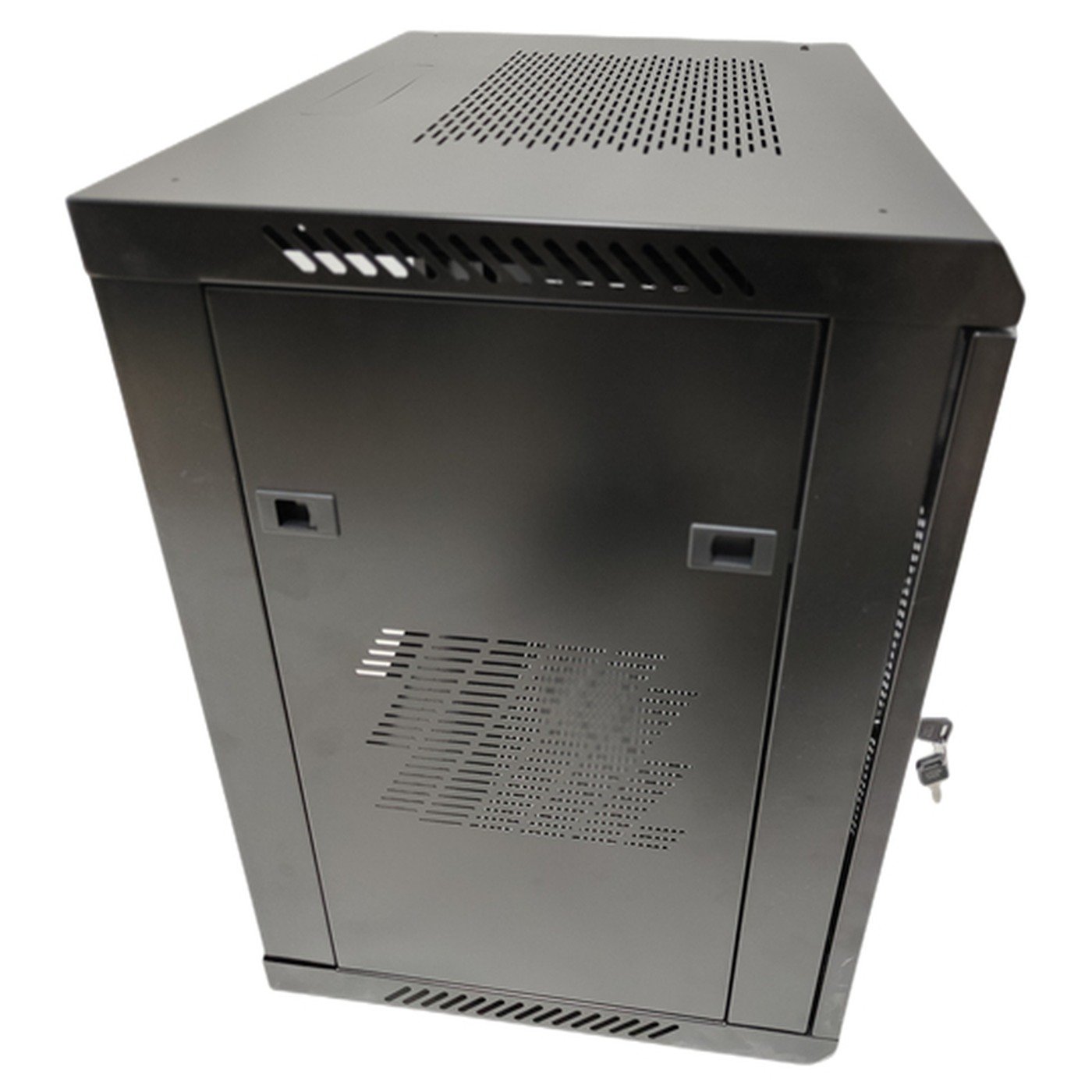
Figure 1: A black powder coated 12U network cabinet with a perforated front door and a lockable handle.
The Product: What a Network Cabinet Is
What Network Cabinet Manufacturing Covers
Network cabinet manufacturing covers the welded frame, the side and rear panels, the front door and its lock, the mounting rails and their hole pattern, the top and base cable entries, the ventilation apertures, the earth stud, and the finish. The switches, patch panels, servers and PDUs belong to the customer; the structure that carries them is the factory’s.
That division matters because a network cabinet is bought against a rack unit count rather than a millimetre dimension. The customer says 12U, 42U or 9U wall mounted, and expects the rails to accept standard equipment without an adapter. Everything the fabricator controls — rail position, hole type, squareness and panel stiffness — is judged by whether a device slides in and screws down.
XHX Metal produces these cabinets from drawing to delivered units in one factory: laser cutting on two 6kW fiber laser cutting machines to plus or minus 0.01 mm, CNC punching and bending, TIG and MIG welding, deburring, and powder coating through audited partners. The wider scope is on the product range page.
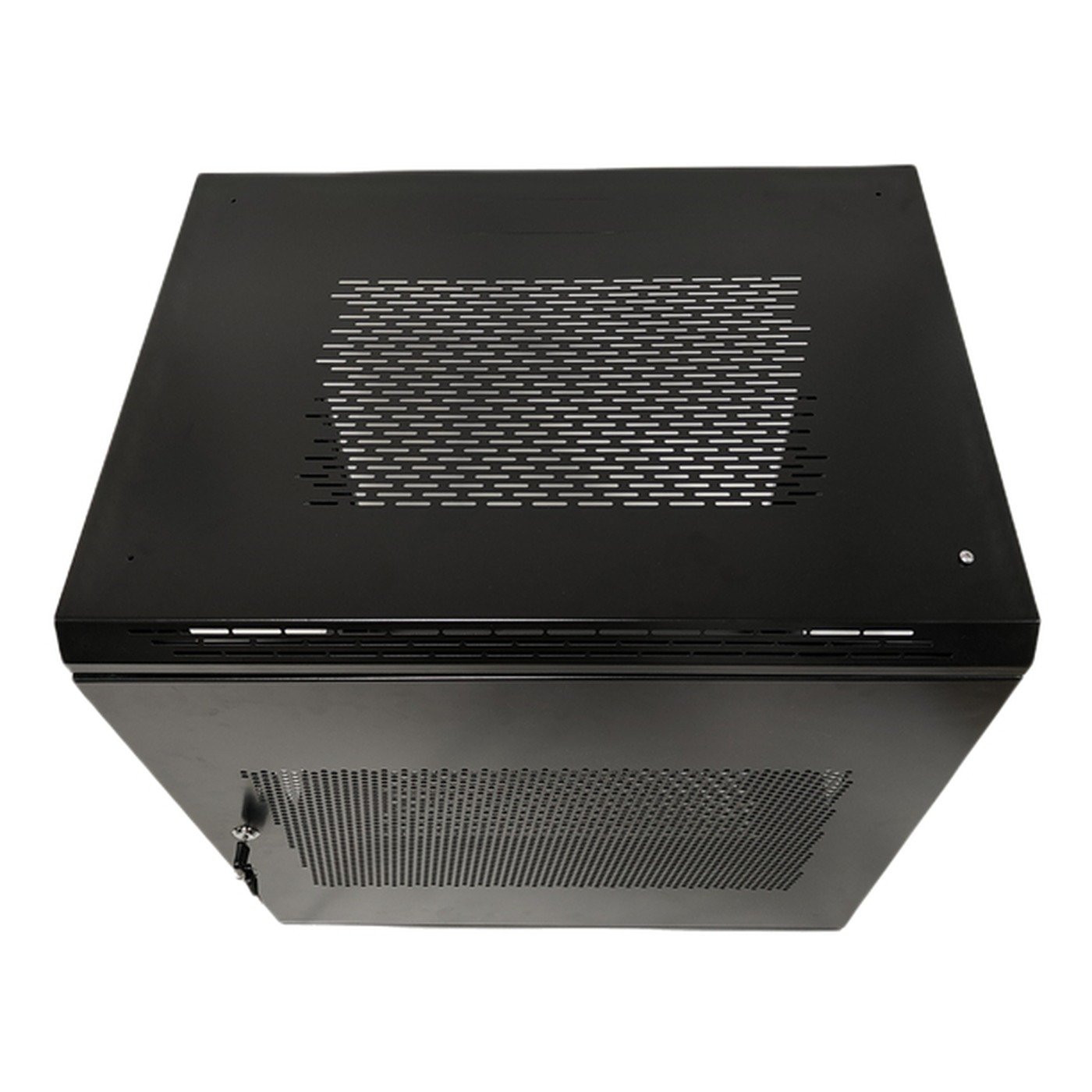
Figure 2: The welded frame and perforated top and side panels of a 12U network cabinet.
Sizes and Formats: 6U to 18U, Wall and Floor
A rack unit is 44.45 mm of vertical space, so the useful internal height of a cabinet follows directly from its U count: a 9U cabinet gives about 400 mm of mounting height, a 12U about 533 mm, and an 18U about 800 mm. The external size is then set by the depth of the equipment and the bending clearance behind the rails.
Wall mounted cabinets dominate the 6U to 18U range, because they put the equipment above the floor in a room too small for a floor cabinet. Floor standing cabinets take the same frame and put it on a plinth or castors, which adds a base and changes the load path into the floor. Most buyers run one frame design and offer it in both formats rather than tooling twice.
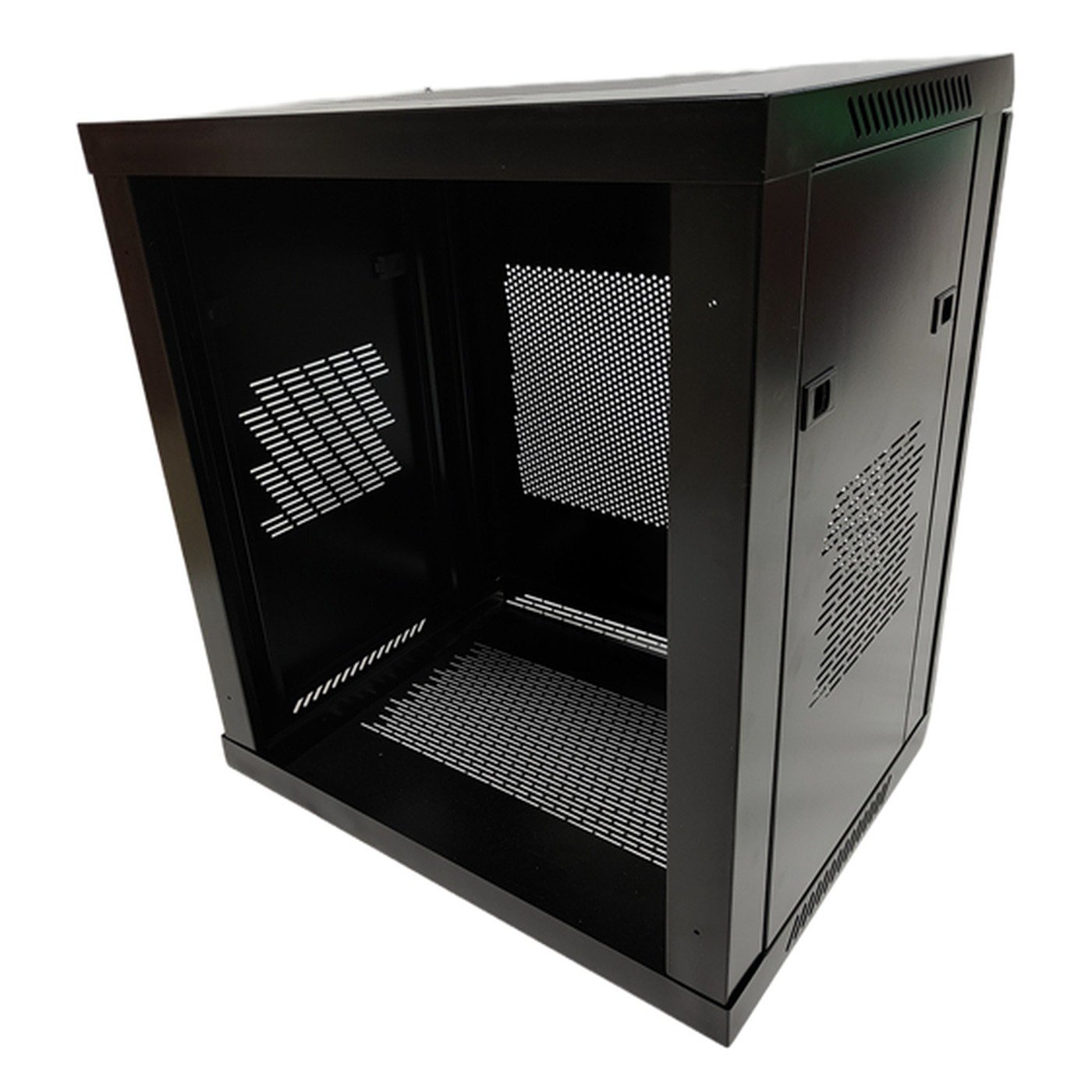
Figure 3: The cabinet with the door open, showing the mounting rails and the internal clearance behind them.
The Parts Buyers Order Most
The parts on nearly every order are the welded body, the front door, the two side panels, the rear panel, the four mounting rails, the door lock or handle, the cable entry plates, and the fixing kit. Buyers add a fan tray, a PDU bracket, a shelf, cage nuts and a base plinth as the installation design firms up.
For a network cabinet the fittings are what turn a box into a working product, so the accessory list should be agreed with the drawing rather than after it. A cabinet supplied without cage nuts, or with rails that only accept one screw type, creates a site problem the installer cannot solve from a van.
Use Cases: Who Orders Network Cabinets
IT Integrators and Cabling Contractors
IT integrators and structured cabling contractors buy a network cabinet to a fixed equipment list: a patch panel, two switches, a router and a UPS. They order in batches across projects, so the cabinet has to stay identical between deliveries, because the same installer is fitting the same layout on a different site.
This channel also cares about cable management. The rails, the cable entry and the space behind the equipment decide how neatly the installation can be dressed, and a cabinet that leaves no room for a bend radius will be installed badly even by a careful contractor. Structured cabling practice is described by BICSI, the industry association for the trade, which publishes the installation standards contractors follow.
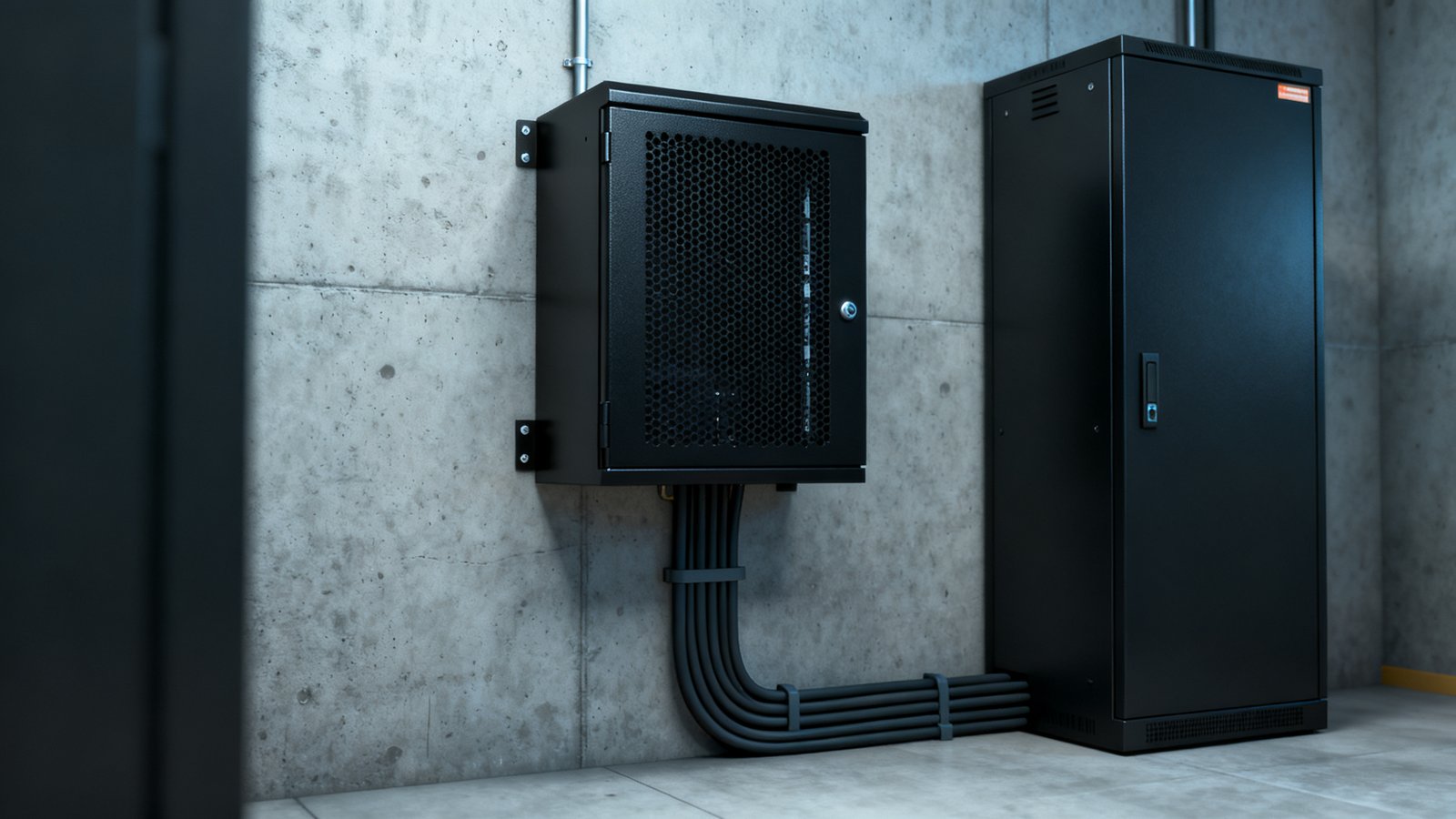
Figure 4: A 12U network cabinet installed in a small communications room, with cable trunking below.
Security and Access Control Installers
Security contractors order a network cabinet for CCTV recorders, access control panels and power supplies, often in plant rooms, risers and shared cupboards. The equipment is smaller but the environment is harsher: dust, heat and a certain amount of unauthorised interest.
That shifts the specification towards a lockable door, a dust-resistant panel arrangement and ventilation sized for a continuous load rather than peak demand. Where a project names an installation standard for communications rooms and data spaces, it is usually written against the framework published by TIA.
Small Server Rooms and Edge Sites
Small businesses, clinics, schools and edge sites order a 12U to 18U network cabinet to hold the equipment that used to sit on a shelf: a server, a switch, a firewall and a NAS. These buyers are not data centre operators, so they buy on a fixed budget and expect the cabinet to arrive complete.
The load case is what distinguishes this channel. A cabinet in a shop is often wall mounted on a partition rather than a structural wall, so the fixing and the loaded weight have to be stated clearly. Product safety and installation expectations for electrical accessories of this kind are covered in Europe through CEN-CENELEC standards, and in the United States through the enclosure standards published by NEMA and evaluated by laboratories such as UL.
Materials, Ventilation, and Finish
Steel Sheet, Thickness, and Load Rating
A network cabinet is built from 1.0 mm to 2.0 mm cold-rolled steel. The frame, the base and the mounting rails carry the load, so they take the heavier gauges, while the side and rear panels can be thinner because they close the structure rather than support it.
The static load rating quoted for a network cabinet follows from that frame and from the way it is fixed. A wall mounted 12U cabinet is commonly rated around 60 kg when fixed to a structural wall, and a floor standing version considerably more. Those figures are only meaningful when the fixing method and the wall type are stated with them, which is why the drawing should carry both.
Perforated Panels and Airflow
A network cabinet removes heat by convection through its panels, so the open area of the perforated door and the vents is part of the thermal design rather than a detail. A door with a working open area above about 60 percent passes air freely; a door with decorative slots does not, and the difference shows up as a rack that runs hot in summer.
The layout matters as much as the open area. Vents low on one side and high on the opposite face create a stack effect, and a fan tray at the top pulls air through the equipment rather than around it. Blocking the low intake with a shelf or a bundle of cables removes most of that movement, so cable management is a thermal decision as well as a tidy one.
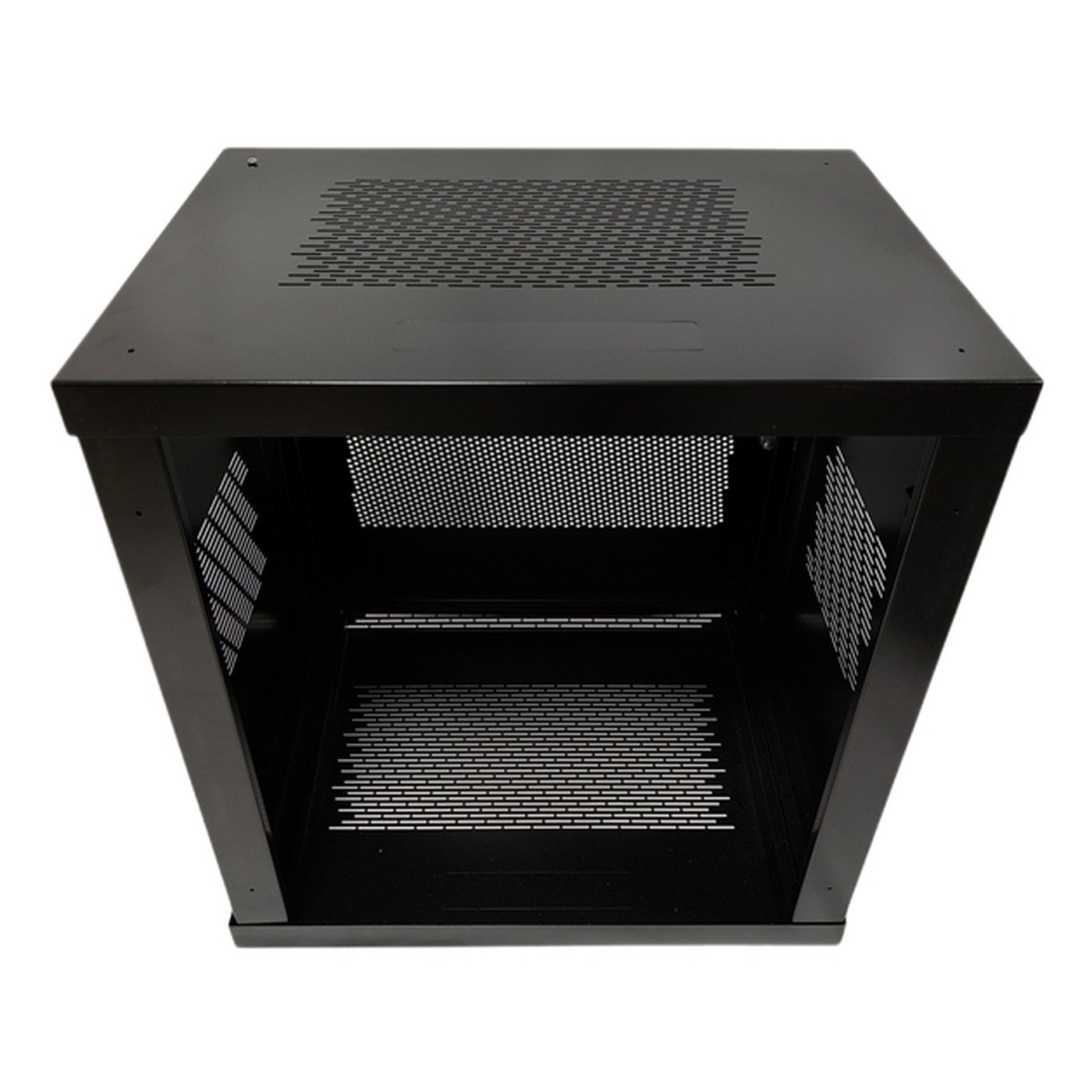
Figure 5: The perforated top panel of a network cabinet, the aperture that lets hot air out of the rack.
Powder Coating and Colour Consistency
The standard finish is a powder coat over a pre-treated surface, usually in black or a textured dark grey, and it has to cover folded edges, perforated holes and weld dressing without closing the apertures. Coating practice is described by the Powder Coating Institute.
For a network cabinet the colour is usually specified by the customer’s brand or by the equipment inside, and it has to match across deliveries. One powder lot per order, recorded cure parameters and a retained sample are the controls, and the film thickness range belongs on the quotation. Where stainless steel is specified for a washdown or external installation, surface treatment practice is described by the National Association for Surface Finishing and material guidance by SSINA.
Production Difficulty and Quality Risks
From Equipment List to Rack Unit Geometry
A network cabinet is designed from the equipment list backwards. The customer states the U count, the depth of the deepest device, the rack hole type and whether the cabinet is wall mounted or floor standing; the factory then sets the internal depth, the rail positions and the panel split. The production discipline behind the frame, panels and rails is described by SME.
That order matters because the external size of a network cabinet tells a buyer almost nothing about whether their equipment fits. A cabinet quoted as 12U but drawn with rails 40 mm too far forward will not accept a deep server without hitting the rear door, which is a design failure that only appears during installation.
19-Inch Rails, Hole Pitch, and Squareness
The mounting interface is the part of a network cabinet that cannot be approximate. The rails sit at a fixed horizontal spacing, and the holes repeat on the standard rack pitch in either a square pattern for cage nuts or a tapped pattern for screws.
Squareness is the second requirement. Rails that are twisted or set at different depths will still accept a patch panel, but a heavier device will not slide in without force, and the fixings will cross-thread. The controls are a welded frame jig, a first article check on the rail spacing at the top and bottom, and dimensional verification using the practice published by NIST. Hole and fastener standards are published by ANSI.
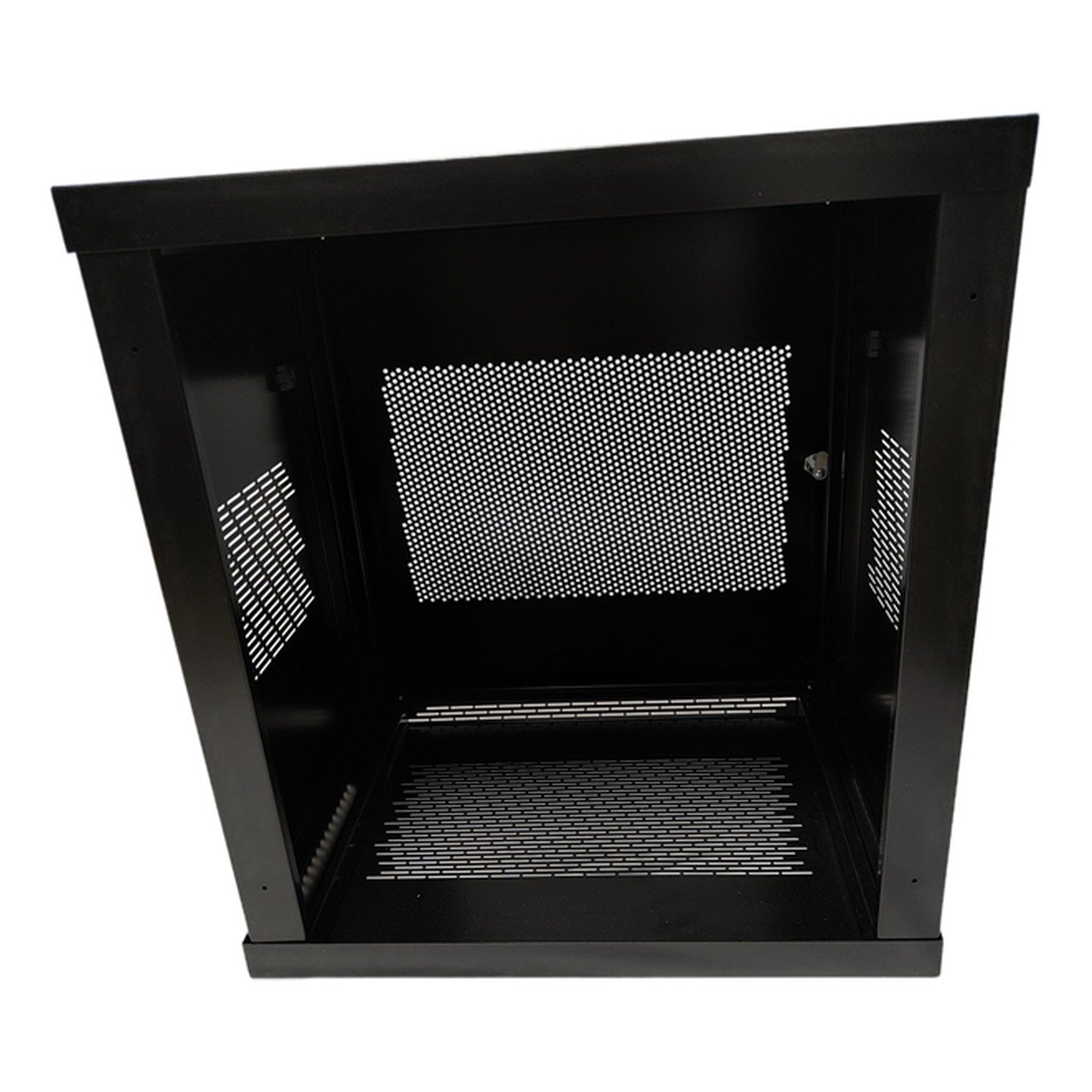
Figure 6: The mounting rails inside a network cabinet, the interface that has to repeat to the standard rack pitch.
Door Fit, Lock, and Ventilation Coverage
The door is where a network cabinet is judged on quality, because it is the only face the customer sees after installation. A door that drops on one hinge, or a perforated panel whose border is uneven, reads as a cheap product even when the frame is sound.
The lock or handle is the second risk, because it has to sit flush in the door face and still engage the frame. The third is ventilation coverage: the perforation has to be clear of the door frame and of any stiffening return, because a vent pattern that is partly blocked by the frame reduces the airflow the panel was specified to deliver.
Lead Times, Files, and Order Flow
What You Send Us
To quote a network cabinet we need the U count, the deepest piece of equipment, the hole type, the mounting method, the cable entry positions, the finish and the annual volume. A photograph of the room and the equipment list is often more useful than a general drawing.
Where the design is fixed, a STEP model or a dimensioned 2D drawing works well, with the rail positions, the hole pattern and the cable entry called out separately. Where a buyer is matching a cabinet they already install, we work from the existing unit or its drawing so that the accessories stay interchangeable.
Batch Volumes, MOQ, and Realistic Pricing
A network cabinet is a mid-size fabricated item, and the volume band reflects that. Realistic production runs from 50 to 300 pieces per batch over three to six releases a year, with a minimum order around 20 to 50 pieces and FOB prices typically between $45 and $140 each depending on the U count, the depth, the door type and the fittings included.
Within that band the U count and the depth do most of the work, because they drive the blank size and the number of panels. A 9U wall cabinet with a single perforated door sits at the bottom; an 18U floor cabinet with a plinth, a fan tray and a pair of adjustable rails sits at the top. First batches ship 20 to 30 days after drawing and sample approval, and repeat releases move faster once the frame jig exists.
Assembly, Post-Processing, and Documents
XHX Metal cuts, punches, forms and welds the frame, makes the panels and rails, deburrs and finishes the parts, and assembles the cabinet with its door, lock and earth stud fitted. Coating is carried out by audited partners with pre-treatment and film thickness recorded against the batch.
An order is supported by the approved drawing with its revision number, material certificates, a first article inspection report that records the rail spacing and hole pattern, coating records, batch inspection records, and a packing list. Buyers who need third-party verification of the kind offered by UL should agree the scope at quotation. For a network cabinet the first article report is what proves the interface the customer’s equipment will actually bolt to.
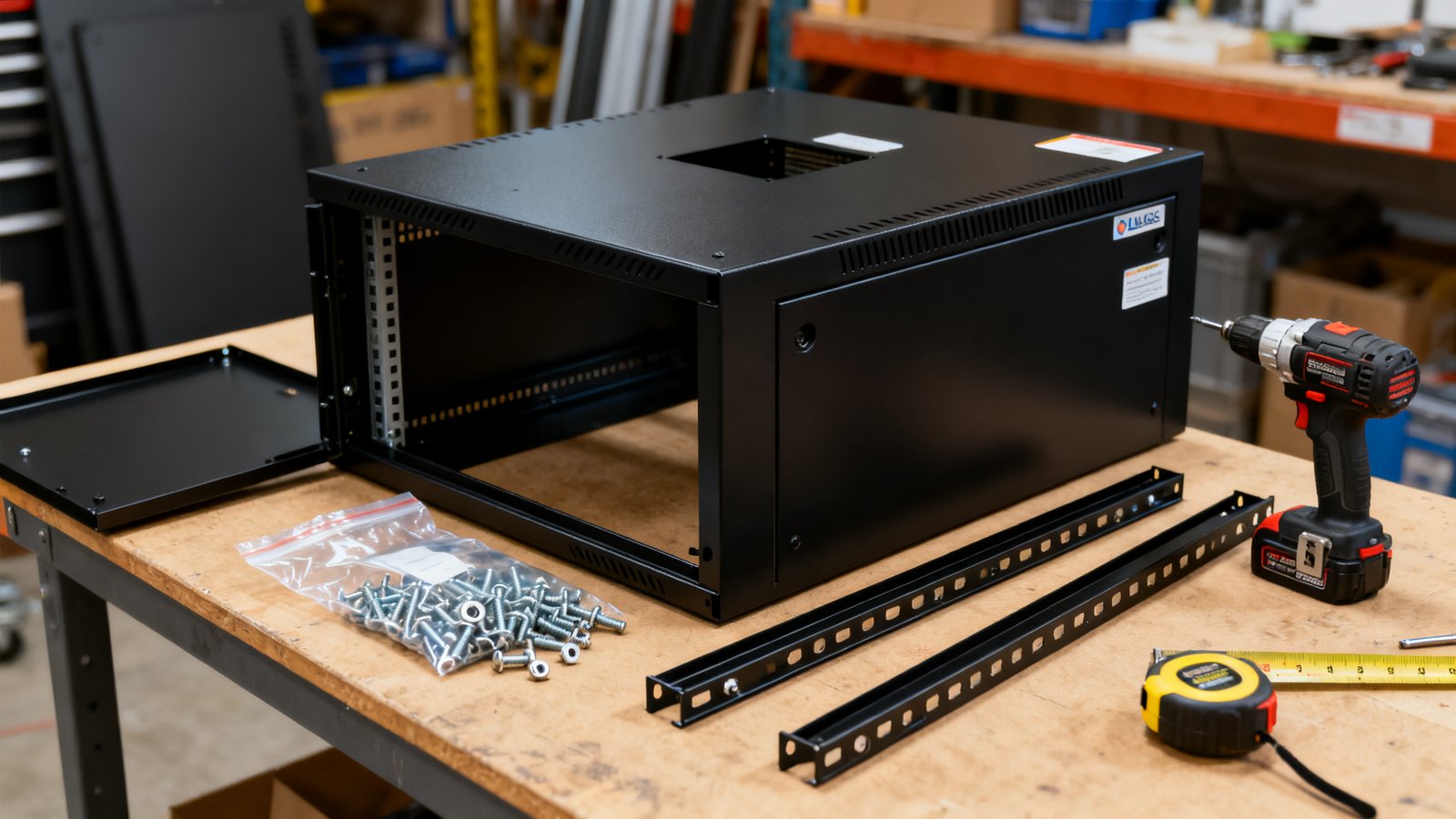
Figure 7: Cabinet assembly: the body on the bench with its rails, cage nuts and fixings ready to fit.
Case Studies: Network Cabinet Programmes
Case 1: IT Integrator — 12U Wall Cabinet
An IT integrator needed a 12U wall mounted network cabinet for branch office fit-outs, with a perforated front door, a lockable handle and rails drilled for cage nuts so that its standard patch panel and switch kit would fit every site.
The network cabinet was produced in 1.2 mm steel with a welded frame, a vented door and top and base cable entries, finished in a textured black powder coat. The first article recorded the rail spacing at both ends before the batch ran. Production ran at 150 pieces per batch, four releases a year, with an MOQ of 50 and FOB prices from $52 to $75. The first batch shipped 24 days after approval, and annual value was approximately $38,000.
Case 2: Security Contractor — 9U Vented Cabinet
A security contractor needed a 9U network cabinet for CCTV recorders and access control panels, with a dust-conscious panel arrangement, a fan tray mount and a lockable door.
The cabinet was supplied in 1.2 mm steel with a perforated door, side vents and a prepared fan position, so the contractor could add a fan tray without modifying the panel. The retained colour sample stayed with the job for repeat deliveries, and each batch was checked against the sealed sample before packing. Production ran at 200 pieces per batch, three releases a year, with an MOQ of 50 and FOB prices from $45 to $68. The first batch shipped 22 days after approval, and annual value was approximately $34,000.
Case 3: Edge Site Rollout — 18U Floor Cabinet
A rollout programme needed an 18U floor standing network cabinet for edge sites, with a plinth, adjustable rails front and rear, a fan tray and a cable entry large enough for a bundled fibre and copper riser.
The cabinet used a 1.5 mm welded frame with a bolt-on plinth, four adjustable rails and a split rear entry plate, finished in black powder coat. The frame jig held the rail spacing across the batch. Production ran at 80 pieces per batch, three releases a year, with an MOQ of 20 and FOB prices from $95 to $140. The first batch shipped 28 days after approval, and annual value was approximately $28,000.
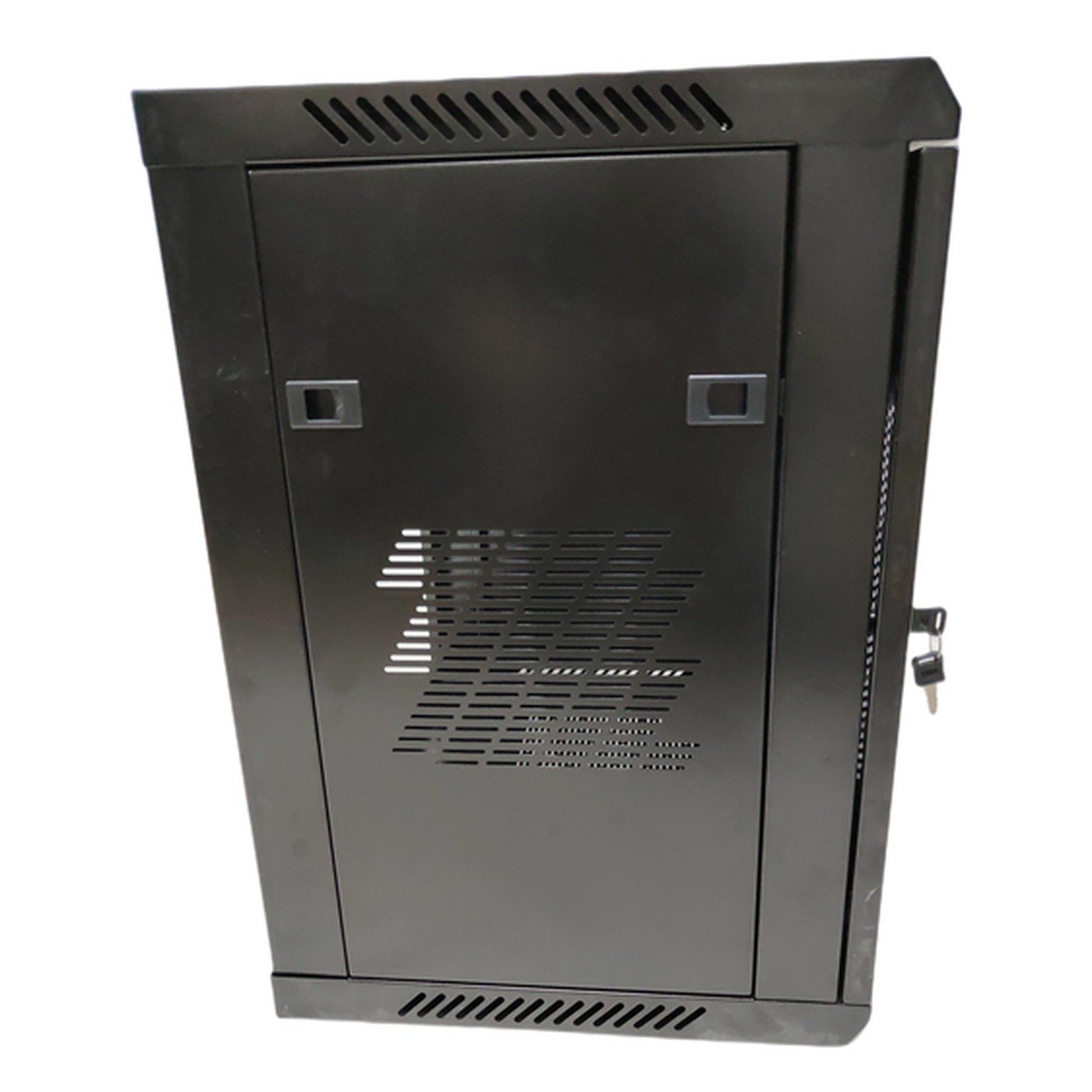
Figure 8: A production network cabinet checked and photographed before packing.
Summary and Next Steps
How to Choose a Network Cabinet Supplier
The supplier that fits a network cabinet controls the rail interface, not just the outside of the box. Ask for a first article report that records the rail spacing and the hole pattern at the top and bottom of the frame, and a retained colour sample from the coating batch.
Check that the quotation states the sheet thickness, the U count and internal depth, the door type and open area, the rail hole type, the fittings included and the fixing method. Match the supplier to the batch size as well: a network cabinet is usually bought in the tens or hundreds rather than by the container.
Why XHX Metal
XHX Metal provides network cabinet manufacturing from drawing to delivered units: laser cutting to plus or minus 0.01 mm, CNC punching and bending, TIG and MIG welding, deburring, powder coating through audited partners, and assembly with the door, lock, rails and earth stud fitted.
The company has manufactured sheet metal cabinets for export customers from Dongguan since 2014, and holds ISO 9001:2015 certification with CE documentation and SGS records. Sheet and coating guidance is published by SSINA and the American Galvanizers Association. Samples in 5 to 10 working days and first batches in 20 to 30 days are normal work.
How to Start Your Programme
Send the U count, the deepest device, the hole type, the mounting method, the cable entries, the finish and the volume. We will propose the internal depth and rail positions, issue a drawing, and build a sample for approval.
Programmes are handled through the contact page, and integration projects are described on the industrial automation page.
FAQ: Network Cabinet Manufacturing
What does 12U actually mean? One rack unit is 44.45 mm, so a 12U cabinet gives about 533 mm of mounting height before clearances.
Which rail hole type should we specify? Square holes suit cage nuts and are the usual choice for a mixed list, while tapped holes suit a fixed kit.
What is the minimum order? MOQ is typically 20 to 50 pieces depending on the U count, with batches released three to six times a year.
Do you supply the cage nuts, shelves and fan tray? Yes. Cage nuts, shelves, PDU brackets, fan trays and plinths can be supplied with it.
Can the cabinet go on a wall that is not structural? The fixing method must be agreed at quotation, because the load rating only applies to the wall type it was calculated for.
How long does a sample take? A sample follows in 5 to 10 working days after drawing approval, and the first batch ships 20 to 30 days after approval.