How lightweight aluminum enclosures with conductive paint protect sensitive electronics from electromagnetic interference, support reliable grounding, and perform in demanding environments.
In sheet metal fabrication, the material you choose shapes how a part performs in real-world use. For electronic enclosures, that decision goes beyond strength and cost: the enclosure must also protect sensitive components from electromagnetic interference (EMI), support safe grounding, and survive the environment where it will be installed. An aluminum EMI shielding enclosure with conductive paint answers all of these requirements in one product.
This guide walks through why EMI shielding matters, what makes this enclosure different, and the four features that matter most: EMI shielding paint, electrical conductivity, lightweight aluminum construction, and environmental durability. It also compares aluminum with common enclosure materials and explains how XHX Metal fabricates custom aluminum enclosures for OEM projects.
1. Why Enclosure Material Choice Affects EMI Performance
An enclosure does more than hold a circuit board or terminal block. In many electronic systems, it is part of the electromagnetic protection strategy. External sources such as power lines, radio transmitters, motors, and nearby equipment can inject interference into sensitive circuits, while the circuits themselves can emit signals that disturb other devices. A shielded enclosure reduces both problems by reflecting and absorbing electromagnetic fields.
The material and surface finish determine how well the enclosure performs this job. Conductive paint creates a continuous conductive layer over the aluminum surface, including bends, panels, and cutouts, so the finished product behaves like a conductive shield rather than an ordinary painted box. That is why material, coating, and fabrication details must be considered together at the design stage.
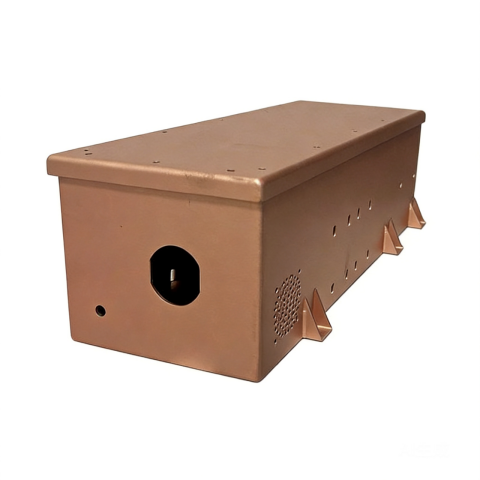
Aluminum EMI shielding enclosure with conductive paint, fabricated as a complete product.
2. The Product: An Aluminum EMI Shielding Enclosure
This enclosure is fabricated from aluminum sheet metal and finished with a specialized conductive paint. The aluminum body provides a lightweight, corrosion-resistant structure, while the conductive coating turns the whole surface into a continuous electrical shield. The result is an enclosure that blocks electromagnetic interference, supports grounding, and keeps electronic assemblies protected in indoor and outdoor applications.
Because the enclosure is produced through a standard sheet metal workflow, it can be customized for different sizes, cutouts, mounting brackets, connector openings, and finish requirements without changing the core design.
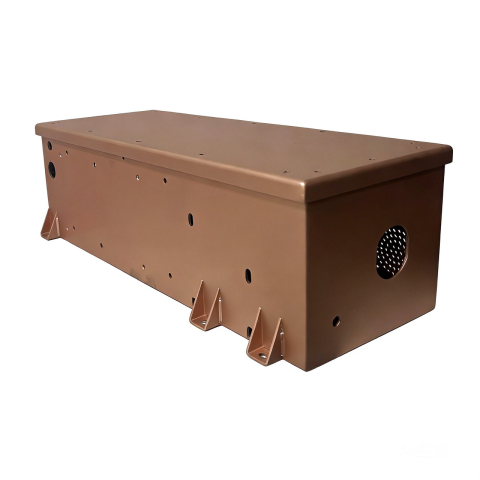
Front view of the lightweight aluminum EMI shielding enclosure.
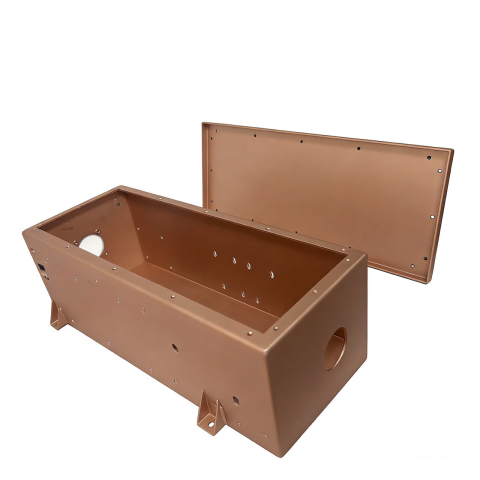
Close view of the enclosure body showing formed edges and mounting features.
| At a glance: four featuresEMI shielding paint: a continuous conductive coating that reflects and absorbs electromagnetic interference.Electrical conductivity: the conductive surface supports reliable grounding and ESD protection.Lightweight aluminum: about one-third the density of steel, for easier handling, shipping, and installation.Environmental durability: corrosion-resistant aluminum plus a protective finish for long service life. |
3. Four Features That Matter in the Field
3.1 EMI Shielding Paint Blocks Electromagnetic Interference
The enclosure is coated with a specialized conductive paint that forms a continuous, electrically conductive film. This layer reflects and absorbs electromagnetic fields, reducing interference from external sources such as power lines, radios, and nearby equipment. It also helps contain emissions generated inside the enclosure, which is critical in medical, telecom, industrial, and test equipment.
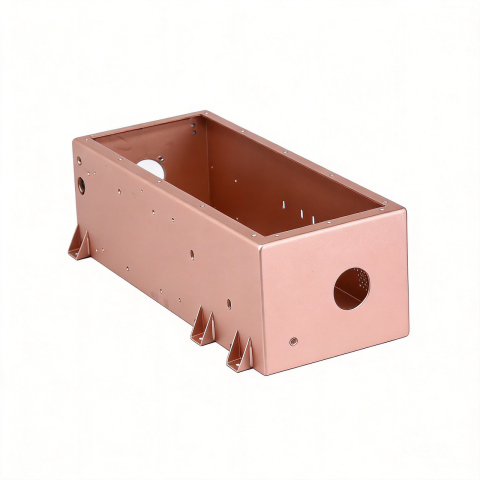
Conductive paint on the aluminum surface provides continuous EMI shielding.
3.2 Electrical Conductivity Supports Grounding and ESD Protection
Because the painted surface is conductive, the enclosure can be connected to a reliable ground point. This gives sensitive circuits a low-impedance path for stray currents and static discharge, and it keeps doors, panels, and mounting hardware at the same electrical potential. For electronic assemblies, a conductive enclosure is not optional; it is the foundation of safe, stable operation.
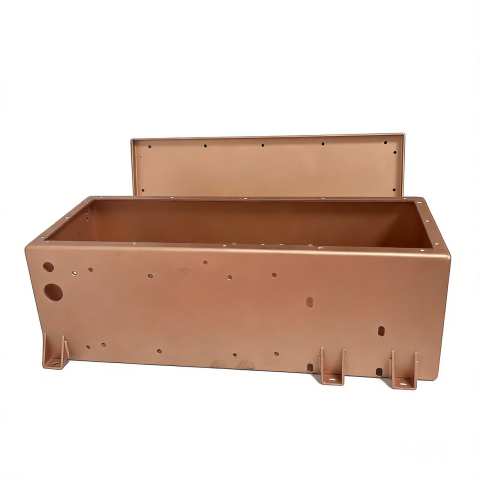
The conductive enclosure supports reliable grounding and ESD protection.
3.3 Lightweight Aluminum Construction Simplifies Handling
Aluminum weighs roughly one-third as much as steel. For wall-mounted, rack-mounted, portable, or transportable enclosures, that difference reduces shipping costs, makes installation easier, and lowers the load on the supporting structure. Aluminum also provides a good strength-to-weight ratio in alloys such as 6061, making it practical for panels, doors, and chassis frames.
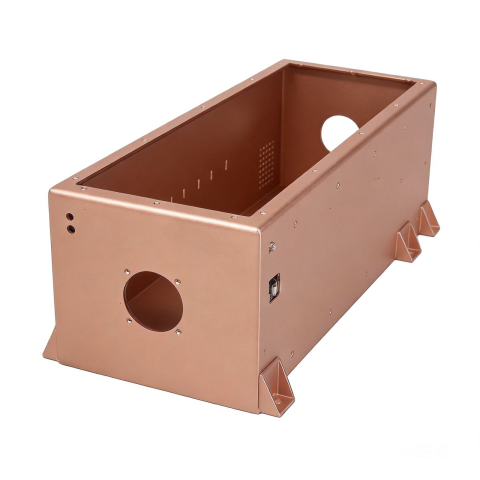
Aluminum construction keeps the enclosure light enough for easy handling and installation.
3.4 Environmental Durability Extends Service Life
Aluminum naturally forms a protective oxide layer that resists corrosion and does not rust like carbon steel. The conductive paint adds another barrier against moisture, dust, and moderate chemical exposure. With proper gaskets, fasteners, and assembly, the enclosure can be used indoors, outdoors, in humid conditions, and in temperature-cycling environments.
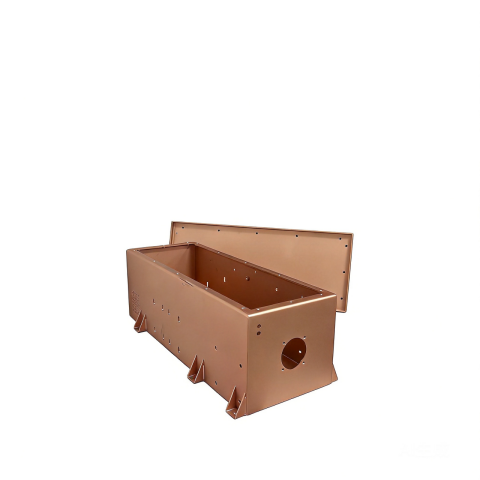
Corrosion-resistant aluminum and a protective finish support long-term outdoor and industrial use.
4. Aluminum vs. Other Enclosure Materials
For EMI-shielded electronic enclosures, aluminum offers the best balance: light weight, good corrosion resistance, easy forming, and a stable base for conductive paint. Stainless steel remains a strong choice for severe chemical or marine environments, while cold-rolled and galvanized steel suit budget housings where weight is less critical.
| Material | Strength | Weight | Corrosion Resistance | Enclosure Fit |
| Aluminum | Good | Light | Good | EMI-shielded electronics, weight-sensitive and outdoor designs |
| Stainless Steel | High | Heavy | Excellent | Harsh chemical or marine environments |
| Cold Rolled Steel | High | Heavy | Poor without coating | Budget indoor cabinets with painting |
| Galvanized Steel | Moderate | Heavy | Good | Cost-effective outdoor housings |
| Copper | Moderate | Heavy | Excellent | High-conductivity or premium shielding parts |
Aluminum also has the practical advantage of easy fabrication. It bends cleanly, welds well, and produces precise edges, so features such as mounting brackets, ventilation louvers, and cable openings can be added without excessive tool wear or processing time.
5. How XHX Metal Builds Custom EMI Enclosures
At XHX Metal, aluminum EMI shielding enclosures are produced through a complete sheet metal workflow: laser cutting, CNC bending, welding, deburring, surface treatment, and final coating. The same process supports both standard enclosure designs and fully customized OEM parts.
The factory is equipped with two 6 kW fiber laser cutting machines with positioning accuracy of about plus or minus 0.01 mm, CNC press brakes, TIG/MIG and laser welding stations, automatic deburring, and CNC machining centers. Production runs under an ISO 9001:2015 quality system, and the team supports OEM/ODM projects with annual capacity of up to 500,000 parts.
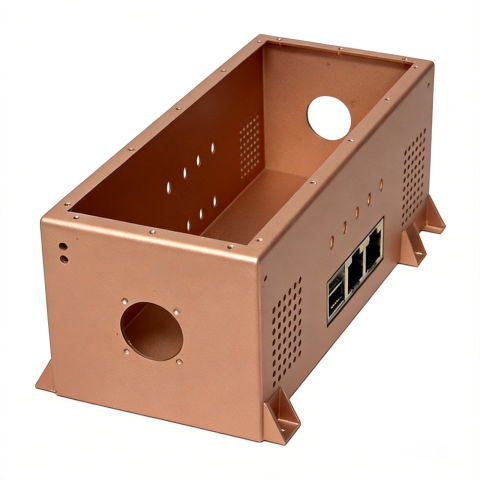
Aluminum enclosure with precision-formed edges and mounting features.
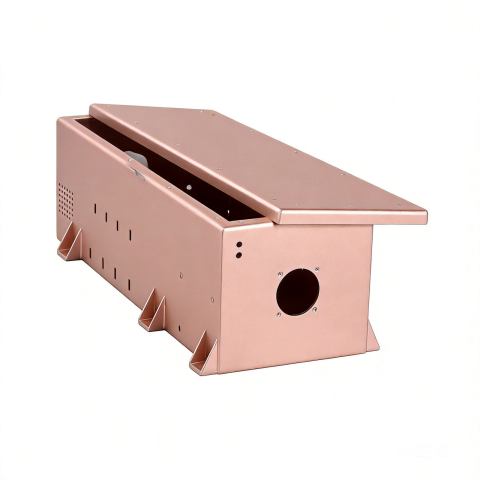
Finished aluminum enclosure with a smooth, conductive-coated surface.
6. Typical Applications
EMI-shielded aluminum enclosures are widely used in telecom and 5G equipment, medical devices, industrial controls, power and energy storage systems, test and measurement instruments, and outdoor electronics that need both shielding and weather resistance. Custom cutouts, mounting brackets, gaskets, and connector openings can be added during fabrication to match the final assembly.
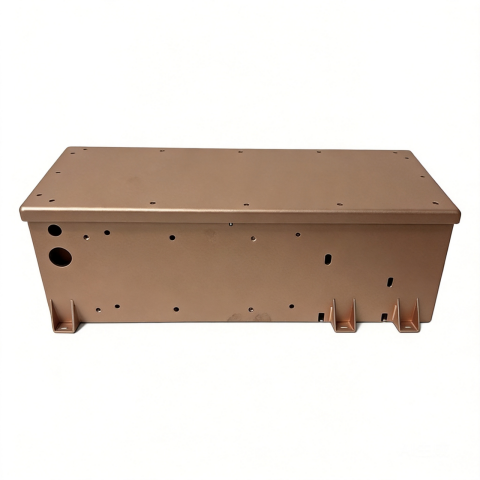
Custom EMI shielding enclosure configured for electronic equipment.
7. FAQ
What makes an enclosure EMI-shielded?
A shielded enclosure uses a conductive material or coating to block electromagnetic fields. In this product, the aluminum body plus conductive paint forms a continuous conductive surface that reflects and absorbs EMI.
Can conductive paint be applied to aluminum enclosures?
Yes. Aluminum is a common base for conductive paint because it is lightweight, corrosion-resistant, and easy to fabricate. The coating is applied over prepared surfaces so it remains continuous across panels, seams, and cutouts.
Are aluminum EMI enclosures durable outdoors?
Aluminum resists corrosion and does not rust, and the conductive paint adds protection against moisture and dust. With proper sealing and hardware, the enclosure is suitable for demanding indoor and outdoor applications.
Can XHX Metal customize the enclosure size and features?
Yes. XHX Metal supports OEM/ODM fabrication from drawings or 3D models, including custom dimensions, cutouts, brackets, mounting options, and finishing requirements.
8. Conclusion
An EMI shielding enclosure only performs well when material, coating, and fabrication are matched to the application. Aluminum gives you a lightweight, corrosion-resistant foundation; conductive paint turns it into a continuous electrical shield; and careful manufacturing ensures seams, fasteners, and grounding points work together. If you are developing an enclosure for telecom, medical, industrial, or energy equipment, these four features are a solid place to start.
XHX Metal (Guangdong Xinghaoxin Technology Co., Ltd.) specializes in custom sheet metal fabrication, including aluminum EMI shielding enclosures. The factory combines two 6 kW fiber laser cutting machines, CNC bending and welding stations, automatic deburring, and an ISO 9001:2015 quality system to support everything from prototypes to production runs. Contact Barry at sales01@xinghaoxin.com or +86 132 4496 3694, or send your 3D model to the team for a quote. Learn more at www.xhxmetal.com or browse the product range on Alibaba at gdxhx.en.alibaba.com.