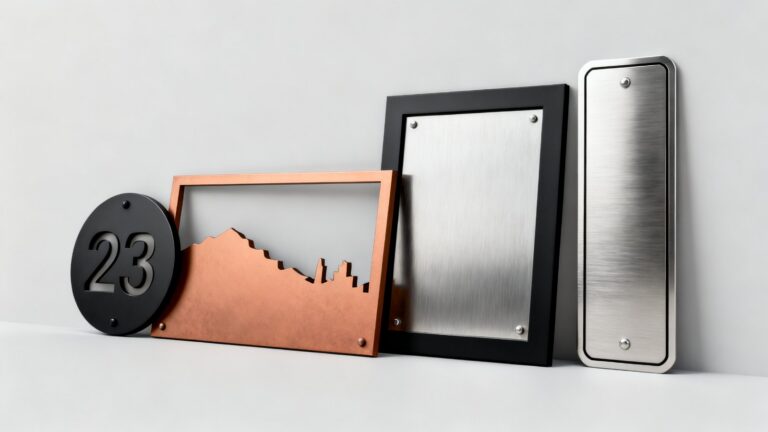
Custom laser cut metal portraits turn a customer photograph into a hollow metal artwork: the face, pet, or scene is redrawn as a cut path, then laser cut out of a metal sheet so the image is formed by the metal that remains and the negative space around it. Brands in North America and Europe sell these pieces as personalised gifts, pet memorials, and wall decor, ordering them in batches of individual designs rather than one repeated part.
This guide explains how the product is made from a photo to a finished, wall-ready piece: how designs are converted and approved, which materials and finishes work, the quality risks that decide whether a portrait still looks like the person, the lead times and file requirements for batch orders and single custom orders, and real purchasing data from export programmes. It answers the questions buyers ask first: what they are actually ordering, what can go wrong, how a factory controls it, which files are needed, what assembly and finishing is included, and what the numbers look like in practice.
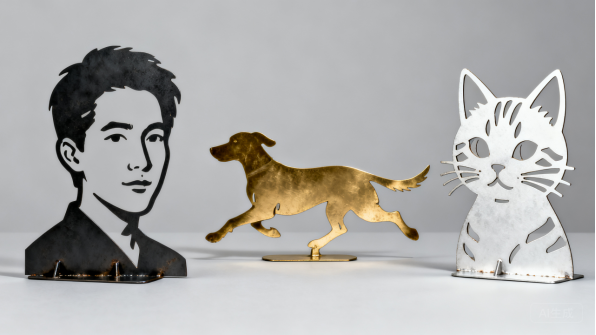
Figure 1: Custom laser cut metal portraits in matte black, brushed gold, and white powder-coated finishes.
The Product: What Custom Laser Cut Metal Portraits Are
How Custom Laser Cut Metal Portraits Are Made
Custom laser cut metal portraits are made by converting a supplied photograph into a vector cut path, cutting that path from a metal sheet, and finishing the panel into a wall-ready piece. The artwork is hollow: the likeness is formed by the remaining metal, the negative spaces, and the thin bridges that hold the design together.
The process starts with the customer’s photo, usually a JPG or PNG of a person, a pet, or a group. A designer traces the key features, simplifies noise, and rebuilds the image as clean closed paths that a laser can follow. The proof is sent back for approval, because this is the stage that decides whether the finished portrait is recognisable. After approval, the cut file goes to a fiber laser, which cuts the outline and all internal openings from one flat sheet. Parts are then deburred, straightened if needed, powder-coated, fitted with mounting hardware, and packed as a finished product. Cutting parameters and machine practice follow guidance from the Laser Institute of America.
Because every order carries different faces and different proportions, this is a high-mix product: the same machine, material, and finishing route are reused, but the cut file changes for every piece.
What Buyers Order Most: Cut-Out Panels, Not Frames
The parts buyers order most in custom laser cut metal portraits are the cut portrait panels themselves, welded mounting studs or keyhole hangers, powder-coated finishes, and protective packaging for parcel shipping. Buyers purchase finished, wall-ready pieces, not loose sheet metal or traditional frame components.
A typical purchase order lists a batch of individual photos, one size and one finish, and a delivery date. The factory returns the same number of unique portraits, each cut from its own approved design. Where the buyer sells through e-commerce, the pieces are usually supplied with hidden stand-off mounts or keyhole hangers already installed, so the end customer can hang the portrait without extra hardware. Some buyers add a stand for tabletop use, a gift box, or a printed insert card, and those items are quoted inside the same programme.
This is why the quotation should list the panel, the finish, the mounting hardware, and the packing as separate lines: a buyer comparing suppliers needs to compare complete delivered units rather than bare cut panels.
Design Basics: Negative Space and Connecting Bridges
A laser cut portrait is a structural design as well as an image. Every opening removes metal, so the designer must balance likeness against strength, keeping enough material in the panel and enough connecting bridges to stop thin parts breaking or bending in transit.
Hair strands, eyelashes, and fine pet fur are the hardest details. Cutting them at full fidelity would leave fragile strips that cannot survive handling, so designers thicken or merge the smallest lines, keeping the overall shape and character. Bridges are placed where they are least visible and strongest, and the minimum bridge width is set by the material thickness and the finished size. Large open areas are left where the design allows, because they reduce weight and add a modern look, while dense areas are simplified to avoid a mesh that looks noisy from a distance.
The proof stage is where the buyer sees those compromises before cutting. Approving a proof that shows the actual cut lines, not just a photo effect, prevents the most common disappointment in this product category.
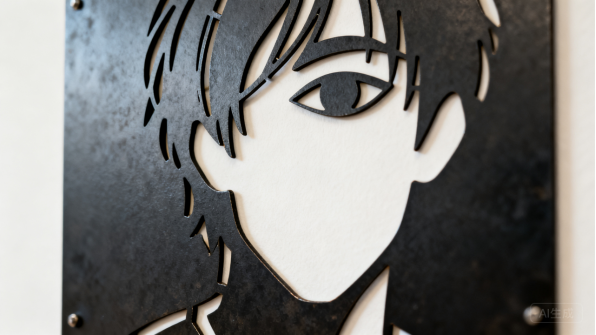
Figure 2: Negative space and thin connecting bridges hold hair, facial features, and outlines together.
Materials and Thickness Options
Custom laser cut metal portraits are usually cut from mild steel, stainless steel, or aluminium, with thickness chosen for the finished size and the handling the piece will see. Most wall art runs between 1.0 mm and 2.0 mm, thin enough to cut delicate detail and thick enough to stay flat.
Mild steel is the default for powder-coated portraits: it cuts cleanly, holds detail, and takes colour well at a reasonable cost. Stainless steel is specified for outdoor pieces, coastal interiors, and a premium brushed or mirror look, and grades follow SSINA selection guidance. Aluminium reduces weight for large panels and takes anodised finishes, with alloy and finish selection supported by Aluminium Association and European Aluminium references. Thicker sheets resist bending on big designs but limit how fine the cut lines can be, so the size and the material are decided together. Zinc-coated substrates for outdoor work follow galvanizing guidance, and buyers who want a specific grade should say so at quotation, because material certificates can be provided with the order.
Use Cases and Applications
Personalised Gift and E-Commerce Brands
Personalised gift and e-commerce brands are the largest buyer group, selling one-off portraits to consumers from a fixed catalogue of sizes and finishes, and wall decor market research shows the category continuing to expand through online and home channels. They order in batches of individual designs, and the factory ships finished, wall-ready pieces that go straight into retail packaging.
These brands live on turnaround and consistency. A customer uploads a photo, the brand sends it to the factory, and the design proof has to come back quickly so the consumer does not cancel. Because every piece is different, the risk is quality variation rather than dimensional variation: one portrait may look far better than another if the source photo or the tracing is weak. Brands control this by setting photo guidelines, using a consistent tracing style, and approving a proof before cutting. They also want a fixed set of sizes and finishes, so the storefront stays simple while the artwork stays unique.
For these buyers the factory is a production partner behind a consumer brand, so proof turnaround and reorder speed matter as much as the unit price.
Pet Portrait Businesses
Pet portrait businesses order dog, cat, and horse portraits, often as memorial pieces, and they depend on the silhouette still reading as the right animal and the right character. High-contrast photos and a clean side profile work best, and the design service has to cope with fur.
Fur is the defining challenge. A literal cut-out of fine fur becomes a fragile mesh, so designers merge strands into broader shapes while keeping ears, muzzle, and posture accurate. Memorial buyers are emotionally invested in the result, which raises the bar on likeness and on finishing quality. Many pet portrait sellers offer a proof to their customer before production, so the factory often supports two approval steps: one for the seller, one for the end customer. Batches are moderate and repeat monthly, and the same mounting hardware and packaging are reused across the range.
Because a pet portrait is usually a gift, packaging and delivery condition influence reviews strongly, which makes corner protection and flat packing part of the product specification.
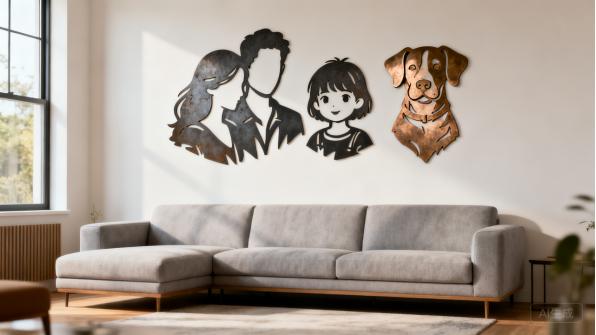
Figure 3: A wall arrangement of laser cut metal portraits mounted as silhouettes in a modern interior.
Home Decor and Interior Brands
Home decor and interior brands use laser cut portraits and silhouettes as wall art collections: family portraits, children, dancers, and animals, often in three sizes and three finishes. They buy larger batches and expect colour consistency across the whole range.
In this channel the piece competes with framed prints and canvas, so the design language matters as much as the likeness. Brands often want a collection that hangs together, which means one material thickness, one coating system, and a consistent mount so every size sits at the same distance from the wall. Larger panels are more sensitive to flatness, so the material and the packaging are specified together. Designers may supply their own vector artwork, while other brands ask the factory to develop a collection from photos and sketches.
For collections, the practical advantage of laser cutting is that a new size or a new subject can be added without new tooling, which keeps a range fresh without a large investment.
Memorial, Wedding, and Corporate Gifts
Memorial, wedding, and corporate buyers order portraits and silhouettes for specific occasions, with tight deadlines and a strong emphasis on presentation. These programmes often need a gift box, an engraved or printed insert, and a finish that feels premium to the recipient.
Memorial pieces frequently pair a portrait with dates or a short line of text, cut into the panel or engraved on a separate plate. Wedding orders combine a couple portrait with a date, and corporate buyers order logos, team photos, or award shapes in larger batches for events. Deadlines in this segment are fixed, so production planning starts from the event date and works backwards through proof approval, cutting, coating, and shipping. Premium finishes such as brushed stainless, copper tones, or a two-tone look are common, and the buyer usually approves a physical sample for high-value orders.
Because mistakes here cannot be corrected after the event, these programmes benefit most from an approved proof and a first-article sample.
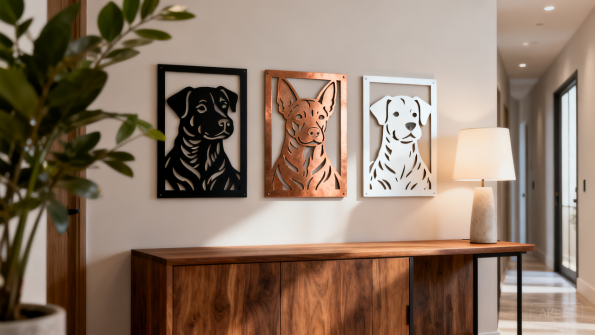
Figure 4: Personalised laser cut pet portraits used as gifts in a hallway display.
Materials, Design Input, and Finishes
Choosing Steel, Stainless, or Aluminium
Mild steel, stainless steel, and aluminium each change how a laser cut portrait looks, weighs, and survives its environment. The right choice depends on whether the piece stays indoors, how large it is, and whether the buyer wants a painted colour or a bare metal finish.
Mild steel is the workhorse for powder-coated portraits because it cuts and forms predictably and holds fine detail. Stainless steel costs more but resists rust and takes brushing, mirror polishing, or coloured finishes for premium and outdoor work. Aluminium is about a third of the weight of steel for the same panel, which helps on large pieces and on parcel shipping, and it suits anodised finishes. Thickness is matched to size: thin sheets allow the finest cut-outs, while heavier sheets resist bending on large portraits. Material certificates are available, and material property data helps buyers compare grades before specifying.
Powder Coating and Finish Options
Powder coating is the standard finish for these portraits: it gives a durable, uniform colour over the whole panel, including the cut edges, and it is available in matt, satin, textured, and metallic effects. It also protects mild steel from rust indoors and outdoors.
Panels are degreased and pre-treated, then coated electrostatically and cured, so the film flows into the cut edges rather than bridging over them. Colour consistency matters when a brand sells a collection, so one powder lot is used per order and a retained sample is kept for reorders. RAL and Pantone references allow exact colour matching, and a light texture hides minor handling marks. Bare metal options include brushed stainless, mirror polish, and anodised aluminium, and two-tone work can combine a coated panel with a brushed, plated, or copper-toned accent. The Powder Coating Institute publishes guidance on specifying and testing these finishes, and anodising practice, nickel plating guidance, and Copper Development Association references cover the metal-finish alternatives.
Photo Quality and Artwork Requirements
Photo quality decides how good the finished portrait can be. Clear, evenly lit images with a simple background and a visible outline of the head, ears, or profile work best, because the designer needs to separate the subject from what surrounds it.
For a person, a head-and-shoulders photo taken from chest height in soft daylight is ideal. For pets, a side or three-quarter view with the ears and muzzle clearly separated from the background gives the strongest silhouette. Files should be at least 2,000 pixels on the long edge, sharp, and free of heavy filters; screenshots and social media downloads often fail because compression destroys the edge detail. Buyers who supply batches should pass these guidelines to their own customers. If a photo is unusable, the better option is to request another one before cutting, because no amount of design work can recover detail that is not in the file.
Design Service: Customer File or In-House Tracing
Design can come from the buyer as a finished vector file, or from XHX Metal as an in-house tracing service. Both routes end in the same approval step, and the choice usually comes down to the buyer’s design capacity and how much control they want over the artwork.
When the buyer supplies vectors, the factory checks that paths are closed, lines are thick enough for the material, and the file matches the intended size before cutting. When the factory designs, a designer traces the photo into a cut-ready path, adjusts fragile details, and sends a proof showing the actual cut lines. Common formats are AI, SVG, DXF, and PDF for artwork, and DXF for the final cut file. Two revision rounds are normally included, and extra revisions are quoted. For collections, the factory keeps the approved style on file so later subjects match the first one.
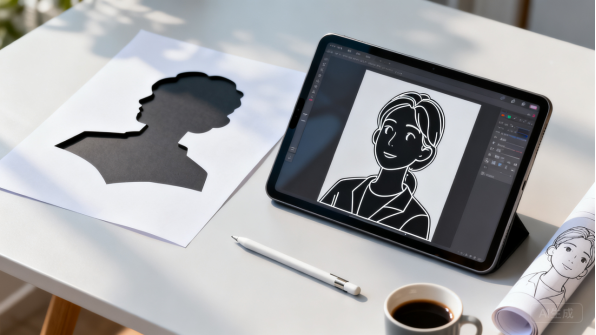
Figure 5: A portrait converted into a cut-ready vector proof before production approval.
Production Difficulty and Quality Risks
Likeness: The First Quality Risk
Likeness is the first quality risk in custom laser cut metal portraits. A piece can be dimensionally perfect and still fail, because the buyer’s customer only judges whether the portrait looks like the person or pet in the photo, above all else.
Likeness is lost in three places: a weak source photo, a tracing that smooths away a distinctive feature, or a design that removes too much material and changes the proportions. Designers protect it by checking the proof at final size rather than on screen, by keeping signature features such as a hairline, a nose shape, or an ear angle, and by asking for a better photo when the supplied file is too low in resolution. For repeat sellers, the factory keeps a style sheet so the same subject is treated consistently across orders. Where the end customer approves the proof, that step removes most of the risk before any metal is cut.
Thin Bridges, Weak Points, and Breakage
Thin bridges are the second risk: the narrow strips of metal that hold the portrait together can bend, snap in transit, or deform while the panel is handled. Detail and strength pull in opposite directions in almost every portrait design.
The controls are geometric and practical. Minimum bridge width is set from the material thickness and finished size, fragile areas are thickened or reconnected, and sharp internal corners are given a radius so stress does not concentrate. The designer reviews the path before cutting, and the first article is handled and flexed as a check. Cutting parameters are tuned to reduce dross and heat input, and parts are supported so they do not drop or catch as they are released from the sheet. For large portraits, a slightly heavier sheet or a redesigned bridge layout can remove most of the fragility without changing the look.
Heat Distortion, Burrs, and Edge Quality
Heat distortion and edge quality are the third risk. Laser cutting puts heat into a thin sheet, and dense detail can leave a panel slightly bowed, with dross, burrs, or a rough edge on the underside if the parameters are wrong.
Good cutting starts with the right power, speed, gas, and focus for the material, and with nesting that keeps delicate areas supported during the cut. Panels are checked for flatness after cutting and straightened where needed before coating, because a bow that survives into the finished product shows immediately against a wall. Edges are deburred so the portrait is safe to handle and so coating adheres cleanly. Because a coated edge cannot be corrected later without stripping the finish, flatness and edge work are treated as pre-finishing operations rather than final inspection items.
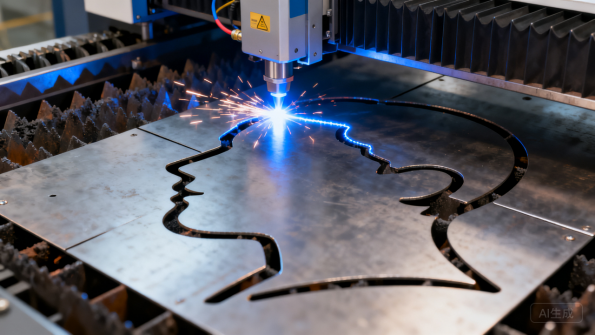
Figure 6: A fiber laser cutting a portrait outline and internal openings from flat metal sheet.
Coating Coverage and Colour Consistency
Coating coverage and colour consistency are the fourth risk. Cut edges, tight internal openings, and thin bridges are the hardest areas to coat evenly, and a collection that hangs together shows any shade difference between panels hung side by side.
Pre-treatment removes oil and oxide so the powder bonds, and the coating is applied so it wraps the cut edges rather than leaving bare metal inside the openings. Colour is controlled by using one powder lot per order, recording cure time and temperature, and keeping a retained sample for the next batch. Where a buyer sells a range, the factory also keeps the coating specification with the artwork file, so a new subject can be added later in exactly the same colour. For outdoor or humid installations, corrosion protection at the cut edges is confirmed before production.
Quality Control in Custom Laser Cut Metal Portraits
XHX Metal controls these four risks with defined steps: proof approval before cutting, a design check for bridge widths and corner radii, cutting parameters tuned per material, and finishing controls that include flatness checks, edge deburring, and lot-based colour records.
Every programme begins with a proof that shows the actual cut lines, and the approved version is stored with the order so reprints and reorders match. First articles are checked for likeness at final size, bridge integrity, flatness, and coating coverage before the batch proceeds. Two 6kW fiber laser cutting machines hold plus or minus 0.01 mm positioning accuracy, which keeps repeated features consistent across a batch, and inspection records follow each run. Where a buyer needs third-party evidence, SGS inspection can be arranged before shipment, and photographs of the finished batch are issued as standard for export orders.
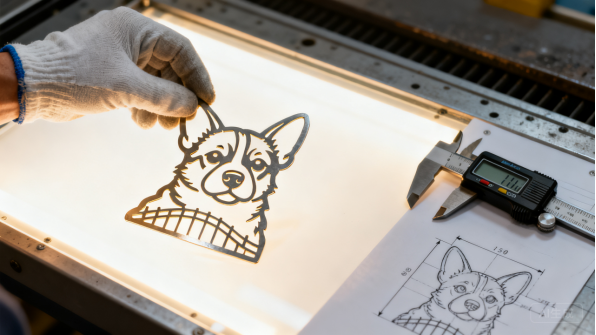
Figure 7: Backlit inspection of bridge width, edge quality, and cut detail before coating.
Lead Times, Volumes, and Documents
Photo Review, Vector Proof, and Approval
A custom laser cut metal portraits order starts with photo review and a vector proof. XHX Metal checks the images, confirms what can be cut, and returns a proof showing the actual cut lines, usually within one to two business days for a batch.
For single personal orders the proof normally comes back within 24 to 48 hours, and production starts only after the buyer approves it. For batches, the buyer sends a folder of photos, one file per portrait, with names or reference numbers that match the order list. The design team works through the batch and returns the proofs together, so the buyer can review them in one pass. Two revision rounds are included per design. Approving at this stage is what protects the schedule: a proof that is approved late pushes cutting, coating, and delivery back by the same number of days.
Cutting, Finishing, and Assembly
After approval, production runs through cutting, deburring, straightening, powder coating, hardware fitting, and packing. Setup is quick because the process uses the same equipment for every design, so the schedule depends mainly on batch size, coating colour, and finishing requirements.
Cutting is the fastest step: a fiber laser follows the approved path, and nesting places the portraits to use the sheet efficiently. Deburring and flatness checks follow, then the panels are coated in the specified colour and cured. Mounting studs or keyhole hangers are welded or fitted, and where a stand or a gift box is part of the programme, those items are assembled before packing. Finished pieces are separated, protected, and packed so that thin bridges and corners arrive intact, and a packing photograph is taken before the cartons are closed. Process planning follows general manufacturing practice for small-batch production.
Batch Volumes and Realistic Pricing
Batch volumes for custom laser cut metal portraits typically run from 50 to 300 pieces per release, with three to six releases a year and minimum orders of about 20 to 50 pieces, while personal orders start from a single piece. FOB prices usually fall between $15 and $80 depending on size, material, and finish.
A 20 to 30 cm powder-coated steel portrait sits at the lower end of that range, while a large stainless or two-tone piece with premium mounting sits at the top. Because every portrait is a unique cut file, the engineering effort per order is higher than for a repeated part, and the price reflects design work, cutting time, coating, hardware, and packing. First batches usually ship 15 to 30 days after proof approval, and reorders move faster because the design style and coating specification are already on file. Buyers who share a rolling forecast let the factory reserve sheet material, coating capacity, and design time before each release.
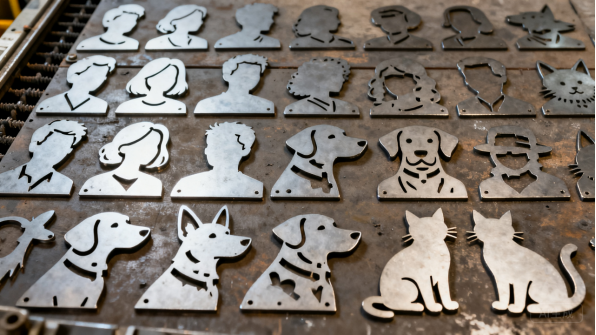
Figure 8: A high-mix batch of unique portrait cut-outs before finishing.
What Files and Documents Come With an Order?
Buyers supply photo files and, optionally, vector artwork, and they receive proofs, a cut-file record, material certificates, first-article and batch inspection records, and packing lists. The exact document set is agreed at quotation so both sides know what evidence the order carries.
Photo input is normally JPG or PNG at 2,000 pixels or more on the long edge. Vector artwork can be AI, SVG, DXF, or PDF, and the final cut file is issued as DXF so a buyer can reorder or move production later. The document package can include material certificates for steel, stainless, or aluminium lots, a first-article report covering likeness, bridge integrity, flatness, and coating, batch inspection records, and packing lists with carton counts and weights. Third-party inspection such as SGS is available on request, and photographs of the finished batch are standard before dispatch.
Past Case Studies
US Pet Portrait Brand: High-Mix Batch Programme
A US pet portrait brand needed batches of unique dog and cat silhouettes for online gift sales, in three sizes with powder-coated black, copper, and white finishes. The programme runs at 120 to 250 pieces per release with a minimum order of 50 pieces, priced from $18 to $34 FOB, for an annual value of $32,000 to $45,000.
Each release arrives as a folder of customer photos, and the design team returns a proof for every portrait before cutting. XHX Metal delivered the first batch of 180 pieces 20 days after proof approval, with bridge widths and edge quality checked on a first-article report and coating colour retained per order. Stand-off mounts were welded before coating so the hardware matched the finish, and cartons were drop-tested for parcel shipping. Consolidating three size options into two sheet layouts cut material cost by about 5 percent, and the brand now reorders monthly with the same style sheet.
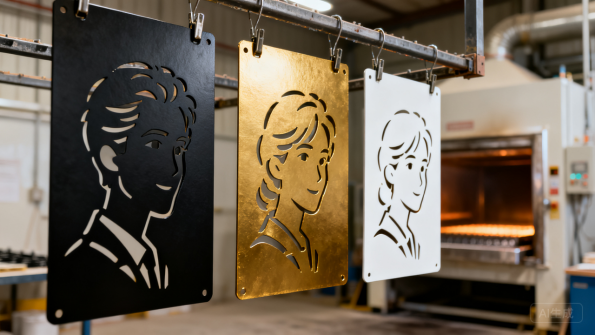
Figure 9: Freshly powder-coated portrait panels on a coating rack in black, gold, and white.
European Gift Platform: Human Portrait Line
A European gift platform sells human portraits as anniversary and wedding gifts, mixing single orders with seasonal promotional batches. Batch releases run at 60 to 150 pieces with a 30-piece minimum, priced from $22 to $38 FOB, for an annual value of $30,000 to $42,000.
Single orders are quoted individually and ship from a one or two piece run, while promotional batches are planned with a rolling forecast so material and coating capacity are reserved. The factory keeps the approved tracing style on file, which keeps different portraits visually consistent across the range. First batch of 140 pieces shipped 18 days after approval, SGS inspection was arranged before dispatch, and a two-tone finish combined a coated panel with a brushed stainless accent. A design review reduced coating changeovers by grouping orders by colour, saving about 4 percent.
What the Case Data Shows
Both programmes sit inside the same wall-art range: 50 to 300 pieces per release, minimum orders of 20 to 50 pieces, first batches in 15 to 30 days, and annual values between $30,000 and $45,000 per customer. Single personal orders run beside batch work at individual pricing.
Price depends on size, material, finish, and mounting rather than on volume alone, so a small coated steel portrait and a large brushed stainless piece are quoted differently inside the same programme. Design effort is a real cost in this category because every piece carries its own cut file, which is why buyers who approve proofs quickly and group orders by colour get better lead times. Both cases included retained colour records and first-article approval, and the same approach makes a reorder repeatable rather than a new trial.
Single personal orders are quoted from the same process but carry individual pricing, because design time, setup, and packing are spread over one or two pieces instead of a batch. For both batch buyers the practical lesson is the same: approve proofs in one pass, keep colour and mounting specifications on file, and order in releases that match the selling season rather than carrying finished stock. Cartons are labelled by size and finish, which simplifies picking when one release contains several variants.
Summary and Next Steps
What Assembly and Post-Processing Can XHX Metal Provide?
XHX Metal provides the full path from approved artwork to a finished, wall-ready product: laser cutting, deburring and edge finishing, straightening, powder coating, welded stand-off studs or keyhole hangers, assembly, and protective packing designed for parcel, retail, or pallet shipment.
Buyers can order bare cut panels, coated panels, or complete pieces with mounting hardware installed. For e-commerce programmes, the pieces are packed as retail-ready units with corner protection and a mounting template; for larger installations, hardware is supplied in the carton with a layout guide. Optional work includes tabletop stands, gift boxes, printed insert cards, and two-tone finishes that combine a coated panel with brushed or plated metal. All finishing steps are recorded against the order, so a reorder in the same size, colour, and mounting specification can be produced without re-approving the process.
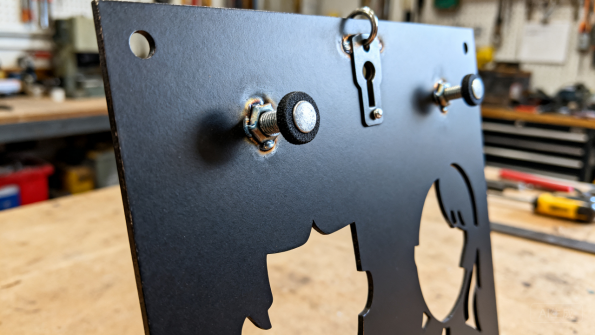
Figure 10: Welded stand-off studs and keyhole hardware fitted before packing and shipment.
Why XHX Metal
XHX Metal is a privately owned sheet metal manufacturer in Dongguan, China, with a 2,000-square-meter factory, about 30 employees, and annual capacity of about 500,000 pieces. ISO 9001:2015, CE, and SGS certification cover the quality system, and export documentation is routine.
Two 6kW fiber laser cutting machines, CNC punching, CNC press brakes, and TIG and MIG welding handle the metal side of production, while coating is controlled through documented partner processes for powder coating, anodising, and plating. The factory produces portraits, wall art, enclosures, cabinets, panels, and welded assemblies for export customers, with packaging designed for ocean freight. Buyers receive proofs, first-article reports, material certificates, and batch records, and third-party inspection can be arranged before shipment. Related capabilities are described on the sheet metal fabrication services and product pages.
How to Start Your Project
Start with the photos and the product brief: portrait type, finished size, material, finish, mounting, quantity, and target delivery date. Send the files to XHX Metal for a review of what can be cut, and expect a vector proof before any metal is cut.
For a batch, organise the photos in a folder with a reference number for each portrait and note any pieces that need text or a special shape. For a single personalised order, one clear photo is usually enough to begin. Proofs are issued within one to two business days for batches and within 24 to 48 hours for single orders, and first batches typically ship 15 to 30 days after approval. Photographs of each finished batch are issued before dispatch, so buyers can confirm the result without travelling to the factory. Contact Barry at +86 13244963694 or sales01@xinghaoxin.com, or send the files through the XHX Metal website.
Key Takeaways
Custom laser cut metal portraits succeed or fail on likeness, structure, and finish: the proof decides whether the piece looks like the subject, and bridge design, flatness, and coating decide whether it survives handling and hangs flat on a wall for years.
Buyers should supply high-resolution photos, approve a proof that shows the real cut lines, specify the material, finish, and mounting clearly, and agree the document set at quotation. Batches of 50 to 300 pieces with 20 to 50 piece minimums are realistic for a 30-person factory, and first shipments typically follow 15 to 30 days after approval, with single orders running alongside at individual pricing.