Last updated: September 27, 2026 | By XHX Metal Engineering Team
A stainless steel letterbox is a small product with an unusually harsh job. It sits on an exposed wall, takes rain from every direction, is opened by whoever lives there and sometimes pried at by whoever does not, and it is expected to still look new after ten winters. Stainless steel letterbox manufacturing is the work of making that possible at a price a builder or a hardware distributor can sell.
This guide is written for the buyers who place that order. It covers the grades that survive coastal air, the brushed and mirror finishes and the post-weld treatment most suppliers skip, the posting slot geometry that keeps both the rain and the fingers out, and how a programme runs from drawing to delivery — with real batch data from three supplier programmes.
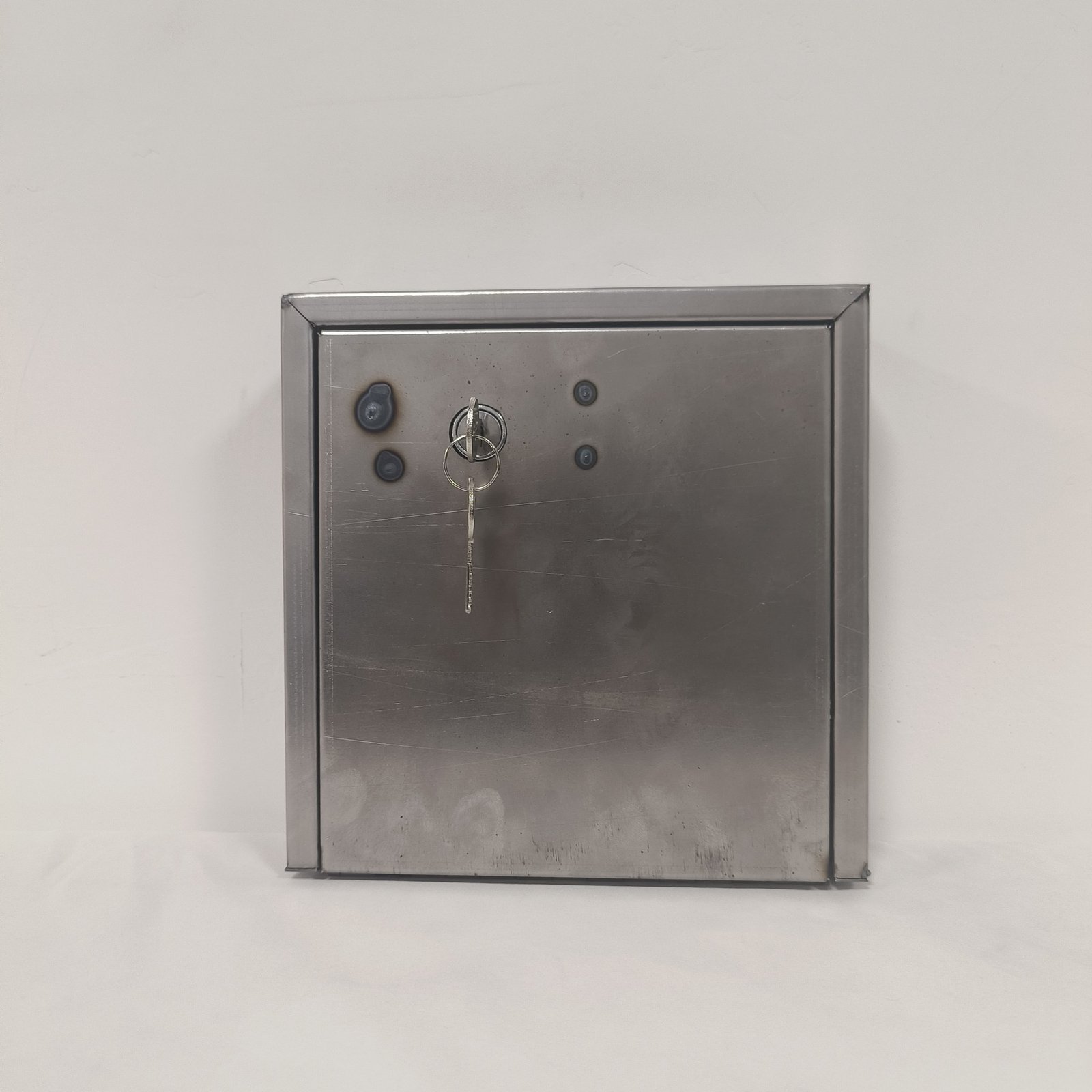
Figure 1: A brushed stainless steel letterbox with a horizontal posting slot and a central keyed lock.
The Product: What a Stainless Steel Letterbox Is
What Stainless Steel Letterbox Manufacturing Covers
Stainless steel letterbox manufacturing covers the body, the door and its hinge, the posting slot and its rain lip, the internal baffle, the lock, the fixings, and the surface finish. Post, postman and building are the customer’s world; the plate on the wall is the factory’s.
A stainless steel letterbox is usually a shallow box between 200 and 350 mm square, 60 to 120 mm deep, folded and welded from 1.0 mm to 1.5 mm sheet and finished in a brushed or mirror surface. That combination of a welded thin sheet and a visible surface is what makes the category difficult: every weld, every dressing mark and every grain direction ends up on the front of the product.
XHX Metal produces these boxes from drawing to delivered parts in one factory: laser cutting on two 6kW fiber laser cutting machines, CNC punching and bending, TIG welding, deburring and graining, and passivation before packing. The wider scope is on the product range page.
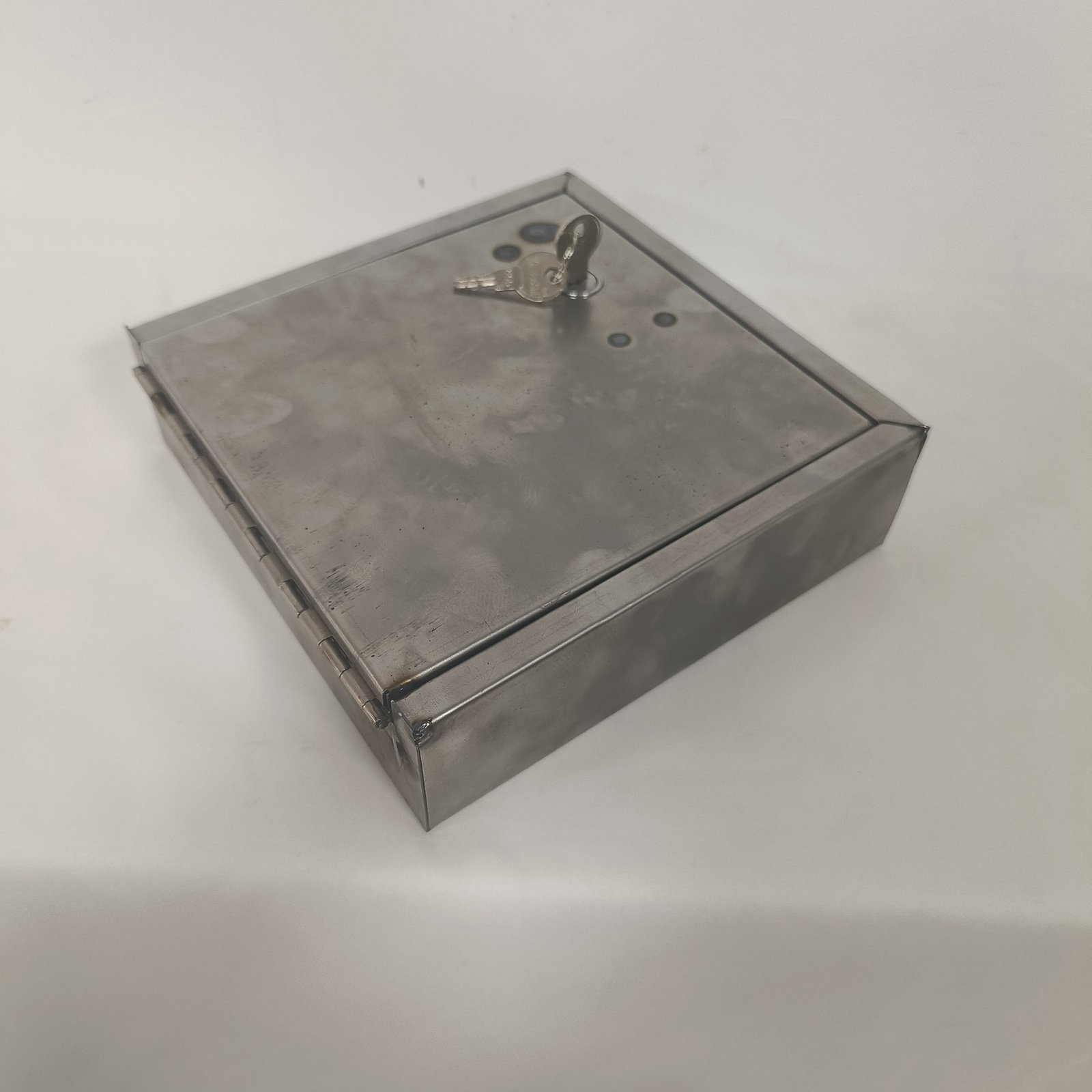
Figure 2: The folded and welded body of a stainless steel letterbox, seen from three quarters.
Types: Wall Mounted, Through-Wall, and Post Box
Wall mounted letterboxes are the volume product. They fix flat to a wall beside a door, and their size is limited by the wall space a builder is willing to give them. A through-wall version passes the chamber into the wall so that only the face plate shows, which looks cleaner but needs a cavity and a longer installation.
Post boxes take the same chamber and put it on a stand or a pillar at the property boundary, which is common in rural and coastal locations where the house sits far from the road. Each format changes the fixing and the drainage detail rather than the sheet metal itself, so a factory that has tooled one can usually quote the others from the same drawing family.
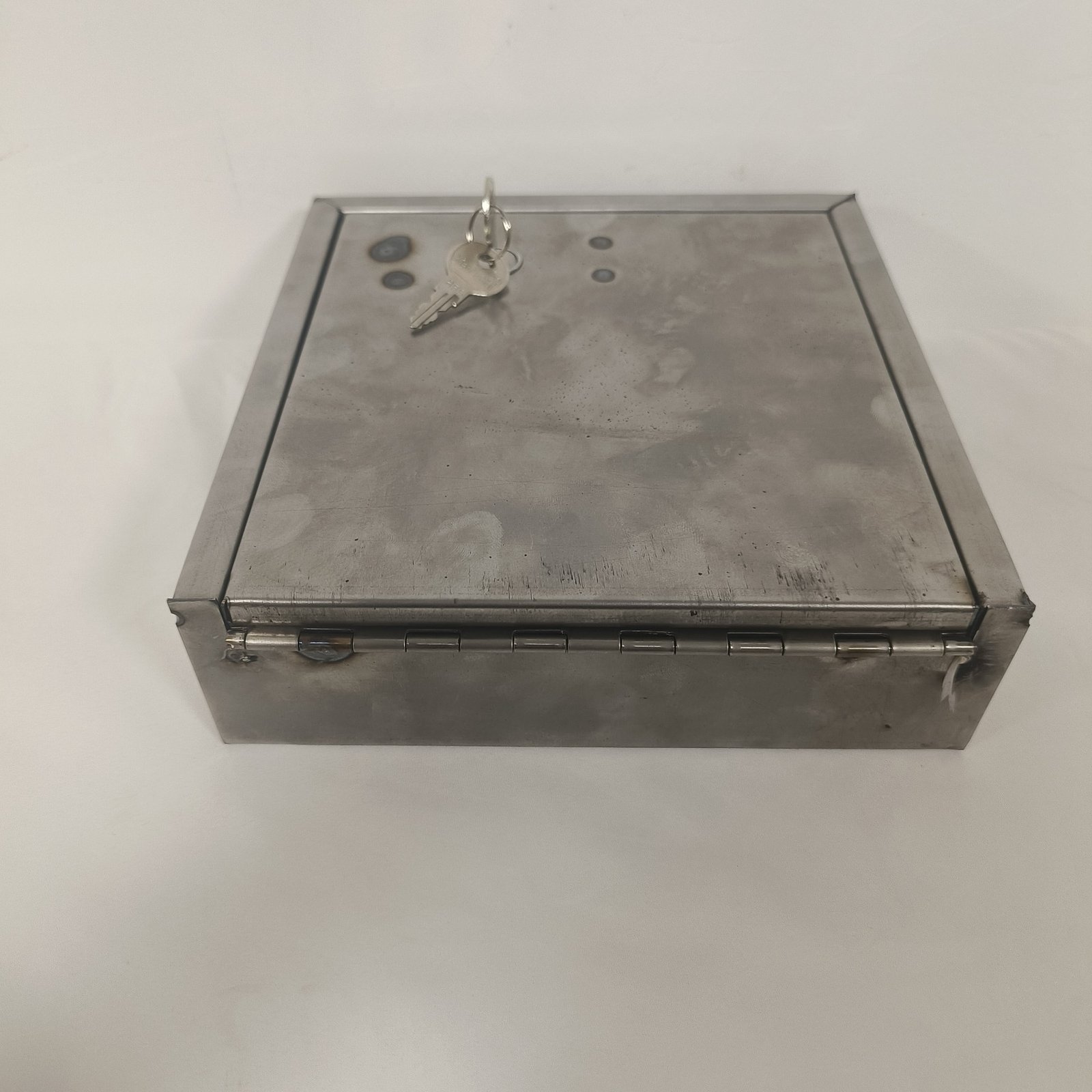
Figure 3: The door open, showing the hinge, the lock body and the fixing points inside.
The Parts Buyers Order Most
The parts on nearly every order are the body, the door, the face plate with its posting slot, the internal baffle, the lock, the hinge, and the fixing kit. Buyers add a rain hood, a name plate, a number engraving, and a décor trim as the range matures.
For a stainless steel letterbox the surface is half the specification, so the parts list has to state the finish and its direction, not just the material. A buyer who orders 304 brushed and receives 304 brushed with the grain running the wrong way has a product that will not match the next batch, even though every dimension is correct.
Use Cases: Who Orders Stainless Steel Letterboxes
Holiday Let and Property Managers
Holiday let operators and property managers buy a stainless steel letterbox because it survives being ignored. A door that is opened with wet hands, a lock that is never oiled and a wall that faces the sea are all normal in managed property, and a mild steel box with a painted finish will show the cost of that within two seasons.
For a stainless steel letterbox, buyers in this channel also value a keyed lock and a weather seal, because the box often holds documents with a visitor’s name on them. Purchasing runs in modest batches — a few hundred at a time — and repeats whenever a new site is taken on.
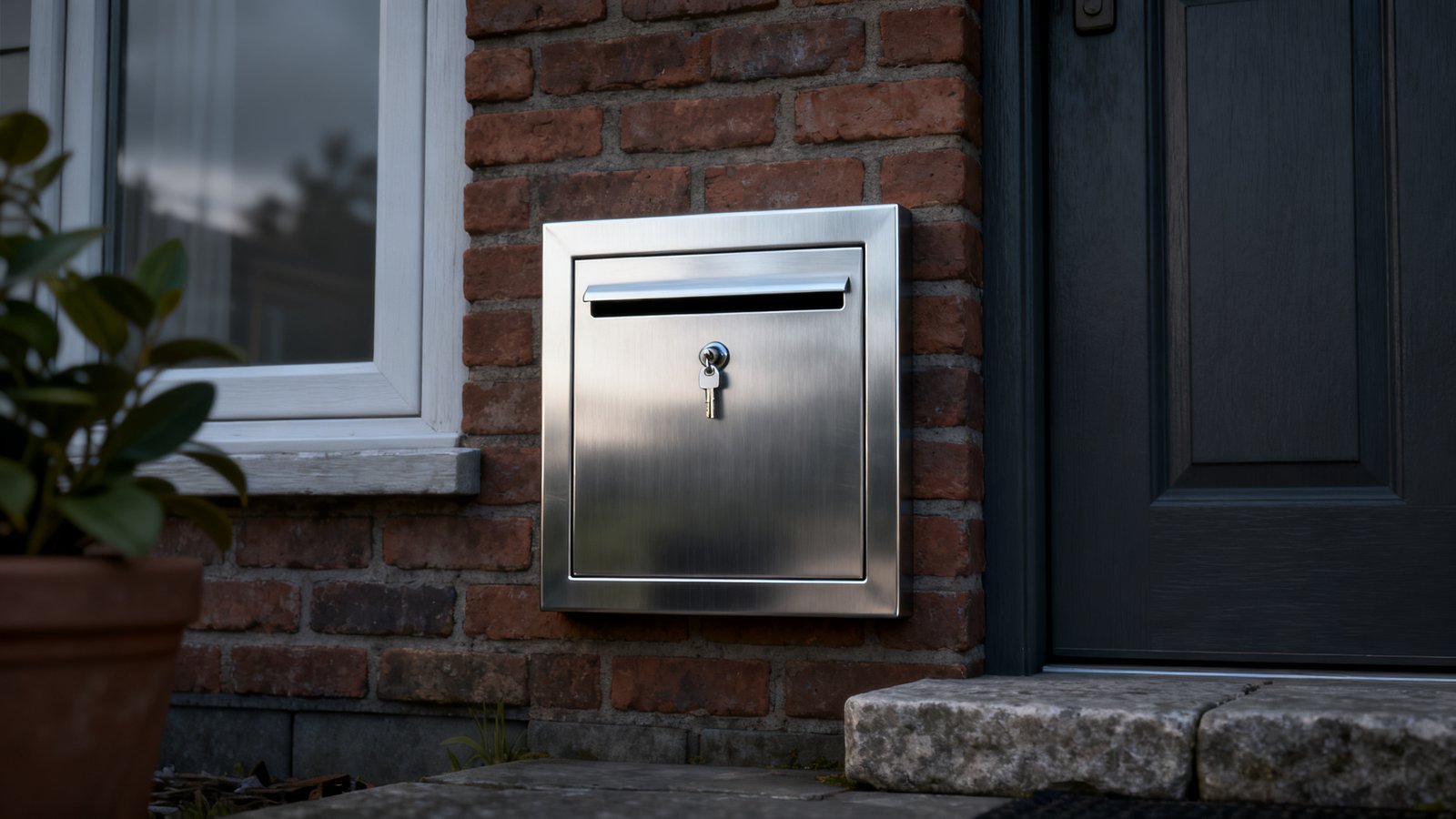
Figure 4: A stainless steel letterbox installed beside a front door, flush mounted at waist height.
Building Hardware Distributors
Distributors buy a stainless steel letterbox as one line in a catalogue that a builder orders from, so the priority is that the product matches its description every time and that the carton can go straight onto a trade counter shelf.
That makes the finish specification the commercial centre of the product. A distributor who sells 316 brushed in a coastal region cannot accept a delivery that is visually different from the last one, even if the grade is right, which is why a retained finish sample matters more in this channel than in most.
Architectural and Coastal Projects
Architects specify a stainless steel letterbox on coastal and industrial projects because it is the one part of the facade that cannot easily be repainted. The specification normally names the grade, the finish and the fixing method, and the building control expectation is that the hardware will not corrode ahead of the cladding around it.
These programmes are smaller but stricter: the batch may be only a few dozen boxes, yet each one is inspected against a sample and the fixings have to suit a substrate that is already on site. Public and residential building products are covered by standards published through CEN-CENELEC in Europe, and consumer product expectations in the United States are set out by the US Consumer Product Safety Commission.
Grades, Finishes, and Fabrication
304 or 316: Choosing the Right Grade
Grade 304 is the default for a stainless steel letterbox, and for most inland sites it is enough. It resists atmospheric corrosion well, forms and welds cleanly, and keeps the product inside its price band.
For a stainless steel letterbox, grade 316 adds molybdenum and is specified where chlorides are present: coastal walls, salt-sprayed roads, and industrial atmospheres. The cost difference is real, so the decision belongs to the site rather than to the catalogue. Grade selection and corrosion data are published by SSINA, the British Stainless Steel Association and World Stainless.
Brushed and Mirror Finishes
Brushed finishes are the practical choice for a letterbox, because they hide fingerprints and the fine scratches that a daily-used product collects. The grain is produced on a belt or a rotary pad, and the direction has to be agreed and then repeated, because two boxes with crossed grain look different even under the same light.
Mirror finishes are specified for architectural work and for interior lobbies. They are harder to produce, because every weld and every dressing mark that a brushed surface would hide becomes visible, and they need a protective film and careful packing to arrive in the condition they left in.
Welding, Dressing, and Passivation
This is the step that separates a stainless steel letterbox that lasts from one that rusts at the corners within a year. Welding heats the steel and draws chromium out of solution near the weld, leaving a heat tint that has lost much of its corrosion resistance.
The fix is mechanical and chemical: the weld is dressed and blended, the whole part is cleaned of contamination, and the surface is pickled or passivated so that the passive layer is restored. Surface treatment practice is described by the National Association for Surface Finishing. A box that is welded, brushed and shipped without passivation will show rust at the weld long before the sheet around it shows anything.
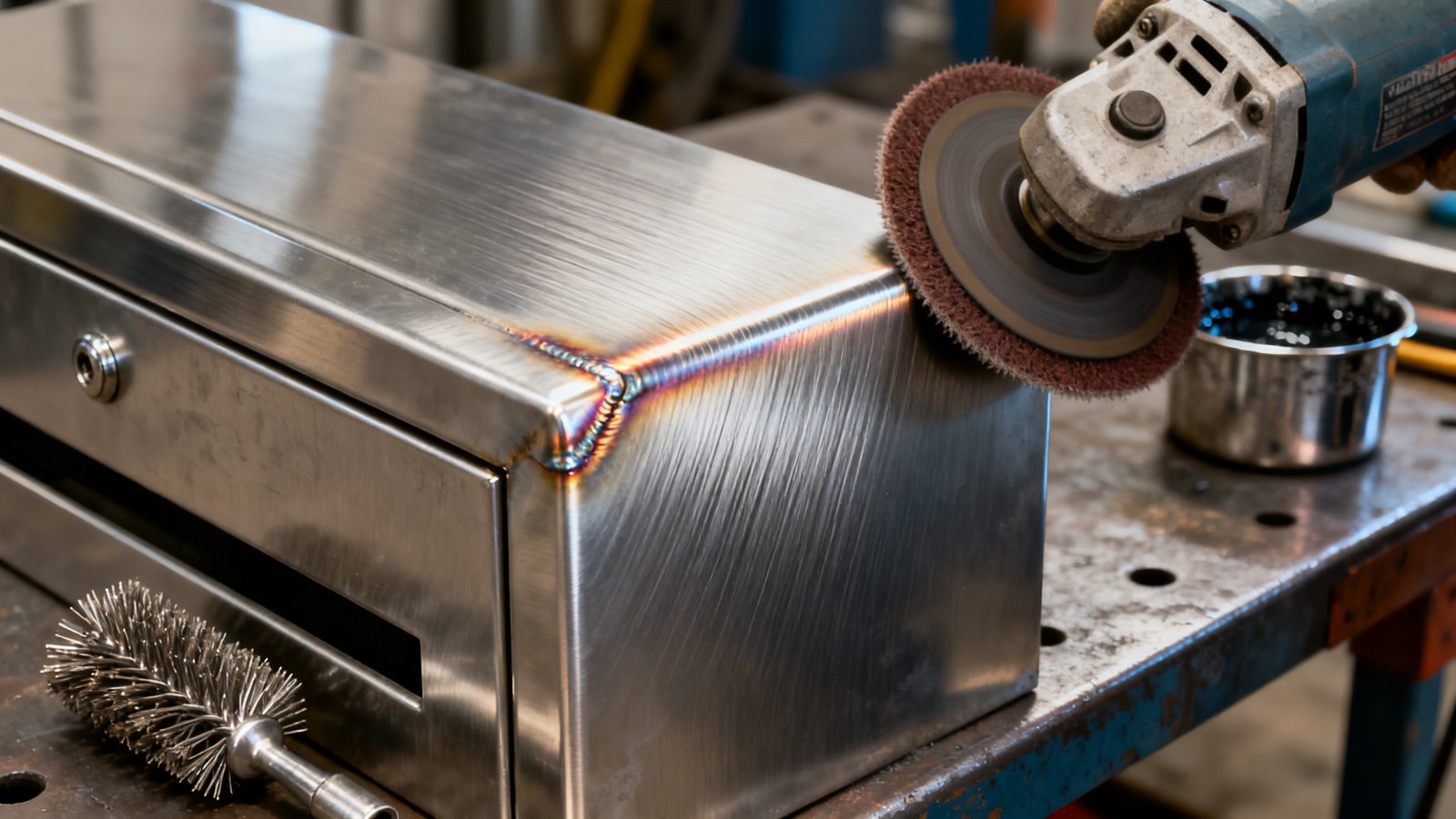
Figure 5: Dressing a welded corner of a stainless steel letterbox and restoring the passive layer.
Production Difficulty and Quality Risks
From Wall Opening to Face Plate
A stainless steel letterbox starts from two drawings that have to agree: the chamber that holds the post, and the face plate that the customer sees. If the plate is drawn without reference to the body, a small change in the fold allowance shows up as a visible step where the door meets the frame.
The sequence is therefore body first, then door fit, then face plate, then slot and lock. That is the order in which the tolerances stack, and reviewing them in that order at quotation is cheaper than correcting a plate that has already been laser cut. The production discipline behind this is described by SME.
Slot Geometry, Baffle, and Rain Protection
On a stainless steel letterbox the posting slot is where security and weather protection meet. A slot that is too wide lets fingers in; one that is too narrow rejects the padded envelope the household actually receives; and one that is set level lets rain run straight into the chamber.
The usual answer is a slot around 40 to 60 mm high under a formed rain lip, angled slightly downward, with an internal baffle below it so that anything posted drops behind a wall of metal and cannot be fished out. A door seal completes the system. Thread and fastener standards for the lock and hinge are published by ANSI.
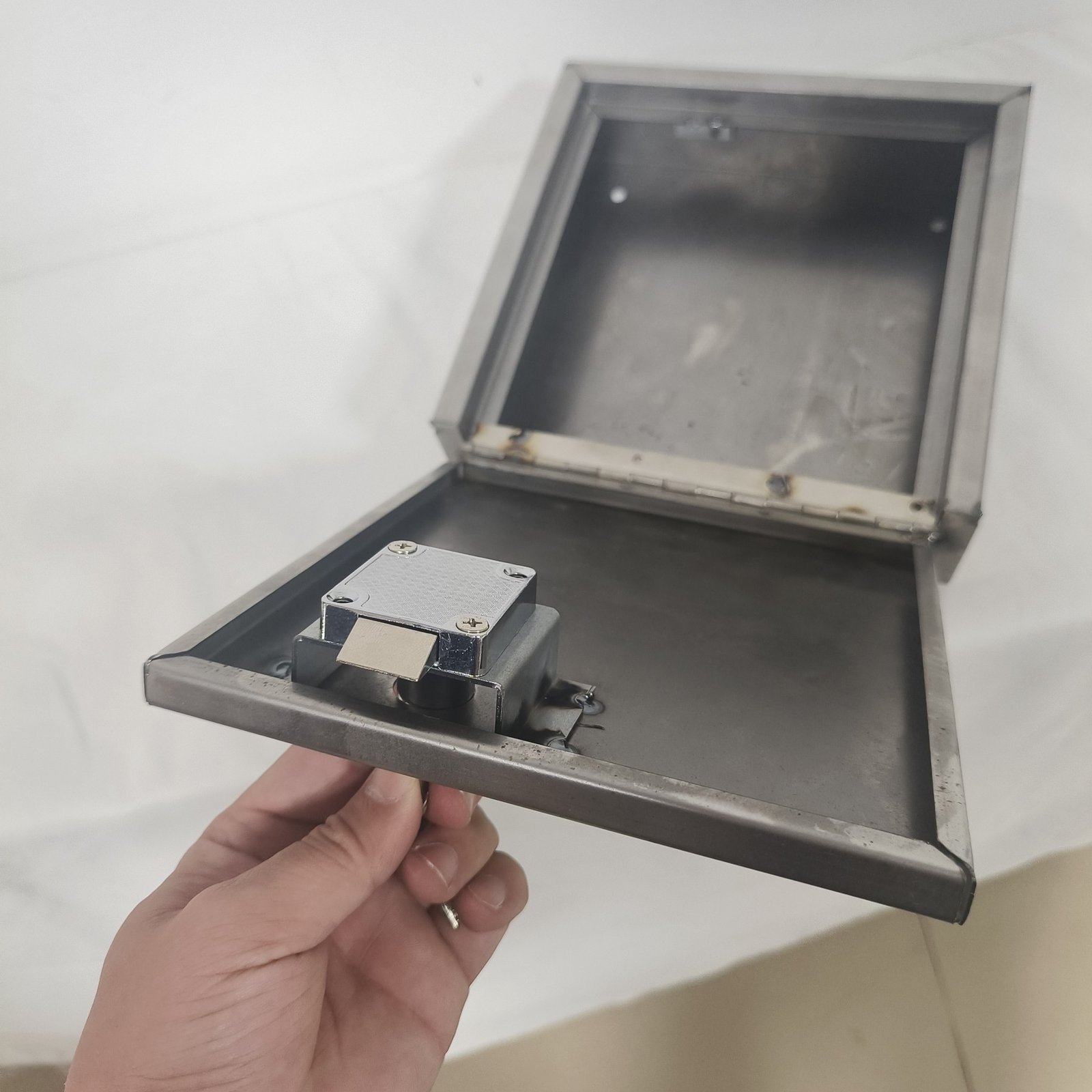
Figure 6: The chamber open, showing the internal baffle and the slot geometry that keeps posted items out of reach.
Grain Direction, Lock Fit, and Packing
A brushed stainless steel letterbox has one quality characteristic that a dimension sheet cannot capture: the direction of the grain. The face plate, the door and the frame edges should run the same way, and each batch should match the retained sample, because in daylight a crossed grain reads as a different product.
The lock cut-out is the second risk, because a lock that sits a fraction high leaves a visible gap at the key plate. Dimensional checks follow the practice published by NIST. The last risk is transit: stainless arrives with the scratches it collects, so an interleaf between stacked plates and corner protection are specifications rather than packing extras. Coating, where a powder coat is used instead of a bare finish, follows the practice published by the Powder Coating Institute.
Lead Times, Files, and Order Flow
What You Send Us
To quote a stainless steel letterbox we need the wall space available, the size of post the box must accept, the grade, the finish and its grain direction, the lock type, and the fixing method. A photograph of the wall and a note of the exposure is often more useful than a general drawing.
Where the design is fixed, a STEP model or a dimensioned 2D drawing works well, with the slot, the door gap, the lock centre and the fixing pattern called out separately. Where the buyer is replacing an existing box, we measure the old unit and issue a drawing for approval so that the new one fits the same opening.
Batch Volumes, MOQ, and Realistic Pricing
A stainless steel letterbox is a small fabricated item. Realistic production runs from 200 to 800 pieces per batch over three to six releases a year, with a minimum order around 100 pieces and FOB prices typically between $12 and $34 each depending on the grade, the size and how much of the fixing and finishing work is included.
Within that band, on a stainless steel letterbox, the grade and the finish do most of the work. A 304 brushed box with a cam lock sits at the bottom; a 316 mirror-finished box with a rain hood, a name plate and a stainless fixing kit sits at the top. First batches usually ship 20 to 25 days after drawing and sample approval, and repeat releases move faster once the graining jig and the finish sample exist.
Assembly, Passivation, and Documents
XHX Metal cuts, forms, welds, dresses and grains the box, fits the door, baffle, lock and hinge, passivates the stainless, and packs with interleaves and corner protection. Coating, where specified, is carried out by audited partners with film thickness recorded against the batch.
An order is supported by the approved drawing with its revision number, material certificates naming the grade and the heat, a first article inspection report, graining and passivation records, batch inspection records, and a packing list. Buyers who need third-party verification of the kind offered by UL should agree the scope at quotation. For a stainless product the material certificate is the document that matters most, because it is what proves the grade that the finish alone cannot show.
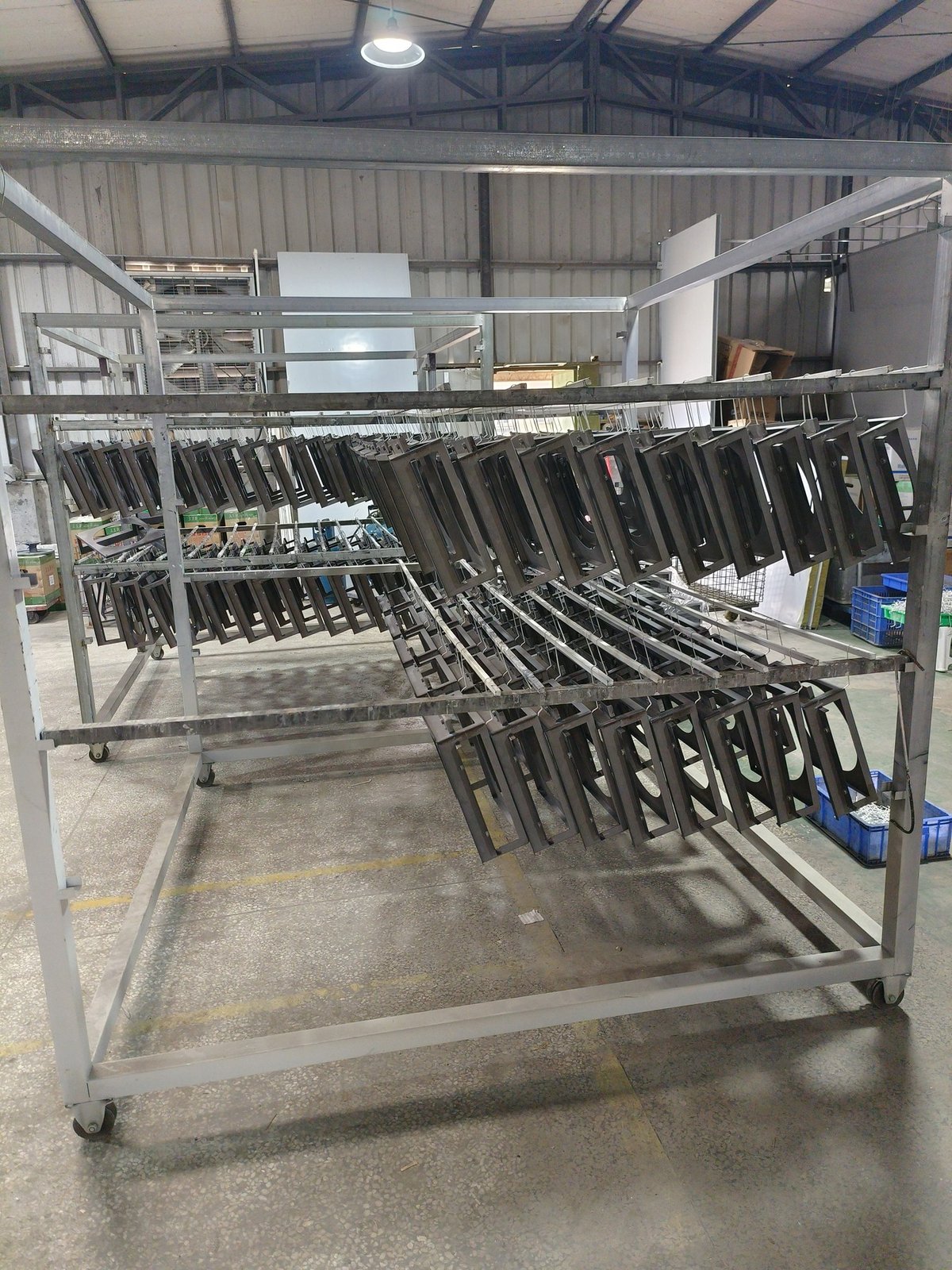
Figure 7: A production batch of stainless steel letterboxes on a rack, ready for finishing and packing.
Case Studies: Stainless Steel Letterbox Programmes
Case 1: Holiday Let Operator — Coastal Standard Box
A holiday let operator needed a stainless steel letterbox for holiday homes along an exposed coastline, with a keyed lock, a weather seal and a face plate that would not date the property.
The stainless steel letterbox was produced in 1.2 mm grade 316 with a brushed finish, a formed rain lip, an internal baffle and a stainless fixing kit, and each unit was passivated after graining. Production ran at 300 pieces per batch, four releases a year, with an MOQ of 100 and FOB prices from $18 to $28. The first batch shipped 20 days after approval, and annual value was approximately $23,000.
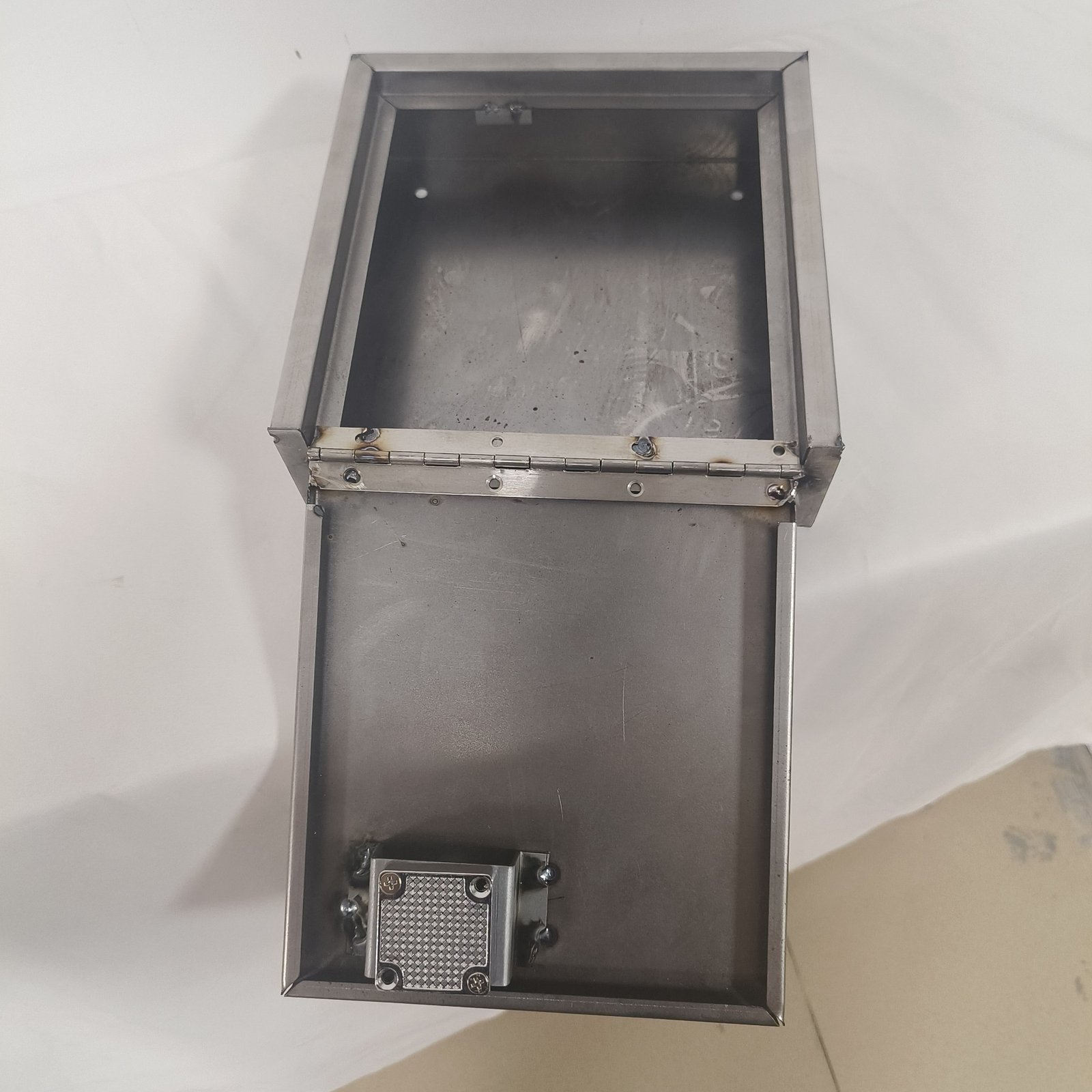
Figure 8: A production letterbox being opened and checked before packing.
Case 2: Building Hardware Distributor — Trade Counter Range
A building hardware distributor needed a stainless steel letterbox as a stocked line for builders, in one size and one finish, packed so that it could be sold from a trade counter without repacking.
The range used 1.0 mm grade 304 with a consistent brushed grain across the plate, door and frame, a cam lock, and an individual carton with a printing area. The grain direction was recorded on the drawing so that repeat cartons matched the counter display. Production ran at 500 pieces per batch, three releases a year, with an MOQ of 100 and FOB prices from $12 to $20. The first batch shipped 22 days after approval, and annual value was approximately $24,000.
Case 3: Architectural Project — Through-Wall Version
An architectural project needed a through-wall stainless steel letterbox so that only the face plate would show on a rendered facade, with the chamber recessed into the wall behind.
The stainless steel letterbox face plate was produced in 1.5 mm grade 316 with a mirror finish and a concealed fixing, and the chamber was supplied as a separate welded part with a flange that could be set into the wall. Because the quantity was small and the finish demanding, each unit was inspected against a sealed sample, and a sealed sample travelled with the order number so that later phases matched. Production ran at 200 pieces per batch, three releases a year, with an MOQ of 50 and FOB prices from $20 to $34. The first batch shipped 24 days after approval, and annual value was approximately $16,000.
Summary and Next Steps
How to Choose a Stainless Steel Letterbox Supplier
The supplier that fits this product welds and dresses the stainless properly, passivates it before packing, and controls the grain direction across the plate, the door and the frame. Ask for a first article report that records the slot and door gap, and a retained finish sample from the graining batch.
Check that the quotation names the grade, the sheet thickness, the finish and its direction, the lock type, the fixing kit and the packing standard. Match the supplier to the batch size as well: a stainless steel letterbox is bought in the hundreds rather than by the container.
Why XHX Metal
XHX Metal provides stainless steel letterbox manufacturing from drawing to delivered parts: laser cutting to plus or minus 0.01 mm, CNC punching and bending, TIG welding, dressing and graining, passivation, hardware fitting, and export packing.
The company has manufactured stainless and sheet metal products for export customers from Dongguan since 2014, and holds ISO 9001:2015 certification with CE documentation and SGS records. Material and finish guidance is published by SSINA and the British Stainless Steel Association, and coating chemistry for the European market falls under EU REACH. Samples in 5 to 10 working days and first batches in 20 to 25 days are normal work.
How to Start Your Programme
Send the wall space, the post size, the grade and finish, the lock type, the fixing method and the annual volume. We will propose the chamber and plate sizes, issue a drawing, and build a sample for approval.
Programmes are handled through the contact page; the same kitting discipline applies to other home metal products such as custom sheet metal parcel boxes.
FAQ: Stainless Steel Letterbox Manufacturing
Which grade should I choose? Grade 304 suits inland sites, and grade 316 is specified for coastal, salt-sprayed and industrial locations where chlorides are present.
Will the box rust at the welds? Only if the welds are left untreated. We dress and passivate the welded areas and the whole part so the passive layer is restored before packing.
Can you match the finish of a sample we already sell? Yes. Send the sample and we will match the grain direction and the surface and hold a retained sample for reorders.
What is the minimum order? MOQ is typically 100 pieces for a standard box and 50 pieces for a mirror-finished or through-wall version.
How long does a sample take? A sample follows in 5 to 10 working days after drawing approval, and the first batch ships 20 to 25 days after sample approval.