Last updated: October 30, 2026 | By XHX Metal Engineering Team
A house number plaque is the engraved plate that identifies a building, and a planter box is the metal container that holds planting at an entrance, a street or a terrace. Both are small outdoor sheet metal products that have to look right and survive weather for years. At XHX Metal, house number plaque and planter fabrication covers laser cutting, engraving, bending, welding, polishing, lacquering and powder coating in a 2,000 sqm factory in Dongguan, China.
This article is written for the buyers who order both: what each product is made of, where they are used, how material and finish are chosen, what actually goes wrong outdoors, how long a programme takes, what documents arrive with it, and three order examples with volumes and price bands.
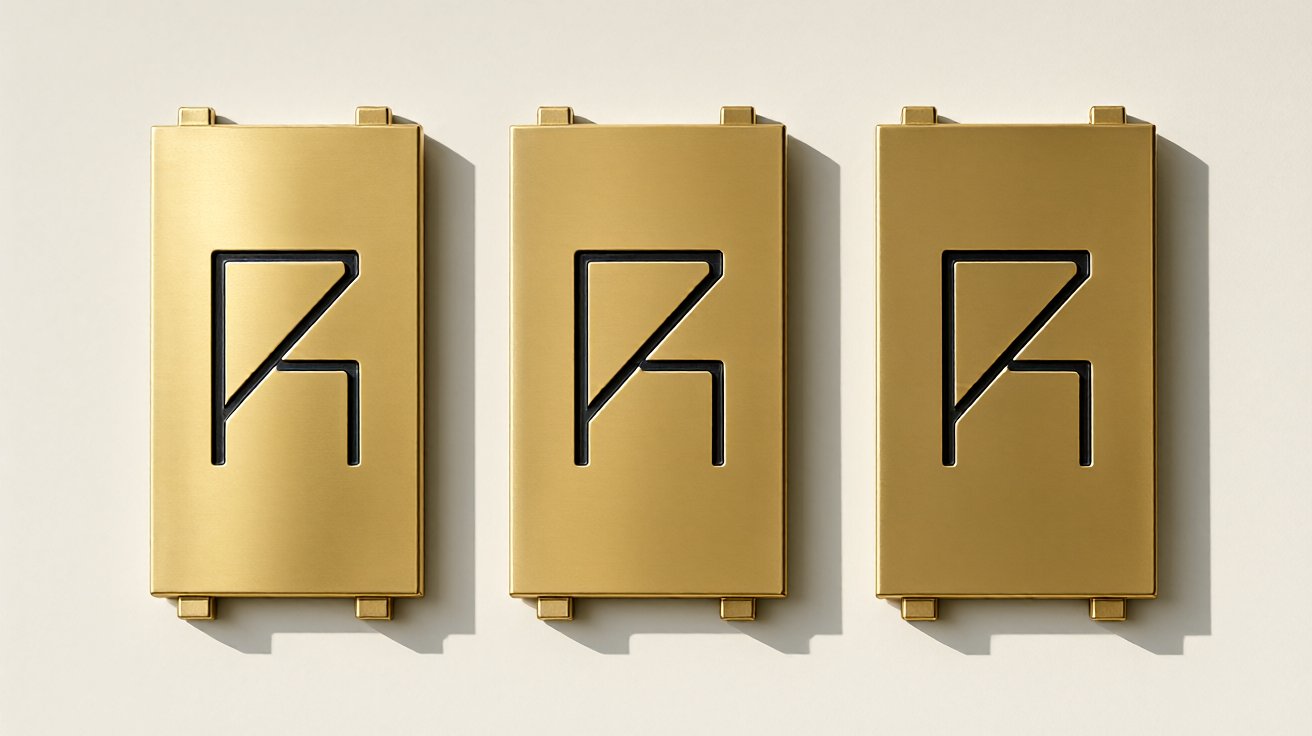
Figure 1: Solid brass house numbers mounted on a wall, each numeral an engraved plate.
House Number Plaque and Planter: What We Build
Two Products, One Supply Route
The house number plaque and the planter box travel together because they are bought together. A residential developer, a hotel refurbishment or an apartment block needs entrance identity and entrance planting, and the same buyer orders the numerals, the address plaque and the planters. Supplying both from one factory removes a coordination problem, because the finish and the material can be matched deliberately rather than by accident.
A house number plaque order contains the numerals themselves, a backing plate or a floating mount, fixings, and sometimes a matching letter plate or a mailbox plate. A planter order contains the four side panels, a base with drainage, a folded or rolled top rim, an inner liner where specified, and feet or a base frame.
Brass Numbers and the Alternative
A house number plaque is made in three ways and the choice of method decides the price. Solid brass, cast or machined, is the premium option: it can be polished and lacquered to a warm gold, it can be engraved deeply, and it ages well if the lacquer is maintained. Stainless steel is the durable option, either laser cut from plate or etched, and it does not need a coating to resist weather. Aluminium is the budget option, usually powder coated, and it is the lightest of the three.
The practical difference between the three house number plaque options appears after a few years. Brass that has lost its lacquer goes dull and needs polishing; stainless that was never passivated grows rust spots at the cut edges; coated aluminium chips at the corners and shows a bright edge. A buyer who has replaced a set once tends to specify the same grade again rather than trade down.
Where Our Scope Ends
Illuminated numerals, LED modules and their drivers are bought-in electrical parts. We make the housing, the diffuser frame and the mounting, and the client specifies the light engine. Where a house number plaque is lit, the diffuser frame and the cable entry become the parts that have to be designed rather than the numeral, and the ingress protection of an outdoor fitting is graded per IEC 60529.
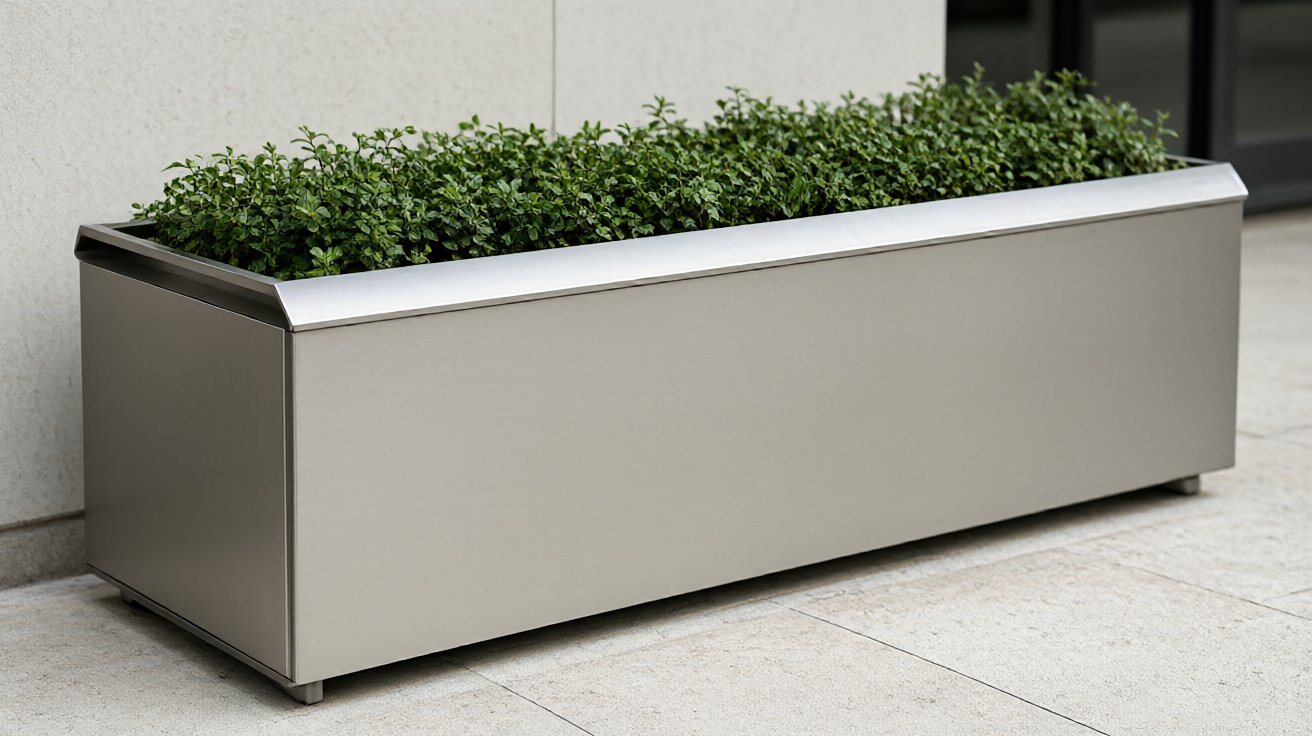
Figure 2: A rectangular stainless steel planter box with a folded rim and a powder coated finish.
Where House Numbers and Planters Are Used
Residential Developments and Apartments
The largest group for the house number plaque and planter range is residential: apartment blocks, housing estates, villa developments and serviced apartments. These need a number plate per unit and planters at the entrance, and the order is placed once per phase, so a development that builds out over three years comes back three times with the same specification. That makes the first order the important one, because it sets the tone everything later has to match.
Residential buyers of a house number plaque care about consistency across phases more than about the lowest price, because a second phase with a slightly different brass tone is visible from the street. They also care about installation height and letter size, because a house number plaque legible from the kerb is a different product from one legible at the door, and the fixing height has to be agreed before the wall is finished.
Hotels, Offices and Retail Frontage
The second group is hospitality and commercial: hotel room numbers, office suite plates, retail frontage and signage. Room numbers are small, high volume and often need to match an interior scheme, which pushes them towards brass or brushed stainless with a specified letter style. A hotel also replaces individual plates during rebranding, so a supplier has to be able to re-run a small quantity of a form from two years earlier.
Streetscape, Parks and Public Realm
The third group for the house number plaque and planter range is public realm: street planters, park installations, transport interchanges and campus landscaping. These planters are large, they are specified by a landscape architect, and they take abuse from weather, vehicles and vandalism. Lifting lugs, a craneable base frame and a weight the paving can carry are all part of the design, and none of them appear on a residential planter. Stainless or galvanised steel with a heavy coating is normal, and drainage, weight and lifting points all matter.
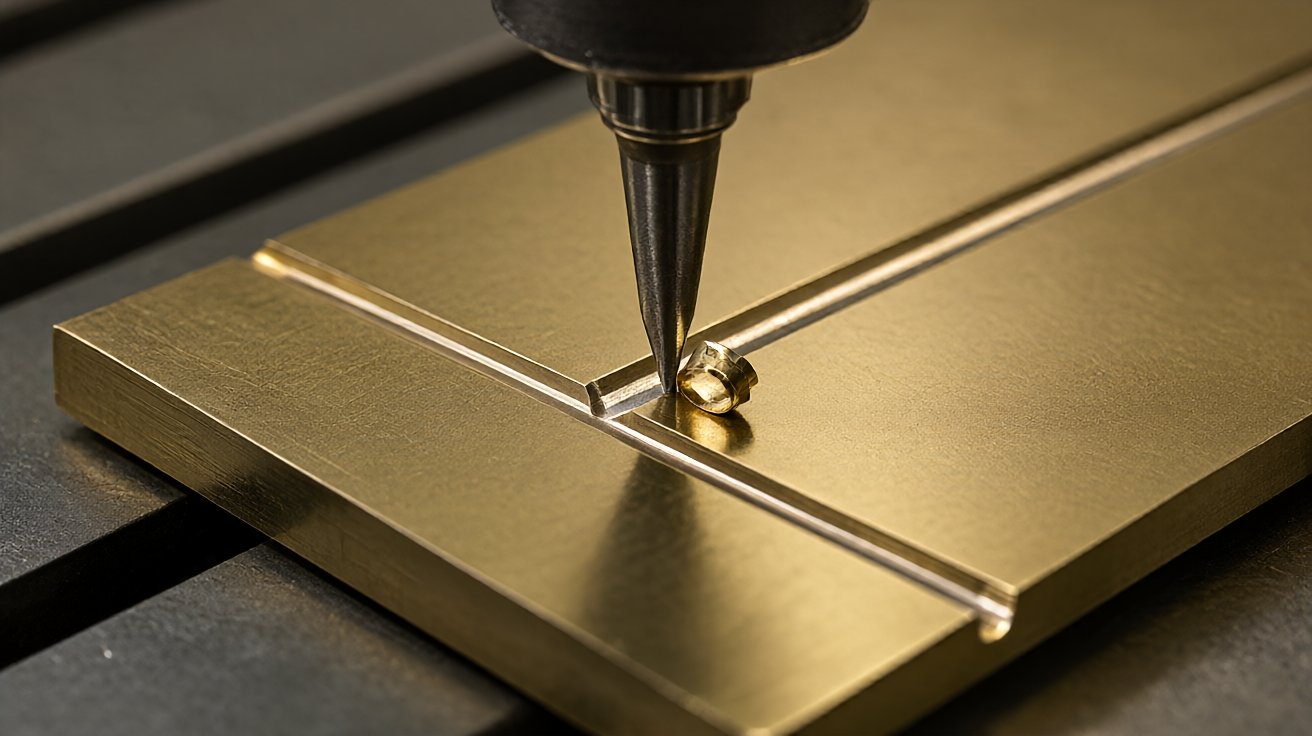
Figure 3: A brass plate being engraved, the cutter cutting a crisp V groove into the surface.
Choosing Material, Thickness and Finish
Brass Grade and Engraving Depth
What are the main quality risks in this kind of work? On the plaque, the first is engraving that is too shallow. A laser mark on brass is a surface discolouration a few microns deep; an engraved number is a cut 0.3 mm to 0.8 mm deep with a crisp wall. The laser mark fades and cannot be refinished, while an engraved number can be re-blackened and polished indefinitely, which is why a plaque that is meant to last decades is engraved rather than marked.
Brass grade on a house number plaque matters less than people expect, because most plaques are a leaded free-cutting brass chosen for machinability rather than for corrosion resistance; copper alloy designations are listed in EN 12164. What matters is that the plate is solid and the same alloy throughout, so that polishing does not cut through a plating to a different colour underneath.
Planter Steel, Thickness and the Base
House number planter boxes are made from 1.2 mm to 2.0 mm sheet in galvanised steel, stainless or aluminium, within the thickness tolerances of EN 10131. On a house number planter, thickness is driven by the span of the side panel rather than by the soil load: a long unsupported panel bows visibly once it is filled, so a 1,200 mm long planter needs either 2.0 mm sheet or a folded stiffening return along the top and bottom edges.
The base of a house number planter is the part that fails. Soil holds water, and a flat base with a few holes rusts from the inside out. The base should be pressed or folded so it drains to the holes, and the holes should be clear of the ground so water leaves rather than sitting under the box.
Finish for Outdoors
A brass plaque is polished and then lacquered, and the lacquer is the wear item: it is specified by the environment, with an exterior-grade clear coat needed anywhere the plaque sees rain and sun. A planter is either powder coated over a phosphate or galvanised base, or left as bare stainless; hot dip galvanising before coating follows ISO 1461. Powder coating on a planter has to cover the inside as well, because the soil face is the one that stays wet.
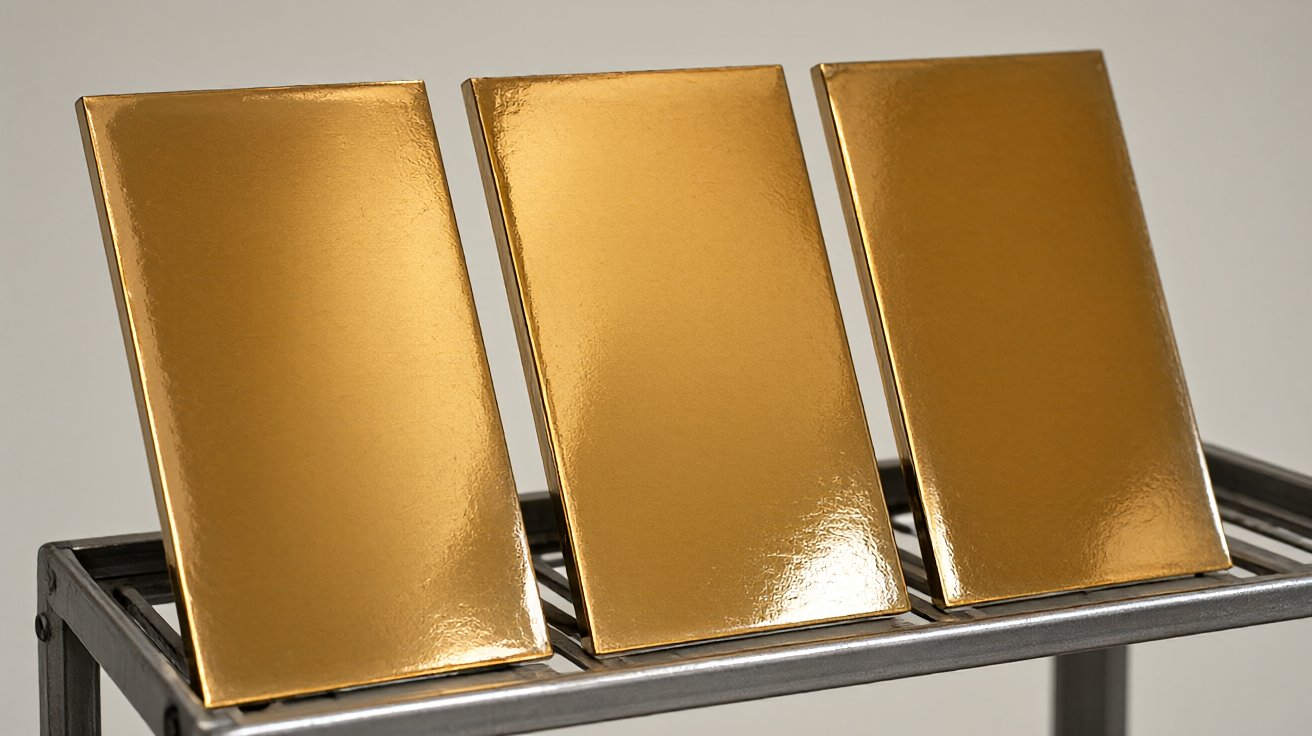
Figure 4: Brass plates after lacquering, the clear coat sealing the polished face.
Cutting, Engraving, Welding and Coating
Cutting and Engraving Brass
House number plaque numerals are either laser cut or machined from plate, and the difference shows at the edge. Laser cutting leaves a slightly oxidised edge that has to be dressed and polished; machining leaves a clean edge but costs more per piece, with general tolerances for the cut parts per ISO 2768. For a thin numeral with tight internal curves, laser cutting plus a vibratory polish is the economic route.
Engraving a house number plaque is a separate operation and the cutter geometry decides the look. A V cutter gives a classic engraved numeral that reads well in raking light; a flat cutter gives a wider, shallower groove that holds blacking better. The engraved groove is then filled with a contrasting enamel or blacking and the face is polished back, so the number reads dark against bright brass.
Welding a Planter Without Distorting It
A planter box is a five-sided box, and it welds at four vertical corners and around the base. Thin sheet welded freehand pulls and the sides go out of flat, which a powder coat will not hide because a coated panel shows every wave. The corners are welded on a fixture, in a balanced sequence, and dressed flush before coating, to the weld quality levels in ISO 5817.
Where the design allows, a folded corner or a riveted construction avoids the weld entirely and keeps the panel flat, at the cost of a visible joint line. Both are legitimate; the wrong choice is a welded corner that was not controlled.
Coating and Its Coverage
Powder coating a house number planter is a coverage problem more than a colour problem. The outside is easy; the inside, the base, the drainage holes and the top rim are where thin spots appear, and those are exactly the surfaces that stay wet. A specification should state the coating system, the dry film thickness and the pretreatment rather than just a colour, with the coating durability classes in ISO 12944 as the reference.
For a brass house number plaque the equivalent statement is the lacquer type and its thickness, because a cheap lacquer fails within a season and takes the polished finish with it.
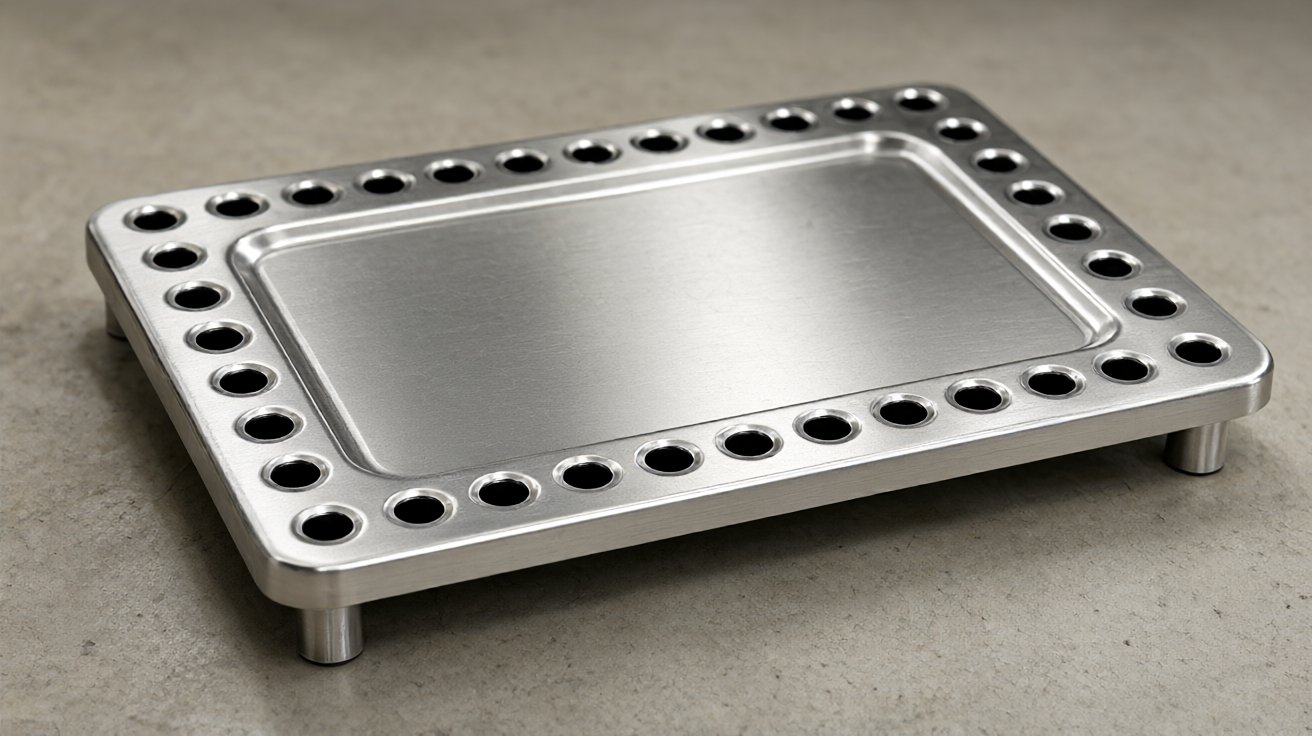
Figure 5: The underside of a planter showing drainage holes and a raised base pressing.
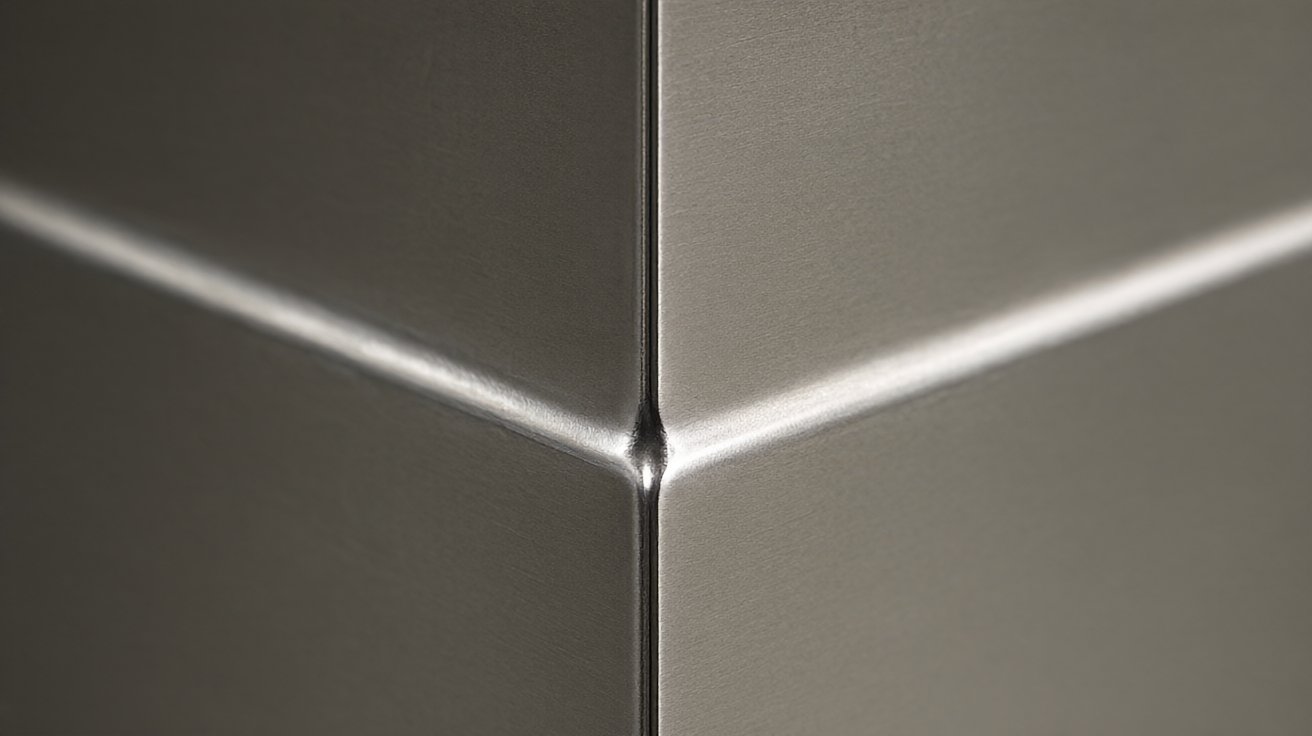
Figure 6: A planter corner welded and dressed before coating, the seam blended flat.
Weathering, Drainage and Fixings
What Kills a Planter
Planter boxes fail in a predictable order. Water sits in the base, the coating on the inside fails first because it is the least accessible surface, the steel rusts from the inside, and the first thing the client sees is a rust stain running down the outside face. The failure is almost never the outside coating.
The countermeasures are structural: a drained base, a raised foot so air moves underneath, a liner or a geotextile where soil is placed directly, and a coating that was actually applied to the inside. A planter that sits flat on paving with no air gap will hold water under its base whatever the drainage holes do.
What Kills a Plaque
A brass house number plaque fails at the lacquer and at the fixing, and both failures show up within two or three years rather than decades. Lacquer breaks down under UV and starts to chalk, then water gets under it and the brass goes patchy. The fixing is the other problem: a plaque screwed directly to a damp wall traps water behind the plate, and the staining shows on the wall rather than on the brass.
Stand-offs solve it. Mounting the plate 10 mm to 15 mm off the wall lets air move behind it, and the shadow line makes the numerals read better as well. The stand-off has to be part of the plaque design rather than added on site, because it changes the fixing length and the installation height.
Fixings and Theft
Entrance hardware gets stolen, and a house number plaque is as easy to take as a planter is to drive away with. Stainless fasteners are worth specifying outdoors, because a plated screw at a coastal site fails before the plaque does, and the corrosion classes for stainless fasteners are set out in ISO 3506. A plaque fixed with visible screws is easy to remove, so a residential or hotel specification usually calls for security Torx, a concealed back plate or an adhesive plus mechanical combination. The fixings have to be named in the specification, because they change both the price and the installation time.
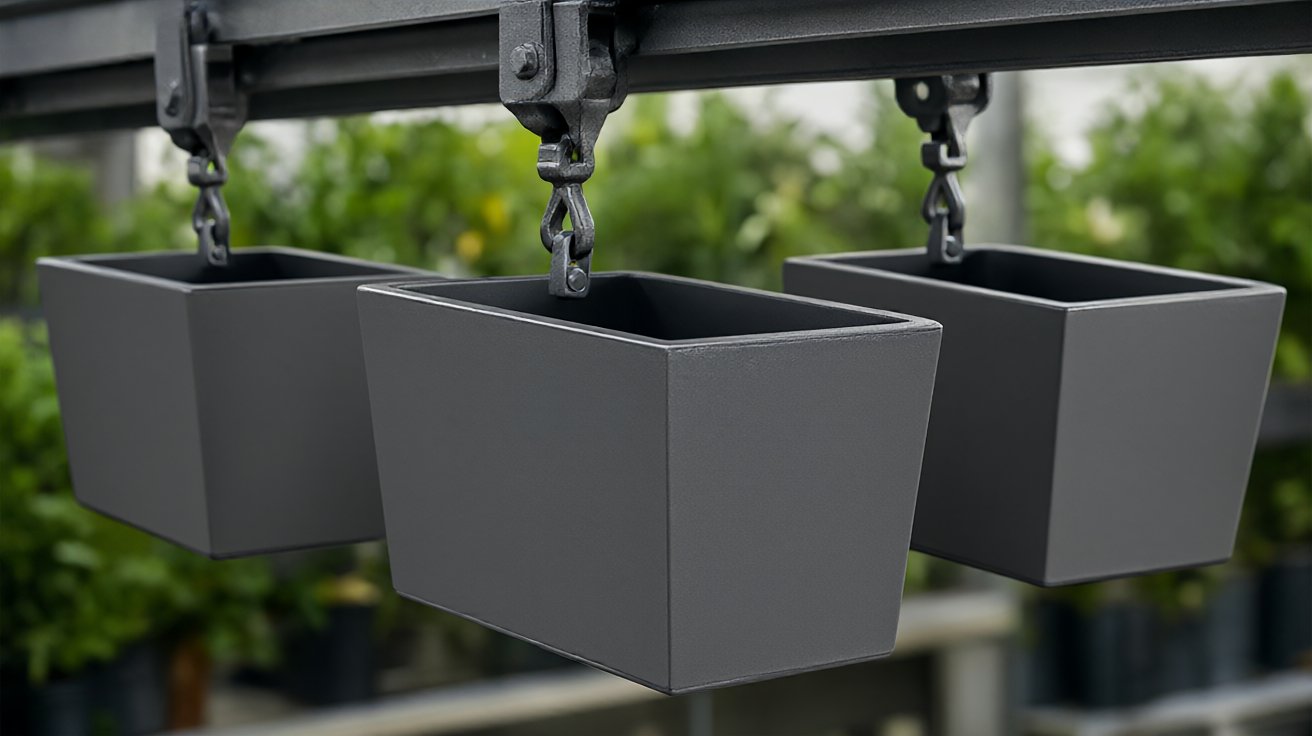
Figure 7: Planter boxes after powder coating, hanging on a line in even matte colour.
Lead Time, Cost and the Order Process
From Artwork to Delivery
The house number plaque process starts with artwork rather than a drawing. For a plaque we need the numeral or letter form, the plate size, the material, the engraving depth and the fill colour, the fixing method and the installation height. For a planter we need the size, the material, the coating colour and system, whether a liner is required, and how it will be lifted on site.
We return a proof for the lettering before cutting, because a font that is correct on screen can read badly at 80 mm tall on a wall, and re-making an engraved plate is far more expensive than changing a proof. The proof also fixes the plate outline and the fixing position, so the installation drawing and the manufactured part agree.
Documents You Should Receive
A plaque order should arrive with the approved artwork proof, the material certificate, and on request a lacquer specification. A planter order should arrive with the coating specification and dry film thickness record, the material certificate, and a lifting and installation note for anything large enough to need plant. Where a project is inspected, the dry film thickness record is the document that is actually checked, because coverage on the inside face cannot be seen once the box is planted; inspection document types are defined in EN 10204.
Batch Sizes and Price Bands
House number plaque and planter orders are small-ticket items with low minimums. A brass house number plaque runs from USD 15 to USD 48 per set depending on size, engraving and lacquer, with a minimum order around 50 pieces. The engraving and the lacquer are what separate a USD 15 plate from a USD 48 one, not the brass itself. A stainless planter box runs from USD 120 to USD 250 per unit for a 600 mm to 1,200 mm box, with a minimum order of 2 to 10 pieces because the welding and coating setup is per batch rather than per unit.
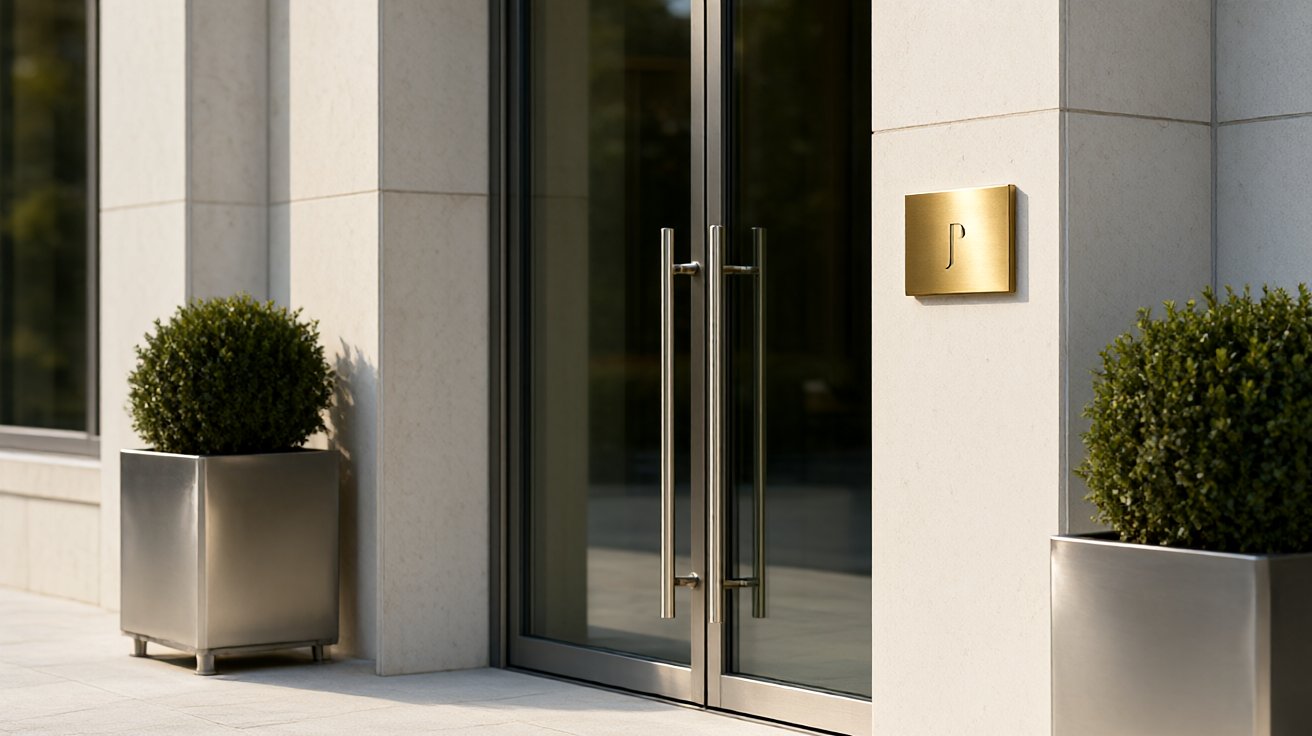
Figure 8: Planter boxes and a house number plaque installed at a building entrance.
Three House Number and Planter Programmes
A Residential Developer in the UK
A UK developer building out an estate in four phases needed a house number plaque run of 220 brass plates, one per unit, in a specified serif numeral with black infill, plus 60 brushed stainless planters for the shared entrances.
We produced the house number plaque in solid brass, engraved 0.5 mm deep with black infill and an exterior lacquer, and the planters with a drained pressed base and an inside-and-out powder coat. Releases ran at 55 plaques and 15 planters per phase, with an MOQ of 50 and FOB prices from USD 18 to USD 34 per plaque and USD 130 to USD 190 per planter. The first batch shipped 22 days after proof approval and annual value was approximately USD 14,000.
A Hotel Group in Southeast Asia
A hotel group refurbishing three properties needed a house number plaque run of 180 room number plates in brushed stainless with a concealed fixing, and 24 large planters for the lobby terrace.
The house number plaque was produced in 2 mm stainless, laser cut and etched rather than engraved to hit the budget, with a concealed back plate and stand-offs, and the planters in stainless with a heavy exterior coating. Releases ran at 60 plaques per property, with an MOQ of 40 and FOB prices from USD 12 to USD 26 per plaque and USD 180 to USD 250 per planter. First delivery was 25 days after approval and annual value was approximately USD 11,000.
A Landscape Contractor in Australia
A landscape contractor for a campus project needed a house number plaque scheme and 40 large galvanised planters, 1,200 mm long, with drainage, lifting lugs and a specified powder coat colour to match the paving.
We produced the house number plaque and planter package with 2.0 mm galvanised sheet, a folded stiffening return on the long panels, a pressed drained base, welded lifting lugs and a full inside-and-out coating. Releases ran at 40 units in one shipment, with an MOQ of 10 and FOB prices from USD 165 to USD 240 per planter. The batch shipped 30 days after approval and the order value was approximately USD 8,000.
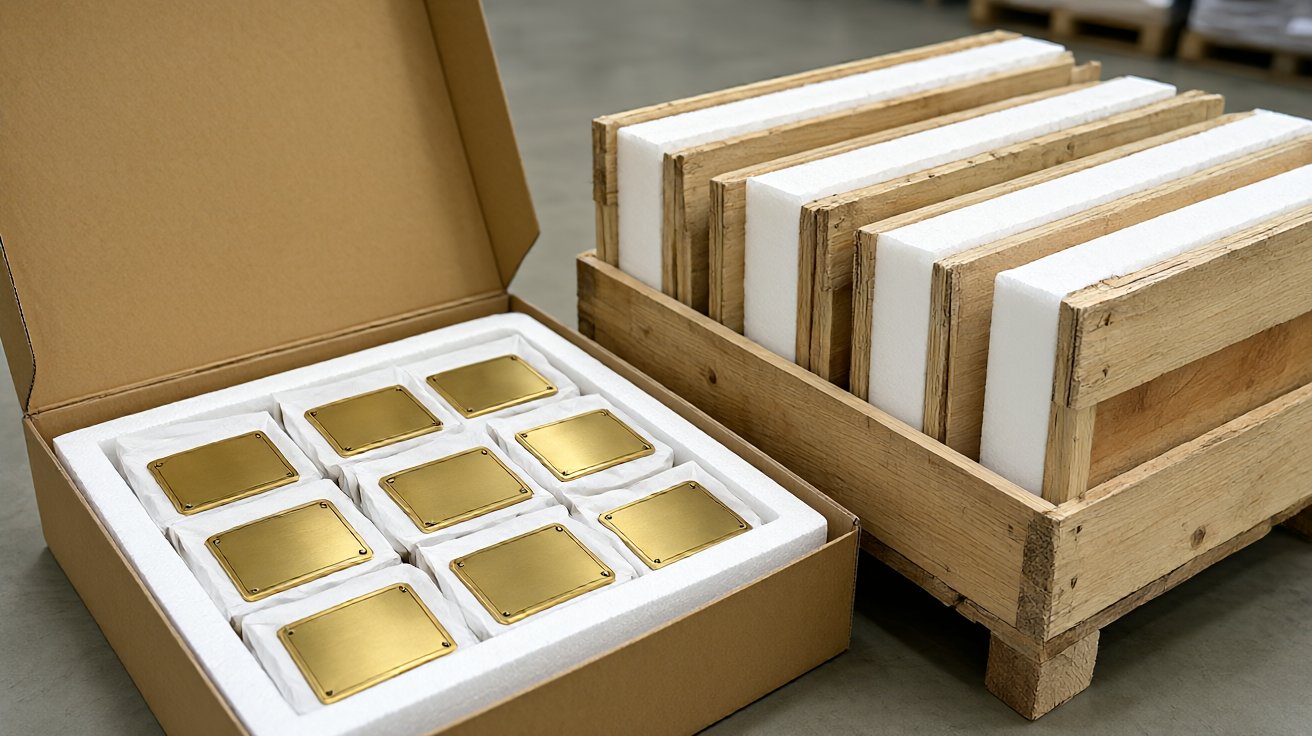
Figure 9: Finished plaques and planter panels packed with interleaving for export.
Choosing a House Number and Planter Supplier
What to Ask at Quotation
Ask five things before comparing prices. On a plaque: is the numeral engraved or laser marked, and to what depth? Which brass or stainless, and is it solid throughout? What lacquer, and is it specified for exterior use? How is it fixed, and is the fixing security type? On a planter: is the base drained and is the coating applied to the inside face as well as the outside?
The answers separate suppliers quickly. A quote that names the engraving depth, the lacquer type and the coating system is comparable; a quote that lists a size and a price is not, because the same brass plate can be a decal on zinc or a 6 mm solid engraved plate.
Where Suppliers Fail
Failures cluster in five places. The numeral fades within two years because it was laser marked and sold as engraved. The lacquer chalks and the plate goes patchy because an interior coat was used outdoors. The planter rusts from the inside because only the outside was coated. The long panel bows once filled because the sheet was sized on cost. And the fixings are wrong for the wall, so the plate sits in trapped water.
None of these are exotic. They follow from buying entrance hardware as a decorative item rather than as an outdoor product, and they are avoided by stating the engraving, the lacquer and the coating coverage at enquiry.
How XHX Metal Works
XHX Metal has manufactured sheet metal products for export customers from Dongguan since 2014 under ISO 9001:2015 with CE documentation and SGS records, following the inspection practice in ISO 14253-1, in a 2,000 sqm factory with about 30 staff. The equipment list covers two 6 kW fiber laser cutting machines at +-0.01 mm, CNC punching, CNC bending, TIG and MIG welding, polishing, engraving, powder coating and electroplating through audited partners, all under ISO 9001:2015 with CE documentation and SGS records.
For a house number plaque or planter programme, samples follow in 5 to 10 working days and first batches in 20 to 30 days. Send artwork or a drawing with the size, the material, the finish and the fixing requirement through the contact page; related work is described on the metal signs page and the sheet metal capabilities page, and enquiries also reach sales01@xinghaoxin.com.
Frequently Asked Questions
What is the difference between engraved and laser marked numerals?
Engraving cuts 0.3 mm to 0.8 mm into the metal with a crisp wall and can be refinished indefinitely. Laser marking only discolours the surface a few microns deep, fades, and cannot be restored. A plaque meant to last decades should be engraved.
Should a house number plaque be brass or stainless steel?
Brass gives a warm gold and takes deep engraving beautifully, but it needs a lacquer that is maintained. Stainless is more durable and needs no coating, but it reads cooler and etching is shallower than engraving.
Why does my brass plaque go dull or patchy?
The lacquer failed, usually because an interior-grade coat was used outdoors or because the plate traps water against the wall. UV breaks the coat down, water gets under it, and the brass goes patchy underneath.
How thick should a planter box be?
1.2 mm to 2.0 mm depending on the panel span. A long unsupported side panel bows once filled, so a 1,200 mm planter needs 2.0 mm sheet or a folded stiffening return rather than a heavier base.
Do planters need drainage?
Yes, and the base has to be shaped so water drains to the holes with air able to move underneath. A flat base with a few holes holds water, and the coating on the inside face fails first, which is why planters rust from within.
How long does production take?
Samples follow in 5 to 10 working days after artwork or drawing approval. First production batches ship in 20 to 30 days depending on the engraving, lacquer and coating content.