Last updated: October 9, 2026 | By XHX Metal Engineering Team
A retail display cabinet carries two jobs at once: it holds stock and it sells it. That is why the metal body, the shelf spacing and the LED lighting matter as much as the dimensions. XHX Metal builds custom retail display cabinets in stainless steel, from a single counter unit to a run of floor standing cases, in a 2,000 sqm factory in Dongguan, China.
This article is written for retail brands, shop fitters and distributors ordering a display cabinet series: what the cabinet is made of, where it is used, how the lighting and glass are specified, what makes the parts difficult to build, how long a project takes, and three programme examples with the volumes and price bands involved.
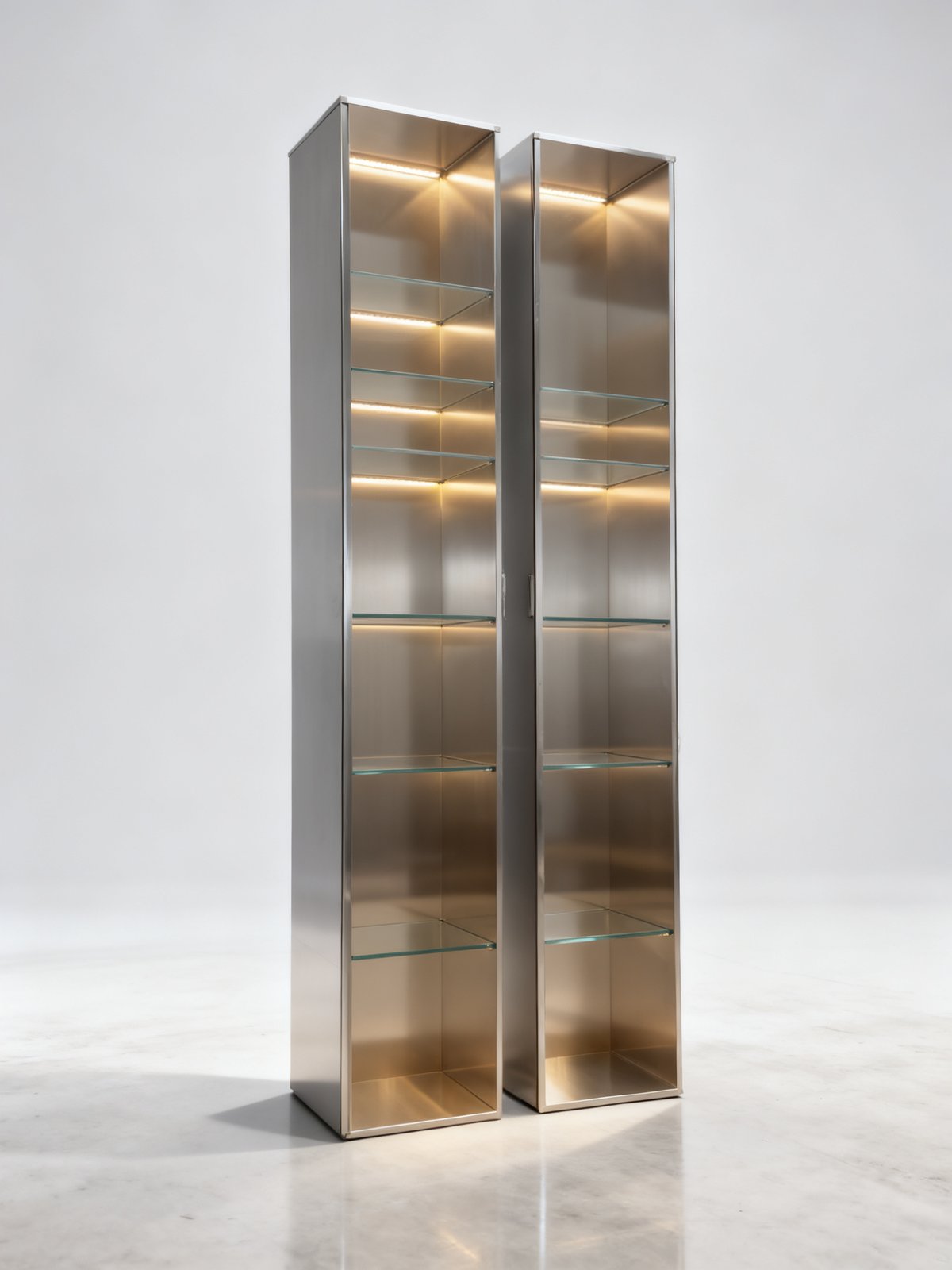
Figure 1: A pair of stainless steel retail display cabinets with glass shelves and warm LED lighting, photographed against a studio backdrop.
Retail Display Cabinet: What We Build
The Cabinet, Panel by Panel
What does a retail display cabinet actually consist of? A formed steel body, a back panel that carries the light, two side panels, a set of adjustable shelves, a plinth or a base frame, glass or acrylic doors, and a lock. Behind the visible surfaces sit the light channels, the LED drivers and the cable route that connects the bays together.
Each panel is a separate fabrication step, and the cabinet only works when they agree: the body has to be square enough for the doors to run, the shelf pitch has to match the customer’s product heights, and the light channel has to sit where it lights the front of the shelf rather than the back. The FABRICATOR covers how this kind of work is priced and sequenced in a job shop.
Formats: Floor Standing, Wall Mounted and Counter Top
Floor standing cabinets are the largest format, usually 1.5 m to 2.2 m tall with a mirror-polished interior, five to eight glass shelves and a formed plinth. Wall mounted cabinets hold the same internals in a shallower body, and counter-top units pack three or four lit shelves into a 400 mm to 700 mm tall case.
Multi-bay runs are assembled from the same parts. Buyers who plan a shop fit-out usually order one bay first, check the shelf pitch against the product, and then release the remaining bays with the same drawing so that the light lines run continuously.
The Parts Buyers Order Most
The recurring items in an order are the cabinet body, the back light panel, glass shelves and their retainers, the LED channel and driver, doors with hinges and a lock, plinths, and the small brackets that tie the bays together. Distributors often order glass shelves and light channels as spares, because those are the parts that get damaged in a shop.
Tell us which of those parts you buy today and which you fit yourself. Selling the retail display cabinet as a complete, wired, tested unit is usually cheaper for a shop fitter than buying a body and sourcing glass, lighting and locks separately.
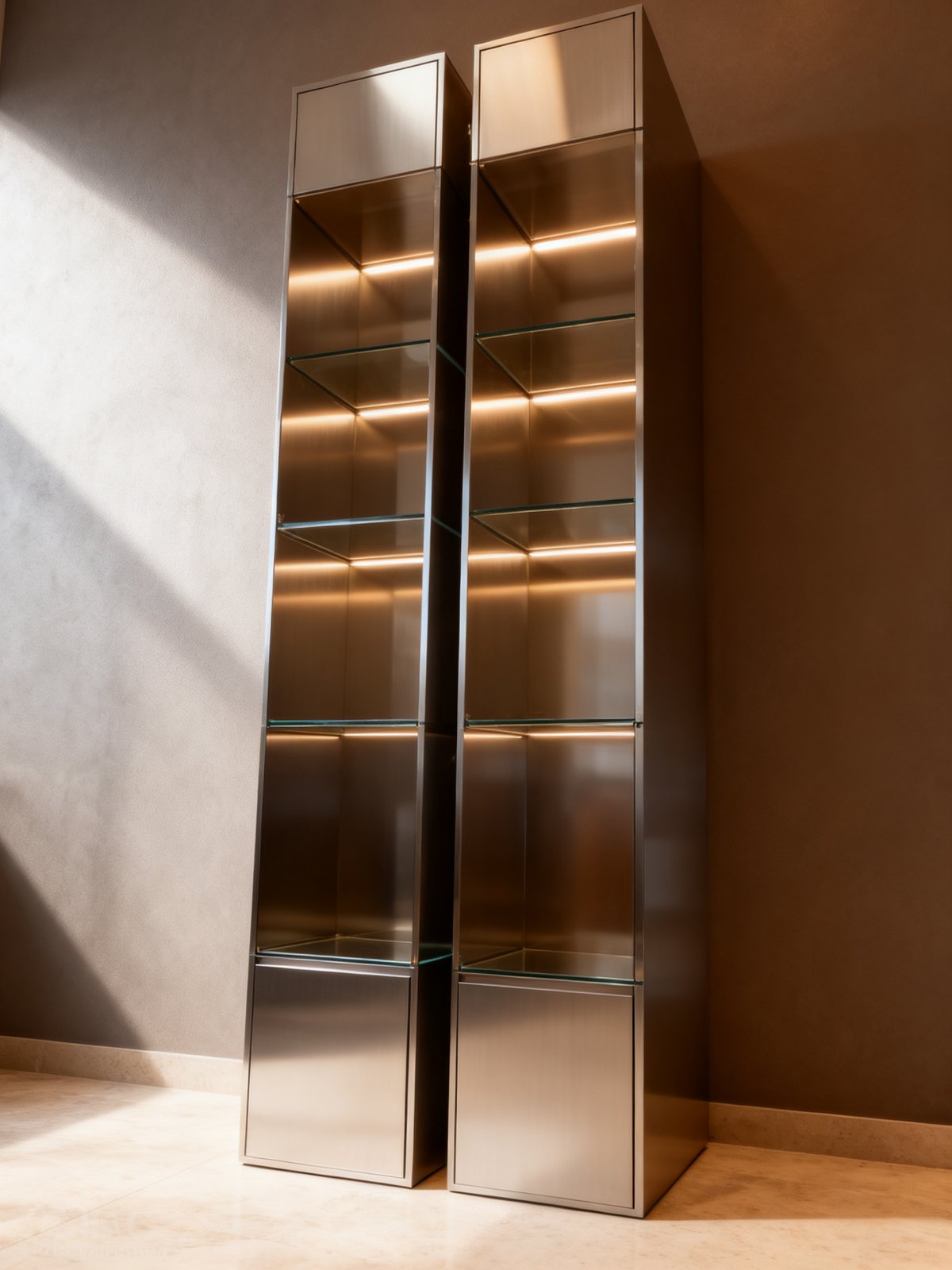
Figure 2: Two floor standing units: mirror-polished body, adjustable glass shelves and a formed plinth.
Where Retail Display Cabinets Are Used
Jewellery and Watch Retail
Jewellery and watch counters are the classic application. The retail display cabinet is specified for small, high-value items: shallow shelves, tight shelf gaps, a lockable glass door, and lighting that produces no shadow across the counter. Mirror-polished interiors are common because they double the apparent depth of a narrow case.
These buyers also care about security and about the impression the case makes from the entrance. A lit cabinet with even shelf lighting reads as a better store, and that is often why a chain replaces a whole run rather than a single unit.
Eyewear, Cosmetics and Fragrance Counters
Eyewear, cosmetics and fragrance displays use the same construction with different proportions. Shelves are angled or stepped so products face the customer, and the cabinet is often a low, wide unit built into a sales counter. Distributors in this group often order the same cabinet in two heights, so a counter run can be levelled to the shopfront rather than built from one fixed size.
In this group the retail display cabinet has to survive daily handling, so the finish matters: brushed stainless steel hides fingerprints better than mirror, and a powder coated body in the brand colour is cheaper than a polished one while still looking deliberate.
Collectibles, Museum and Showroom Displays
Museums, galleries and brand showrooms order display cases with a different priority again: light quality and dust control. The retail display cabinet body is often a powder coated steel frame with glass on three sides, a sealed back panel and a dimmable or switchable light source.
For this group we quote the cabinet with the light specification as a separate line, because the LED choice changes both the look and the cost more than any other option on the drawing.
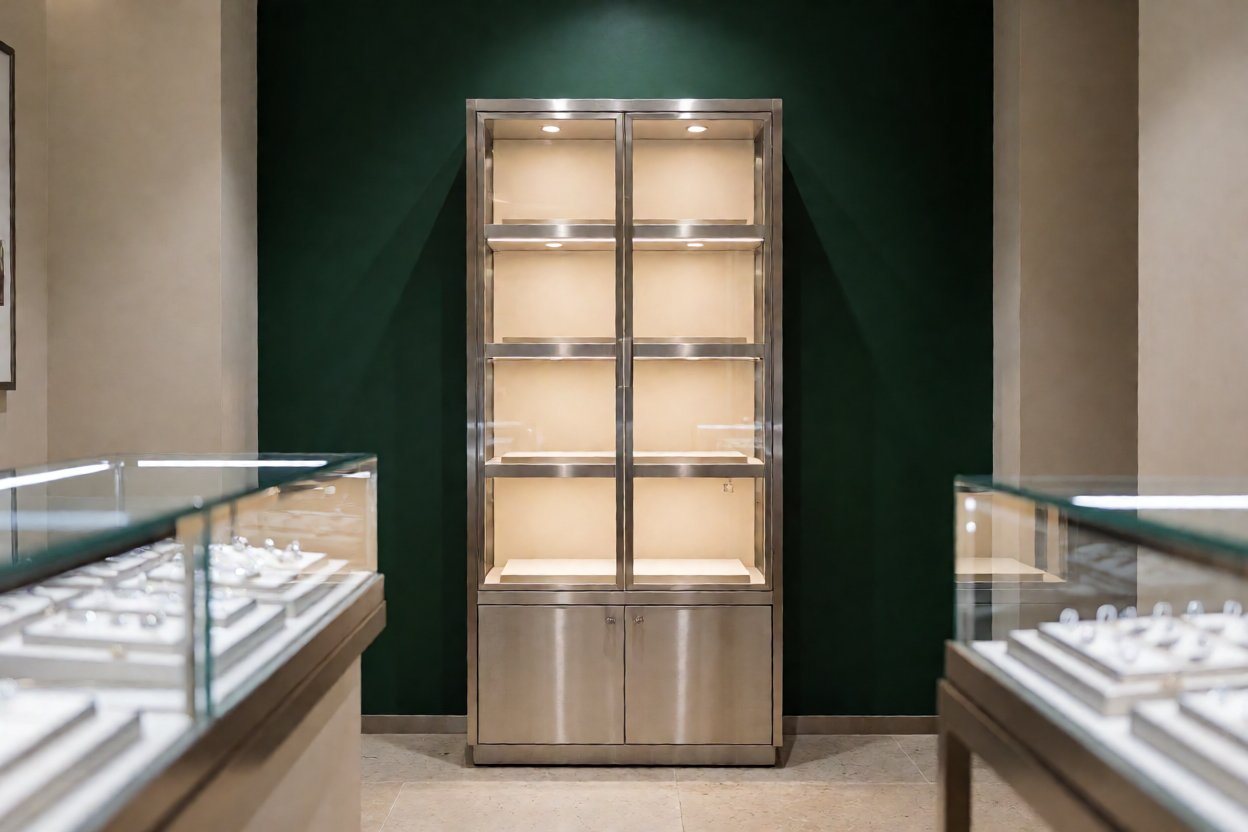
Figure 3: A retail display cabinet installed in a jewellery shop, with spotlights above and empty shelves ready for stock.
Materials, Glass and Lighting
Stainless Steel Grades and Finishes
Most of our retail display cabinets are built from 304 stainless steel sheet in 1.0 mm to 1.5 mm, with 316 for coastal or high-touch installations. Mirror polishing is the default for visible faces because it reflects light into the case, with brushed finishes where fingerprints are a problem. Grade background is published by the Nickel Institute and finishing practice by the Specialty Steel Industry of North America; the American Coatings Association covers coating performance.
The finish is where a retail display cabinet is judged. Grain direction is fixed on the drawing, mirrored panels are film-protected until assembly, and colour or finish references are kept on file so a bay ordered a year later still matches the run.
Glass, Shelves and Load
Shelves are usually 5 mm to 8 mm tempered glass with polished edges, supported either on a stepped bracket or on a fixed steel rail. Glass is the part most often damaged and the part most often packed badly, so the shelf load and the fixing method are agreed at quotation rather than assumed. Glass specification and handling are covered by the National Glass Association.
Where glass is not required, we build steel or aluminium shelves with an anodised or powder coated finish. Steel shelves are cheaper, lighter to ship and less fragile, but they change the look, which is why the choice sits with the brand.
LED Light Channels and Colour Temperature
Lighting is specified as hard numbers: LED strip in a formed channel, 3000 K for jewellery warmth or 4000 K for neutral retail, a driver in the plinth or behind the back panel, and a wattage that keeps the interior cool. The channel is welded or riveted into the panel so the retail display cabinet is delivered lit and tested, and colour temperature and rendering follow Illuminating Engineering Society practice.
Two practical points decide satisfaction. The first is uniformity; a strip that stops short of the side panel shows a dark corner. The second is serviceability: lights are the component most likely to fail in a shop, so the driver and the connectors are placed where a fitter can reach them without dismantling the case.
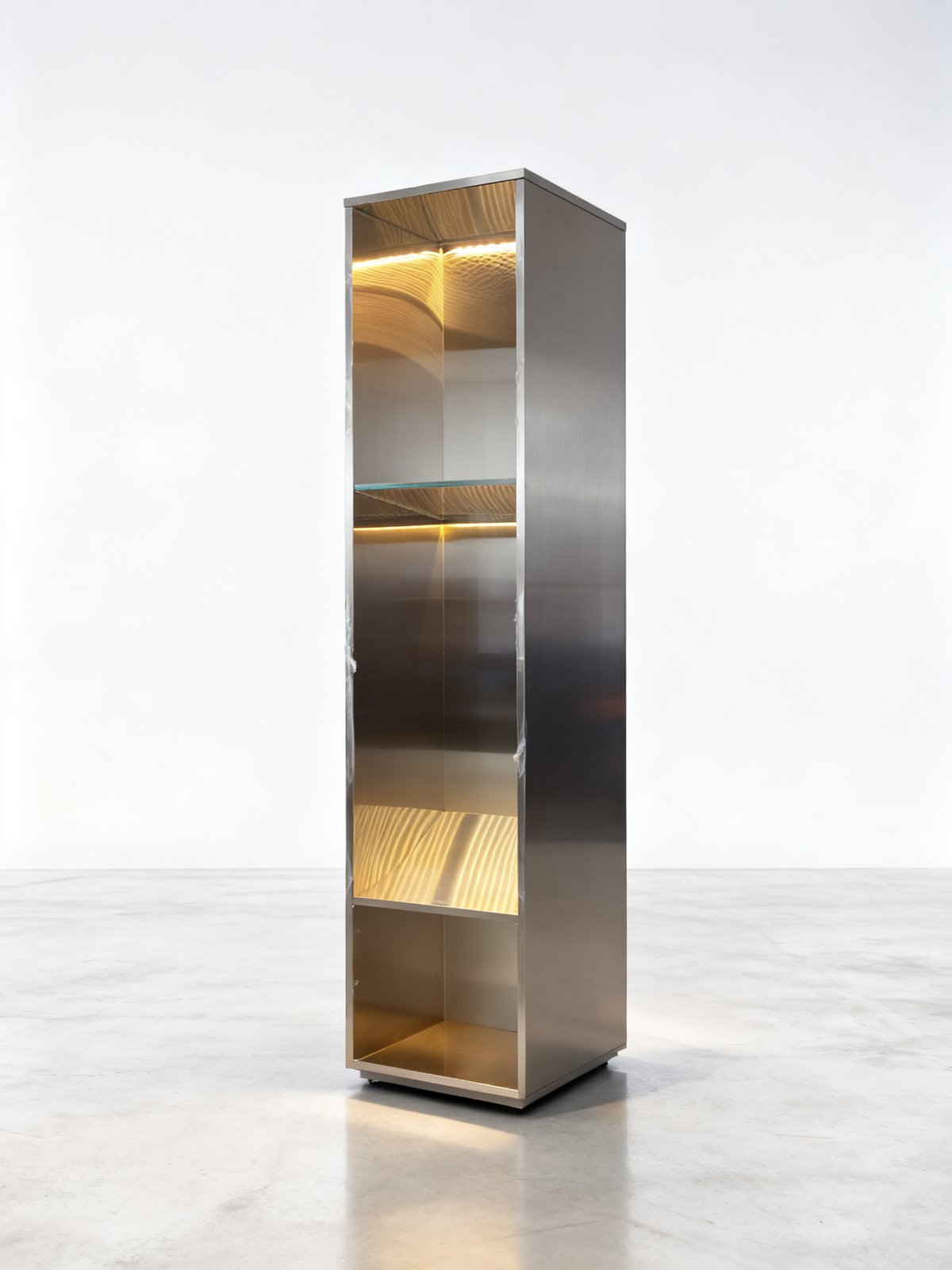
Figure 4: Shelf and light detail: the LED channel sits in front of the shelf edge, so the light reaches the front of the display.
Production Difficulty and Quality Risks
Squareness, Door Gaps and Glass Fit
Where do display cabinets go wrong? The most common fault is squareness. A body that is out by a millimetre shows up as an uneven door gap and a shelf that will not sit flat, and it cannot be corrected after finishing. Frames are welded in a fixture, checked on a surface plate, and the glass is cut only after the body passes.
Sheet metal work follows general tolerances in line with ASME Y14.5 practice unless the drawing is tighter. On a retail display cabinet the critical dimensions are the internal width, the shelf pitch and the door opening, so those are the ones we measure and record; Modern Machine Shop documents the same principle for formed and machined parts.
Light Uniformity and Wiring
The second risk group is electrical. A lit retail display cabinet has to arrive working, which means the strip is tested before packing, the driver is matched to the strip, and the wiring is routed so that closing a door or sliding a shelf cannot cut it.
Our countermeasure is a lighting test on every unit with a photograph for the record, plus a spare-parts note in the documents so the customer can replace a strip in the field without a full replacement order. That has become a standard part of the retail display cabinet offer.
Mirror Surfaces, Packing and Freight Damage
Polished surfaces and glass travel badly. A mirror panel that touches another panel in transit arrives scratched, and a glass shelf packed loose arrives broken, so both the cabinet and its shelves are packed as separate protected items rather than as one heavy crate.
For export we use foam-lined crates with corner protection, film on every visible face and glass in its own compartment. It costs more than a loose crate, but it removes the claim, the return freight and the delay that a damaged retail display cabinet would otherwise cause.
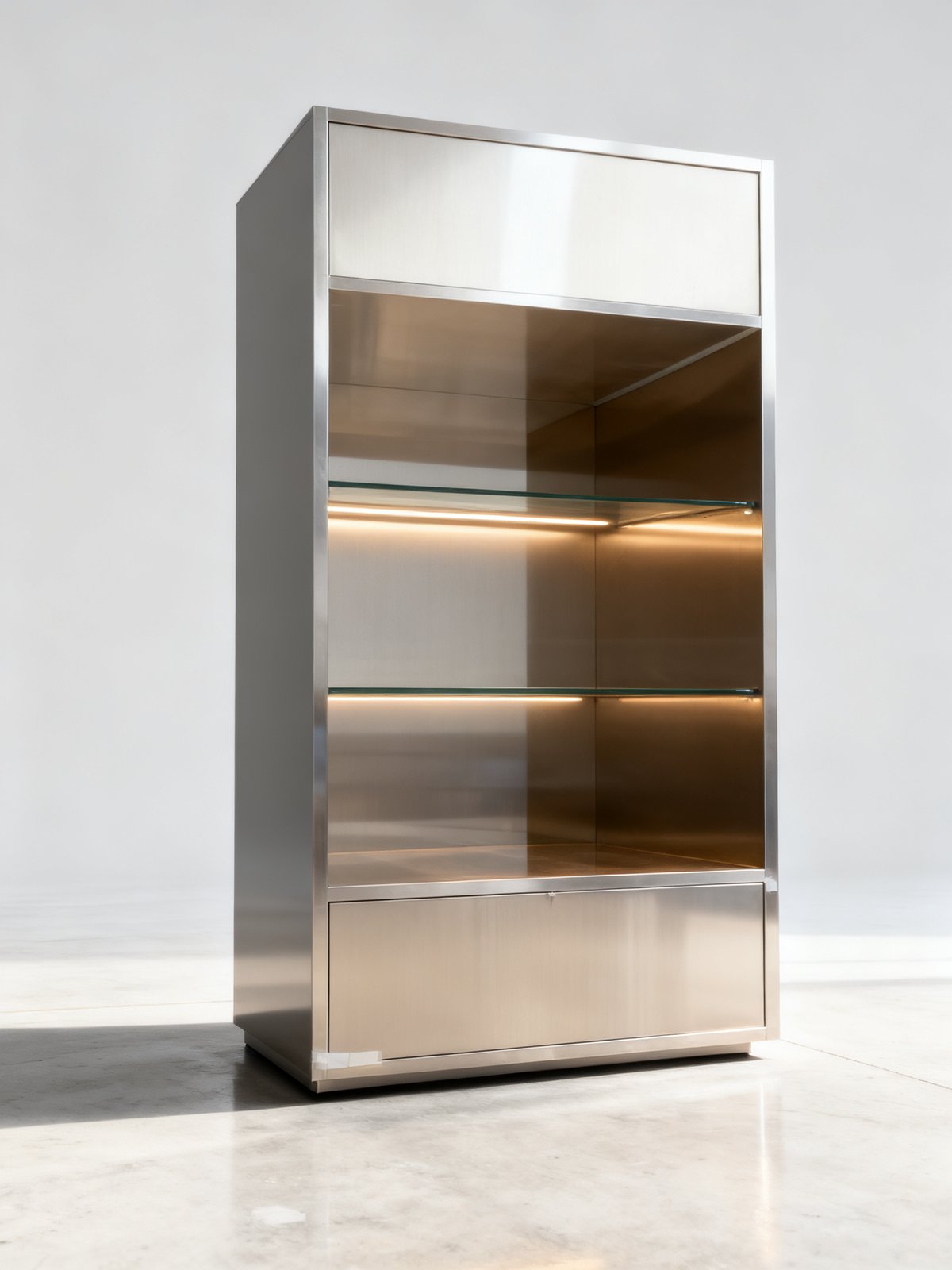
Figure 5: Inside a retail display cabinet: shelf positions, back panel and the cable route that hides the LED wiring.
Lead Times, Files and Documentation
What You Send Us
To quote a retail display cabinet we need the overall size, the product heights that set the shelf pitch, the glass thickness, the light specification, the voltage and plug standard for the destination country, and the lock or door type. US buyers also check classification under the Harmonized Tariff Schedule when they compare landed cost.
A STEP model or a dimensioned 2D drawing is ideal, and a clear PDF with the critical dimensions is enough to start. Market, delivery port and expected annual volume let us quote the parts that repeat – shelves, light channels and locks – at programme prices rather than as one-offs.
Sampling and Production Lead Times
A sample follows in 5-10 working days after the drawing is approved, and the first production batch ships 15-30 days later. Multi-bay runs are usually staggered so the shop fit-out can start on the first bay while the rest are in production.
The two things that move the date most are the light specification and the glass thickness, because both are bought in. Agreeing them at sample stage keeps a retail display cabinet programme on schedule; changing them later re-opens the drawing.
Assembly, Wiring and the Documents Included
Every unit ships assembled and lit: body welded and finished, shelves cut and fitted, LED channel installed and tested, locks and hinges fitted, and the cabinet packed with its spares list. Silkscreening, engraving and custom packing run on the same order.
The documents are material certificates, a first article inspection report, a lighting test record, and dimensional records on the critical features. The factory holds ISO 9001:2015 and CE, works with SGS for third-party inspection, and CE marking obligations are set out by the European Commission.
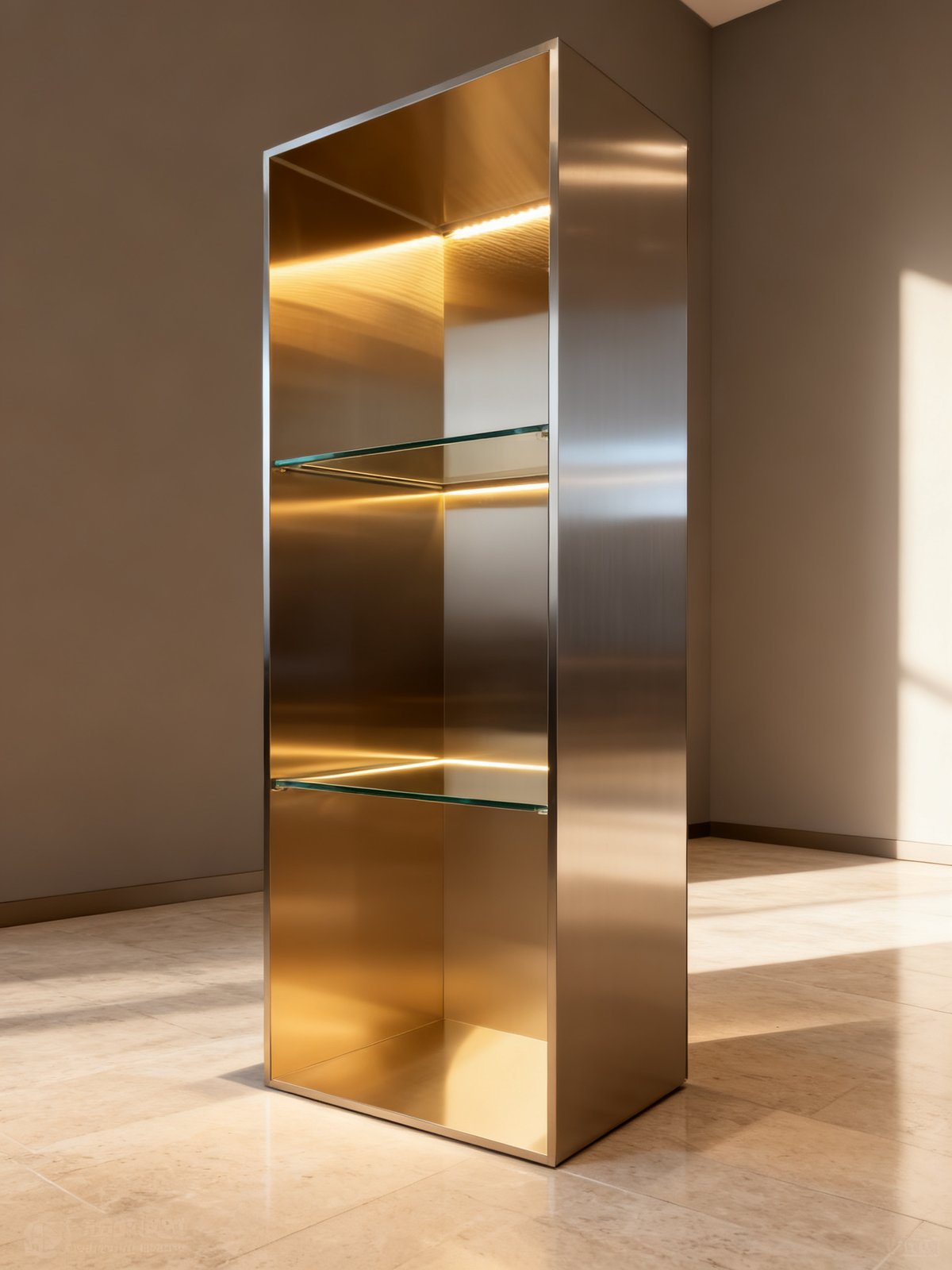
Figure 6: Two cabinet bays side by side, aligned so the shelves and light lines run continuously.
Programmes We Have Delivered
Case 1: Jewellery Chain – Floor Standing Cases
A jewellery chain ordered floor standing cases in 304 stainless steel with mirror interiors, five glass shelves and a warm LED channel per shelf. Batches ran 10-40 units two to four times a year, with a minimum of 5-10 pieces and FOB prices between $100 and $400 per cabinet depending on height and lighting.
The programme was specified as a bay module rather than a fixed width, so the customer could fit different shop layouts from the same drawing. The first batch shipped in 20-35 days after a sample round, and annual spend sat in the $25k-70k band with SGS inspection before shipment.
Case 2: Eyewear Distributor – Counter Top Units
An eyewear distributor needed counter-top display cabinets in 1.0 mm stainless steel with stepped shelves and a lockable glass front. Volumes ran 50-300 units per batch three to six times a year, minimum 20-50 pieces, with FOB prices in the $15-80 range per unit.
The first batch shipped 15-30 days after approval. Because the shelf pitch was tested on a sample before release, the retail display cabinet needed no revision later, and a cost review after the second batch removed 4-6% by nesting the side panels and shelf rails on the same sheet.
Case 3: Retail Brand – Shelf Packs and Spare Parts
A retail brand with existing counters ordered shelf packs, light channels and mirror back panels rather than complete cabinets: 200-800 pieces per batch, four to eight batches a year, a 100 piece minimum and FOB prices from $2 to $15 per piece, shipping 15-25 days after the sample round.
These parts follow the finish and grain direction of the original retail display cabinet, so a bay refitted two years later still matches the run. Annual spend stayed in the $15k-40k band with a 4-6% step down in the second year.
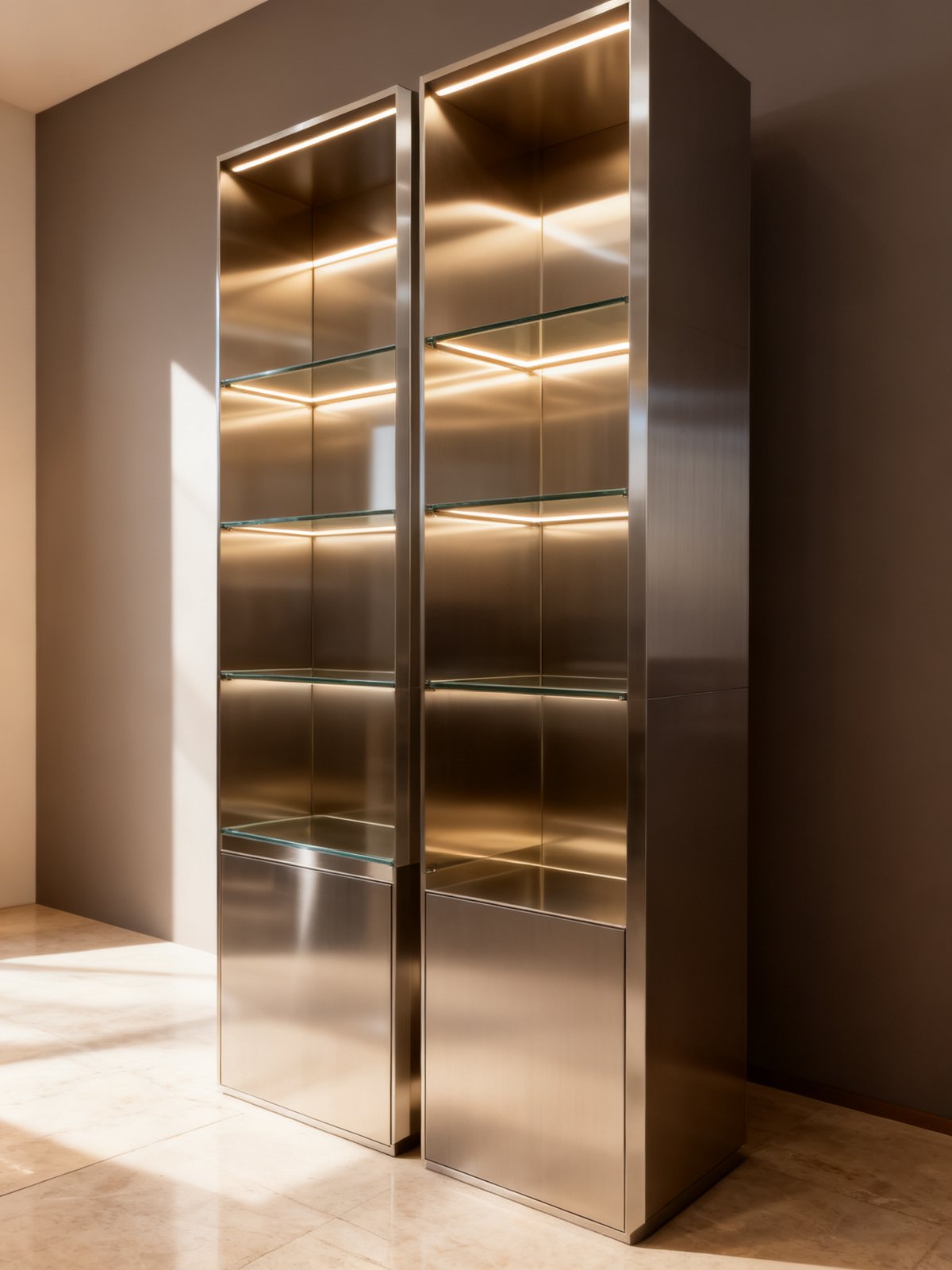
Figure 7: A tall unit after assembly and lighting test, checked for shelf level and light uniformity.
Summary and Next Steps
How to Specify a Retail Display Cabinet
Specify the cabinet from the product, not from the shelf. Decide the item heights first, because they set the shelf pitch; then choose glass or steel shelves, then the lighting colour and wattage, then the door and lock. Those four decisions fix most of the cost and most of the risk in a retail display cabinet.
Then ask the supplier two questions: how the body is checked for squareness before glass is cut, and how the lighting is tested before packing. A supplier that answers both with a fixture, a measurement and a record can repeat a shop fit-out.
Why XHX Metal
XHX Metal builds the whole retail display cabinet in one 2,000 sqm factory in Dongguan: laser cutting on two 6kW machines with +-0.01 mm positioning accuracy, CNC punching, CNC bending, TIG and MIG welding, mirror polishing with finishing partners, LED installation, wiring, testing and packing. Samples follow in 5-10 working days and the first batch in 15-30 days.
The company has manufactured for retail and equipment brands in North America and Europe for over a decade, holds ISO 9001:2015 and CE, and runs 500,000 parts a year; manufacturing support networks are described by NIST MEP.
How to Start Your Programme
Send a drawing or sketch with the product heights, cabinet size and lighting you want. What the factory builds is set out on the sheet metal capabilities page, finished parts are on the products page, and quoting starts from the contact page; project enquiries also go to sales01@xinghaoxin.com.
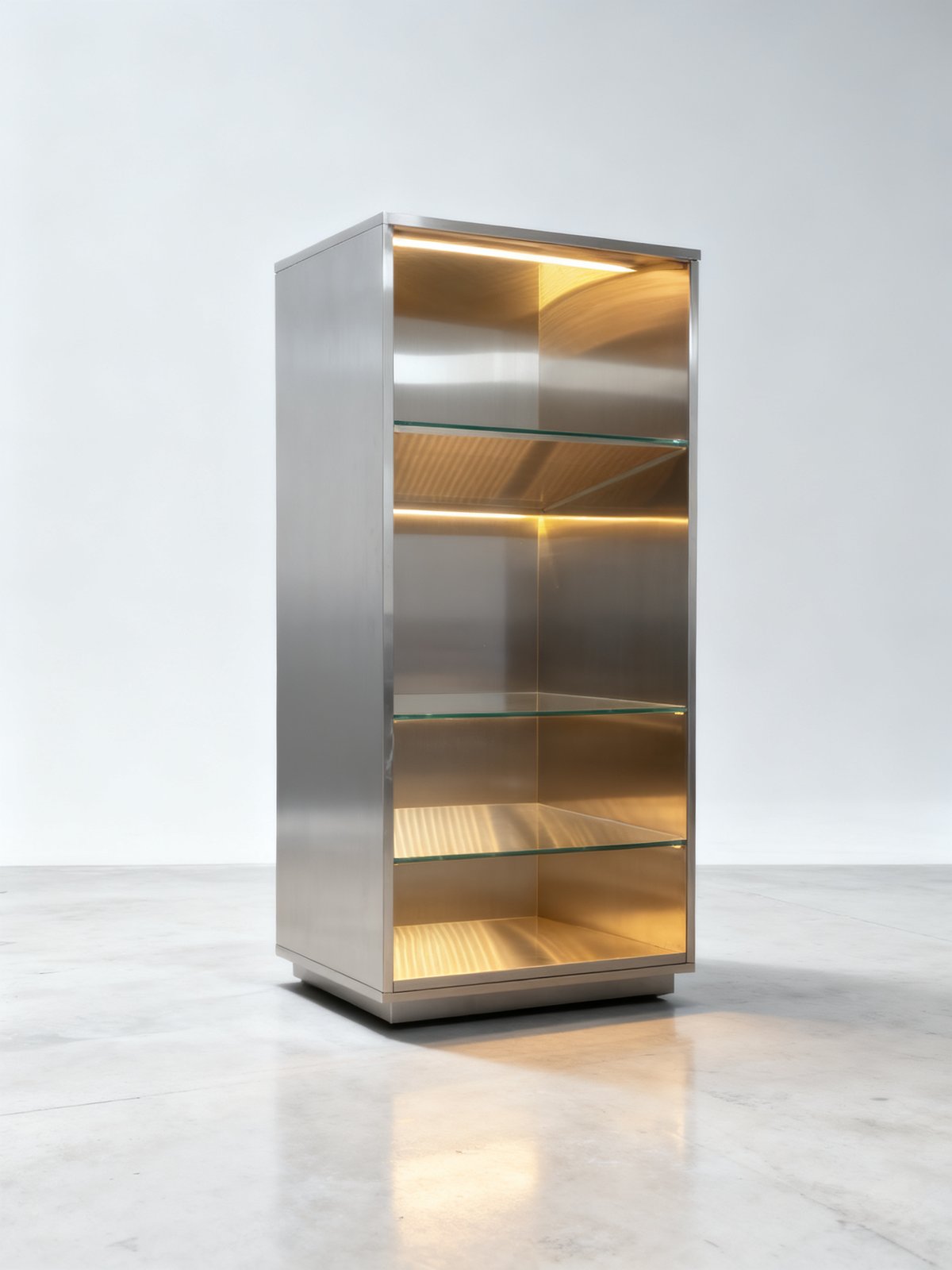
Figure 8: The finished retail display cabinet lit and photographed before packing.
FAQ: Retail Display Cabinet
Can you build a retail display cabinet to our shop dimensions? Yes. The cabinet is quoted as a bay module with its own width, height and shelf pitch, so different shop layouts can be fitted from the same drawing.
Do the cabinets arrive lit and tested? Yes. The LED channel, driver and wiring are installed in the factory, and every unit is switched on and photographed before packing.
What is the minimum order? Counter-top units usually start at 20-50 pieces, floor standing cases at 5-10 pieces, and shelf packs or spare parts at around 100 pieces.
How are glass shelves shipped? In their own compartments in a foam-lined crate, so shelves can be replaced individually if one breaks.