Last updated: October 10, 2026 | By XHX Metal Engineering Team
A shelf bracket looks like the simplest part a sheet metal factory can make, and that is exactly why it has to be right. Two legs at ninety degrees, a row of holes and a coating are all that stand between a loaded shelf and the floor, and every one of those details is decided on the drawing. XHX Metal produces custom shelf bracket sets in steel and stainless steel in a 2,000 sqm factory in Dongguan, China.
This article is written for furniture makers, shopfitters and shelving distributors ordering brackets in production quantities: what the part is made of, where it is used, how thickness and fixing pattern set the load, what makes a pair of brackets hard to build well, how long a programme takes, and three order examples with their volumes and price bands.
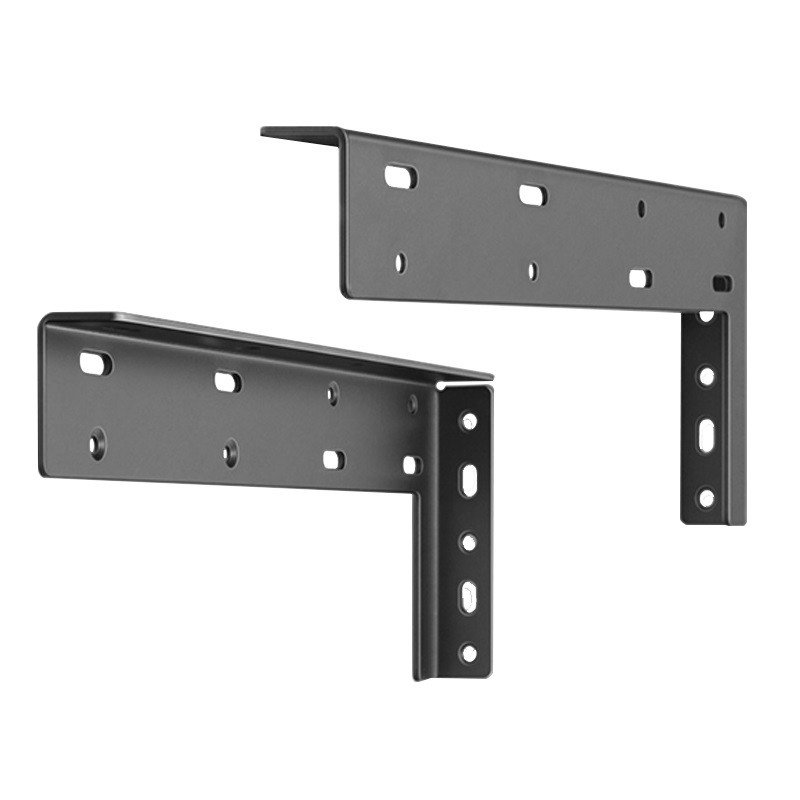
Figure 1: A matched pair of heavy-duty shelf brackets in black powder coat, bent from 3 mm steel with slotted and pierced fixing holes.
Shelf Bracket: What We Make
The Bracket in Three Dimensions
What is actually inside a shelf bracket? A vertical leg that fixes to the wall or the cabinet side, a horizontal leg that carries the shelf, a bend radius between them, and a fixing pattern on both faces. Larger brackets add a flange or a return along the top edge, which is what stops the horizontal leg from flexing under load.
Every one of those features is a fabrication decision. The leg length sets how far the shelf projects, the thickness sets how much it can carry without a visible droop, the hole pattern decides where the fixings land, and the bend radius decides how the coated part looks. The FABRICATOR covers how these forming decisions are priced in a job shop.
Formats: Wall Mounted, Under-Shelf and Heavy-Duty
The common format is the wall-mounted pair: two shelf brackets fixed to a wall, carrying a timber or glass shelf. Under-shelf types sit inside a cabinet or a wardrobe, where the vertical leg is shorter and the fixing is into a panel rather than masonry. Corner and T formats tie two panels together rather than carrying a shelf.
Heavy-duty versions – the parts in the photographs – use 2.5 mm to 4 mm steel, a wider face and a slot pattern so the shelf can be levelled on site. They are the brackets ordered for garage shelving, workshop benches and retail stockroom walls, where a shelf carries real weight rather than decoration. Furniture load and stability testing is standardised by BIFMA for institutional and domestic furniture.
What Ships in an Order
A finished order is a matched set: two shelf brackets of the same leg length, the same hole pattern, the same coating and the same orientation, packed together so a fitter cannot pair a left-hand bracket with a right-hand one by mistake.
Brackets are usually supplied bare, unprotected and ready to fix. Where a customer’s packaging carries the retail product, the shelf bracket is packed flat against a card or in a printed sleeve, and the packed weight stays low enough to keep freight and handling costs down.
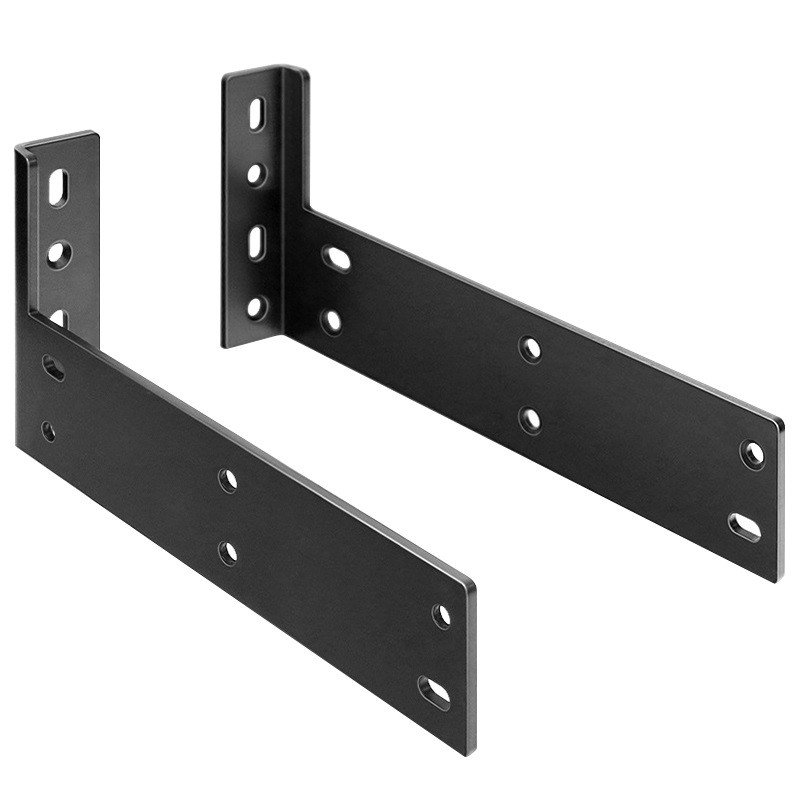
Figure 2: Two shelf brackets standing upright: vertical wall leg, horizontal shelf leg and a row of fixings along each face.
Where Shelf Brackets Are Used
Furniture and Cabinet Makers
Furniture and cabinet makers order shelf brackets as a component rather than a product. They arrive at the assembly line in matched sets, are fitted with the shelf and the carcass, and are never seen again once the unit is installed – unless one is missing from the box, which is when an inexpensive part becomes an expensive complaint.
This group cares most about three things: the fixing pattern must match the pre-drilled panels, the pairs must be dimensionally identical, and the coating must not chip when the bracket is dropped into a carton at the end of the line. Load requirement is usually modest; repeatability is not.
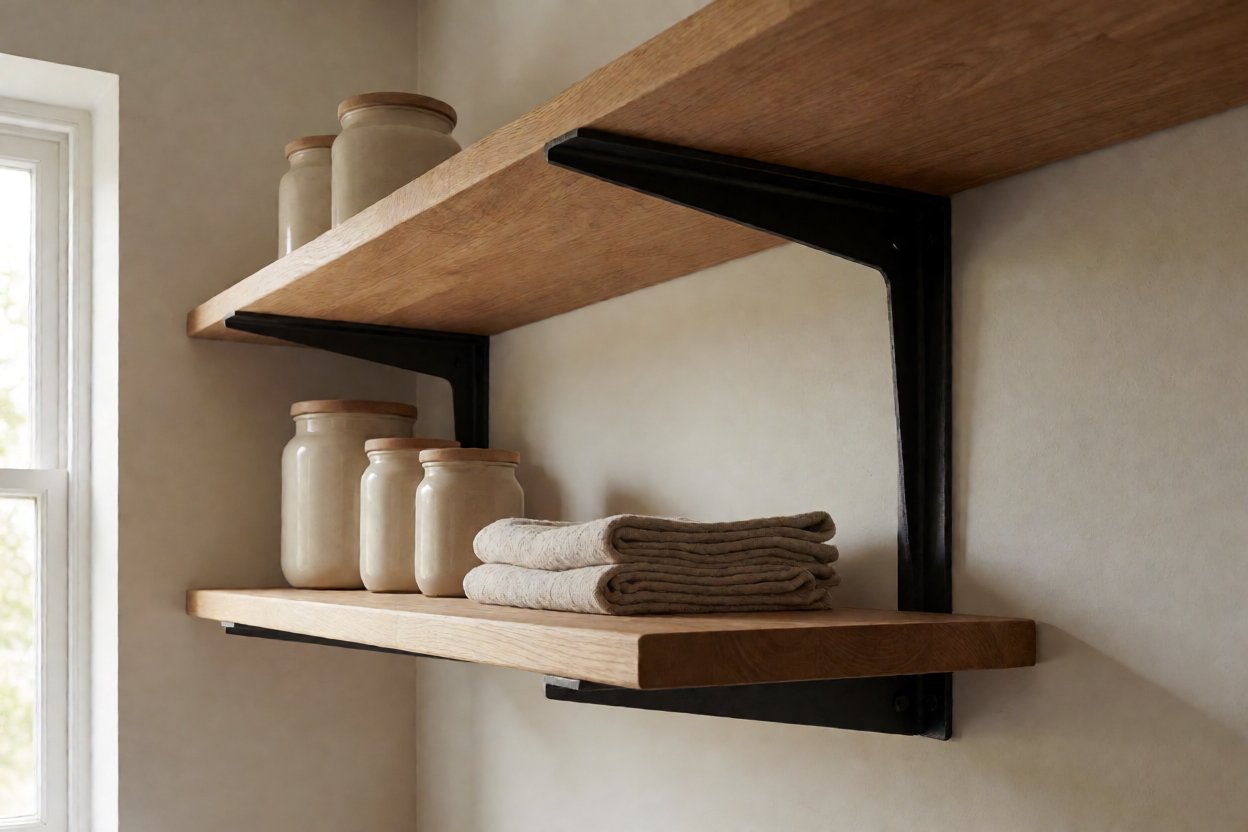
Figure 3: Open shelving on the same heavy-duty bracket, photographed in a plain utility room.
Shopfitting, Retail and Display
Shopfitters order heavier brackets for wall-mounted shelving in shops, where the shelf carries stock rather than a few books and the bracket is visible to customers. Colour matters here as much as strength: black textured powder coat, a brand colour, or a stainless finish that matches the shelving system.
Shop programmes are usually released bay by bay. One shelf bracket design is agreed, a sample bay is fitted and approved, and the remaining bays are ordered against the same drawing, which is why a supplier that can repeat a finish and a hole pattern matters more than one that quotes the lowest first price.
Storage, Garage and Utility Shelving
The third group is storage: garage walls, utility rooms, workshops and stockrooms. The brackets here are chosen for capacity and for the ability to be adjusted after the wall has been drilled, so the slotted version is common and the shelf bracket is often specified with a deeper leg and a heavier gauge.
Buyers in this group order in larger batches and often hold stock, which changes the shape of the programme: a fixed size is repeated several times a year, the price steps down after the first run, and the supplier is expected to keep the coating reference on file.
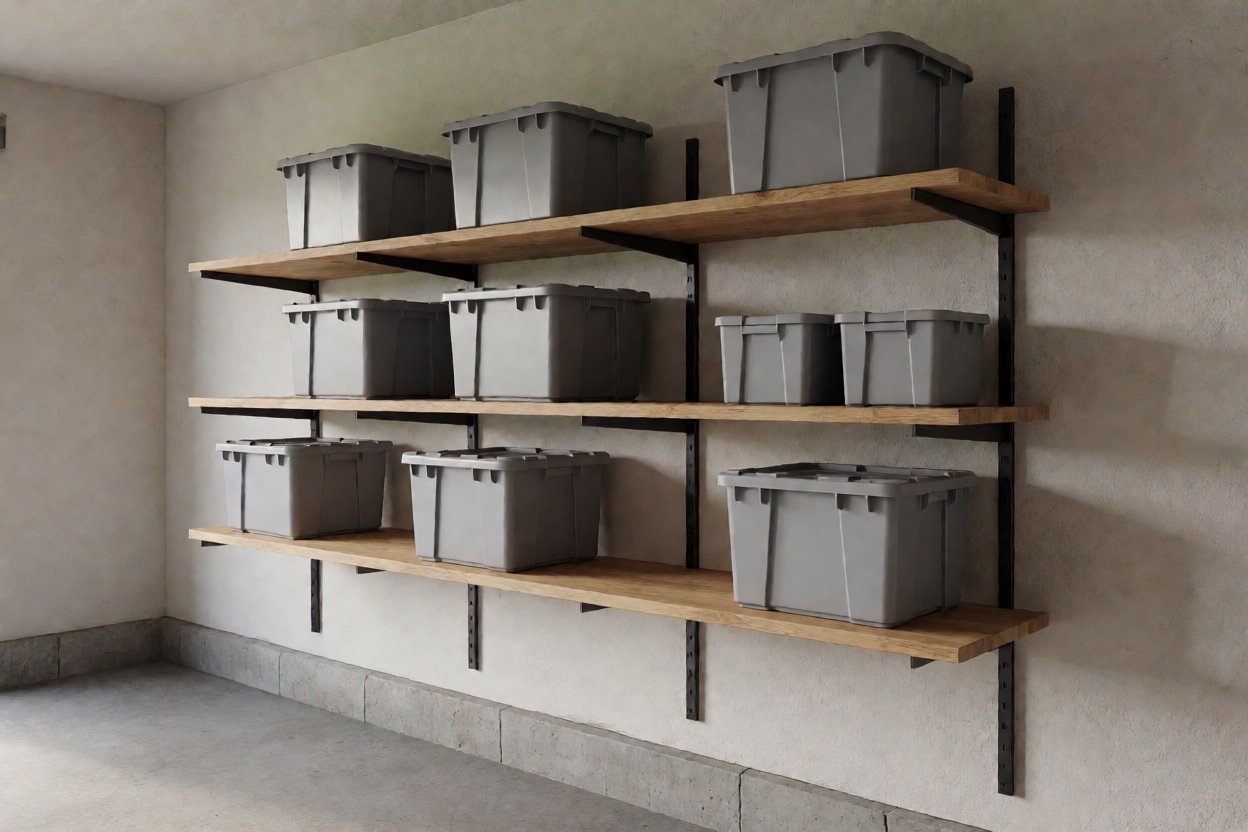
Figure 4: The product in use: timber shelves carried by the same brackets on a utility wall, loaded with plain storage boxes.
Steel, Thickness and Load
Grade and Thickness
Most shelf brackets are made from cold-rolled steel in 2.0 mm to 4.0 mm, with hot-dip galvanised or pre-galvanised sheet for outdoor and damp installations and 304 stainless steel where the bracket will stay visible in a wet area. Grade background is published by the American Iron and Steel Institute and stainless finishing practice by the Specialty Steel Industry of North America.
Thickness is the single biggest lever on capacity, but it is not the only one. A 3 mm bracket with a short leg and a top flange outperforms a 4 mm bracket with a long unsupported leg, which is why we ask for the intended span and load rather than quoting from the gauge alone.
Hole and Slot Patterns
The fixing pattern decides whether the bracket can actually be installed. Fixed holes give the strongest, cheapest part; slots – the elongated holes shown in the photographs – allow adjustment on a wall that is not perfectly plumb, at a small extra cost in punching time.
Fixing centres are usually set by the customer’s shelf and panel, not by us. Where the pattern is still open, the practical rule is to keep the wall fixings on the centre line of the vertical leg and to leave enough metal between holes for the head of the fixing to seat without crushing the coating.
Powder Coating and Finishes
Black textured powder coat is the default finish on a steel shelf bracket because it hides handling marks and matches shelving systems. Other colours are matched to a RAL reference or a customer sample, and galvanised finishes are used where the part will be outdoors. Coating performance background is published by the American Coatings Association.
Two details decide whether a coated shelf bracket survives handling. The first is preparation: the part is deburred and pre-treated, so the coating grips the bend rather than flaking at the radius. The second is packing, because brackets that rub together in a carton arrive with chipped edges even when the coating itself was correct.
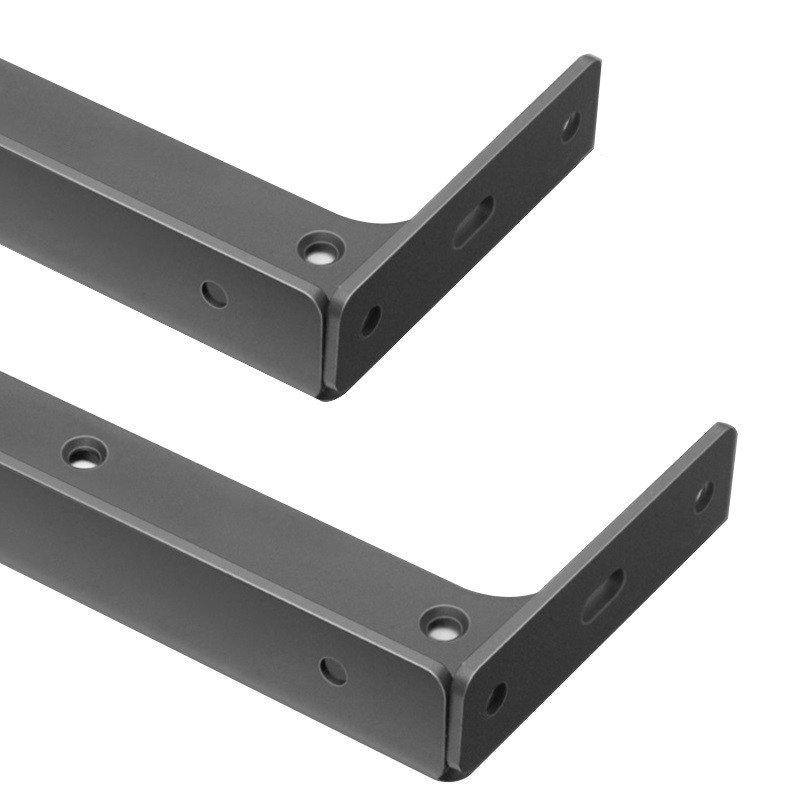
Figure 5: Slot detail on the shelf bracket: elongated holes let the bracket be adjusted on site without redrilling the wall.
What Makes a Bracket Hard to Make Well
Bend Angle, Squareness and Leg Length
Where does a bracket go wrong? Almost always at the bend. A few degrees off ninety and the horizontal leg tilts, so the shelf shows a gap at one end; a leg that is a millimetre long or short moves the fixing and the shelf. Springback changes with thickness and with the grain of the sheet, so the bend programme is set on the first part and checked on a square before the run continues.
Pairs are the harder requirement. Two shelf brackets that are each inside tolerance can still disagree with each other, so brackets that ship as a set are formed against the same programme and checked as a pair, not as individual parts; the same principle for formed parts is documented by Modern Machine Shop.
Hole Alignment Between Mates
The second risk is the fixing pattern. If the holes in the two brackets of a set do not line up with each other, the fitter has to slot or redrill on site, and that is how a supplier loses a repeat order. Laser cutting holds the pattern to within a few tenths of a millimetre; a punch tool holds it even more tightly once a die is justified by volume.
Sheet metal work follows general tolerances in line with ASME Y14.5 practice unless the drawing is tighter, and the critical dimensions on a shelf bracket are the leg lengths, the bend angle and the hole-to-hole distances, so those are the features measured and recorded.
Deburring, Coating and Packing
The third group of problems is cosmetic and only appears late. Sharp edges left by the laser are a handling hazard for the fitter and a weak point for the coating, so every bracket is deburred before finishing. Powder that bridges a hole, or a coating that is thin on a cut edge, shows up first on the parts that a customer actually handles.
Our routine is deliberately dull: deburr, pre-treat, coat to the agreed reference, inspect the bend and the holes, then pack in pairs with separation so the parts cannot rub. It is the same routine on the first sample and on the tenth repeat batch, which is what makes a shelf bracket programme predictable.
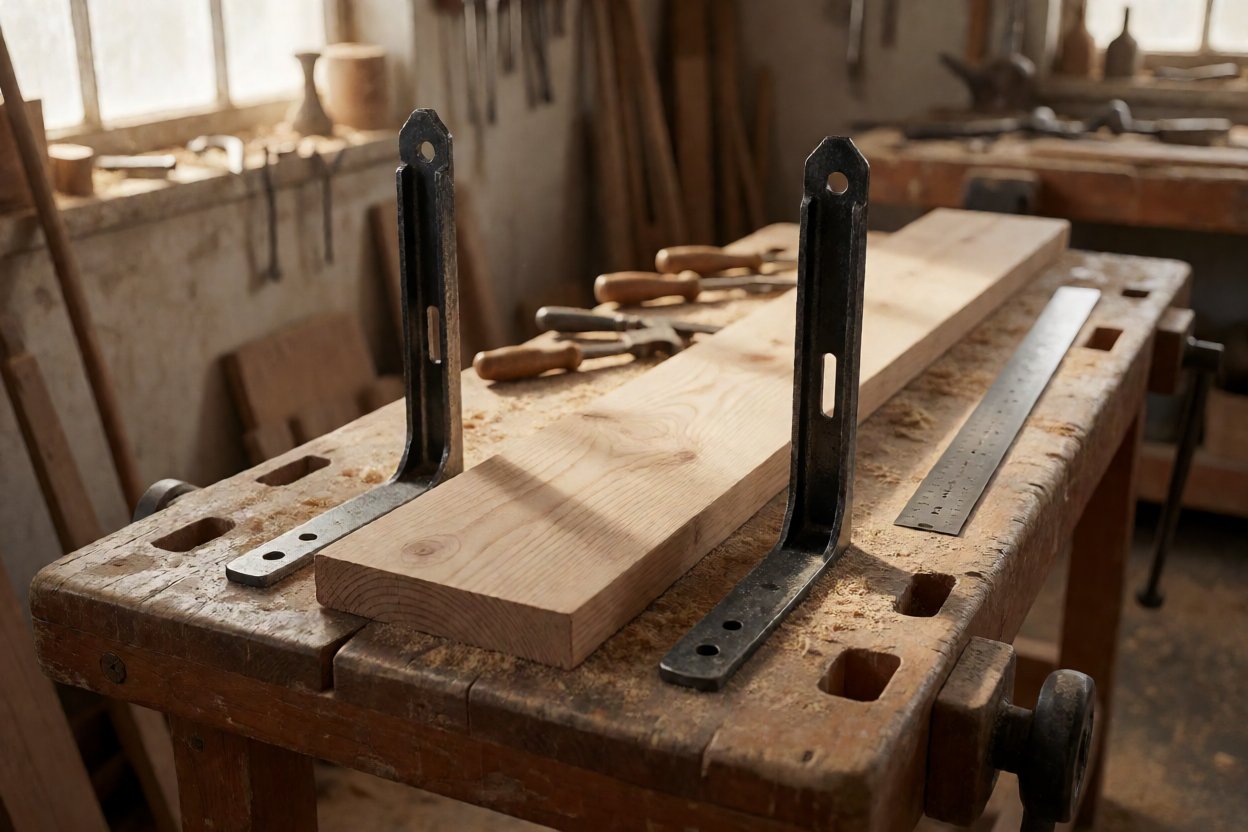
Figure 6: A pair of shelf brackets and a plain timber shelf laid out on a bench before fitting.
Drawings, Lead Times and Order Flow
What You Send Us
To quote a shelf bracket we need the leg lengths, the thickness, the hole or slot pattern with its centres, the fixing type intended on site, the finish, and the quantity per year with the batch split. A dimensioned 2D drawing is ideal; a STEP model or a clear PDF with the critical dimensions also works.
Where the design is still open, send the shelf size and the intended load instead. We will propose a thickness, a leg length and a fixing pattern, and quote that version rather than a part that will droop once it is loaded.
Sampling and Production Lead Times
Samples follow in 5-10 working days after the drawing is approved, and the first production batch ships 15-30 days later. A formed and coated shelf bracket with no die involved moves quickly, because cutting and bending are program-driven rather than tool-making jobs.
Two things move the date: a change to the fixing pattern after the sample, and a coating colour that has to be matched from scratch. Both are cheaper to settle at sample stage, and both are the reason a bracket programme is quoted with a sample round included.
Finishes, Marking and Documents Included
Finishing, marking and packing are part of the order: powder coating in a specified colour, galvanising or a bare oiled finish, laser marking or a printed label, and packing designed around the customer’s carton rather than around ours.
Documents ship with the parts: material certificates, a first article inspection report, dimensional records on the leg lengths and the hole pattern, and batch traceability. The factory holds ISO 9001:2015 and CE, and works with SGS for third-party inspection. US buyers checking landed cost use the Harmonized Tariff Schedule, and CE obligations are set out by the European Commission.
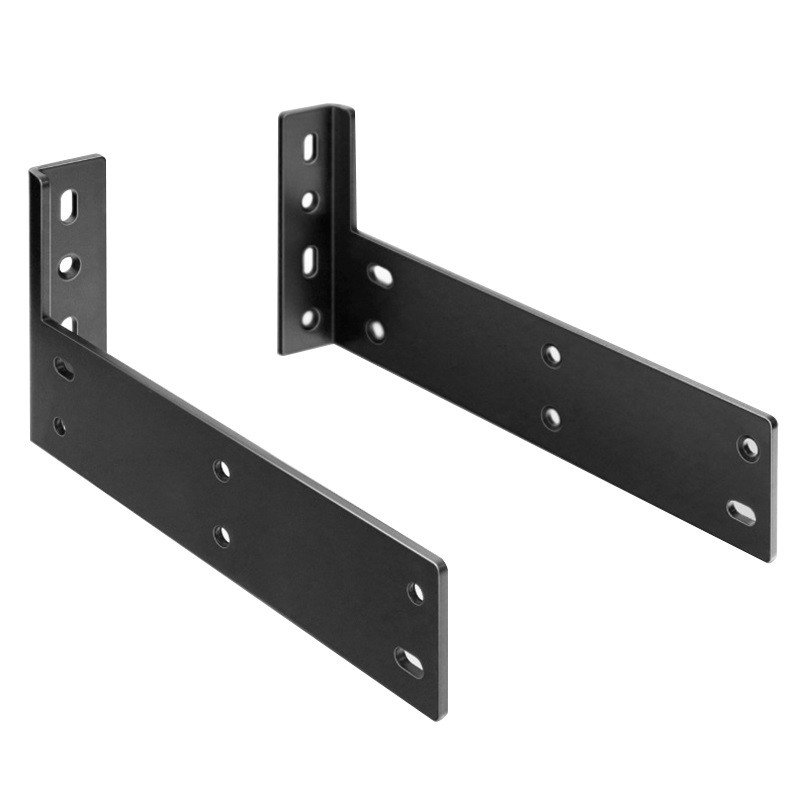
Figure 7: Two brackets in a three-quarter view, showing the bend radius, the flange and the deburred hole edges.
Programmes We Have Delivered
Case 1: Furniture Brand – Matched Bracket Sets
A furniture brand ordered matched bracket sets in 2.5 mm cold-rolled steel, black textured powder coat, with a fixed hole pattern set by a pre-drilled cabinet panel. Batches ran 200-800 pieces, four to eight times a year, with a minimum of 100 pieces and FOB prices from $2 to $15 per bracket.
The first shelf bracket sample was approved in 5-10 working days and the first batch shipped 15-25 days later. Annual spend stayed in the $15k-40k band, and the parts were checked as pairs at the factory so a set could not be split on the packing line.
Case 2: Shopfitting Contractor – Heavy-Duty Wall Brackets
A shopfitting contractor needed heavy-duty wall brackets in 3 mm steel with slotted fixings for a retail shelving programme. Volumes ran 50-300 per batch, three to six times a year, minimum 20-50 pieces, with FOB prices in the $15-80 range per bracket depending on size and finish.
A sample bay was fitted and approved before the rest of the programme was released, and the first production batch shipped 15-30 days after drawing approval. Holding the same coating reference across bays removed the colour argument at installation, and annual spend landed in the $30k-60k band.
Case 3: Distributor – Stocked Size Programme
A storage products distributor stocked four shelf bracket sizes for the trade, all in black powder coat: 200-800 pieces per size, four to eight production batches a year, a 100 piece minimum per size and FOB prices from $2 to $15 depending on gauge.
The programme was planned around stock rather than around individual orders, so the batch sizes were agreed up front and the coating reference was kept on file. Price stepped down 4-6% after the first year as the four sizes were nested together on the same sheets.
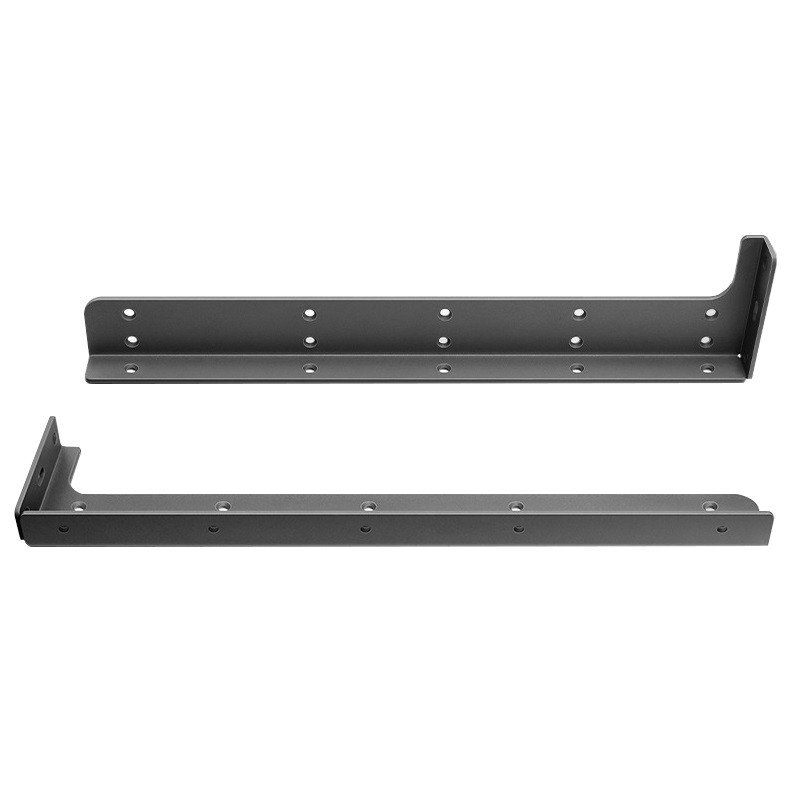
Figure 8: A flat pair after forming and coating, checked against each other so both brackets in a set match.
Summary and Next Steps
How to Specify a Shelf Bracket
Specify the shelf first and the bracket second. Fix the span, the load and the fixing surface, then choose the leg lengths, the thickness and the hole pattern that satisfy them. A shelf bracket is cheap to change on a drawing, expensive after the coating line.
Then ask the supplier two questions: how the bend angle is checked, and how pairs are matched before packing. Those answers decide whether a programme repeats cleanly, and both are visible in the sample.
Why XHX Metal
XHX Metal keeps the whole shelf bracket in one 2,000 sqm factory in Dongguan: laser cutting on two 6kW machines with +-0.01 mm positioning accuracy, CNC punching for repeating patterns, CNC bending, deburring, powder coating and packing. Samples follow in 5-10 working days, the first batch in 15-30 days, and cutting carries no die cost. The factory holds ISO 9001:2015 and CE and exports to North America and Europe.
The company has made brackets and formed parts for furniture, storage and equipment brands for over a decade, and runs 500,000 parts a year; manufacturing support networks are described by NIST MEP.
How to Start Your Programme
Send a drawing, a shelf size or a sample with the annual quantity and the batch split. What the factory builds is set out on the sheet metal capabilities page, finished parts are on the products page, and quoting starts from the contact page; project enquiries also go to sales01@xinghaoxin.com.
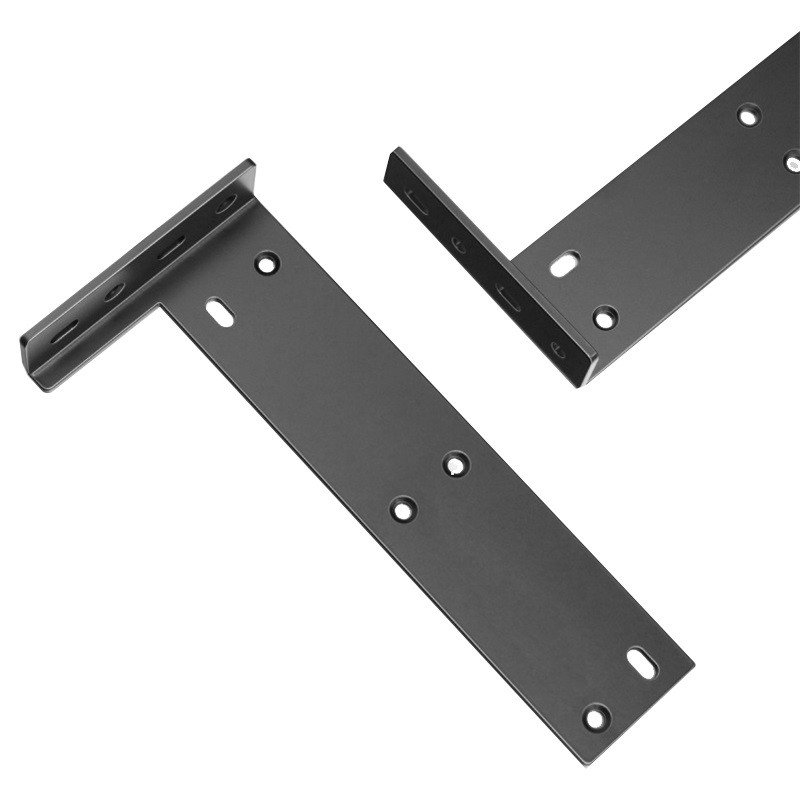
Figure 9: A finished shelf bracket pair before packing, with the coating inspected across the bend.
FAQ: Shelf Bracket
What thickness should a shelf bracket be? It depends on span and load: 2.0-2.5 mm suits light shelving, 3.0 mm and above suits garage and retail shelves, and a top flange adds stiffness without a heavier gauge.
Can the brackets be slotted instead of drilled? Yes. Slots cost slightly more in punching time and let the shelf be levelled on a wall that is not plumb, which is why most heavy-duty shelf brackets are slotted.
What is the minimum order? Around 100 pieces where the part repeats each year; larger brackets are quoted from 20-50 pieces upwards.
How are the brackets packed? In matched pairs with the coated parts separated so they cannot rub, packed to the customer’s carton size and ready for the assembly line.