Last updated: October 12, 2026 | By XHX Metal Engineering Team
An exhaust silencer does two jobs that pull against each other: it has to quieten the exhaust without costing the engine power. Both are decided by the inside of the part – the perforated core, the volume around it and the way the shell is welded – long before anyone hears it running. XHX Metal builds stainless steel exhaust silencers in a 2,000 sqm factory in Dongguan, China.
This article is written for equipment builders, engine and generator makers and aftermarket exhaust brands ordering silencers in production quantities: what the part is made of, where it is used, how the wall thickness, core and packing are specified, what makes a silencer hard to build, how long a programme takes, and three order examples with their volumes and price bands.
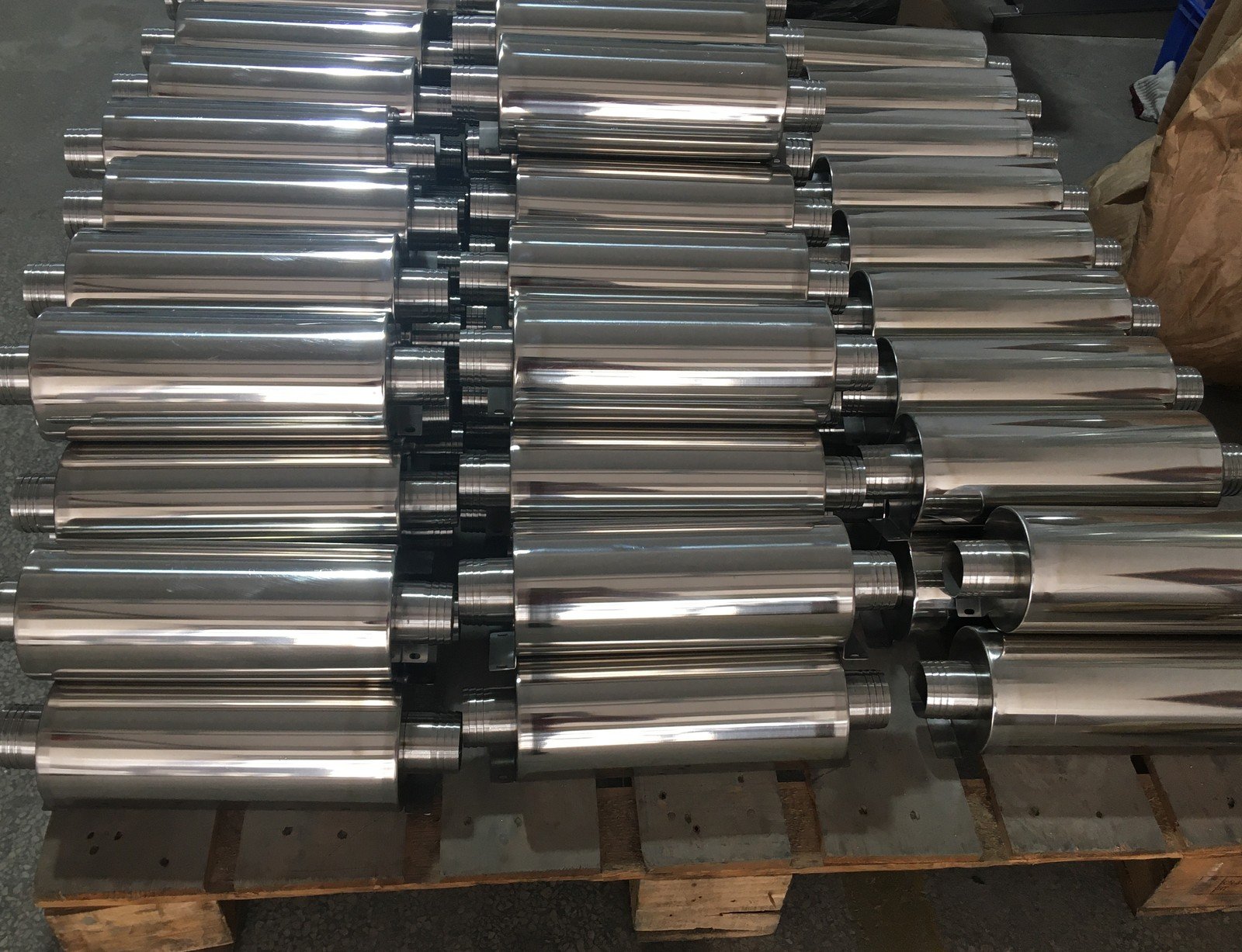
Figure 1: A pallet of finished exhaust silencer bodies in polished stainless steel, ready for packing.
Exhaust Silencer: What We Make
The Silencer, Part by Part
What is inside an exhaust silencer? An outer shell, usually a round tube or a rolled and welded cylinder; a perforated inner core that carries the gas; end caps that close the shell; inlet and outlet connections; and a chamber between the core and the shell that absorbs the sound. Mounting brackets, drain points and heat shields are added when the installation needs them.
Each of those parts changes the result. A larger chamber and a longer core quieten more but add back pressure; a thinner wall saves weight but distorts more when it is welded, which is why the wall thickness is usually the first item we discuss rather than the last.
Formats: Cylindrical, Conical and Straight-Through
The cylindrical silencer is the standard shape, sized by body diameter and length, and it covers most small engine, generator and compressor applications. Conical versions – the tapered body in the photographs – are used where the exhaust has to be reduced in diameter or tucked into a tight space, and they are formed from sheet rather than tube.
Straight-through designs with a perforated core and an absorptive chamber are the quietest for their size at low back pressure. Baffled or chambered designs use internal plates instead of packing, which suits hot or dirty exhaust streams where fibrous packing would burn or clog.
What Ships in an Order
A finished order can be single units for a prototype, matched pairs for a twin-cylinder application, or a pallet of identical units for a production line. Larger orders ship with the units individually protected and stacked so that the polished surface is not marked in transit.
End connections are made to the customer’s mating part: a male or female thread, a flange, a plain spigot for a clamp, or a socket for a slip joint. Getting that interface right is the difference between a silencer that fits on the line and one that is reworked at the bench.
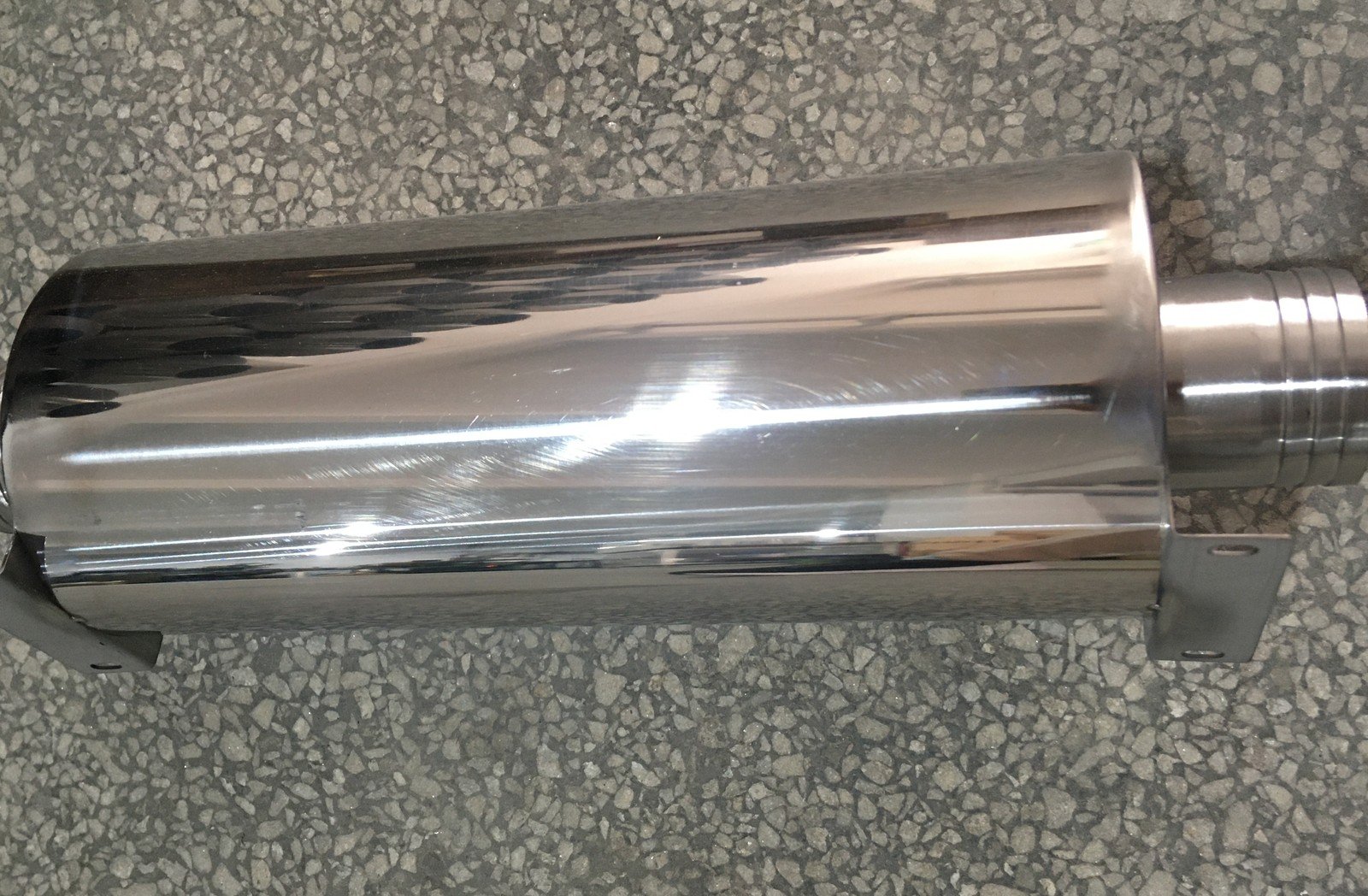
Figure 2: A single exhaust silencer: rolled and welded shell, formed end caps and a threaded outlet.
Where Exhaust Silencers Are Used
Small Engines, Generators and Pumps
The largest share of the exhaust silencers we build goes onto small engines: generator sets, water pumps, pressure washers and compact machinery. These applications are judged on noise, heat and back pressure at the same time, and the silencer is usually one of the last components designed and the first one blamed.
Noise limits for this class of engine are set by regulation in most export markets, which is why the drawing usually arrives with a target rather than a shape. Emission and noise requirements for engines are published by the US Environmental Protection Agency.
Compressors and Industrial Equipment
Compressors, blowers and industrial machinery use the same construction in heavier wall thickness, often with a flanged connection and a drain, because the exhaust stream carries condensate. These silencers are usually unpainted stainless rather than polished, since nobody looks at them after installation.
In this group the exhaust silencer is treated as a pressure part as much as a noise part: the welds have to be sound, the shell has to take vibration, and the mounting has to survive the machine it is bolted to.
Vehicle and Aftermarket Exhausts
Motorcycle, scooter and aftermarket exhaust brands order silencers where appearance matters as much as the noise figure. A polished stainless or mirror-finished exhaust silencer is a visible part of the product, so the weld dressing and the polish become specification items rather than finishing details.
Vehicle exhaust noise is regulated through UN type approval, and the applicable requirements are published by the United Nations Economic Commission for Europe. For an aftermarket brand, the exhaust silencer has to satisfy that framework and the customer’s own sound target, on a part that is also judged on how it looks.
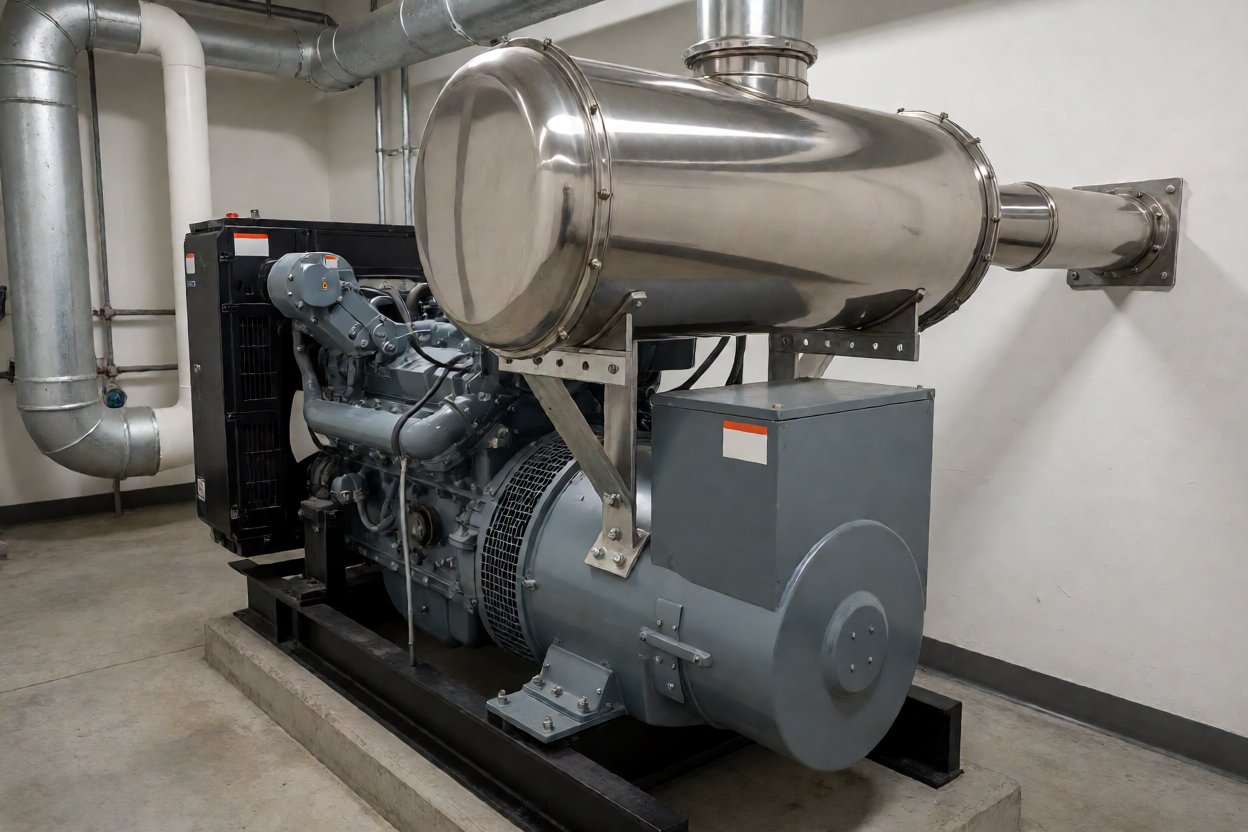
Figure 3: The product in service: an exhaust silencer mounted above a small generator set.
Stainless Steel, Welding and Finish
Grades and Wall Thickness
Most exhaust silencers are built in 304 stainless steel, with 316 for marine, coastal or chemically aggressive exhaust streams. Shell thickness typically runs from 1.0 mm to 2.0 mm and the perforated core from 0.8 mm to 1.5 mm. Grade background is published by the Nickel Institute and the American Iron and Steel Institute.
Wall thickness is a balance. Thin walls keep the weight and the cost of an exhaust silencer down, but they move when they are welded and they dent in service; thicker walls weld cleanly and last, at the price of weight on a part that hangs off an engine.
Core, Packing and Acoustic Fill
The perforated core is the working part of the silencer. Its hole pattern, open area and length set how much sound reaches the absorptive chamber, and the packing material – stainless wool, glass fibre or a hybrid – decides how much of it is absorbed rather than reflected.
Packing choice is usually set by the exhaust temperature. Fibrous packing gives the best sound reduction per kilogram but has a temperature ceiling, so hot applications move to a metallic fill or to a baffled design. This is a conversation to have with the silencer on a drawing, not after it has burned out.
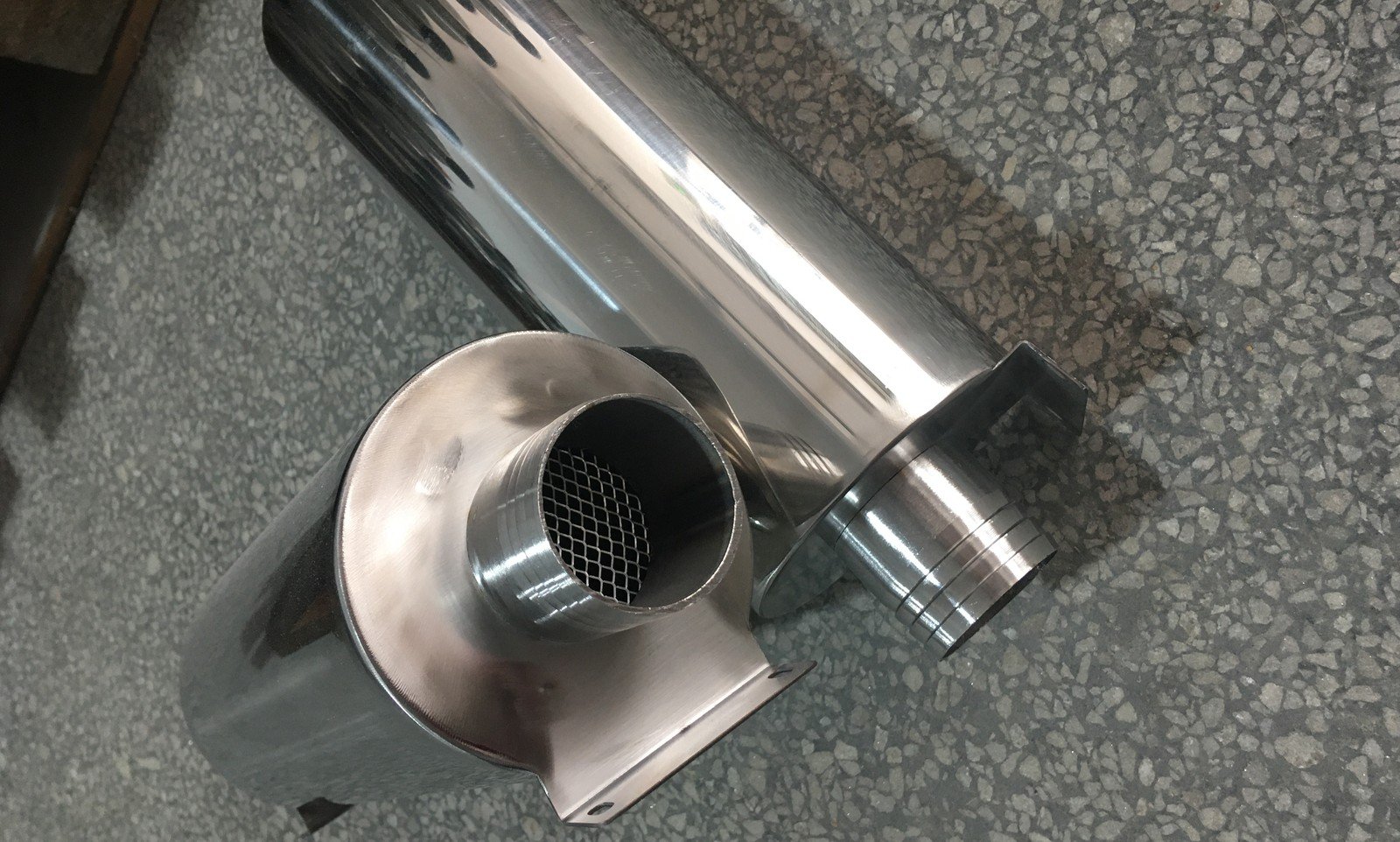
Figure 4: Cut-away view showing the perforated core inside the shell, the part that does the silencing work.
TIG Welding, Passivation and Polishing
Shells, end caps and cores are TIG welded, because the weld has to be sound on a thin wall and clean on a visible part. After welding, stainless parts are passivated to restore the oxide layer, and finishing practice for stainless fabrication is described by the Specialty Steel Industry of North America.
Finish is specified as mill, brushed, polished or mirror. A polished exhaust silencer is handled separately through the shop – gloves, film and dedicated packing – because a scratched mirror shell cannot be repaired. Welding practice for this kind of work is documented by the American Welding Society.
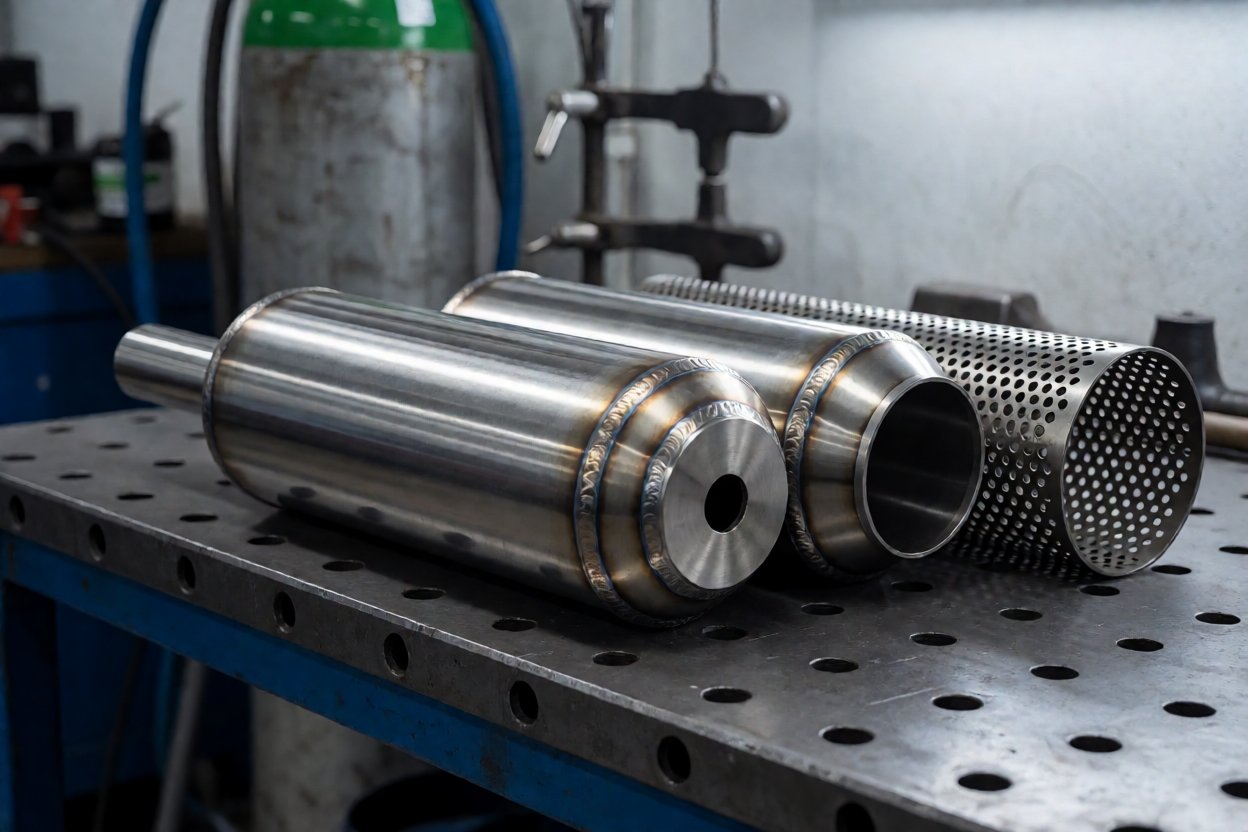
Figure 5: Silencer bodies on the fabrication bench, with the perforated core beside them and the TIG welds visible.
What Makes a Silencer Hard to Build
Thin-Wall Welding and Distortion
Where do silencers go wrong? At the weld, and on the thinnest wall in the assembly. A shell that is 1.0 mm thick pulls as it cools, so a cylinder that was round when it was tacked comes out oval, and an end cap that was flat comes out dished. Once the part is welded, that distortion is expensive to remove.
Our countermeasures are a welded fixture for anything made more than once, a balanced tack sequence around the circumference, back-step welding on long seams and a cooling pause before the final pass. For parts that cannot distort at all, the joint is redesigned so a formed flange carries the seam instead of a butt weld.
Concentricity, Alignment and Fit-Up
The second risk group is alignment. The core, the shell and the end connections have to share one axis, and the inlet has to line up with whatever it bolts to on the engine. An exhaust silencer that is a millimetre out at the flange can cost an hour of fitting on the customer’s line.
Sheet metal work follows general tolerances in line with ASME Y14.5 practice unless the drawing is tighter. On a silencer the critical dimensions are the overall length, the body diameter, the connection geometry and the mounting position, so those are the features recorded batch by batch.
Leaks, Acoustic Consistency and Surface Damage
A leak in a silencer shows up as a whistle rather than as a visible fault, which is why every welded joint is checked before the part is finished. Acoustic consistency is the quieter problem: two units built to the same drawing can differ if the packing density varies, so the fill weight is recorded rather than estimated.
The last risk is cosmetic. Polished shells are damaged by handling, stacking and packing, and an exhaust silencer that arrives scratched fails an inspection that has nothing to do with how well it silences. Film, separation and individual protection are part of the product, not an extra.
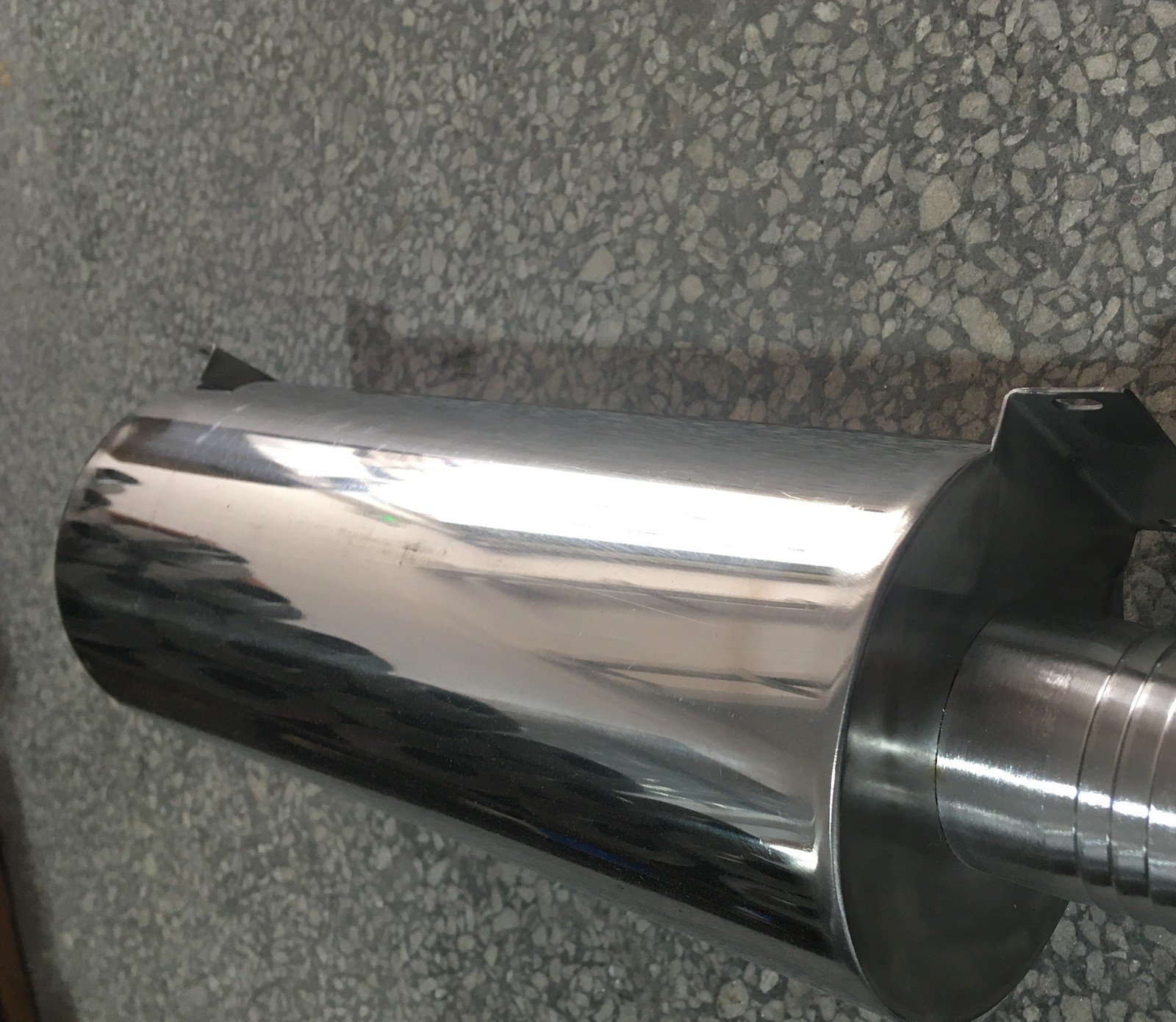
Figure 6: A conical variant with a flanged outlet, formed from sheet and welded into the shell.
Drawings, Lead Times and Documentation
What You Send Us
To quote an exhaust silencer we need the body diameter and length, the wall thickness, the connection type at each end, the mounting arrangement, the finish, the intended exhaust temperature and the annual quantity with its batch split. A dimensioned 2D drawing is ideal and a STEP model accelerates the review.
Where the design is still open, send the engine, the space available and the noise target instead. We will propose a body size, a core pattern and a packing that fit the application, and quote that exhaust silencer rather than a shape that will not meet the target.
Sampling and Production Lead Times
Samples follow in 5-10 working days after the drawing is approved, and the first production batch ships 15-30 days later. Rolled and welded silencers move quickly because tooling is a fixture and a program rather than a die.
Two things move the date: a change to the connection after the sample, and a packing or finish specification that arrives late. Both are cheaper to settle before the first batch, which is why the sample is treated as the specification for an exhaust silencer programme.
Assembly, Testing and the Documents Included
Assembly and testing are part of the order: core and packing fitted, end connections welded and checked, mounting brackets attached, the unit leak-tested and, where the customer asks for it, a sound or flow check recorded on the sample.
Documents ship with the parts: material certificates, a first article inspection report, weld and leak test records, and batch traceability. The factory holds ISO 9001:2015 and CE, and works with SGS for third-party inspection. US buyers checking landed cost use the Harmonized Tariff Schedule, and CE marking obligations are set out by the European Commission.
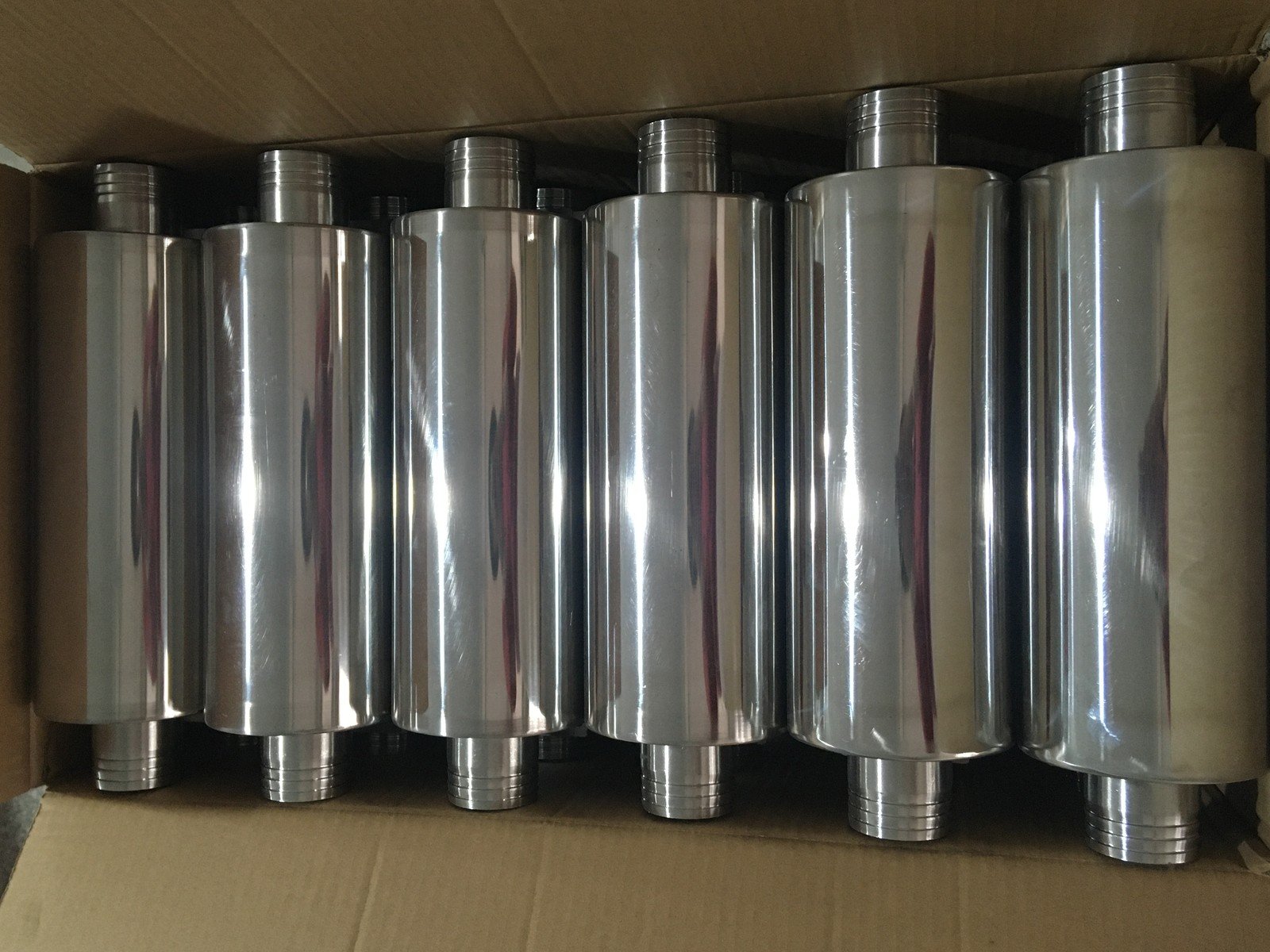
Figure 7: A matched set of exhaust silencers boxed for shipment, each unit protected individually.
Programmes We Have Delivered
Case 1: Generator Manufacturer – Production Silencers
A generator manufacturer ordered cylindrical exhaust silencers in 1.5 mm 304 stainless with a threaded inlet, a flanged outlet and a mounting bracket. Batches ran 50-300 units, three to six times a year, with a minimum of 20-50 pieces and FOB prices in the $15-80 range per unit depending on size and finish.
The first batch shipped 15-30 days after drawing approval, following a sample round of 5-10 working days. Holding the connection geometry across batches removed fitting problems on the customer’s assembly line, and annual spend sat in the $30k-60k band with SGS inspection before shipment.
Case 2: Aftermarket Brand – Polished Silencer Kits
An aftermarket exhaust brand ordered polished exhaust silencers in matched pairs with a mirror finish, a slip-joint inlet and a band clamp outlet: batches of 10-40 pairs, two to four times a year, minimum 5-10 pieces each, FOB prices between $100 and $400 per pair.
The programme lived or died on surface quality, so film protection, individual bagging and a separated crate were specified at sample stage. The first batch shipped in 20-35 days, and annual spend landed in the $25k-70k band.
Case 3: Distributor – Cores, Caps and Spare Parts
A parts distributor stocked perforated cores, formed end caps and mounting brackets rather than complete units: 200-800 pieces per batch, four to eight batches a year, a 100 piece minimum and FOB prices from $2 to $15 per piece.
These parts match the finish and the dimensions of the finished exhaust silencer, so a unit repaired two years later still fits. Annual spend stayed in the $15k-40k band with a 4-6% step down in the second year as the parts were nested together.
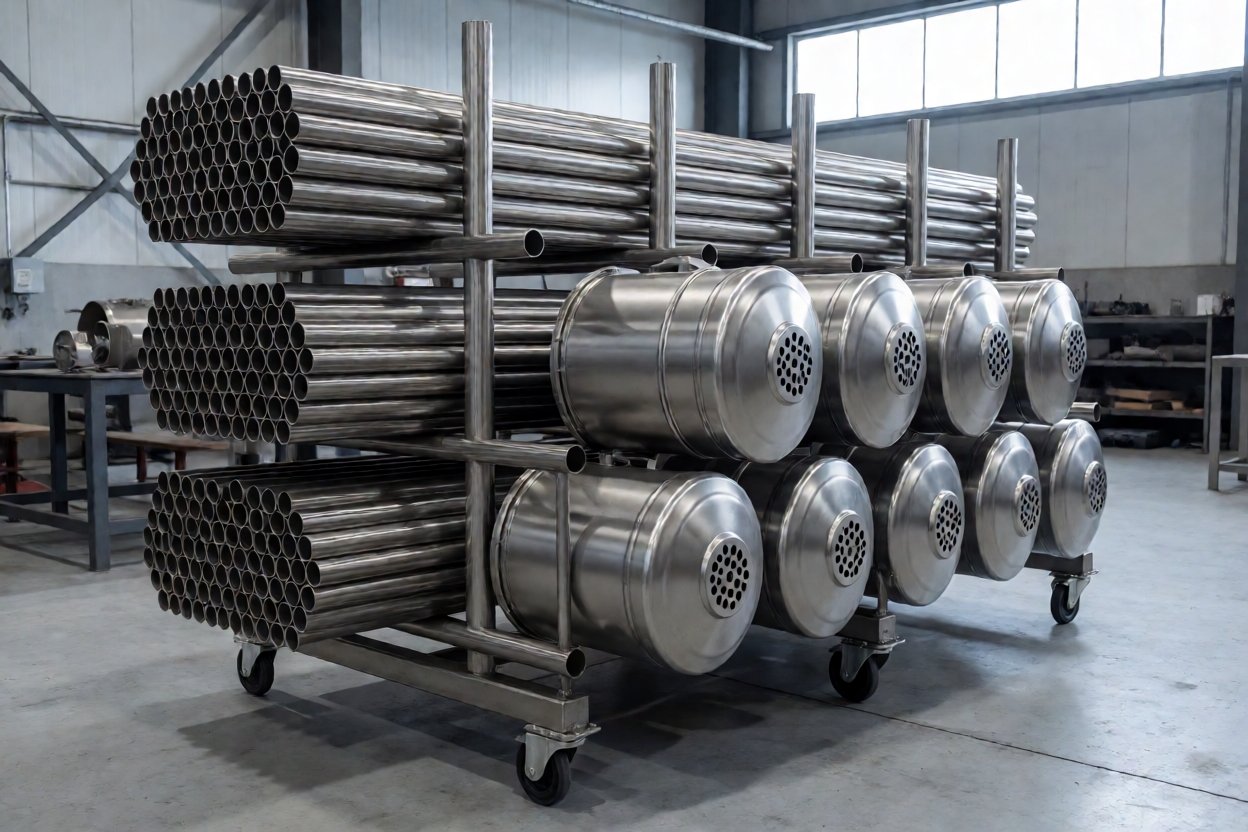
Figure 8: Round stainless tube and finished silencer bodies in the fabrication shop.
Summary and Next Steps
How to Specify an Exhaust Silencer
Specify the exhaust silencer from the engine backwards. Fix the noise target, the exhaust temperature, the space and the mating connection, then choose the body size, the core and the packing that satisfy them. The shape of the part is the last decision.
Then ask the supplier two questions: how the shell is held while it is welded, and how the packing weight is controlled. Those two answers decide whether the tenth batch silences like the first.
Why XHX Metal
XHX Metal keeps the whole exhaust silencer in one 2,000 sqm factory in Dongguan: laser cutting on two 6kW machines with +-0.01 mm positioning accuracy, CNC punching for perforated patterns, rolling, CNC bending, TIG welding, passivation and polishing with finishing partners, then assembly, leak testing and packing. Samples follow in 5-10 working days and the first batch in 15-30 days.
The company has made welded stainless assemblies for equipment and aftermarket brands in North America and Europe for over a decade, holds ISO 9001:2015 and CE, and runs 500,000 parts a year; support networks are described by NIST MEP.
How to Start Your Programme
Send a drawing, a sample or the engine details with the noise target and the annual quantity. What the factory builds is set out on the sheet metal capabilities page, finished parts are on the products page, and quoting starts from the contact page; project enquiries also go to sales01@xinghaoxin.com.
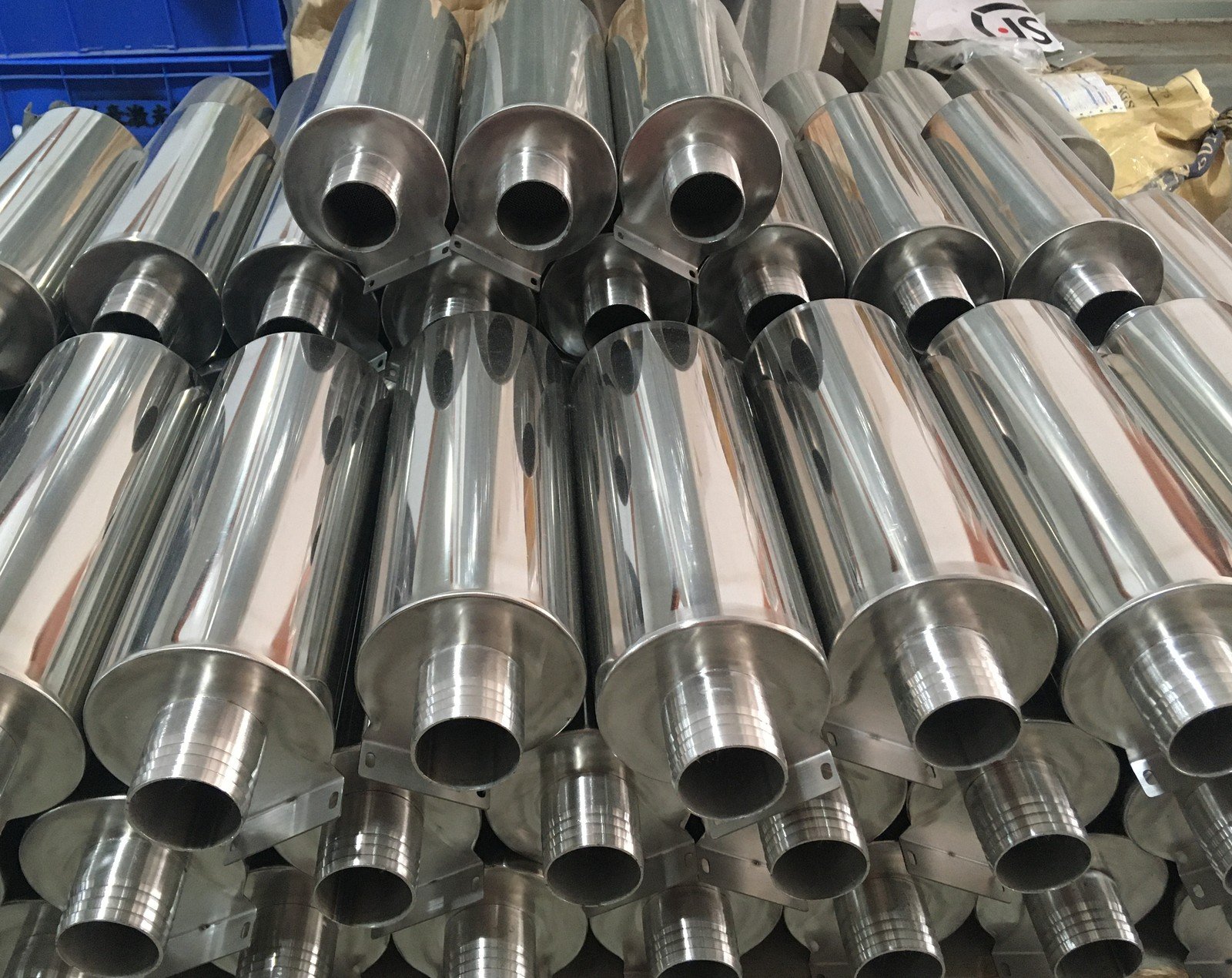
Figure 9: Finished exhaust silencers stacked after inspection, before they are boxed.
FAQ: Exhaust Silencer
What is the difference between a silencer and a muffler? They are the same part; silencer is the usual term in Europe and muffler in North America, both describing a component that reduces exhaust noise.
Does a silencer reduce engine power? Any silencer adds some back pressure. A straight-through core with the right open area keeps that low, which is why the core pattern and the body volume are matched to the engine rather than copied.
Which stainless grade should we use? 304 covers most exhaust applications; 316 is used for marine and corrosive environments, and the choice is set by the exhaust stream rather than by the look of the part.
What is the minimum order? Around 20-50 pieces for a mid-size exhaust silencer that repeats through the year, and about 100 pieces for spare parts.