Power equipment enclosure manufacturing is the sheet metal discipline behind the cabinets that protect UPS systems, industrial power supplies, battery backup, and distribution gear. These are large, heavy enclosures built for heat, load, and electrical safety, and they are produced in smaller batches than typical sheet metal products because each power system is engineered to its site. Standards and practices from UL, NEMA, and IEEE shape how power equipment is built and installed, and TIA and Uptime Institute guidance define what data center power rooms expect from their infrastructure.
This guide follows the full journey of a custom power enclosure program in seven steps: the product and its families, the applications each serves, material selection, production difficulty, lead times, past case studies with realistic purchasing data, and a practical summary. Whether you are a UPS OEM sourcing rack-mount enclosures, a data center integrator buying floor-standing cabinets, or a telecom operator specifying battery backup enclosures, the information here will help you brief a fabricator, plan realistic timelines, and avoid the thermal and fit problems that appear during commissioning.
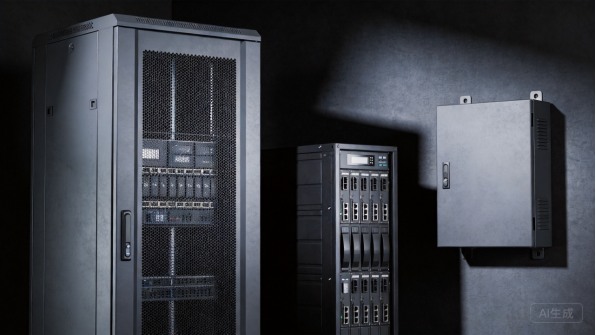
Figure 1: Power equipment enclosures in rack-mount, floor-standing, and wall-mount configurations.
The Product: What Are Power Equipment Enclosures
Product Families and Configurations
Power equipment enclosures fall into three main families: rack-mount enclosures, floor-standing cabinets, and wall-mount boxes. Rack-mount enclosures hold UPS modules and power distribution units in 19-inch racks, floor-standing cabinets house larger UPS systems, battery strings, and distribution panels, and wall-mount boxes serve smaller power supplies and branch distribution. Each family has its own size, load, and installation logic.
Within each family, enclosures vary by capacity, cooling, and access. A small wall-mount box may be a formed shell with a hinged door, while a floor-standing UPS cabinet can be a welded frame with doors front and rear, internal mounting frames, cable management, and ventilation systems. Power equipment enclosure manufacturing spans all of these, and a fabricator that handles large-panel forming, welding, and assembly can supply the full range to power equipment OEMs.
Core Components and Their Roles
The core components are the cabinet body, doors, internal mounting frames, cable management, ventilation, and grounding. The body carries the structural load and defines the equipment envelope, doors provide service access and protection, and internal mounting frames carry the UPS modules, batteries, breakers, and busbars. Cable management routes power and signal cabling cleanly, and ventilation removes heat from the enclosed equipment.
Grounding is a safety-critical component: the enclosure provides the equipment grounding path, with grounding bars, studs, and continuity across doors and panels. Sealing and gasketing protect against dust and moisture where the rating requires it. Every component is a fit point, and the enclosure design must hold tolerances so doors align, panels mount, and the cabinet assembles without field modification.
Cable entry plates and gland kits are prepared to the wiring plan, so field installation does not require drilling on site.
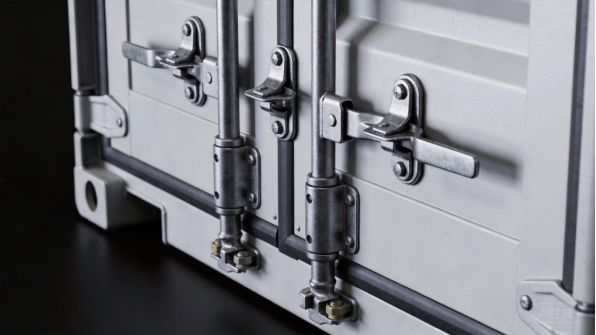
Figure 2: Enclosure details include locking doors, sealing gaskets, and cable entry plates.
Design Drivers: Heat, Load, and Electrical Safety
Power enclosure design is driven by three requirements: heat removal, structural load, and electrical safety. UPS systems generate heat that must be exhausted through ventilation, fans, or air-conditioned rooms, so the enclosure’s airflow path and fan mounting are engineered from the thermal load. The cabinet must also carry the weight of modules and batteries, which drives frame strength and base design.
Electrical safety shapes the construction: clearances, insulation, barriers, and grounding all follow the equipment’s ratings and the standards that apply. UL evaluations and NEMA ratings define what buyers expect from power enclosures, and IEEE standards cover power systems practice. These drivers are settled at quotation, not discovered at commissioning, because they decide the enclosure’s material, geometry, and documentation.
Customization in Power Equipment Enclosure Manufacturing
Custom power equipment enclosure manufacturing exists because every power system is engineered to its site and duty. Buyers customize cabinet dimensions, door layouts, internal mounting, cable entry patterns, ventilation, colors, and labeling, and they expect the enclosure to assemble with their modules and busbars. Custom fabrication also supports product families: one cabinet platform can serve several power ratings with different internal layouts.
Customization includes compliance details such as grounding provisions, barrier placement, and documentation for the equipment’s certification. ANSI and related standards inform enclosure construction, and buyers increasingly ask for documented materials and test evidence. A fabricator that can provide material certifications and consistent batch quality gives power equipment OEMs the file they need for UL and project approvals.
Use Cases and Applications
Data Centers and IT Rooms
Data centers and IT rooms are the largest market for UPS enclosures. Rack-mount and floor-standing UPS cabinets protect the power infrastructure that keeps servers running, and they are installed in power rooms and IT corridors where space, cooling, and service access are planned. Uptime Institute tier guidance and TIA data center standards shape what power rooms expect, and the enclosures are specified for capacity, redundancy, and maintainability.
For data center programs, the enclosure must arrive on schedule for commissioning and match the room layout. UPS OEMs order enclosures in production batches against their equipment schedule, and integrators buy floor-standing cabinets per project. Power equipment enclosure manufacturing serves this demand with consistent quality and documentation, and buyers value fabricators that understand the power room environment.
Industrial Power and Control
In power equipment enclosure manufacturing, industrial plants use power enclosures for UPS systems, power supplies, drives, and distribution in control rooms and machine areas. These enclosures are built for heat, vibration, and dust, with ventilation sized to the equipment and doors that open for regular service. The NEMA type system guides construction for industrial environments, and buyers specify the rating for the plant’s conditions.
Industrial programs are often engineered to order: the enclosure is sized to the equipment list and the site, and the fabricator builds to a project drawing. Documentation of materials, grounding, and construction is expected, and delivery is scheduled around the plant’s commissioning plan. For fabricators, industrial power work is lower volume but higher value, and it demonstrates the large-panel and welding capability that power OEMs need.
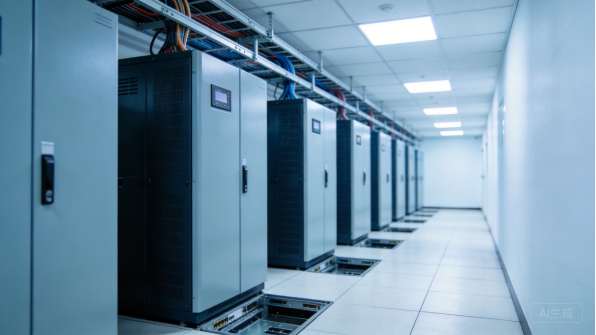
Figure 3: Floor-standing UPS cabinets serve power rooms in data centers.
Telecom and Network Backup Power
Telecom and network sites use battery backup enclosures that keep communication equipment running through power outages. These enclosures house battery strings, rectifiers, and distribution, and they are built for cabinet or wall installation at cell sites and network huts. Sealing, ventilation, and battery weight are the main design drivers, and the enclosures must survive outdoor and semi-outdoor environments.
Telecom programs follow operator specifications and standards, and the enclosures are documented for the site approval process. Battery enclosures are heavy, so base design and lifting points are part of the engineering, and the internal layout is matched to the battery and rectifier sizes. For fabricators, telecom work is repeat business as operators expand networks and upgrade sites.
Site engineers also check door swing and service access when the enclosure is specified, which affects the cabinet layout.
Energy Storage and Renewable Integration
Energy storage and renewable systems use power enclosures for inverters, battery management, and grid interconnection. These enclosures are built for outdoor installation at solar and storage sites, with weather sealing, corrosion protection, and ventilation for high-power electronics. The cabinet must carry heavy components and survive the site environment for decades.
Renewable programs are specification-driven, with documentation for grid codes and project approval. Outdoor enclosures need UV-stable finishes, sealed doors, and filtered ventilation, and the internal layout is matched to the inverter and BMS equipment. For fabricators, this is a growing market that rewards corrosion engineering and large-enclosure experience.
Battery rooms and inverter cabinets also need ventilation matched to the equipment’s heat rejection, which the enclosure design documents for the site engineer.
Material Selection
Cold-Rolled and Galvanized Steel
Cold-rolled steel is the standard material for power enclosures, protected by powder coating. It forms cleanly, welds predictably, and carries the heavy loads of UPS modules and batteries, and its mechanical properties are documented in references such as MatWeb’s materials database for comparison. Typical thicknesses range from 1.2 mm for wall boxes to 2.0 mm or more for floor-standing cabinets that carry equipment weight.
Galvanized steel adds a zinc coating for internal parts and outdoor duty, and the American Galvanizers Association documents the long service life of zinc coatings. For power enclosures, galvanized internal panels and mounting frames resist corrosion while painted exteriors carry the product finish. Both materials cut, bend, and weld predictably, which keeps fabrication repeatable across cabinet sizes.
Internal mounting frames are often punched from the same material family, keeping the enclosure system consistent and traceable.
Stainless Steel
Stainless steel, primarily grades 304 and 316, is specified for power enclosures in marine, food, pharmaceutical, chemical, and coastal installations where corrosion resistance cannot rely on coating. SSINA provides grade selection guidance for corrosive service, with grade 316 adding molybdenum for chloride resistance. Stainless enclosures never need recoating and tolerate washdown and chemical exposure.
Stainless is more expensive and harder to form than carbon steel, and it demands dedicated handling to prevent contamination that causes surface rust. Welds must be controlled and finished to preserve corrosion resistance. For power equipment in demanding environments, the stainless premium is justified by service life, and the fabricator’s stainless experience shows in weld quality and surface finish.
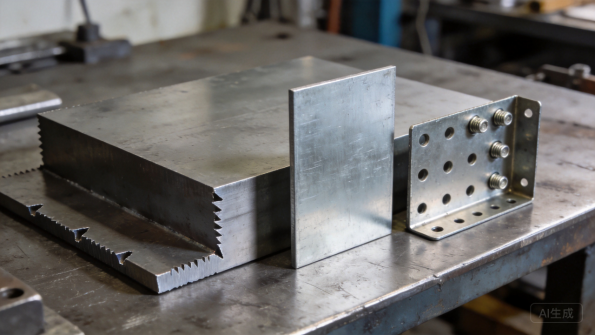
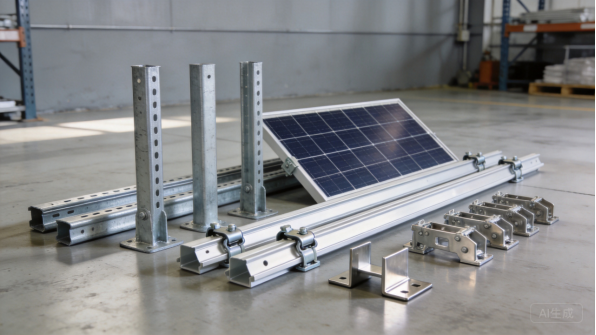
Figure 4: Steel panels and punched mounting plates cover the power enclosure material range.
Aluminum
In power equipment enclosure manufacturing, aluminum enclosures appear where weight matters: portable power equipment, marine installations, and large panels handled during installation. Aluminum is about one-third the weight of steel, resists corrosion naturally, and conducts heat well, which helps with thermal management. Its properties and alloy selection guidance are cataloged by references such as AZoMaterials.
The trade-offs are strength and cost: aluminum enclosures need thicker sections to reach the same stiffness, and the material costs more per kilogram. Welding aluminum requires controlled heat input, and galvanic isolation is needed at joints with steel hardware. For weight-critical and highly corrosive applications, aluminum is often the right choice despite the premium.
Finishes, Insulation, and Hardware
The finish defines the enclosure’s appearance and outdoor durability. Powder coating, applied electrostatically and cured in an oven, forms a tough 60 to 80 micron film, and the Powder Coating Institute publishes technical resources on coating selection and testing, with performance verified under ASTM International standards including salt spray and adhesion tests. Textured greys and blacks are standard for power equipment.
Insulation and hardware complete the system: thermal insulation for outdoor cabinets, sealing gaskets for rated enclosures, and stainless or zinc-plated fasteners matched to the environment. Grounding hardware, cable glands, and lifting points are specified with the electrical design. Agreeing the finish, sealing, and hardware specification at quotation prevents the most common field complaints: corrosion, leaks, and missing grounding provisions, and the finish is also part of the enclosure’s appearance at site handover.
For outdoor cabinets, sun shields and drip lips are formed into the roof panels, and the coating is selected for UV resistance.
Production Difficulty
Laser Cutting and Cutout Precision
Power equipment enclosure manufacturing begins with laser cutting and punching, which produce the body panels, doors, and the cutouts for vents, cable entries, and displays. Fiber laser systems hold tolerances around plus or minus 0.1 mm, and at XHX Metal two 6kW fiber laser cutting machines deliver plus or minus 0.01 mm positioning accuracy, which matters when door and panel cutouts must line up across a large cabinet. CNC punching adds the repetitive hole patterns that mounting frames and vents need.
Cutout quality is visible on a power enclosure: burrs around cable entries damage wiring, edge roughness around vent louvers tears gaskets, and pierce points must sit in hidden areas. Nesting software arranges parts to minimize scrap across the cabinet set, and cutting and punching parameters are tuned per material and thickness. The cutting stage decides whether doors fit, panels mount, and the enclosure passes inspection.
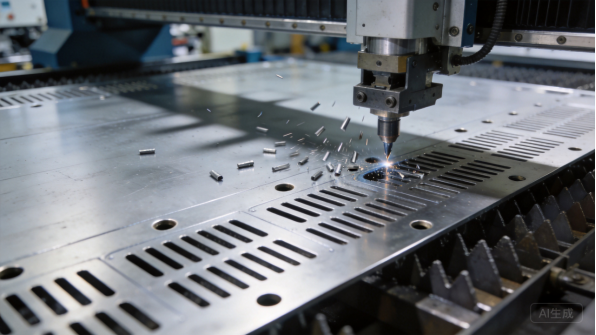
Figure 5: CNC turret punching forms cutouts and louvers in large enclosure panels.
CNC Bending and Large Panel Flatness
Bending converts flat blanks into the cabinet body, doors, and mounting flanges, and large panels are the hardest to form: a slight bend error across a long flange becomes a visible gap at the far end. Springback compensation is tuned for each material, and Engineers Edge publishes bend allowance and deduction references used to lay out blanks and predict finished dimensions.
Modern CNC press brakes with programmable back gauges hold bend positions and angles consistently, and first articles are verified against the drawing before production. For power enclosures, the critical checks are door opening geometry, flange flatness, and base squareness, because a warped frame will not align with the raised floor or the modules inside. These measurements are checked on the first article and sampled during production.
Welding, Assembly, and Internal Fit
Welding joins the cabinet frame, doors, and mounting brackets, and large enclosures are the most distortion-prone parts a fabricator builds. Heat from welding can pull a long panel out of flatness, so parts are clamped in fixtures that hold geometry while the weld cools, and TWI Global provides technical guidance on controlling distortion in welded steel.
Assembly adds the internal hardware that makes the enclosure functional: mounting frames, busbar supports, cable management, fans, and doors are fitted with alignment checks. Internal fit is a quality point because the modules and busbars must install without forcing, and door operation is verified on the complete cabinet. For power OEMs that assemble in-house, the fabricator ships machined and finished enclosures ready for their equipment line.
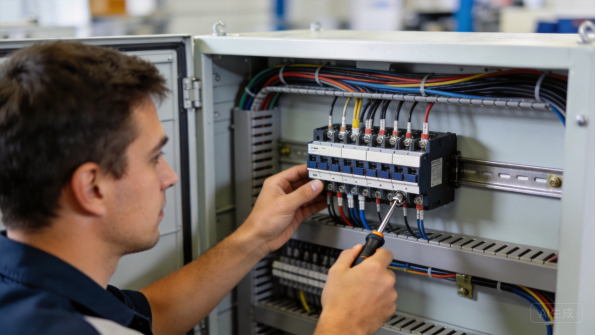
Figure 6: Internal assembly fits busbars, distribution units, and cable management.
Quality Control and Electrical Safety Coordination
Power enclosure quality control combines dimensional inspection with functional and safety checks. First articles are inspected against the drawing, verifying door openings, mounting patterns, and flatness, and production batches follow a control plan with sampling. Coating thickness, gasket fit, hinge alignment, and door operation are checked at defined points, and grounding continuity is verified on the complete assembly.
Electrical safety coordination is the power-specific step: grounding points, barriers, and clearances are checked against the equipment’s requirements, and documentation supports the OEM’s UL or project file. UL and NEMA practice guide these checks, and buyers need the evidence for certification and site approval. A fabricator that treats grounding and documentation as part of the product is the one that passes power room audits.
Production Lead Times
RFQ, Engineering Review, and Prototypes
A power equipment enclosure manufacturing program starts with an RFQ: drawings or equipment specification, material, finish, quantities, and target timing. The fabricator’s engineering team reviews the design for manufacturability, checking door fit, internal mounting, cable entry, and sealing, and returns a quotation with comments within one to three business days. Prototypes are typically delivered in twelve to twenty business days because large-panel programs need careful setup.
The prototype is where enclosure fit gets validated: doors are opened and closed, internal frames are fitted with the modules, and cable entries are checked against the wiring plan. Prototype feedback should include fit notes and suggested drawing changes. For power programs, a fully assembled sample with internal hardware, not just the shell, is worth the cost because it proves the cabinet installs and serves before production.
For standard cabinet sizes, previously approved drawings shorten the engineering review to a confirmation check.
Tooling and Process Setup
Most power enclosures are produced with laser cutting, CNC punching, and CNC bending, which keeps tooling costs low and design changes inexpensive. The setup that matters is process tooling: bending programs with verified parameters, welding fixtures for cabinet frames, and inspection gauges for door openings and mounting patterns. Building this setup typically takes one to two weeks for a new cabinet.
Because power enclosures are large and produced in limited volumes, dedicated stamping dies are rarely justified; the economics are reviewed at quotation, and flexible fabrication is usually the right route. Buyers should expect the fabricator to confirm this in the quotation rather than assume expensive tooling is required.
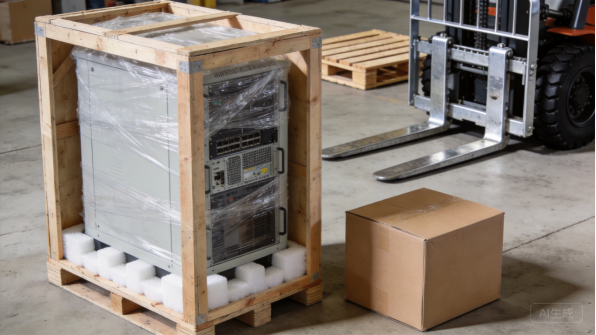
Figure 7: Floor-standing enclosures ship crated with protective supports.
Production Batches and Volume Planning
In power equipment enclosure manufacturing, production runs are small by design: a floor-standing cabinet line typically produces 50 to 200 units per month depending on size, and larger cabinets are built in batches of 20 to 80 units because welding, finishing, and assembly capacity is the constraint. Typical lead times are 25 to 45 business days, with coating and assembly consuming the largest share.
Forecast sharing keeps small-batch lead times stable. When OEMs share rolling forecasts, the factory reserves material and finishing capacity and orders long-lead items such as specific steel grades or custom colors in advance. Galvanized and cold-rolled coils are usually on hand, while stainless sheets and custom finishes may add one to two weeks. A clear schedule with milestone dates makes the bottleneck visible before it becomes a delivery delay.
Packaging, Logistics, and Documentation
Power enclosures are large, heavy, and easily scratched, so packaging is a real cost and schedule item. Floor-standing cabinets are wrapped in protective film and crated with foam supports, wall boxes ship in reinforced cartons, and all shipments use rust-preventive paper or VCI film against container condensation. The fabricator should provide crate dimensions, gross weight, and loading photos for freight planning.
Documentation accompanies every shipment: packing lists, material certificates, grounding and coating records, and dimensional reports where agreed. Buyers should confirm the documentation set during quotation, because power projects often require records for the commissioning file. Communication follows clear milestones, with photos at each stage, so OEMs and integrators can track progress without site visits.
Past Case Studies
UPS OEM: Rack-Mount Enclosure Family
A UPS OEM needed a family of rack-mount enclosures in 2U to 6U heights for its modular UPS range, built from 1.2 mm cold-rolled steel with ventilation cutouts and front doors. The program runs at a modest 80 to 120 enclosures per month with a minimum order of 30 units, priced from $180 to $420 FOB depending on size, for an annual value of roughly $360,000.
XHX Metal delivered the first articles with dimensional verification in 18 business days, and the first production batch of 60 enclosures shipped in 26 business days. Monthly releases now follow the OEM’s forecast, and nesting and punching improvements reduced unit cost by 4 percent after the first year. The enclosures assemble with the OEM’s modules without modification, and each shipment includes material certificates and dimensional records.
The program shows how power equipment enclosure manufacturing supports modular UPS platforms in small, predictable monthly batches.
Data Center Integrator: Floor-Standing UPS Cabinet
A data center integrator needed floor-standing UPS cabinets for a power room upgrade: 40 production cabinets plus 10 spare units, built from 2.0 mm steel with front and rear doors, internal mounting frames, and cable management. Unit prices ranged from $900 to $1,800 FOB depending on configuration, for a total order value of about $52,000.
The cabinets were produced in two batches of 25 units, with the first batch delivered in 38 business days and the second four weeks later, shipped as part of two shared 40-foot containers. Each cabinet was fitted with the integrator’s busbar and module layout at the factory dry-fit, and grounding continuity was verified on every unit. The integrator specified the same cabinet on a second site, ordering 30 units the following quarter.
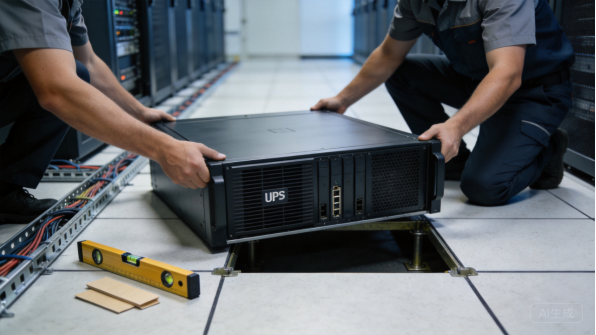
Figure 8: Technicians position floor-standing cabinets in a data center power room.
Telecom OEM: Battery Backup Enclosures
A telecom OEM needed battery backup enclosures for network sites, with battery shelves, rectifier mounting, sealed doors, and outdoor-rated finishes. The program runs at about 40 enclosures per month with a minimum order of 20 units, priced from $350 to $750 FOB depending on battery capacity, for an annual value of roughly $250,000.
First articles were IP tested and dimensionally verified, and the first batch of 40 enclosures shipped in 35 business days. The internal battery layout was matched to the OEM’s battery sizes, and lifting points were verified on the prototype. The program now delivers quarterly releases with material certificates and coating records, and the OEM added a larger variant for new sites in the following year.
Industrial Distributor: Wall-Mount Power Boxes
An industrial power distributor needed wall-mount power distribution boxes in standard sizes, with hinged doors, cable entry plates, and a textured grey finish. The program runs at 150 to 250 boxes per month with a minimum order of 50 units, priced from $60 to $150 FOB depending on size, for an annual value of roughly $300,000.
The boxes are produced in monthly batches of 200 units, delivered in 24 to 28 business days, and shipped as part of consolidated containers with the distributor’s other products. Coating thickness and door alignment are verified on a sampling basis, and the distributor stocks standard sizes against pull-through demand. The program has run for two years with consistent quality, and a lockable door option was added in the third year.
Summary and Next Steps
Key Takeaways
Power equipment enclosure manufacturing is a heat, load, and electrical-safety-sensitive discipline that demands more than sheet metal work. The material decision drives cost and performance, from coated steel for standard cabinets to stainless for corrosive environments, and ventilation, grounding, and sealing must be specified for the equipment and the site. Production difficulty concentrates in large-panel flatness, internal fit, and grounding coordination, which are exactly where experienced fabricators differentiate themselves.
Lead times follow a predictable path: engineering review in days, prototypes in two to four weeks, process tooling in one to two weeks, and production in four to seven weeks per batch, with runs of 20 to 200 units depending on cabinet size. Forecast sharing and staged delivery planning keep OEM and project programs on schedule. Buyers who settle materials, ratings, and documentation requirements before quoting will have smoother programs than those who discover requirements at commissioning.
Why XHX Metal
XHX Metal is a privately owned sheet metal manufacturer in Dongguan, China, with a 2,000 square meter factory, about 30 employees, and an annual capacity exceeding 500,000 pieces. The factory operates under an ISO 9001:2015 quality management system with CE and SGS certifications, and it produces custom enclosures, cabinets, panels, and assemblies for export customers with packaging designed for ocean freight. Two 6kW fiber laser cutting machines, CNC punching, CNC press brakes, and TIG and MIG welding cover the fabrication side of power enclosure work.
The company supports buyers from design review through production, provides first-article inspection reports and material certificates, and coordinates coating, grounding, and dimensional verification when required. For power equipment enclosure manufacturing programs, buyers can review related sheet metal fabrication services and product pages, and the team will structure quotations, quality documentation, and delivery schedules to match the program’s small-batch needs.
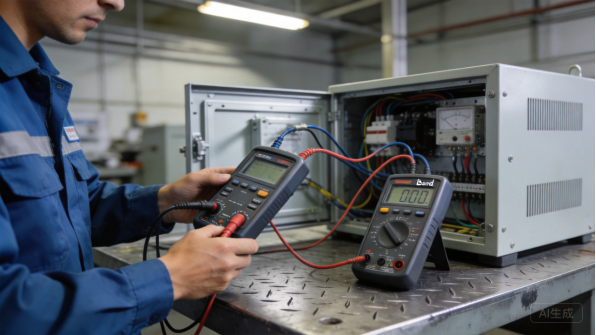
Figure 9: Insulation and grounding testing verify the enclosure before shipment.
How to Start Your Project
Start with a STEP or STP file and a drawing that states material, finish, rating, quantities, and documentation requirements. If the design is not finalized, send photos or sketches of the power equipment the enclosure must house, the site environment, the capacity and heat load, and the annual volume, and the engineering team will recommend a manufacturable, rating-ready design. The typical path is: engineering review, quotation, prototype, first-article inspection, production, and shipment, with clear communication at each milestone.
To discuss a power enclosure program, contact Barry at +86 13244963694 or sales01@xinghaoxin.com, or send your design through the XHX Metal website. With clear requirements and the right partner, a power enclosure moves from drawing to production in weeks, with fit, grounding, and finish that pass commissioning.
What to Ask a Fabricator
Before placing an order, ask the fabricator three questions: which materials and thicknesses it handles for large cabinets, how it verifies door fit and internal mounting on first articles, and what grounding, coating, and dimensional documentation it can provide. The answers reveal whether the shop treats power enclosures as engineered cabinets or as simple metal boxes.
Also confirm small-batch production planning, because power enclosures are built in limited volumes and the fabricator must schedule welding, finishing, and assembly around them. A fabricator that lists test methods and acceptance criteria in the quotation is treating quality as part of the product, and that is the partner worth building a power line with.