Last updated: September 19, 2026 | By XHX Metal Engineering Team
An e-bike battery box is the metal case that carries the cell pack on a bicycle frame, and it is one of the most demanding enclosures in light electric vehicles. It has to hold a heavy pack through vibration, seal against rain and road spray, spread heat away from the cells, allow the pack to be removed and locked, and still follow the frame line closely enough to look intentional.
This guide is written for buyers who have to specify that enclosure. It covers the formats an e-bike battery box takes, the materials and sealing that decide whether it survives a wet winter, the thermal and mechanical risks, the standards and documents that travel with an order, and three production programmes with real purchasing data behind them.
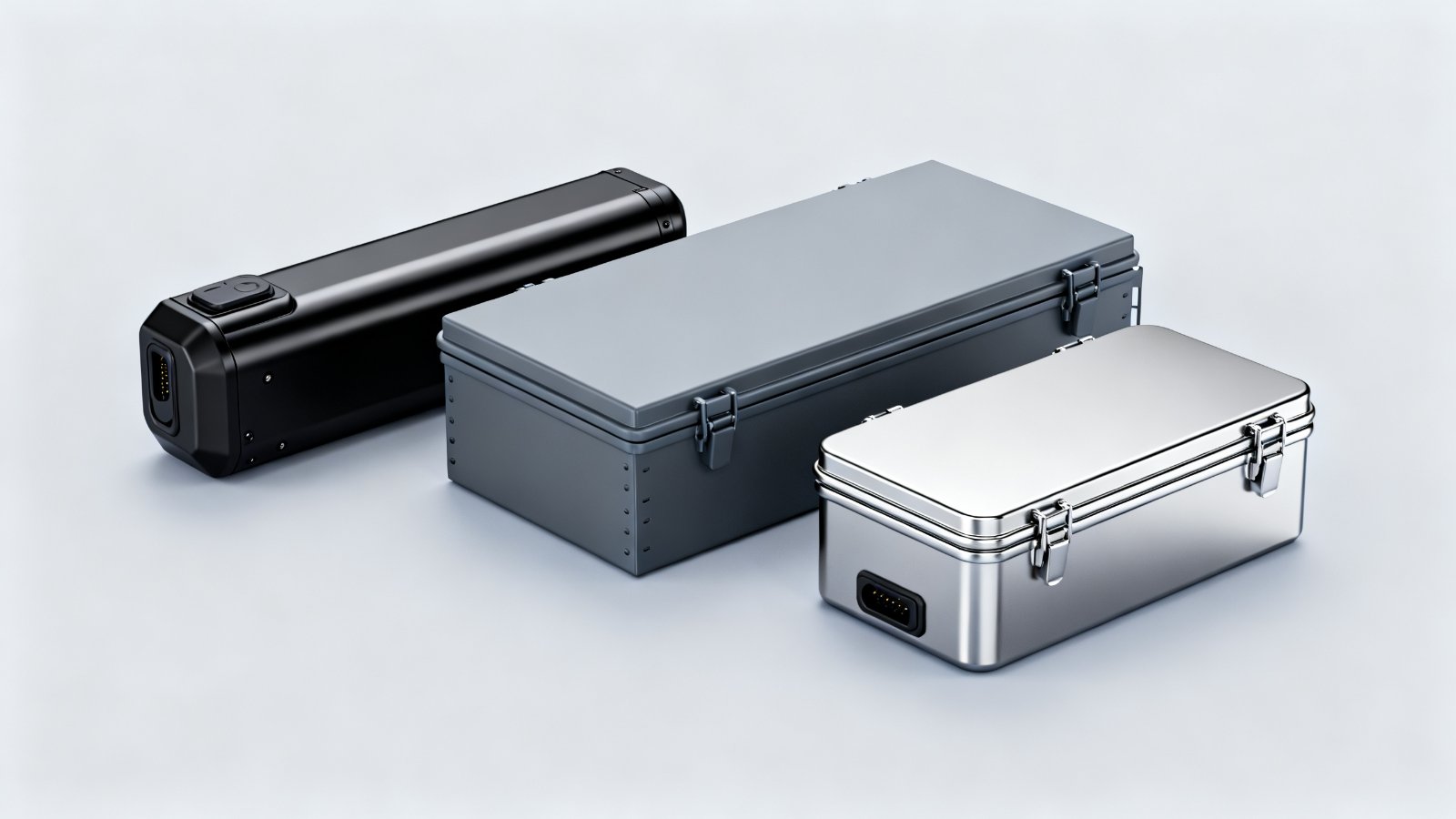
Figure 1: E-bike battery box enclosures produced in one process: a downtube case, a rack-mounted case and a portable pack case.
The Product: What an E-Bike Battery Box Is
What E-Bike Battery Box Manufacturing Covers
An e-bike battery box is the fabricated enclosure that carries the pack, and manufacturing one covers the whole item: the case body, the lid, the gasket and cable entry, the internal cell cradle, the lock and latch, the docking interface, and the finish. The cells, battery management system, and wiring harness belong to the customer.
That split matters because the enclosure carries most of the mechanical risk without owning the electrical function: it resists vibration, absorbs impact, keeps water out, and passes heat to the outside air, while the pack inside remains the customer’s design. The engineering discipline this depends on is described by SME, and confirming the split at quotation prevents the most common dispute in this category.
XHX Metal produces e-bike battery box enclosures from drawing to delivered parts inside one factory: two 6kW fiber laser cutting machines, CNC bending, TIG and MIG welding, deburring, and coating partners for powder coating, anodising, and plating. The wider scope is on the sheet metal fabrication services page.
Formats: Downtube, Rack-Mounted, and Portable Cases
Three formats cover most orders. A downtube case sits inside the frame triangle and follows the tube, which makes it the hardest to design and the most visible on the finished bike. A rack-mounted e-bike battery box sits on a rear carrier, giving more volume and easier access at the cost of weight distribution. A portable pack case is carried separately and docks into a cradle on the frame.
The format decides the mechanical priorities. Downtube cases are dominated by stiffness and frame fit, because a case that flexes rattles in the cradle and wears the contacts. Rack and portable cases are dominated by impact and handling, because they are lifted, dropped, and set down on hard ground far more often.
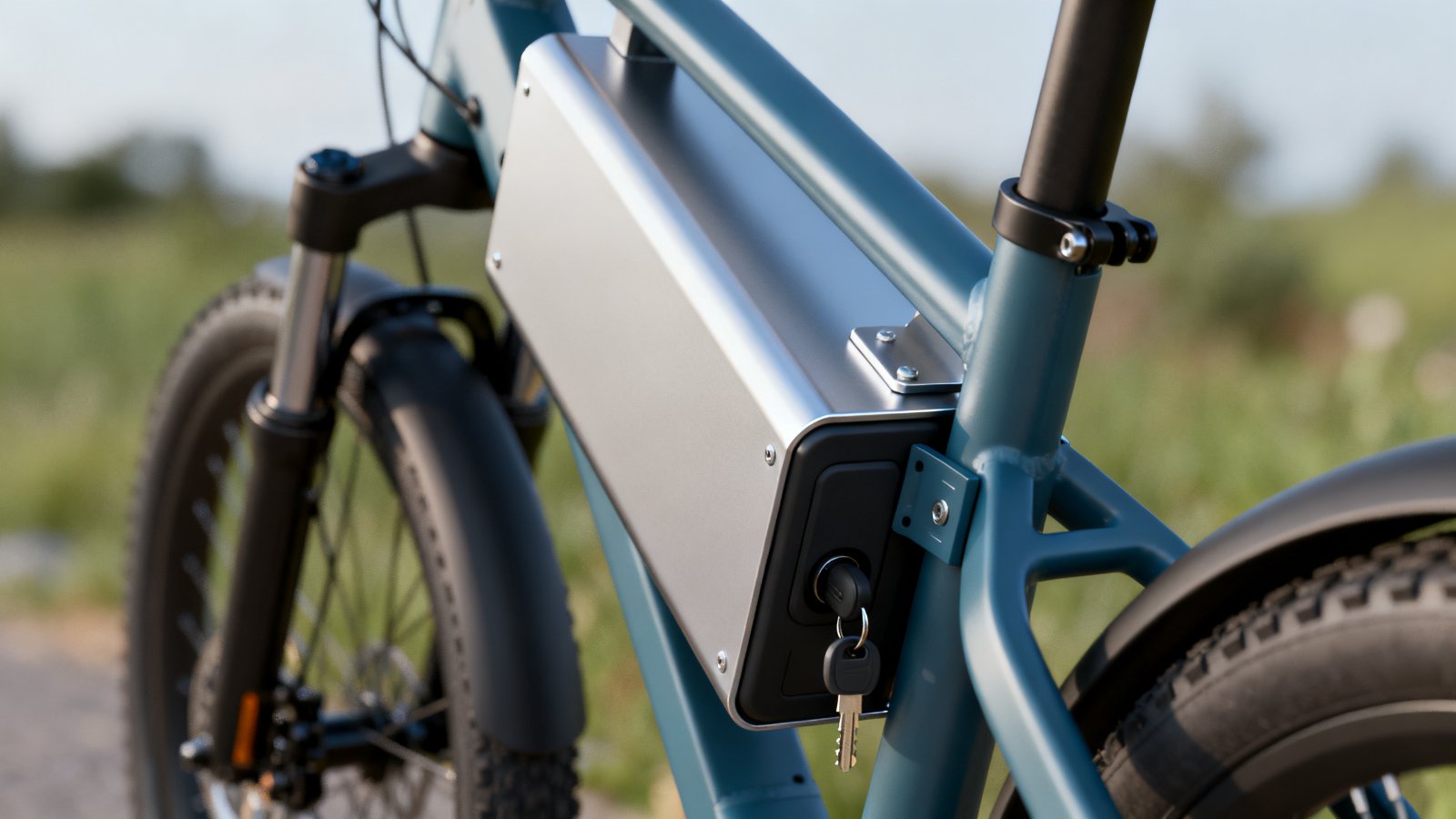
Figure 2: A downtube e-bike battery box fitted into the frame, with keyed lock and sealed charging port.
Which Parts Buyers Order Most
The parts that appear on nearly every order are the case body, the lid or sliding cover, the gasket, the cell cradle, the lock and latch, the docking rail or cradle interface, the charging port surround, and the mounting hardware. Buyers add a heat spreader, a sealed electronics pocket, or a carry handle depending on the format.
Repeat buyers add items once the pack is in production: a spare gasket set, a replacement latch, a branded end cap, and a labelled transit carton. Those additions cost little per unit and remove a disproportionate amount of after-sales work, and they are cheaper to specify with the first order than to retrofit. The wider scope is listed on the product range page.
Use Cases: Who Orders E-Bike Battery Boxes
E-Bike Brands and OEM Assemblers
E-bike brands order an e-bike battery box to their own frame geometry and industrial design, usually with the pack assembled by a partner. The case has to match the frame drawing to a tolerance that keeps the battery visually aligned with the tubes, and it has to accept the customer’s pack without modification.
These buyers also work under regulatory pressure. Electrical safety of the complete vehicle is assessed against product standards, and battery fire incidents have pushed both regulators and the press to treat this category carefully; consumer safety guidance is published by the US Consumer Product Safety Commission and NHTSA. None of that changes the enclosure, but it explains why brand buyers ask for traceable material and process records on an e-bike battery box.
Battery Pack Assemblers and Cell Suppliers
Pack assemblers order the enclosure as one line in a bill of materials that already contains cells, a BMS, a harness, and a charger. They need the case to arrive ready for assembly, with the cradle, gasket, and fasteners present so that a pack can be built without additional sourcing.
For this customer the critical requirement is repeatability of the internal geometry. A cell cradle that is two millimetres different between batches changes how the pack seats, and a mounting boss that moves forces a change to the harness. An e-bike battery box programme for a pack assembler is therefore measured on dimensional consistency rather than on appearance.
Rental Fleets, Retrofit, and Aftermarket
Rental operators and aftermarket suppliers order e-bike battery boxes to replace damaged cases and to fit newer packs into existing frames. Volumes are lower and the mix is wider, and the work usually starts from a physical survey rather than a drawing.
These programmes depend on the docking interface matching what is already on the fleet. If the cradle, rail, or contact spacing differs, a replacement e-bike battery box will not seat, and a rider will not wait for a second delivery. Measuring a sample from the fleet and issuing a reverse-engineered drawing for approval is slower at the start and far cheaper than a mismatch in the field.
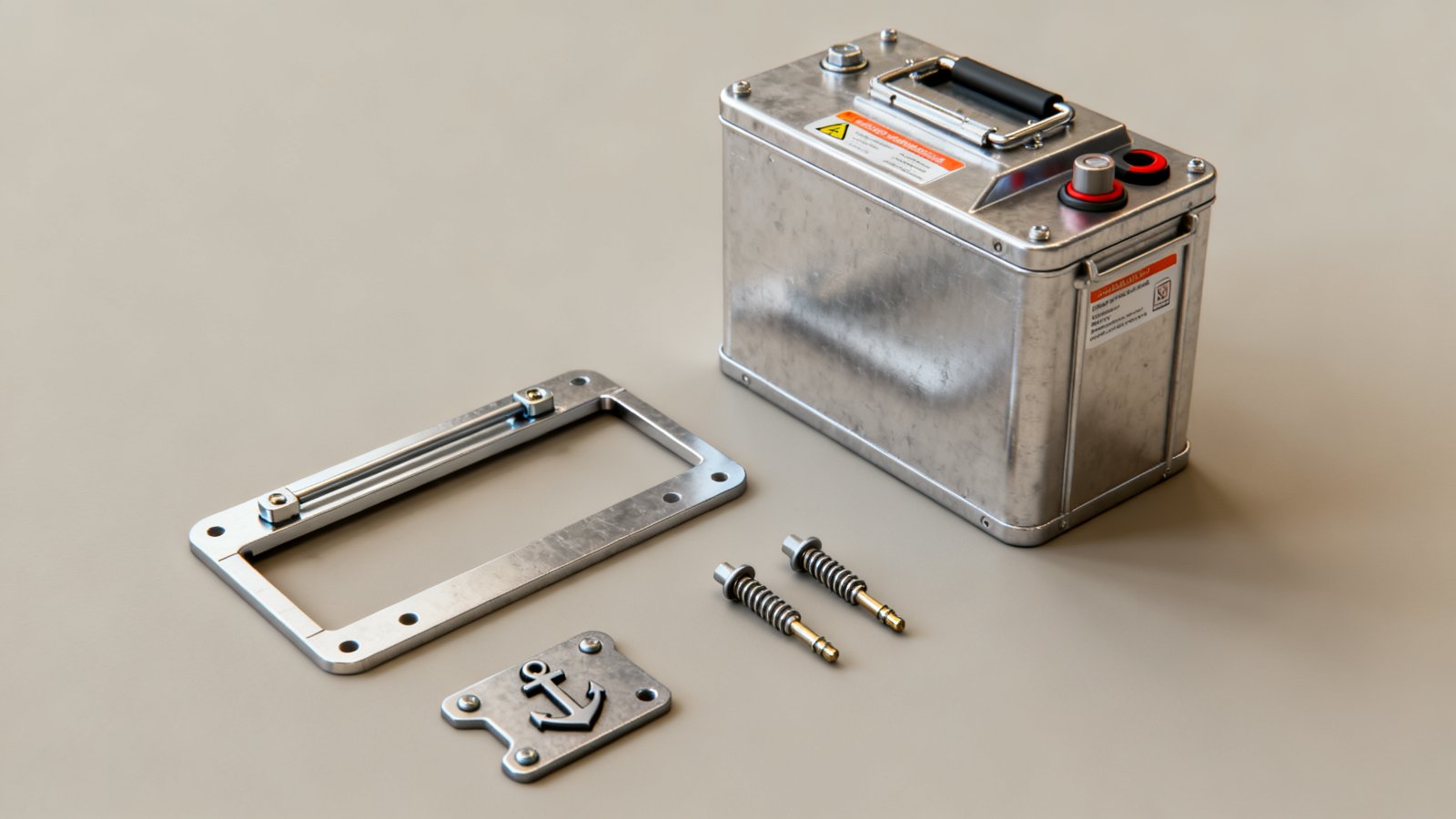
Figure 3: A battery docking system: mounting plate, slide rail, sprung contacts and retaining bracket.
Materials, Sealing, and Thermal Design
Aluminium, Steel, and the Role of Plastics
Aluminium is the default material for an e-bike battery box, usually between 1.5 mm and 3.0 mm, because it is light, resists corrosion without a coating, and conducts heat away from the pack. Alloy guidance for sheet and extrusion is published by the Aluminum Association and European Aluminium.
Steel is used where stiffness or cost matters more than weight, and it then needs a protective coating. Plastics appear at the interfaces rather than in the structure: the gasket, the port cover, the cell cradle, and the end caps. A well-designed programme usually mixes the two, with a metal case carrying the loads and moulded parts doing the sealing and insulation.
Sealing, Cable Entry, and the Charging Port
Water reaches the pack through three routes: the lid joint, the cable exit, and the charging port. Each needs its own detail. The lid gasket belongs in a formed channel rather than on a flat face, so it cannot creep out of position when the case flexes, and the lid should be stiff enough that the sealing load is even along its length.
Cable entries are made through a sealed gland or a moulded boot, never through a plain hole, and the charging port needs a gasket behind its surround plus a cover that stays closed in use. On an e-bike battery box that is removed and refitted daily, those two details fail long before the coating does.
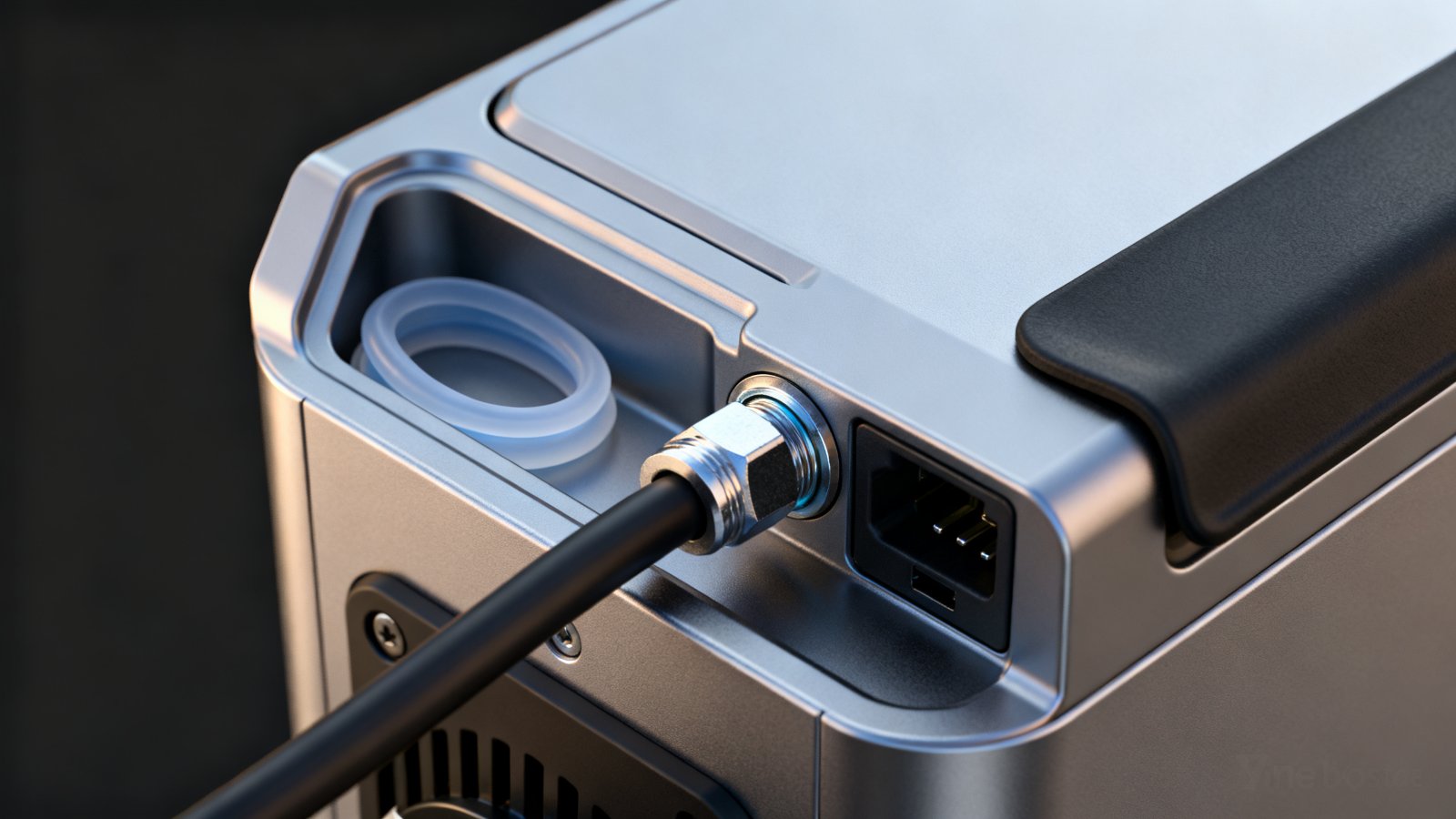
Figure 4: Sealing detail: gasket in a formed channel, sealed cable gland and a rubber charging port cover.
Thermal Path, Impact, and Vibration
Heat leaves the pack by conduction into the case wall and then into the air, so the case is part of the thermal design rather than a container around it. A heat spreader and a thin thermal pad between the cells and the inner wall make that path work; forming cooling ribs on the outside increases the surface area at almost no cost in weight.
Vibration is the other constant load. The pack must be restrained so that it cannot move inside the case, and the cradle has to hold it without hard contact points that rub through insulation over thousands of kilometres. For an e-bike battery box, the practical test is a ridden and a shaken unit rather than a drawing review, and buyers should specify both.
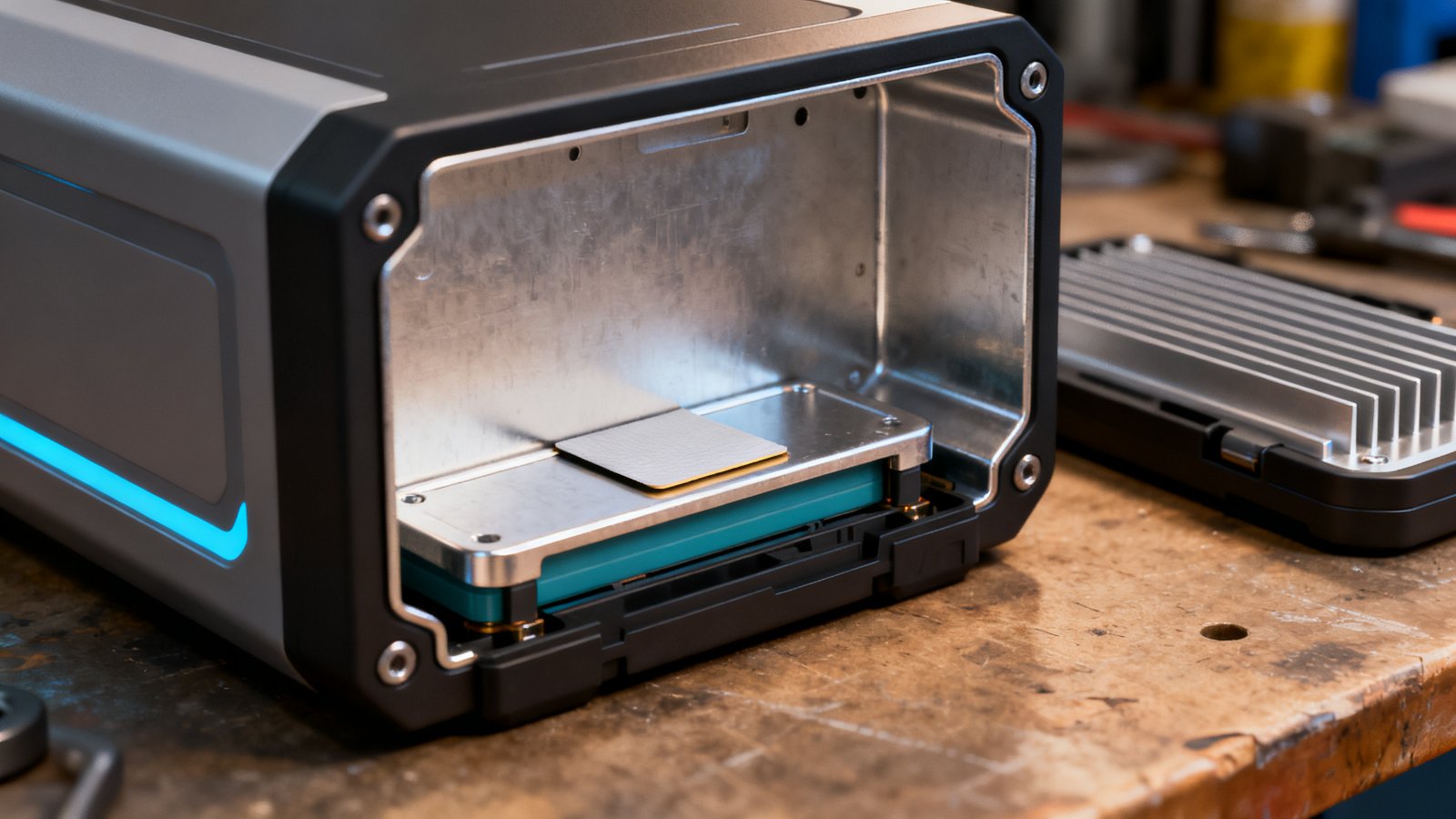
Figure 5: Thermal design: heat spreader, thermal pad and formed cooling ribs on the case wall.
Production Difficulty and Quality Risks
From Pack Drawing to Enclosure Geometry
An e-bike battery box starts as a pack drawing, not a case drawing. The customer supplies the cell stack dimensions, the BMS position, the connector locations, and the frame interface, and the case geometry is derived from them. Getting that translation wrong is the most expensive mistake in this product, because it is discovered when the first pack does not fit.
The review therefore runs in a fixed order: cell envelope first, then the cradle and clearances, then the lid and gasket, then the lock, the docking interface, and the frame fit. Cutting and forming come last. Where a frame interface exists, the frame drawing or a physical frame should be supplied, because an e-bike battery box that fits the pack but not the bicycle is still a failure. The process capabilities behind this are described by the Laser Institute of America.
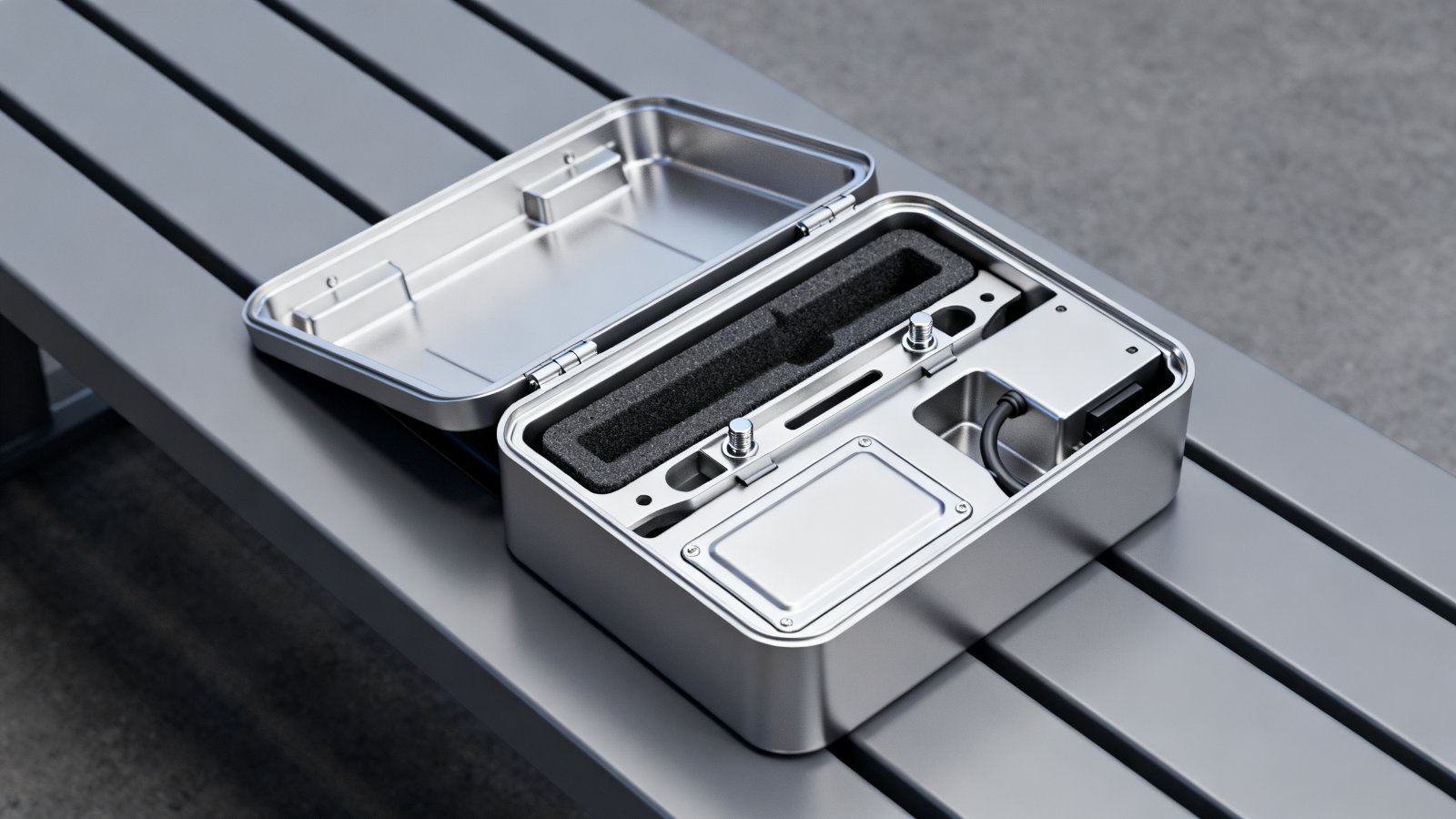
Figure 6: The inside of an e-bike battery box: cell cradle, busbar channel, sealed electronics pocket and cable exit.
Dimensional Accuracy, Cell Clearance, and Fastener Locations
Inside an e-bike battery box, the tolerances that matter are the ones that touch something: the cradle position, the boss locations, the docking rail, and the lid face. A case that is generously dimensioned on the outside but has a cradle two millimetres out of position will still fail assembly.
The controls are a first article inspection that records those specific features, and a fixture for the docking interface so that every case is assembled against the same reference rather than against a measurement. Flatness and dimensional checks follow the measurement practice published by NIST, and fastener and thread standards are published by ANSI. Buyers should ask for the inspection report to list the interface dimensions, not only the shell size.
Distortion, Sealing Tests, and Finish Consistency
Cutting and welding put heat into thin aluminium, so long panels can bow and a welded seam can pull the lid face out of flat. Both matter on an e-bike battery box, because a lid that is not flat cannot compress a gasket evenly and will leak at one corner long before it leaks along the whole joint.
The controls are nesting, a welding sequence that balances heat, and a post-weld check against a straight edge or fixture. Sealing is then verified by a water test on the first article rather than assumed. Finish consistency follows the practice described by the Powder Coating Institute: one coating lot per order, recorded cure parameters, and a retained sample, because two batches of anodised or coated cases will not match by accident.
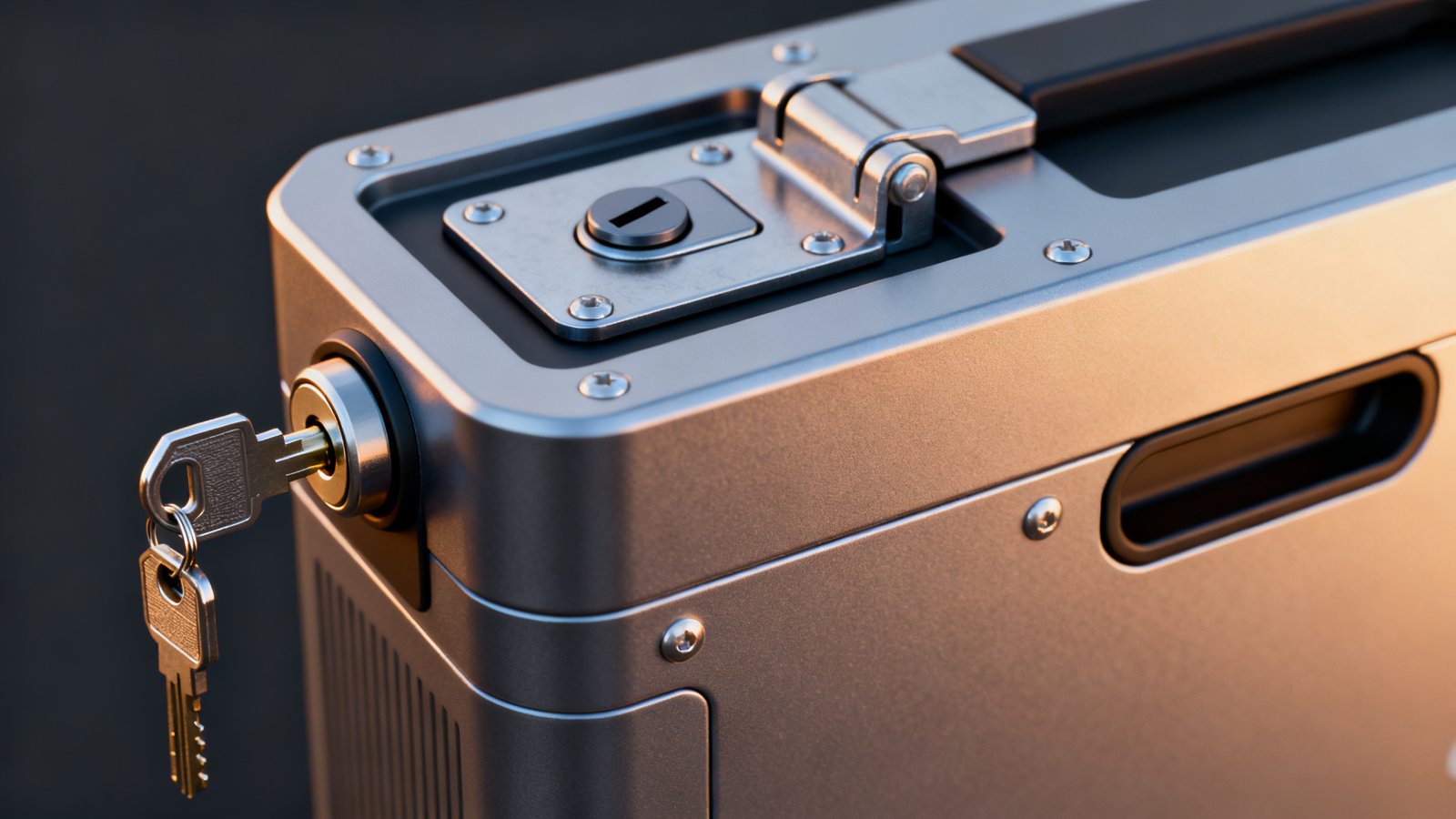
Figure 7: Locking hardware: keyed barrel lock, reinforced latch plate and a sealed key slot cover.
Standards, Lead Times, and Order Flow
Standards and Compliance Documents
An e-bike battery box is a component of a product that is regulated as a whole, so the enclosure usually supports a certification route rather than holding one itself. What the fabricator provides is consistent geometry, material certificates, weld and finish records, and a documented sealing test that the customer’s own test house can rely on.
Electrical safety and battery requirements for light electric vehicles are covered by standards developed through bodies such as CEN-CENELEC, with product safety evaluation available from laboratories such as UL. Battery placing on the market and end-of-life requirements in Europe sit under the EU Batteries Regulation, which is why buyers increasingly ask for material documentation with the first e-bike battery box order rather than with the second.
Batch Volumes, MOQ, and Realistic Pricing
An e-bike battery box is a small to mid-size item. Realistic volumes run from 50 to 300 pieces per batch over three to six releases a year, with a minimum order around 50 pieces and FOB prices typically between $14 and $45 depending on size, material, and hardware content.
The price inside that band is set less by the sheet metal than by what is fitted to it. A plain case with a gasket sits at the bottom; a case with a machined docking rail, a keyed lock, a heat spreader, and a sealed electronics pocket sits at the top. First batches usually ship 20 to 30 days after drawing and sample approval, and repeat orders move faster because the fixture and the finish record already exist.
Assembly, Post-Processing, and Documents
XHX Metal cuts, forms, welds, and finishes the case, fits the gasket, cradle, latch and docking hardware, and packs the finished item. Coating and anodising are carried out by audited partners, with inspection recorded against the batch.
An order is supported by the approved drawing with its revision number, material certificates, a first article inspection report that records the interface dimensions, batch records, a sealing test record, and a packing list. Buyers who need third-party verification should agree the scope at quotation. Hardware and thread standards are published by ANSI, and for an e-bike battery box the documentation set is what makes a replacement batch fit a fleet that is already in service.
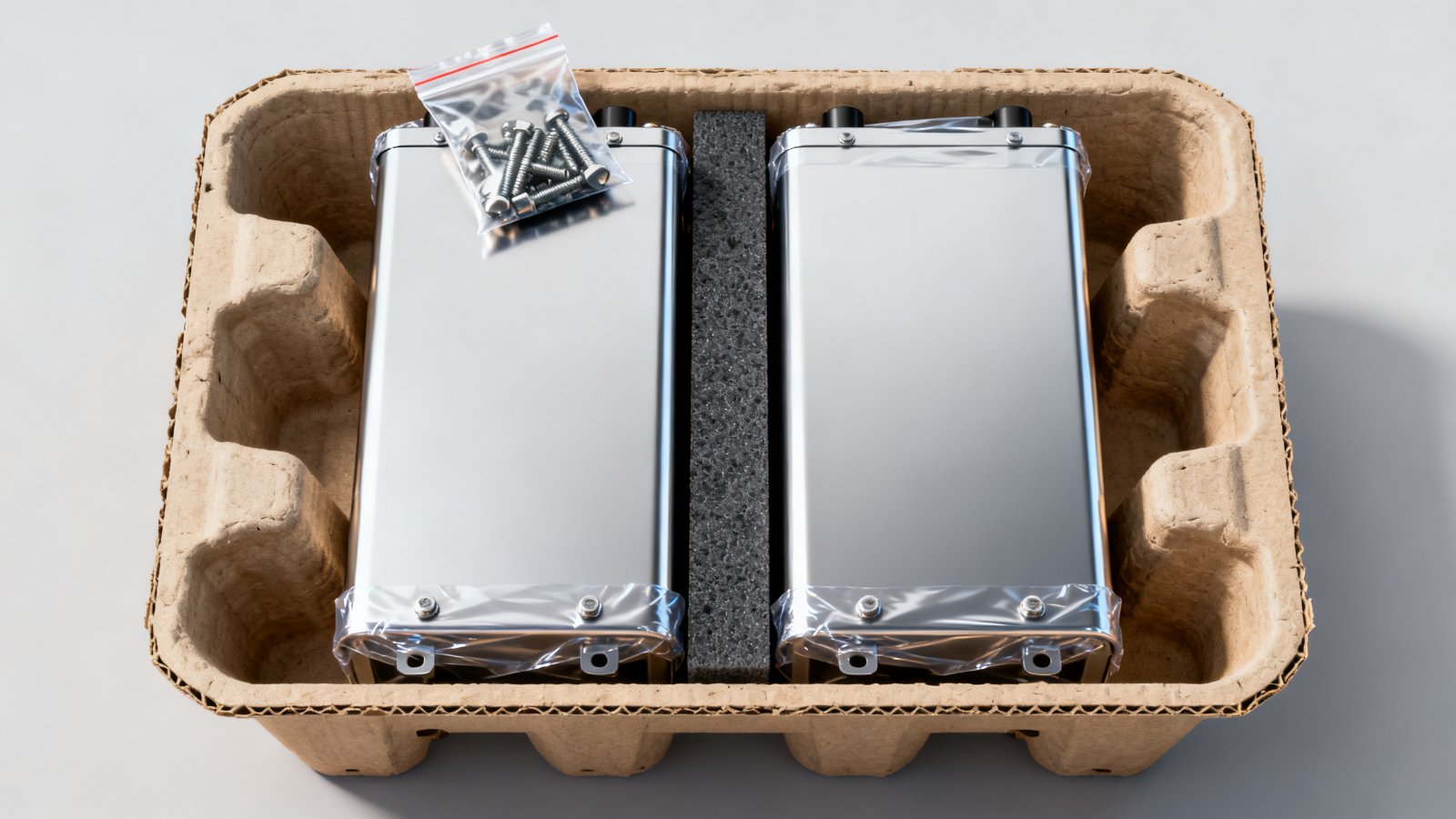
Figure 8: Transit packing for battery cases: moulded end caps, foam separator, protective film and sealed hardware bag.
Case Studies: E-Bike Battery Box Programmes
Case 1: European E-Bike Brand — Downtube Case
A European e-bike brand needed a downtube e-bike battery box that followed the frame line closely and accepted a pack from its own supplier. The frame was already tooled, so the case had to be derived from the frame rather than the other way round.
We built the case in 2.0 mm aluminium with a folded and welded body, an anodised finish, a channel gasket, a keyed lock and a machined docking rail. Production ran at 200 pieces per batch, four batches a year, with an MOQ of 50 and FOB prices from $22 to $38. First batch shipped 24 days after approval, and annual value was approximately $44,000.
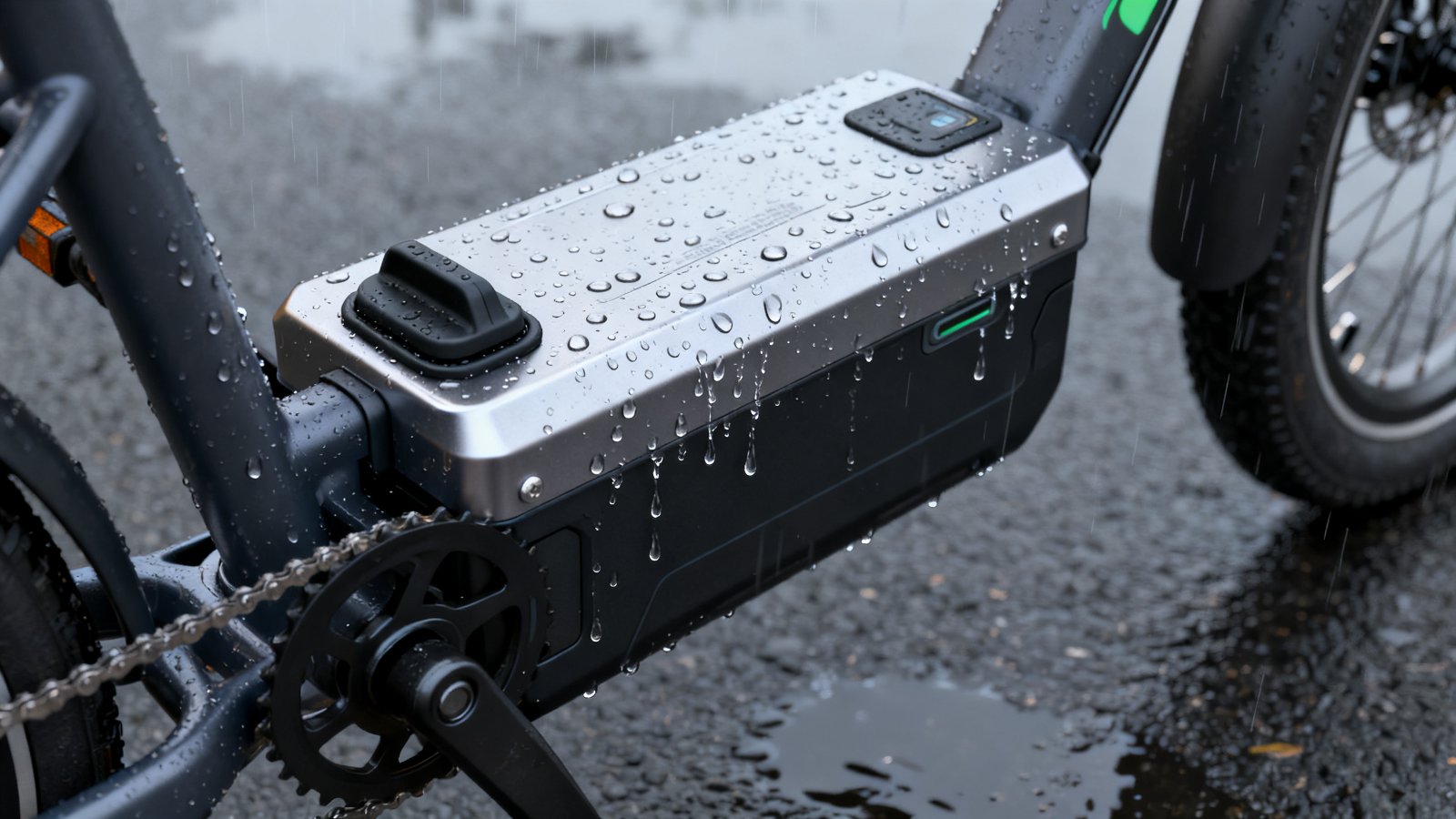
Figure 9: A sealed e-bike battery box in the rain, with water beading off the case and the port cover.
Case 2: Battery Pack Assembler — Rack-Mounted Enclosure
A pack assembler needed a rack-mounted e-bike battery box that would arrive ready for cell installation, with the cradle, gasket, and fasteners already in place so that no additional sourcing was required on its own line.
The case was produced in 2.5 mm aluminium with a bolted lid, a foam-lined cell cradle, a sealed electronics pocket and formed cooling ribs. Production ran at 150 pieces per batch, three batches a year, with an MOQ of 50 and FOB prices from $26 to $45. First batch lead time was 26 days, and annual value was approximately $38,000. The first article report listed the cradle and boss positions rather than only the outer dimensions, which is what allowed the assembler to release the pack without a trial build.
Case 3: Rental Fleet — Retrofit Cases and Mounting Plates
A rental operator needed replacement e-bike battery boxes and matching mounting plates for a fleet already in service, with packs that had been superseded by a newer cell format from the original supplier.
The work started with a physical survey of three fleet bikes. The cases were cut in 2.0 mm aluminium with a revised internal cradle and the original docking interface retained, so the new pack fitted the existing cradle. Production ran at 300 pieces per batch, three batches a year, with an MOQ of 100 and FOB prices from $14 to $28. First batch shipped 19 days after approval, and annual value was approximately $33,000.
Summary and Next Steps
How to Choose an E-Bike Battery Box Manufacturer
The supplier that fits this product can form the case, weld and seal it, fit the cradle and docking hardware, and document the interface dimensions. Ask to see a first article report that lists the cradle, boss, and rail positions, and a sealing test record for a comparable case.
Check that the quotation states the material and thickness, the sealing method, the gasket type, the lock and docking hardware, and the packing grade. Match the supplier to the batch size as well: e-bike battery boxes are bought in small and medium batches rather than container volumes.
Why XHX Metal
XHX Metal provides e-bike battery box manufacturing from drawing to delivered parts: cutting on two 6kW fiber laser cutting machines to plus or minus 0.01 mm, CNC bending, TIG and MIG welding, powder coating and anodising through audited partners, hardware assembly, and export packing.
The company has produced sheet metal enclosures and welded assemblies for export customers from Dongguan, Guangdong since 2014, and holds ISO 9001:2015 certification with CE documentation and SGS records. Samples in 5 to 10 working days and first batches in 20 to 30 days are normal work.
How to Start Your Programme
Send the pack drawing with the cell envelope and connector positions, the frame interface or a photograph with key dimensions, the material and finish you have in mind, the annual volume and batch size, and the documents needed. If no case drawing exists, we will produce one for approval.
Programmes are handled directly through the contact page.
FAQ: E-Bike Battery Box
Do you supply the cells or the battery management system? No. We fabricate the case and its mechanical parts; the cells, BMS, harness, and charger come from you.
Can you match a frame that is already tooled? Yes. Send the frame drawing or a frame sample, and the case geometry will be derived from it and checked on a first article.
What is the minimum order? MOQ is typically 50 pieces for a new programme and 100 pieces for a simpler retrofit case.
Which material suits an e-bike battery box? Aluminium is the usual choice for weight, corrosion resistance and heat transfer. Steel is used where stiffness or cost matters more, with a coating.
How do you check that the case is sealed? The first article is water tested with the gasket, cable gland and port cover fitted, and the result is recorded so later batches can be compared.
How long does a sample take? A sample follows in 5 to 10 working days after drawing approval, and the first batch ships 20 to 30 days after sample approval.