Last updated: September 30, 2026 | By XHX Metal Engineering Team
Sheet metal capabilities are easier to judge from the parts that come off the floor than from a list of machines, so that is how they are set out here. XHX Metal is a 2,000 sqm factory in Dongguan, China, with around 30 staff, where the sheet metal capabilities cover laser cutting, CNC punching, CNC bending, welding, finishing and assembly under one roof.
This article is a working account of what we can do and what we have already built: the part types we run most often, the industries behind them, the materials and finishes, the operations that make a part difficult, the drawings and lead times an order needs, and three programme examples with their volumes and price bands. It is written for buyers comparing sheet metal capabilities before a first order.
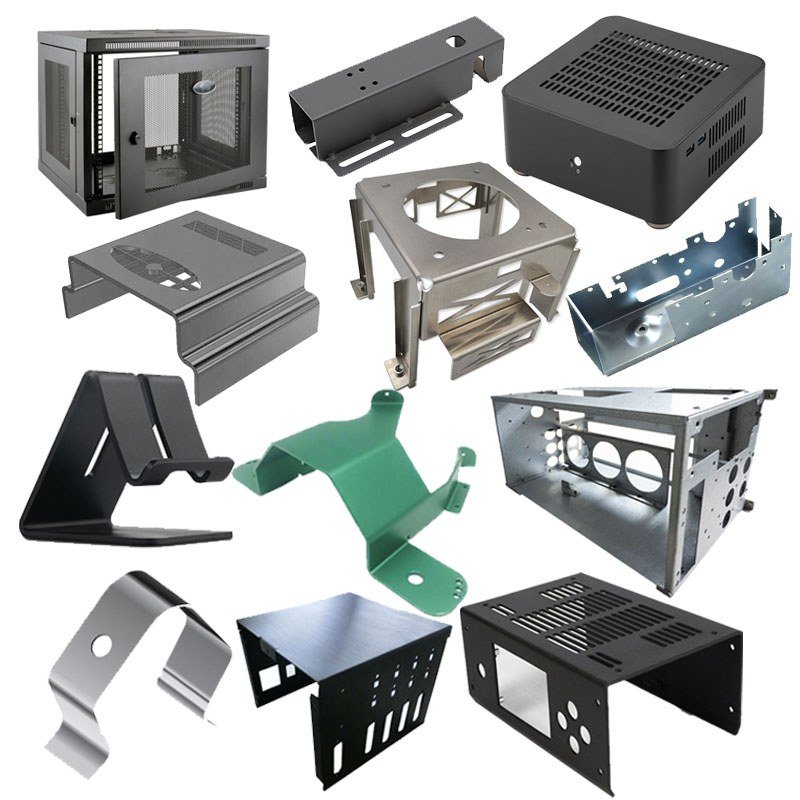
Figure 1: A cross-section of the sheet metal capabilities at XHX Metal: enclosures, brackets, chassis, covers and welded frames in painted, powder coated and natural finishes.
Sheet Metal Capabilities: What We Make
A Single Factory from Cutting to Assembly
Capabilities here start with a drawing and end with a packed, inspected part. The factory runs two 6kW fiber laser cutting machines with +-0.01 mm positioning accuracy, a CNC turret punch, CNC press brakes, TIG and MIG welding, automatic deburring, a CNC machining centre and powder coating. Because every step sits in one building, these sheet metal capabilities include the joints, hardware, finish and packing, not just the blank.
What parts do buyers order most often? The recurring items are enclosures and cabinets, welded frames and bases, brackets, chassis and covers, perforated and mesh components, and small formed panels. Those families account for most of the 500,000 parts a year this factory can produce, and The FABRICATOR explains why buyers increasingly want one supplier holding several of these processes.
The Part Types That Leave Our Floor
The floor handles sheet from 0.8 mm to 6 mm in steel, stainless and aluminium. Enclosures run from wall mounted boxes with a recessed face to floor standing cabinets with a plinth, a lockable door and internal mounting plates. Welded assemblies cover machine frames, bases and guards, where the value is in the fixture and the weld sequence. Smaller work includes brackets, hinges, arms with rolled edges, mesh cylinders and mirror-polished trims.
Parts through this line include industrial enclosures, control cabinets, stainless steel chassis, battery and power housings, parcel boxes, metal picture frames, letterboxes, signs and wine racks. The same sheet metal capabilities that hold a tight fit on a cabinet door also produce a part whose face must show no tooling marks.
Batch Sizes These Sheet Metal Capabilities Are Built For
This is a small to medium batch factory, and the sheet metal capabilities here are arranged around that. Small parts start at about 100 pieces and run 200-800 per batch; mid-size items such as parcel boxes and welded sub-assemblies run 20-50 pieces minimum and 50-300 per batch; large cabinets and welded frames start at 5-10 pieces and run 10-40 per batch. Laser cutting and CNC punching need no dedicated die, so a first order can be small without a tooling charge.
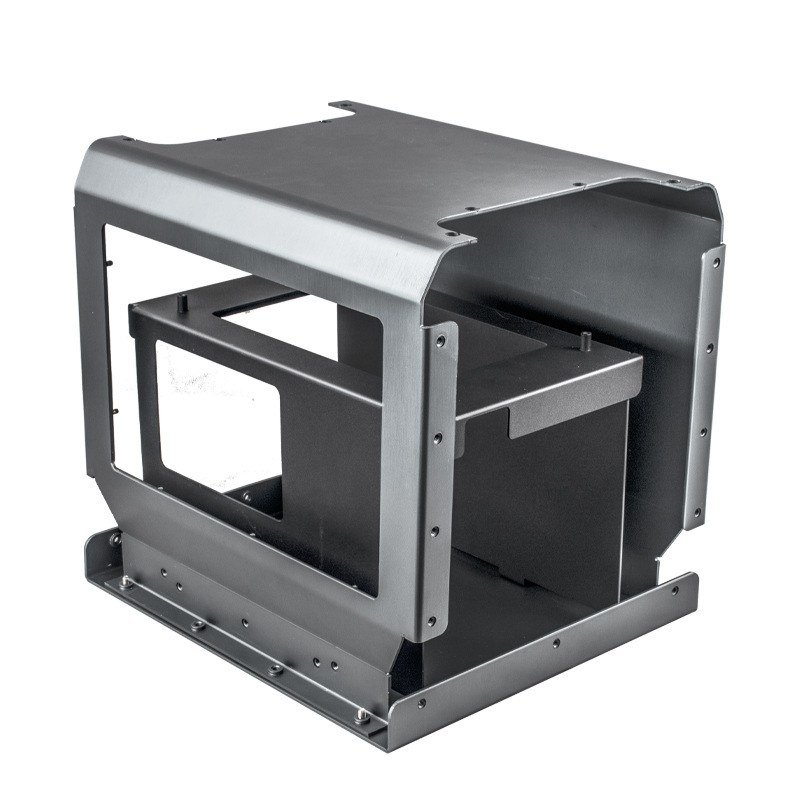
Figure 2: A formed and riveted enclosure frame in grey powder coat, built on a CNC press brake with pierced, laser-cut and slotted apertures.
Where Our Parts Are Used
Industrial Equipment and Automation OEMs
The largest share of the sheet metal capabilities in this factory serves industrial equipment builders and automation integrators, mostly in North America and Europe. What they order is predictable: control cabinets, machine enclosures, operator pedestals, welded frames and bases, covers and guards, arriving ready for assembly with thread inserts, hinged doors, gasket faces and cable entries already in place. US buyers also check classification under the Harmonized Tariff Schedule before an order is placed.
Because the machine a part belongs to is built to a schedule, these programmes are planned backwards from an installation date. Repeat batches matter more than the first order, and the sheet metal capabilities that support them are the ones that hold a dimension between batches: fixed fixtures, recorded bend programs and a first article report that can be checked against every later batch.
Power, Energy and Outdoor Installations
Battery cabinets, power equipment housings and roadside or pole mounted cabinets form the second group. Here the sheet metal capabilities that matter are the ones keeping water out and coatings intact: formed and welded seams rather than open joints, gasket channels, drip edges, louvres that turn a water path downwards, and a finish that survives a coastal or roadside environment. Enclosure type and construction are defined in the NEMA standards used by North American specifiers.
Parts in this group are heavier and larger, so welding distortion and handling damage become the main risks rather than a tight bend. Our answer is sequential tacking in a fixture, back-step welding on long seams, and packing designed for the weight of the unit.
Home, Retail and Lifestyle Brands
The second pillar of the business is home and lifestyle manufacturing: parcel boxes, letterboxes, metal picture frames, signs, wine racks and shelf fixtures for appliance, garden and home decor brands. Sheet metal capabilities in this line are judged on appearance, so the finish carries the product. Mirror and brushed stainless steel, colour-matched powder coat, laser-cut patterns and tidy weld dressing are what the buyer sees, and a colour shift between batches is a defect even when every dimension is correct.
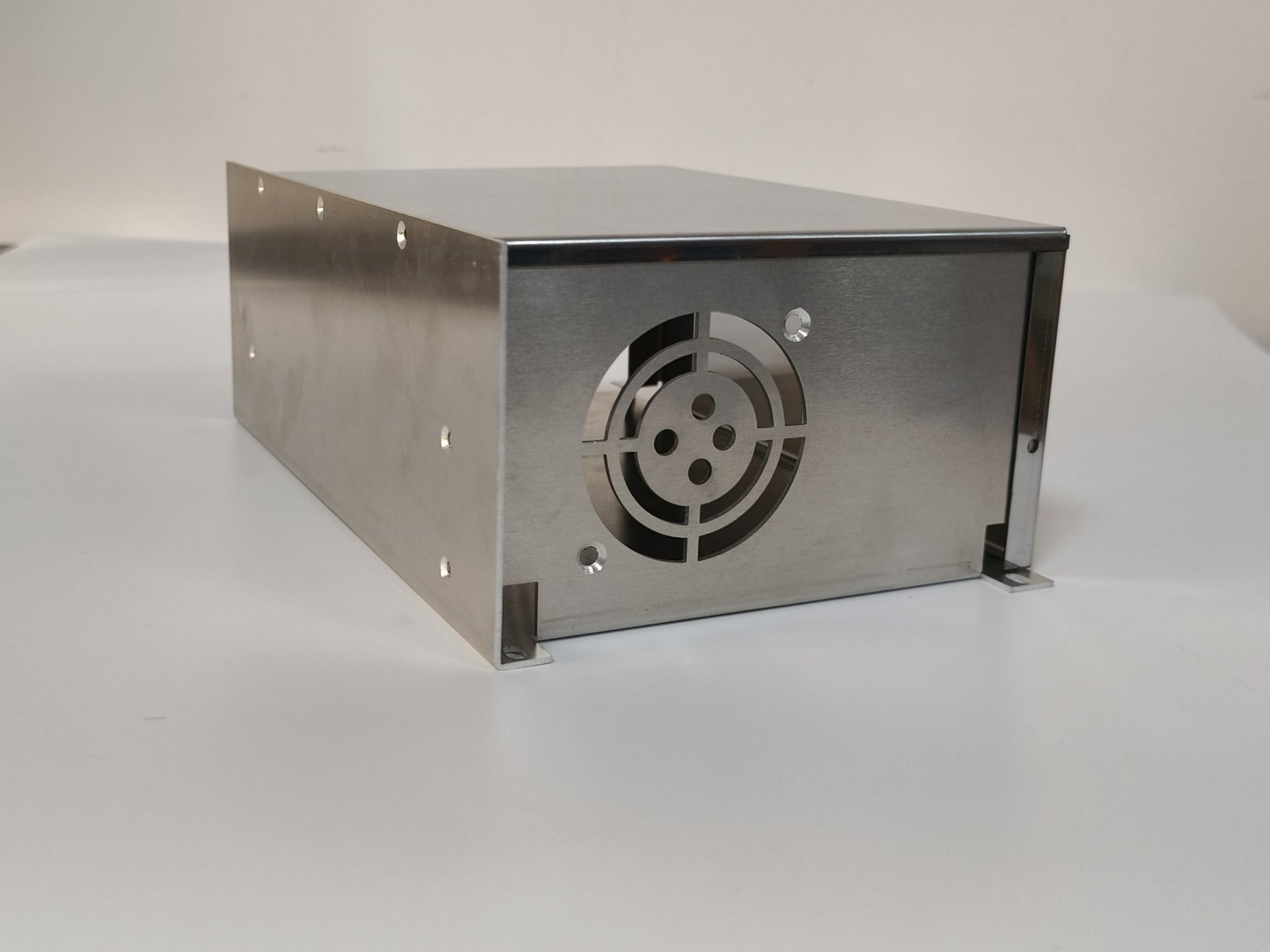
Figure 3: A stainless steel chassis with a fan aperture, louvred vents and fixing holes, laser cut and formed from 1.5 mm sheet.
Materials, Machines and Finishes
Steel, Stainless Steel and Aluminium
Cold-rolled mild steel covers most enclosures and cabinets, typically 1.0 mm to 2.0 mm, and takes powder coat and galvanising well. Stainless steel in 304 and 316 is used for outdoor, food-adjacent and architectural work as well as mirror trims, with mill certificates shipped with each order. Aluminium, mostly 5052 and 6061, suits lightweight covers; grade background is published by the American Iron and Steel Institute and the Nickel Institute.
Grade choice follows the environment. Coastal and roadside installations move to 316, indoor equipment stays on 304 or powder coated mild steel, and aluminium is chosen for weight or formability. The Aluminum Association covers alloy selection. Thicker sheet resists denting; lighter sheet keeps a wall mounted enclosure light.
Cutting, Forming and Joining
Two 6kW fiber laser cutting machines cut sheet to +-0.01 mm positioning accuracy, which is why the sheet metal capabilities here suit pierced panels, fine slots and shaped profiles that a die would never pay for at these volumes. The CNC turret punch takes over where a pattern repeats, and CNC press brakes form bends from recorded programs, so a batch released months later comes off the same way, the point Modern Machine Shop makes about repeatability resting on programs.
Joining is TIG for visible and sealed seams and MIG for heavier frames, followed by dressing, deburring and, on stainless, passivation. Tapping, counterboring and machining a mounting face run on the CNC machining centre, so a part arrives with its threads and faces finished.
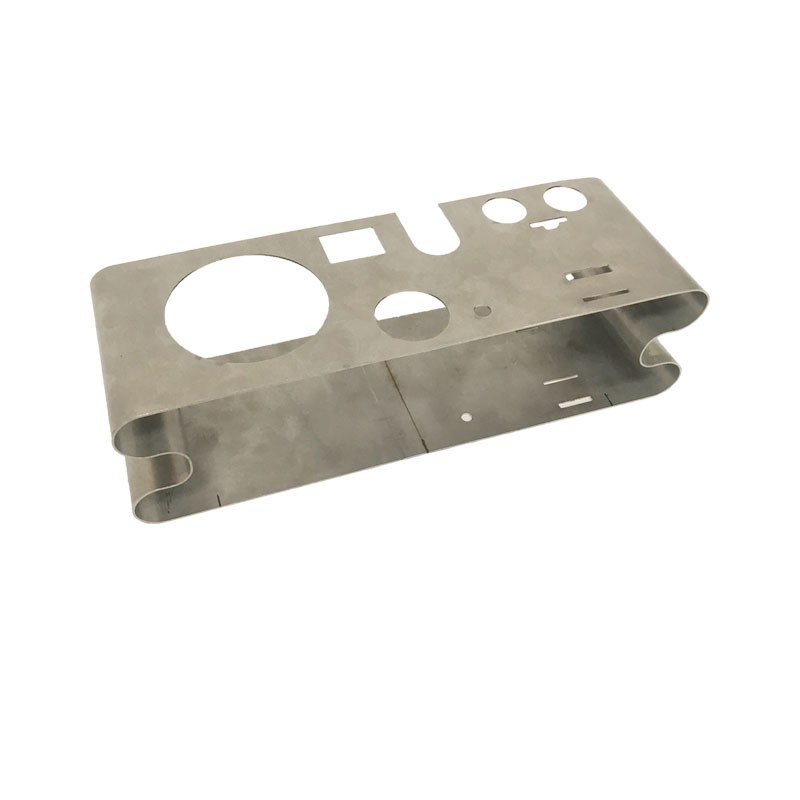
Figure 4: A stainless steel mounting bracket with laser-cut apertures, rolled edges and a set of pierced slots, formed without a dedicated die.
Powder Coating, Galvanising and Polished Finishes
Powder coating is the default finish, applied in a chosen RAL colour over a pre-treated surface, and most of the sheet metal capabilities described here are designed around it. Galvanising and passivation are handled with partners; the American Coatings Association covers coating performance testing.
For visible parts the finish decides the project. Brushed stainless is worked with the grain in one direction, mirror work is polished to an 8K finish and film-protected, and colour is matched against the customer’s sample before a batch is released. Silk screening and pad printing run on the same order.
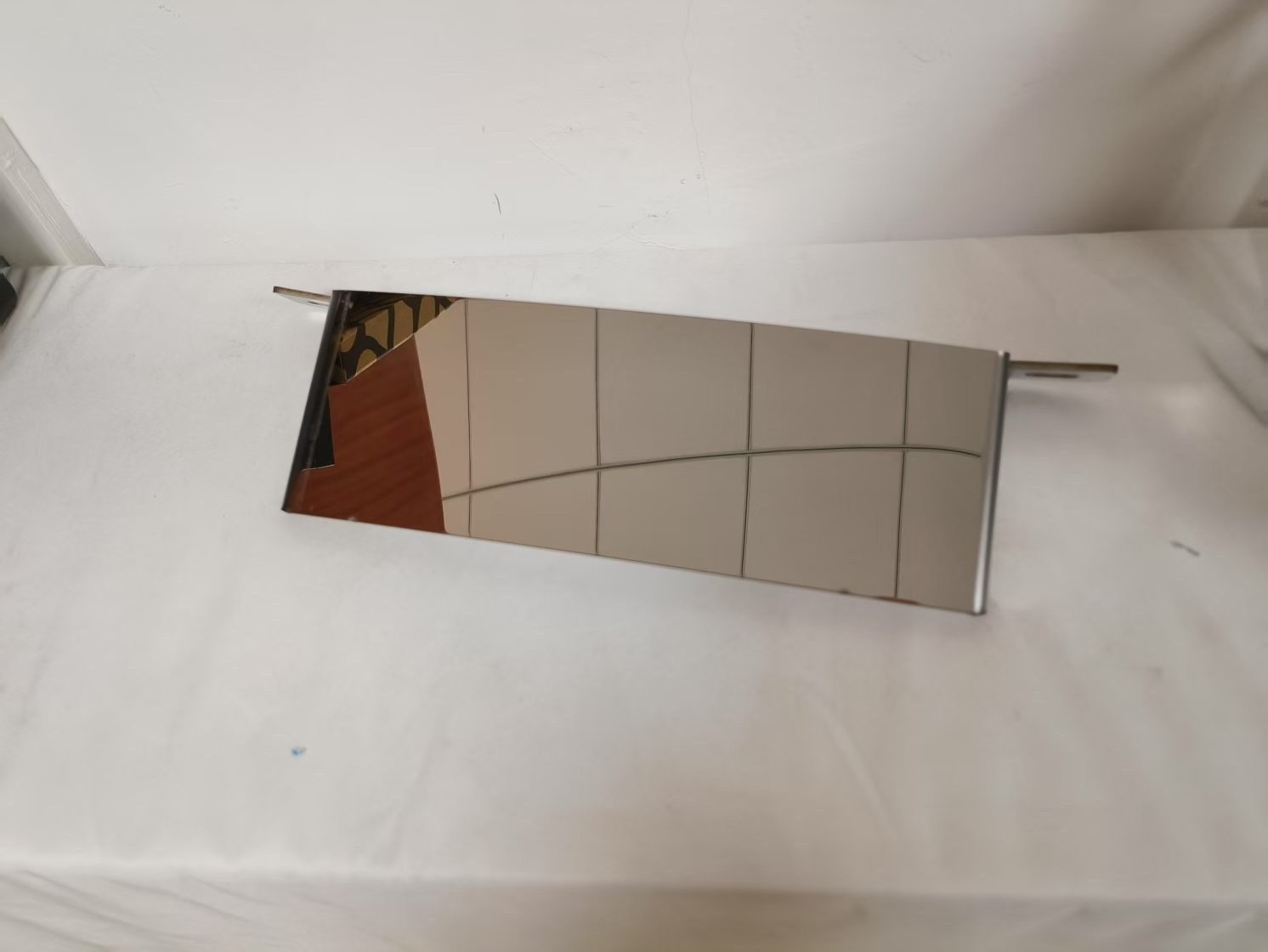
Figure 5: A mirror-polished stainless steel section, polished to an 8K finish with the brushed grain kept running in one direction.
Where Sheet Metal Capabilities Get Tested
Weld Distortion and Pull
What are the quality risks in this work, and how are they controlled? The first is weld distortion: heat shrinks a seam as it cools, so a frame that measures correctly on the bench can pull out of square overnight. It is one of the sheet metal capabilities that is hardest to fake, because a distorted frame only shows up when the equipment inside will not fit. Our countermeasures are a welded fixture for anything made more than once, a balanced tack sequence, back-step welding on long seams, and a squareness check on a surface plate.
Thin sheet is the harder case. Stainless and aluminium move more than mild steel, so those parts are tacked in position, allowed to cool, and only then welded out. Where a frame cannot distort at all, self-jigging tabs cut into the flat pattern locate the part mechanically.
Tolerances, Squareness and Fit-Up
Unless a drawing states otherwise, dimensions are held to general tolerances in line with ASME Y14.5 practice, with bend angles within about half a degree and hole-to-hole positions inside a few tenths of a millimetre. Tighter requirements are quoted against the drawing, because on formed parts the stack of thickness, bend deduction and springback decides the result.
The second risk is fit-up between parts made in different processes. A door formed on one machine and a frame welded on another only close well if both were drawn from the same model. These sheet metal capabilities are therefore checked as an assembly: hinges fitted, doors closed, gaskets seated and inserts installed before a first article is signed off.
Cosmetic Surfaces and Colour Consistency
The third risk group is visual. Mirror-polished stainless shows every handling mark, brush grain shows every change of direction, and powder coat shows every colour shift between batches. These defects cost more, because a marked part cannot be repaired, only remade.
Our controls are procedural: gloves and protective film on polished parts, grain direction fixed on the drawing, formed edges deburred before finishing, and powder colour verified against a retained reference panel at the start of each coating run. For an exact brand colour, a sample panel is coated and kept on file.
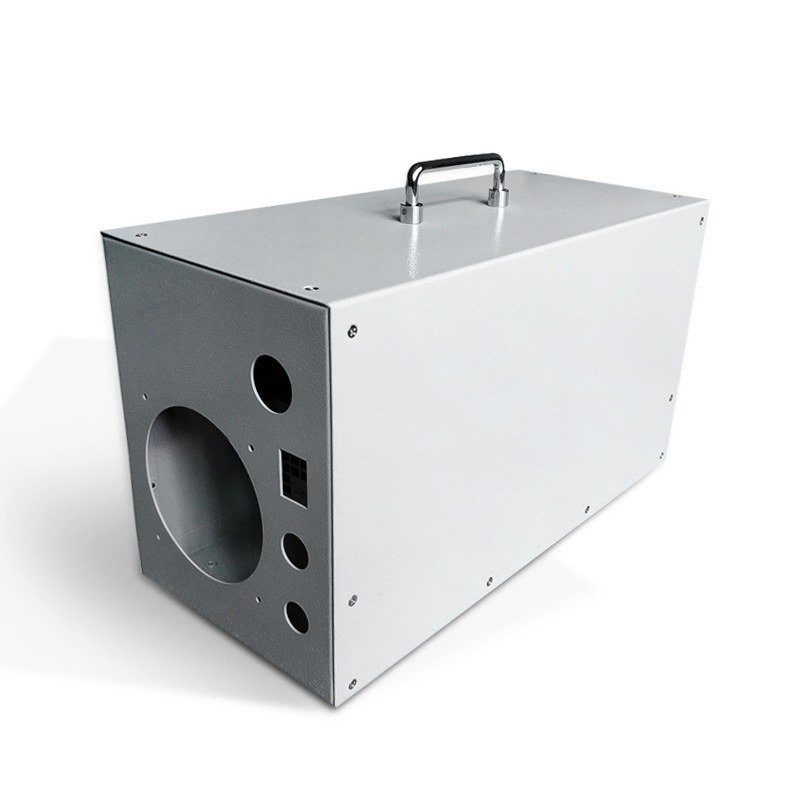
Figure 6: A fabricated enclosure with a formed handle, a large circular cut-out and a connector aperture, welded and assembled before powder coating.
Drawings, Lead Times and Documentation
What You Send Us
What does a supplier actually need before quoting? A STEP or IGES model for anything three-dimensional, and a dimensioned 2D drawing for the tolerances, threads, material, thickness, finish and any marking. A DXF flat pattern is welcome but not required, and a PDF marked with the critical dimensions is enough to start.
What comes back is a review, not just a number. We check the part against the sheet metal capabilities in the building, flag anything that will not form, weld or finish well, and suggest the change before the quote is issued rather than after a first article fails.
Sampling and Production Lead Times
Samples follow in 5-10 working days after the drawing is approved, and the first production batch ships 15-30 days later, stretching to about 35 days for large welded cabinets. Repeat orders run faster because the fixture, bend programs and finish reference already exist, and a factory equipped for 500,000 parts a year agrees the schedule at order rather than assuming it.
Two things move the date more than anything else: a drawing revision after the fixture is built, and a colour specification that arrives late. Both are cheaper to settle at sample stage than inside a production batch, which is why the sample is treated as the specification.
Assembly, Post-Processing and the Paper Trail
Assembly and post-processing are part of the offer. Clinch nuts and studs, rivets, threaded inserts, hinges, locks, handles and gaskets are installed in-house, shelves and brackets are fitted, and parts are packed for the shipping method rather than dropped in a carton. Silk screening, laser marking and custom packing run through the same order, so the sheet metal capabilities here extend past the part to the way it arrives.
Every order carries documents: material certificates, a first article inspection report, dimensional records on critical features, and batch traceability back to the material certificate. The factory holds ISO 9001:2015 and CE, works with SGS for third-party inspection, and welcomes customer audits. CE marking obligations are set out by the European Commission.
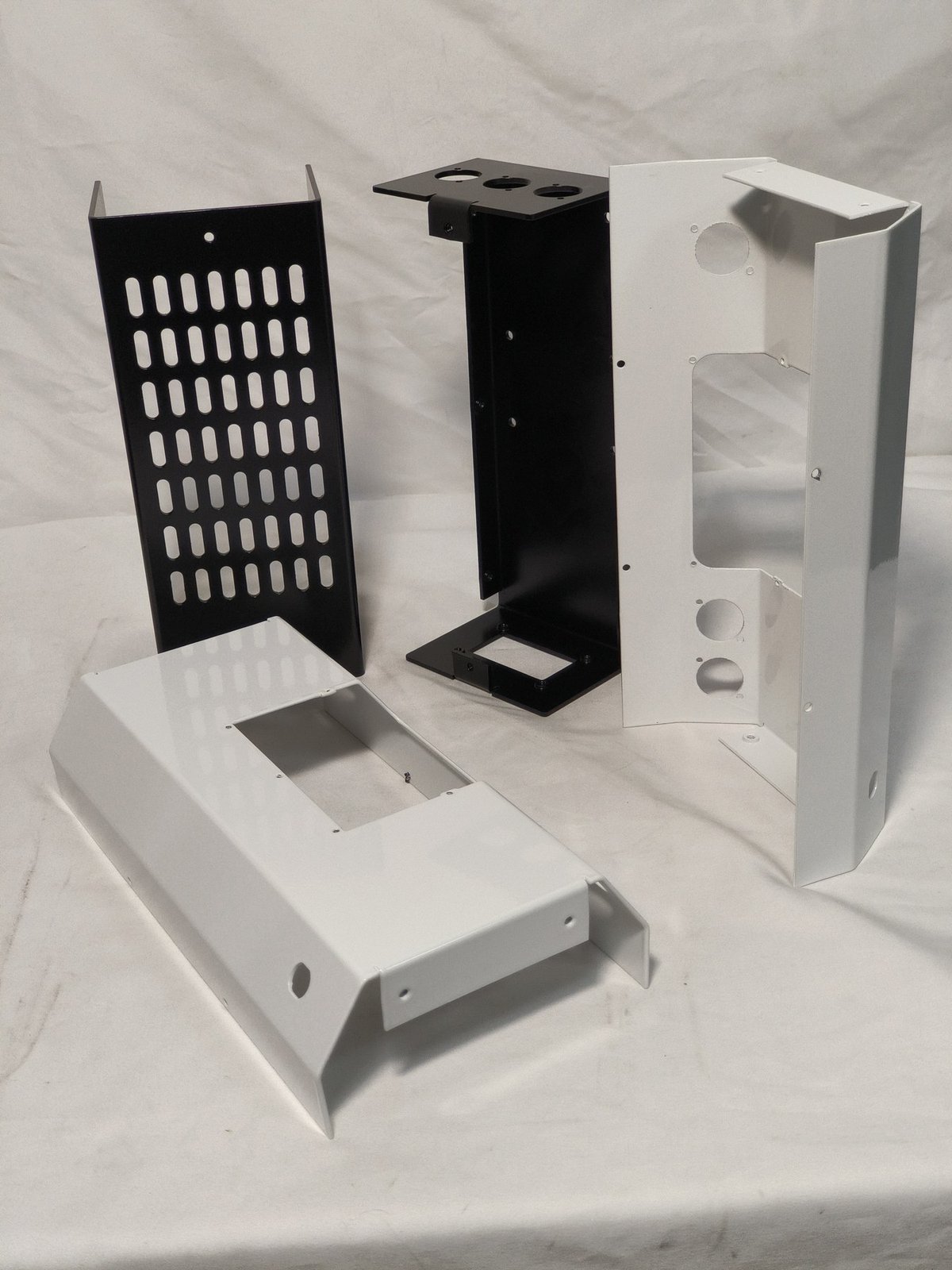
Figure 7: Black and white powder coated parts from the same production batch, including perforated panels, formed brackets and pierced covers.
Programmes We Have Delivered
Case 1: Equipment Builder – Enclosure Range
An equipment builder in Europe needed wall mounted and floor standing enclosures in 1.2 mm and 1.5 mm cold-rolled steel, powder coated to a RAL reference with a lockable door, a gasket face and cable entries. Volumes ran 50-300 pieces per batch across three to six batches a year, with a minimum of 20-50 pieces and FOB prices of $15-80 per unit.
The first batch shipped 15-30 days after drawing approval, following a sample round in 5-10 working days. Because the frame was welded in a fixture from the start, later batches closed without rework, and a cost review after the second batch took 4-6% out of the unit price by nesting parts better. Annual spend sat in the $30k-60k range, with SGS inspection before shipment.
Case 2: Automation Integrator – Welded Frames and Bases
An automation integrator in North America ordered welded machine frames and bases with drilled mounting plates, tapping and paint: batches of 10-40 units, two to four batches a year, a minimum of 5-10 pieces and FOB prices between $100 and $400 per unit. The first batch shipped in 20-35 days.
The critical requirement was squareness, because the customer mounts linear rails directly onto the frame. Welding was done in a fixture with a balanced tack sequence, the frames were checked on a surface plate, and the mounting plates were machined after welding rather than before. These sheet metal capabilities were audited by the customer at the factory, and annual spend landed in the $25k-70k band.
Case 3: Home Brand – Brackets and Small Panels
A home and lifestyle brand in Europe bought brackets, small formed panels and mirror-polished trims for a retail line: 200-800 pieces per batch, four to eight batches a year, a 100 piece minimum and FOB prices from $2 to $15 per piece. The first batch shipped in 15-25 days after a sample round.
The programme was an appearance problem rather than a dimensional one, and the sheet metal capabilities under test were finishing and packing. Grain direction, film protection and packing were fixed at sample stage, and the approved sample stayed the reference for later batches. Annual spend was in the $15k-40k range, with a 4-6% step down after year one.
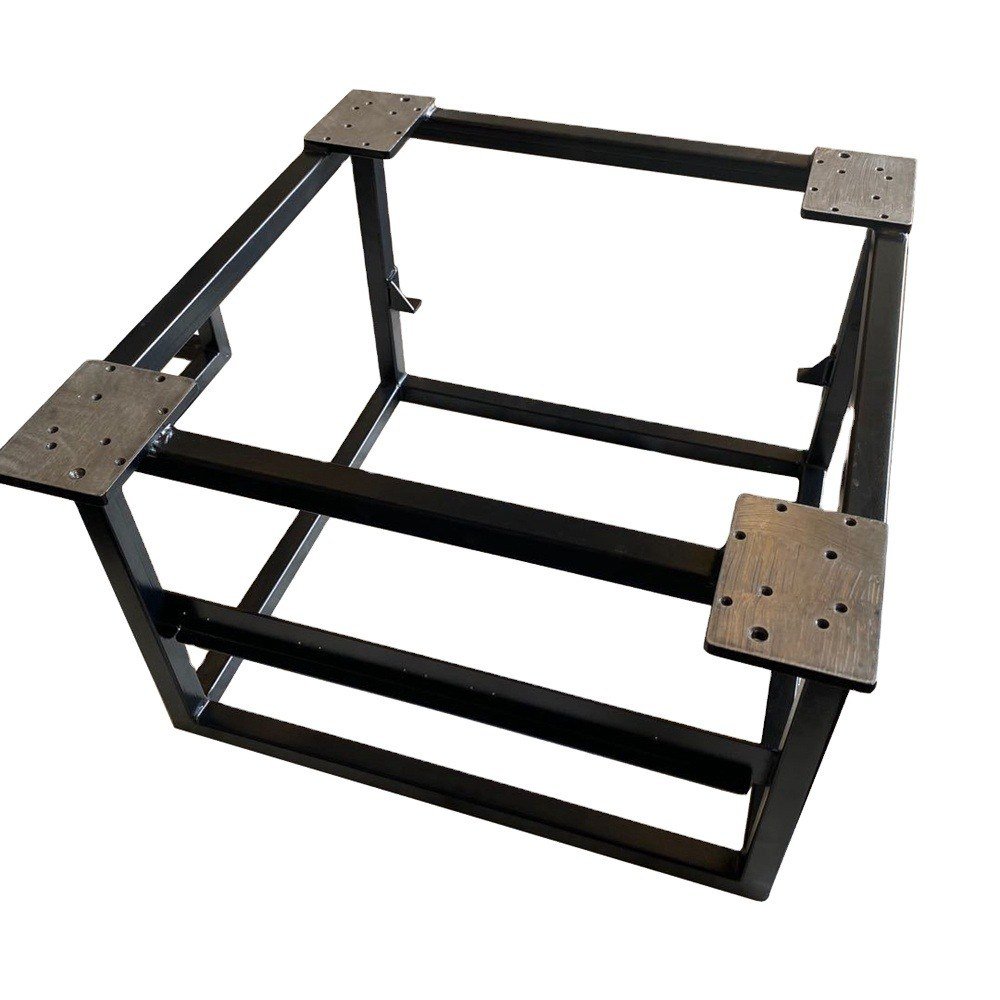
Figure 8: A welded steel frame with drilled mounting plates, TIG welded in a fixture and checked for squareness before painting.
Summary and Next Steps
How to Judge Sheet Metal Capabilities
Sheet metal capabilities are best tested with a part, not a factory tour. Ask for the process list with its tolerances, the thicknesses run, the finishes held in-house and those bought in, the minimum order for your size band, and the documents that arrive with the first batch. A supplier answering only in general terms usually sub-contracts half the process.
Ask about repeatability. Sheet metal capabilities that produce a good first article are common; those holding the same dimension and colour three batches later are not. Fixtures, recorded bend programs and retained colour panels are the evidence.
Why XHX Metal
XHX Metal keeps the whole chain in one 2,000 sqm factory in Dongguan: laser cutting on two 6kW machines, CNC punching, bending, TIG and MIG welding, deburring, CNC machining, finishing partners and assembly. The sheet metal capabilities here are small-batch friendly, with prototypes in 5-10 working days, no die cost on cut parts, and a first batch in 15-30 days. The company has exported to North America and Europe for over a decade and holds ISO 9001:2015 and CE; manufacturing support networks are described by NIST MEP.
How to Start Your Programme
Send a STEP model or drawing with the quantity and finish. Finished parts are described on the products page, automation and equipment work on the industrial automation page, and quoting starts from the contact page. For project enquiries, email the XHX Metal engineering team at sales01@xinghaoxin.com.
FAQ: Sheet Metal Capabilities
What is the minimum order for custom sheet metal parts? It depends on the size band: about 100 pieces for small brackets, 20-50 for mid-size boxes, and 5-10 for large cabinets.
Can you work from a drawing instead of a sample? Yes. A STEP model with a dimensioned 2D drawing is the normal route, and DFM comments come back before the quote, so anything that will not form or weld cleanly is changed early.
Which finishes can you supply? Powder coating in a specified RAL colour, galvanising, passivation, brushing, mirror polishing and printing.
How do you check parts before shipping? A first article inspection report is signed against the approved drawing, critical dimensions are recorded per batch, and third-party inspection including SGS is available.
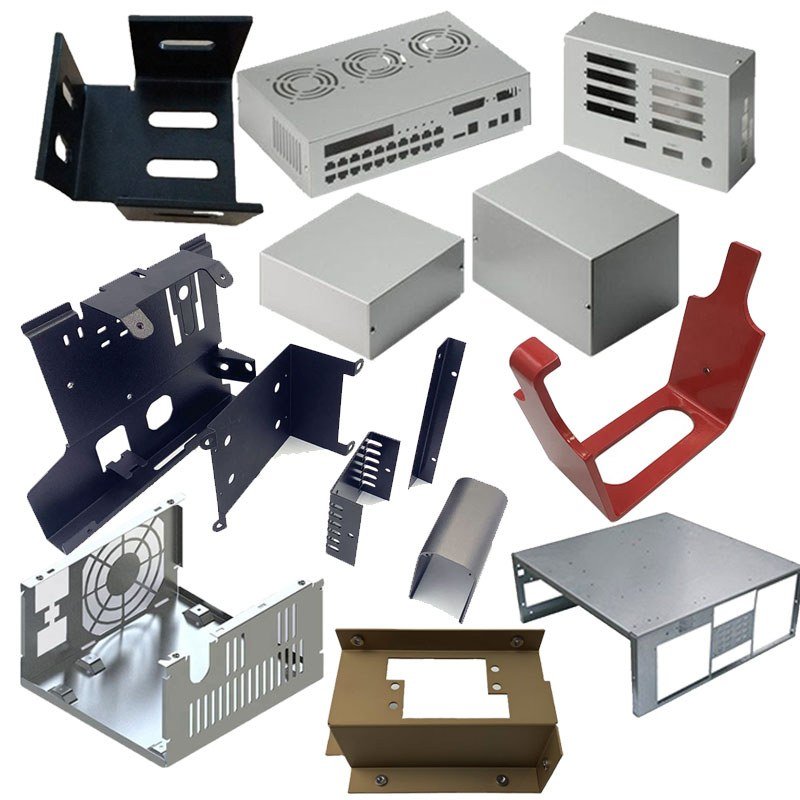
Figure 9: Further parts from the floor: aluminium boxes, black powder coated brackets, a red finished component and sheet metal covers and bases.