Last updated: October 14, 2026 | By XHX Metal Engineering Team
A laser cutting service turns a flat drawing into finished flat parts: outer profiles, holes, slots, notches and ventilation fields, cut from sheet metal to a tolerance the rest of the assembly depends on. At XHX Metal every laser cutting service runs on two 6 kW fiber lasers with +-0.01 mm positioning accuracy, inside a 2,000 sqm factory in Dongguan, China.
This article is written for buyers, engineers and procurement teams who order a laser cutting service rather than a finished assembly: what the service includes, where cut parts are used, which materials and thicknesses fit the process, what makes a part hard to cut well, how long a laser cutting service takes, and three order examples with volumes and price bands.
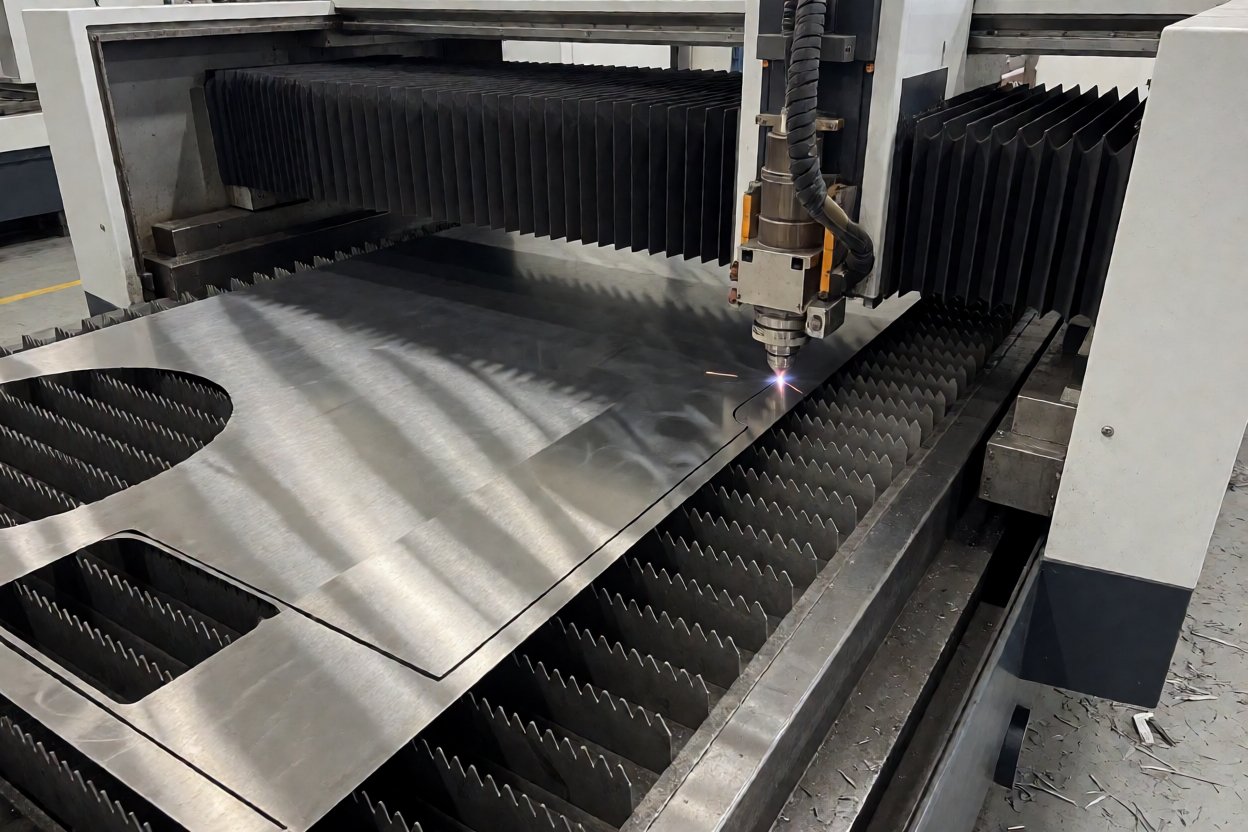
Figure 1: A fiber laser cutting head cutting a stainless steel sheet inside an enclosed 6 kW machine.
Laser Cutting Service: What We Provide
What the Service Covers
A laser cutting service cuts sheet metal to a drawing and delivers flat parts: profiles, holes, slots and openings, with the edges deburred and the parts packed for the next process. Buyers order cutting alone, or a laser cutting service that continues straight into bending, welding, finishing and assembly in the same factory.
Most enquiries arrive as a DXF when cutting is the whole job, or as a STEP assembly when the buyer wants the finished part. Both are quoted on the same four answers: material, thickness, quantity and secondary operations. Because cutting, forming and welding sit under one roof, a flat blank from a laser cutting service can leave as an assembled enclosure.
The parts ordered most often are the ones that hold a machine together: mounting plates, enclosure side panels and doors, gland plates, vent covers, brackets, gussets, spacers and cover plates. One assembly usually needs eight to twenty different flat parts, and ordering them as one kit from a single laser cutting service keeps material, finish and part numbers consistent.
Machines, Sheet Sizes and Formats
Cutting runs on two 6 kW fiber laser cutting machines with +-0.01 mm positioning accuracy, cutting standard 3,000 x 1,500 mm sheets and larger formats on request. Parameters are set per material and thickness rather than scaled from the previous job, which is how a laser cutting service holds the same result across batches.
Orders arrive in three shapes: single prototype parts, a kit for one assembly, and production batches of a repeated part. Batches are nested to reduce waste, and the nesting is recorded so the next batch from the same laser cutting service runs the same layout and yield.
What Arrives With the Cut Parts
Flat parts are deburred before packing. Automatic deburring and hand finishing remove the sharp edge that a laser cutting service leaves on thin sheet, which matters when parts are handled on the customer’s line or finished by powder coating.
Parts ship with protective film where the surface is visible, interleaved so brushed stainless and aluminium panels arrive without contact marks, and packed in export crates. Where the customer asks for it, a laser cutting service delivers the cut parts as a kit for one assembly with a packing list.
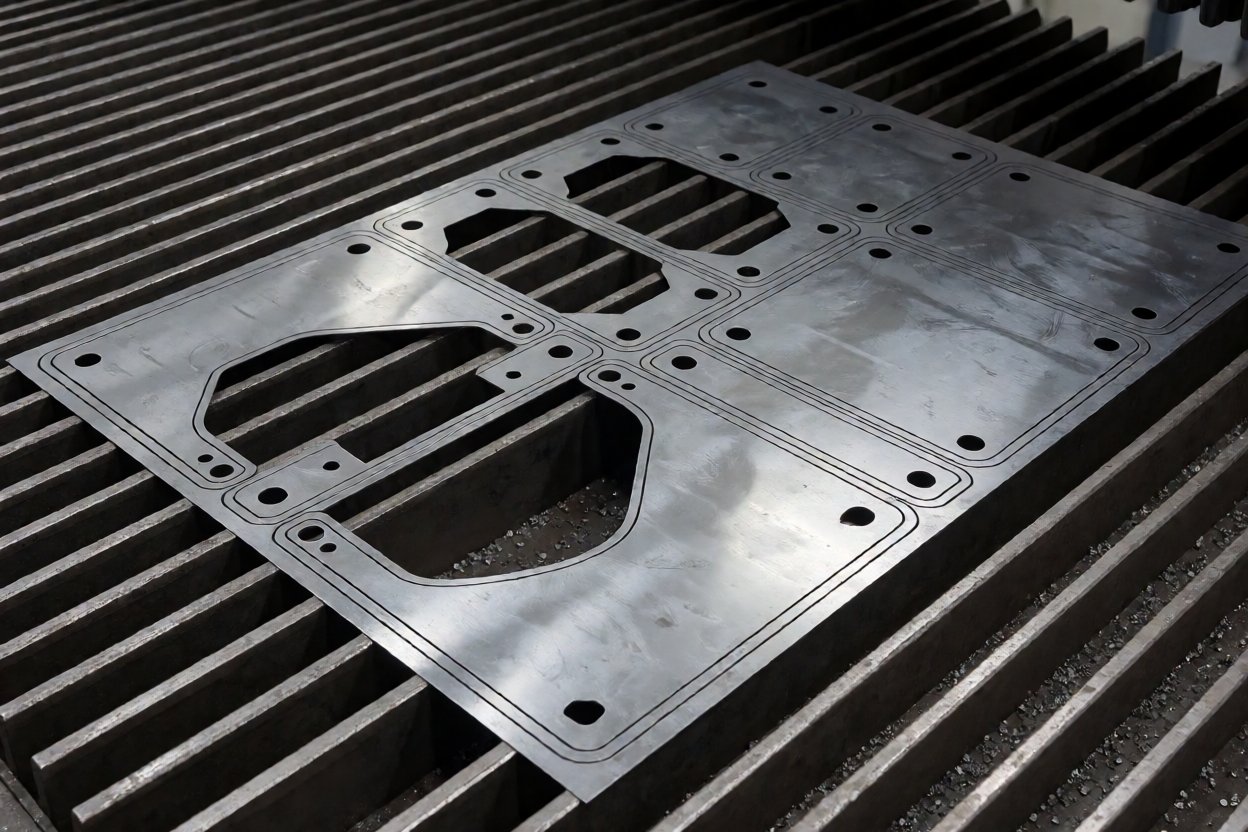
Figure 2: Nested bracket and panel blanks held in the sheet by micro-joints on the cutting bed.
Where Laser Cutting Services Are Used
Enclosures, Cabinets and Control Panels
The largest share of the work goes into electrical enclosures and cabinets: side panels, doors, back panels, mounting plates, gland plates, vent covers and louver panels that a laser cutting service cuts flat before they are bent, welded and coated. Cut accuracy at this stage decides how well the finished enclosure closes and seals.
Panel work rewards a laser cutting service that understands what happens next. A door cut 0.2 mm large still closes once the gasket is fitted; a mounting plate with holes 0.2 mm out of position does not accept the equipment bolted to it. Hole positions and edge-to-hole distances are therefore checked against the drawing before the parts leave cutting.
Ventilation is the second specialty: perforated fields, louver banks and fan cut-outs cut to a pattern that keeps both panel stiffness and airflow. The pattern is stored as a program, so a repeat order from the same laser cutting service comes out identical. Related assemblies are listed on the products page.
Brackets, Frames and Machine Parts
Brackets, gussets, motor mounts, guards, covers and machine panels are the second large group. These are parts where the laser earns its place: a flat profile with internal slots and tabs is cut in one operation, where a punch would need a die and a saw a second set-up.
Because brackets are usually thin and numerous, burrs and flatness matter more than appearance, and a laser cutting service is judged on both. They are cut from 1.5 mm to 6 mm sheet, deburred, and at higher volumes the same geometry moves to CNC punching without redrawing the part.
Signage, Screens and Decorative Panels
Laser cutting also serves decorative work: pierced screens, sign panels, frames and portrait art cut from stainless, aluminium and brass. Thin bridges and fine negative space are the point of these parts, so the program, the flatness of the sheet and the handling between operations decide whether the pattern survives intact.
The same machines cut industrial and decorative work, but they are not run the same way. Decorative panels are cut film up, handled with gloves and inspected panel by panel before coating, which is a slower and more careful version of the same laser cutting service.
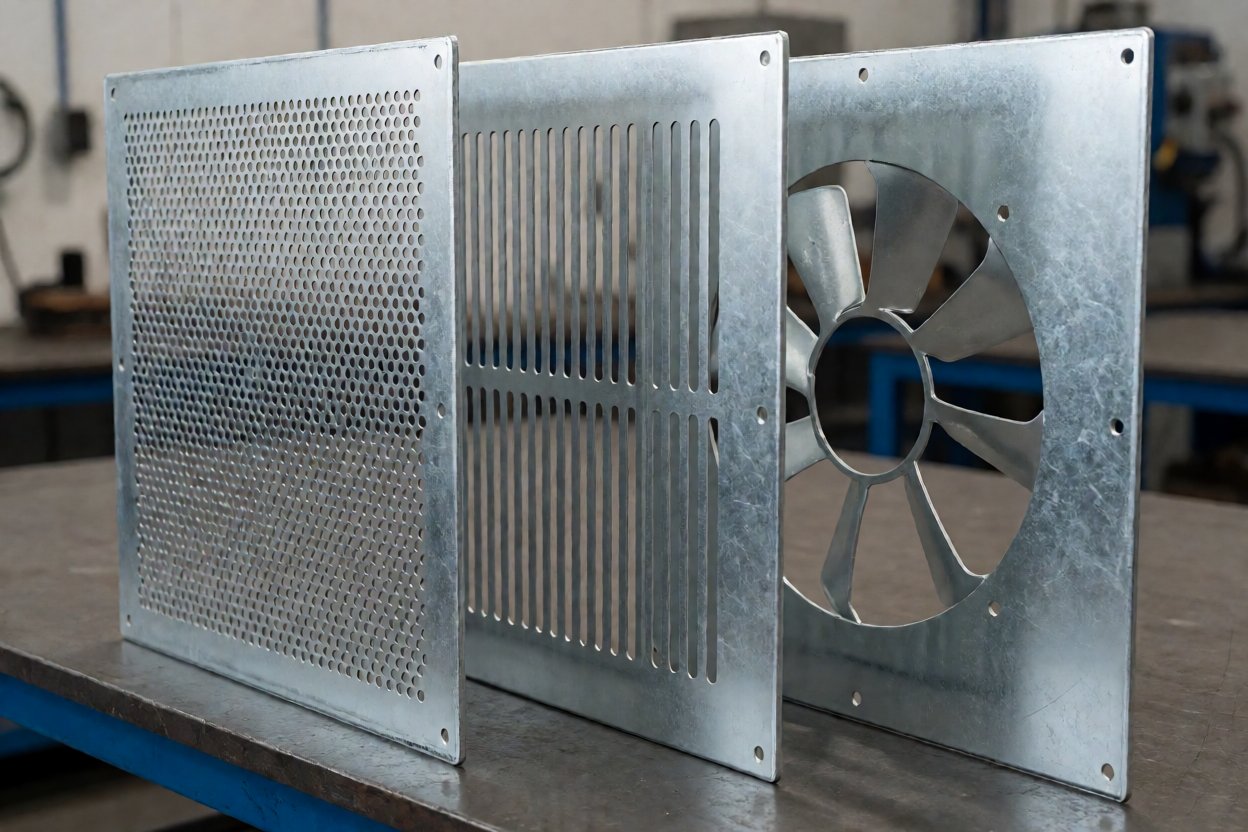
Figure 3: Laser cut vent panels: a perforated field, long slots and a fan cut-out with mounting holes.
Materials, Thickness and Edge Finish
Materials We Cut
Laser cutting covers the five materials most sheet metal parts are made from: cold rolled steel, galvanized steel, stainless steel 304 and 316, aluminium, and copper or brass. Each cuts differently, so a laser cutting service sets power, focus and assist gas per material rather than per job.
Stainless needs more power and a nitrogen assist, aluminium reflects and conducts heat away fast, and filmed sheets have to keep their surface intact. Material practice is documented by SSINA for stainless, the American Iron and Steel Institute for steel and the Aluminum Association for aluminium.
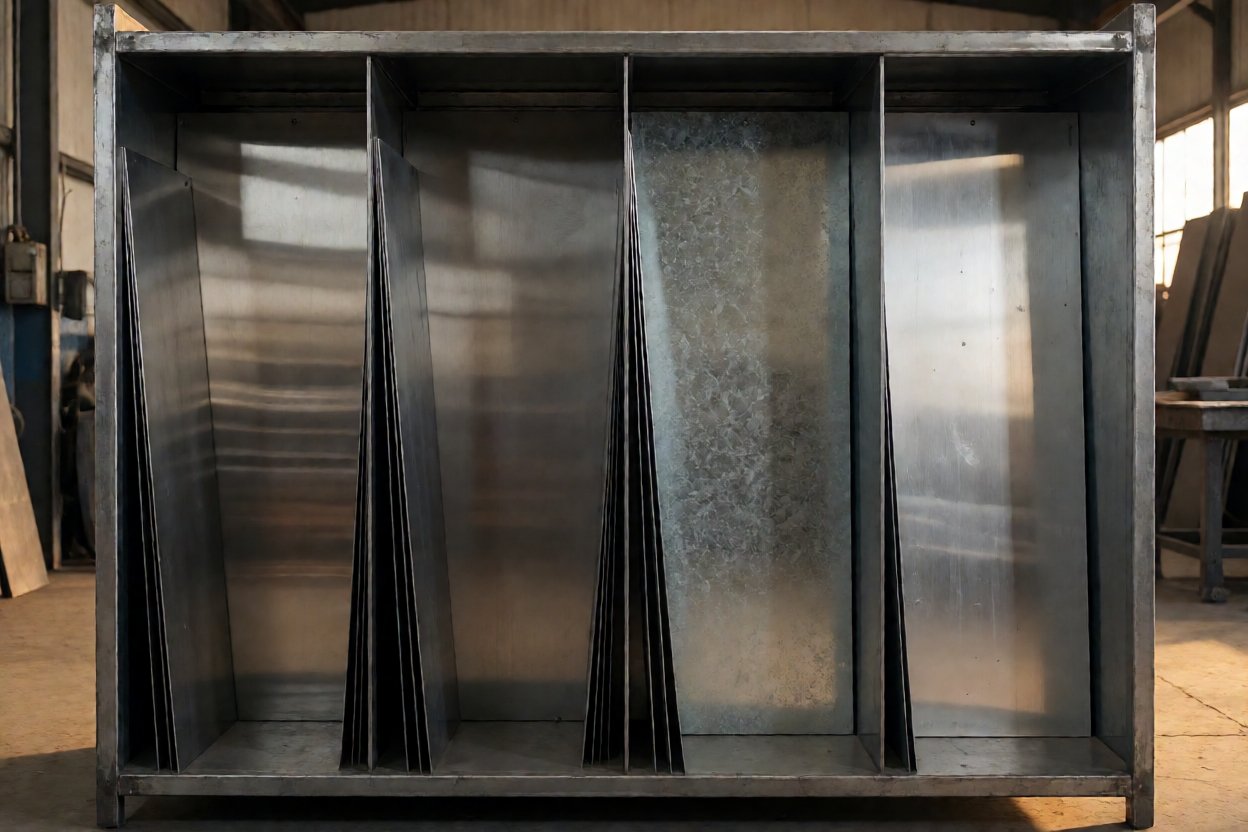
Figure 4: Sheet stock rack with brushed stainless, cold rolled, galvanized and aluminium sheets.
Thickness, Kerf and When Punching Wins
The practical range is 0.5 mm to 20 mm in carbon steel, 0.5 mm to 16 mm in stainless and 0.5 mm to 12 mm in aluminium, although most parts sit between 0.8 mm and 6 mm. Kerf runs about 0.1 mm to 0.5 mm, compensated in the program before the nest is cut.
Above roughly 1,000 identical parts with simple geometry and holes no smaller than the sheet thickness, CNC punching costs less per piece than a laser cutting service. Below that, or where the profile is complex, the laser wins because no die has to be made. Brass and copper follow the practice set out by the Copper Development Association, and galvanized sheet, where the zinc vaporises at the kerf, by the American Galvanizers Association.
Edges, Dross and Deburring
A laser cut edge is a thermal cut edge: square on thin sheet, slightly tapered as thickness rises, with fine striations that are visible but harmless. On thick carbon steel a badly matched parameter set leaves dross under the part, so gas pressure and focus are set per thickness.
Deburring closes the gap between a cut part and a finished part: it removes the sharp edge on thin sheets, and parts for powder coating are prepared so the coating covers the cut face. Where a laser cutting service leaves an edge visible in the finished product, that is agreed at quotation stage, not discovered later.
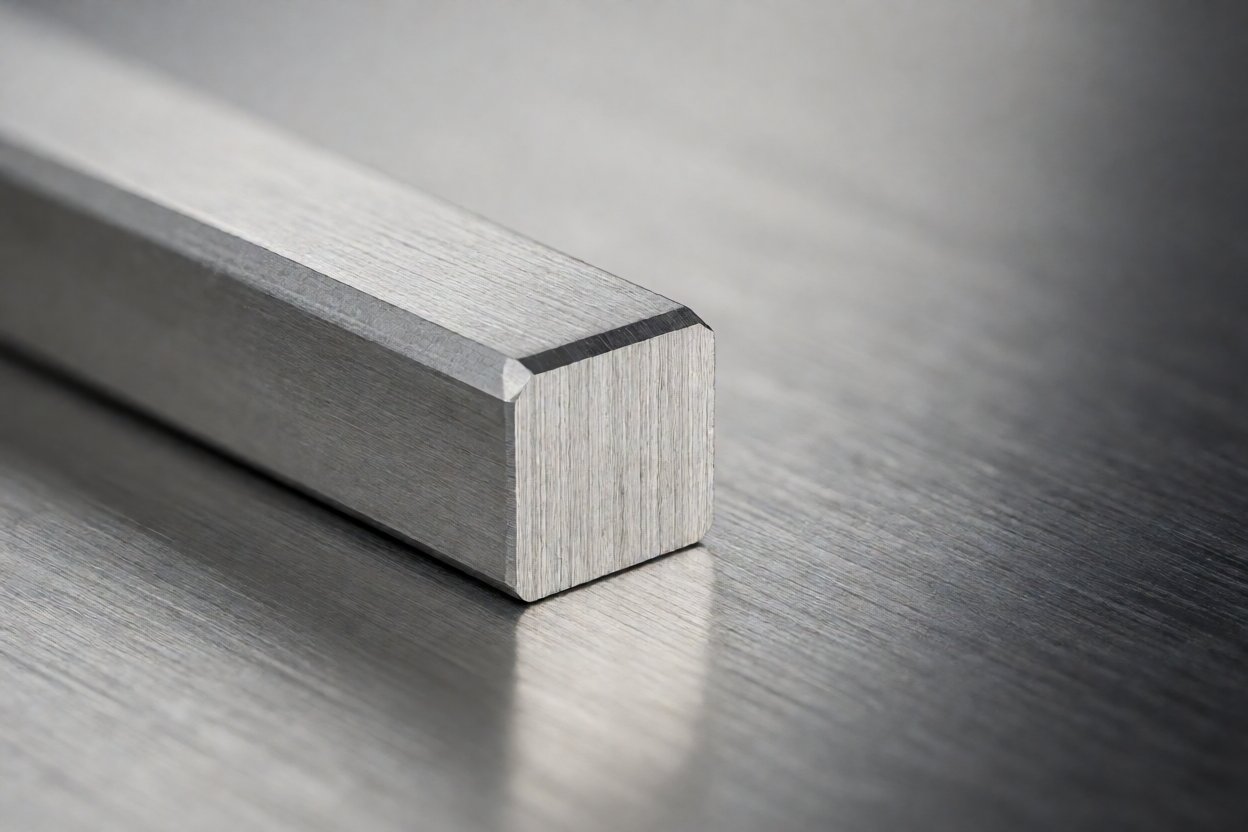
Figure 5: Macro view of a laser cut edge in 3 mm stainless steel: square, clean and free of dross.
What Makes Laser Cutting Hard to Get Right
Minimum Features, Kerf and Taper
Laser cutting holds position accurately, but it cannot cut features thinner than its own beam: a hole smaller than the sheet thickness, a slot under about 0.8 mm, or a web under 1 mm will taper, distort or fail. A laser cutting service checks those limits before writing the program.
Holes are kept at or above the sheet thickness, small features are compensated in the program rather than expected from the machine, and a first-off part is measured before the batch runs. On thin stainless and aluminium a nitrogen assist gives a cleaner edge with less oxidation.
Process practice for this class of equipment is described by the Laser Institute of America, useful background for buyers specifying processed parts.
Heat, Distortion and Thin Webs
Heat is the second risk: a 0.8 mm stainless sheet with a dense perforation or a long narrow outline can lift and warp as it is cut, and a thin web between two cut-outs can break during handling. A laser cutting service that cuts the layout in the wrong order creates that distortion itself.
Our countermeasures are parameter sets recorded per material and thickness, a cut sequence that balances heat across the sheet, micro-joints holding parts in the skeleton until the final pass, and flatness checks on parts with fine patterns.
On decorative work the bridges are dimensioned with the customer before cutting, because a laser cutting service that leaves a bridge 0.2 mm too thin delivers a panel that fails in transit.
Nesting, Tolerance and Material Use
The third risk group is commercial: nesting decides how much of each sheet becomes parts and how much becomes offcut, and a laser cutting service that nests badly raises the price of work that looked cheap per hour.
Brush and grain direction, film orientation and surface protection all constrain how parts can be rotated in the nest. Offcuts are recorded by size and grade and reused on later orders, which is one reason a repeated part gets cheaper in the second year of a laser cutting service programme.
Scratches are the last risk: film, gloves, interleaving and dedicated stillages are part of the process for visible parts, because a marked stainless panel cannot be polished back later.
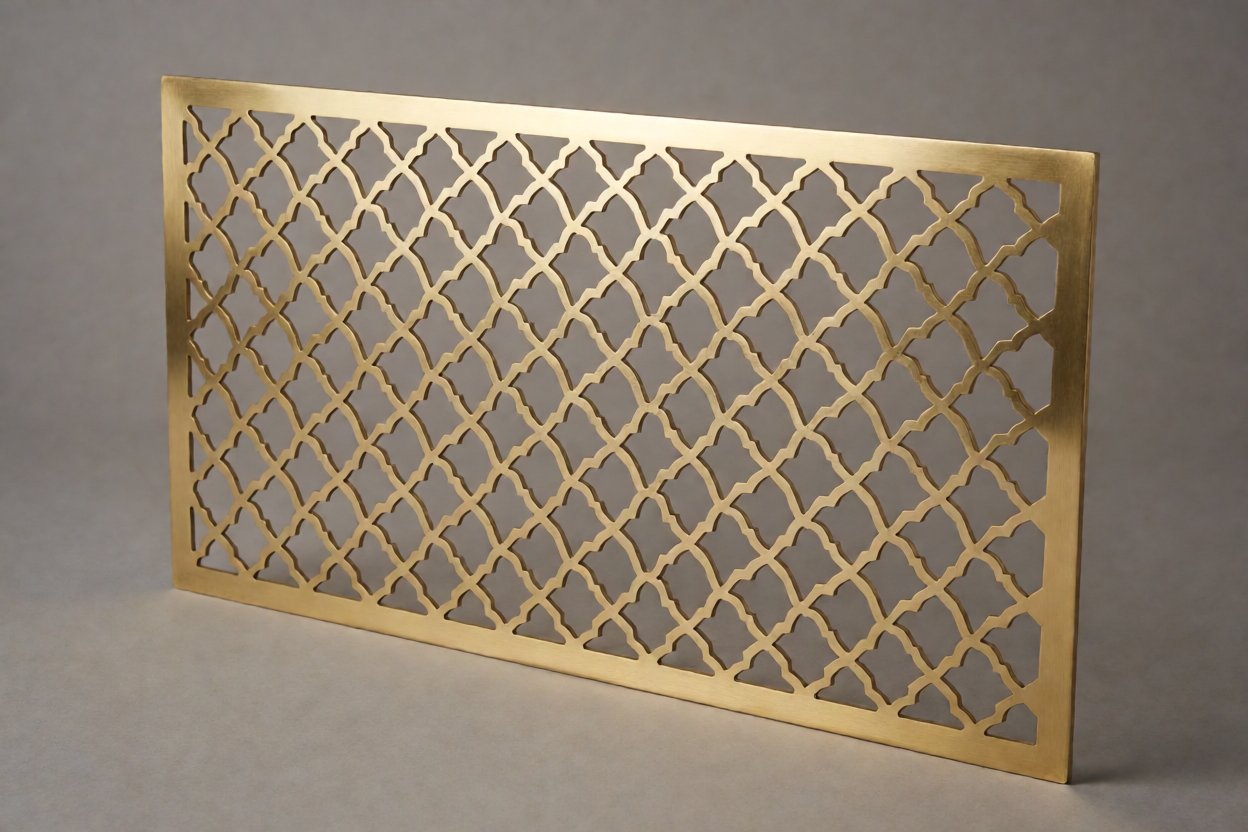
Figure 6: A pierced brass decorative panel with thin laser cut bridges between the pattern shapes.
Laser Cutting Service Lead Times and Documentation
What to Send for a Quotation
Send a DXF for cut-only work, or a STEP model with a dimensioned 2D drawing when the part will be formed or welded. Add the material grade, thickness, quantity per batch, the finish and any surface protection, and a laser cutting service quotation comes back without a second round of questions.
Where the design is still moving, send the flat pattern you have and the function the part has to perform. We return a manufacturable version with features adjusted for kerf, bend allowance and minimum web, then quote that drawing instead of quoting a shape that has to be corrected later.
File formats follow the same discipline: DXF and DWG for cutting, STEP or IGES for 3D, and PDF for dimensioned drawings. Files are controlled by revision, so a laser cutting service order cannot be cut from a superseded drawing.
Lead Times
Samples follow in 5-10 working days after the drawing is approved, and the first production batch ships 15-30 days later depending on material, finishing and quantity. The shortest laser cutting service lead time is flat cut-only work, which skips forming, welding and coating.
Two things move the date: a material that is not in stock in the right grade and thickness, and a finishing specification that arrives after cutting. Both are cheaper to settle before the nest is laid out, which is why the sample is treated as the specification for the programme.
Inspection, Certificates and Packing
Documents ship with the parts: material certificates, a first article inspection report with the critical dimensions measured, and batch traceability back to the sheet. The factory holds ISO 9001:2015 and CE, and third-party inspection can be arranged through SGS or by a customer visit.
For export orders, US buyers calculate landed cost with the Harmonized Tariff Schedule, and CE marking obligations for machinery and electrical products are set out by the European Commission. Packing is specified with the part: film on visible faces, interleaving between panels, individual protection for polished parts, and export crates banded for sea freight.
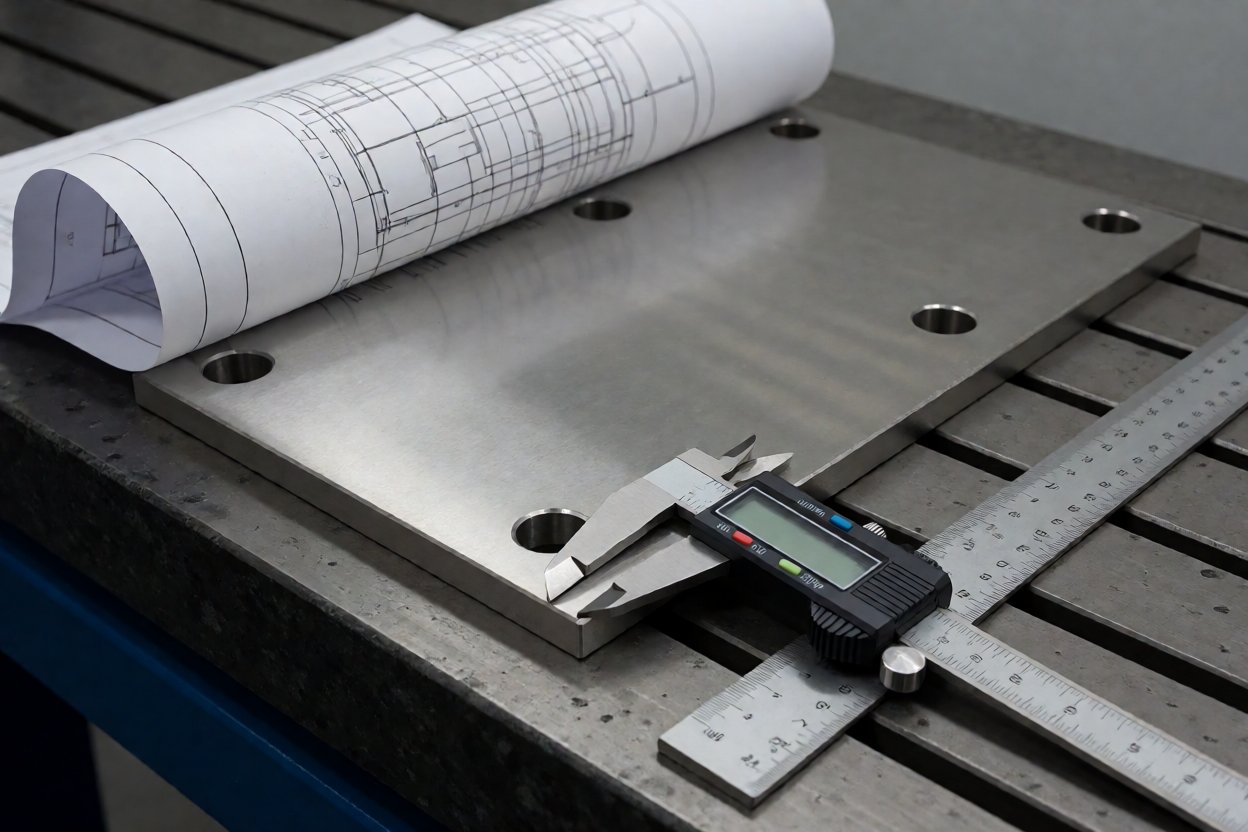
Figure 7: First article inspection: caliper measuring the position of a laser cut hole in a panel.
Laser Cutting Programmes We Have Delivered
Case 1: Control Panel Builder – Panels and Mounting Plates
A control panel builder ordered enclosure panels with cut holes, mounting plates and gland plates in 2 mm galvanized steel: batches of 50-300 pieces, three to six times a year, a minimum of 20-50 pieces and FOB prices in the $15-80 range per piece depending on size and coating.
The first batch shipped 15-30 days after drawing approval, following a 5-10 working day sample round, and annual spend sat in the $30k-60k band with third-party inspection before shipment. Cutting and punching moved onto the same nest in the second year of the laser cutting service, giving a 4-6% step-down on the repeated parts.
Case 2: Equipment OEM – Brackets, Gussets and Spacers
An equipment OEM ordered several hundred repeated small parts per batch – L-brackets, gussets, spacers and plate washers in 2 mm cold rolled steel and 304 stainless: batches of 200-800 pieces, four to eight batches a year, a minimum of 100 pieces and FOB prices from $2 to $15 each.
This laser cutting service programme was won on flatness and burrs rather than cutting speed. Every part is deburred before packing, and the tab pattern is nested so brackets arrive flat enough to weld without straightening. Annual spend stayed in the $15k-40k band.
Case 3: Decorative Cut Panels for a Brand
A brand ordered pierced decorative panels in 1.5 mm brass and brushed stainless with fine internal bridges: batches of 50-300 pieces, two to four times a year, a minimum of 20-50 pieces and FOB prices between $15 and $80 per panel depending on size, material and coating.
The programme lived or died on the surface: film up during cutting, gloves at every station, interleaving in the crate and an inspection of every panel before coating. The first batch shipped 15-30 days after approval and annual spend landed in the $30k-60k band.
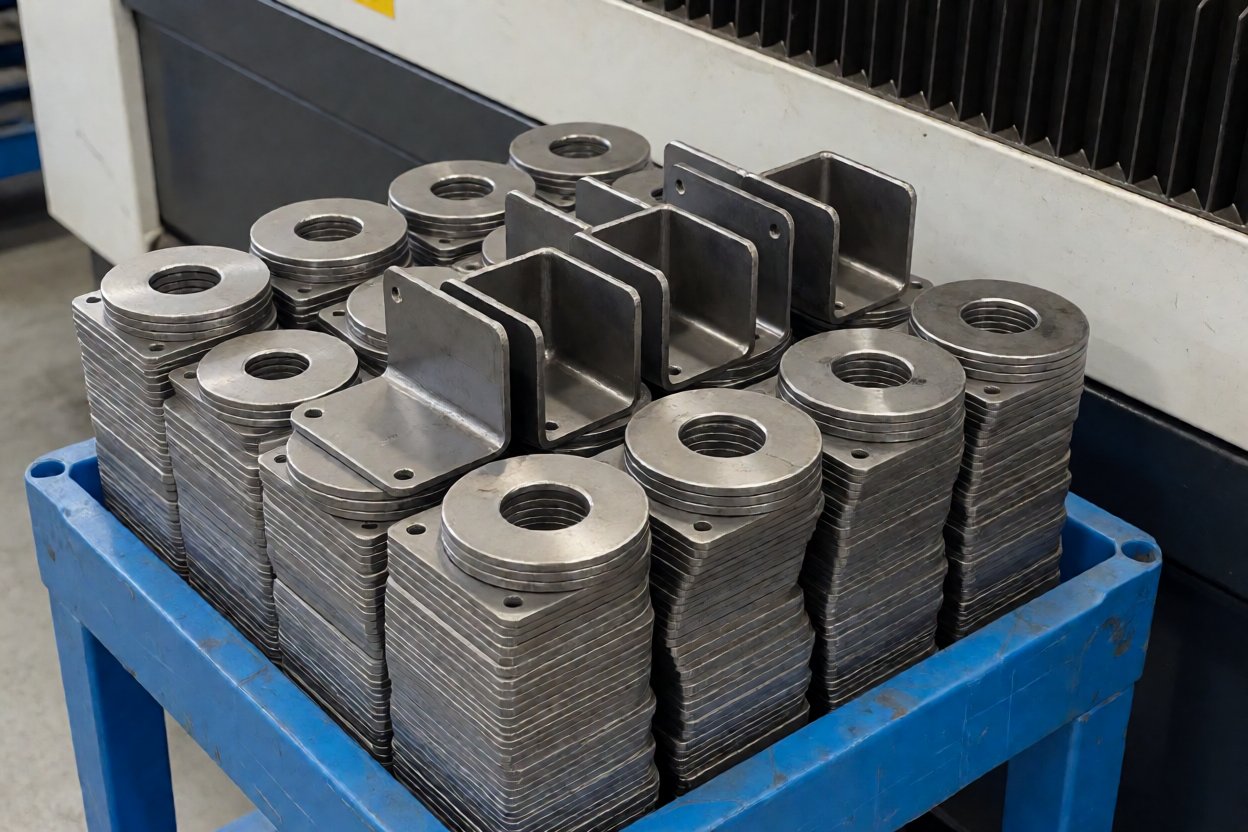
Figure 8: A production batch of laser cut brackets, gussets and spacers in a stillage after deburring.
Summary and Next Steps
How to Specify a Laser Cutting Service
Specify a laser cutting service from the part’s function backwards. Fix the material and thickness, the features that must fit, the surface that must stay unmarked, and the annual quantity. Nesting, parameter set and packing all follow from those four answers.
Then ask two questions: how cut features are checked against the drawing, and how flat parts are protected between cutting and packing. Those two answers decide whether the tenth batch of a laser cutting service behaves like the first.
Why XHX Metal
XHX Metal keeps cutting, punching, forming, welding, finishing and assembly in one 2,000 sqm factory in Dongguan: two 6 kW fiber laser cutting machines at +-0.01 mm positioning accuracy, CNC punching, CNC bending, TIG and MIG welding and coating partners, at about 500,000 parts a year.
The factory holds ISO 9001:2015 and CE, works with SGS on inspection, and has supplied OEM and brand customers in North America and Europe for over a decade. Supplier-qualification support programmes of the kind small manufacturers use are described by NIST MEP.
How to Start Your Programme
Send a DXF or STEP file with material, thickness and quantity for a quotation with the lead time. Capabilities are set out on the sheet metal capabilities page, finished assemblies are on the products page and projects start from the contact page; enquiries also reach the engineering team at sales01@xinghaoxin.com.
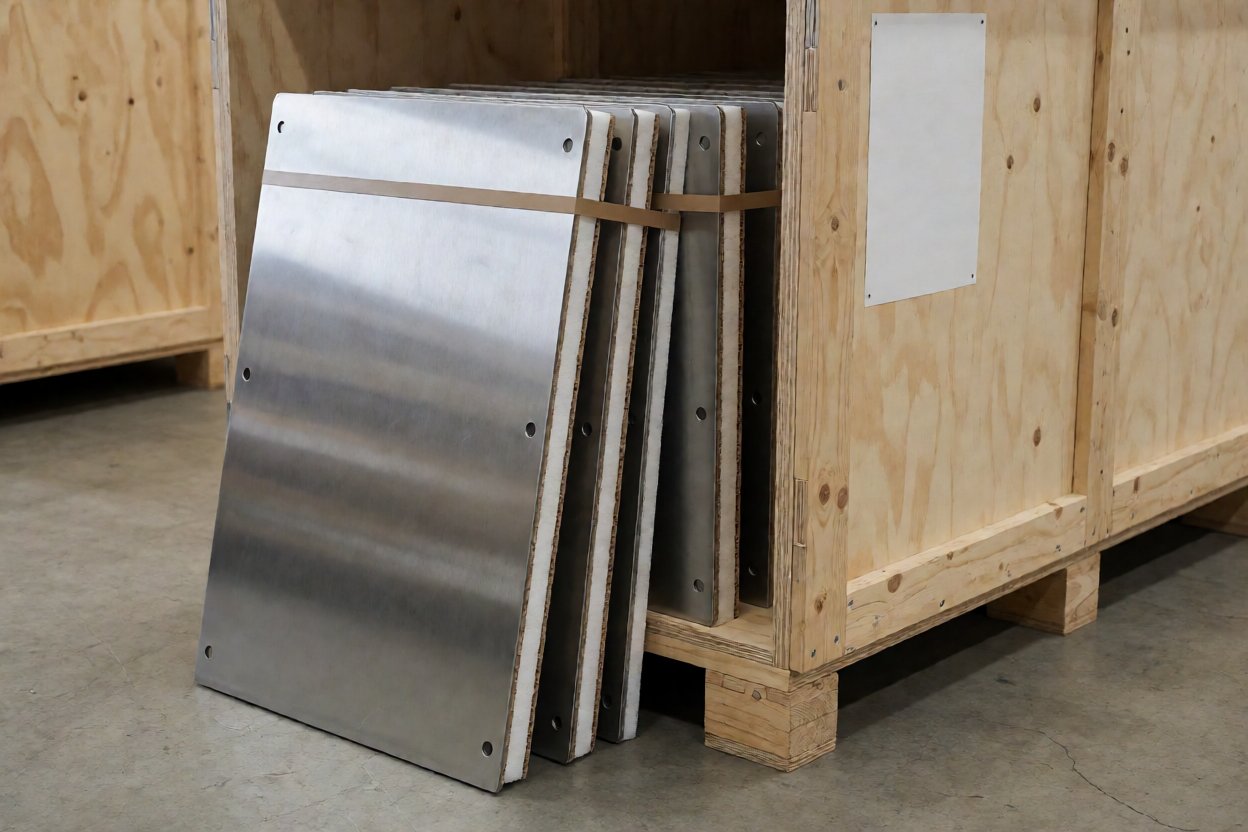
Figure 9: Export packing: stainless panels interleaved with foam and separated inside a plywood crate.
FAQ: Laser Cutting Service
What is the minimum order? Around 100 pieces for small flat parts and 20-50 pieces for larger panels; prototypes and one-off parts are quoted too.
How accurate is laser cutting? Positioning accuracy is +-0.01 mm, with practical tolerances on cut features around +-0.1 mm on thin sheet; critical features are confirmed at first article.
Can one order be cut and bent? Yes. Cutting, punching, bending, welding and coating sit in one factory, so a laser cutting service order continues into a formed and finished part without a second supplier.
Do you cut filmed or coated sheet? Yes. Filmed sheets are cut film up where the surface is visible, and parts can be supplied with the film left on for protection in transit.