Last updated: October 14, 2026 | By XHX Metal Engineering Team
A cnc punching service turns flat sheet into parts by cutting holes, slots, notches and outer profiles with a turret of punch and die tools, rather than with a thermal cutting beam. At XHX Metal a cnc punching service runs alongside two 6 kW fiber lasers inside a 2,000 sqm factory in Dongguan, China, so a part can be punched, formed, welded and finished without leaving the building.
This article is written for buyers, engineers and procurement teams deciding whether to place a punching job rather than a laser job: what a cnc punching service covers, which parts suit it, how material and thickness change the answer, what makes a punched part hard to hold to tolerance, how long the work takes, and three order examples with volumes and price bands.
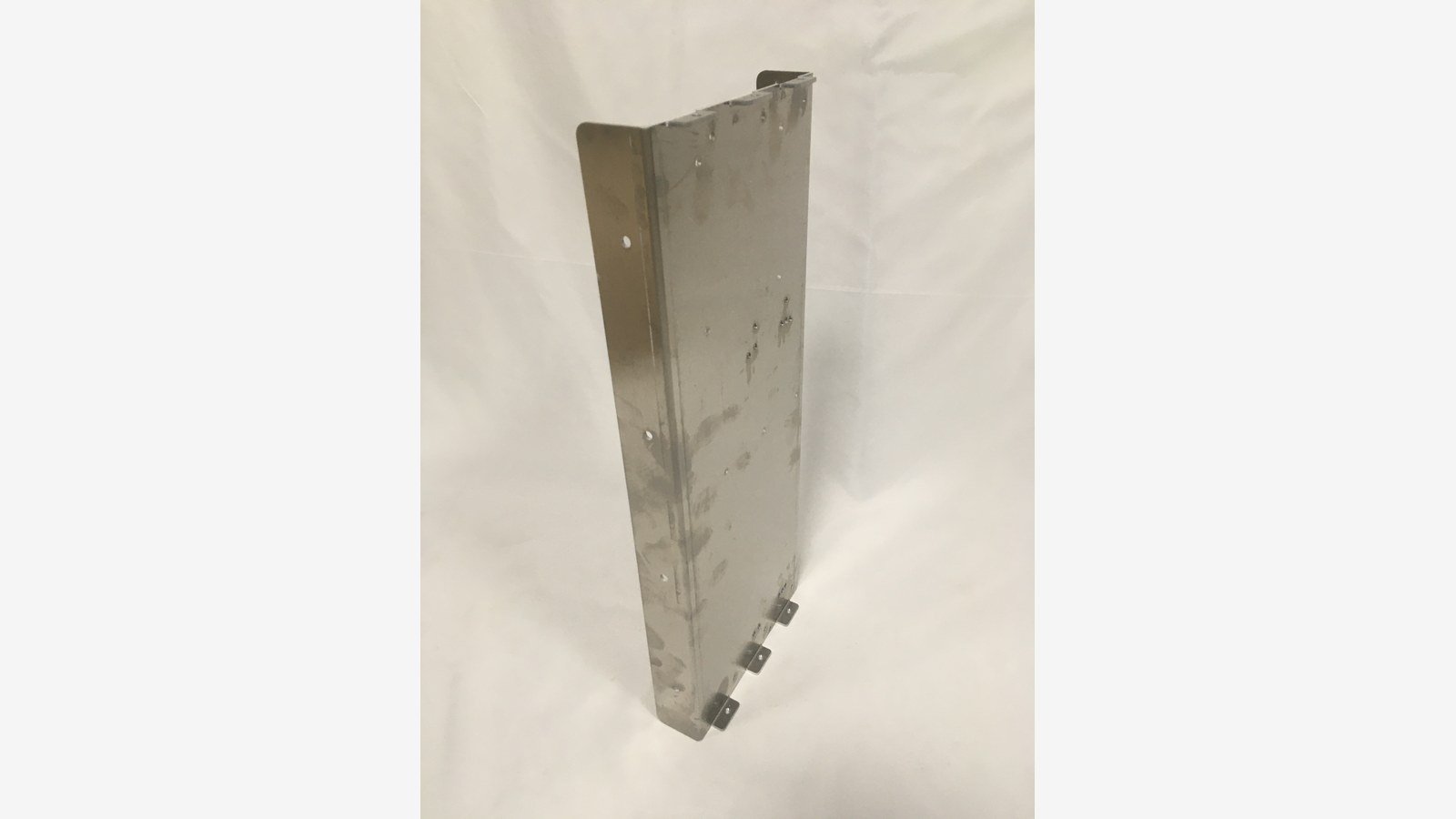
Figure 1: A punched and formed stainless steel bracket with a regular hole pattern and formed tabs.
CNC Punching Service: What We Provide
What the Service Covers
What does a cnc punching service deliver? Flat parts cut by tooling: round holes, obround slots, rectangular openings, louvre vents, countersinks, embosses and the outer profile, all struck in one setup on a turret punch press, giving a flat blank that continues into bending and finishing.
Buyers order a cnc punching service on its own when they already have forming capacity, or as the first step of a finished part. Most enquiries arrive as a STEP model with a dimensioned 2D drawing when the part will be formed, or as a DXF when only the flat blank is needed. Both are quoted on the same four answers: material, thickness, quantity and secondary operations.
The parts a cnc punching service quotes most often need many identical holes rather than a complex outline: enclosure side panels and doors, mounting plates, gland plates, vent covers, louvre panels and brackets. One enclosure usually carries eight to twenty flat parts, and one kit keeps hole positions and material grade consistent.
Machines, Tooling and Sheet Formats
A cnc punching service runs on a CNC turret punch press with a multi-station tool turret, working standard 3,000 x 1,500 mm sheets. Tooling covers round punches in the common diameters, obround and rectangular tools, louvre and emboss formers, and countersink tools, so a pattern that would need twenty operations on a manual press runs as one program.
Two things decide the tooling plan. The first is hole size: a round hole smaller than the sheet thickness is a poor punch target for a cnc punching service, so those move to the laser. The second is the pattern, because a dense hole field uses a cluster tool that strikes many holes per stroke.
Punching, Laser or Both
The cheapest plan is usually a mix. Straight runs of small holes, regular grids and standard vents go onto the punch because tooling strikes them far faster than a laser can trace them. Freeform outlines, tight radii and holes below the thickness limit go onto the laser, which needs no die.
Because both processes sit in the same factory, we split the nest rather than forcing one machine to do the whole part. That decision is made at quotation, so the quoted price reflects the cheaper route.
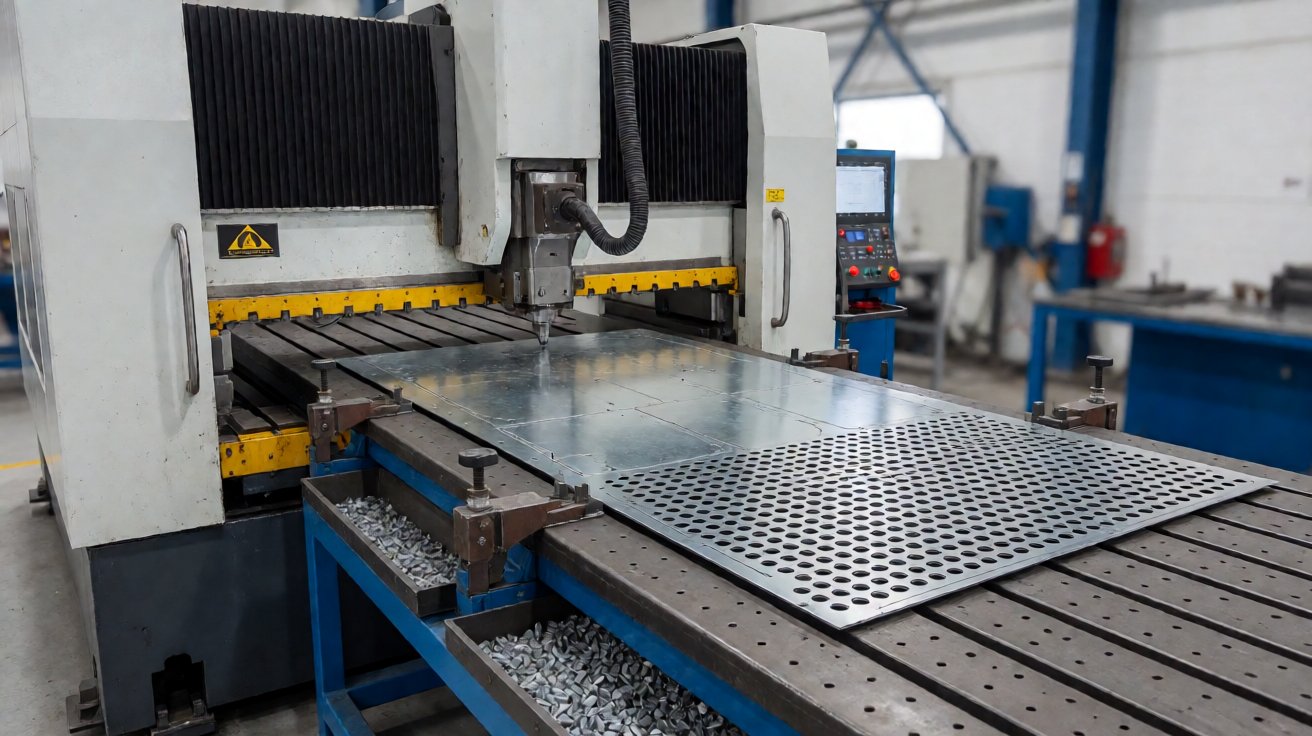
Figure 2: A CNC turret punch press running a programmed hole and slot pattern on a galvanized sheet.
Where a CNC Punching Service Is Used
Enclosures, Cabinets and Control Panels
The largest share of work for a cnc punching service goes into electrical enclosures and cabinets: mounting plates, gland plates, back panels, doors, vent covers and louvre banks. These parts are judged on hole position, because a mounting plate with holes 0.2 mm out of position does not accept the equipment bolted to it, however clean the edges look.
Panel work also rewards a cnc punching service that understands the next operation. A door punched with a consistent hole pattern still closes once the gasket is fitted, and a louvre bank that is formed to a repeatable depth keeps both airflow and panel stiffness predictable across batches.
Ventilation is the second specialty of a cnc punching service: perforated fields, louvre banks and fan cut-outs punched to a pattern that balances open area against panel stiffness. The pattern is stored as a program, so a repeat order comes out identical. Related assemblies are listed on the products page.
Brackets, Chassis and Machine Parts
Brackets, gussets, motor mounts, guards, cover plates and chassis panels form the second large group of parts a cnc punching service is asked to run. These are the parts where punching wins outright: a flat plate carrying a grid of holes, slots and formed tabs is struck in one program, where tracing every hole with a beam takes many times longer.
Because brackets are thin and numerous, flatness and burr condition matter more than appearance. They are punched from 1.5 mm to 4 mm sheet, deburred before packing, and stacked so they arrive flat enough to weld without straightening. Blanking and shearing practice for this class of work is published by the Fabricators & Manufacturers Association.
Perforated Covers, Grilles and Ventilation Parts
Perforated and louvred parts are the third group, and the one a cnc punching service handles best: equipment covers, acoustic grilles, filter frames, machine guards and ventilation panels. A dense hole field is exactly what a turret press is built for.
The same tooling also forms features a laser cannot cut at all: louvres pushed out of the sheet, embossed stiffening ribs and formed tabs. When a design depends on those, a cnc punching service is the only process that produces the part.
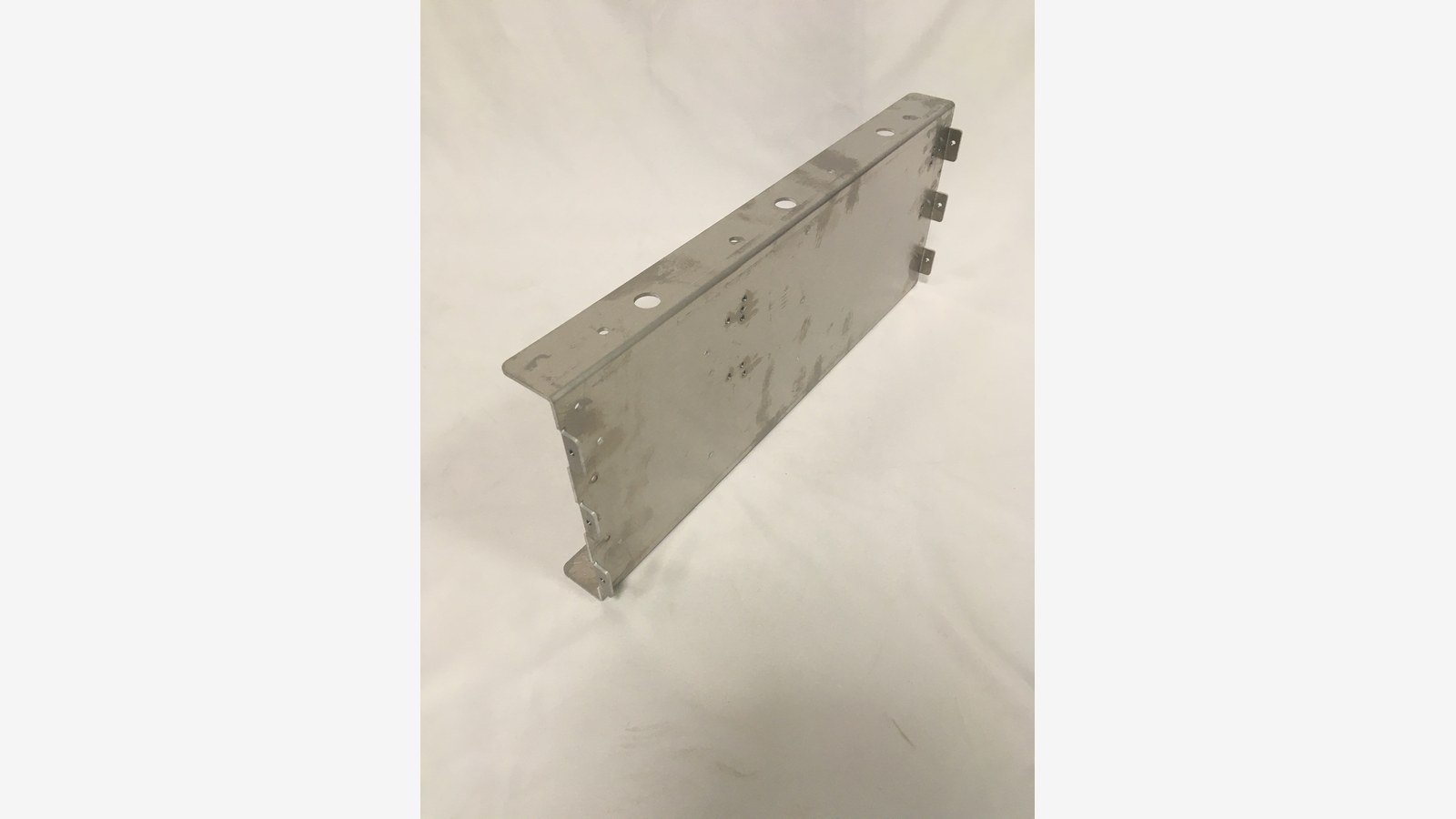
Figure 3: A punched sheet metal panel with mounting holes, slots and formed edge tabs after punching.
Materials, Thickness and Tooling Limits
Materials We Punch
Punching covers the sheet metals most parts are made from: cold rolled steel, electro-galvanized and hot dip galvanized steel, stainless 304 and 316, aluminium 5052 and 6061, and pre-painted sheet. Each behaves differently under the tool, so clearance between punch and die is set per material and thickness.
Two material effects decide quality. Stainless work-hardens at the shear zone, so tooling and clearance must suit the grade or the hole edge tears. Aluminium and pre-painted sheet mark easily, so the sheet is handled film up and separated between operations. Material practice is documented by SSINA, the American Iron and Steel Institute and the Aluminum Association.
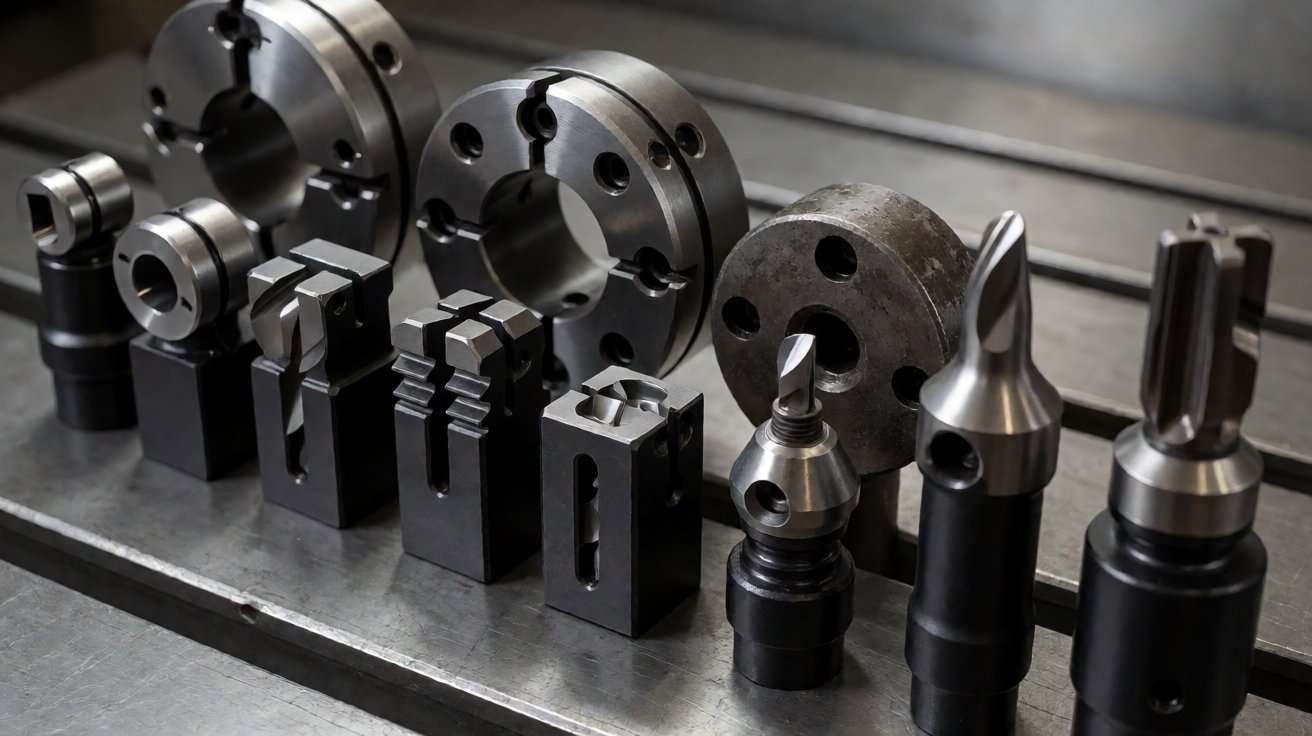
Figure 4: Turret punch tooling: round, obround and louver forming sets with polished cutting edges.
Thickness, Hole Size and the Punching Window
The practical range for a cnc punching service is 0.5 mm to 6 mm, with most parts sitting between 0.8 mm and 3 mm. Above roughly 6 mm the tonnage needed rises steeply and laser cutting becomes the better route, so thickness is the first filter applied to an enquiry.
Hole size is the second filter, and the rule buyers trip over most. A round hole smaller than the sheet thickness is a bad punch target, because the punch is too slender to survive the stroke. Slots follow the same logic, with minimum width tied to thickness.
Where a design needs holes below that limit, they move to the laser in the same nest. Buyers who assume a cnc punching service will simply punch everything are the ones most often surprised at quotation, which is why the hole-size check happens before pricing.
Tooling, Clearance and Edge Quality
Edge quality comes from correct clearance: too little and the edge shears with a second fracture and a hard burr, too much and the hole edge rolls. A cnc punching service sets clearance from material type and thickness, which is why parameters are not copied between a steel job and a stainless job.
Tool condition matters as much as the setting. A worn punch leaves a larger burr and a hole that drifts out of size, so tooling is replaced before it affects the part rather than after a reject. Sheet thickness and flatness tolerances are defined by ASTM International and ISO.
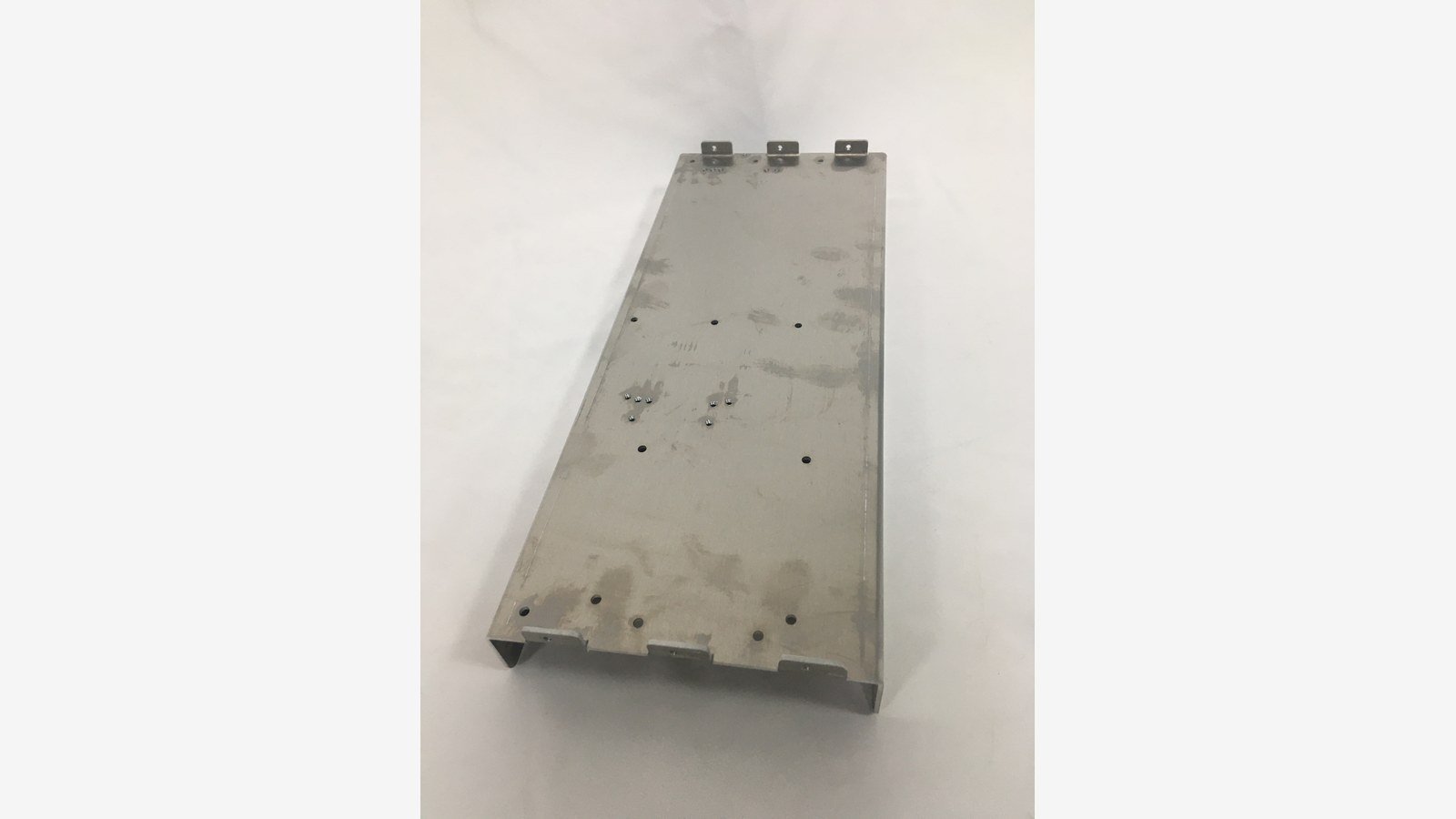
Figure 5: A production punched part in 2 mm steel showing hole position accuracy and formed returns.
What Makes CNC Punching Hard to Get Right
Hole Distortion, Burrs and Slug Pulling
What quality risks should a buyer watch for in punched parts? Three dominate. The first is hole distortion: when clearance is wrong or the punch is dull, the hole edge shears instead of cutting cleanly, and the hole ends up tapered or oversized.
The second is burrs. Every punched edge carries some burr, and on 2 mm steel an unmanaged burr is sharp enough to matter on the customer’s assembly line and to spoil a powder coated finish. The third is slug pulling, where a cut slug rides back up on the punch and is pressed into the sheet, leaving a mark that cannot be polished out.
Our countermeasures are straightforward: clearance set per material and thickness, tooling inspected and replaced on a schedule rather than on failure, anti-slug measures on the tooling, and automatic deburring plus hand finishing before packing. Burr height and hole size are confirmed at first article and then checked in batch.
Tolerance, Flatness and Material Movement
The third risk group is dimensional. Punching is accurate in position, but practical tolerance on a punched feature is not the same as the machine’s positioning accuracy, and quoting the machine figure is how suppliers end up arguing about rejects. We quote a realistic tolerance band per feature and inspect against it.
Flatness is the related risk. A large panel with a dense perforation can bow as material is removed, and a bracket that leaves the press slightly bowed will not sit flat in a welding fixture. Sheet is stored flat, deburred with control, and parts with fine patterns are checked for flatness rather than assumed good.
Surface marking is the last risk, and it is the one buyers notice first. Film, gloves, interleaving and dedicated stillages are part of the process for visible parts, because a scored pre-painted panel or a marked brushed stainless face cannot be repaired later.
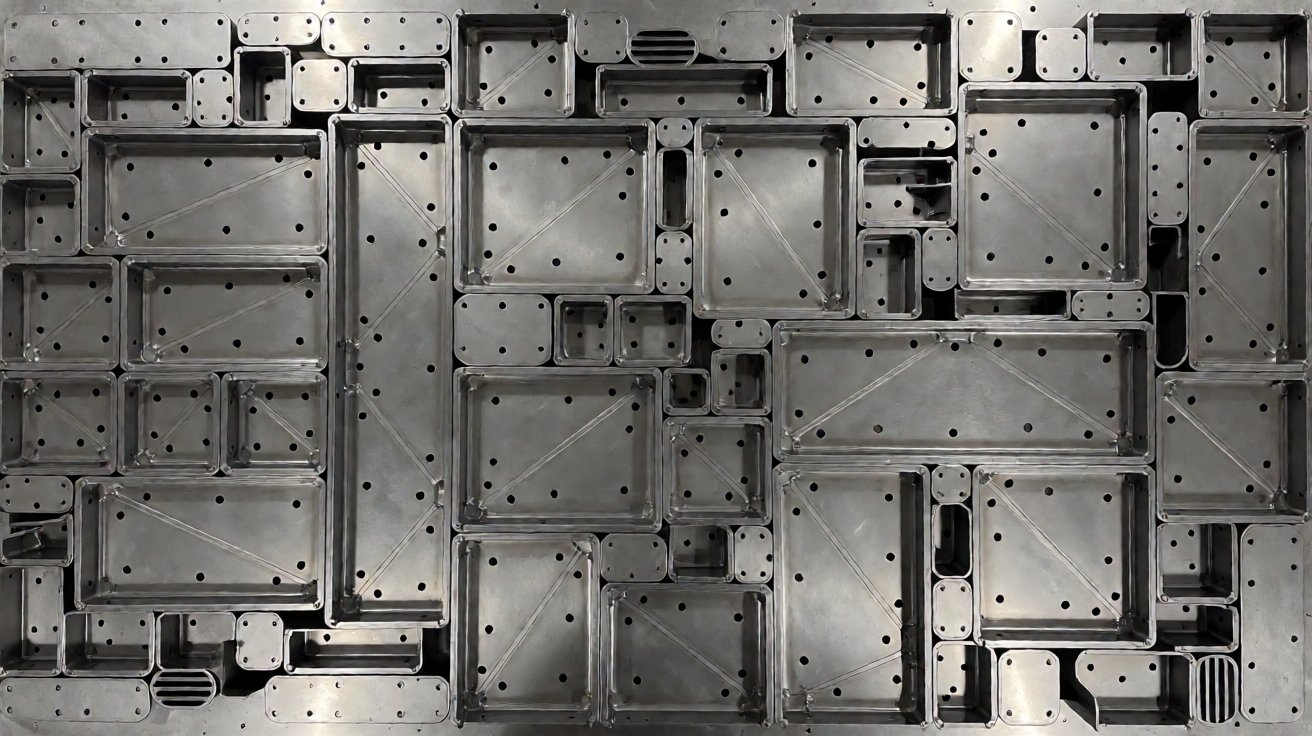
Figure 6: A nested layout of panels, gussets and brackets punched from one 2 mm cold rolled sheet.
CNC Punching Service Lead Times and Documentation
What to Send for a Quotation
What does the supplier need to quote? Send a STEP model with a dimensioned 2D drawing when the part will be formed, or a DXF when only the flat blank is needed. Add the material grade, thickness, quantity per batch, the finish, and any surface protection, and a cnc punching service quotation comes back without a second round of questions.
Where the design is still moving, send the flat pattern you have and describe what the part has to do. We return a manufacturable version with features adjusted for hole-size limits, tooling access and bend allowance, then quote that drawing instead of a shape that has to be corrected later.
File discipline matters more than file format. Files are controlled by revision, so an order cannot be punched from a superseded drawing, and the drawing approved at sample stage becomes the specification the batch runs against.
Lead Times
Samples follow in 5-10 working days after the drawing is approved, and the first production batch ships 15-30 days later depending on material, finishing and quantity. Punching-only work with no forming or coating is the shortest route through the factory.
Two things move the date: a material that is not in stock in the right grade and thickness, and a finishing specification that arrives after punching. Both are cheaper to settle before the program runs, which is why the sample is treated as the specification for the production programme.
Inspection, Certificates and Packing
Documents ship with the parts: material certificates, a first article inspection report with critical hole positions and dimensions measured, and batch traceability back to the sheet. The factory holds ISO 9001:2015 and CE, and third-party inspection can be arranged through SGS or by a customer visit.
For export orders, US buyers calculate landed cost with the Harmonized Tariff Schedule, and CE marking obligations for machinery and electrical products are set out by the European Commission. Import documentation practice for metal parts is summarised by the U.S. International Trade Administration. Packing is specified with the part: film on visible faces, interleaving between panels, individual protection for painted parts, and export crates banded for sea freight.
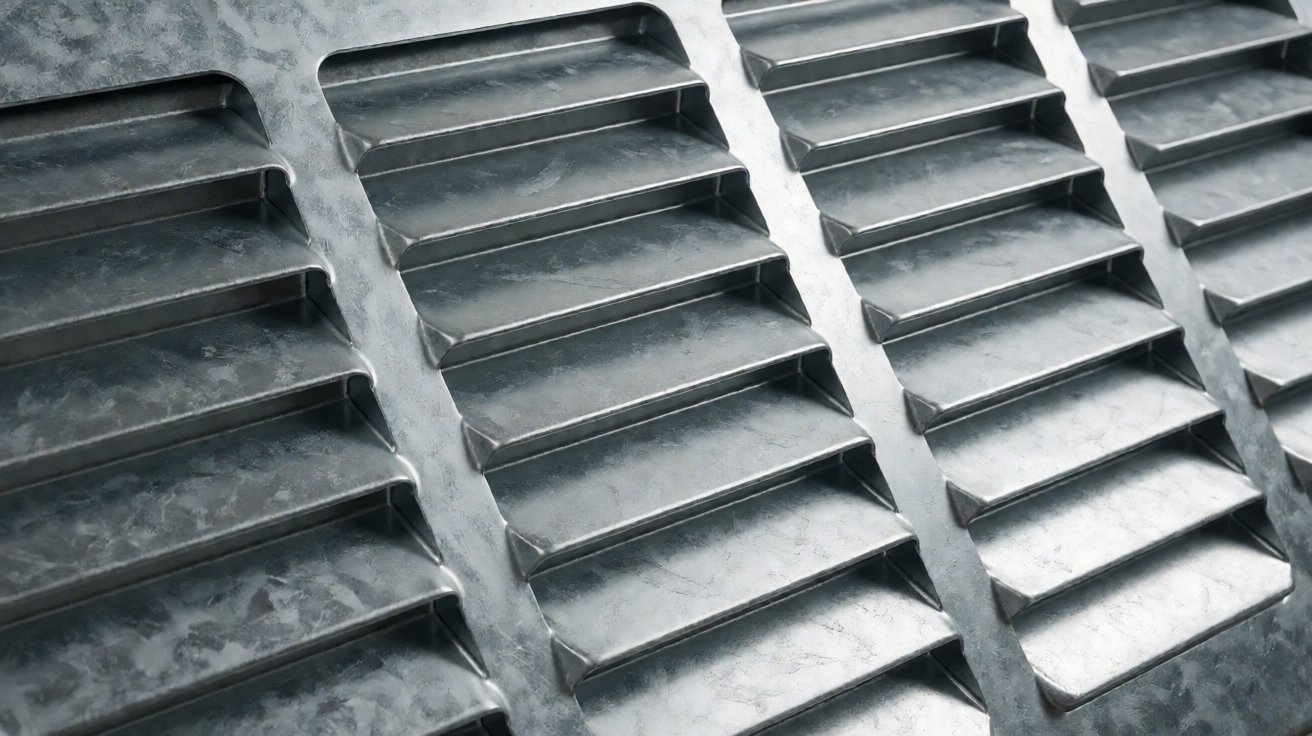
Figure 7: A punched louver ventilation bank in 1.5 mm galvanized sheet with formed slats.
CNC Punching Programmes We Have Delivered
Case 1: Control Panel Builder – Mounting and Gland Plates
A control panel builder ordered mounting plates, gland plates and vent covers in 2 mm galvanized steel: batches of 50-300 pieces, three to six times a year, a minimum of 20-50 pieces and FOB prices in the $15-80 range per piece depending on size and coating.
The first batch shipped 15-30 days after drawing approval, following a 5-10 working day sample round, and annual spend sat in the $30k-60k band with third-party inspection before shipment. Moving the regular hole grids onto the punch and leaving the freeform outlines on the laser gave a 4-6% step-down on the repeated parts in the second year.
Case 2: Equipment OEM – Brackets, Gussets and Cover Plates
An equipment OEM ordered several hundred repeated small parts per batch – L-brackets, gussets, cover plates and spacers in 2 mm cold rolled steel and 304 stainless: batches of 200-800 pieces, four to eight batches a year, a minimum of 100 pieces and FOB prices from $2 to $15 each.
This programme was won on flatness and burr condition rather than on press speed. Every part is deburred before packing, and the nest is laid out so brackets arrive flat enough to weld without straightening. Annual spend stayed in the $15k-40k band.
Case 3: Automation Integrator – Louvred Cabinet Panels
An automation integrator ordered louvred and perforated cabinet panels in 1.5 mm galvanized steel with formed louvre banks and embossed stiffening ribs: batches of 50-300 pieces, two to four times a year, a minimum of 20-50 pieces and FOB prices between $15 and $80 per panel depending on size and coating.
The programme depended on repeatability of the formed features: louvre depth held across the batch, ribs formed without marking the sheet, and every panel checked against the first article. The first batch shipped 15-30 days after approval and annual spend landed in the $30k-60k band.
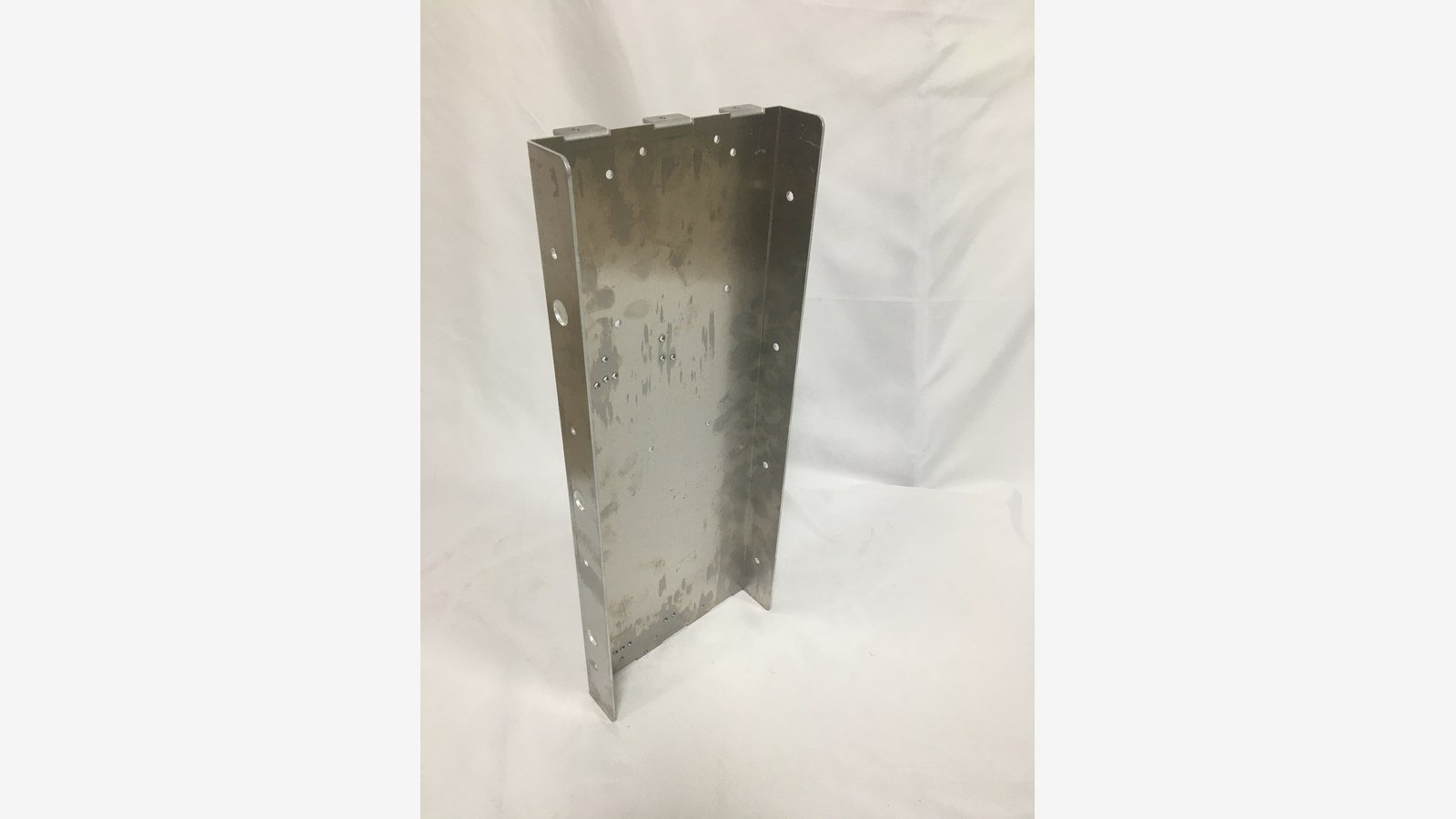
Figure 8: A finished punched bracket ready for welding, showing flatness and burr-free punched edges.
Summary and Next Steps
How to Specify a CNC Punching Service
Specify a cnc punching service from the feature list backwards. Count the holes, slots and vents that repeat across the part, check the smallest hole against the sheet thickness, fix the material and grade, and state the annual quantity. Tooling plan, nest and price all follow from those four answers.
Then ask two questions: how hole positions are checked against the drawing, and how burrs and flatness are controlled before packing. Those two answers decide whether the tenth batch behaves like the first.
Why XHX Metal
XHX Metal keeps laser cutting, CNC punching, forming, welding, finishing and assembly in one 2,000 sqm factory in Dongguan: two 6 kW fiber laser cutting machines at +-0.01 mm positioning accuracy, CNC turret punching, CNC bending, TIG and MIG welding and coating partners, at about 500,000 parts a year. A cnc punching service order therefore continues into a finished assembly without a second supplier.
The factory holds ISO 9001:2015 and CE, works with SGS on inspection, and has supplied OEM and brand customers in North America and Europe for over a decade.
How to Start Your Programme
Send a STEP or DXF file with material, thickness and quantity for a quotation with the lead time. Punching capability sits alongside laser cutting on the sheet metal capabilities page, the process is described on the CNC punching page, finished assemblies are on the products page and projects start from the contact page; enquiries also reach the engineering team at sales01@xinghaoxin.com.
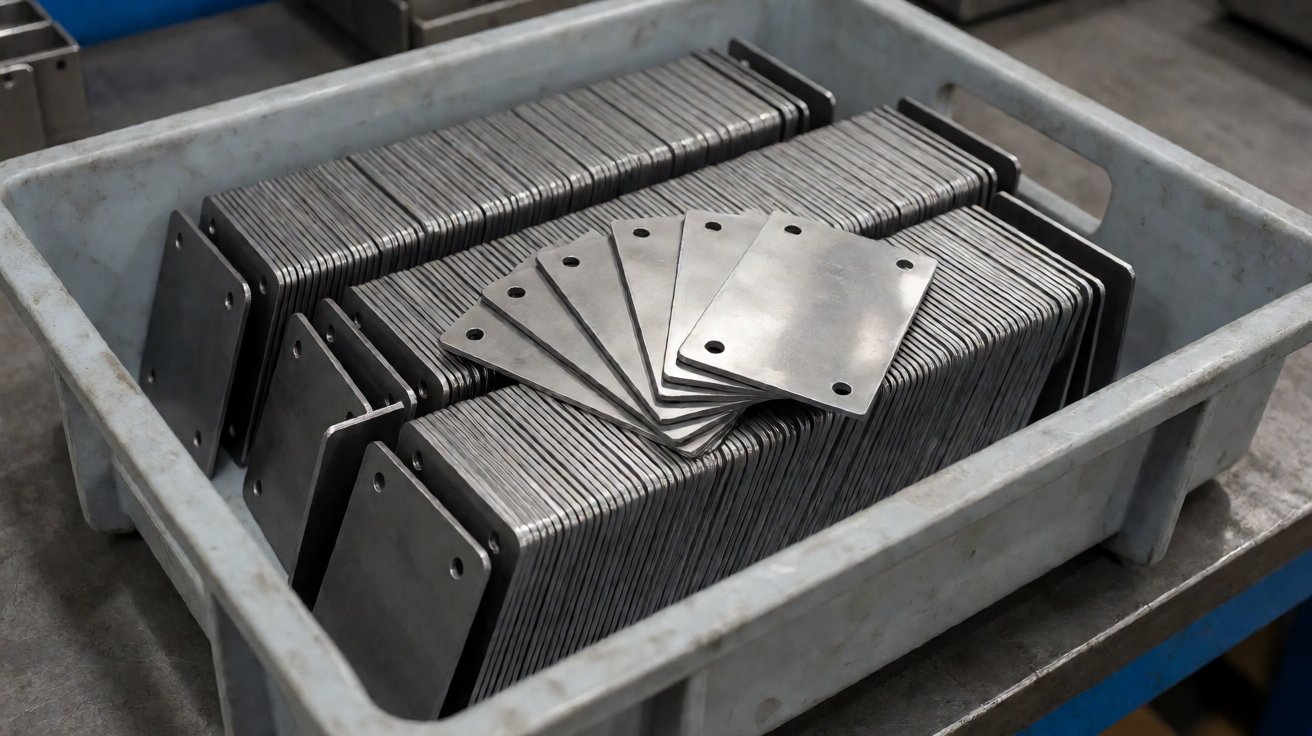
Figure 9: A production batch of deburred punched plates and brackets ready for the next operation.
FAQ: CNC Punching Service
What is the minimum order? Around 100 pieces for small flat parts and 20-50 pieces for larger panels; prototypes and one-off parts are quoted too.
Is a cnc punching service cheaper than laser cutting? Above roughly 1,000 identical parts with simple geometry it usually is, because tooling strikes many holes per stroke; below that, or where the outline is complex, laser cutting is the better route.
What is the smallest hole you can punch? As a rule the hole diameter should be at least the sheet thickness; smaller holes are cut on the laser in the same nest rather than forced through the punch.