Last updated: September 22, 2026 | By XHX Metal Engineering Team
An outdoor electrical box is a fabricated sheet metal enclosure that keeps terminations, meters, or control gear dry and safe where no building protects them. It looks like a simple box with a lid, and it is judged on exactly the things a simple box can get wrong: where the water goes, whether the gasket seals after the door has been opened a hundred times, and whether the knockouts line up with the contractor’s conduit.
This guide is written for the buyers who order that enclosure. It covers the formats an outdoor electrical box takes, the materials and coatings that survive coastal and inland weather, the production risks that decide whether a box passes a hose test, and how a programme runs from drawing to delivery — with real batch data from three supplier programmes.
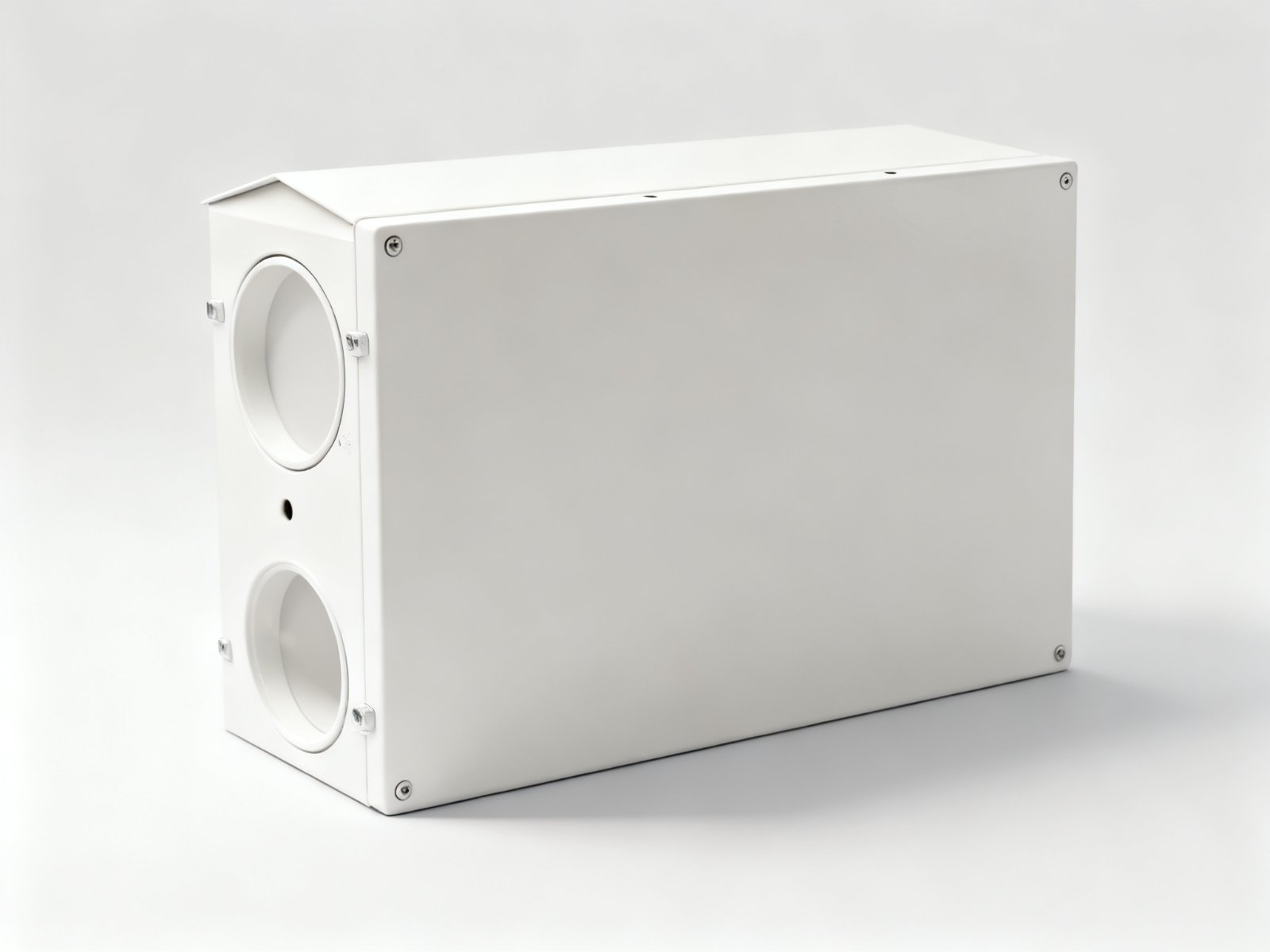
Figure 1: An outdoor electrical box with a sloped top, folded and welded from powder coated sheet steel.
The Product: What an Outdoor Electrical Box Is
What Outdoor Electrical Box Manufacturing Covers
An outdoor electrical box is the fabricated shell that houses terminations, meters, or control gear in an exposed position. Manufacturing it covers the body, the door or lid, the sloped top where one is used, the gasket, the internal bosses, the knockouts and cable entries, the hinges and catch, and the coating.
The electrical content never belongs to the box maker: the breakers, terminals, meters, and wiring are the customer’s. What the fabricator owns is the envelope around them — keeping water out, keeping the door closed, and giving the installer a mounting surface and a predictable way to bring cable in. That division is worth stating at quotation, because most disputes are about water where the customer expected none.
XHX Metal produces these enclosures from drawing to delivered parts inside one factory: two 6kW fiber laser cutting machines, CNC punching and bending, TIG and MIG welding, deburring, and coating partners. The wider scope is on the sheet metal fabrication services page.
Formats: Wall-Mounted, Sloped-Top, and Flush Boxes
Three formats cover most orders. A plain wall-mounted box has a flat top and a single door, and is used where it sits under an eave or inside a plant room. A sloped-top outdoor electrical box adds an angled lid that sheds rain away from the door joint, which is the shape most exposed installations use. A flush box is recessed into a wall so that only the door face is visible, usually for meters and service entries.
The format decides where the sealing load sits. On a flat-top outdoor electrical box the door gasket does all the work. On a sloped-top design the lid sheds most of the water before it reaches the door, so the gasket only handles wind-driven rain. On a flush box the wall is the weather barrier, and the risk on an outdoor electrical box moves to the joint between the flange and the render.
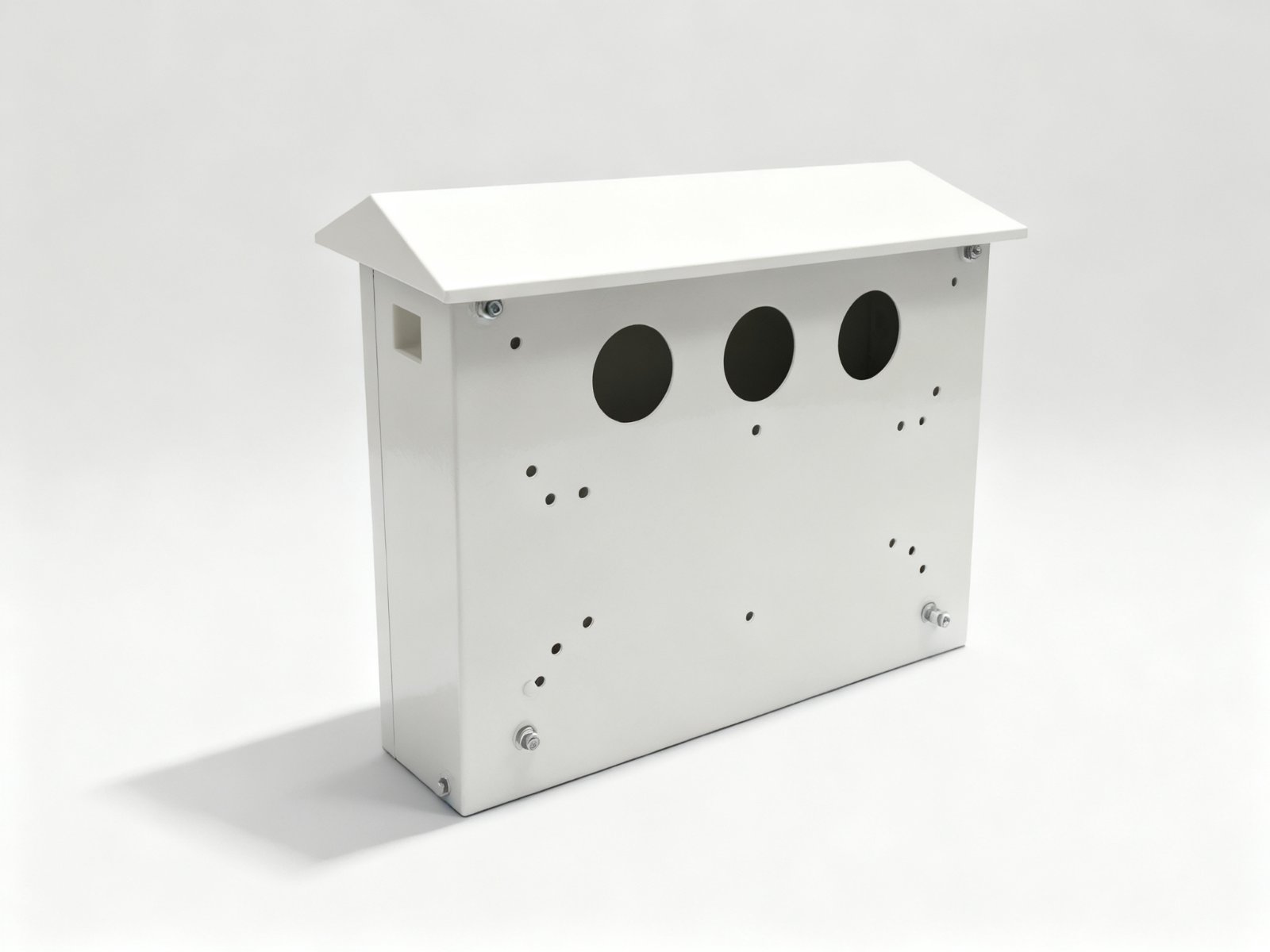
Figure 2: An outdoor electrical box with three large circular knockouts and a pattern of small mounting holes.
Which Parts Buyers Order Most
The parts on nearly every order are the body and door, the gasket, the internal mounting bosses, the knockouts and cable entries, the hinge and catch set, and the wall brackets. Buyers add a mounting plate, a rain hood, a lockable catch, or a breather vent depending on the installation.
Repeat buyers add items once the product is in service: a sealing washer set, a spare gasket, a knockout template, and a carton that survives a contractor’s van. Those additions cost little per unit and remove many of the call-outs that follow a first delivery. The wider scope is listed on the product range page.
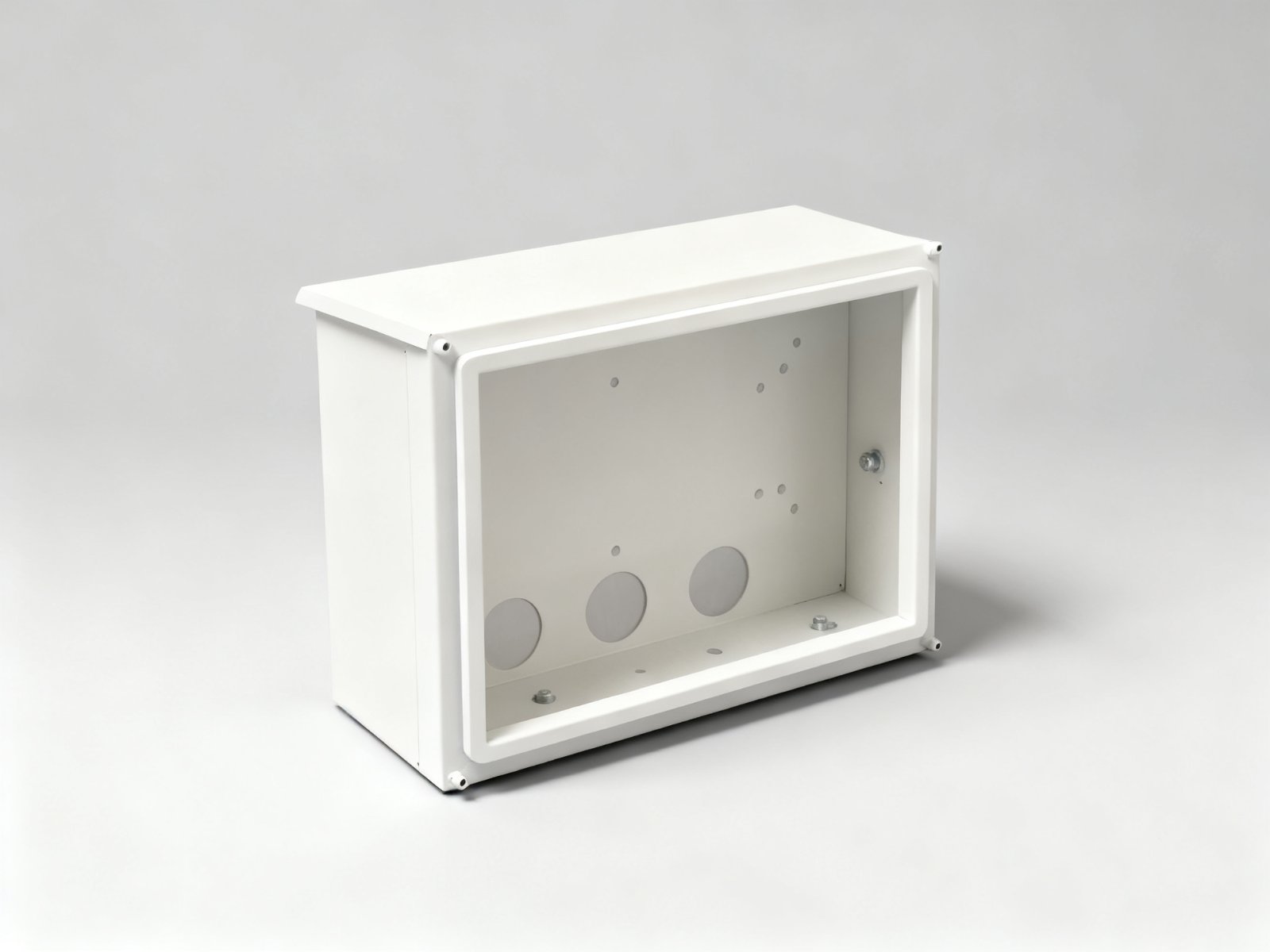
Figure 3: The lid of an outdoor electrical box, showing the closed-cell gasket that seals the door joint.
Use Cases: Who Orders Outdoor Electrical Boxes
Solar, Storage, and EV Installers
Solar and storage installers order an outdoor electrical box for array junction boxes, string combiners, inverter isolation, and charge point supplies. These buyers work to a per-site schedule, so a delivery that arrives without the sealing washers or the right knockout size delays a crew rather than a warehouse.
The specification in this channel is driven by exposure. A roof or car park installation sees full sun, wind-driven rain and large temperature swings, which puts the emphasis on coating durability, UV stability and a gasket that does not take a set. Installers also want the knockouts pre-formed, because drilling a finished enclosure on site removes the coating and starts a corrosion point.
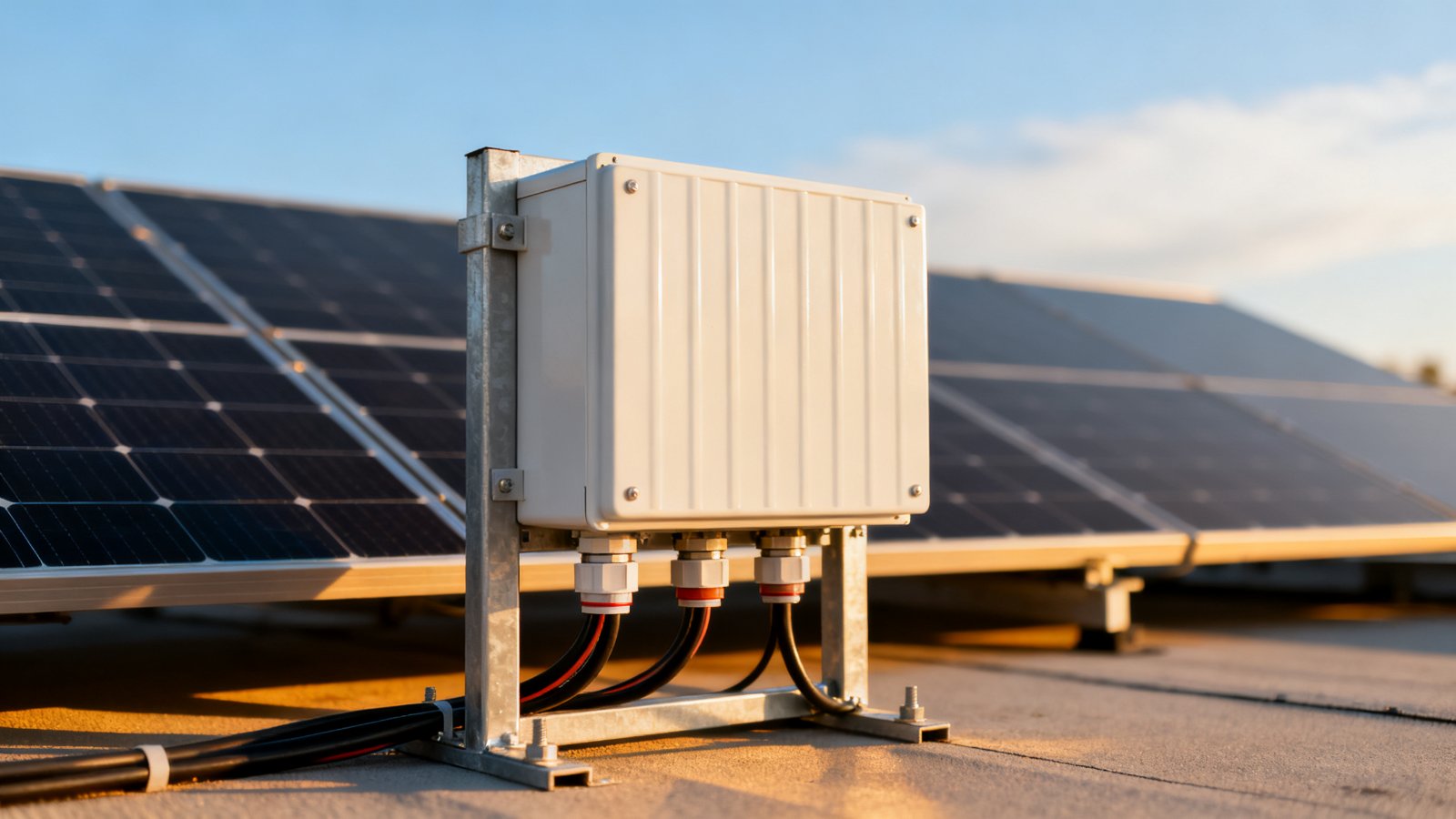
Figure 4: An outdoor electrical box installed on a roof-mounted solar frame, with sealed cable entries.
Electrical Distributors and Panel Builders
Distributors and panel builders buy outdoor electrical boxes in family ranges, often as a private-label item sold under their own catalogue number. They care about packaging, palletising, and a consistent colour across a family of sizes more than about any single installation.
These buyers also want the family to share features. If the door, the gasket profile, the hinge and the catch are common across four sizes, the distributor stocks one spare kit instead of four, and the factory runs one set of fixtures instead of four. Designing the range that way is cheaper for both sides and is decided at the first drawing, not at the fourth size.
Telecom, Signage, and Site Services
Telecom cabinets, roadside signage and site services order larger outdoor electrical boxes that house power supplies, controllers, and comms equipment in unattended locations. These units are heavier, are sometimes padlocked, and are expected to run for years between visits.
The requirements here move beyond weather to access and security: a lockable catch, a hinge that will not sag after a thousand openings, a mounting plate sized to the customer’s equipment, and venting that lets heat out without letting water in. Public energy programmes and site electrification work are described by the US Department of Energy.
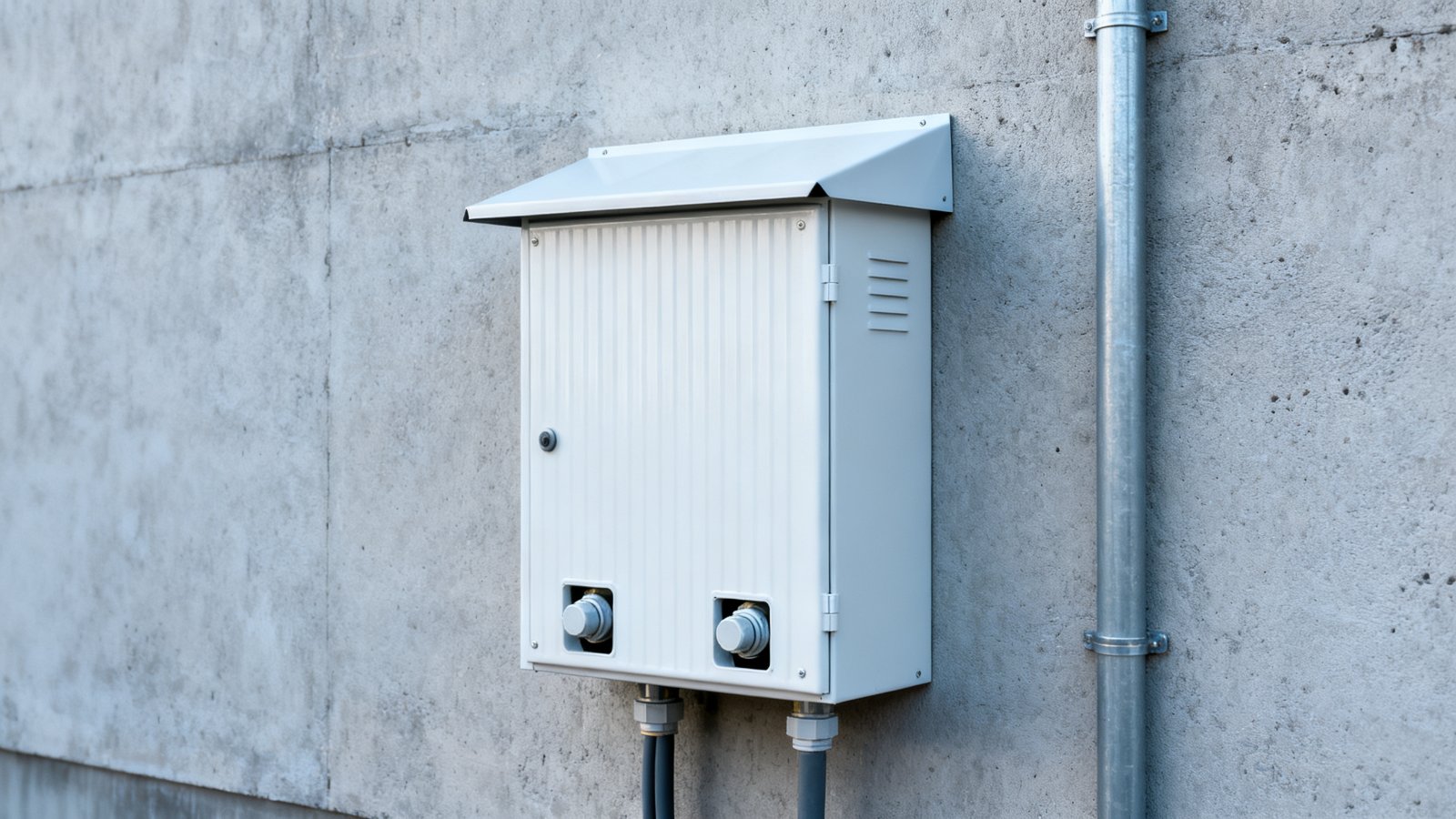
Figure 5: A wall-mounted outdoor electrical box on an industrial facade, with conduit and sealed glands below.
Materials, Sealing, and Weather Protection
Steel, Stainless Steel, and Aluminium
Mild steel with a powder coating is the default for an outdoor electrical box because it is stiff, cheap to fold, and takes a durable finish. It has to be coated properly, because an uncoated or poorly pre-treated box will rust from the cut edges inward within a couple of seasons.
Stainless steel is chosen for coastal and industrial atmospheres, usually grade 304 and grade 316 where chlorides are present. Aluminium is used where weight matters, since it needs no coating to resist weather but costs more than steel sheet. Material guidance is published by SSINA for stainless and by the Aluminum Association and European Aluminium for aluminium.
Powder Coating and Corrosion Protection
A powder coating over a correctly pre-treated surface is the standard finish, and on an outdoor electrical box the pre-treatment matters more than the colour. Degreasing, rinsing and a conversion coating give the powder something to bond to; skipping any of those steps produces a box that looks right in the factory and blisters in the field.
On steel, a galvanised or zinc-rich substrate under the coating protects the cut edges and any scratch the installer makes. Coating practice is described by the Powder Coating Institute, hot dip galvanising by the American Galvanizers Association, and coating chemistry for the European market falls under EU REACH. The dry film thickness and the pre-treatment method belong on the drawing, not in a conversation.
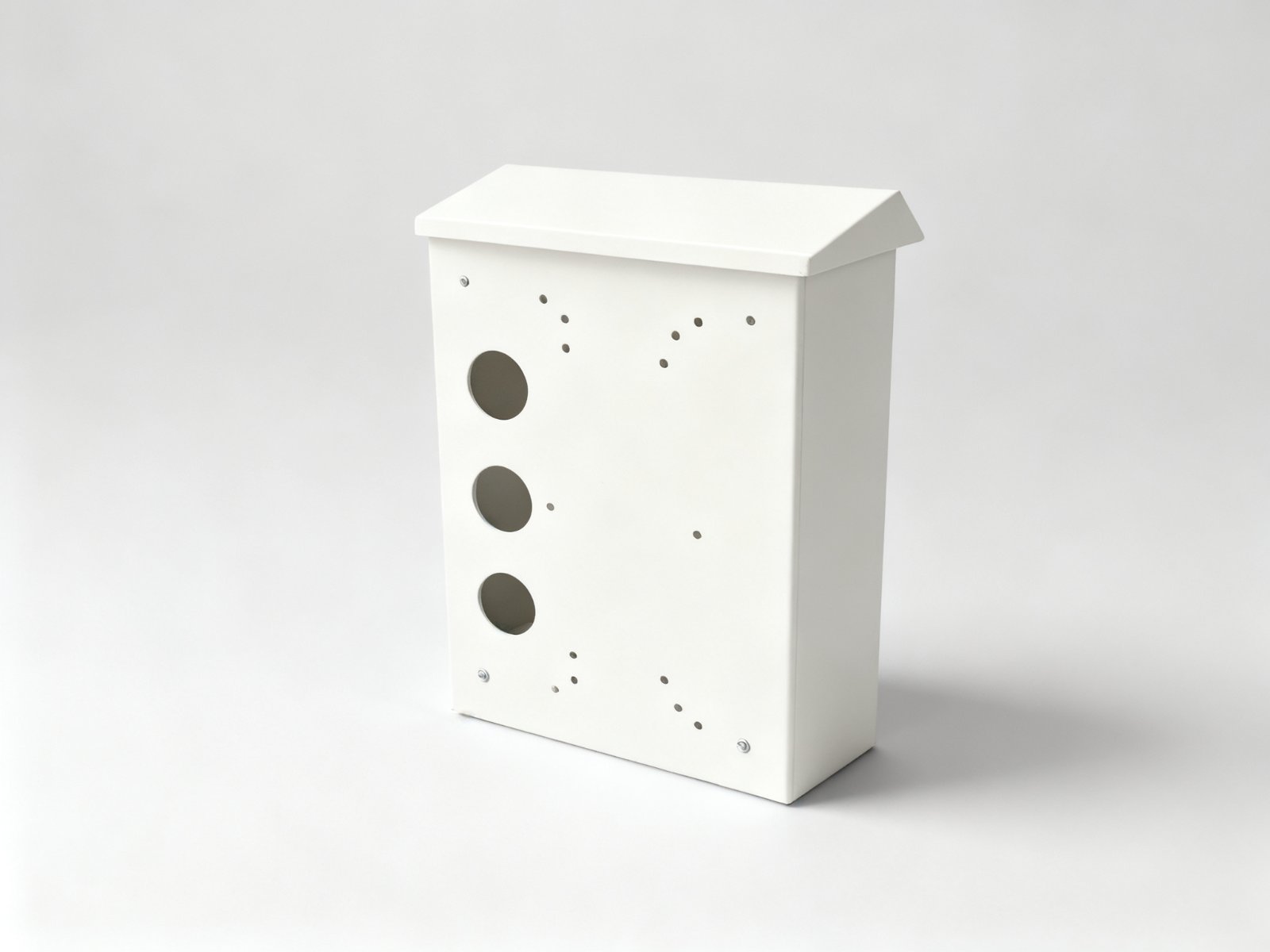
Figure 6: A compact outdoor electrical box, powder coated over a pre-treated steel substrate.
Gaskets, Knockouts, and Cable Entry
Water reaches the interior of an outdoor electrical box through four routes: the door joint, the knockouts, the cable entries, and condensation. Each needs its own detail rather than a general instruction to keep water out.
The gasket belongs in a formed channel or on a folded lip rather than on a flat face, so that it cannot creep when the door is closed repeatedly. Knockouts should be formed so that they open cleanly without tearing the coating, and cable entries should be sealed with glands rather than left open. Condensation is handled with a drainage path at the lowest point and a breather vent, so the box equalises pressure through a membrane instead of holding moisture against the terminals.
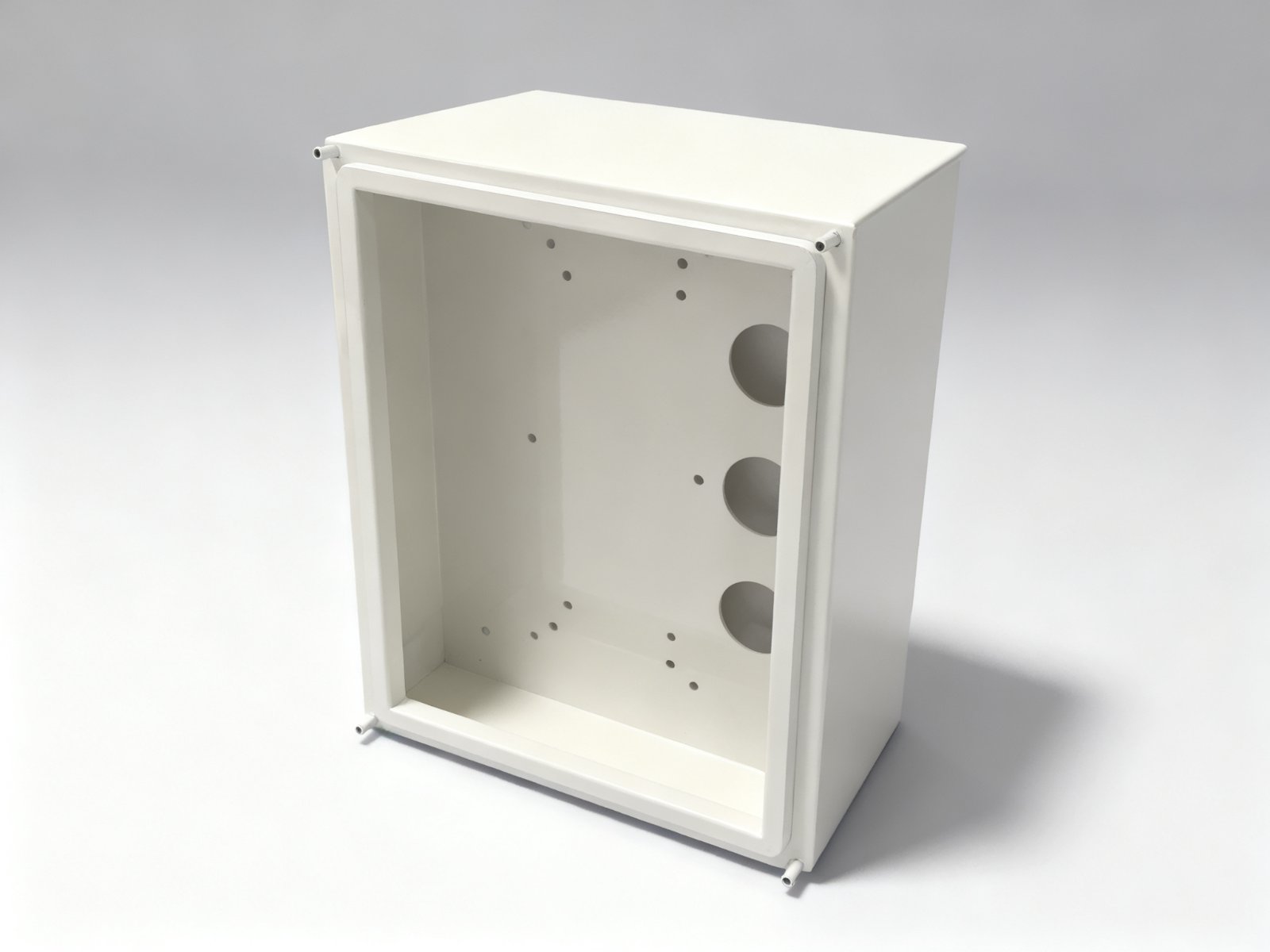
Figure 7: Mounting bosses and knockouts formed inside an outdoor electrical box.
Production Difficulty and Quality Risks
From Drawing to Flat Pattern
An outdoor electrical box starts as a flat pattern, and almost every assembly problem traces back to that pattern. The blank has to allow for the bend deductions, the door overlap, the gasket compression and the corner joints, and a mistake there shows up as a door that will not close squarely.
The review runs in a fixed order: internal volume first, then the mounting bosses and knockout positions, then the door and gasket, then the hinges and catch, and last the outline. The process control behind this is described by SME. Where a customer supplies an existing box to copy, we measure it and issue a drawing for approval rather than working from the sample alone.
Knockouts, Bosses, and Hole Positions
On an outdoor electrical box the knockouts are the feature that decides whether the installer likes the product. A knockout that is the wrong size, the wrong pitch from its neighbour, or formed in a way that tears the coating will be drilled out on site, and from that moment the enclosure is no longer protected.
Bosses carry the same weight for the customer’s own assembly, since they position the mounting plate, the DIN rail or the meter. Threaded holes and press-in nuts are covered by the fastener standards published by ANSI, and the first article inspection should record knockout diameter and pitch, boss height, and thread gauge rather than only the outside dimensions.
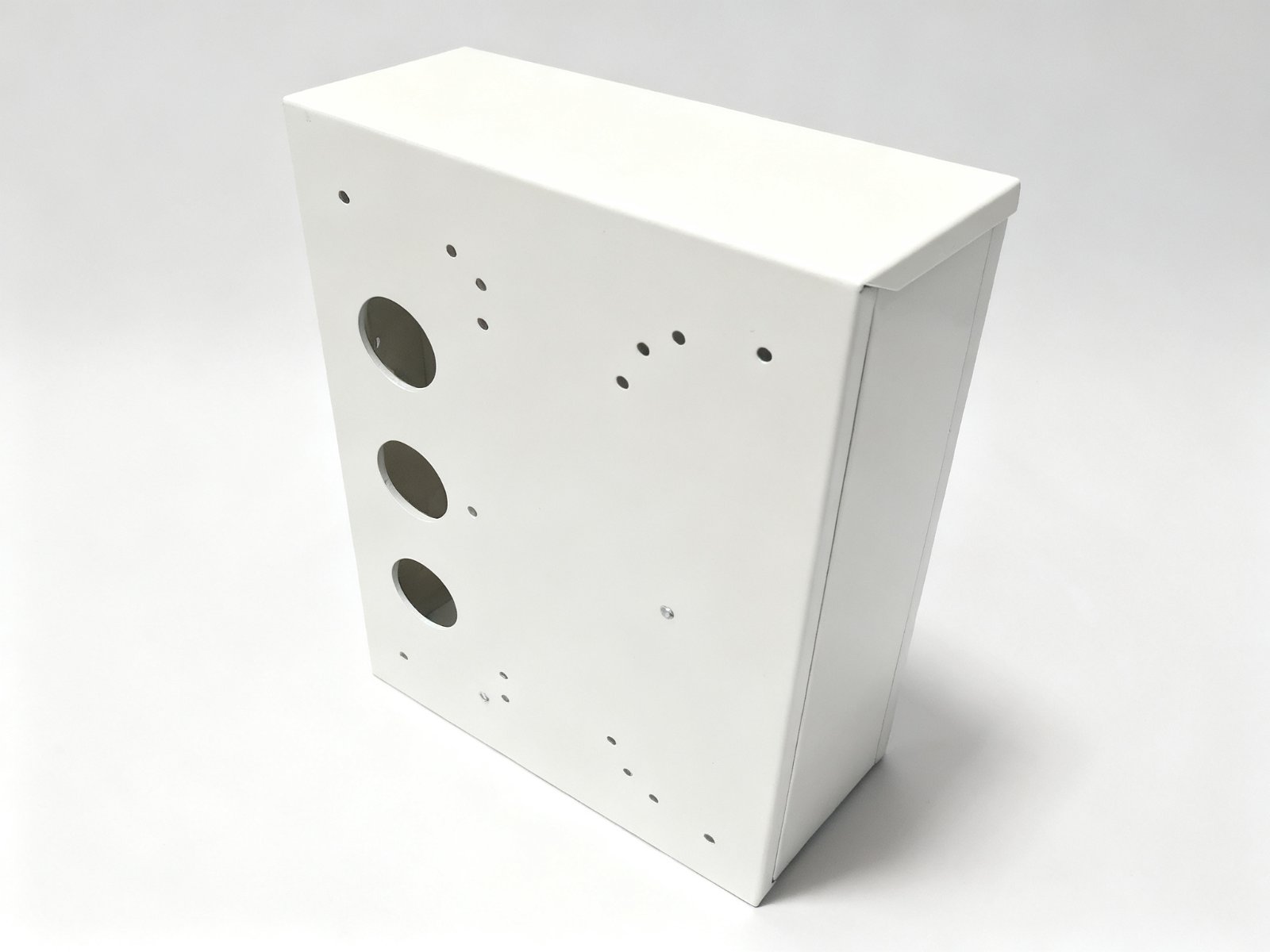
Figure 8: Knockout positions and the small-hole pattern recorded on the first article inspection of an outdoor electrical box.
Sealing, Flatness, and Coating Consistency
A door gasket only seals if the door is flat and the closing force is even. Welding pulls thin sheet, so a welded outdoor electrical box can arrive with a door face that is a couple of millimetres out of flat, which is enough to leave a gap at one corner. The controls are a balanced weld sequence and a check against a straight edge or fixture before coating.
Coating consistency is the second recurring risk. Two batches coated weeks apart will not match by accident, so one powder lot per order, recorded cure parameters, and a retained sample are what keep a reorder matching the family already on a distributor’s shelf. Dimensional and flatness checks follow the measurement practice published by NIST, and buyers should ask for the film thickness range in writing.
Standards, Lead Times, and Order Flow
Standards and Compliance Documents
An outdoor electrical box is usually a component of an installation that is approved as a whole, so the enclosure supports a certification route rather than holding a certificate itself. What the fabricator supplies is evidence: material certificates, coating and pre-treatment records, a first article inspection report, and a consistent part that the customer’s own test house can evaluate.
Where an enclosure type or ingress expectation is specified, it is normally expressed through the enclosure standards published by bodies such as NEMA and evaluated by laboratories such as UL. Buyers should state at quotation which documents they need, because assembling that package after delivery is far more expensive than agreeing it at the start.
Batch Volumes, MOQ, and Realistic Pricing
An outdoor electrical box is a small to mid-size fabricated item, so volumes are moderate rather than continuous. Realistic production runs from 200 to 800 pieces per batch over three to six releases a year, with a minimum order around 100 pieces and FOB prices typically between $9 and $30 each depending on size, material, and how much is fitted inside.
Within that band the price is driven by the sheet thickness, the coating system, and the fittings rather than by the outline alone. A plain painted steel box sits at the bottom; a galvanised or stainless version with a lockable catch, a mounting plate and a sealed gland set sits at the top. First batches ship 15 to 25 days after drawing and sample approval, and repeat releases move faster once the fixture and the coating record exist.
Assembly, Post-Processing, and Documents
XHX Metal cuts, punches, forms, welds, deburrs, and finishes the enclosure, fits the gasket, hinge, catch and internal bosses, and packs to the customer’s line or warehouse standard. Coating and galvanising are carried out by audited partners, with pre-treatment and film thickness recorded against the batch.
An order is supported by the approved drawing with its revision number, material certificates, a first article inspection report, coating records, batch inspection records, and a packing list. For an outdoor electrical box the useful extras are a retained colour sample, a drilling template for the knockouts, and a sealing washer set in the box, because each of them removes a call-out rather than a complaint.
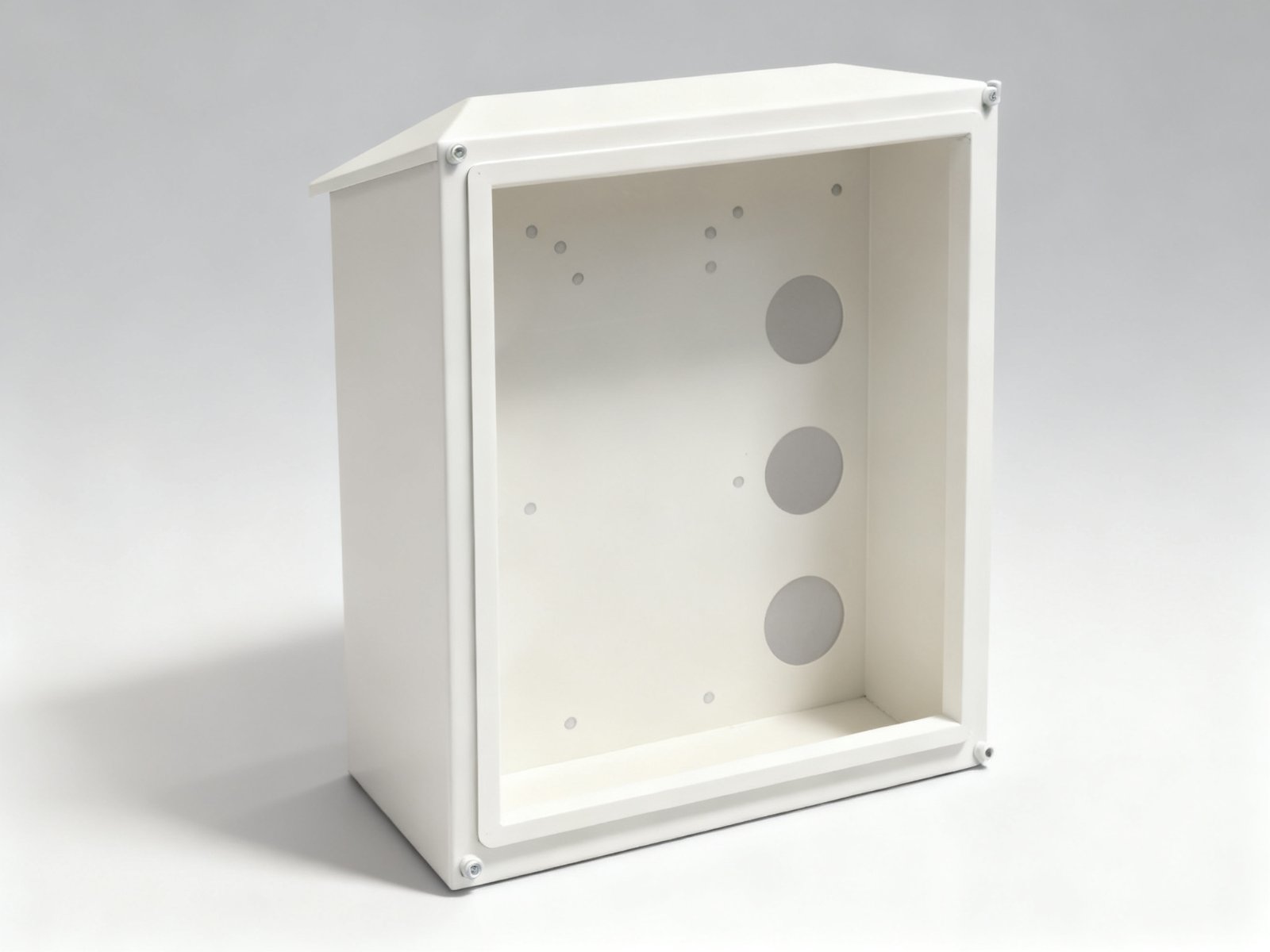
Figure 9: The assembled interior of an outdoor electrical box, with bosses, gasket channel and cable entry ready for the customer’s gear.
Case Studies: Outdoor Electrical Box Programmes
Case 1: US Solar Installer — Sloped-Top Box
A US solar installer needed a sloped-top outdoor electrical box for array junction work, with pre-formed knockouts sized to the glands its crews already carried and an internal plate for the customer’s own terminal blocks.
We built the enclosure in 1.5 mm steel with a folded and welded body, a channel gasket, three knockouts and a galvanised internal plate, finished in a light grey powder coat. Production ran at 400 pieces per batch, four releases a year, with an MOQ of 100 and FOB prices from $12 to $26. The first batch shipped 20 days after approval, and annual value was approximately $30,000. The knockout pitch on the outdoor electrical box was recorded on the first article report so that repeat orders matched the crews’ glands without a site check.
Case 2: European Distributor — Private-Label Family
A European electrical distributor needed a private-label family of outdoor electrical boxes in four sizes, sold under its own catalogue number, with a common door, gasket, hinge and catch so that one spare kit covered the whole range.
The family was produced in 1.2 mm and 1.5 mm steel with a galvanised substrate under a textured grey powder coat, and each size shared the same gasket profile and catch. Production ran at 300 pieces per batch, five releases a year, with an MOQ of 100 and FOB prices from $10 to $22. First batch lead time was 22 days, and annual value was approximately $24,000.
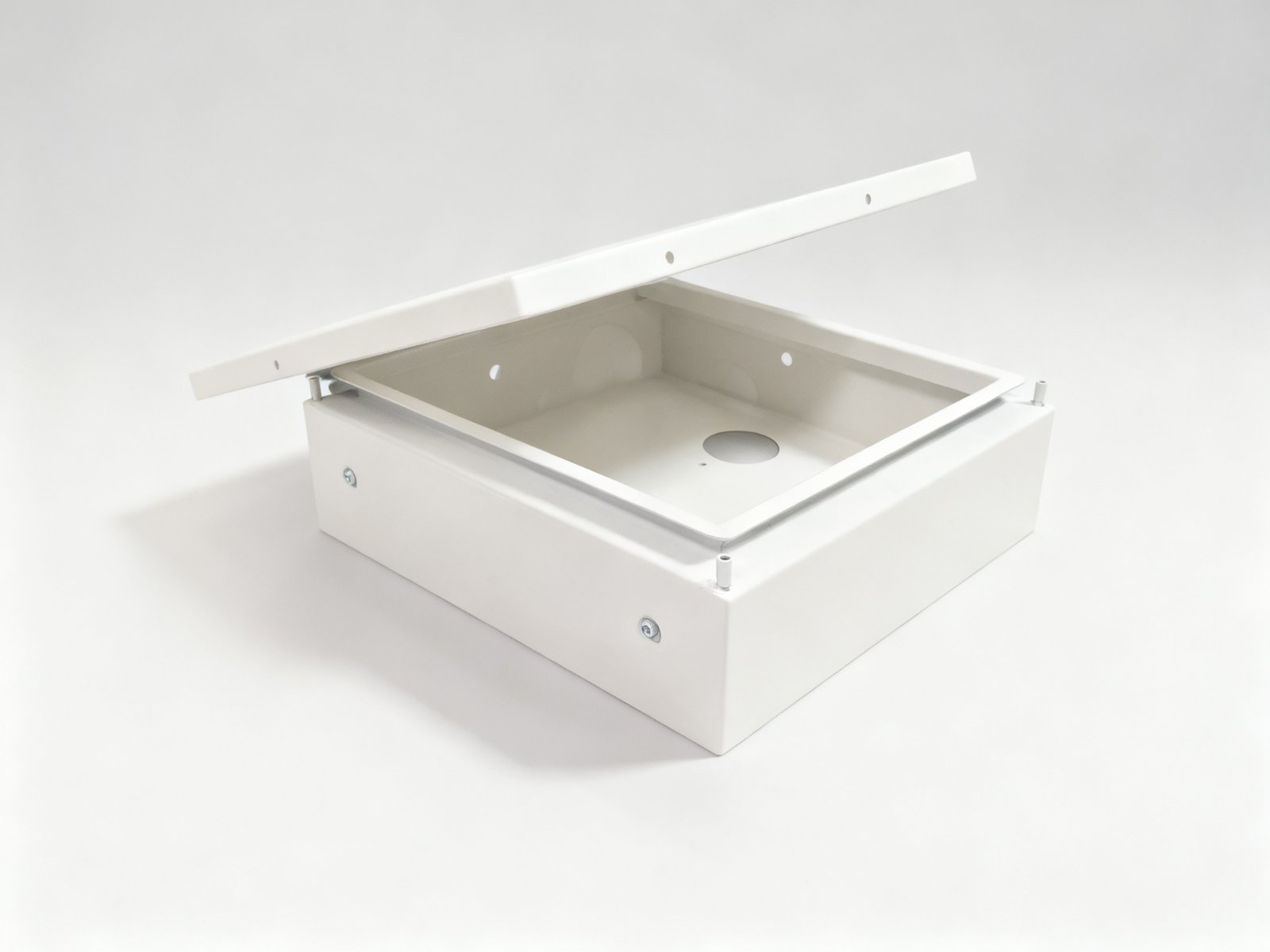
Figure 10: An outdoor electrical box with the door open, showing the gasket channel and internal mounting arrangement.
Case 3: Telecom Site Builder — Larger Sealed Version
A telecom site builder needed a larger outdoor electrical box for roadside power and control equipment, with a lockable catch, a hinged door that would not sag, and venting that let heat out without letting rain in.
The enclosure was produced in 2.0 mm steel with a welded body, a reinforced hinge, a lockable catch, louvred vents on the shaded side and a breather vent, finished in a light grey powder coat. Production ran at 200 pieces per batch, three releases a year, with an MOQ of 50 and FOB prices from $20 to $38. The first batch shipped 25 days after approval, and annual value was approximately $22,000. The breather vent and louvre positions on the outdoor electrical box were agreed on the drawing, so the venting did not compromise the door seal.
Summary and Next Steps
How to Choose an Outdoor Electrical Box Supplier
The supplier that fits this product can form the enclosure, weld and finish it, fit the gasket and hardware, and document the two features that decide the installation: knockout positions and door flatness. Ask to see a first article report that records both, and a retained colour sample from the coating lot.
Check that the quotation states the sheet thickness, the material, the pre-treatment and coating system with its film thickness, the gasket type, and how the box is packed. Match the supplier to the batch size as well, since an outdoor electrical box is usually bought in the hundreds rather than by the container.
Why XHX Metal
XHX Metal produces an outdoor electrical box from drawing to delivered parts: laser cutting on two 6kW fiber laser cutting machines to plus or minus 0.01 mm, CNC punching and bending, TIG and MIG welding, deburring, powder coating and galvanising through audited partners, and export packing.
The company has manufactured sheet metal enclosures and welded assemblies for export customers from Dongguan, Guangdong since 2014, and holds ISO 9001:2015 certification with CE documentation and SGS records. Samples in 5 to 10 working days and first batches in 15 to 25 days are normal work.
How to Start Your Programme
Send the drawing or a sample of the existing outdoor electrical box with the internal volume, the knockout sizes and pitch, the mounting arrangement, the coating you need, the annual volume and the release pattern. If no drawing exists, we will measure the sample and issue one for approval.
Programmes are handled directly through the contact page.
FAQ: Outdoor Electrical Box
Do you supply the electrical components inside the box? No. We fabricate the enclosure, the door, the gasket and the mounting plate; terminals, breakers, meters and wiring are supplied by you.
Can you match a box we already buy? Yes. Send the sample or the drawing, and we will measure it, issue a drawing, and build a sample for approval.
What is the minimum order? MOQ is typically 100 pieces for a standard size and 50 pieces for a larger enclosure with more fittings.
Which finish survives a coastal site? Stainless steel in grade 304, or grade 316 in heavy chloride exposure. Mild steel works where it is galvanised under the coating.
Can you form the knockouts to our gland sizes? Yes. Send the gland specification and the pitch you need, and both are recorded on the first article.
How long does a sample take? A sample follows in 5 to 10 working days after drawing approval, and the first batch ships 15 to 25 days after sample approval.