A good tool box is taken for granted until it fails: a drawer that binds, a latch that jams, or a lid seal that lets moisture into expensive equipment. Behind every dependable tool chest, top box, or workshop cabinet is a sheet metal manufacturing process that must balance strength, weight, precision, and cost. The tool storage market spans professional workshops, automotive repair, industrial maintenance, and home garages, and Grand View Research tracks steady growth in the tools and accessories segment as professionals and hobbyists invest in organized, durable storage.
This guide follows the full journey of a custom sheet metal tool box project in seven steps: the product itself, the applications it serves, material selection, production difficulty, lead times, past case studies, and a practical summary. Whether you are a hardware brand launching a tool storage line, an automotive aftermarket company sourcing rolling chests, or an industrial OEM specifying workstations, the information here will help you brief a fabricator, plan realistic timelines, and avoid the mistakes that turn a simple metal box into a costly program.
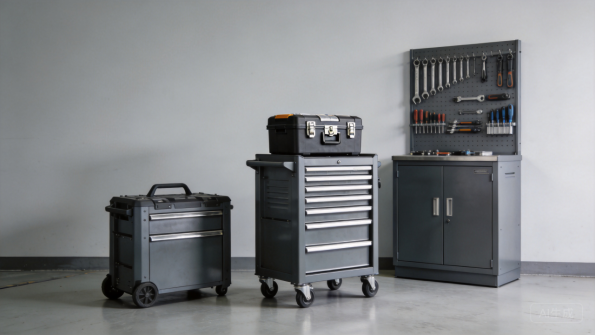
Figure 1: Finished custom sheet metal tool storage products with powder-coated finishes and precision drawer systems.
The Product: What Are Sheet Metal Tool Boxes and Tool Storage
Product Families and Typical Configurations
Custom sheet metal tool storage covers several distinct product families. Portable top boxes sit on a workbench or truck bed and open with a single latch, making them the simplest and most volume-driven product. Rolling tool chests add a lower cabinet with drawers on slides, sometimes with a built-in work surface on top. Wall-mounted cabinets and locker-style units store tools vertically in workshops, and mobile workstations combine a counter, drawers, and sometimes a pegboard back panel.
Each family has its own manufacturing logic. A portable top box is usually one formed shell with a lid, a handle, and one or two latches, while a rolling chest is an assembly of a dozen or more panels, drawer bodies, slides, and locking bars. The product family determines the number of parts, the welding content, and the inspection points, so buyers should define the product type before requesting a quotation.
Core Structure and Key Components
The core structure of a tool box is simple: a body, drawers or shelves, a top, and a closure system. The body is formed from sheet steel with folded edges that add stiffness, and internal strengthening ribs prevent panels from flexing when loaded. Drawers are separate formed assemblies that run on ball-bearing slides, and their fit defines the perceived quality of the entire product: a drawer that binds or rattles makes an expensive chest feel cheap.
The closure system includes latches, locks, and handles. Portable boxes need latches that hold the lid tight even when the box is carried by the handle, while rolling chests use a central locking bar operated by a single key or combination lock. Hinges, stay arms, and lid gas struts are also sheet metal integration points that must align with formed brackets. Every one of these components is a potential quality issue, which is why experienced fabricators design them into the sheet metal from the start.
Tolerances and Fit Requirements
Tool storage products demand tighter tolerances than most industrial sheet metal work because the moving parts have to work every day for years. Drawer widths are commonly held to plus or minus 0.3 mm or better, drawer rail positions to plus or minus 0.2 mm, and lid and door perimeters to consistent gaps around the full edge. These requirements are achievable with laser cutting and CNC bending, but they force the fabricator to control the whole process rather than rely on final adjustment.
Fit requirements are usually defined on a GD&T drawing that follows standards published by organizations such as the American National Standards Institute. Datums, parallelism, and flatness callouts tell the fabricator how the drawer body relates to the chest frame, and first-article inspection verifies those relationships before production. A fabricator that skips this discipline will produce boxes that look fine individually but fail to assemble consistently in volume.
Customization and Branding
Custom fabrication gives tool storage brands a way to differentiate in a crowded market. Compartment layouts, drawer sizes, internal dividers, foam inserts, branding, and color can all be engineered into the product, and powder coating supports RAL and Pantone matching for a consistent brand look. Some customers request integrated charging docks, LED lighting, or cable pass-throughs for connected tool systems, all of which add sheet metal design work.
Customization also covers the details that make a product practical: recessed handles that protect knuckles, edge trim that prevents cuts, drainage and ventilation details, and rubber pads that stop tools from sliding. Because every feature is formed from the same metal design, brands can build a coherent product family with shared components, which lowers cost across the line even when individual models look different.
Use Cases and Applications
Professional Workshops and Vehicle Repair
Professional mechanics and workshop technicians are the most demanding tool storage customers. Their boxes are loaded with heavy hand tools, opened and closed hundreds of times a week, and moved around the shop on casters. The Statista tools and DIY market data shows a large and growing base of professional users who buy storage by durability rather than price, which is why automotive aftermarket brands consistently invest in heavier-gauge rolling chests.
For workshops, the key requirements are drawer capacity, slide strength, and mobility. Drawers must hold full-weight sockets and wrenches without sagging, slides must extend fully for visibility, and the chest must roll smoothly over shop floors. Professional users also expect locks, gas-lid stays, and impact-resistant powder coating that survives daily abuse, all of which become specification points for the fabricator.
Industrial Facilities and Maintenance
Factories, warehouses, and maintenance departments use sheet metal tool cabinets to control access to tools and spare parts. A lockable cabinet keeps expensive instruments secure, organized shadow boards prevent tools from disappearing, and mobile workstations bring tools to the job instead of making workers walk to a central room. These products are specified by facility managers and safety officers, not consumers, so documentation and consistency matter as much as price.
Industrial applications often add requirements that consumer products do not have: fire-resistant materials in some jurisdictions, grounding provisions, heavy-duty casters rated for floor loads, and finishes that resist oils and cleaning chemicals. The OSHA guidelines for tool storage and workshop safety influence design choices such as stable drawer stops and lid restraints, and manufacturers serving this market should be ready to discuss compliance during quotations.
DIY and Home Garage Market
The home garage and DIY market is the volume engine of tool storage. Casual users buy top boxes, chests, and cabinet systems sold through big-box retail and e-commerce, and they expect professional-looking products at accessible prices. This market rewards efficient manufacturing: standardized panels, shared components, and finishes that hide minor surface marks all help brands hit retail price points.
DIY products still need real quality. A home garage chest that rattles or jams gets returned, and returns destroy margin. The practical approach is to use slightly thinner steel with more reinforcing ribs, standard slides and locks, and a powder coat that looks premium, which is a design-for-manufacturing exercise that a good fabricator can lead. For brands, the e-commerce channel also adds packaging requirements: products must survive courier handling without dents or scratches.
Mobile and Specialty Applications
Beyond the workshop, sheet metal tool storage appears in trucks, vans, trailers, and marine applications. Pickup truck tool boxes protect tools from weather and theft, van shelving systems organize service vehicles, and marine tool cabinets resist salt corrosion. These applications change the material and design priorities: weather sealing, corrosion resistance, and secure mounting become more important than drawer capacity.
Mobile products also face vibration and handling loads that stationary boxes never see. Latches must hold under rough roads, drawer slides must tolerate shock, and mounting brackets must transfer load to the vehicle structure. For marine use, stainless steel or heavily coated steel is required, and fasteners must be corrosion-resistant. Each specialty application is a niche market where custom fabrication adds real value over off-the-shelf products.
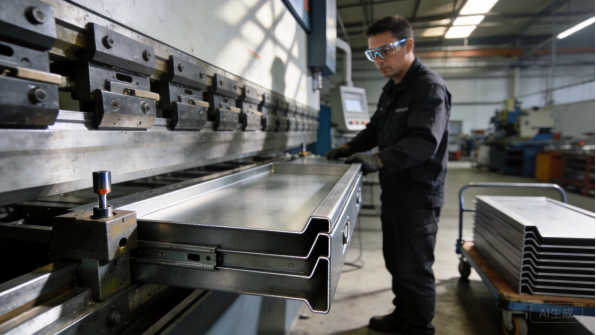
Figure 2: A rolling sheet metal tool chest keeps professional workshop tools organized and protected.
Material Selection
Cold-Rolled and Galvanized Steel
Cold-rolled steel is the workhorse of tool storage. Grades with good formability and weldability, commonly supplied to EN or ASTM specifications, produce smooth surfaces that accept powder coating well, and their mechanical properties are documented in references such as MatWeb’s materials database for direct comparison. Typical body thickness ranges from 0.8 mm to 1.5 mm depending on product size, with drawer bodies often lighter than the outer shell.
Galvanized steel adds a zinc coating for corrosion resistance and is used for internal parts, drawer bodies, and any surface that will not be painted. The American Galvanizers Association documents the long service life of zinc coatings in atmospheric exposure, and galvanized internals protect the product in humid garages and workshops. Galvanized steel costs slightly more than cold-rolled and requires preparation before welding, but it adds real durability at low cost.
Stainless Steel
Stainless steel, primarily grades 304 and 316, is used for tool storage in demanding environments: marine workshops, food and medical facilities, chemical plants, and premium architectural products. SSINA provides grade selection guidance for corrosive environments, and grade 316 adds molybdenum for chloride resistance in coastal and marine applications. Stainless products never need recoating and carry a premium look that many buyers are willing to pay for.
Stainless is harder to form and more expensive than carbon steel, and it requires dedicated handling to prevent carbon steel contamination that causes surface rust. For portable and rolling boxes, the weight of stainless is also a consideration. Buyers should choose stainless when the environment demands it, not as a default, because the material premium is significant and the visible benefit is small in a normal workshop.
Aluminum
Aluminum tool boxes, typically 5052 or 6061 alloy, are popular where weight matters: portable top boxes, pickup truck boxes, and marine products. Aluminum is about one-third the weight of steel, resists corrosion naturally, and accepts powder coating and anodizing well. Its properties and alloy selection guidance are cataloged by engineering references such as AZoMaterials, which publishes practical alloy comparisons for structural applications.
The trade-off is strength and cost. Aluminum panels must be thicker than steel to reach the same rigidity, which partially cancels the weight advantage, and the material costs more per kilogram. Welding aluminum also requires controlled heat input to avoid distortion. For portable products carried by hand, aluminum is often the right answer; for loaded rolling chests, steel remains the stronger and more cost-effective choice.
Finishes and Coating Systems
The finish defines how a tool box looks and how long it lasts. Powder coating is the dominant technology: electrostatically charged powder is cured in an oven into a tough 60 to 80 micron film, and the Powder Coating Institute publishes technical resources on coating selection and testing for industrial and consumer products. Textured powders hide fingerprints and minor handling marks, while smooth gloss powders give a premium showroom look.
Coating durability is verified with standards published by ASTM International, including adhesion, impact, and salt spray tests, and buyers should specify the expected performance for the product’s market. Interior surfaces need coverage too: e-coat or careful masking ensures that drawers, ribs, and corners are protected without interfering with slides and locks. A finish system specified at quotation prevents the most common warranty complaint, rust and peeling, before it reaches customers.
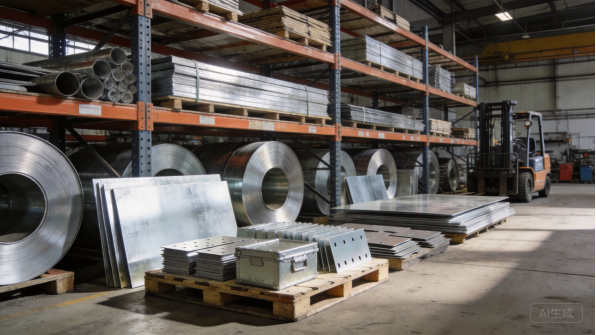
Figure 3: Raw material coils and cut blanks for tool box bodies and drawer panels.
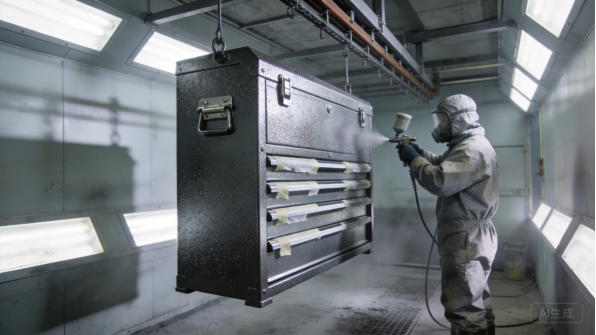
Figure 4: Powder coating provides a durable, brand-matched finish for tool storage products.
Production Difficulty
Laser Cutting and Blanking
Every tool box starts as flat steel, and laser cutting produces the body panels, drawer fronts, lids, and internal brackets with the edge quality and dimensional accuracy that assembly depends on. Fiber laser systems hold tolerances around plus or minus 0.1 mm, and at XHX Metal two 6kW fiber laser cutting machines deliver plus or minus 0.01 mm positioning accuracy, which matters when drawer openings and slide mounting holes must line up across the whole chest.
Cutting quality affects the rest of the process. Burrs on drawer edges can bind slides and scratch users, so deburring is standard on visible edges. Nesting software arranges parts on each sheet to minimize scrap, and cutting order is tuned to prevent distortion on thin panels. For a product with a dozen panels per chest, material utilization and edge quality directly drive cost and customer satisfaction.
CNC Bending and Forming
Bending converts flat blanks into three-dimensional shells, drawer bodies, and lids, and it is where tool box geometry is won or lost. Drawer bodies must be square within tight limits or the slides will bind; lids must be flat or they will not seal against the body. Springback compensation is essential, especially for higher-strength materials, and Engineers Edge publishes bend allowance and deduction references that engineers use to lay out blanks and predict finished dimensions.
Modern CNC press brakes with programmable back gauges hold bend angles consistently across production runs, and first articles are verified against the drawing before production. For tool boxes, the critical dimensions are the drawer opening width and height, the flange positions where slides mount, and the flatness of the work surface. These measurements are checked on the first article and sampled during production to keep the process under control.
Welding and Assembly
Welding joins shells, attaches drawer stops, and builds the frames of rolling chests. Heat from welding can distort thin panels, so parts are clamped in fixtures that hold the correct geometry while the weld cools. TWI Global provides technical guidance on welding thin-gauge steel, including heat input control and distortion management, which are directly applicable to tool box production.
For visible seams, spot welding or MIG welding with controlled settings keeps the exterior clean, and internal structural welds use higher deposition rates. After welding, seams are ground and finished before coating. Assembly adds the hardware that makes the product work: slides, locks, handles, and casters, each with its own torque and alignment requirements. A fixture-based assembly process with documented checks is what keeps quality consistent across thousands of units.
Quality Control and Testing
Tool storage quality control goes beyond dimensions. Drawer cycle testing verifies that slides operate smoothly for thousands of open-close cycles, load testing confirms that drawers and shelves hold their rated weight without sagging, and coating checks verify thickness and adhesion. First-article inspection on a coordinate measuring machine validates the critical fit dimensions, and production batches follow a control plan with sampling.
The testing program should be agreed before production because it affects cost and lead time. A consumer top box may need only a visual check and a drawer pull test, while a professional rolling chest specified for continuous use may require documented cycle and load testing on every batch. A fabricator that documents tests with photos and reports gives buyers evidence they can use in marketing, which is a real advantage for branded products.
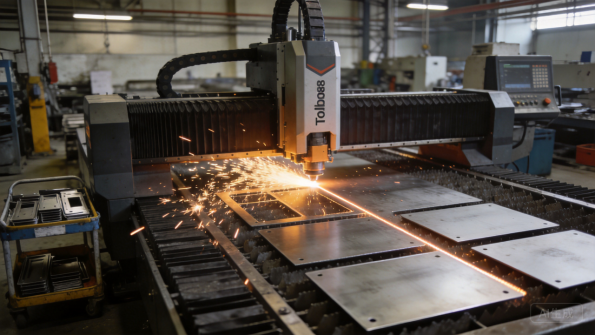
Figure 5: Fiber laser cutting produces accurate blanks for tool box bodies and drawer fronts.
Figure 6: CNC press brake forming shapes tool box panels and drawer bodies to consistent geometry.
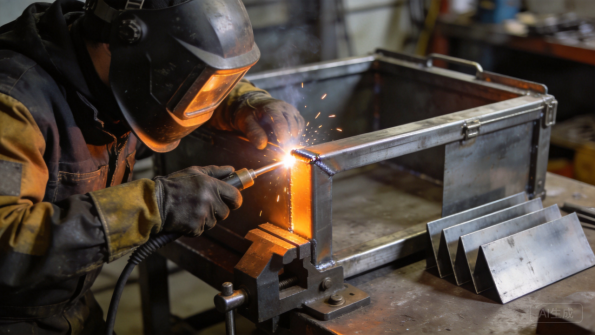
Figure 7: Controlled welding and fixturing keep tool box frames square and strong.
Production Lead Times
RFQ, Engineering Review, and Prototypes
A tool storage program starts with an RFQ: 3D model, drawing, material, finish, quantity, and target price. The fabricator’s engineering team reviews the design for manufacturability, checking bend radii, drawer clearances, slide mounting, and tolerance stacks, and returns a quotation with comments within one to three business days. Prototypes are typically delivered in five to twelve business days for a single box and slightly longer for a multi-drawer chest.
The prototype is where tool storage designs get validated. Drawer fit, lid sealing, and slide alignment can only be truly judged on a physical sample, and prototype feedback should include fit notes and suggested drawing changes. A fabricator that assembles a full prototype, not just a panel sample, gives the buyer confidence that the production product will work as designed.
Tooling and Process Setup
Most tool boxes are produced with laser cutting and CNC bending, which keeps tooling costs low and design changes inexpensive. The setup that matters is process tooling: welding fixtures that hold shells square, bending programs with verified parameters, and inspection gauges that operators use on the line. Building this setup typically takes one to two weeks for a new product family.
For very high volumes, stamping dies for drawer bodies or outer panels can reduce unit cost, but die development adds four to eight weeks and significant upfront investment. The right decision depends on annual volume: under roughly 20,000 units per year, laser cutting and bending is almost always the lower-cost route, while above that the economics should be modeled both ways. Buyers should ask for a cost comparison before committing to tooling.
Production Batches and Volume Planning
Typical production lead times are 15 to 30 business days for batches from a few hundred to several thousand units, with finishing and coating consuming the largest share of that time because powder coating lines run in fixed batch cycles. Rolling chests take longer than top boxes because they are assemblies of many parts that must be welded, finished, and fitted together.
Forecast sharing keeps lead times stable. When buyers share rolling forecasts, the factory reserves material and finishing capacity and orders long-lead items such as special steel grades or custom powder colors in advance. Standard cold-rolled and galvanized steel is usually on hand, while stainless coils, aluminum tempers, and custom colors may add one to two weeks. A clear schedule with milestone dates makes the bottleneck visible before it becomes a delay.
Packaging, Logistics, and Communication
Finished tool boxes are large, heavy, and easily scratched, so packaging is a real cost and schedule item. Individual products are wrapped in protective film, packed in export cartons with foam corner pads, and palletized with stretch wrap. For e-commerce programs, retail-ready packaging with printed cartons may be required, which adds lead time and cost but protects the brand in the last mile.
Overseas shipments need rust-preventive paper or VCI film to protect against container condensation, and the fabricator should provide carton dimensions, gross weight, and loading photos for freight planning. Communication follows clear milestones: design review, material confirmation, first-article inspection, and shipment, with photos at each stage. Buyers who share target launch dates early give the factory time to schedule and deliver on time.
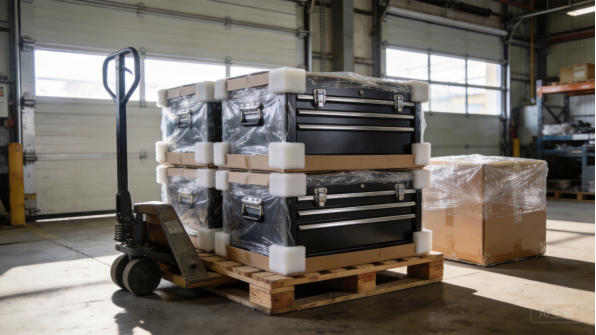
Figure 8: Protective packaging keeps finished tool boxes safe from factory to destination.
Past Case Studies
Hardware Brand: Portable Top Box Line
A hardware brand wanted a portable top box line with three sizes, a powder-coated textured finish, and a retail price point that demanded efficient manufacturing. The engineering team designed a shared construction platform: one body forming sequence, one lid profile, and standardized latches and handles scaled across sizes. The prototype revealed a lid sealing issue, so the lid flange was adjusted and a continuous EPDM gasket added.
Production started with 1,000 units per month and scaled to 5,000 as the line was listed through retail channels. A shared platform meant that adding a fourth size required only new blank dimensions, not new tooling or processes. The program demonstrated how design for manufacturing converts a simple metal box into a profitable product family.
Automotive Aftermarket: Rolling Tool Chest
An automotive aftermarket brand needed a rolling tool chest with eight drawers, a central locking system, and casters rated for heavy workshop loads, priced for the professional market. The chest was designed as a welded frame with individual drawer assemblies on ball-bearing slides, and the locking bar was integrated into the sheet metal design rather than added as a bolt-on part.
The first articles were assembled fully and tested: drawers were cycled 5,000 times, the chest was loaded to rated capacity, and the powder coat was checked for adhesion and thickness. Production batches included the same tests on a sampling basis, and the brand used the test reports in its marketing materials. The chest launched successfully and became a repeat-order program, with a second variant added a year later.
Industrial OEM: Mobile Workstation
An industrial equipment OEM needed a mobile workstation combining a work surface, four locking drawers, a pegboard back, and a shelf for a laptop and instruments. The unit had to fit through standard doorways, roll over facility floors, and support heavy loads without tipping. The design used a reinforced frame, a stiffened top panel, and a low center of gravity from the drawer layout.
The prototype included a load test on the work surface and a stability test with all drawers extended, and the results were documented for the OEM’s internal approval. Production runs of 200 units were delivered quarterly, with inspection reports for drawer alignment and lock function. The OEM standardized the workstation across multiple facilities, and the design was later adapted with a stainless top for cleanroom environments.
Marine Supplier: Corrosion-Resistant Cabinet
A marine equipment supplier needed a tool cabinet for boat workshops and onboard use, where salt air corrodes ordinary steel quickly. The specification called for 316 stainless construction, sealed drawer fronts, and corrosion-resistant hardware throughout. The engineering team replaced painted carbon steel with stainless for the shell and drawers, used sealed slides, and specified stainless fasteners.
The first articles were salt spray tested to confirm the corrosion performance, and the cabinet was delivered in batches with coating verification and dimensional reports. The supplier priced the cabinet as a premium product and sold it through marine distributors. The program showed how material selection driven by the environment, rather than by first cost, creates a defensible product position.
The cabinet has since been specified on two yacht refit projects, and the supplier reorders quarterly against a rolling forecast, which keeps material and finishing capacity reserved well ahead of each shipment.
Summary and Next Steps
Key Takeaways
Custom sheet metal tool boxes look simple but carry demanding requirements: drawer fit, slide alignment, structural stiffness, and coating durability all depend on controlled manufacturing. The material decision drives cost and performance, from cold-rolled steel for volume products to stainless for corrosive environments, and finishes must be specified for the real use case rather than assumed. Production difficulty concentrates in bending accuracy, welding distortion control, and fit verification, which are exactly where experienced fabricators differentiate themselves.
Lead times follow a predictable path: engineering review in days, prototypes in one to two weeks, process tooling in one to two weeks, and production in three to four weeks per batch, with stamping dies adding four to eight weeks when volumes justify them. Forecast sharing and clear documentation keep that path stable. Buyers who settle material, tolerances, and testing before quoting will have smoother programs than those who discover requirements after production starts.
Why XHX Metal
XHX Metal is a privately owned sheet metal manufacturer in Dongguan, China, with a 2,000 square meter factory, about 30 employees, and an annual capacity exceeding 500,000 pieces. The factory operates under an ISO 9001:2015 quality management system with CE and SGS certifications, and it produces custom enclosures, storage products, brackets, and fabricated parts for export customers with packaging designed for ocean freight. Two 6kW fiber laser cutting machines, CNC press brakes, TIG and MIG welding, and a finishing line cover the complete process under one roof.
The company supports buyers from design review through production, provides first-article inspection reports and material certificates, and coordinates third-party testing such as salt spray, load, and dimensional verification when required. For tool storage programs, buyers can review related sheet metal fabrication services and product pages, and the team will structure quotations, quality documentation, and delivery schedules to match the program’s needs.
How to Start Your Project
Start with a STEP or STP file and a drawing that states material, thickness, finish, tolerances, and quantity. If the design is not finalized, send photos or sketches of the product you have in mind, the target weight, the drawer sizes, and the annual volume, and the engineering team will recommend a manufacturable design. The typical path is: engineering review, quotation, prototype, first-article inspection, production, and shipment, with clear communication at each milestone.
To discuss a tool storage program, contact Barry at +86 13244963694 or sales01@xinghaoxin.com, or send your design through the XHX Metal website. With clear requirements and the right partner, a custom sheet metal tool box moves from drawing to production in weeks, with fit and finish that hold up to years of daily use.
What to Ask a Fabricator
Before placing an order, ask the fabricator three questions: which materials and thicknesses it runs regularly, how it verifies drawer fit and slide alignment on first articles, and what testing it can document for drawer cycle, load, and coating performance. The answers reveal whether the shop treats tool boxes as precision assemblies or as simple metal boxes.
Also confirm testing and documentation capabilities, whether in-house or through a named partner, because consumers and retailers increasingly expect evidence of durability. A fabricator that lists test methods and acceptance criteria in the quotation is treating quality as part of the product, and that is the partner worth building a product line with.