Last updated: October 23, 2026 | By XHX Metal Engineering Team
A stainless steel work table is a fabricated table for food preparation, medical or commercial kitchen use, built from 304 or 316 sheet and tube, welded, ground smooth, brushed and passivated. At XHX Metal, stainless steel work table fabrication covers laser cutting, bending, TIG welding, weld dressing, brushing and passivation in a 2,000 sqm factory in Dongguan, China, with two 6 kW fiber laser cutting machines.
This article is written for the buyers and hygiene engineers who specify that table: what a stainless steel work table is made of, where it is used, how the grade and thickness are chosen, what actually goes wrong on a welded top, how long a programme takes, what documents arrive with it, and three order examples with volumes and price bands.
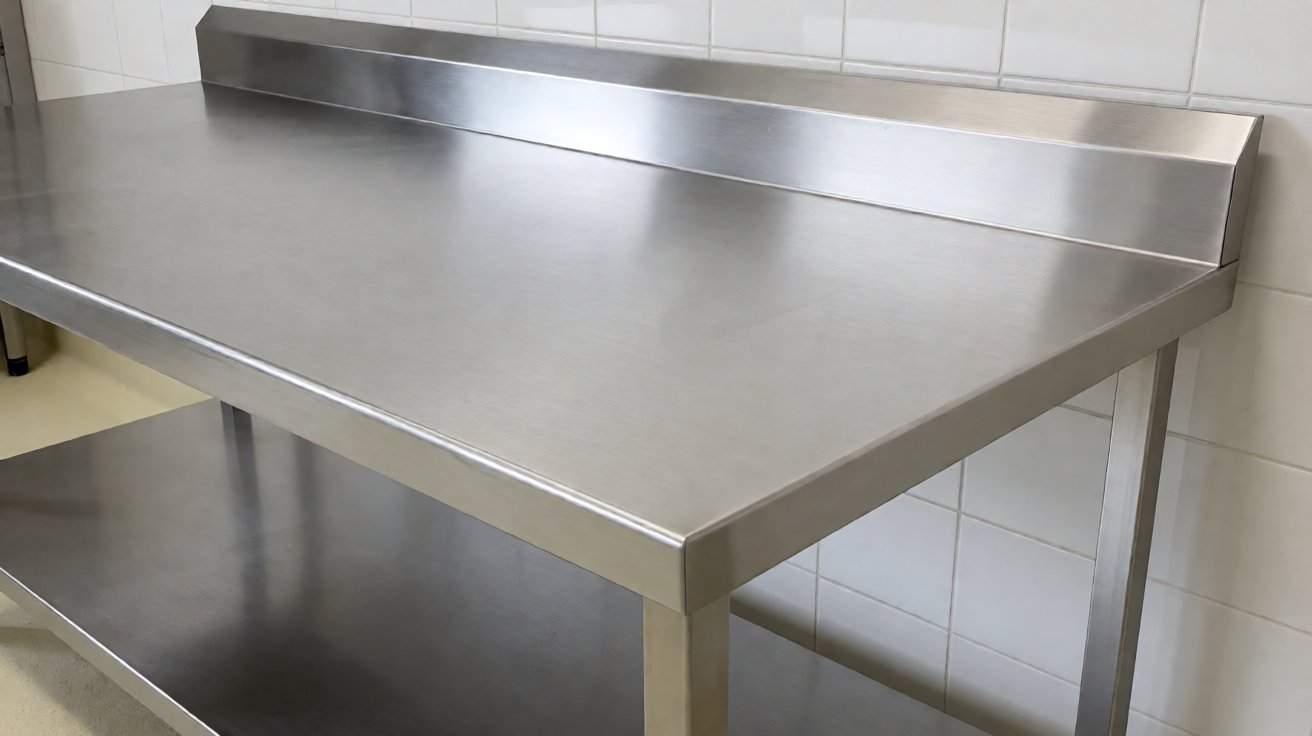
Figure 1: A finished stainless steel work table with an under shelf, standing in a food production area.
Stainless Steel Work Table: What We Build
The Parts in a Table Order
A typical order contains a top, a back upstand where wanted, an under shelf, four legs or two end frames, cross rails, adjustable feet, and sometimes a drawer or a board slot. The top is usually folded down at the edges rather than left as a raw sheet edge, because a folded edge gives the top stiffness and removes the sharp line that a raw laser edge leaves.
The underframe is welded as a separate assembly and the top is fixed to it, either welded or on removable fixings. Keeping them separate matters: a top welded to a completed frame cannot be straightened independently, and a table that is not flat is the complaint buyers raise first. A stainless steel work table is judged on the top, so the top has to be finished and flattened before it ever meets the frame.
Where the Weld Goes
The welds that decide the quality of a stainless steel work table are the ones nobody sees after finishing: the corner seams of the top, the joint between the upstand and the top, and the leg-to-frame connections. Each is TIG welded, then ground back and polished so that the finished surface reads as one continuous sheet. On a table that will be inspected, the seam is also the first place an auditor looks, because a dressed weld is where fabrication either hides its work or fails to.
That dressing is the expensive part of the job. A table with twenty linear metres of weld to dress takes far longer in finishing than in cutting and forming, and the labour is skilled because an over-polished seam shows as a hollow under glancing light while an under-polished one leaves a visible line.
Where Our Scope Ends
The appliances on a stainless steel work table are not ours. Where a sink is part of the brief the bowl is customer-supplied and the table is built around it, with the cut-out and edge treatment in our scope per ISO 128. Sinks with a drawn bowl, taps, waste fittings, drawers and any refrigeration are the customer’s scope, and we fabricate the table and the upstand around them. What we own is the sheet, the tube, the weld, the finish and the flatness of the top.
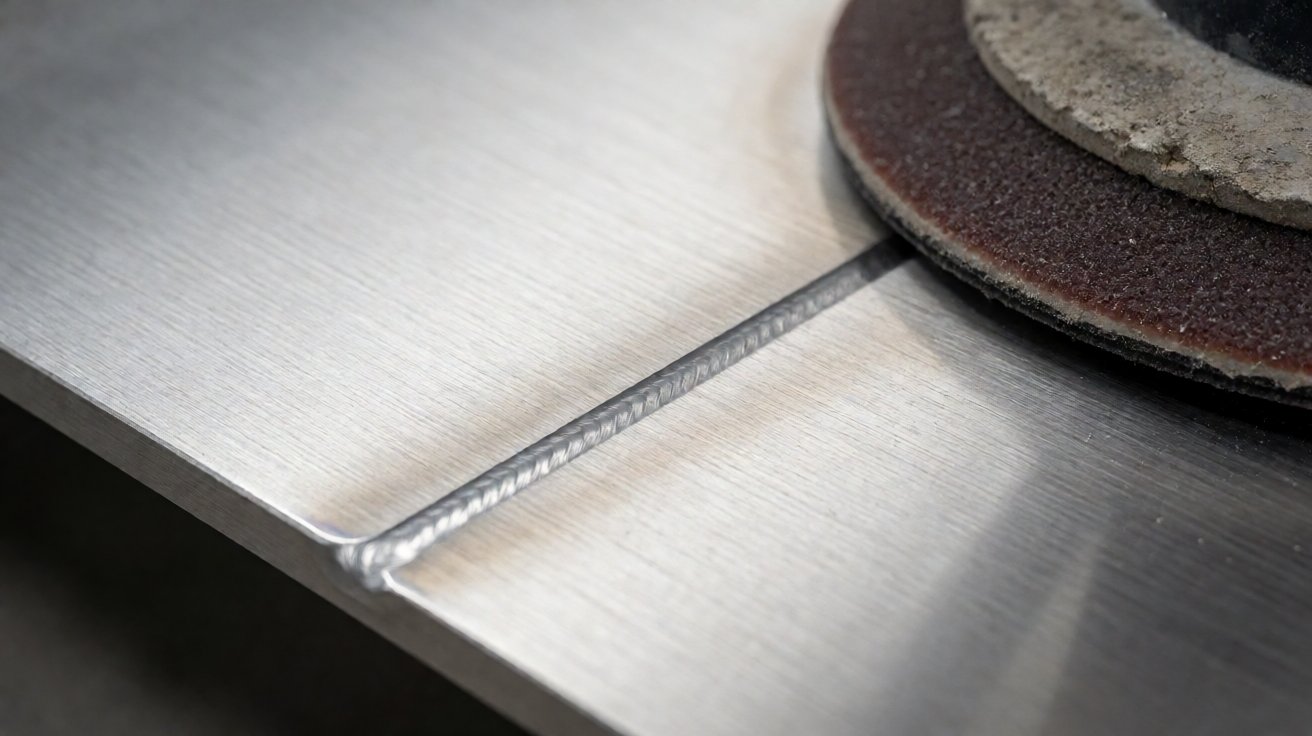
Figure 2: A welded corner on a table frame, ground and polished flush before the surface is brushed.
Where Stainless Steel Work Tables Are Used
Food Preparation and Processing
The largest group is food: preparation benches, packing tables, trimming stations, bakery benches and the tables inside production halls. These are specified against hygiene requirements rather than against load, and the practical target is a surface that can be cleaned and will not harbour soil in a crevice. A stainless steel work table in this setting is often the most-used piece of furniture in the room, so it takes more abuse than the machinery around it.
European buyers usually point to the machinery hygiene framework in EN 1672-2 and to EHEDG guidance, which set out that food-contact surfaces be smooth, cleanable and self-draining. A stainless steel work table is not a machine, but the same principles are what an auditor applies to it. In practice that means no crevices, no unsealed joints, a surface that can be wiped down and a frame that lets the floor be washed.
Medical, Laboratory and Pharmacy
The second group is clinical and laboratory: instrument benches, cleanroom packing tables, pharmacy compounding benches and mortuary tables. These add requirements that a kitchen table does not have: a defined surface roughness, coved internal corners, and often 316 rather than 304 because of the disinfectants in use. Cleanroom and clinical buyers may also reference ISO 14644 for the environment the bench sits in. A laboratory buyer will also ask for the roughness measurement on a stainless steel work table to be recorded per unit rather than declared for the batch.
Commercial Kitchens and Catering
The third group is commercial catering: restaurant prep benches, dishwash entry and exit tables, pot wash units, server stations and back-of-house stainless steel work table runs. These are the most price-sensitive and the most likely to use a thinner gauge, with 304 and a No.4 finish as the normal specification. Volume is higher here and the design is simpler, so the stainless steel work table is usually bought on a standard size rather than drawn for the project.
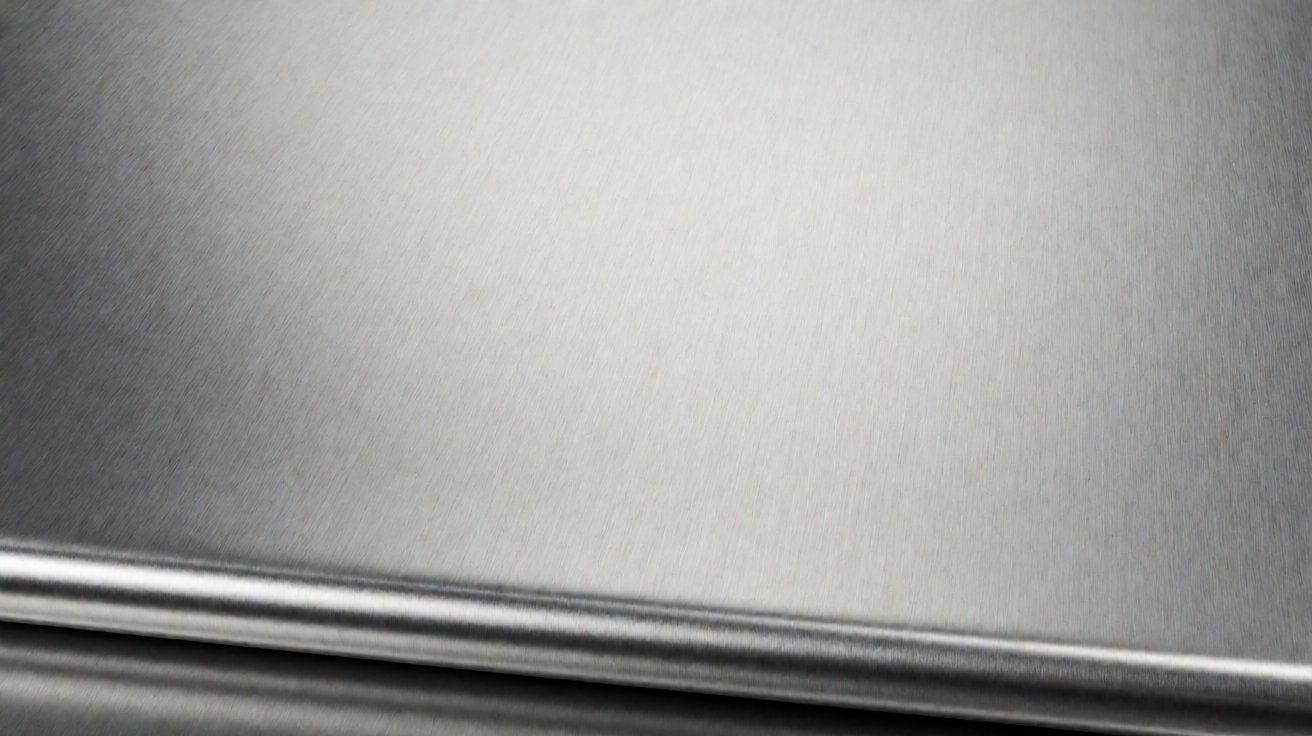
Figure 3: A No.4 brushed finish on a table top, with the grain running one direction across the surface.
Choosing the Grade, Thickness and Finish
304 or 316
Grade 304 covers most stainless steel work table work: general food preparation, commercial kitchens and indoor production with normal washdown. Grade 316, with its molybdenum addition, is specified where chlorides are present, which means seafood and meat processing with brine, acidic products, chloride-based sanitisers, or a coastal plant. The premium is roughly 20 to 40 percent on material, as set out on the stainless steel material page.
For welded tables the low-carbon variants 304L and 316L are the safer choice, because the lower carbon reduces the risk of sensitisation and weld decay along the seam. Grade compositions are standardised in EN 10088-2. A buyer specifying 304 on a heavily welded table without the L suffix is saving very little and taking a real corrosion risk.
Thickness and What It Buys
Top thickness on a stainless steel work table runs from about 1.0 mm to 2.0 mm. A 1.2 mm top is normal for a commercial kitchen bench; 1.5 mm is the usual choice for food production where the table takes heavy trays; 2.0 mm appears where the top spans a wide opening without intermediate support. Thickness buys flatness and dent resistance, not strength in the structural sense, because the folded edge and the underframe do the stiffening.
Surface Finish and Roughness
Finish on a stainless steel work table is specified as a roughness, not a description. Hygiene guidance for food-contact surfaces typically calls for Ra of 0.8 micrometres or better, which is about a No.4 brushed finish, as described in ISO 4287 for profile roughness parameters; a 2B mill finish is smoother but shows scratches and is rarely used on a working top. The brushed grain should run one direction so that cleaning strokes follow it.
Roughness on a stainless steel work table is verified with a profilometer rather than by eye, and the reading is taken on the finished top including dressed weld areas, because a polished seam that measures rougher than the parent sheet is where soil will collect.
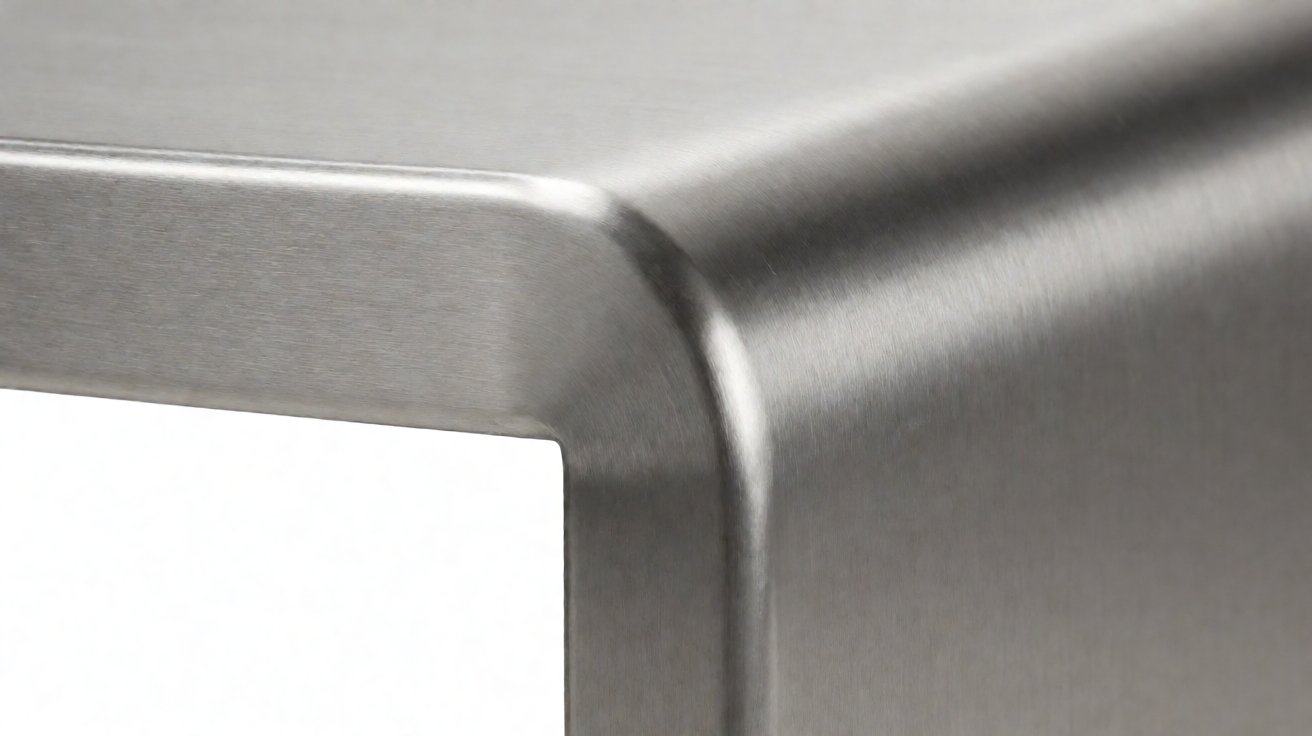
Figure 4: A coved internal corner where the top meets the upstand, with no crevice for soil to collect.
Welding, Dressing and Passivation
Why the Weld Is the Risk
What are the main quality risks on a stainless steel work table? The weld is the first. Welding burns out the chromium at the seam, leaves heat tint, and can open a crevice where the bead does not fully penetrate. A table that looks perfect on delivery can show rust along a seam within a year if the tint was never removed, because the tinted area is the least corrosion-resistant part of the whole assembly.
The countermeasures are standard but only work if they are actually done: purge the back of the weld with argon so the root does not oxidise, keep heat input low enough to avoid sugaring, weld in a sequence that limits distortion, and remove every trace of tint afterwards.
Dressing Without Making It Worse
Grinding a weld introduces iron contamination from the abrasive and can leave a groove that is deeper than the sheet surface. Abrasive selection for stainless follows guidance from the British Stainless Steel Association, which also covers the iron-contamination failure mode. The correct sequence is to grind with a dedicated stainless disc, blend with a finer grade, polish to match the parent surface, then brush the whole area so the grain is continuous. Abrasives used on carbon steel must never touch stainless, because embedded iron becomes a rust spot.
Passivation Restores the Surface
Passivation of a stainless steel work table removes free iron and rebuilds the chromium oxide layer after fabrication. It is done with a nitric or citric acid formulation, and the requirement is defined in ASTM A967, with the test methods for confirming it in ASTM A380. On a stainless steel work table the treated areas are the welds and any ground zone, and the test for success is a water break test or a copper sulphate test rather than a visual check.
Citric formulations are increasingly used because they are safer to handle and easier to rinse, and for food equipment the residue question matters as much as the corrosion result. Whichever is used, the table has to be rinsed to a neutral pH and dried before packing.
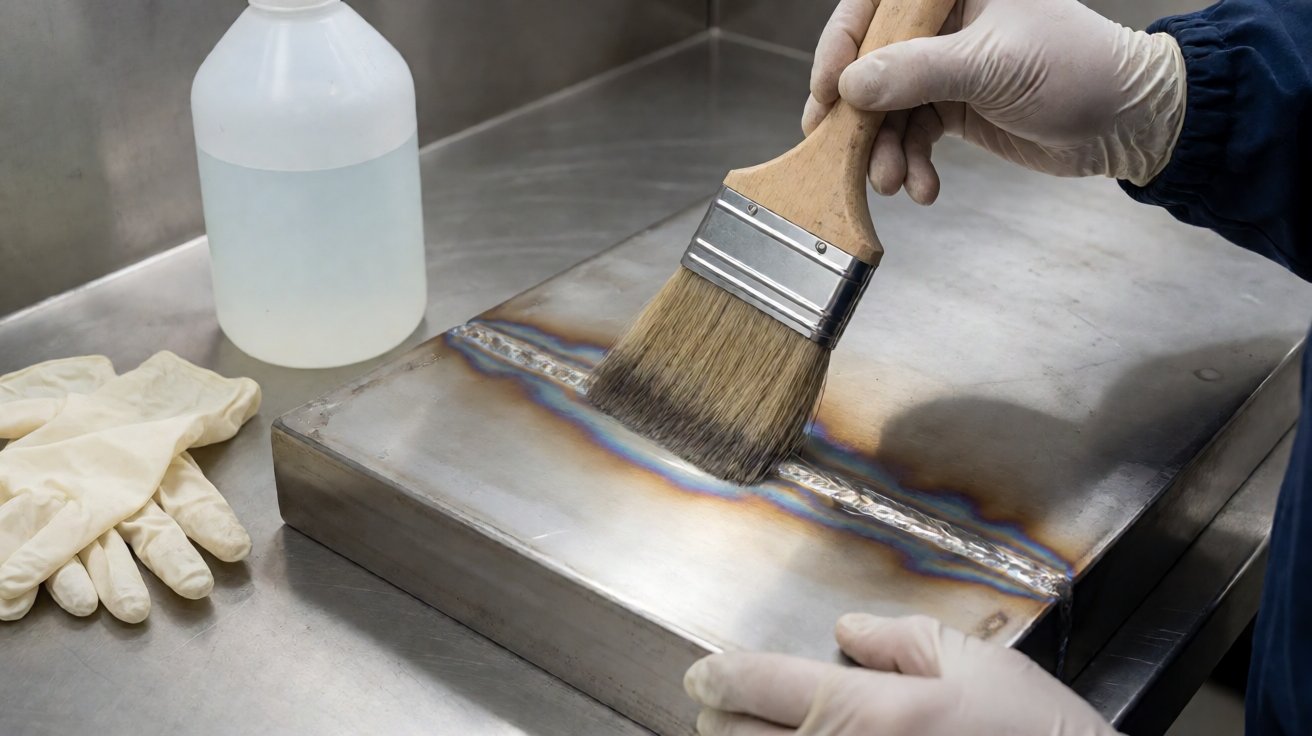
Figure 5: Passivation being applied to a welded area, restoring the oxide layer after heat tint removal.
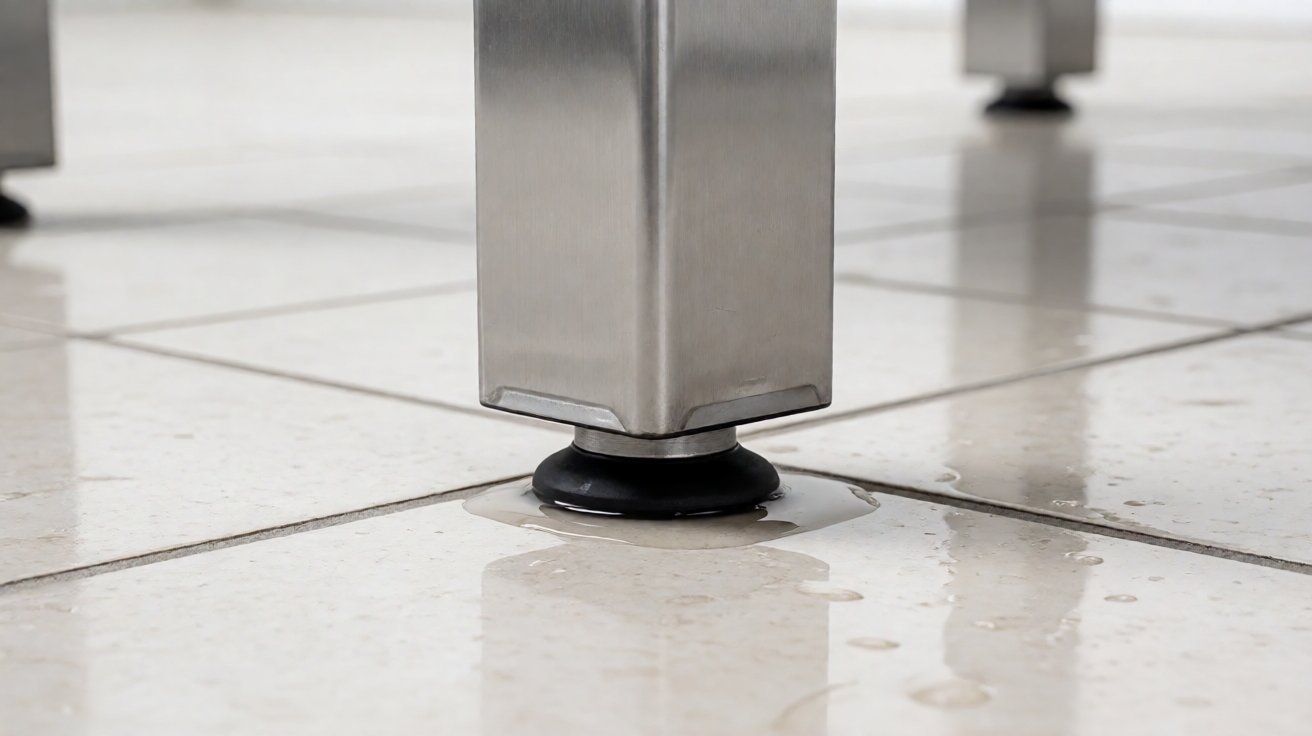
Figure 6: An adjustable leg with a hygienic foot, raised off the floor so washdown water can pass.
Hygiene Details That Decide an Audit
Coved Corners and No Crevices
Where the top meets an upstand, a square internal corner is a crevice that cannot be cleaned. The hygienic answer is a coved or radiused joint, formed either by folding the upstand out of the same sheet or by welding a radiused fillet and dressing it smooth. The radius does not have to be large, but it has to be continuous and it has to be polished. Folding the upstand from the same sheet is the better answer where the geometry allows it, because it removes the weld entirely at the point where soil would otherwise collect.
Legs, Feet and the Floor Gap
A stainless steel work table is cleaned by washing the floor under it, so the frame has to allow that. Under shelves are set back from the leg line, feet are hygienic types that do not trap water, and the bottom rail either sits high enough for a mop or is omitted altogether. Sealed box sections are avoided because a tube that cannot drain holds water and eventually rusts from inside. Where a closed section in a stainless steel work table is unavoidable, a drain hole is drilled at the lowest point and the drawing says so, so that nobody plugs it later.
Flatness, Drainage and Assembly
A stainless steel work table for food usually drains to one end or to a sink, so the top is set with a slight fall rather than dead flat, and the upstand has a turned edge so water cannot run behind it. Flatness still matters for a bench that carries trays, and the practical tolerance is a millimetre or so across a two-metre top, checked with a straight edge before the frame is packed. Drainage and flatness pull against each other, and the drawing has to say which one wins rather than leaving the workshop to guess.
Tables that ship assembled are easier to keep flat, and tables that ship flat-packed need the fixing holes drilled and matched at the factory, because site drilling on a brushed surface leaves a burr that no one removes.
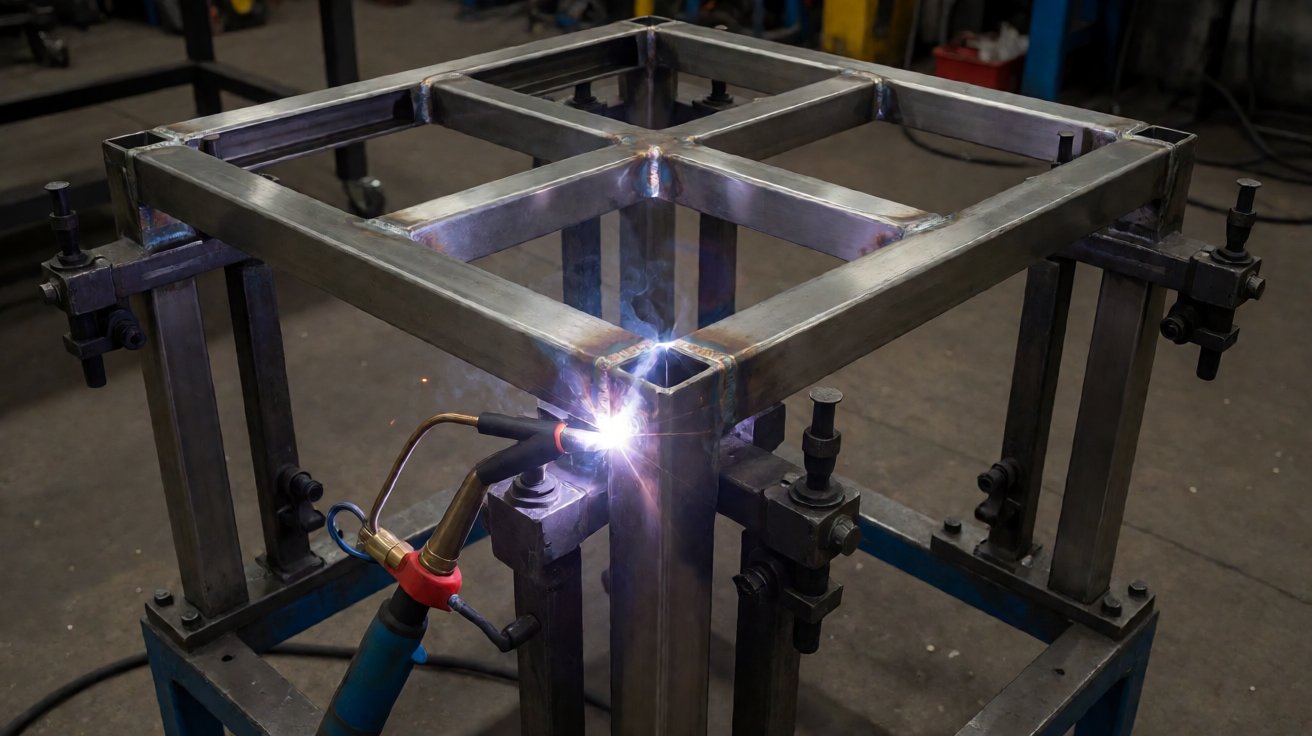
Figure 7: The welded underframe of a work table on a jig, held square before the top is fitted.
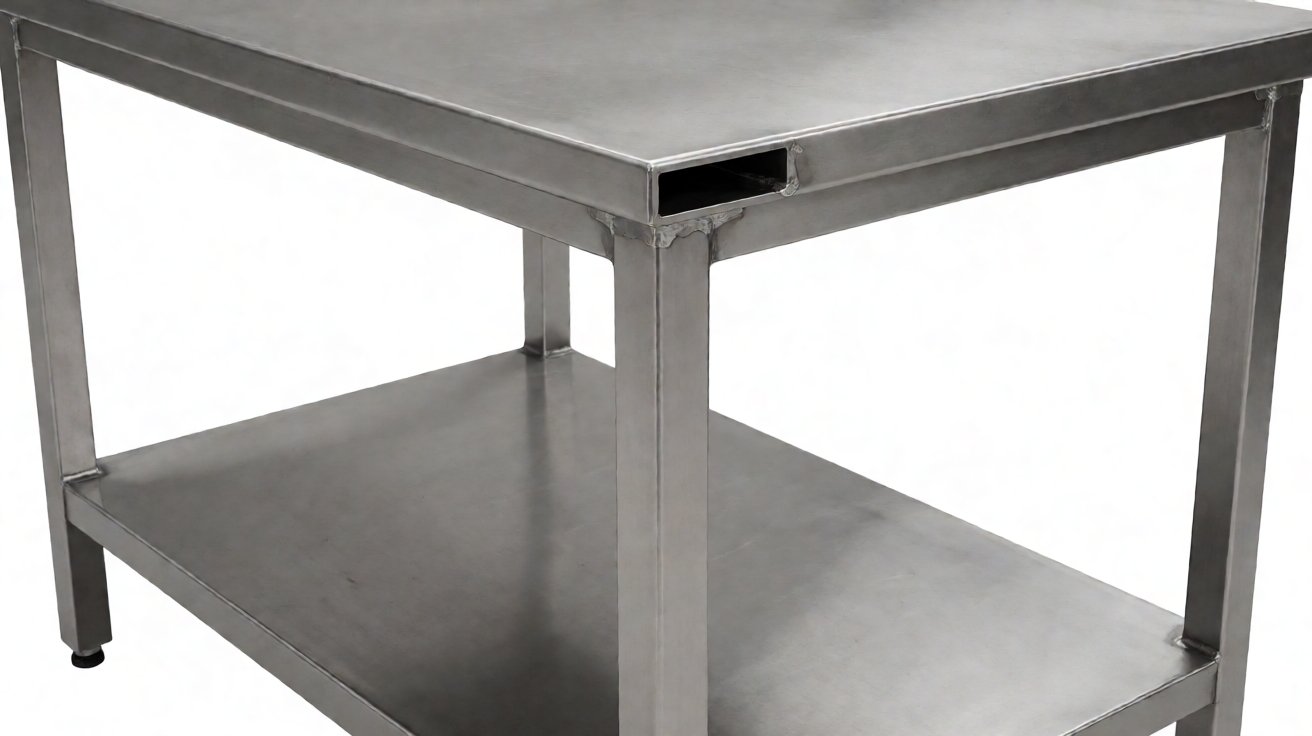
Figure 8: An under shelf welded in place, set back so the floor and legs stay accessible for cleaning.
Lead Time and the Order Process
From Drawing to Table
A stainless steel work table order starts with a dimensional drawing and a finish specification. We ask for the overall size, the top thickness and grade, the upstand height, whether an under shelf is required, the leg and foot type, the sink or appliance cut-outs, the surface finish and the roughness target, and whether the table ships assembled.
The drawing review returns the questions that matter: whether the upstand needs a coved joint, whether the sink cut-out falls on a weld, whether the top needs a fall for drainage, and whether the under shelf conflicts with a leg position.
Documents You Should Receive
A stainless steel work table order should arrive with the approved drawing, a material certificate per EN 10204 3.1, material certificates naming the grade and heat number, the finish specification with the measured roughness, the passivation record and its test result, and the flatness and dimensional inspection record. For food and medical buyers the weld dressing standard is worth writing into the drawing rather than leaving to the workshop.
For export stainless steel work table programmes the packing record matters too. A brushed top that rubs against a crate edge in transit arrives with a scratch that cannot be repaired on site, so tops are wrapped, corner protected and crated on edge rather than stacked flat.
Batch Sizes and Price Bands
Stainless steel work tables of this kind are a medium-volume, made-to-order product. A single kitchen refit is a handful of units; a programme for a food plant or a hospital runs 20 to 80 tables per batch, two to four batches a year, with a minimum order around 5 tables once the drawing is fixed. FOB prices for a 1500 x 700 mm table in 1.2 mm 304 with an under shelf typically fall between USD 120 and USD 260 depending on gauge, weld length, finish and passivation.
Weld length is the real cost driver, not table area. A table with a fully welded and dressed top costs more than twice one with a folded top and minimal weld, which is why the same nominal size can quote very differently.
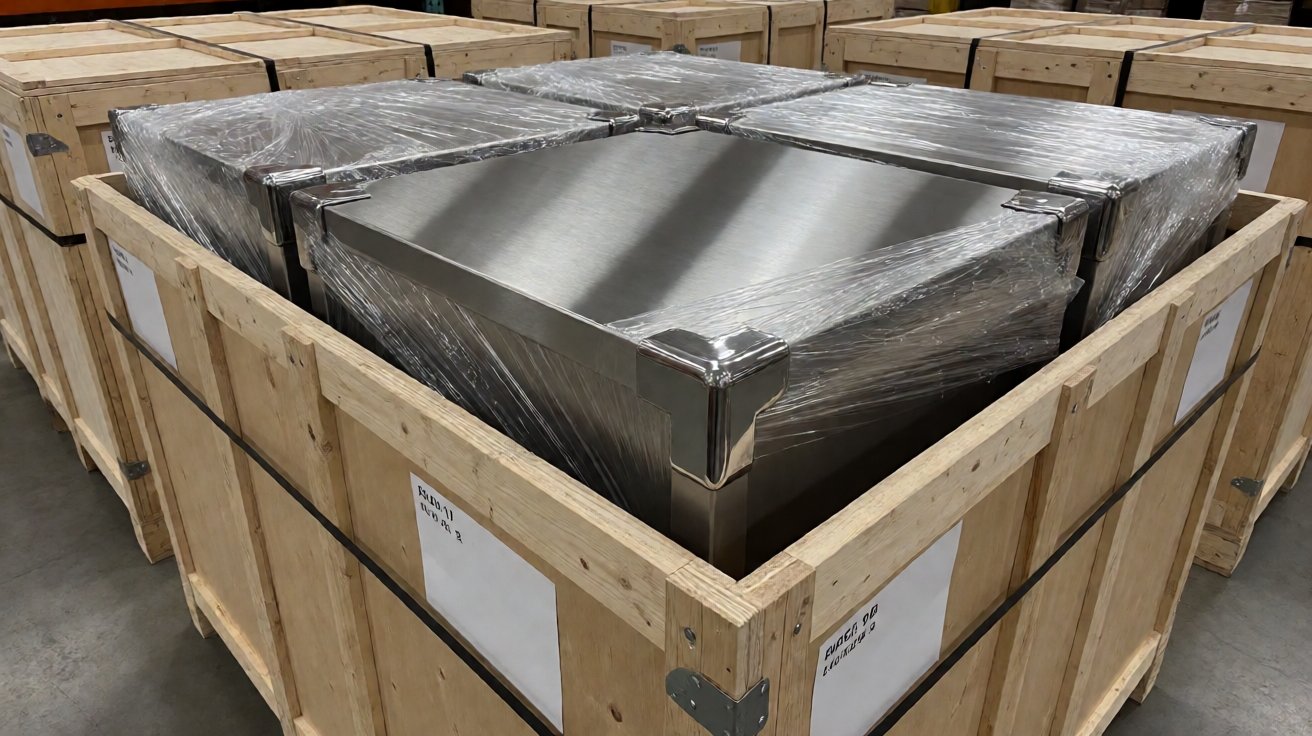
Figure 9: Finished tables crated for export, each wrapped and protected against transit damage.
Three Stainless Steel Work Table Programmes
Preparation Benches for a UK Food Producer
A food producer needed 40 preparation benches for a chilled hall: 1800 x 750 mm in 1.5 mm 304, with a 100 mm coved upstand, an under shelf and hygienic feet. The tops had to be fully welded and dressed flush with a measured roughness, and the plant’s auditor required a passivation record per table.
We fabricated the stainless steel work table as an assembled unit, TIG welded with a purged root, ground and polished flush, brushed in one grain direction and passivated, with the roughness reading recorded on the inspection sheet. Releases ran at 40 tables, twice a year, with an MOQ of 10 and FOB prices from USD 195 to USD 245. The first batch shipped 26 days after approval and annual value was approximately USD 17,000.
Laboratory Benches for a German Equipment Integrator
An integrator fitting out pharmaceutical laboratories needed 24 benches in 316L with a coved rear upstand, a defined Ra on all food-contact and product-contact surfaces, and cut-outs for customer-supplied sinks and service grommets.
The stainless steel work table was produced in 1.5 mm 316L with the upstand folded from the same sheet to give a continuous cove, cut-outs laser cut and edge-dressed before brushing, and every unit passivated and roughness-checked. Releases ran at 24 benches, once or twice a year, with an MOQ of 8 and FOB prices from USD 260 to USD 340. The first batch shipped 28 days after approval and annual value was approximately USD 13,000.
Dishwash Tables for a Middle East Catering Supplier
A catering supplier needed entry and exit tables for a chain of hotel kitchens: 1200 x 700 mm in 1.2 mm 304, with a turned-down edge rather than a full weld, legs braced for a rough handling environment, and a finish that would survive daily washdown in hard water.
We built the stainless steel work table with a folded top and minimal weld to keep the cost inside the client’s band, braced the frame for transport, and specified a brushed finish with passivation on the welds only. Releases ran at 60 tables, three times a year, with an MOQ of 20 and FOB prices from USD 95 to USD 140. The first batch shipped 21 days after approval and annual value was approximately USD 21,000.
Choosing a Stainless Steel Work Table Supplier
What to Ask at Quotation
Ask five things before comparing prices for a stainless steel work table. Which grade and which L variant is quoted, and is the top a single sheet or jointed? What is the weld dressing standard, and is the dressed area measured for roughness? Is passivation included, with a test record? What flatness tolerance is held across the top? And does the price include crating that protects a brushed surface?
The answers separate suppliers quickly. A quote that names the grade, the dressing standard, the roughness and the passivation record is comparable; a quote that lists a size and a price is not, because the finishing content behind the same size varies more than the material cost.
Where Suppliers Fail
Failures in stainless steel work table supply cluster in the same places. Rust appears along a seam because the tint was never removed or the area never passivated. A top is not flat because it was welded to a finished frame and could not be corrected. A crevice at the upstand joint fails an audit where a cove was needed. A brushed top arrives scratched because it was stacked flat in a crate. And a table rusts from inside because a sealed section could not drain.
None of these are exotic. They follow from buying a table on size and grade alone, and are avoided by writing the finish, dressing standard and passivation requirement into the drawing.
How XHX Metal Works
XHX Metal has manufactured sheet metal parts and welded assemblies for export customers from Dongguan since 2014, in a 2,000 sqm factory with about 30 staff and an annual capacity of 500,000 parts. The equipment list covers two 6 kW fiber laser cutting machines at +-0.01 mm, CNC punching, CNC bending, TIG and MIG welding, weld dressing and brushing, with passivation through audited partners, all under ISO 9001:2015 with CE documentation and SGS records.
For a stainless steel work table programme, samples follow in 5 to 10 working days and first batches in 20 to 30 days, extending to 35 days where the weld dressing content is high. Send a drawing with the grade, thickness, upstand detail, sink cut-outs and roughness target through the contact page; related work is described on the sheet metal welding page and the sheet metal capabilities page, and enquiries also reach sales01@xinghaoxin.com.
Frequently Asked Questions
What is a stainless steel work table?
It is a fabricated table for food preparation, medical or commercial kitchen use, built from 304 or 316 stainless sheet and tube, welded, ground and polished, brushed and passivated so the surface is cleanable and resistant to corrosion.
Should I specify 304 or 316 for a work table?
304 covers general food preparation and commercial kitchens. Choose 316 where chlorides are present: seafood and meat with brine, acidic products, chloride sanitisers, or a coastal site. For welded tables use 304L or 316L to reduce the risk of weld decay.
What surface roughness should a food work table have?
Hygiene guidance for food-contact surfaces typically calls for Ra of 0.8 micrometres or better, which corresponds roughly to a No.4 brushed finish. The reading should be measured on the finished top, including dressed weld areas.
Is passivation necessary on a stainless work table?
Yes, on the welded and ground areas. Fabrication leaves free iron and heat tint that destroy the passive layer, and passivation per ASTM A967 restores it. Without it a seam can show rust within a year even on 316.
Can the table be supplied flat-packed for site assembly?
Yes. Flat-packed tables have the fixing holes drilled and matched at the factory, because site drilling on a brushed surface leaves a burr that is rarely removed. Assembled tables are easier to keep flat and are the better choice where the top is fully welded.
How long does a stainless steel work table take?
Samples follow in 5 to 10 working days after drawing approval. First production batches ship in 20 to 30 days, extending to 35 days where the weld dressing and passivation content is high.