Last updated: October 22, 2026 | By XHX Metal Engineering Team
Sheet metal welding is the joining of formed steel, stainless or aluminium parts by melting their edges together, with or without filler wire, so that the assembly carries load, holds a shape and often holds a seal. At XHX Metal, sheet metal welding covers TIG, MIG and spot work on parts from 0.8 mm to 6 mm thick, in a 2,000 sqm factory in Dongguan, China, alongside laser cutting, CNC punching, bending and powder coating.
This article is written for the buyers and engineers who specify welded assemblies: what sheet metal welding covers, where welded parts are used, how material and thickness decide the process, why welded sheet distorts and how that is controlled, how long a programme takes, what documents prove the weld, and three order examples with volumes and price bands.
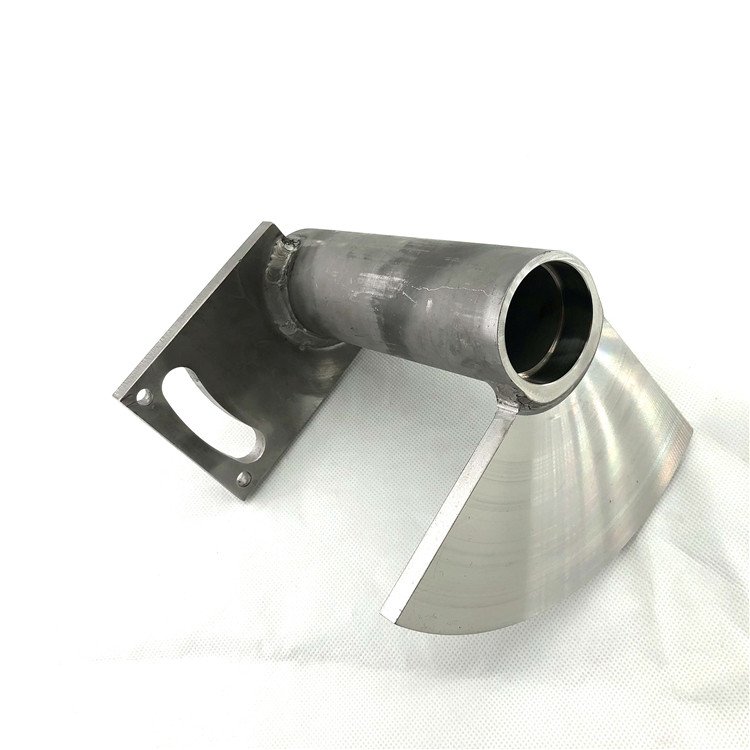
Figure 1: A tube-to-plate fillet weld on a fabricated bracket, bead left as welded for inspection.
Sheet Metal Welding: What We Do
The Processes and What Each Is For
Sheet metal welding in a fabrication shop means three processes most of the time. TIG (GTAW) gives the finest control and the cleanest bead, so it is used on stainless, on thin gauge and on any seam that will be seen or polished. MIG (GMAW) is faster and more forgiving, which suits mild steel from 2 mm up and longer seams. Resistance spot welding joins overlapping sheets without filler and is the cheapest way to build a stiff panel.
The choice within sheet metal welding is driven by three questions: what material, what thickness, and does the seam have to look good or hold pressure. A 1.0 mm stainless cover welded with MIG will look burnt and may warp; the same part in TIG at low amperage stays flat and can be finished flush.
What We Weld
A typical welded sheet metal assembly contains a body, a frame, brackets, bosses, hinge reinforcements and sometimes a tube connection. On enclosure work the welds are mostly corner seams, butt joints where two folded panels meet, and tube-to-plate joints for cable entries or mounting bosses. On frames the work is square-tube mitre joints and gusset plates.
We also take on sheet metal welding for customer-supplied parts and rework assemblies that failed a seal test elsewhere. Both are quoted on the same answers as a new build: material, thickness, seam length, access, finish requirement and whether the joint must be airtight.
Where Welding Sits in the Process Chain
Sheet metal welding never stands alone. A welded assembly has already been laser cut, deburred and folded, and after welding it is dressed, cleaned, and either powder coated or passivated. That sequence matters because welding is the step that moves the part: heat puts distortion into a panel that was flat when it left the press brake, and no downstream process removes it.
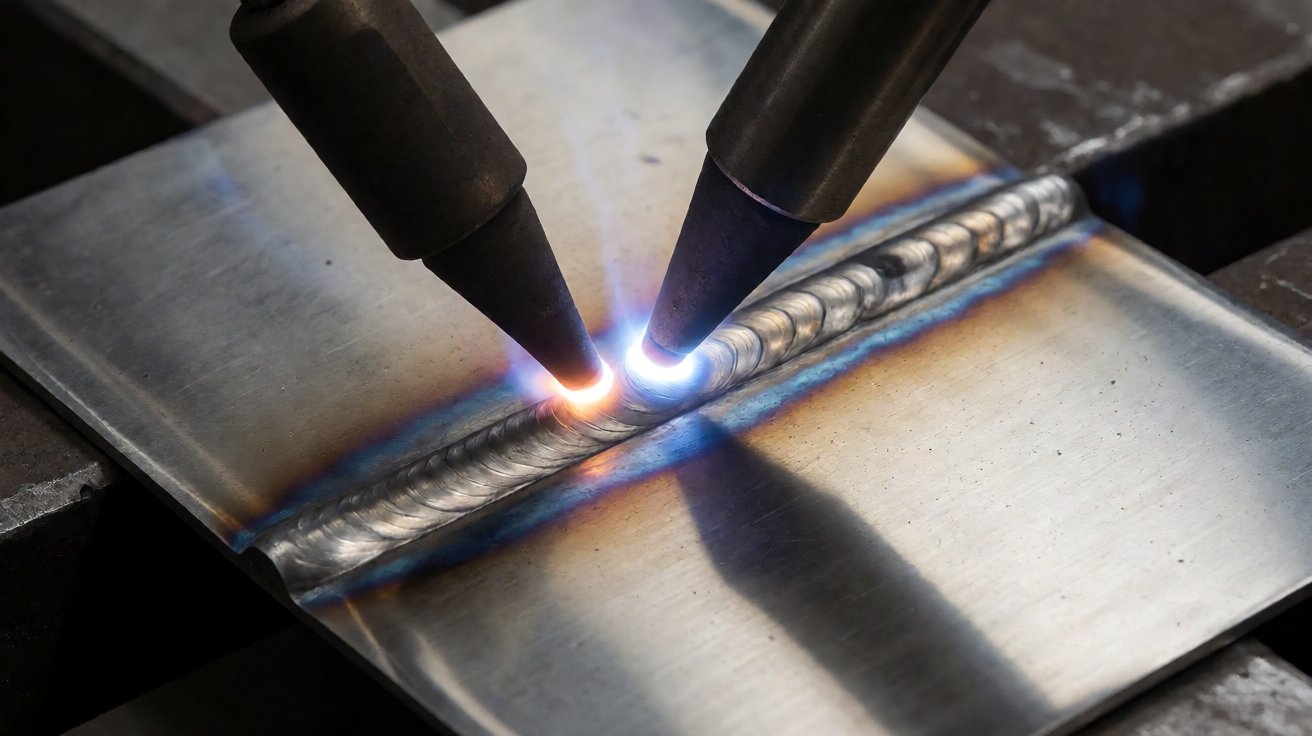
Figure 2: TIG welding thin stainless sheet: stable arc, molten pool and stacked-dime ripple.
Where Welded Sheet Metal Assemblies Are Used
Enclosures That Must Seal
The largest group for sheet metal welding is enclosures that have to keep something out. An outdoor electrical cabinet, a wash-down food-industry housing or an IP66 terminal needs continuous welds on every seam that water could reach, because a folded and riveted joint leaks. Buyers specify the ingress level and the welds follow from it: the IEC 60529 ingress protection code defines the IP rating, and reaching IP65 or above on a fabricated box means welding, not gasketing alone.
Sealed enclosures also need the weld inspected rather than assumed. A pinhole in a corner seam passes a visual check and fails a hose test, so sealed work is leak tested before coating, and the test record travels with the batch. Gas tungsten arc welding terminology and process definitions follow AWS A3.0.
Structural Frames and Machine Bases
The second group carries load. Machine bases, conveyor frames, equipment skids, stair and platform units and welded trolleys are built from square tube, angle and plate, and for these the sheet metal welding is the structure. Here the requirement is penetration and consistency rather than appearance, and the failure mode is fatigue at a toe that was never dressed.
Structural sheet metal welding is specified against a code. In Europe EN 1090 governs execution classes for steel structures and requires welders qualified to ISO 9606; in the United States the equivalent is AWS D1.1. A fabricator who cannot show welder qualification certificates is not a structural supplier, whatever the samples look like.
Tubes, Ducts and Flow Parts
The third group moves air, water or product. Duct transitions, fan housings, silencer bodies, hoppers and tube manifolds are welded from sheet and tube, and the seam has to be both sealed and smooth inside, because a rough internal bead collects material and disturbs flow. These parts are usually TIG welded and dressed internally.
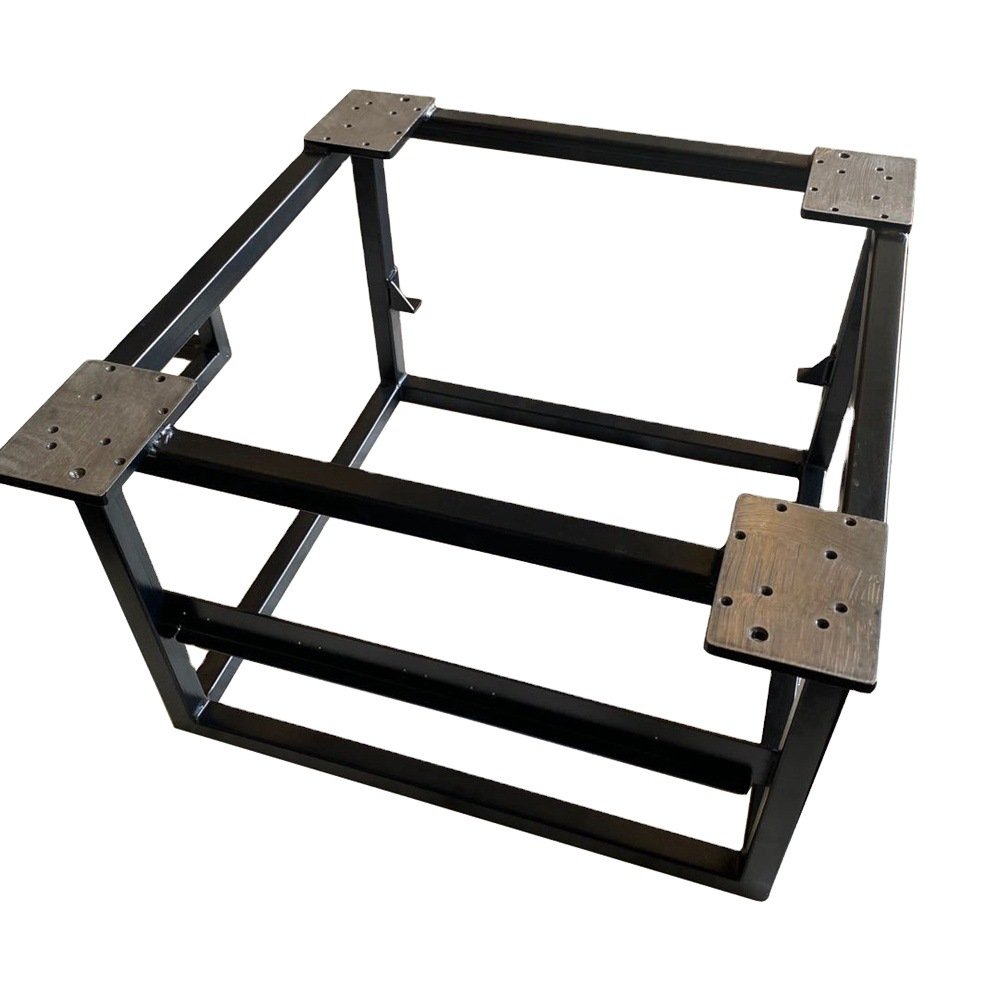
Figure 3: A welded square-tube frame with corner plates, checked for square before coating.
Materials and Thickness for Sheet Metal Welding
Mild Steel, Stainless and Aluminium
Mild steel is the easiest to weld and the most forgiving of fit-up error, which is why most frames are steel. Cold rolled sheet from 1.0 mm up welds cleanly with MIG; below 1.0 mm the risk of burning through rises and TIG or spot welding becomes the sensible choice. Filler and base metal classifications are listed by the American Welding Society.
Stainless is where sheet metal welding gets difficult. It conducts heat poorly, so heat concentrates at the seam and distortion is worse than in steel; it also loses corrosion resistance if the weld is overheated, which shows as a dark sugared bead and later as rust. Grade 304 covers most work and 316 is used for chloride exposure, as set out on the stainless steel material page.
Aluminium needs a different process entirely. Its oxide layer melts far above the metal, so AC TIG or a specialist MIG setup is required, and its thermal conductivity pulls heat away so fast that preheat and higher current are normal. Thin aluminium is usually riveted or clinched rather than welded in a sheet metal shop.
Filler Metal and Shielding Gas
Filler and gas are part of the specification, not a workshop preference. Stainless is welded with a matching 308L or 316L filler, mild steel with an ER70S-type wire, and aluminium with 4043 or 5356 filler. Shielding gas for stainless is usually argon with a small hydrogen or helium addition; mild steel runs on a CO2 or argon mix.
Stainless also needs the back of the weld protected, because the root oxidises without gas and that oxide is where corrosion starts. Purge gas, a backing tape or a flux coating does that job. Heat tint removal grades are described by ASTM A380.
Thickness Limits and Joint Design
Thickness sets the joint design in sheet metal welding. Below 1.5 mm, a square butt with no gap and full penetration is normal and a V-groove is unnecessary; from 3 mm up a V or U prep is needed so the arc reaches the root. Fit-up tolerance is tight in thin material, typically under 0.2 mm gap on a butt joint, because a wide gap cannot be bridged without burning the edge back.
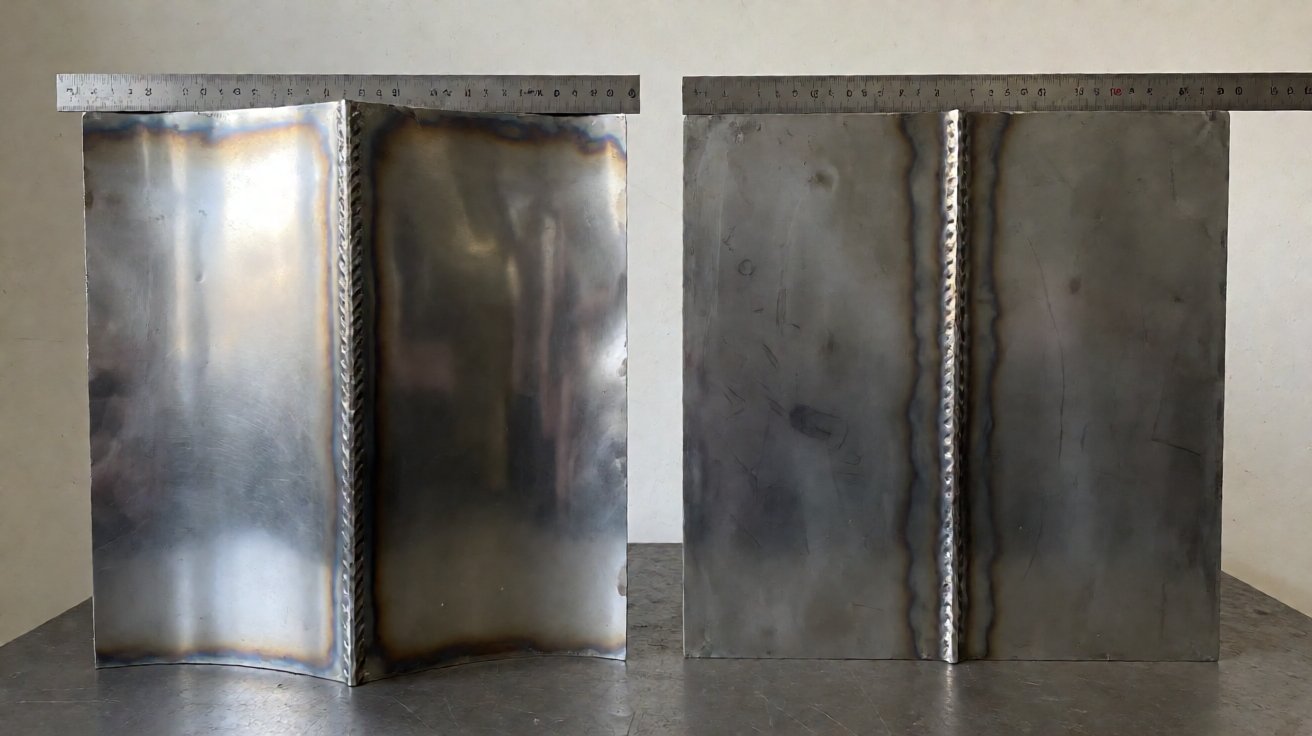
Figure 4: The same seam welded badly and well: a bowed, oil-canned panel beside a flat one.
Why Sheet Metal Welding Distorts, and How It Is Controlled
The Mechanism
What causes distortion in sheet metal welding? Localised heat. The arc raises a narrow band of metal to melting point while the surrounding sheet stays cold, and as that band cools it contracts. The result is a seam that pulls short, an edge that bows and a face that oil-cans.
It has three forms, each with a different fix: longitudinal shrinkage that shortens the part along the weld, transverse shrinkage that pulls the sides together, and angular distortion where the seam lifts like a hinge.
Control by Sequence and Balance
The first control is sequence. A long seam is never run start to finish in one pass; it is stitch welded in short runs, either back-step or alternating from the centre outwards. Both spread the heat and let each run cool before the next adds to it, and on a symmetric part the two sides run in the same order so shrinkage balances.
The second control is restraint. A fixture that holds the part flat forces shrinkage against the clamp rather than the free shape, and the part springs back flat when released, which is why a panel welded in a weak jig can bow the moment it comes out.
Control by Heat Input and Technique
Heat input is current times voltage divided by travel speed, and each is a lever. Lower amperage, faster travel and a smaller pool all reduce the heat entering the sheet. Limits are tabulated in AWS D1.1.
Two physical aids do a lot of work: copper backing bars and chill blocks clamp against the seam and pull heat out, which is why a stainless seam over copper stays flatter.
Control by Design and Correction
The cheapest control happens at the drawing: keep seams away from large flat faces, add a rib or folded return near the weld, and keep weld length short. Where the design cannot change, a pre-set works: the panel is bowed the opposite way so shrinkage pulls it straight.
After welding, correction is limited: a dressed seam can be brought back locally and a light heat shrink takes a wave out of mild steel, while stainless is harder to correct without marking.
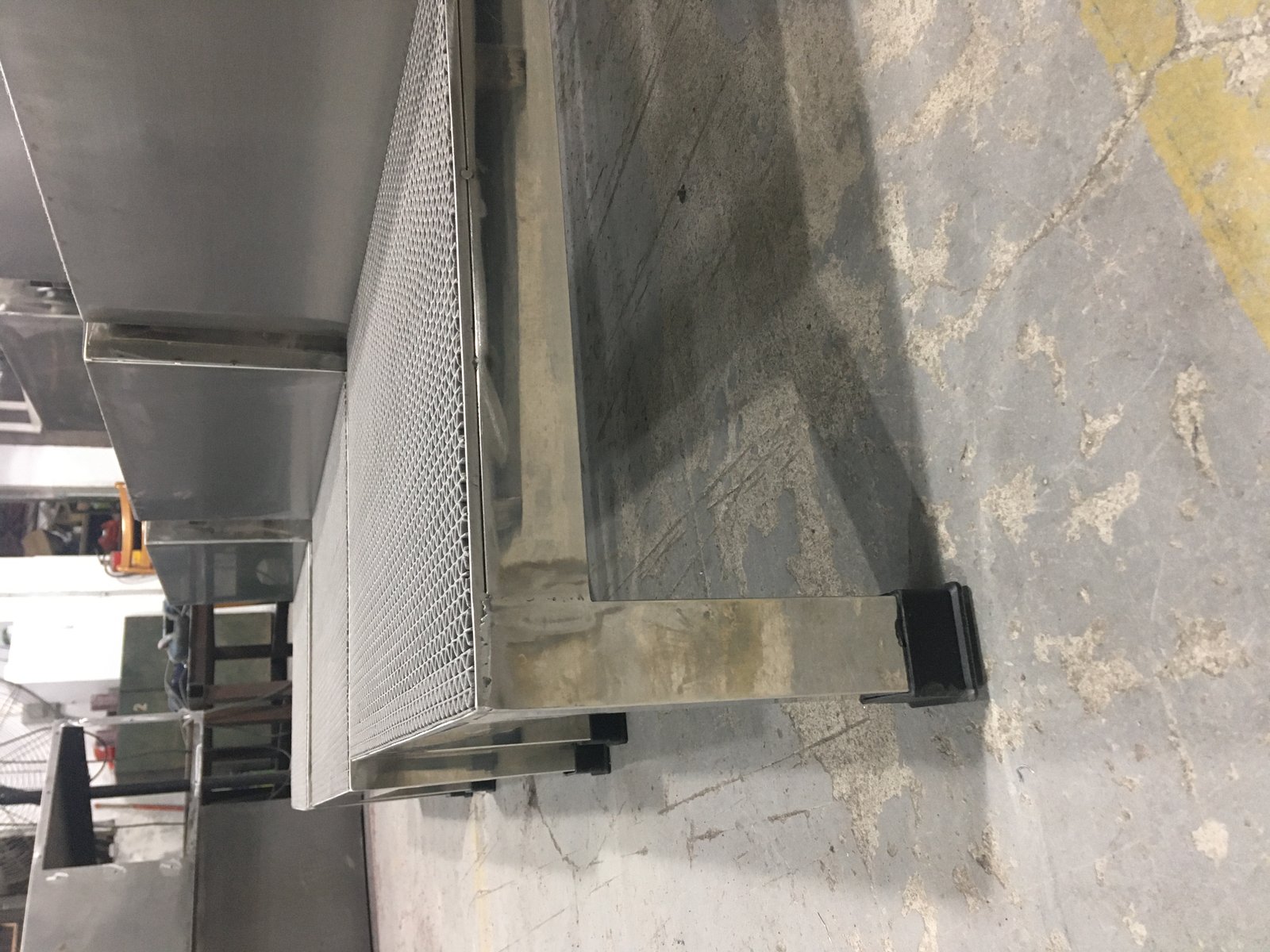
Figure 5: Stainless step unit with full welds dressed flush and the surface restored.
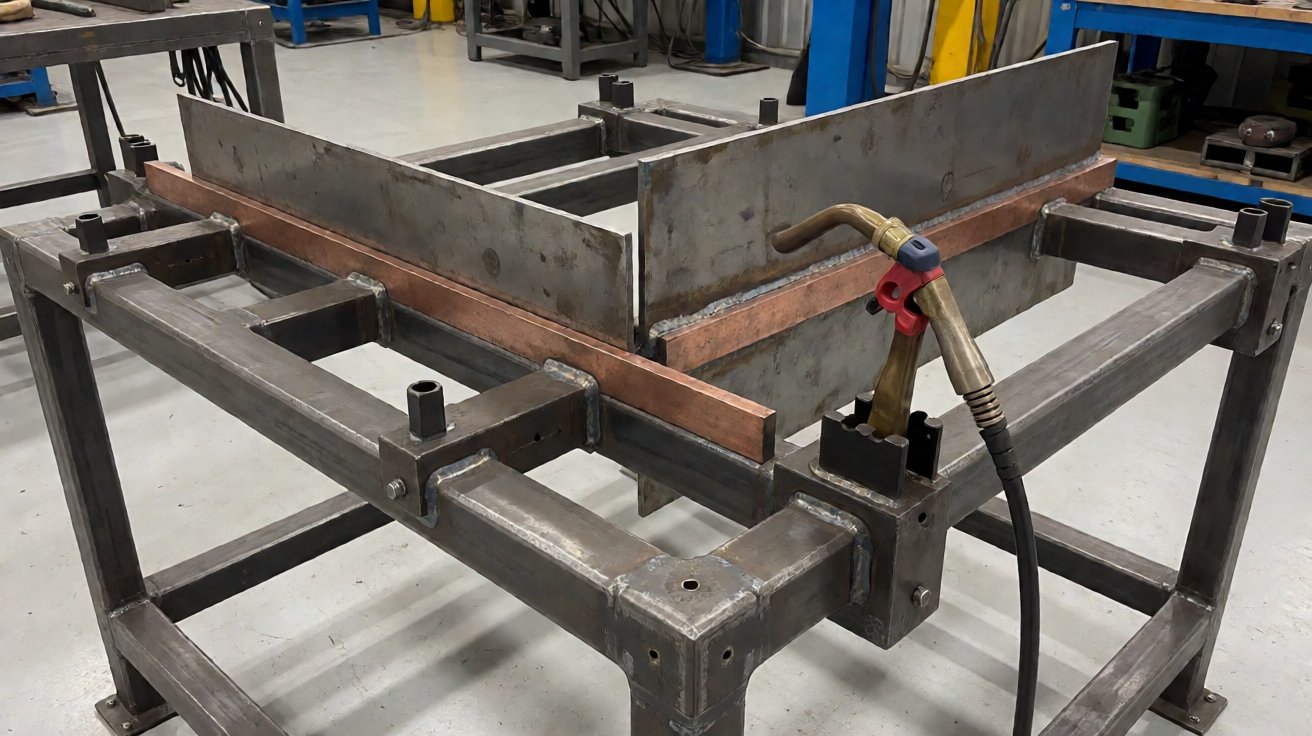
Figure 6: A welding fixture with toggle clamps and copper backing bars holding a seam in line.
Weld Quality, Inspection and Documentation
The Defects That Matter
What are the quality risks in sheet metal welding? The ones that cause rejection are predictable. Burn-through on thin sheet from too much current or too slow a travel. Undercut where the arc has eaten into the parent metal beside the bead and thinned the section. Porosity from a dirty surface, damp filler or lost shielding gas. Lack of fusion where the arc ran on the bead instead of into the root. And distortion, which is not a weld defect in the strict sense but fails the part just the same.
Each has a direct countermeasure: fit the current to the thickness, clean the joint to bare metal before welding, keep the gas flow set and the nozzle clear, and control heat input as described above. Most welding failures in a sheet metal shop are preparation failures rather than operator failures.
How the Weld Is Checked
Inspection is staged to the requirement. A visual check confirms bead profile, leg length, undercut and discolouration on every part. A fillet gauge measures leg length against the drawing. Dye penetrant reveals surface-breaking cracks and pinholes on stainless and on any seam that will be sealed, per ISO 3452-1. A leak test, either pressure decay or water immersion, proves an enclosure that has to hold IP65 or better.
Destructive or radiographic testing is not normal on sheet metal work; it appears on pressure vessels and structural class work, which is a different supply chain. What a sheet metal buyer should expect is dimensional and visual inspection with a documented record, plus a leak test where sealing is specified.
Documents That Prove the Weld
A sheet metal welding order should arrive with the drawing at its current revision, material certificates naming the grade and heat number, filler and gas identification, welder qualification records where a code applies, and the inspection or leak test record for the batch. Post-weld treatment is recorded too: passivation on stainless per ASTM A967, and the dressing standard on visible seams.
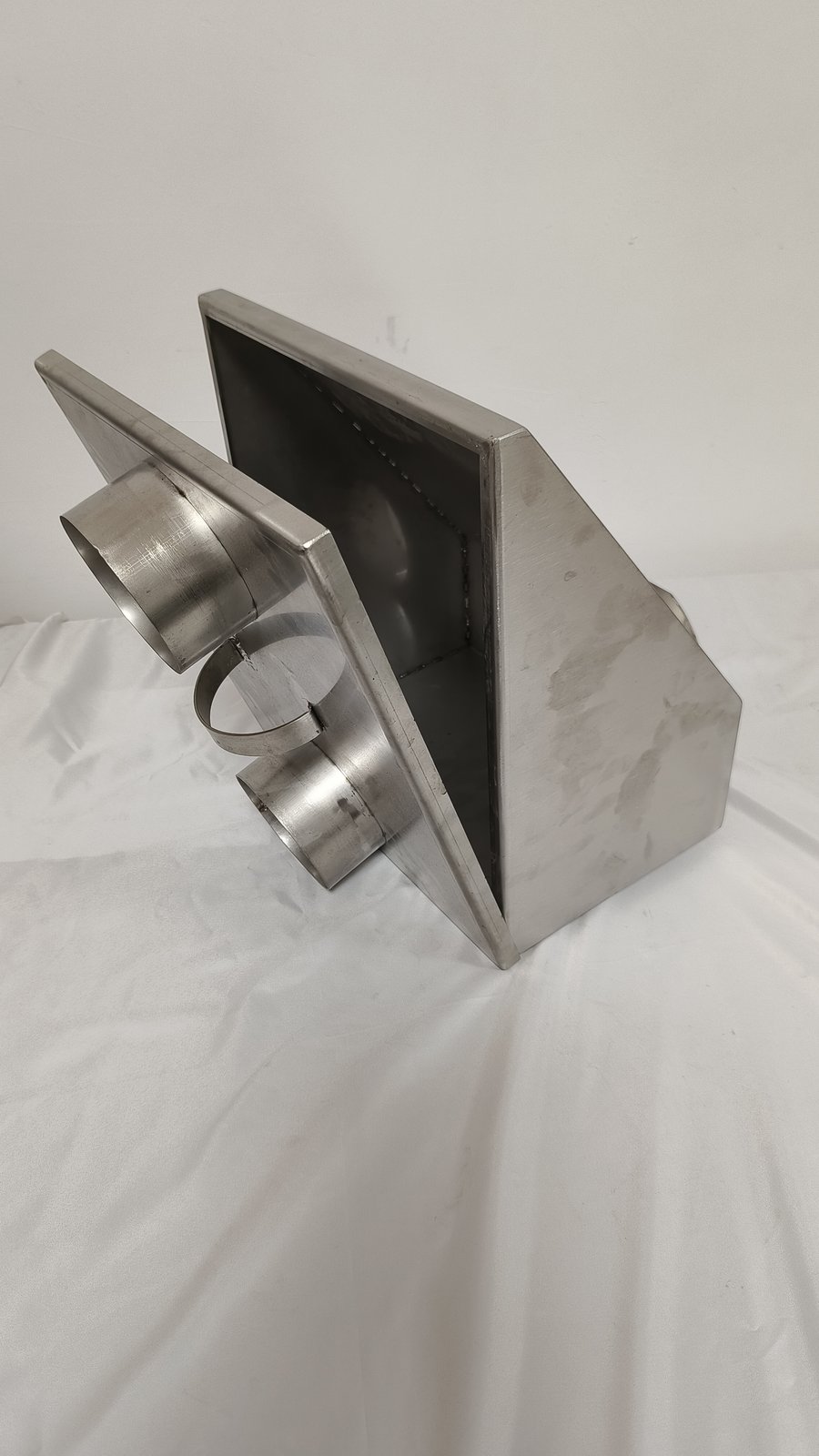
Figure 7: A welded sheet metal duct transition: tube outlets welded into a folded box body.
Lead Time, Cost and the Order Process
From Drawing to Sample
Sheet metal welding starts with a joint review rather than a torch. We check the drawing for seam access, because a weld that cannot be reached with a torch cannot be made; for joint type and thickness; for whether the seam must be sealed, dressed or left raw; and for the order of operations, since a part that is welded after coating loses its finish.
Samples follow in 5 to 10 working days after drawing approval for a folded and welded assembly, and longer where a weld fixture has to be built. The first sample is checked for distortion and squareness against the drawing, and for seal where sealing is specified, before the batch is released.
What Drives the Cost
Sheet metal welding is priced on seam length and complexity, not on part weight. A short seam in an awkward position costs more than a long seam on an open bench, because access and repositioning dominate. Dressing and finishing are separate operations and often cost as much as the weld itself, especially where a stainless seam has to be blended and polished.
Fixture cost is the other variable. A part welded once needs no fixture; a part welded fifty times a year needs one, and the fixture is charged once and then amortised. Buyers planning a repeat programme should expect that setup on the first order rather than spread invisibly across the piece price.
Batch Sizes and Price Bands
Welded sheet metal is a low-to-medium volume business. Enclosure bodies usually run 20 to 100 units per batch, three to six batches a year, with a minimum order around 20 units once a fixture exists. FOB prices for a welded, dressed and coated enclosure typically fall between USD 40 and USD 180 depending on size, gauge, seam length and finish, while a welded tube frame runs from USD 25 to USD 90.
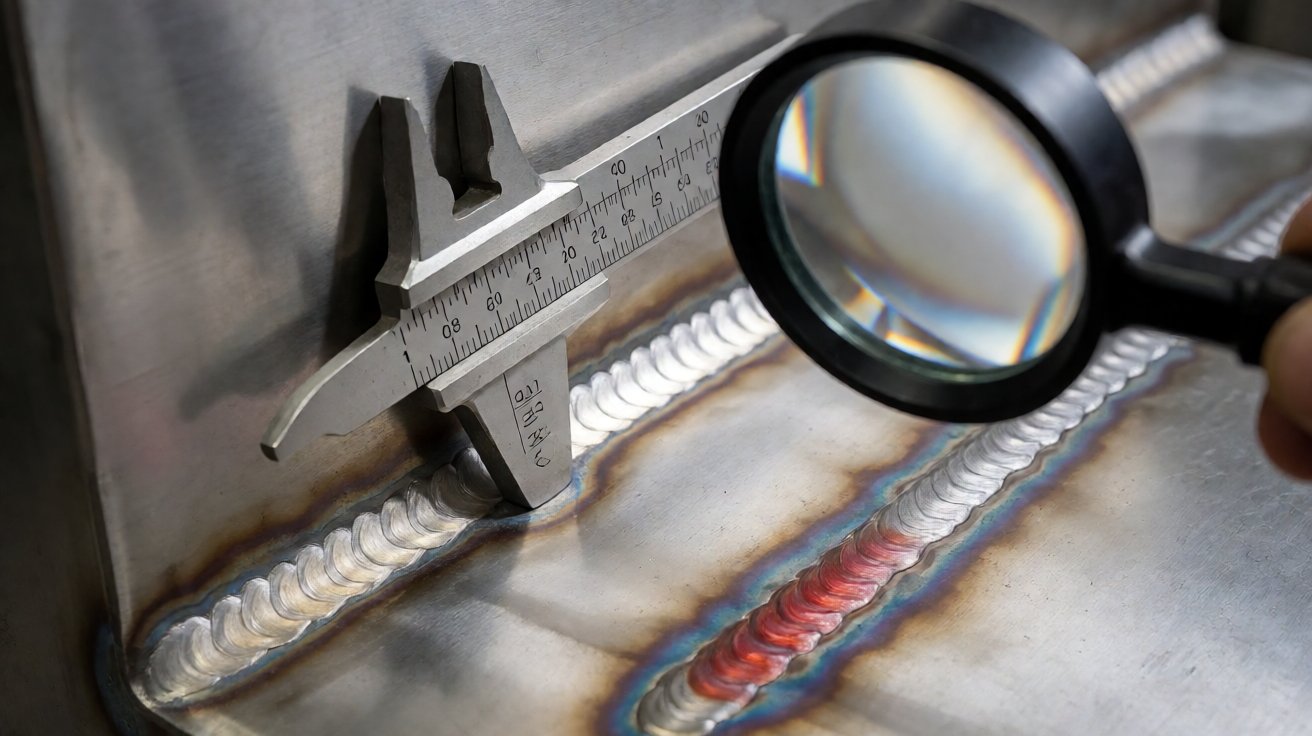
Figure 8: Weld inspection: fillet gauge on the bead, dye penetrant on the adjacent seam.
Three Sheet Metal Welding Programmes
An IP66 Outdoor Cabinet for a European Integrator
An enclosure integrator needed an outdoor control cabinet that would hold IP66 through a hose test, with every seam continuous and the door frame square enough for the gasket to seal on all four sides. The cabinet was 2.0 mm cold rolled steel with a folded body and a welded corner seam.
We welded the sheet metal assembly with MIG on the corner seams, sequenced to balance shrinkage, then dressed and leak tested every unit before coating. Releases ran at 60 units, four times a year, with an MOQ of 20 and FOB prices from USD 95 to USD 140. The first batch shipped 25 days after approval, the leak test record travelled with each batch, and annual value was approximately USD 28,000.
A Stainless Wash-Down Housing for a Food Equipment Builder
A food equipment builder needed a stainless housing that could be washed down daily, with no crevice for bacteria to collect: all welds continuous, dressed flush, and passivated afterwards. The part was 1.5 mm grade 304 with a tube outlet welded into the base.
The sheet metal welding ran as TIG throughout with a purged root, dressed flush and passivated, and each unit was dye-penetrant checked along the internal seam. Releases ran at 35 units, three times a year, with an MOQ of 10 and FOB prices from USD 120 to USD 185. First batch lead time was 28 days and annual value was approximately USD 17,000.
A Welded Tube Frame for a Conveyor Integrator
A conveyor integrator needed a welded base frame in 60 x 60 x 3 mm square tube with corner mounting plates, square to within 1.5 mm across the diagonal so the conveyor would track without adjustment.
We built a weld fixture that held the frame square during welding, ran the corner joints as TIG with a balanced sequence, and checked the diagonal on every unit before coating. Releases ran at 40 frames, twice a year, with an MOQ of 15 and FOB prices from USD 55 to USD 85. The first batch shipped 22 days after approval and annual value was approximately USD 11,000.
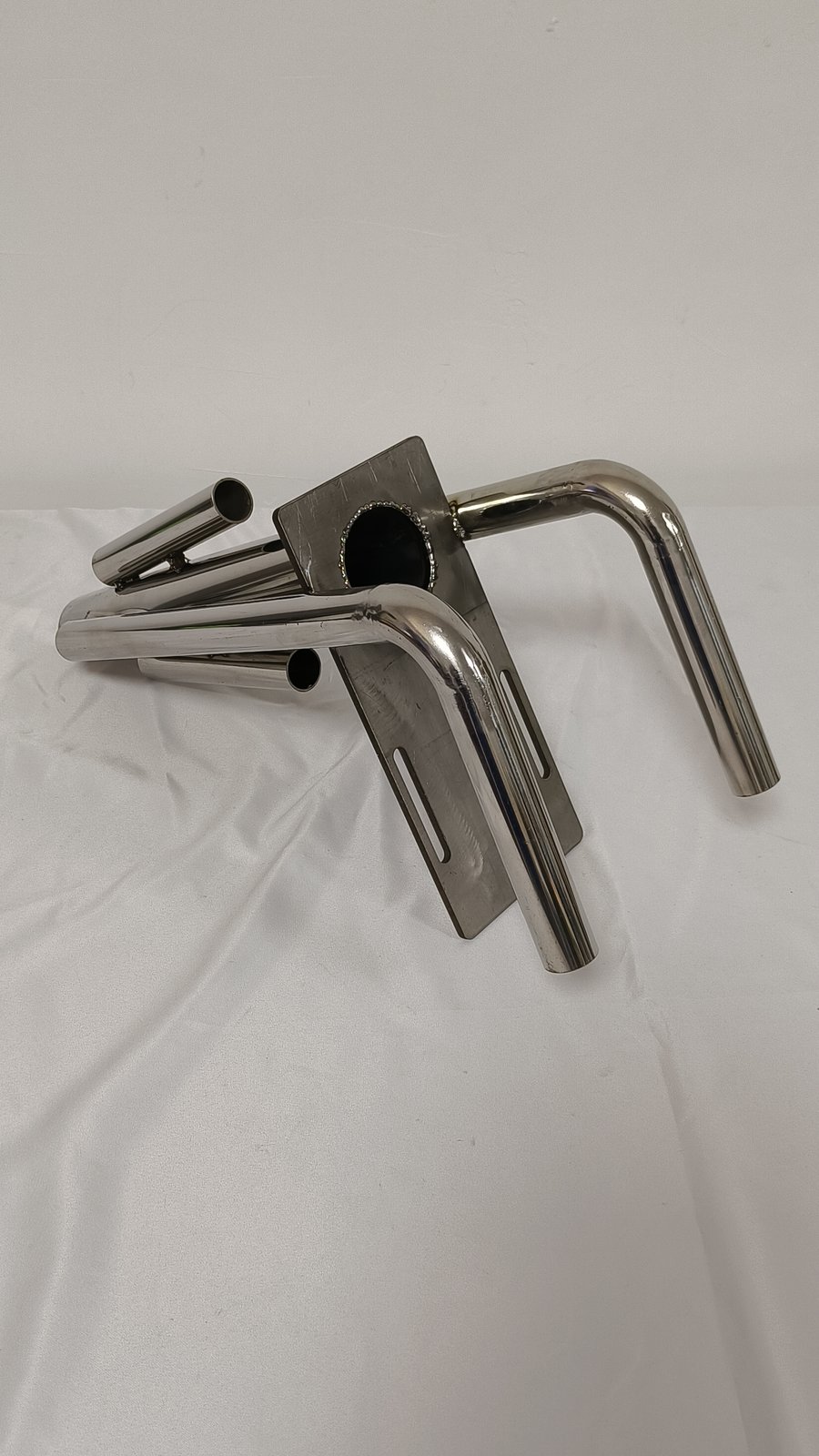
Figure 9: A polished tube assembly where every weld has been blended into the parent metal.
Choosing a Sheet Metal Welding Partner
What to Ask at Quotation
Ask five things before comparing prices for sheet metal welding. Which process goes on each seam, and why? Is the weld continuous or stitch, and is that enough for the seal specified? Will the part be welded in a fixture, or free? What is the dressing standard on visible seams, and is it included? And are welder qualifications available if a structural code applies?
The answers separate suppliers quickly. A quote that names the process per seam, states the dressing standard and includes the leak test is comparable; a quote that lists a weight and a price is not, because two fabricators can produce the same drawing with wildly different weld quality and neither price reveals which.
Where Suppliers Fail
Failures in sheet metal welding cluster in the same places. A sealed enclosure leaks at a corner because the seam was stitch welded and then coated, hiding the gap. A panel bows because it was welded free with no fixture. A stainless seam rusts within a year because the root was never purged or the weld was never passivated. A visible seam looks unacceptable because dressing was quoted as an extra.
None of these are exotic. They are the predictable result of quoting a welded assembly as though it were a folded one, and they are avoided by reviewing the joint before the first part is cut.
How XHX Metal Works
XHX Metal has manufactured sheet metal parts and welded assemblies for export customers from Dongguan since 2014, in a 2,000 sqm factory with about 30 staff and an annual capacity of 500,000 parts. The equipment list covers two 6 kW fiber laser cutting machines at +-0.01 mm, CNC punching, CNC bending, TIG and MIG welding, and powder coating through audited partners, all under ISO 9001:2015 with CE documentation and SGS records. The framework for weld quality management is set out in ISO 3834.
For a sheet metal welding programme, samples follow in 5 to 10 working days and first batches in 15 to 30 days, extending to 35 days where a weld fixture is needed. Send a drawing or a sample with the material, thickness, seal requirement and finish through the contact page; related work is described on the sheet metal capabilities page and the powder coating capability page, and enquiries also reach sales01@xinghaoxin.com.
Frequently Asked Questions
What is sheet metal welding?
It is the joining of formed sheet metal parts by melting their edges together, using TIG, MIG or resistance spot welding, with or without filler metal. It is used to build sealed enclosures, structural frames and tube assemblies that cannot be made by folding alone.
How do you stop thin sheet from distorting when welded?
By controlling heat input and sequence: lower current, faster travel, stitch or back-step welding instead of one long run, balanced welding on symmetric parts, a fixture that holds the part flat, and copper backing bars to draw heat out of the seam.
Can you weld 0.8 mm stainless without burning through?
Yes, with TIG at low amperage and good fit-up. Below 1.0 mm the gap tolerance is very tight, so the parts have to be cut and folded accurately before welding, and a fixture is usually needed to hold the seam closed.
Do you leak test welded enclosures?
Yes, where a seal is specified. Enclosures that must reach IP65 or above are leak tested before coating, usually by pressure decay or water immersion, and the test record is supplied with the batch.
What documents come with a welded order?
The approved drawing, material certificates with grade and heat number, filler and gas identification, welder qualification records where a code applies, the inspection record, and the leak test record if sealing was specified.
How long does sheet metal welding take?
Samples follow in 5 to 10 working days after drawing approval, longer where a weld fixture has to be built. First production batches ship in 15 to 30 days, extending to 35 days for a large welded assembly with dressing and coating.