Last updated: October 21, 2026 | By XHX Metal Engineering Team
Kiosk enclosure fabrication is the design and manufacture of the metal housing that holds a self-service terminal: the screen, the card reader, the receipt printer, the cash or coin unit, the power supply and the cabling between them. At XHX Metal, kiosk enclosure fabrication runs from laser cut blanks and folded panels through welding, powder coating and assembly in a 2,000 sqm factory in Dongguan, China, with two 6 kW fiber lasers holding +-0.01 mm accuracy.
This article is written for the buyers and engineers who specify that housing: what kiosk enclosure fabrication covers, which terminals it serves, how material and thickness are chosen, what goes wrong on a large folded cabinet, how long a programme takes, what documents arrive, and three order examples with volumes and price bands.
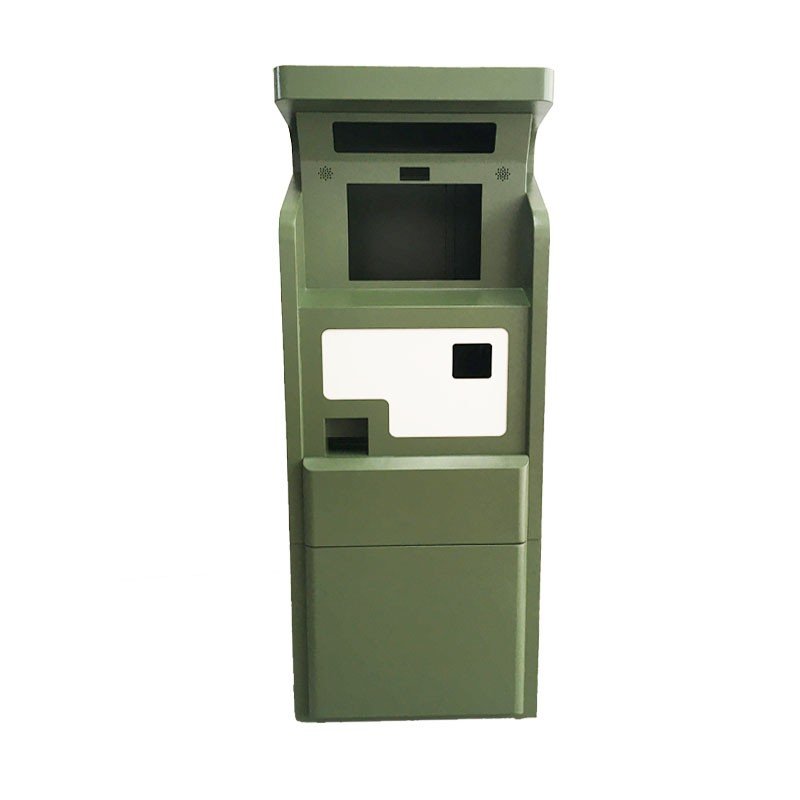
Figure 1: A finished kiosk enclosure: floor-standing body, hooded screen bay, card slot and lower door.
Kiosk Enclosure Fabrication: What We Build
What a Kiosk Enclosure Actually Is
A kiosk enclosure fabrication project starts from a fabricated sheet metal cabinet built around one specific terminal configuration, not a generic box with holes in it. Its height, screen angle, slot positions and internal shelves all follow the hardware the customer has already chosen. That distinction matters commercially: a kiosk enclosure is bought on fit, not on dimensions. If the screen bezel sits 2 mm too low or the card slot lands behind the reader faceplate, the terminal does not assemble, and no paintwork recovers the order.
The market behind this work is large. Grand View Research on the self-service kiosk market tracks it in the tens of billions of dollars, driven by unattended payment, ticketing and check-in. Every one of those terminals needs a housing, and most are built by fabricators rather than by the brand.
The Parts We Fabricate
A typical kiosk enclosure fabrication order contains eight to twenty parts: the main body, the front fascia, the screen bezel, the hood, the lower access door, the plinth, internal shelves, the PC mounting plate, the printer cradle, the cash-box bracket, blanking plates and the cable entry panel. Most are folded and welded assemblies rather than pressings. The body is formed from one or two large blanks, and the internal structure is a separate welded frame the skin attaches to. Keeping them apart is what lets the visible faces stay flat.
We also produce the small hardware a terminal needs: hinge brackets, lock strike plates, earth studs, DIN rail supports and vent louvres, described on our sheet metal capabilities page. Supplying them with the body means the assembly arrives complete.
What Stays With the Customer
The electronics never belong to the fabricator. Screens, readers, printers, controllers and the wiring between them are the customer’s scope, and the enclosure is the envelope built around them. Being explicit about that line at quotation prevents the most common dispute in this category: who owns the interface dimensions. What we own is everything that touches the part — the sheet, bend radii, weld dressing, coating, gasket grooves and thread inserts.
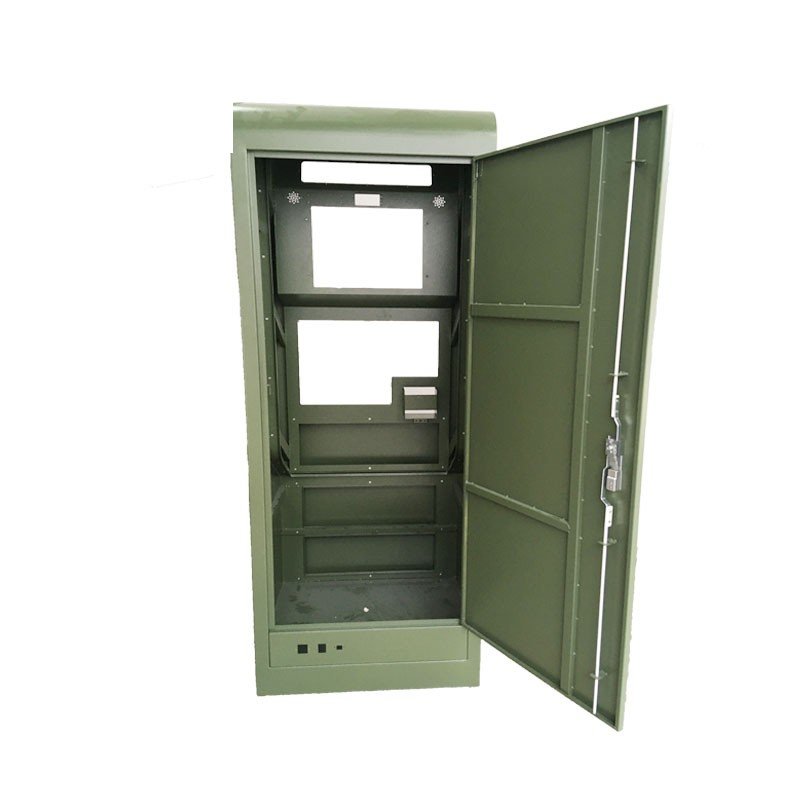
Figure 2: Inside a kiosk enclosure: internal shelf structure, mounting panels and door stiffening.
Assembly of customer-supplied hardware can be added when the customer prefers a populated unit, quoted separately from the metalwork. Most first orders are metalwork only; assembly is added once the hardware list stops changing.
Where Self-Service Kiosk Enclosures Are Used
Payment and Ticketing Terminals
The largest group for kiosk enclosure fabrication is unattended payment: parking ticket machines, transport ticket vendors, utility payment terminals, top-up stations and bank self-service units. These share one architecture — a hooded screen at standing eye height, a card slot on the approach side, a receipt slot below it, and a locked lower compartment for the cash or coin unit.
Payment terminals carry compliance requirements that reach into the mechanical design. Card data handling follows the PCI Security Standards Council, and contactless and chip interfaces follow EMVCo specifications. Neither body certifies the enclosure, but both shape where readers can sit and how the metal around them shields the signal.
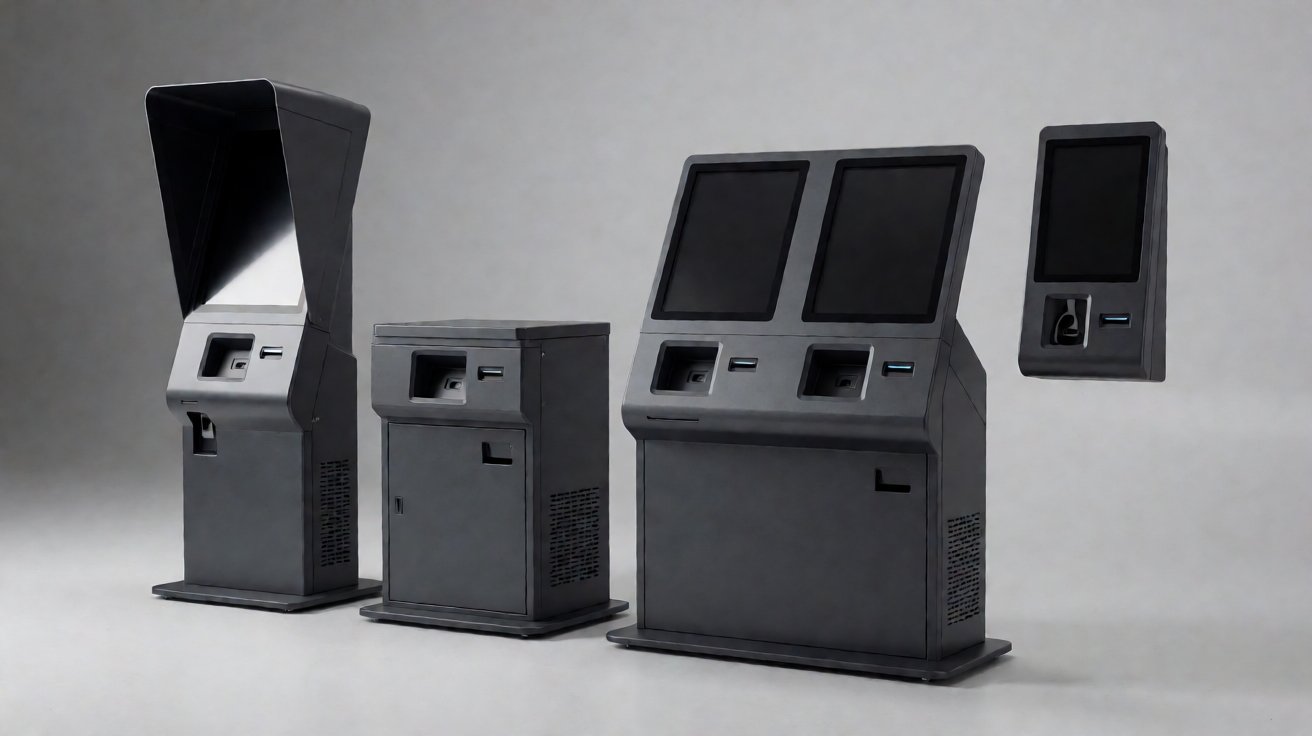
Figure 3: Kiosk enclosure fabrication output: floor-standing, counter-top, dual-screen and wall-mounted variants.
Accessibility is the third constraint. In the United States the US Access Board ADA Standards set reach ranges and operable-part heights that fix the screen centre and the card slot height. A kiosk enclosure designed without those numbers is redesigned after the first site survey, which is a schedule problem rather than a fabrication one.
Self-Service Retail and Check-In
Retail self-checkout, hotel check-in, airport bag-drop, hospital registration and queue-management terminals form the second group, and kiosk enclosure fabrication for them differs from payment work. They run in attended indoor environments, so the ingress requirement is lighter and the budget moves to appearance: tighter panel gaps, a flatter fascia, a consistent colour across a fleet, and a bezel that disappears into the front face.
Industrial and Outdoor Variants
The third group works harder. Outdoor payment kiosks, electric vehicle charging interfaces, warehouse self-service stations and yard terminals face rain, dust, temperature swing and vandalism, so the enclosure changes character: heavier gauge, fully welded seams, a sloped or hooded top so water cannot pool, gasketed doors, and a coating build thick enough to survive UV and road salt.
Ingress protection is specified rather than assumed. The IEC 60529 ingress protection code defines the IP rating buyers quote, and the practical target for an outdoor terminal is usually IP54 or IP55 with a drainage path at the lowest point. Vandal resistance is a separate conversation about lock grade, hinge concealment and panel stiffness.
Materials for a Custom Kiosk Enclosure
Steel, Stainless or Aluminium
Cold rolled steel is the default sheet for kiosk enclosure fabrication: it folds cleanly, welds easily, takes powder coat well and costs the least. At 1.5 mm to 2.0 mm it gives a stiff panel that resists the denting a public terminal receives. Its weakness is corrosion at cut edges and welds, so the coating must be complete rather than decorative.
Stainless is chosen where the terminal sits outdoors, near the coast, or in a wash-down environment. Grade 304 covers most installations and 316 is specified for chloride exposure, as set out on the stainless steel material page. Stainless costs more, scratches visibly and needs different weld dressing, so it is a decision rather than a default. Grades are catalogued by SSINA and alloy compositions by ASM International.
Aluminium suits terminals where weight matters: wall-mounted units, retrofits and shipping-cost-sensitive fleets. It cannot be welded to steel standards in thin gauges, so an aluminium kiosk enclosure is usually a folded and riveted assembly with extruded corners rather than a welded shell.
Thickness and Stiffening
Thickness is set by the largest unsupported panel, not by habit. A 2.0 mm cold rolled steel fascia spanning 600 mm behaves well; the same gauge spanning 1,200 mm will oil-can under a hand press. The answer is either a heavier gauge or, more economically, a folded return flange, a swaged rib or a bonded stiffener behind the face. Thickness and flatness tolerances for cold rolled flat products are defined in EN 10131.
Finish and Colour
Powder coating is the standard finish for kiosk enclosure fabrication, and the choice of chemistry matters: polyester for indoor terminals, and a super-durable or fluoropolymer grade for outdoor units that must hold colour under UV. Typical build is 60 to 90 microns over a phosphate or conversion pretreatment, as described on the powder coating capability page; durability classes are described by PCI, the Powder Coating Institute. Colour is usually matched to a RAL or a customer master sample, and the hard part is repeatability across releases rather than the first batch.
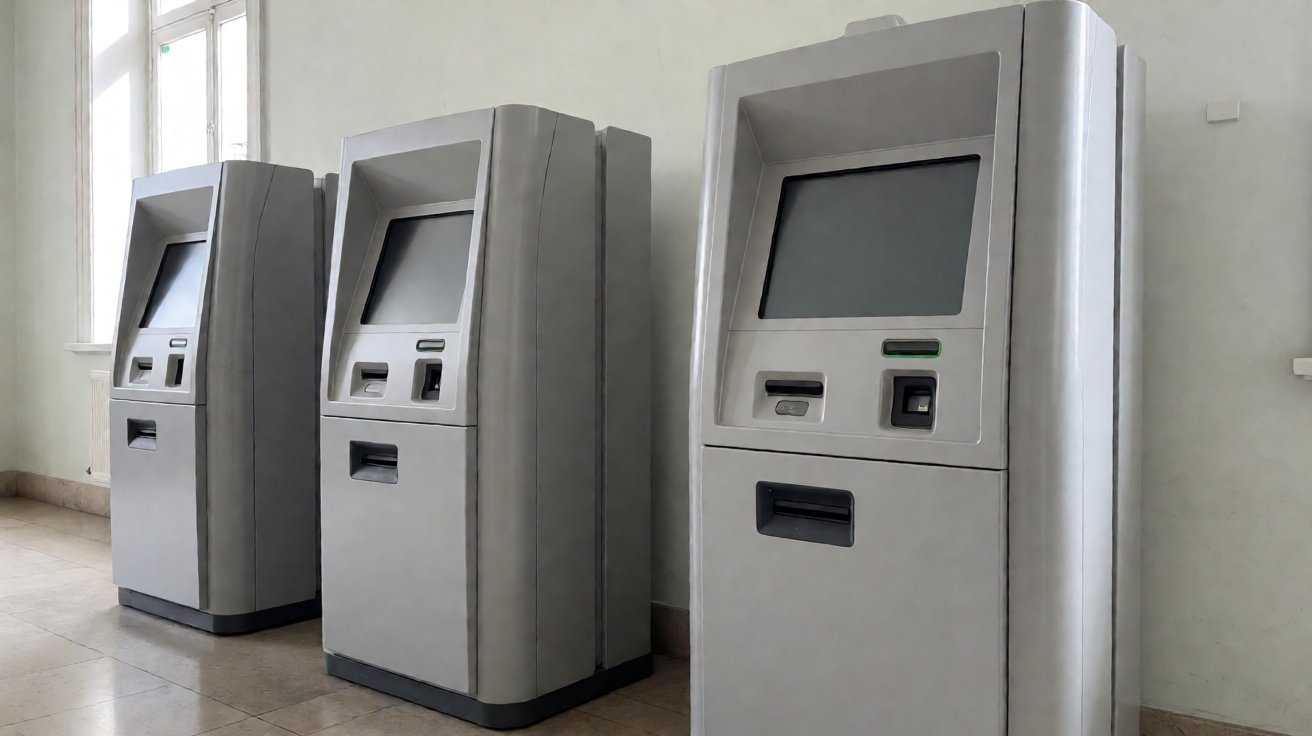
Figure 4: Self-service kiosk enclosures installed in a public service hall, screens blank before commissioning.
Production Challenges in Kiosk Enclosure Fabrication
Large Panel Flatness
What are the main quality risks in kiosk enclosure fabrication? The first is flatness. Laser cutting puts heat into a big blank, folding introduces springback, and welding pulls the sheet as it cools; any of the three leaves a face that reflects light in waves. We control it in three places: blanks are cut with stiffening features included, welding is sequenced and fixtures hold the panel until it cools, and the face is checked against a straight edge before coating, because a wave in bare steel becomes a highlight once powder flows out.
Screen and Slot Cutouts
The second risk is the opening set. A screen window, card slot and keypad cutout are cut on different faces, and their positions chain together: the bracket mounts to the frame, the frame locates the fascia, the fascia carries the window. Tolerances fine on each part still stack into a bezel that misses its opening, so openings are dimensioned from a single datum carried through the assembly.
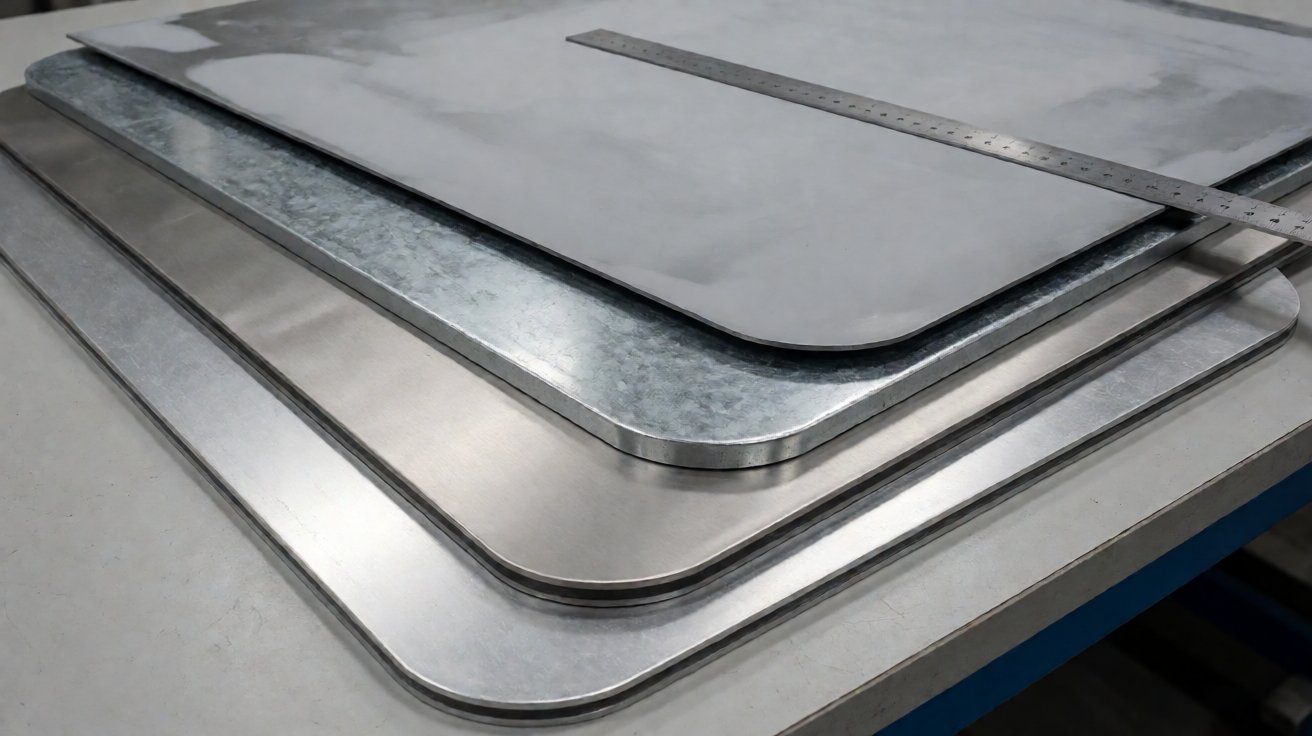
Figure 5: Sheet metal blanks for kiosk enclosure fabrication: cold rolled steel, galvanised, stainless and aluminium.
Curved and Multi-Plane Panels
The third risk is geometry that leaves the flat pattern. Many terminal designs call for a large-radius curve turning the front face into the side, or a hood folding over the screen. These need radius bending with the right tooling and a bend allowance verified on a sample. Coating adds a second problem: powder flows differently on a radius, so film build can drop at the outside of the bend.
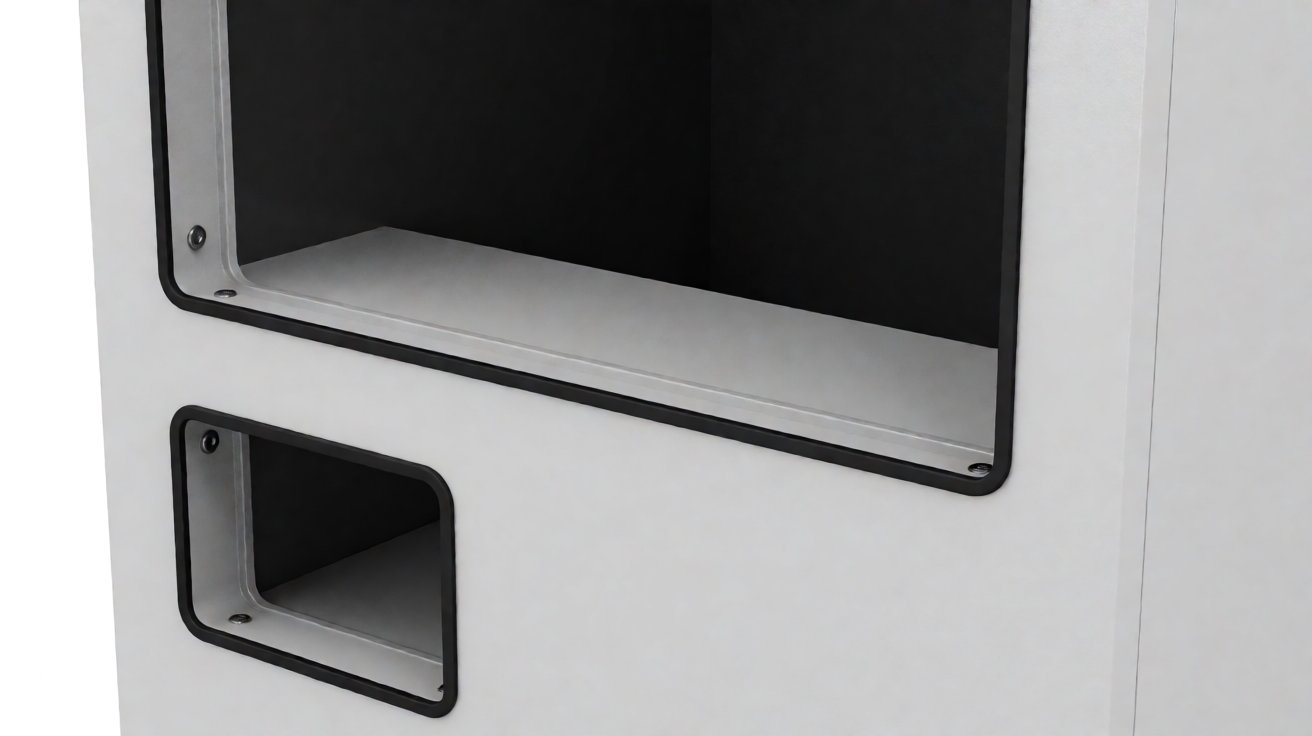
Figure 6: Display opening with a folded return flange and gasket, the detail that decides screen fit.
Security, Ventilation and Cable Entry
The fourth risk is the detail that decides whether the terminal survives its site. Locks need a reinforced strike rather than a hole in a single skin; louvres must shed water instead of funnelling it; cable entry needs a gland plate so a bundle can be sealed without cutting the body. Electronics in a sealed cabinet also need a thermal path, so filtered fans or a heat exchanger belong in the panel layout. Thermal load is covered in IEC 60890 and the NEMA enclosure types.
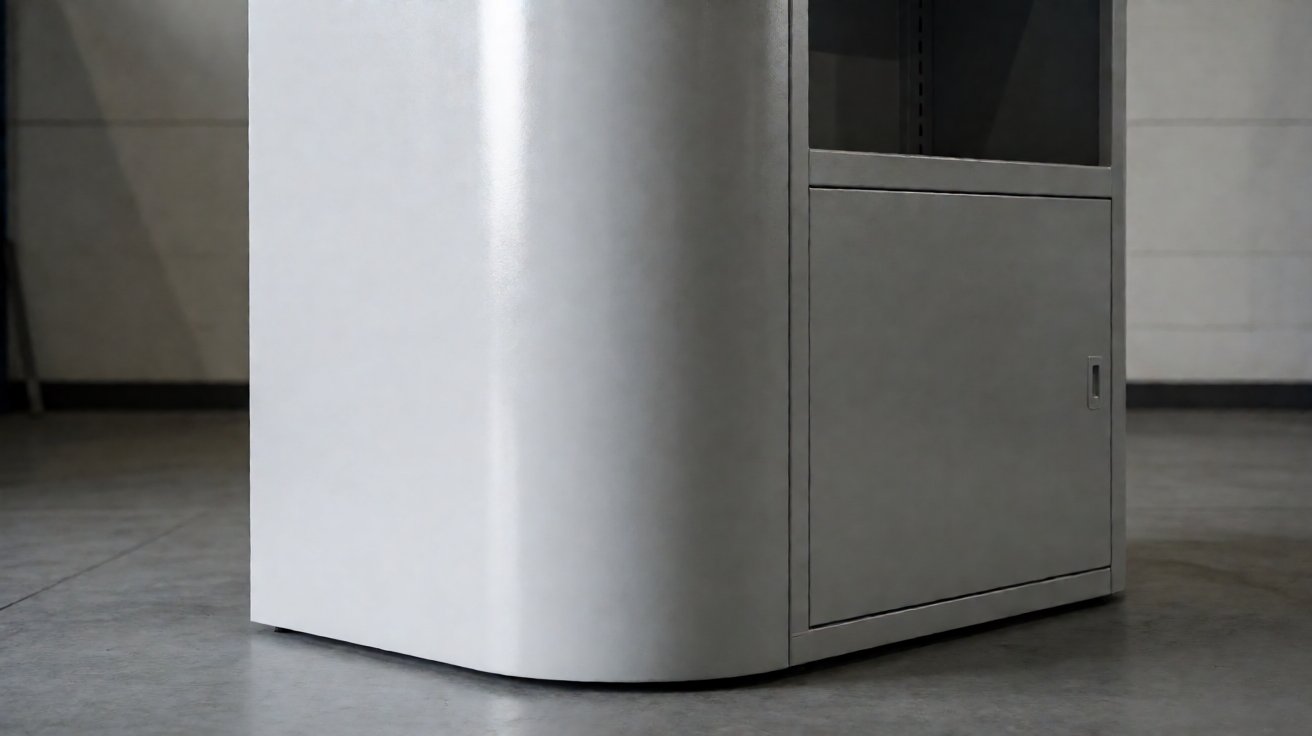
Figure 7: Large-radius bend turning the front face into the side face of a kiosk enclosure.
Lead Time and the Order Process
From Drawing to Sample
Kiosk enclosure fabrication starts with a drawing review, not with a press. For every order we ask for a STEP model plus 2D drawings with tolerances, the hardware the enclosure must accept, the target finish, and the annual volume with the release pattern. The review returns a list of interface questions — screen model, reader faceplate, printer model, lock type, cable entry direction — because those answers change the flat pattern.
Samples follow in 5 to 10 working days after drawing approval for a folded assembly, and longer where a weld fixture or a bending program has to be built first. The first sample is checked against the customer’s hardware, not just against the drawing, and that check is what protects the batch.
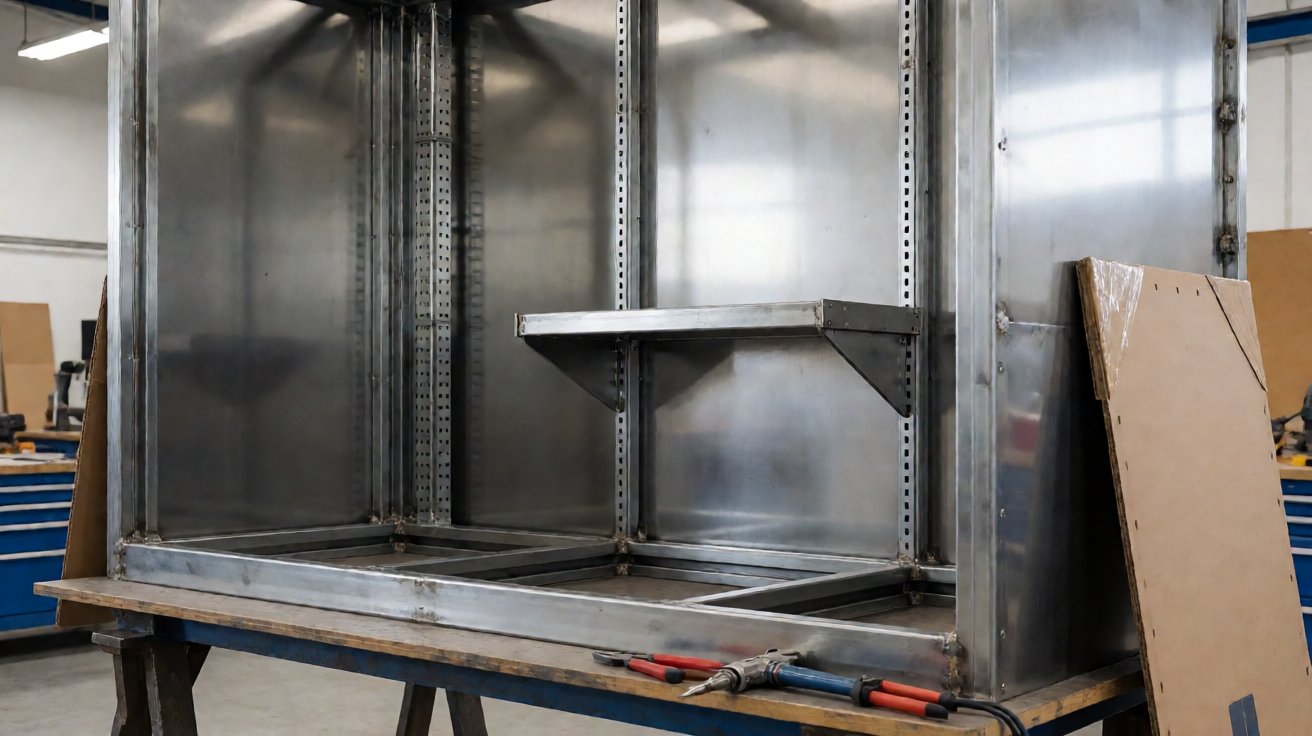
Figure 8: Kiosk enclosure fabrication in assembly: welded base frame, clecoed side panels and cable tray.
Documents You Should Receive
Every kiosk enclosure fabrication order should arrive with a documented trail: the approved drawing at its current revision, material certificates naming the grade and the heat or lot, a first article inspection report covering the interface features, coating thickness records, and batch inspection records. For export programmes the package also includes a packing list with dimensions and weights per crate and photographs of the packed units. XHX Metal works to ISO 9001:2015 and supplies CE documentation on request; the EU directives behind it are published on EUR-Lex.
Batch Sizes and Price Bands
Kiosk enclosure fabrication is a low-volume, high-mix business, which sets the price band. A floor-standing terminal is a large part, so realistic releases run from 10 to 40 units per batch, two to four batches a year, with a minimum order around 5 to 10 units once the fixture exists. FOB prices for a coated, assembled body typically fall between USD 100 and USD 400 depending on size, gauge, internal structure and finish. Below that band the setup — program, fixture, coating mask, packing design — dominates the piece price.
Three Kiosk Enclosure Programmes
A Ticketing Terminal for a European Integrator
A transport systems integrator needed a floor-standing ticket vendor for a metro rollout: a hooded screen bay, a card slot, a receipt slot and a locked lower compartment for the printer and cash unit. The visible faces had to be flat enough to hold a reflection, and the fleet colour had to repeat across releases.
We produced the kiosk enclosure fabrication as a welded body with a separate folded fascia, a return flange around the screen window and a gasketed lower door. Releases ran at 25 units, three times a year, MOQ 8, FOB USD 210 to 290. The first batch shipped 30 days after approval; annual value approximately USD 19,000.
A Retail Self-Checkout for a US Brand
A retail fixture brand trialling self-checkout in twenty stores needed a counter-top enclosure that would look correct in a finished interior: tight panel gaps, a fascia hiding every fastener, a bezel flush with the front face, and a colour matched to the store fit-out. The kiosk enclosure fabrication used 1.5 mm cold rolled steel with folded returns for stiffness rather than ribs, blind fasteners on visible faces and a two-coat powder finish matched to the master sample. The pilot ran at 12 units, MOQ 5, FOB USD 130 to 175; the brand then moved to 40-unit releases twice a year and annual value reached approximately USD 26,000.
An Outdoor Payment Kiosk for the Middle East
A parking operator in a coastal city needed an outdoor payment kiosk that would survive salt air, dust and 50 C surface temperatures: a sloped hood, welded seams, a gasketed door, a sun shield and a coating that would not chalk within two years.
We built the kiosk enclosure fabrication in 2.0 mm steel with continuous welds dressed and sealed, a drainage path at the lowest point, a gland plate and a super-durable polyester powder at 80 to 100 microns. Releases ran at 15 units, twice a year, MOQ 6, FOB USD 280 to 390. The first batch shipped 33 days after approval and passed the customer’s site inspection; annual value approximately USD 10,000.
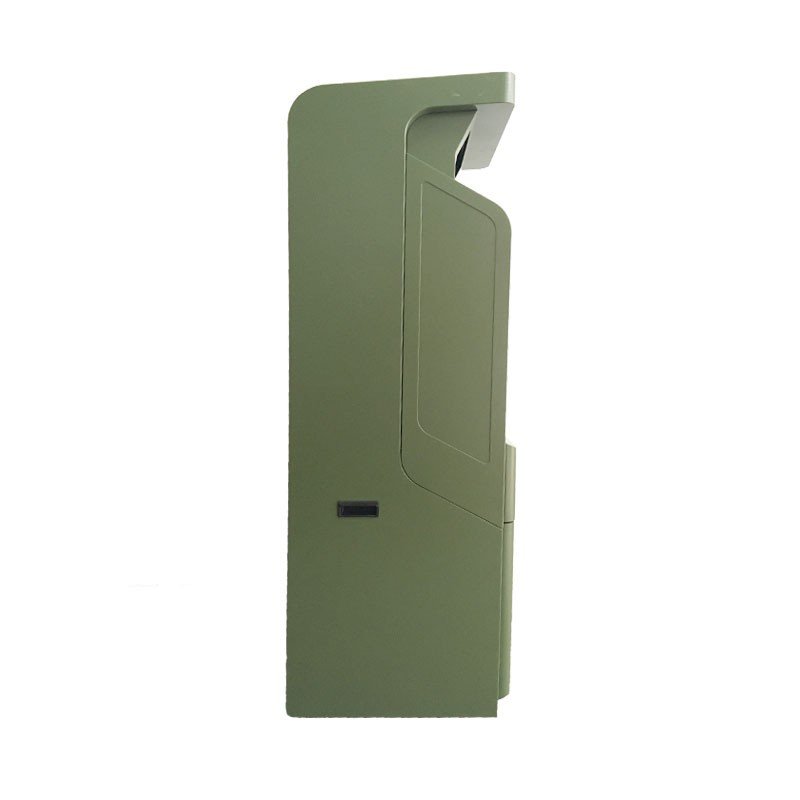
Figure 9: Side profile of a kiosk enclosure showing the forward hood and the folded panel joints.
Choosing a Kiosk Enclosure Fabrication Partner
What to Ask at Quotation
Ask five things before comparing prices for kiosk enclosure fabrication. Which gauge and grade is quoted, and at what flatness? Are the screen and slot openings cut in one setup from a single datum? Is the finish a standard polyester or a super-durable grade, and at what film build? Is the internal frame included, or is the quote for the skin only? And is the tooling charged once or per release? The answers separate suppliers quickly: a quote naming the gauge, the flatness tolerance, the coating system and the frame is comparable; a quote listing a size and a price is not.
Where Suppliers Fail
Failures in kiosk enclosure fabrication cluster in the same places. Panels arrive waved because flatness was never specified. Bezels do not cover their openings because the opening set was cut in sequence from different datums. Coating build is thin on radii and edges, so the first winter brings rust along a fold. Gaskets leak because the door has no positive seat. And documentation arrives incomplete, which stalls the buyer’s own incoming inspection. None of these are exotic; they are the predictable result of quoting a kiosk enclosure as though it were a generic electrical box.
How XHX Metal Works
XHX Metal has manufactured sheet metal parts and enclosures for export customers from Dongguan since 2014, in a 2,000 sqm factory with about 30 staff and an annual capacity of 500,000 parts. The equipment list covers two 6 kW fiber laser cutting machines at +-0.01 mm, CNC punching, CNC bending, TIG and MIG welding, and powder coating through audited partners, all under ISO 9001:2015 with CE documentation and SGS records. For a kiosk enclosure fabrication programme, samples follow in 5 to 10 working days and first batches in 15 to 30 days, extending to 35 days for a large welded body. Send a drawing or a sample with the hardware list and volume through the contact page; related assemblies are listed on the products page and enquiries also reach sales01@xinghaoxin.com.
Frequently Asked Questions
What is kiosk enclosure fabrication?
It is the design and manufacture of the metal housing around a self-service terminal, covering the body, fascia, screen bezel, doors, internal frame and hardware, produced by laser cutting, CNC punching, bending, welding, powder coating and assembly to the customer’s hardware configuration.
Can you work from a sample instead of a drawing?
Yes. We measure the sample, rebuild the geometry as a 3D model, and return a drawing for approval before cutting. That route is common where a terminal was designed around a legacy enclosure and the original drawings no longer exist.
What is the minimum order for a custom kiosk enclosure?
Around 5 to 10 units for a floor-standing terminal once the fixture exists, and 20 to 50 units for a counter-top unit. Below that the setup dominates the piece price, so a pilot order is usually quoted with the setup shown separately.
Do you supply the screen, reader and printer?
No. The electronics are the customer’s scope; we fabricate the enclosure and can assemble customer-supplied hardware into it when the order calls for a populated unit. That assembly scope is quoted separately from the metalwork.
How long does kiosk enclosure fabrication take?
Samples follow in 5 to 10 working days after drawing approval for a folded assembly, longer where a weld fixture is needed. First production batches ship in 15 to 30 days, extending to 35 days for a large welded body with a multi-stage coating.