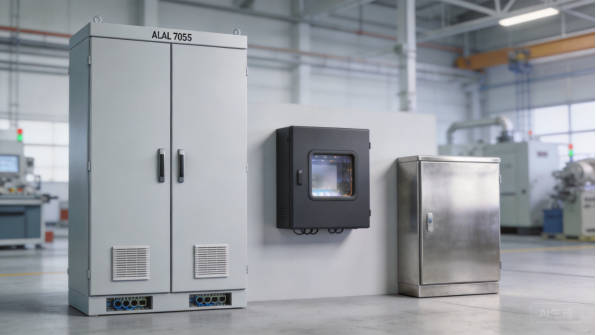
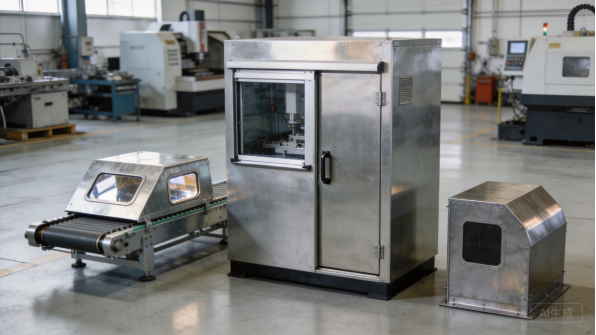
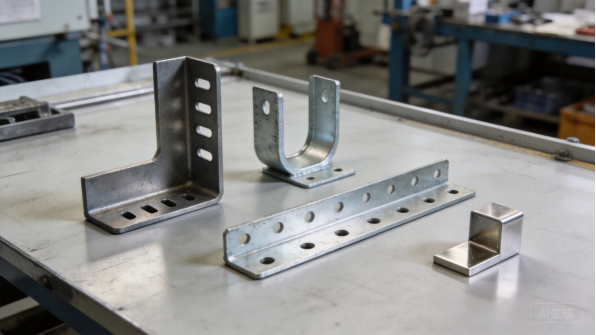
A practical engineering guide by XHX Metal for medical device OEMs, R&D teams, and procurement professionals
1. Product Overview: What Medical Device Enclosures Are
1.1. What an Enclosure Actually Does
A medical device enclosure is the protective housing that surrounds the electronics, power supplies, sensors, displays, and connectors of a medical product. It is not merely a box: it is a load-bearing, safety-critical component that carries weight, manages heat, shields sensitive circuits from electromagnetic interference, and separates the user from live electrical parts. In patient monitors, infusion pumps, diagnostic carts, laboratory analyzers, and imaging consoles, the enclosure defines how the device feels to the clinician, how safely it performs, and how easily it can be cleaned, serviced, and upgraded. Sheet metal fabrication is the most common route for these housings because it combines dimensional precision, mechanical strength, and controlled surface quality in a repeatable production process.
From an engineering perspective, the enclosure must satisfy several jobs at the same time. It protects the electronics from dust, liquid spills, and accidental impact; it supports internal subassemblies with exact mounting features; it provides grounding and shielding continuity; and it creates the interface that users touch, carry, and mount. A poorly designed housing can cause EMC failures, overheating, water ingress, or mechanical noise, all of which are difficult and expensive to fix after the device is in the field. That is why medical OEMs treat the enclosure as part of the product architecture rather than as a late-stage cosmetic step.
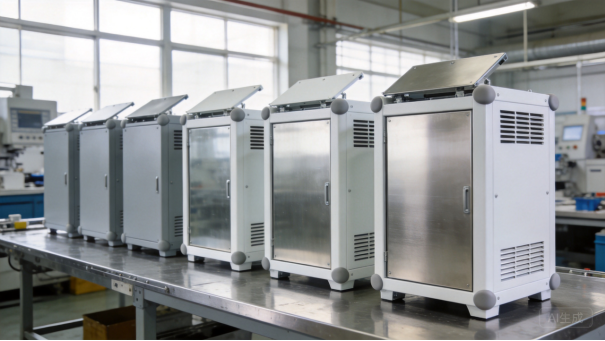
Custom sheet metal medical device enclosures on a factory inspection table.
1.2. Housing Types Across the Medical Product Range
Medical products span an extremely wide range of shapes and sizes, so their enclosures do as well. A handheld vital signs monitor may need a compact aluminum shell weighing less than 500 grams, while a computed tomography console may require large powder coated steel panels, a load-bearing frame, cable management, and a display mount. Common sheet metal components include chassis and backplanes, front bezels, top and side covers, mounting brackets, carrying handles, equipment carts, and protection frames. Even a single product often combines several fabricated parts: a 1.2 mm aluminum front panel, a 1.5 mm steel internal chassis, thin brackets for printed circuit boards, and a ventilated cover for the power supply.
These housing types create very different manufacturing challenges. Portable devices need thin material, light weight, and tight fits; bench-top laboratory instruments need rigid frames and accurate mounting features; imaging and monitoring equipment need large flat surfaces with controlled distortion. Some products are assembled from dozens of formed parts, while others use a deep-drawn or welded chassis. For a medical OEM, the enclosure type determines the tooling, process route, inspection plan, and lead time, so the product definition has to be clear before fabrication begins.
1.3. Standards That Shape the Design
Medical device enclosures are governed by a dense network of regulatory and technical requirements. The most important international benchmark is IEC 60601-1, which covers the basic safety and essential performance of medical electrical equipment, including creepage and clearance distances, grounding, protection against ingress, and the mechanical strength of enclosures. Risk management follows ISO 14971, and quality systems for manufacturers follow ISO 13485. Devices sold in the United States must also be manufactured under quality system regulations enforced by the FDA, which expect controlled processes, validated methods, and traceable records for the components that affect safety and performance.
For a sheet metal supplier, these standards translate into practical obligations. Material certificates must prove the grade and thickness; dimensional inspection reports must show that mounting features meet the drawing; surface treatment must withstand the cleaning agents specified by the customer; and the production process must be controlled and documented. The enclosure is often part of the device history file, so a fabricator who cannot supply records is not a viable partner. XHX Metal maintains ISO 9001:2015 quality management and works with medical OEMs to provide the inspection and documentation package their regulatory team needs.
1.4. Why Sheet Metal Is the Default for Complex Devices
Sheet metal remains the default material for medical device enclosures because it solves problems that plastics cannot. Metal provides natural electromagnetic shielding, which is critical when motors, pumps, and wireless transmitters operate inside the same housing. It conducts heat away from power supplies and processors, allowing the enclosure to act as a passive heat sink. It has high strength-to-weight performance, so thin aluminum panels can protect electronics without making a portable device heavy. It is also cleanable: a properly finished metal surface resists disinfectants, does not absorb liquids, and can be wiped down in a clinical environment.
Equally important, sheet metal is scalable. Laser cutting, CNC bending, and welding can produce a single prototype and then ramp to thousands of parts with the same design and process. Tooling is relatively simple compared with injection molding, so design iterations are faster and less expensive. That combination of shielding, thermal performance, mechanical strength, cleanability, and manufacturing flexibility explains why most serious medical devices still use a metal chassis or enclosure even when plastic covers are added for aesthetics.
1.5. XHX’s Role in the Medical Supply Chain
XHX Metal (Guangdong Xinghaoxin Technology Co., Ltd.) is a privately owned company specializing in producing and processing sheet metal enclosures, chassis, and frames for medical, telecommunication, industrial, and data center equipment. The factory in Dongguan covers about 2,000 square meters, employs around 30 people, and has an annual capacity of roughly 500,000 parts. Production is built around two 6 kW fiber laser cutting machines, CNC press brakes, TIG, MIG, and laser welding stations, an automatic deburring line, and CNC machining centers, all supported by ISO 9001:2015 quality management.
For medical OEMs, the company works as an extension of the engineering team. XHX reviews drawings for manufacturability, recommends material and finish routes, builds prototypes and first articles, manages serial production, and supplies the dimensional reports and material certificates needed for regulatory files. The sections below explain how medical enclosures are used, what materials to choose, where production is difficult, how long delivery takes, and what real projects look like, so buyers know what to prepare before they request a quotation.
2. Usage: Where Medical Device Enclosures Perform
2.1. Hospitals and Clinical Environments
Hospital equipment lives a harder life than most people realize. A bedside monitor is moved between rooms, wiped with disinfectant several times a day, bumped into beds and walls, and expected to keep working while plugged into a crowded power outlet. The enclosure therefore needs surfaces that tolerate alcohol, bleach, and quaternary ammonium cleaners without fading or cracking; seals that keep liquids away from electronics; and handles, casters, and mounting brackets that survive years of use. Any sharp edge or poorly sealed joint becomes a cleaning and infection-control problem, so edge finishing and sealing are part of the product specification, not an afterthought.
Mechanical stress is also part of daily use. Carts are pushed over thresholds, devices are lifted onto shelves, and wall-mounted monitors are installed and removed by different staff. The enclosure must resist impact without transferring force to the electronics, and door hinges, latches, and fasteners must stay aligned over thousands of cycles. Clinical teams rarely report these requirements in a request for quotation, but an experienced fabricator builds them into the design by choosing appropriate material thickness, adding reinforcing bends, and specifying hardware that can be replaced in the field.
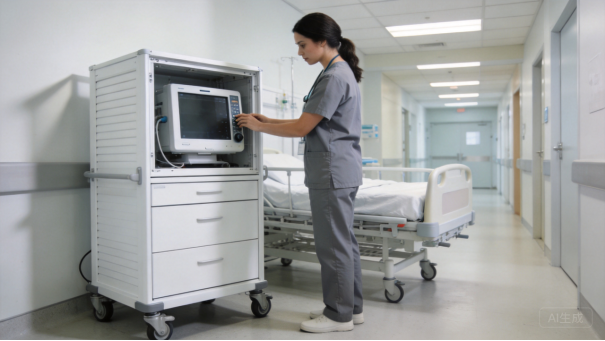
A medical device in a white sheet metal enclosure used on a hospital diagnostic cart.
2.2. Diagnostic and Laboratory Equipment
Laboratory analyzers and diagnostic systems run almost continuously in environments that combine heat, vibration, and chemical exposure. Centrifuges vibrate, reagent pumps produce humidity, and processors generate heat, so the enclosure must hold internal components in accurate positions while managing airflow and containing spills. Stainless steel surfaces are common in wet areas because they resist corrosion and can be wiped clean, while powder coated steel frames provide stiffness at a lower cost. Modular construction matters in the laboratory, where technicians need to reach pumps, valves, and circuit boards without dismantling the whole instrument.
Thermal management is a major usage requirement for this category. Analyzer enclosures often include vented panels, filter housings, fan mounts, and air ducts, and the sheet metal design must ensure that airflow reaches the right components without creating hot spots. The enclosure also plays a role in acoustic performance, since laboratory staff spend entire shifts next to running instruments. Adding stiffening ribs, isolating fan mounts, and sealing panel gaps are all manufacturing tasks that turn an ordinary housing into a product that performs quietly in a real laboratory.
2.3. Home Care and Portable Devices
The fastest-growing part of the medical device market is home care, where devices must be light enough for a patient to carry and robust enough to survive a drop onto a kitchen floor. Infusion pumps, oxygen concentrators, sleep therapy machines, and remote monitoring devices all use compact sheet metal enclosures, usually made from 1.0 to 1.5 mm aluminum or steel with powder coated or anodized finishes. Weight is controlled through material selection and flat-pattern nesting, while strength comes from bent flanges, ribs, and formed profiles rather than from thick plate.
Usability is different in a home setting. Patients may have limited strength or dexterity, so battery covers, doors, and latches must be easy to operate, and the enclosure should have no sharp edges. Cleaning instructions are simpler than in a hospital, but the device may still be wiped with household cleaners, so the finish must be durable. Serviceability also matters because home devices are returned for repair; a fabricator who keeps drawings, spare parts, and assembly documentation can help the OEM rebuild devices quickly and cost effectively.
2.4. OEM Product Lifecycle and Aftermarket
Medical device OEMs buy enclosures at several different stages, and the requirements change at each stage. During research and development, engineers need a handful of prototypes quickly, often with features still changing. During pilot production, they need enough parts for clinical evaluation and regulatory testing, with documentation to prove how the parts were made. During serial production, they need consistent quality at a predictable cost, and during the aftermarket phase they need spare panels, doors, and brackets that still fit devices produced years earlier.
A capable sheet metal partner supports all of these stages without losing control of the design. That means keeping engineering drawings and revision histories, maintaining jigs and tooling, controlling materials so a replacement batch matches the original color and thickness, and documenting changes through an engineering change process. For medical products, configuration control is not optional: a panel replaced with a slightly different thickness or finish can affect safety, performance, or the regulatory file. The fabricator and the OEM must agree on how revisions, deviations, and material substitutions are approved.
2.5. Turning Use Cases into Specifications
The practical lesson is that the enclosure specification should be written from the use case before any material is ordered. The engineering team should answer a small set of questions: where will the device be used, what cleaning agents will touch it, what temperature and humidity range must it survive, what IP rating is required, how much weight must it carry, how will it be mounted, and how often will it be opened for service. Each answer changes the design, and each design change changes cost and lead time.
When XHX receives a drawing and questionnaire together, the design for manufacturability review can recommend the right material thickness, bend radius, finish system, and inspection plan in the first response. When the use case is missing, the quotation must make assumptions, and assumptions usually become change requests later. That is why the DFM review is the first and most valuable step: it turns the way the device is used into concrete manufacturing decisions that can be approved before production begins.
3. Material Selection: Choosing the Right Material
3.1. Aluminum Alloys: The Lightweight Workhorse
Aluminum is the most common material for portable and bench-top medical enclosures because it weighs roughly one-third as much as steel while still providing excellent strength, shielding, and thermal conductivity. Alloys 5052 and 6061 are the industry standards for sheet metal work. 5052 offers good corrosion resistance and formability, which makes it ideal for panels, covers, and brackets with complex bends; 6061 provides higher strength and machines well for structural frames and mounting plates. Material property data for both alloys is widely published, for example through MatWeb, and typical enclosure gauges range from 1.0 to 3.0 mm depending on the size and load of the device.
Aluminum also responds well to surface treatment. It can be anodized for a hard, scratch-resistant finish, powder coated in nearly any medical white or gray, or left with a brushed appearance for visible front panels. Its natural oxide layer provides corrosion resistance, and its thermal conductivity allows the enclosure to help cool internal electronics. The trade-off is that aluminum is more expensive per kilogram than steel and requires careful bending and welding practice to avoid cracking or distortion, which is exactly the kind of process control a specialized sheet metal factory provides.
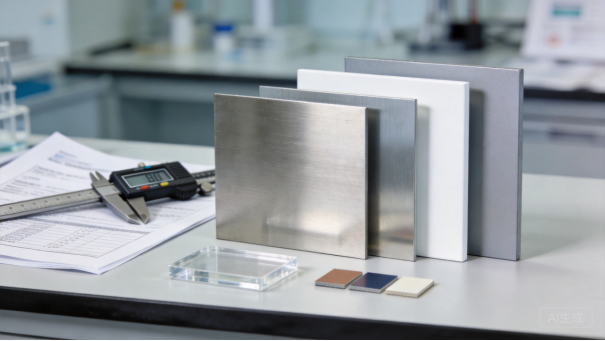
Medical enclosure material samples, finishes, and measuring tools on a workbench.
3.2. Stainless Steel: Durability and Hygiene
Stainless steel is selected when the device will be exposed to water, chemicals, or repeated disinfection. Grades 304 and 316 form a self-healing chromium oxide surface that resists corrosion without paint, which makes them suitable for surgical equipment, wet analytical instruments, and enclosures used in environments where powder coating could chip. Grade 316 adds molybdenum for even better resistance to chlorides and medical cleaning solutions. Stainless steel is heavier and more expensive than aluminum or painted steel, so it is usually used selectively: surfaces that must be sterilized, structural parts that need maximum durability, and visible panels where a professional medical appearance matters.
Surface finish is an important detail in stainless steel fabrication. A brushed No. 4 finish hides fingerprints and minor scratches, while a mirror finish is easier to clean but shows every mark. Weld areas on stainless steel must be cleaned and passivated to restore corrosion resistance, and laser-cut edges should be deburred to avoid sharp contact surfaces. Useful technical comparisons of stainless grades are available from materials engineering references such as AZoMaterials, and the final choice should always be validated against the cleaning agents and sterilization methods in the product’s instructions for use.
3.3. Powder-Coated Steel: Cost-Effective Protection
For large enclosures, internal chassis, and structural frames, powder coated steel is the most economical way to combine strength, stiffness, and a uniform appearance. Cold rolled steel such as SPCC provides a smooth surface for painting, while galvanized steel such as SECC offers corrosion protection beneath the coating. The process starts with cleaning and chemical pretreatment, typically zinc phosphate or a chrome-free conversion coating, followed by electrostatic application of the powder and oven curing. The cured film is tough, scratch resistant, and available in any RAL color, which makes it easy to match the industrial design of a medical product.
Powder coating quality depends on preparation and masking. Holes for screws and PEM fasteners must be masked or re-tapped so hardware fits after coating, grounding points must stay conductive, and parts should be hung so coating does not pool in corners. The Powder Coating Institute publishes practical guidance on pretreatment, application, and quality testing, and a good fabricator follows the same discipline: verifying film thickness, adhesion, and color consistency on every batch rather than assuming the coating will come out right.
3.4. Metal versus Plastic: When Metal Wins
Many medical products combine a metal chassis with plastic cosmetic covers, and the material decision deserves more thought than a simple preference. Metal wins whenever electromagnetic shielding is required, because a continuous conductive enclosure provides the attenuation that plastic parts cannot match. Metal also wins when heat must be conducted away from power electronics, when the enclosure must carry structural loads, and when the product is expected to survive years of cleaning and transport. For large flat panels, metal is also less prone to sagging and warping than plastic over a long service life.
Plastic remains useful for small covers, front bezels, handles, and parts that must be electrically insulating, and it can create organic shapes that are difficult to stamp from sheet metal. The manufacturing trade-off is real: injection molding requires expensive tooling and is slow to change, while sheet metal can be prototyped from the same drawing within days. For regulated medical devices, metal also simplifies material traceability and recycling. In practice, the best architecture is often a metal frame and chassis with plastic only where the design requires it.
3.5. Finishes and Surface Treatment
The finish is where material selection becomes product performance. Powder coating provides a smooth, cleanable surface in white, light gray, and custom medical colors, and textured coatings hide scratches on surfaces that take abuse. Anodizing gives aluminum a hard, abrasion-resistant surface without adding thickness. Conductive finishes, such as bare metal grounding areas, nickel plating, or conductive gaskets, maintain shielding continuity across panel joints. Silk screening adds icons, warnings, and branding, but any printed text must survive the same cleaning chemicals as the coating.
Surface quality is also a manufacturing specification. Medical housings should have deburred edges, rounded corners, and a defined surface roughness that is easy to wipe clean; visible welds should be ground and blended where the design calls for a seamless appearance. Coating thickness must be controlled so threaded holes still accept hardware, and masked areas must be checked after curing. When the finish system is chosen early and approved on a first article, the enclosure looks professional and performs reliably for the entire life of the device.
4. Production Difficulty: Precision, Distortion, and Finish Control
4.1. Tight Tolerances and Thin-Wall Control
Medical enclosures are precision products even when they look like simple boxes. Mating panels, front bezels, display openings, and connector cutouts typically require tolerances of about 0.1 mm or tighter, and the complete assembly must fit together without gaps, rattles, or binding. Thin aluminum walls between 1.0 and 1.5 mm make this difficult because the material is easy to deform during cutting, bending, welding, and handling. The design team must control the distance between holes and bends, allow for bend allowance and springback, and plan the manufacturing sequence so that every critical dimension is generated by a stable process rather than by hand adjustment.
Tolerance control starts with the flat pattern. Laser cutting positions holes relative to the sheet edge, and if a hole is out of position on the flat part, the error grows after bending. The fabricator also has to think about tolerance stacks across multiple parts: a front panel, an internal chassis, and a mounting bracket may each be within tolerance, yet the assembled device may still be out of position. That is why first article inspection measures the assembly-critical features, not just the individual parts, and why a dimensional report from the fabricator is worth more than a drawing that looks complete.
4.2. Laser Cutting and CNC Bending
Production begins with laser cutting. XHX Metal operates two 6 kW fiber laser cutting machines with positioning accuracy of about 0.01 mm, which gives clean edges, small heat-affected zones, and the ability to cut both aluminum and steel in the same production run. Parts are nested on the sheet to minimize scrap, and edge quality is controlled so deburring does not remove critical material from thin walls. For medical enclosures, laser cutting is preferred because it can produce complex contours, fine louvers, and precision holes without expensive tooling.
CNC bending then forms the flat parts into three-dimensional enclosures. The press brake operator must account for bend allowance, springback, and grain direction, and the machine must repeat the same angle across the whole batch. Sharp bends can crack aluminum or flake galvanized coating, so the bend radius is matched to the material grade and thickness. The distance between a hole and the bend line is a classic design constraint: if a mounting hole sits too close to a bend, it deforms and the part cannot be repaired. A DFM review catches these issues before production, which is why engineering feedback is part of the service rather than an extra fee.
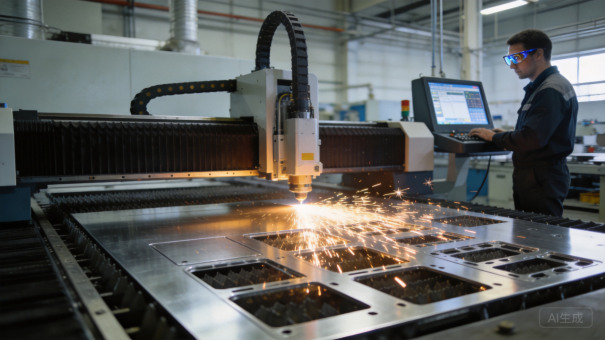
Fiber laser cutting of thin metal panels for medical device enclosures.
4.3. Welding Distortion Management
Welding is the highest-risk operation in medical enclosure manufacturing. Heat from TIG, MIG, or laser welding tries to pull thin aluminum and steel out of shape, and a frame that is 0.5 mm out of square can make doors misalign, panels bind, and mounting holes miss their targets. The solution is controlled process engineering: parts are held in dedicated jigs, tack welded before the final passes, and welded in a sequence that balances heat on both sides of the assembly. After welding, the fabricator checks diagonals and critical dimensions and straightens parts when necessary.
Cosmetic welding is a second challenge. Visible seams on medical devices are usually ground, blended, and refinished so the housing looks like a single continuous surface, and any porosity or undercut becomes a cleaning and corrosion problem. Leak-tight enclosures add the requirement of consistent full-penetration seams. Technical guidance on welding thin sheet metal and controlling distortion is available from organizations such as TWI Global, and XHX applies the same principles in daily production: fixtures, process qualification, visual inspection, and rework procedures that keep distortion under control.
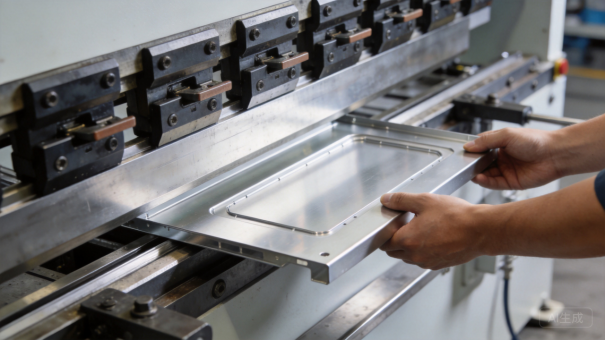
CNC press brake forming a precision aluminum medical enclosure panel.
4.4. Surface Finish and Cleanability
The finish of a medical enclosure is not decorative; it is a functional requirement. Every edge must be deburred, every corner rounded, and every surface must be smooth enough to wipe clean and free of crevices that trap biological material. Burrs on seal faces can cut gaskets, and sharp edges on doors and covers can injure patients and staff. Fabrication therefore includes mechanical deburring, edge rolling where the design allows, and visual inspection under good lighting before coating.
Coating defects are another source of difficulty. Powder coating can pool in corners, build up around threads, and leave pinholes or orange peel if the pretreatment is not perfect. Masking protects threaded holes and grounding points, and re-tapping or cleaning after coating is part of the process. For stainless steel, the goal is a clean passivated surface without contamination from carbon steel tooling. These details are easy to underestimate in a quotation, but they are the difference between an enclosure that looks medical and one that looks like a prototype.
4.5. Quality Control and Traceability
Quality control for medical enclosures goes beyond checking a few dimensions. XHX performs first article inspection on every new design, verifies material certificates against the incoming stock, and measures critical features with calipers, height gauges, and coordinate measuring equipment. Functional checks include door fit, hinge operation, fastener fit, grounding continuity, and sealing surfaces. Every batch is tied to its production records, so the OEM can trace a returned part back to the material lot, machine, and operator that produced it.
Traceability supports the medical device history file. The OEM needs to know that the enclosure delivered this month is made from the same material grade, coating system, and process route as the enclosure that passed regulatory testing. Any deviation, such as a substituted material or a revised bend radius, must be documented and approved. ISO 9001:2015 gives the framework for controlled documentation, and XHX’s inspection reports are structured so the OEM’s quality team can review them quickly and file them with confidence.
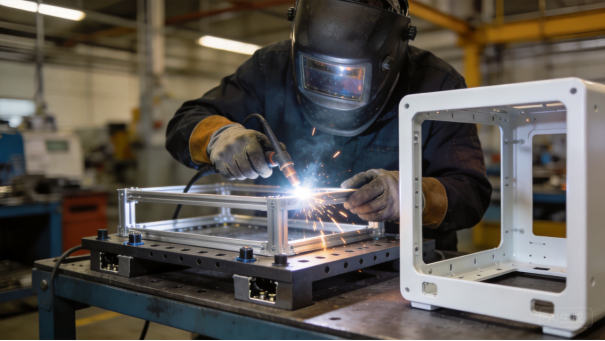
TIG welding of an aluminum medical enclosure frame on an assembly jig.
5. Lead Time: From Drawings to Delivered Enclosure
5.1. DFM Review and Quotation
Lead time starts before the first sheet is cut. When a medical OEM sends a 3D model and 2D drawing to XHX, the engineering team reviews material, thickness, bend radii, hole patterns, tolerances, finishes, hardware, and regulatory documentation requirements. This design for manufacturability review normally takes one to three working days and produces a clear recommendation on process route, inspection plan, and realistic delivery. The quotation then reflects the actual work: a simple aluminum cover can be quoted quickly, while a welded stainless steel chassis with cosmetic finish needs more engineering time.
The DFM review also reveals assumptions that would delay the project later. If the drawing lacks a finish specification, a tolerance on a critical mounting hole, or a requirement for material certificates, XHX flags it before production instead of discovering it at the first article. Freezing the design after the DFM review is the most important thing an OEM can do to protect the schedule, because every change after approval restarts a portion of the manufacturing cycle.
5.2. Material Procurement
Material availability is the first hard date in the schedule. Standard 5052 and 6061 aluminum, SPCC cold rolled steel, and SECC galvanized steel are usually available from local suppliers in one to three working days, which means production can begin almost immediately after order confirmation. Specialty materials, custom pre-painted coils, imported stainless steel with mill certificates, or non-standard thicknesses take longer and should be confirmed during the DFM review. Because metal prices move, the quotation carries a validity period, and the order should be placed before the price expires.
Material substitution is a serious risk in medical projects. If the specified grade is not available, the fabricator must not quietly swap it for a cheaper alternative; the OEM’s engineering and regulatory teams must approve any change. XHX keeps material certificates for every lot and can identify exactly which coil or plate produced each batch. For medical OEMs, that traceability is as important as the price, because the device history file depends on it.
5.3. Prototypes and First Articles
For a new design, XHX typically produces a prototype or first article within one to two weeks after material arrives. The first article includes laser-cut and formed parts, welded assemblies where required, and a trial finish so the customer can verify dimensions, color, texture, and fit before serial production. Special bending tools, welding jigs, or forming dies add a few days to two weeks depending on complexity. The first article is the gate: the customer approves the parts and the accompanying inspection report, and only then does the factory release the full order.
The first article is also where most schedule problems are caught early. If a bend radius is too sharp for the material, a hole is too close to a bend, or a painted surface has an unexpected texture, the fabricator can correct the process quickly. Customers who review the first article promptly save the most time, because the factory can begin production while the engineering change is still fresh. Waiting days or weeks to approve a first article adds exactly that much time to the delivery date.
5.4. Production Planning and the Finishing Bottleneck
Serial production is scheduled as a flow, not a pile of individual operations. For quantities between 100 and 1,000 enclosures, XHX normally plans two to four weeks of production after first article approval, depending on the number of processes, welding content, and finishing requirements. Laser cutting is fast, bending is medium, welding is slow, and surface treatment is the bottleneck, so the factory sequences parts so that coating capacity is never idle waiting for a single bracket. Shifts are checked at start and finish so dimensional drift is caught before it creates a large scrap batch.
Assembly and hardware add another week of work for fully built enclosures. Doors, hinges, latches, PEM fasteners, gaskets, grounding studs, and cable clips are installed and function-tested, and the complete unit is inspected before packaging. Some OEMs take flat panels and assemble internally, which shortens the delivery cycle; others need a fully finished housing ready for electronics installation. The scope should be stated in the quotation, because the difference between raw parts and assembled products can be two weeks of the schedule.
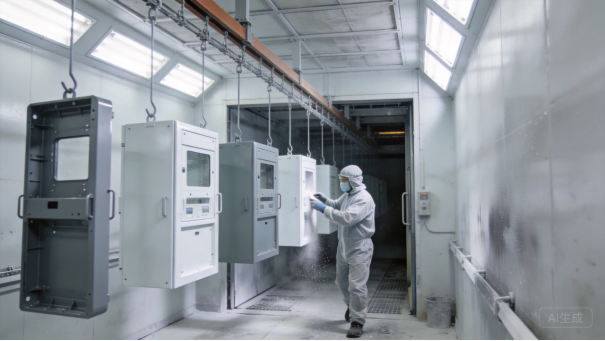
Powder coated medical enclosure panels on the finishing line.
5.5. Inspection, Packaging, and Shipping
The last part of the cycle is quality control and logistics. Every order receives a final inspection covering dimensions, surface quality, hardware fit, and documentation, and finished enclosures are protected with film, corner protectors, and bracing so they arrive without dents or scratches. Packaging for medical enclosures is especially important because coated surfaces scratch easily and precision parts can bend in transit. XHX also prepares packing lists, material certificates, and inspection reports so the OEM receives a complete package with the goods.
Shipping time depends on the destination. From Dongguan, air freight to North America or Europe takes about three to seven days, while sea freight to a major port takes three to five weeks plus customs and inland delivery. XHX’s on-time delivery rate is 93.1 percent on the Alibaba international platform, and logistics can be arranged on FOB, CIF, or DDP terms. Practical advice for buyers: freeze the design, approve the first article quickly, and order spare doors, panels, or brackets with the main run, because a small reorder later costs more than the original unit price.
6. Past Cases: Medical Enclosure Projects
The following cases are representative examples of the type of work XHX Metal performs for medical device OEMs, presented without client names or proprietary details. They show how product requirements, materials, and manufacturing processes come together in real projects, and they highlight the decisions that most affect cost, quality, and delivery. No two medical enclosures are identical, but the patterns in these projects appear again and again: early design review, controlled processes, clear documentation, and first article approval.
Readers should use these cases as a checklist for their own projects. If the product is portable, look at how thin material and weight were controlled; if it is a laboratory instrument, look at how precision mounting and stainless steel were handled; if it is a high-volume device, look at how tooling and process discipline kept cost down. Every case ends with a lesson that can be applied to the next quotation.
6.1. Diagnostic Cart Housing
A medical device OEM needed a housing for a rolling diagnostic cart: an aluminum frame, white powder coated panels, a removable rear cover, and mounting brackets for a monitor and battery pack. The original design used more than 30 separate brackets, which meant long welding time and many opportunities for alignment error. XHX simplified the bracket set by combining functions into formed flanges, reduced the number of welded joints, and standardized the panel finish to a common RAL white so color matching was repeatable across batches.
The result was a cleaner assembly that took less time to build and delivered within six weeks for a quantity of 300 units. The main lesson was about finish control: the first article showed slight gloss variation between the aluminum and steel parts, which was corrected by switching both substrates to the same pretreatment and coating line. Color and texture should be approved on the actual production materials, not assumed from a color chart.
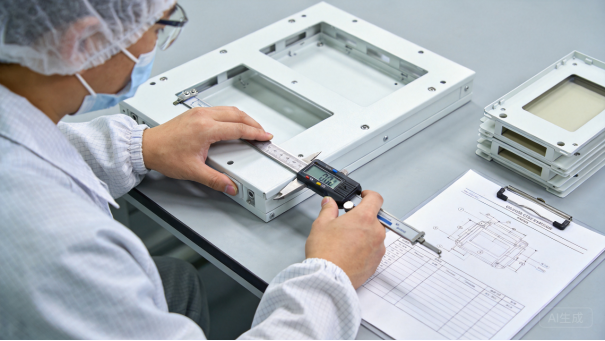
Quality inspection of a finished medical enclosure panel in the factory.
6.2. Handheld Monitor Enclosure
A manufacturer of a handheld patient monitor asked XHX to produce a 1.2 mm 5052 aluminum enclosure with an EMI-shielded interior, a battery door, and mounting bosses for a display module. The quantity was 2,000 units per year, so manufacturing cost mattered as much as dimensional accuracy. The DFM review adjusted the hole-to-bend distances, reduced the number of bends by folding the side walls in one operation, and recommended a nesting layout that saved roughly 15 percent of the material cost.
Prototypes were delivered in two weeks and serial production took four weeks. The enclosure passed the customer’s EMC and drop tests without a design change, largely because the flat patterns and bend sequence were qualified on the first article. The lesson is that DFM savings compound over high volume: a small improvement in nesting or bend count becomes a significant annual cost reduction without changing the product’s performance.
6.3. Laboratory Analyzer Chassis
A laboratory instrument company needed a stainless steel chassis for a benchtop analyzer that handled reagent liquids and ran continuously. The chassis had to hold pumps, valves, and a precision optical assembly in exact positions, survive contact with cleaning chemicals, and open easily for service. XHX fabricated the structure from 304 stainless steel with formed flanges, welded and ground corner joints, passivated surfaces, and CNC-machined mounting pads for the optical module.
The project included first article measurement of every critical mounting point, material certificates for the stainless steel, and a final dimensional report that the OEM placed in the device history file. Delivery took about eight weeks for 120 units, including the additional welding and finishing time that stainless steel requires. The lesson is that regulatory documentation is part of the product: the OEM did not ask for material certificates after delivery, because the requirement was in the specification from the beginning.
6.4. Patient Monitoring Console
Another project involved the console housing for a patient monitoring system: a thin-wall steel frame with ventilated side panels, a display cutout, and mounting points for internal electronics. The customer had already spent months on the industrial design and wanted a production-ready version quickly. XHX built the first article within ten days of material arrival, then used the customer’s feedback on door alignment and panel gaps to adjust the bend sequence and hinge design before full production.
Five hundred consoles were delivered in five weeks, and the final assembly included doors, gaskets, grounding studs, and hardware. The project demonstrated the value of a fast first article: the alignment issues were fixed in the process, not in the field, and the OEM avoided a costly tooling change later. The lesson is that a fabricator who builds prototypes quickly gives the design team the information they need to finalize the product before volume production begins.
6.5. Lessons Learned from Real Orders
Across these projects, five lessons repeat. First, define the use environment and cleaning requirements before quoting, because they determine the material and finish. Second, complete the DFM review early, because the biggest cost and schedule risks are in the drawing, not the factory. Third, approve the first article promptly, because it is the last point where changes are inexpensive. Fourth, specify documentation, material certificates, and inspection reports when the order is placed, not after delivery. Fifth, keep spare parts and repeat orders tied to the same approved design so quality stays consistent.
These lessons are not unique to XHX; they are the standard practice of mature medical supply chains. What a fabricator provides is the discipline to follow them on every order, including the small ones. For OEMs, choosing a partner that applies these lessons consistently is more valuable than comparing the lowest unit price, because the cost of a failed enclosure in the field is far higher than the saving on a few parts.
7. Summary: Choosing the Right Medical Enclosure Partner
7.1. Key Takeaways
A medical device enclosure is a precision, safety-critical component, not a commodity box. The material should be selected from the use case: aluminum for portable and bench-top devices, stainless steel for wet and high-hygiene environments, and powder coated steel for large structural housings where cost matters. Manufacturing difficulty is concentrated in tolerances, thin-wall control, welding distortion, and surface finish, and all of these can be managed with controlled laser cutting, CNC bending, jigged welding, and disciplined inspection.
Lead time is realistic and predictable when the design is complete: a typical new enclosure needs one to three working days of DFM review, one to two weeks for a first article, and two to four weeks for production quantities of 100 to 1,000 units, plus finishing and shipping. The fastest way to shorten the schedule is to freeze the design, approve the first article quickly, and order spare parts with the main run. Documentation is part of the product, so the OEM should request material certificates, dimensional reports, and process records from the start.
7.2. Why XHX Metal
XHX Metal (Guangdong Xinghaoxin Technology Co., Ltd.) is a privately owned company specializing in producing and processing sheet metal, and medical enclosures are one of the categories the factory supports with the same equipment and discipline used for telecommunication, industrial, and data center products. The factory has two 6 kW fiber laser cutting machines, CNC press brakes, TIG, MIG, and laser welding, an automatic deburring line, CNC machining, and an annual capacity of about 500,000 parts under ISO 9001:2015.
The company works with OEMs at every stage: DFM review and quotation, prototyping, first article, serial production, and repeat orders. The team communicates in English, responds to engineering questions in detail, and provides the inspection and material documentation that medical projects require. Because the factory is privately owned and vertically integrated, decisions about scheduling, process changes, and quality issues are made in-house rather than passed through a trading company.
7.3. Contact and Next Steps
The fastest way to start is to send a 3D model, 2D drawing, and a short description of the use environment to XHX for a DFM review and quotation. The engineering team can confirm material, finish, production difficulty, and realistic lead time within a few working days, and the response will include specific recommendations rather than a generic price list. Contact Barry at +86 13244963694 or sales01@xinghaoxin.com, or visit https://www.xhxmetal.com. The factory is at No. 42 Changtang Avenue, Yantian, Chang’an Town, Dongguan, Guangdong, China, and quotes are available on FOB, CIF, and DDP terms.
Medical device development will keep moving toward smaller, more connected, and more home-based products, but the enclosure will still have to protect electronics, manage heat, shield interference, survive cleaning, and look professional on a hospital floor or a kitchen table. A sheet metal partner that understands those requirements, controls its processes, and documents its work will help the OEM ship a better product on schedule. That is the standard XHX applies to every medical enclosure order, and it is the right starting point for any new project.
Frequently Asked Questions
Q: What materials are best for medical device enclosures?
A: Aluminum 5052 and 6061 are best for portable and bench-top devices, stainless steel 304 or 316 is best for wet and high-hygiene environments, and powder coated steel is the most economical choice for large structural housings. The final choice should be based on the device’s use environment, cleaning agents, weight target, shielding needs, and service life.
Q: How long does a medical enclosure prototype take?
A: After design review and material procurement, a first article is normally produced in one to two weeks. Special bending tools, welding jigs, or test fixtures can add a few days to two weeks. Customer approval of the first article is the gate before serial production.
Q: What tolerances can XHX hold on medical enclosures?
A: Standard sheet metal tolerances are about 0.1 mm for assembly-critical features, with laser positioning accuracy of about 0.01 mm on the cutting stage. Tighter tolerances are possible on CNC-machined surfaces and should be specified on the drawing so the inspection plan matches the requirement.
Q: Do you provide documentation for regulatory files?
A: Yes. XHX supplies material certificates, first article inspection reports, dimensional reports, and process records under ISO 9001:2015. The OEM should specify the required documentation in the order so the package is complete for the device history file.
Q: Can you support low-volume medical OEM orders?
A: Yes. XHX produces prototypes, pilot quantities, and serial production from the same process base, so a 20-unit clinical trial batch and a 2,000-unit production order are handled with consistent quality and traceability.
Material Comparison for Medical Device Enclosures
| Material | Weight | Corrosion Resistance | Typical Medical Use |
| Aluminum 5052/6061 | Light | Good | Portable devices, panels, handles, frames |
| Stainless Steel 304/316 | Heavy | Excellent | Wet areas, surgical and lab equipment |
| Powder Coated Steel | Moderate | Good after coating | Large enclosures, chassis, console housings |
| Plastic (cosmetic parts) | Very light | Varies | Bezels, covers, insulating parts |
About XHX Metal
XHX Metal (Guangdong Xinghaoxin Technology Co., Ltd.) is a privately owned sheet metal fabrication company in Dongguan, Guangdong, China, specializing in producing and processing sheet metal enclosures, chassis, frames, and precision parts for medical, telecommunication, industrial, and data center equipment. The factory is equipped with two 6 kW fiber laser cutting machines, CNC press brakes, TIG, MIG, and laser welding, an automatic deburring line, and CNC machining centers, with an annual capacity of about 500,000 parts under ISO 9001:2015.
Contact: Barry | +86 13244963694 | sales01@xinghaoxin.com | https://www.xhxmetal.com | No. 42 Changtang Avenue, Yantian, Chang’an Town, Dongguan, Guangdong, China