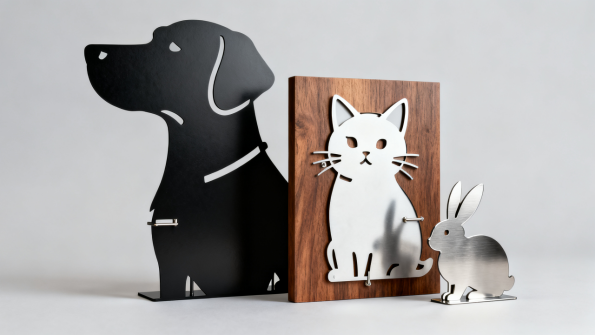
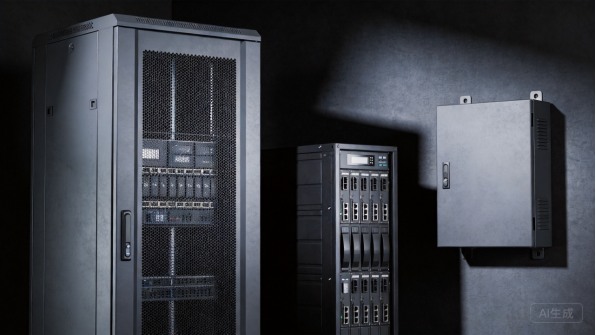
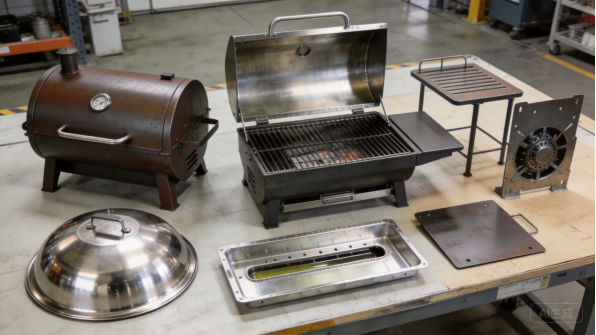
OEM custom sheet metal parts are precision metal components manufactured to an original equipment manufacturer’s own design, specifications, and brand standards. Instead of choosing from a standard catalog, the buyer defines geometry, material, tolerance, finish, and production volume, and the fabricator turns raw sheet metal into ready-to-assemble parts. This model is common across electronics, energy, medical, telecom, and industrial automation, where part geometry, durability, and repeatability directly affect the performance of the final product.
For a privately owned sheet metal company such as Guangdong Xinghaoxin Technology Co., Ltd. (XHX Metal), OEM fabrication means more than cutting and bending. It means reviewing the customer’s design, improving manufacturability, controlling every process step, and protecting the customer’s intellectual property. Demand for fabricated metal parts continues to expand with automation and energy equipment programs, as tracked by Grand View Research. This guide explains what OEM custom sheet metal parts include, where they are used, how to select materials, what makes them difficult to produce, how lead times work, and what realistic projects look like from quotation to delivery.
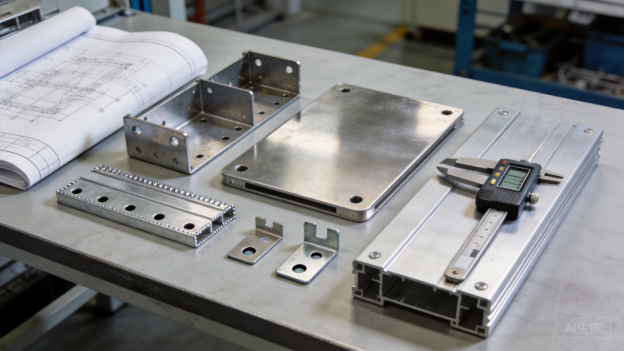
Figure 1: Custom OEM sheet metal brackets, covers, and chassis parts staged for material review.
What Are OEM Custom Sheet Metal Parts?
Definition and Scope
An OEM custom sheet metal part is a metal component made to an original equipment manufacturer’s own drawings, tolerances, and performance requirements rather than selected from a standard catalog. The part normally starts as flat sheet or coil and then moves through laser cutting, punching, stamping, bending, welding, deburring, and surface finishing before it is ready for final assembly. Because the customer owns the design, the fabricator must follow the supplied CAD data, material callouts, edge treatment, and packaging rules.
OEM programs can be a single prototype, a short pilot run, or multi-year production. Some buyers provide only a STEP file and ask the factory to recommend bend radii, hole placement, and material thickness; others send complete drawing packages with geometric tolerances. Both approaches are normal in custom sheet metal work, and the difference is managed through an engineering review before manufacturing starts.
A typical OEM sheet metal workflow starts with engineering review, then material cutting, forming, joining, finishing, and inspection. Because every step can change dimensions, the supplier controls tolerances from the first operation. XHX Metal uses nesting software to combine parts on the same sheet, which reduces waste and keeps small-batch production economical.
Typical Part Families
OEM sheet metal parts appear in nearly every assembled product. Common families include:
- Brackets and mounting plates: motor brackets, sensor brackets, shelf supports, and structural tie plates.
- Enclosures and housings: electronics enclosures, control boxes, battery housings, and machine covers.
- Chassis, frames, and panels: server chassis, rack panels, front and rear covers, and base frames.
- Guards, shields, and trays: machine guards, EMI shields, cable trays, and drip pans.
- Custom hardware: clips, springs, hooks, standoffs, gussets, and grounding tabs.
Even a simple-looking bracket can involve three processes: laser cutting the profile, bending the flange, and deburring the edges. When the same product uses several metal parts, a single OEM supplier can keep the finish, hardware, and inspection approach consistent across the whole set.
How OEM Fabrication Differs From Standard Products
Standard products are developed by the factory for a broad audience. OEM parts are designed by the customer and may include proprietary geometry, branded appearance, or unique performance requirements. The supplier must therefore protect confidential drawings, keep tooling and programs separate, and avoid reusing a customer’s design for another buyer.
OEM work also carries stricter quality obligations. A standard product only needs to satisfy the manufacturer’s own specification, while an OEM part must satisfy the customer’s tolerance, surface class, and acceptance criteria. Typical OEM deliveries include first-article inspection reports, material certificates, dimensional records, and traceable production lots, which is why documented quality management matters as much as machine capability.
OEM buyers should also confirm whether the supplier can hold tooling, manage revision changes, and provide spare-part batches years later. A stable partner keeps programs running even when the original buyer rotates engineering staff.
XHX Metal’s OEM Capability Snapshot
XHX Metal operates a 2,000 sqm factory in Dongguan with about 30 employees and an annual capacity of roughly 500,000 parts. The shop is built around two 6kW fiber laser cutting machines with +/-0.01mm positioning, CNC press brakes, TIG/MIG/laser welding, automatic deburring, and CNC machining centers. Cutting, forming, welding, finishing coordination, and assembly can be managed under one roof, which shortens the distance between engineering and production.
As a privately owned company, XHX Metal keeps quotation and scheduling decisions close to the shop floor. OEM buyers usually work with a small team that understands bend allowances, tolerances, and coating behavior instead of routing every question through a large account hierarchy. The factory operates under an ISO 9001:2015 quality management system, and standard practice includes first-article inspection and batch traceability.
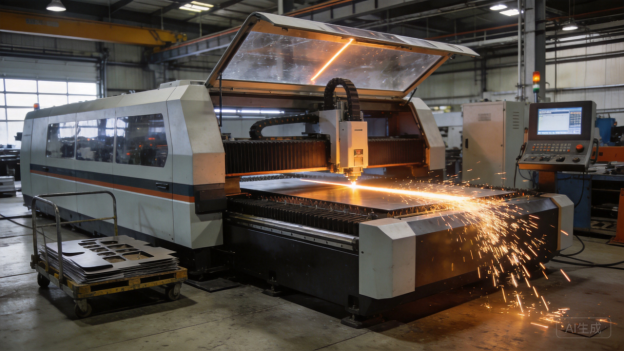
Figure 2: Fiber laser cutting produces clean profiles and precise holes for custom sheet metal parts.
Where OEM Custom Sheet Metal Parts Are Used
Electronics and Telecommunications
Telecom and electronics products rely on OEM sheet metal parts for racks, enclosures, brackets, and shielding. A wall-mount switch enclosure, for example, needs accurate hole patterns, good electromagnetic shielding, controlled vent openings, and a durable powder-coated finish. The same part may carry an IP-rated gasket, captive hardware, and grounding points, so laser cutting and bending must hold tight positions across the whole panel. NEMA and IEC enclosure guidance are often referenced during design, but the fabrication itself is custom to each product.
Small-series production is common here because network hardware is frequently refreshed. An OEM supplier should therefore handle both 50-piece pilot runs and repeat batches without changing the part geometry or finish.
EMI shielding and grounding are common reasons electronics buyers choose custom metal instead of plastic. Metal panels can be connected with conductive gaskets, plating, or grounding tabs, while plastic often needs separate shielding layers. A formed aluminum or steel cover also gives the product mechanical stiffness and a professional appearance.
EV, Energy Storage, and Power Equipment
Battery housings, busbar covers, cable trays, and cabinet frames are among the fastest-growing OEM sheet metal applications. These parts must resist corrosion, manage heat, and provide mechanical protection while keeping the dimensional accuracy needed for sealing and electrical isolation. Aluminum is common for lightweight battery trays, while galvanized or painted steel is used for larger power cabinets where stiffness and cost matter.
Many energy projects also require production traceability, humidity or salt-spray testing, and consistent fastener torque during assembly. A fabricator that can weld sealed seams, control flatness, and coordinate finishing becomes part of the customer’s supply chain rather than a simple job shop.
Battery programs usually add safety-related requirements such as rounded edges, insulated busbar covers, and flame-resistant coatings. Documentation of material grade and coating thickness becomes part of the battery pack file, so the supplier must keep records stable across revisions.
Medical and Laboratory Equipment
Medical carts, instrument chassis, analyzer frames, and laboratory housings use stainless steel or coated aluminum because they need clean surfaces, smooth edges, and resistance to cleaning chemicals. Parts are usually produced in low to medium volumes with strict first-article checks. Sharp burrs, weld discoloration, and inconsistent hole positions are unacceptable because they affect safety, appearance, and assembly time.
Documentation also matters. Material certificates, finish records, and revision control help medical OEMs maintain their own quality files and regulatory submissions.
Clean-room-friendly packaging and individual bagging are often requested for medical parts. The fabricator should plan for controlled handling from the finishing line to the carton so polished surfaces are not scratched.
Industrial Machinery and Automation
Machine guards, control panels, motor mounts, robot bases, and cable carriers are everyday OEM parts in automation. They often combine thick plate elements with thin formed covers, which requires mixed-process capability: laser cutting for profiles, bending for flanges, welding for frames, and machining for critical datum faces. Dimensional stability is essential because a guard or base may need to align with purchased components from several suppliers.
Outdoor, Agricultural, and Marine Equipment
Outdoor equipment exposes sheet metal to rain, dust, salt, and temperature swings. Galvanized steel, stainless steel, and properly finished aluminum are selected according to the expected environment. Design details such as drainage holes, sealed seams, and protected hardware determine whether a part survives years of service. OEM buyers in this segment usually ask for corrosion testing evidence and consistent coating thickness before committing to production.
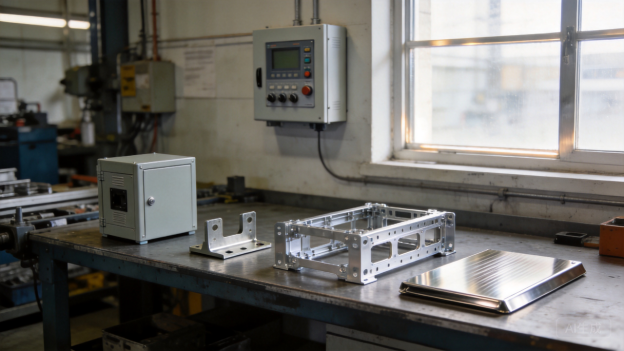
Figure 3: Finished OEM products show how different coatings and materials serve different applications.
Choosing the Right Material
Cold-Rolled Steel
Cold-rolled steel is the workhorse material for indoor brackets, covers, chassis, and structural panels. It offers good strength, excellent formability, a smooth surface, and predictable bending behavior at a moderate cost. The main limitation is corrosion: unless the part is painted, plated, or powder coated, cold-rolled steel will rust quickly in humid conditions. It is usually the first material considered when weight is not critical and the final product is protected by an outer enclosure.
For parts that will be powder coated, cold-rolled steel provides a smooth substrate that helps the coating hide small surface defects. When the same sheet is used for several nested parts, material utilization improves and cost per part drops.
Stainless Steel
Stainless steel is chosen when corrosion resistance, hygiene, or a clean appearance is required. Grade 304 suits most indoor and light outdoor applications, while 316 adds molybdenum for marine and chemical environments. Stainless is harder to bend and cut than carbon steel, so tooling and process parameters need more control, and welding requires careful heat management to avoid discoloration and reduced corrosion resistance. SSINA and similar industry references explain how to select and finish stainless components.
Stainless should also be protected from carbon steel contamination during handling. Tools, brushes, and grinding wheels that have touched ordinary steel can embed particles and create rust spots, so dedicated tooling and clean work areas are recommended.
Aluminum Alloys
Aluminum is about one-third the weight of steel and provides good corrosion resistance and thermal conductivity. Alloy 5052 forms well and is common for enclosures and panels, while 6061 offers higher strength for chassis and structural parts. Powder coating or anodizing improves wear and appearance. Material databases such as AZoMaterials provide useful property comparisons when engineers are balancing weight, strength, and cost.
Aluminum requires care with conductive joints: bare aluminum forms a natural oxide layer that can affect electrical contact, so designers sometimes specify conductive plating or surface treatment at grounding points. Thermal expansion should also be considered when aluminum is combined with steel in one assembly.
Galvanized Steel, Copper, and Brass
Galvanized steel is a cost-effective choice for outdoor parts where the zinc coating provides protection at a lower price than stainless. The American Galvanizers Association publishes guidance on coating behavior and edge treatment. Copper and brass are less common but valuable for conductive terminals, heat-transfer parts, and decorative components; they form well but cost more and require careful handling to avoid scratches.
Brass and copper parts may need tumbling or polishing to remove surface marks, and they are usually packed with protective film because soft metals scratch easily. When electrical conductivity is the goal, the finish must be selected to preserve contact performance rather than only appearance.
Surface Finishing and Coating Decisions
The finish often decides the part’s real-world durability. Powder coating provides tough, uniform coverage and is popular for enclosures and structural parts; the Powder Coating Institute explains the process and film requirements. Plating options such as zinc, nickel, and passivation protect steel or improve conductivity, while anodizing hardens aluminum surfaces. Finish selection affects cost, lead time, masking, and the tolerances that can be held, so it should be finalized during the engineering review rather than at the end of production.
Coating thickness and color consistency are verified with film gauges and color standards before release. Masking protects threaded holes and contact surfaces, and edge coverage is checked because sharp corners often receive less coating.
Production Difficulty and Process Control
Design for Manufacturability
The easiest way to reduce difficulty is to design the part with the process in mind. Bend radius should respect the material thickness, holes should stay away from bend lines, and tolerances should be applied only where they are needed. Engineers Edge and similar references provide practical bend allowance and minimum flange guidance. When a drawing is released with unrealistic tolerances or impossible geometries, the supplier must raise it early; fixing a design in CAD is far cheaper than fixing a bad batch.
A good DFM review also checks hole-to-edge distance, minimum flange height, and whether the part can be nested efficiently. Small changes, such as moving a hole or opening a slot, can eliminate a secondary operation and shorten lead time without affecting function.
Laser Cutting and Blanking
Laser cutting produces clean profiles, tight holes, and good edge quality on most sheet materials. XHX Metal uses two 6kW fiber laser cutting machines with +/-0.01mm positioning, which is suitable for complex cutouts and nested batch production. Cutting thin aluminum requires different gas and speed settings than cutting thick steel; micro-joints, tab placement, and part lifting must also be controlled to avoid scrap.
Fiber lasers are efficient for both carbon steel and aluminum, but thicker material requires higher power and slower feed rates. Cutting quality is verified by checking dross, edge roughness, and hole roundness before a batch is released to bending.
Bending and Forming
Bending converts a flat blank into a three-dimensional part, but it is where many dimensional problems appear. Springback varies with material grade and thickness, bend radius must match available tooling, and the sequence of bends can make a part impossible to form. CNC press brakes with calibrated tooling and experienced operators are the difference between a part that assembles first time and one that needs rework. Flatness, parallelism, and angular accuracy should be clearly defined in the drawing.
Operators verify the first formed part against the drawing, then monitor the bend angle during the run. Tooling wear, material thickness variation, and grain direction can all affect the final angle, so setup records are kept for repeat orders.
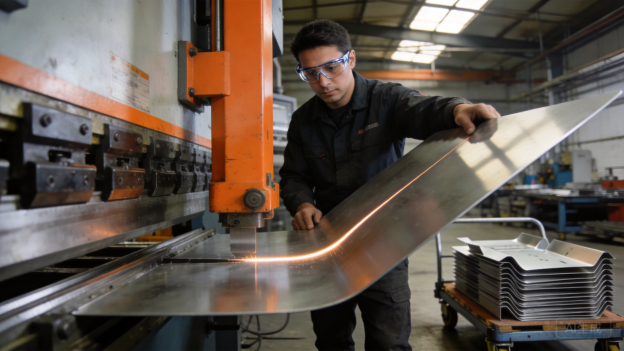
Figure 4: CNC press brake bending holds consistent angles across production batches.
Welding, Assembly, and Deburring
Welding adds strength but also introduces heat distortion, discoloration, and potential porosity. TIG is preferred for clean stainless and aluminum seams, while MIG is efficient for steel frames; laser welding can reduce distortion on precision assemblies. Fixtures control part position, and post-weld grinding or polishing restores appearance. Automatic deburring and manual edge finishing remove sharp edges before coating, which improves safety and paint adhesion. TWI Global offers detailed guidance on weld quality and process selection.
Deburring before welding is important for joint fit, and deburring after welding removes sharp edges from cutouts and corners. A consistent edge break improves both safety and coating performance.
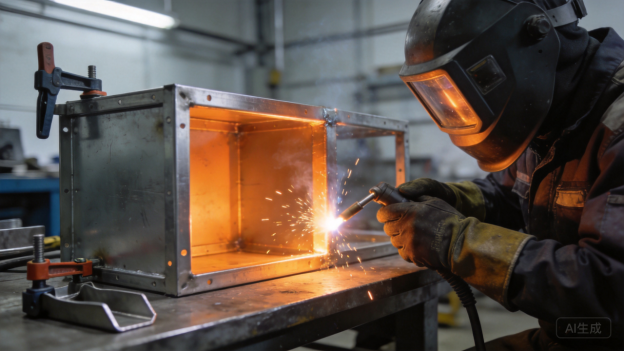
Figure 5: Controlled welding and fixturing keep enclosures flat and sealed.
Quality Control and Inspection
OEM parts need more than visual checking. First-article inspection verifies the critical dimensions from the drawing, and in-process checks catch drift before a large batch is produced. Calipers, height gauges, and coordinate measurement data confirm flatness, hole position, and bend angles; surface checks verify coating thickness and color. Under ISO 9001:2015, records should be kept so every lot can be traced back to material certificates and production settings.
Inspection frequency should be based on risk: critical dimensions are checked on every part or at short intervals, while cosmetic features are sampled. When a problem is found, the supplier records the corrective action so the same defect does not repeat in the next lot.
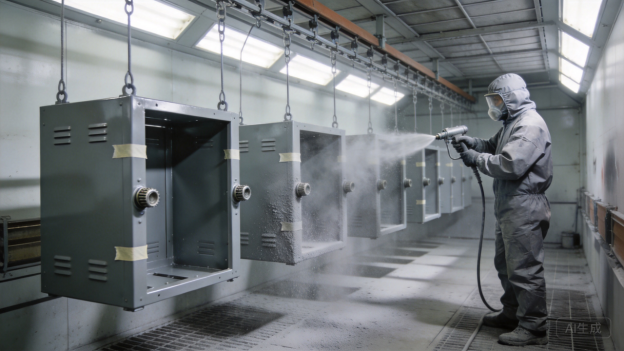
Figure 6: Powder coating and controlled finishing protect OEM parts in service.
Lead Time, Quoting, and Production Planning
What a Complete RFQ Looks Like
A complete request for quotation shortens lead time because engineering does not have to chase missing information. The ideal package includes 3D CAD such as STEP or SolidWorks, a 2D drawing with dimensions and tolerances, material grade and thickness, surface finish, annual volume, and any special requirements such as certificates or export packing. XHX Metal reviews this package, returns design-for-manufacturability comments, and issues a formal quotation.
Quotes should state material, finish, tolerance assumptions, packaging, and payment terms clearly. Ambiguous quotes usually lead to change orders later, so XHX Metal documents what is included and what would be quoted separately.
Prototype Lead Time
Simple prototypes are often produced within 3 to 7 business days after design review and material confirmation. Laser-cut flat parts can be faster than formed and welded assemblies because they need fewer operations. If the customer wants a fully finished sample with powder coating and hardware, additional days are required for coating curing and assembly. Prototypes are usually made with production-equivalent processes so the sample represents the final part.
Prototype feedback is valuable even before parts exist. The supplier should confirm that the proposed bend radius, hole size, and hardware are producible, and should flag anything that would be cheaper or more reliable in production.
Production Lead Time and Batch Planning
Production lead time depends on material availability, process sequence, quantity, and finishing. A typical production order can be completed within 2 to 4 weeks after approval of the sample and confirmation of the purchase order. Large orders are often split into scheduled batches so the customer receives parts as needed without overbuilding inventory. XHX Metal’s annual capacity of about 500,000 parts gives OEM buyers room to scale pilot results into regular supply.
Batch planning also considers finishing capacity and inspection time. A large order may be split by process stage so that coating and QC do not create a bottleneck; customers receive a rolling delivery plan instead of one large uncertain shipment.
Packaging and Logistics
OEM parts must arrive undamaged and traceable. Edge protectors, foam, layer boards, and dedicated cartons prevent scratching during shipping; each carton can carry a packing list and lot number. Export programs are usually quoted with FOB or EXW terms from Shenzhen or other southern China ports, with air freight available for urgent samples and sea freight for production quantities. Early discussion of destination and handling helps the factory choose the right packaging grade.
Sea freight saves cost for large pallets, while air freight is used for urgent samples or low-weight pilot kits. The factory should provide carton dimensions, gross weight, and photos before shipment so the buyer can plan customs clearance and warehouse space.
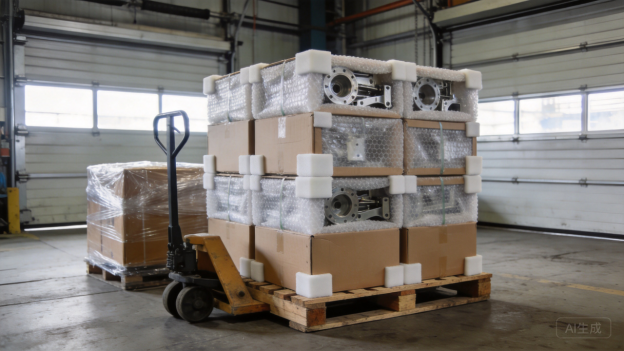
Figure 7: Protective packaging and lot control keep OEM parts traceable from factory to customer.
How XHX Metal Communicates Project Status
Every program gets a clear production milestone: drawing review, material confirmation, cutting and forming, welding, finishing, inspection, and shipment. The project team sends updates at each stage and flags risks before they become delays. For OEM buyers, this kind of visibility is often more valuable than the quoted date itself, because it allows their own assembly schedule to adjust early.
A weekly summary with photos of the parts at each stage gives buyers confidence without requiring visits. When a delay is unavoidable, the supplier communicates the new date and the reason as early as possible.
Past Case Studies
Telecom Equipment Enclosure Program
A network equipment customer needed an aluminum wall-mount enclosure with a gasketed front opening, vent louvers, and powder-coated finish. XHX Metal reviewed the STEP file, adjusted the louver design for cleaner airflow, and produced first articles within one week. The enclosure passed dimensional inspection and coating adhesion checks, and the program moved into repeat batches with consistent quality across every shipment.
The customer supplied only a STEP file and a target price, so XHX Metal proposed the material thickness, bend allowance, and gasket channel geometry. This early DFM input reduced the number of prototypes from three to one and allowed the enclosure to move directly to pilot production.
Repeat batches were scheduled every six weeks so the customer’s installers always had stock on hand. The enclosure was later adapted for two additional sizes using the same design rules, which shows how a well-documented OEM part can grow into a product family.
EV Battery Housing and Tray Program
For an energy storage project, the customer required a lightweight battery housing with sealed seams, threaded inserts, and controlled flatness for gasket sealing. The team selected 5052 aluminum, used laser welding on critical joints, and added CNC machining for datum faces. The first article met the flatness and assembly requirements, and the factory later delivered the program in scheduled batches to match the customer’s production calendar.
The program also included a second variant with different insert positions. By reusing the same welding fixtures and coating color, the factory delivered both variants in one production window, which reduced the customer’s total cost and warehouse stock.
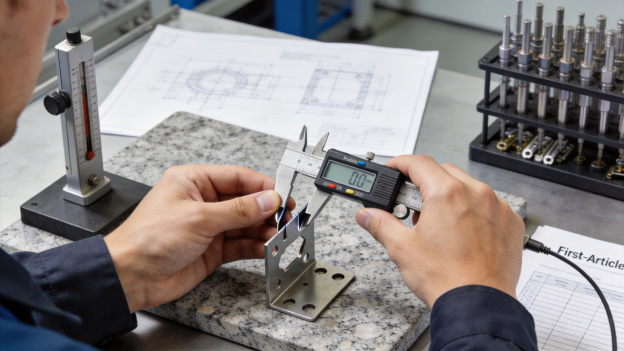
Figure 8: First-article inspection verifies critical dimensions before production batches are released.
Medical Device Chassis Program
A medical equipment OEM needed a stainless steel instrument chassis with brushed finish, precise hole patterns, and clean edges. The project used 304 stainless, TIG welding with argon purging to reduce discoloration, and manual deburring before passivation. Material certificates and first-article reports were included with every lot, helping the customer maintain its own quality file and regulatory traceability.
Small pilot batches were produced first so the customer could validate fit with electronic modules. Only after assembly approval did the program move to larger lots, and every batch kept the same surface finish standard.
Industrial Control Panel Program
An automation company ordered laser-cut and folded control panels with welded mounting rails and textured powder coating. The engineering review simplified several internal cutouts without changing function, which reduced nesting waste and cutting time. The production batch was delivered on schedule, and the customer repeated the order quarterly with no dimensional rework.
The panels also required tapped holes and captive nuts, which were added with hardware insertion and CNC machining. This reduced the customer’s downstream assembly time and kept the part count lower inside the panel.
Automation Bracket Family Program
A robotics integrator needed more than 20 bracket variants for sensor mounts, cable guides, and base plates. XHX Metal grouped the parts into nested laser-cut sheets, created common bend tooling, and delivered samples for every variant before mass production. Consolidating the family into one order reduced the customer’s purchasing and freight costs while keeping each part traceable by part number.
The bracket family covered multiple sheet thicknesses and coatings. XHX Metal standardized the hardware and inspection fixtures so operators could switch between variants quickly, which improved on-time delivery for the integrator’s own production line.
Summary and Next Steps
What a Reliable OEM Partner Provides
A reliable partner provides four things: engineering feedback, process control, honest scheduling, and clear documentation. The best supplier does not simply accept a drawing; it questions tolerances that are too tight, suggests materials that are easier to finish, and explains cost drivers before production begins. That collaboration reduces rework, shortens timelines, and protects the customer’s product quality.
Communication should include both technical and commercial clarity. The supplier explains what a tolerance costs, why a finish needs extra time, and how volume changes affect unit price, so the buyer can make decisions with full information.
Documentation should also include revision history, inspection records, and packaging instructions. When those files are clear, repeat orders become faster and quality stays stable even if new staff are involved.
Why XHX Metal Fits OEM Programs
XHX Metal is a privately owned sheet metal manufacturer in Dongguan, China, with a 2,000 sqm factory, about 30 employees, and roughly 500,000 parts of annual capacity. The company combines two 6kW fiber laser cutting machines, CNC bending, welding, automatic deburring, and CNC machining with ISO 9001:2015 quality management. Because the team is small and production-focused, OEM buyers get faster feedback and more consistent follow-through than they often receive from larger suppliers.
The company serves both domestic and export customers, with packaging and documentation prepared for international shipping. Being privately owned means the people who quote the job are the same people who monitor it, which reduces miscommunication during production.
XHX Metal also coordinates third-party testing when buyers need salt-spray, coating thickness, or material verification. This keeps the OEM program simple while still meeting the customer’s compliance requirements.
How to Start an OEM Sheet Metal Project
Start by sending a STEP or STP file plus a drawing with material, thickness, tolerance, and finish requirements. XHX Metal will review the design, recommend manufacturability improvements, and return a quotation with prototype timing. After sample approval, production can be scheduled as one lot or split into regular batches, with packaging and shipping arranged to your destination. The company’s sheet metal fabrication services and product pages describe the process in more detail.
Most projects follow the same path: design review, quotation, sample approval, production, inspection, and delivery. XHX Metal can also provide suggestions for part numbering, revision control, and packaging standards so the program stays organized as it scales.
For larger programs, the factory can hold safety stock of finished parts or raw material so urgent orders are covered. The agreed stock level is documented and reviewed with the buyer as forecasts change.
Contact XHX Metal
To discuss an OEM custom sheet metal project, contact Barry at +86 13244963694 or sales01@xinghaoxin.com, or visit the XHX Metal website. Buyers can submit drawings through the contact page and receive an engineering review before committing to production. XHX Metal is ready to support prototype, pilot, and production programs for customers worldwide.
The company welcomes drawings in STEP, STP, DXF, DWG, and PDF formats. Even without a complete drawing, a sketch with dimensions and a target quantity is enough to start the conversation and receive practical feedback.
Typical response time for an engineering review is one to two business days after the drawing is received. For standard parts, a quotation can often be returned within the same week.
For more information, visit www.xhxmetal.com and review the company profile before sending your drawing. XHX Metal looks forward to supporting your next custom sheet metal project.